
Our readers keep the lights on and the weekend projects moving. As an Amazon Associate, I earn from qualifying purchases.
The difference between a glued acrylic joint that shatters on the first stress and one that lasts for years comes down to chemical fusion — not surface stickiness. Most household adhesives sit on top of acrylic, creating a brittle bond that fails under tension or temperature shifts. A solvent-based cement actually melts the plastic surfaces together, making the seam as strong as the surrounding material.
I’m Rikta — the co-founder and writer behind FitlyFast. I’ve spent countless hours dissecting the chemical formulations and application techniques that determine whether an acrylic repair holds or fails, comparing cure times, viscosity grades, and substrate compatibility across dozens of products.
This guide breaks down the seven best-performing adhesives for acrylic and plexiglass, ranking them by bond strength, drying speed, and application precision. The right adhesive for acrylic plastic transforms fragile repairs into permanent fixes that handle real daily use.
How To Choose The Best Adhesive For Acrylic Plastic
Not all adhesives behave the same way on acrylic. The wrong choice leaves white haze, gummy residue, or a weak joint that pops apart under light pressure. Focus on three factors: chemistry, viscosity, and cure speed.
Solvent Cement vs. Super Glue vs. Epoxy
Solvent-based cements like methylene chloride or ethylene dichloride dissolve the acrylic surface layers, allowing polymer chains to interlock as the solvent evaporates. The result is a monolithic bond — the joint is as strong as the base material. Super glues (cyanoacrylates) form a hard but brittle layer on the surface, while two-part epoxies create a thick mechanical grip that lacks clarity. For transparent acrylic sheet, solvent cement is the only choice that preserves optical clarity.
Viscosity Determines Your Technique
Water-thin formulas (<5 cP) rely on capillary action to wick into tight joints with zero gap. Medium-bodied cements (50–100 cP) offer a short working window and resist dripping on vertical surfaces. Gel formulations (500+ cP) fill gaps up to 0.5 mm but leave visible seams. Beginners should start with medium-bodied tubes; thin liquids require practice and needle-tip applicators to avoid marring the surface.
Cure Time and Working Window
Fast-setting adhesives bond in 30–90 seconds, leaving virtually no time for repositioning. Slower formulas offer 5–10 minutes of working time, which matters for multi-part assemblies or repairs that require clamping. Full structural cure arrives in 12–24 hours regardless of initial set speed. Apply in a well-ventilated area — solvent fumes are concentrated even at low VOC levels.
Quick Comparison
On smaller screens, swipe sideways to see the full table.
| Model | Category | Best For | Key Spec | Amazon |
|---|---|---|---|---|
| WELD-ON 16 | Solvent Cement | Cast acrylic, signs, displays | Medium-bodied, 5-6 min working time | Amazon |
| Berkland Acrylic Cement | Solvent Cement | Precision capillary joints | Water-thin, 4 oz bottle with needle | Amazon |
| Loctite Plastics Bonding | Activator System | Polypropylene, polyethylene, mixed plastics | Two-step system, 1 min full cure | Amazon |
| KRAFTPROTZ 3D Glue | Cyanoacrylate | PLA, ABS, PETG 3D prints | Ultra-thin capillary, 1.76 oz XXL | Amazon |
| UHU All Purpose | Solvent-Free Gel | Multi-material crafts, model making | Solvent-free, repositionable 24 hr cure | Amazon |
| The Beadsmith Precision Cement | Precision Adhesive | Jewelry, bead knot sealing, tiny repairs | Pinpoint tip, non-fusing formula | Amazon |
| SIKA SikaLatex R | Concrete Admixture | Acrylic fortifier for cement mortar | 500 psi bond strength, 1 gallon | Amazon |
In‑Depth Reviews
1. WELD-ON 16 Acrylic Plastic Cement

This is the most widely trusted solvent cement for cast acrylic and plexiglass. The medium-bodied formula strikes the ideal balance between flow and control — it wicks into tight joints using capillary action yet stays on vertical surfaces without running. The 5–6 minute working window gives you enough time to align parts before the chemical bond sets.
The cement chemically fuses acrylic, polycarbonate, ABS, and styrene into joints that appear invisible when fully cured. Users report seams that match the clarity of the original sheet with zero white haze or blooming. The applicator tip allows reasonable precision, though transferring to a syringe improves fine detail work.
Low-VOC formulation reduces fume intensity compared to older Weld-On variants, but ventilation remains mandatory. The 5 oz tube is adequate for small-to-medium projects like display cases, lens repairs, or model building. Not recommended for wood or metal substrates.
Why it’s great
- Chemically fuses acrylic for invisible, monolithic joints
- Medium viscosity resists dripping on vertical surfaces
- Low-VOC formula with reduced solvent odor
Good to know
- Strong fumes require use in ventilated space
- 5 oz tube runs out fast on larger fabrication jobs
2. Berkland Acrylic Bonding Cement
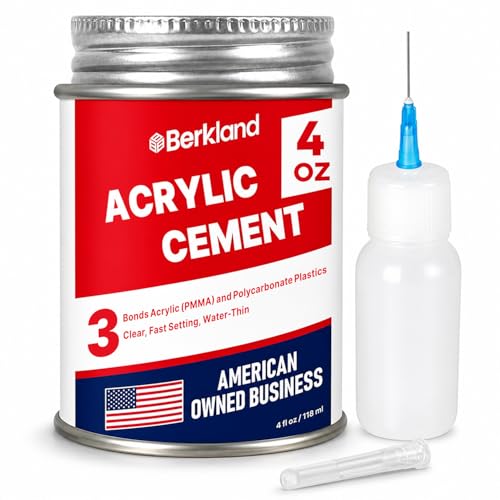
This #3 equivalent acrylic cement matches the chemical performance of professional Weld-On #3 at a lower per-ounce cost. The water-thin consistency (approximately 3–5 cP) flows into sub-millimeter gaps by capillary action, making it the top choice for flush-edge joints where no visible glue line is desired. The included applicator bottle with needle allows precise drop placement.
The solvent evaporates quickly — joints set in 30–60 seconds with full structural strength developing overnight. Users report bonds on ½-inch plexiglass boxes that hold up to repeated handling and moderate weight. The crystal-clear finish shows no yellowing or cracking on properly prepared surfaces.
Two caveats: the extreme fluidity makes vertical applications nearly impossible without the needle, and high-humidity conditions can cause slight whitening. Not compatible with cross-linked acrylics or non-thermoplastics. Use gloves and ventilate generously.
Why it’s great
- Capillary action creates near-invisible seams on flush joints
- Fast 30-60 second set time for quick production work
- 4 oz bottle offers good value per application
Good to know
- Water-thin consistency runs off vertical surfaces
- May show whitening in high-humidity conditions
3. Loctite Super Glue Plastics Bonding System
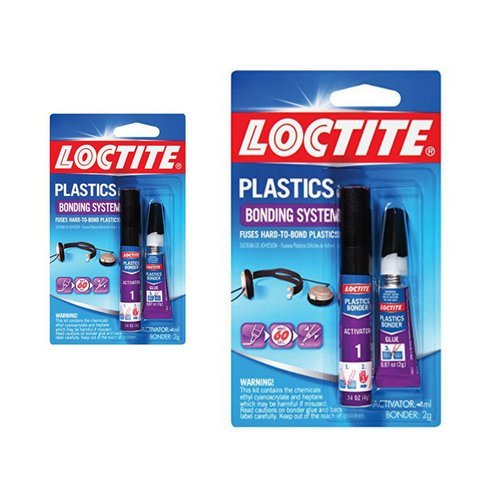
When the plastic part is polyethylene or polypropylene — two materials that famously reject most adhesives — this two-step activator system is the only consumer-grade solution that consistently works. The primer prepares the low-energy surface, and the cyanoacrylate bonds chemically within one minute. Users have successfully repaired airline cat carriers, Yamaha M80 wire holders, and Plantronics ear pieces that defeated every other glue.
The two separate components require choreographed application: spray the activator on one surface, apply glue to the other, then join immediately. Tape won’t stick to polypropylene, so you must hold parts manually or use gloves. The clear finish blends invisibly on most colored plastics.
The 2-gram tube is small — you get two tubes in the pack — and the activator spray covers roughly a dozen medium repairs. It is not designed for large sheet acrylic fabrication but excels on broken appliance parts, car interior clips, and toy repairs where other adhesives fail outright.
Why it’s great
- Only consumer adhesive that reliably bonds polypropylene and polyethylene
- Activator and glue form a chemical bond in 60 seconds
- Clear finish blends invisibly on most colored plastics
Good to know
- Two-step process requires practice and quick assembly
- Small tube size limits to around a dozen small repairs
4. KRAFTPROTZ 3D Printer Super Glue Thin
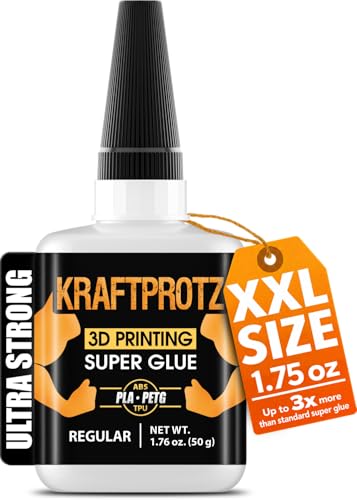
Formulated specifically for 3D printed filaments — PLA, ABS, PETG, TPU, and nylon — this ultra-thin cyanoacrylate uses capillary action to seep into layer lines and micro-fractures. The 1.76 oz XXL bottle holds roughly five times the volume of standard super glue tubes, making it cost-effective for frequent makers and repair jobs.
The bond holds up to 110°C, which matters for RC parts, drone frames, and electronics enclosures that sit near motors or batteries. The precision needle tip resists clogging even after partial use. Users report no blooming or ghosting on clear filaments — a common issue with generic cyanoacrylates that fog up transparent parts.
It is a super glue, not a solvent cement, so it does not chemically fuse acrylic the way Weld-On products do. Best reserved for filament repairs and small plastic assemblies where gap-free joints exist. For sheet acrylic fabrication, a dedicated solvent cement remains superior.
Why it’s great
- Capillary flow penetrates layer lines of 3D prints for strong bond
- Heat resistant up to 110°C for electronics and RC use
- XXL bottle provides 5x the volume of standard glue tubes
Good to know
- Super glue forms brittle surface bond, not solvent fusion
- Not ideal for large sheet acrylic or plexiglass projects
5. UHU All Purpose Adhesive (Solvent Free)

For mixed-material crafting projects that involve paper, felt, wood, glass, and some plastics, this solvent-free gel offers a non-toxic alternative to solvent cements. The formula stays workable for a few minutes after application, allowing repositioning before the bond sets. It dries crystal clear and won’t wrinkle thin paper or saturate porous materials.
Long-time users prefer it over rubber cement for miniature book nooks, dollhouse assemblies, and school projects. The pack of three 35 ml tubes provides good value for low-stress bonding needs. The gel consistency resists running and gives you control during intricate placement.
The solvent-free formulation has a major weakness: some users report that it doesn’t stick reliably to smooth plastics, including certain grades of acrylic. The 24-hour full cure time is slow compared to cyanoacrylates. Best suited for crafts and home repairs where acrylic is one component among several materials, not the primary bonding target.
Why it’s great
- Solvent-free formula with no harsh fumes for indoor crafting
- Repositionable before final bond sets
- Works on diverse materials from paper to glass
Good to know
- Adhesion on smooth plastics and acrylic is inconsistent
- 24-hour full cure time is slow for quick repairs
6. The Beadsmith Clear Precision Cement
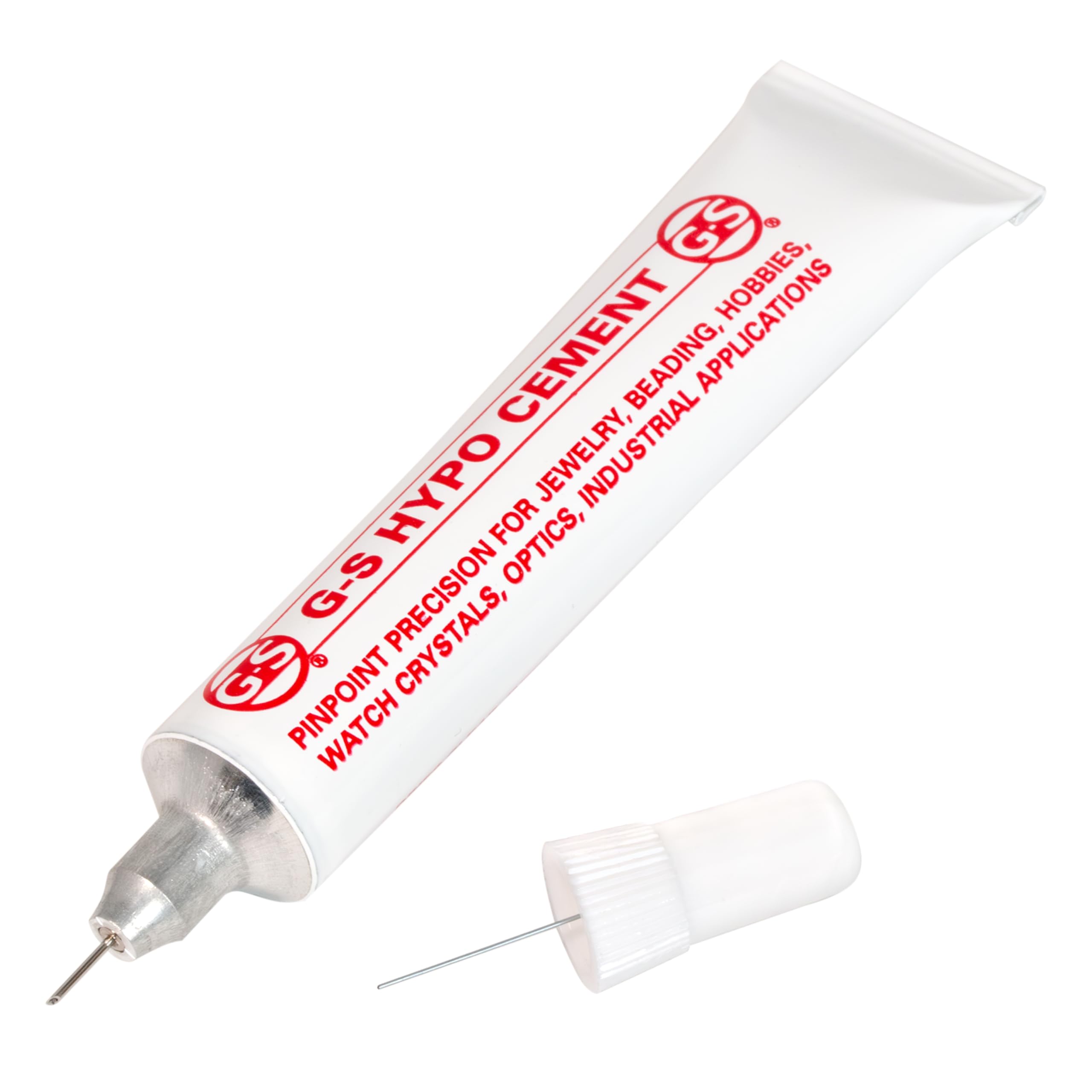
Designed for the jewelry bench rather than the workshop floor, this precision adhesive features a built-in fine-tipped applicator that places glue exactly where you need it — on bead knots, watch crystals, or tiny acrylic components. The non-fusing formula is a standout safety feature: accidental skin contact won’t bond fingers together like cyanoacrylate does.
The cement dries crystal clear and stays flexible without yellowing over time. Users find it excellent for sealing knots on bracelets and repairing small acrylic trinkets. The 9 ml bottle is small but appropriate for the intended application volume.
The trade-off is bond strength. This is not a structural adhesive. It works well for low-stress decorative repairs but cannot handle load-bearing joints or large acrylic sheets. The 24-hour cure time also requires patience. The cap can be tricky to reseat without cross-threading.
Why it’s great
- Pinpoint applicator delivers glue with sub-millimeter accuracy
- Non-fusing formula won’t bond skin together
- Dries flexible and crystal clear without yellowing
Good to know
- Not a structural adhesive — insufficient for load-bearing joints
- Small 9 ml bottle limited to jewelry and tiny repairs
7. SIKA SikaLatex R Concrete Adhesive

This product serves a fundamentally different role — it is an acrylic-polymer latex admixture designed to be added to Portland cement mortar or concrete, not a direct adhesive for acrylic sheet. When mixed with concrete, it achieves a 500 psi bond strength and improves resistance to freeze-thaw cycling. Users have successfully used it to reattach brick steps and ceramic soap dishes with results that lasted years.
The 1-gallon pail goes a long way for masonry projects. It requires no dilution and mixes directly into cement. The material creates a denser, tougher surface that reduces dusting and spalling over time.
This is not an adhesive for bonding acrylic plastic parts. If you are repairing a plexiglass display case or gluing acrylic sheets together, this is the wrong product. It belongs in the article only as a reference for concrete bonding that happens to contain acrylic polymers. Skip this entry if your project involves clear acrylic fabrication.
Why it’s great
- Achieves 500 psi bond strength when mixed with cement mortar
- Resists freeze-thaw damage for outdoor masonry repairs
- No dilution required — easy to mix into concrete
Good to know
- Designed for concrete bonding, not for acrylic plastic sheet
- 30-day full cure time is unusually long
FAQ
Can I use super glue on acrylic plastic?
What is the difference between Weld-On #3 and #16?
How do I prevent white blooming on acrylic repairs?
Can solvent cement bond acrylic to other materials?
Final Thoughts: The Verdict
For most users, the best adhesive for acrylic plastic is the WELD-ON 16 because its medium viscosity offers the best balance of controlled application and strong solvent fusion for sheet acrylic, display cases, and signs. If you need water-thin capillary action for flush-edge joints with invisible seams, grab the Berkland Acrylic Cement. And for repairing broken polypropylene or polyethylene parts that no other glue bonds, nothing beats the Loctite Plastics Bonding System.