
Our readers keep the lights on and the weekend projects moving. As an Amazon Associate, I earn from qualifying purchases.
Rock chips, bug splatter, and road debris don’t discriminate — every mile you drive etches another micro-ding into your clear coat. Paint protection film (PPF) acts as an invisible sacrificial layer, absorbing impacts that would otherwise leave permanent scars. But not all films are equal: thickness, self-healing capability, and adhesive quality separate a weekend-DIY roll that bubbles on curves from a professional-grade shield that stays optically clear for years.
I’m Rikta — the co-founder and writer behind FitlyFast. I’ve spent hundreds of hours cross-referencing automotive detailing forums, watching independent scratch tests, and breaking down the material science of polyurethane versus thermoplastic polyurethane to determine which films actually deliver on durability and optical clarity.
Whether you’re shielding a daily driver’s leading edge or wrapping a weekend toy for track-day abuse, finding the right auto paint protection film comes down to thickness, self-healing chemistry, and whether you need permanent or temporary coverage.
How To Choose The Best Auto Paint Protection Film
Paint protection film is a long-term investment in your vehicle’s resale value. Choosing the wrong thickness or adhesive chemistry can mean yellowing, peeling, or — in the worst case — damaging the clear coat underneath. Here’s what matters most.
Thickness: 6-Mil vs 8-Mil vs 12-Mil
The thickness of the film directly correlates with impact resistance. Eight-mil (8/1000 of an inch) is the industry standard for permanent PPF — it stops most small stone chips without adding so much weight that it becomes difficult to wrap around complex curves. Temporary films are often 4-mil or 6-mil, trading impact protection for easier removal. Twelve-mil films exist but require professional installation because they resist stretching around compound curves.
Material Chemistry: PU, TPU, and TPH
Polyurethane (PU) is the original PPF material — durable but prone to slight yellowing over 3-5 years. Thermoplastic polyurethane (TPU) resists yellowing significantly better and offers superior self-healing properties; when heat is applied, the polymer chains reflow, making light scratches disappear. TPH (a blend of TPU and PVC) is a cost-reduction material found in budget rolls — it’s easier to install but can crack or degrade faster in extreme heat or UV exposure.
Self-Healing Depth
Every PPF marketed as “self-healing” reacts to heat — either from the sun (slow, gentle heat) or a heat gun/hairdryer (fast, targeted). The key metric is how deep the scratch can be before it becomes permanent. Surface-level swirl marks heal within minutes under sunlight. Deeper scratches that reach the adhesive layer will remain visible regardless of heating. Premium TPU films generally heal scratches up to roughly one-third of the film’s thickness.
Permanent vs Temporary Adhesive
Permanent PPF uses a pressure-sensitive acrylic adhesive designed to bond for 5-10 years. Removal requires heat and typically leaves no residue on factory paint. Temporary films use a lower-tack adhesive meant for days or weeks of use — they peel off by hand. The trade-off: temporary films can leave ghosting or crease marks on clear coat if left on too long or exposed to high temperatures, especially on dark-colored vehicles.
Pre-Cut vs Bulk Roll
Pre-cut kits are computer-designed for specific vehicle models. They save installation time and eliminate the need to trim around complex contours with a knife (which risks cutting into paint). Bulk rolls give you flexibility to cover custom areas, motorcycles, or non-standard panels but demand far more skill to install without wrinkles or contamination under the film.
Quick Comparison
On smaller screens, swipe sideways to see the full table.
| Model | Category | Best For | Key Spec | Amazon |
|---|---|---|---|---|
| Install Proz Custom Kit | Pre-Cut Premium | Full frontal coverage | Computer-cut to vehicle | Amazon |
| VViViD Barricade TPU | Full-Body Roll | Complete vehicle wrap | 59″ x 720″ TPU | Amazon |
| XPEL Gloss 12″x300″ | Mid-Range Roll | Hood/fender strips | 8-mil vinyl gloss | Amazon |
| Install Proz Bundle Kit | Value Pack | Door edges + hood strip | 8-mil PU + samples | Amazon |
| HOHOFILM 60″x20ft | Wide Roll | Large panel coverage | 8-mil TPH gloss | Amazon |
| HOHOFILM 60″x9.8ft | Entry Roll | Small-area DIY projects | 8-mil TPH gloss | Amazon |
| VViViD Satin Clear 12″x150ft | Bulk Utility | Non-critical flat surfaces | Vinyl satin finish | Amazon |
| Install Proz Universal Hood Kit | Budget Strip | Hood leading edge | 8-mil PU universal | Amazon |
| Track Armour 12″x300′ | Temporary Shield | Track days / road trips | 4-mil temporary film | Amazon |
In‑Depth Reviews
1. Install Proz Self-Healing Clear Paint Protection Film Kit (Computer Cut)

This is the closest you can get to a professional-grade PPF installation without booking a shop appointment. The computer-cut patterns are designed per vehicle VIN, covering hood, fenders, mirrors, and bumper with zero trimming on paint. The 8-mil polyurethane substrate provides robust stone-chip defense — multiple reviewers reported successful installations on Civics and Audis where the film became optically invisible against factory gloss.
Installation still requires patience: slip solution (baby shampoo and water), a squeegee, and a heat gun for compound curves. The kit includes an installation tool and video walkthrough, though the side-mirror pieces demand careful work to avoid lifting. One reviewer noted that the rear fascia pattern wasn’t perfect, but the company quickly sent a replacement piece without hassle.
Self-healing performance matches the premium-tier claims — swirl marks from initial squeegee work vanished after a few minutes of sun exposure. On dark paints, the gloss finish doesn’t mute the metallic flake. The only real downside is the price of admission, but against shop-installed quotes that run three to five times higher, this kit is the smartest dollar-for-dollar investment.
Why it’s great
- Computer-cut to exact vehicle specs — no cutting on paint
- 8-mil self-healing polyurethane holds up to rock chips
- Company support responsive with replacement pieces
Good to know
- Requires skill and ~6 hours for full frontal install
- Side mirror pieces may lift without careful heat work
2. VViViD Barricade Premium 8 Year Clear Gloss PPF TPU (720″ x 59″)
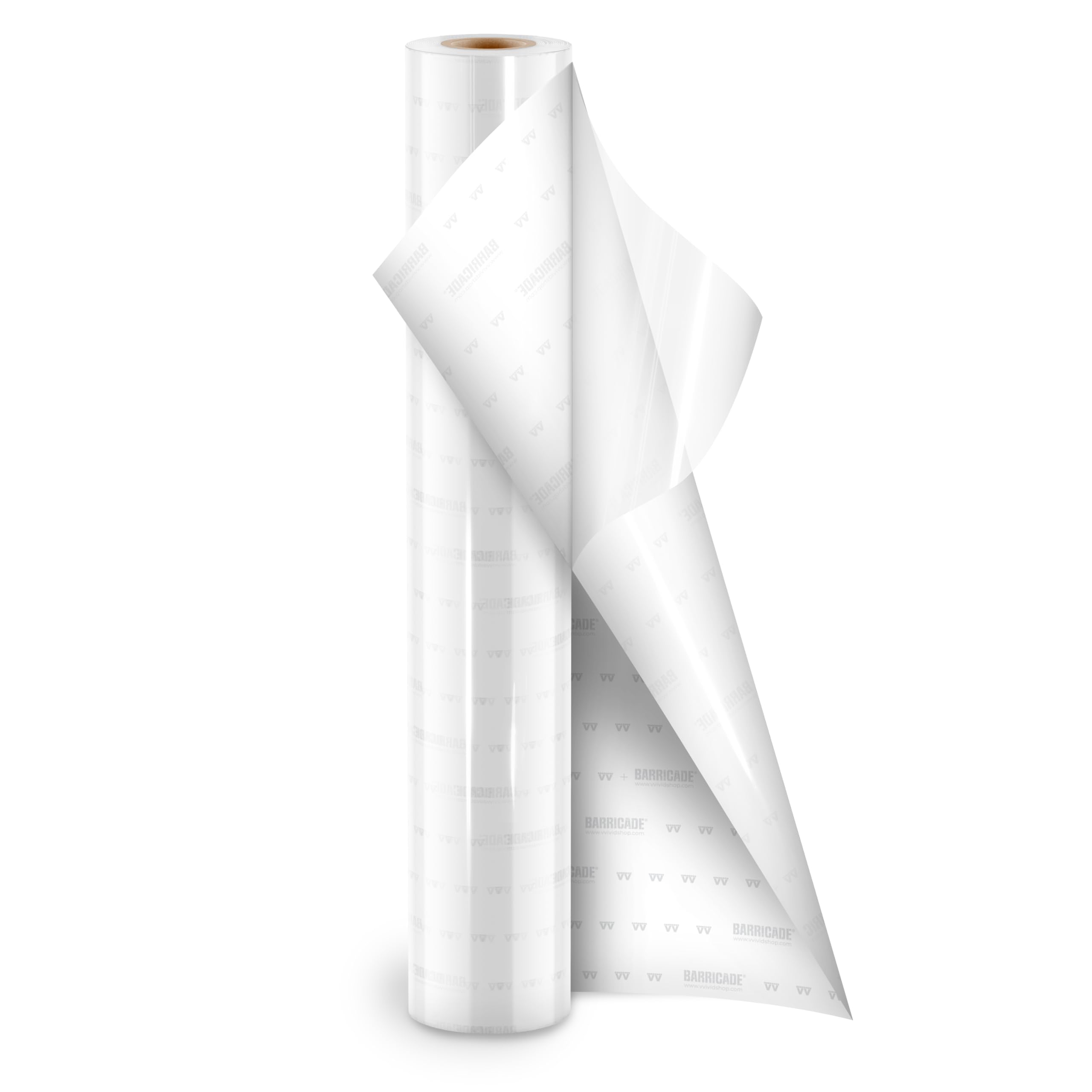
At 59 inches wide and 720 inches long, this roll provides enough material to cover the entire body of a full-size sedan or a muscle car like the 1984 Camaro Z28 — one owner used it for a complete wrap on pearl paint and reported the seam lines were nearly invisible. The thermoplastic polyurethane (TPU) formulation is the same chemistry used by commercial-grade shops, offering superior UV resistance over standard polyurethane and a clear gloss finish that enhances depth rather than muting it.
Reviewers who tested it on high-impact areas like headlight lenses and T-top tracks found the 8-mil-plus thickness stopped stone chips effectively. The self-healing layer responds well to heat-gun activation — surface scratches from installation wiped out with a quick pass. However, one long-time vinyl user noted the film shrinks more than expected during curing; the four-corner stretch method doesn’t work well, and the film left residue when removed from a test panel.
This is a specialist roll for someone who plans to do a full-body wrap and has the time, tools, and patience for a multi-day project. Beginners should start with smaller rolls — but for the sheer square footage per dollar, this is the most coverage you can buy in a genuine TPU material.
Why it’s great
- 59-inch width enables full-body coverage without vertical seams
- TPU resists yellowing and UV degradation better than standard PU
- Self-healing works reliably with heat-gun activation
Good to know
- Film shrinks during cure — requires careful tension management
- Not beginner-friendly; demands professional-level installation skill
3. XPEL Gloss Surface Protection Film 12″ x 300″

XPEL is one of the most recognized names in automotive PPF, and this gloss surface roll delivers the brand’s signature optical clarity at a mid-range price point. The 8-mil vinyl compound is pliable enough for beginners to cut custom shapes — several owners used it to fabricate headlight protectors and stone guards for their A-pillars. The included application squeegee is functional, but most users recommend upgrading to a felt-edge tool for better edge burnishing.
The self-healing properties are present but less aggressive than full TPU films — light swirl marks from washing will fade, but deeper fingernail scratches require heat-gun assistance. On flat panels like hoods and trunk lips, the film adheres with virtually no orange-peel texture.
One limitation: the vinyl base isn’t as conformable around compound curves as TPU. Users wrapping side mirrors reported lifting at the tight radius points. This roll works best for large flat areas, headlight lenses, and simple contour applications where optical clarity matters more than extreme stretchability.
Why it’s great
- Outstanding optical clarity — virtually invisible after install
- Good beginner choice for flat panels and headlight protectors
- No yellowing after extended outdoor exposure
Good to know
- Vinyl base doesn’t conform around tight compound curves
- Self-healing requires heat gun for deeper marks
4. Install Proz Self-Healing Clear PPF Bundle Kit

The Install Proz kit bundles the most vulnerable touch points — door edges, door cups, door sills, a hood strip, and a rear bumper protector — into one cohesive package. The 8-mil polyurethane film is the same self-healing compound sold in their larger rolls, so the protection level is consistent across every piece. Reviewers who installed it on Honda Pilots and Chevy Volts reported the door edge strips remained firmly adhered through months of car washes and daily use without peeling.
Installation is simpler than a full-hood wrap because each piece is small and flat. The door cups press in easily with a squeegee, and the rear bumper protector (60″ x 5.25″) covers the loading lip where suitcases and dog claws do the most damage. Several owners noted the 150-inch door edge roll was barely enough for two vehicles; budget for a second roll if you’re doing a sedan and an SUV.
The self-healing effect is most noticeable on the door sills, where shoe scuffs disappear after a warm day. One minor complaint: the pre-cut shapes are generic, not vehicle-specific, so you may need to trim the sill pieces slightly to fit certain models. Overall, this is the most complete entry-level kit for protecting high-wear areas without tackling a full frontal installation.
Why it’s great
- All high-wear areas covered in one box
- 8-mil self-healing film matches premium quality
- Small pieces make DIY installation manageable
Good to know
- Generic shapes may require light trimming per vehicle
- Door edge roll length is tight for multiple vehicles
5. HOHOFILM PPF 60″x20ft Self Healing Clear Gloss Roll

HOHOFILM’s 60-inch-wide roll offers enough material to cover an entire hood, roof, or trunk lid in a single piece without a center seam. The TPH (thermoplastic-polyurethane hybrid) material is softer and more pliable than pure TPU, which makes stretching around hood valleys and headlight housings easier during wet installation. One professional installer applied this to an Audi S7 and reported the gloss finish was indistinguishable from premium brands at a fraction of the material cost.
That softness comes with trade-offs. Multiple DIY reviewers noted the film’s surface exhibits a noticeable orange-peel texture under direct light — not a dealbreaker on a daily driver, but frustrating if you’re chasing a show-car finish. The adhesive is aggressive; if the film touches itself during installation, separating it without damaging the edges is difficult. Small water pockets from installation tend to disappear after a few warm days, but deeper air bubbles may persist.
Long-term durability is mixed. Several owners reported the film holding strong after 18 months on BMW hoods with no yellowing or peeling. However, one reviewer documented cracking and decay within six months on a car exposed to intense sun, which suggests TPH may not tolerate extreme UV environments as well as pure TPU. On a garage-kept vehicle in moderate climates, this roll delivers excellent value per square foot.
Why it’s great
- 60-inch width eliminates center seams on large panels
- Soft, pliable TPH formula helps with complex contours
- Self-healing handles light swirl marks effectively
Good to know
- Noticeable orange-peel texture on close inspection
- TPH may degrade faster than pure TPU in high-heat environments
6. HOHOFILM PPF 60″x9.8ft Self Healing Clear Gloss Roll
This is the same TPH material as the larger HOHOFILM roll but cut to 9.8 feet — enough to wrap a hood, a pair of front fenders, or a full bumper on a compact car. The wider 60-inch dimension means you can cover a full hood without having to seam two strips together, which is the primary reason most DIYers choose this over narrower rolls. Multiple Tesla Model 3 and Model Y owners used it for partial front-end coverage and reported the film held up well beyond one year with no yellowing.
The same orange-peel texture present in the larger roll carries over here, so if absolute optical clarity is your priority, this isn’t the film for you. Installation requires wet application — the adhesive grabs aggressively, and dry-tacking is nearly impossible. A few users who attempted installation in direct sunlight ended up with trapped air pockets that refused to settle, so a shaded, cool workspace is mandatory.
One reviewer who applied it to an Audi S7 praised the depth of gloss after curing, noting it added a noticeable wet-look enhancement to the paint. The 9.8-foot length is enough for a single large panel but won’t cover an entire front clip — measure your vehicle’s dimensions carefully before ordering. For a low-cost introduction to wide-format PPF, this roll keeps the initial investment manageable.
Why it’s great
- 60-inch width fits most hoods without seams
- Improves paint gloss depth after proper curing
- Good first-time trial size for wide-format PPF
Good to know
- Orange-peel texture noticeable in direct light
- Adhesive is aggressive; dry-tack almost impossible
7. VViViD Satin Clear Paint Protection Bulk Vinyl Wrap 12″x150ft
VViViD’s satin clear vinyl is a versatile protective film that works on vehicle paint, electronics, and even glass surfaces. The air-release acrylic adhesive allows repositioning during installation, which is a significant advantage for beginners. Expect 4-7 years of outdoor durability before the film begins to show signs of wear — the manufacturer claims up to 10 years indoors. Several owners used it to protect mountain bike frames from rock chips and kid-caused scuffs, reporting excellent adhesion on curved tubes.
The satin finish reduces glare compared to gloss films, which is useful for dashboard screens and gauge clusters. However, on exterior automotive paint, the surface texture is visible under direct sunlight — it doesn’t match the invisible appearance of gloss PPF. One reviewer who expected standard PPF performance was disappointed, calling it “more like packing tape” due to limited stretch around complex compound curves. The material is better suited to flat or gently curved surfaces.
Removal after several years is straightforward with heat, but one user reported the film left a faint adhesive haze on a screen after six months. On painted automotive surfaces, test a small area before committing to large panels. For the price per running foot, this roll provides immense coverage for non-critical protection tasks like trunk lips, lower door edges, and interior trim.
Why it’s great
- Air-release adhesive simplifies bubble-free installation
- Satin finish reduces glare on screens and dashboards
- Long 150-foot roll offers massive coverage per purchase
Good to know
- Limited stretchability — not ideal for compound curves
- Visible surface texture under direct sunlight
8. Install Proz Universal Hood Strip 12″x96″ Self Healing PPF
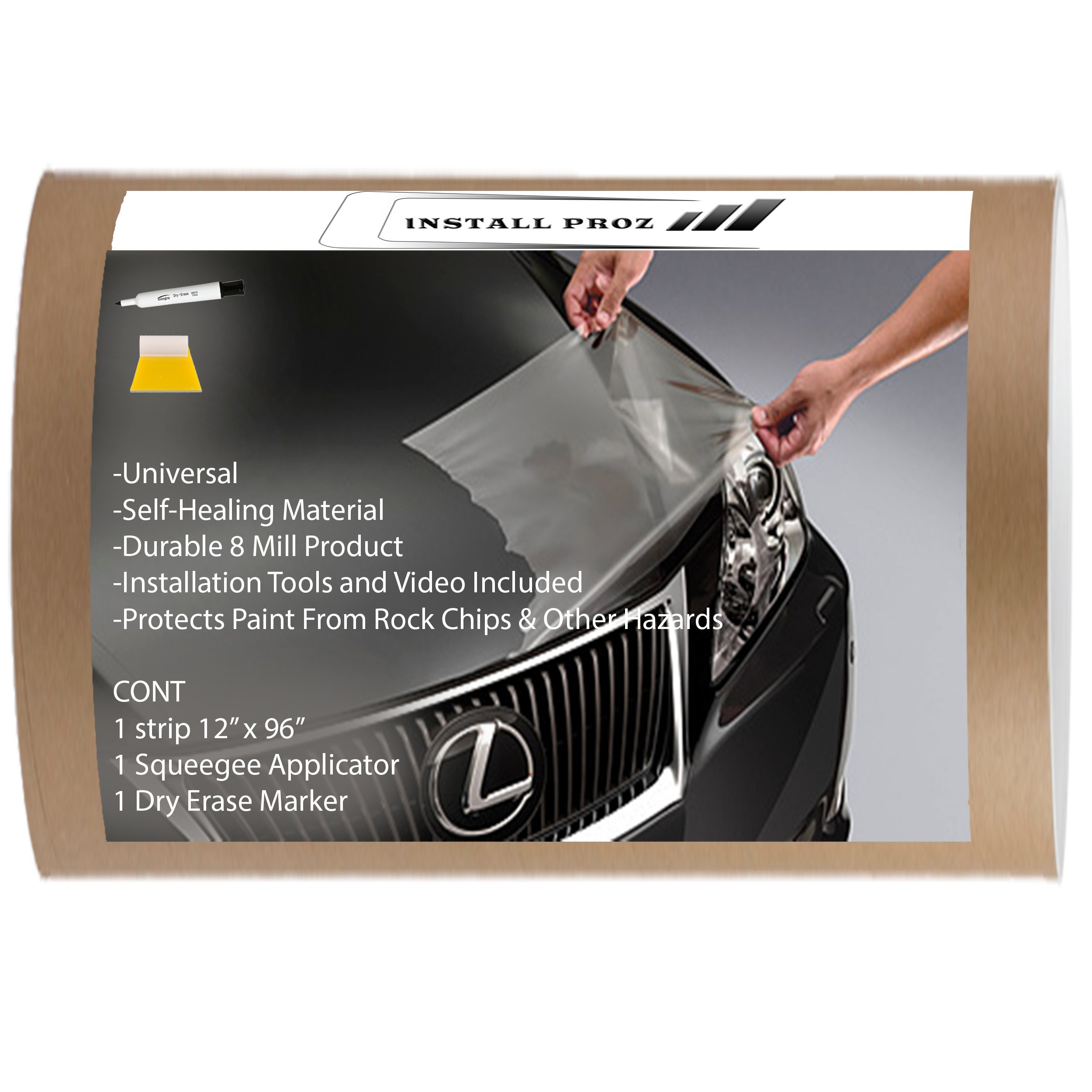
This universal hood strip is the most budget-conscious entry into self-healing PPF. At 12 inches wide and 96 inches long, it covers the leading edge and first two feet of the hood on most sedans and crossovers. The 8-mil polyurethane construction is the same material used in premium Install Proz kits — one owner reported the film still looked great after six years on a Chevy Volt, preventing rock chips while the uncovered sections accumulated visible damage.
Installation requires trimming to fit your specific vehicle. The kit includes an installation video, but you’ll need a sharp utility knife and steady hands to follow the hood contours without scratching the paint underneath. Multiple reviewers noted that the self-healing property works well on surface scratches from squeegee work, but deeper gauge marks from trimming don’t recover. Wet application is essential to prevent air pockets on curved hood designs.
The adhesive is strong, but one customer experienced poor adhesion that led to complete removal within days — this appears to be a batch inconsistency rather than a systemic issue. At this price level, the roll serves as a low-risk trial to see if you’re willing to dedicate the time for a full PPF project. If the 96-inch length is too short for your hood, Install Proz also sells longer rolls in the same material.
Why it’s great
- Proven 6-year durability reported by long-term users
- 8-mil thickness matches premium film quality
- Low-cost entry to test self-healing PPF commitment
Good to know
- Requires precise trimming — risk of scratching paint
- Batch inconsistency reported with adhesive on some rolls
9. Track Armour 12″x300′ Temporary Paint Protection Film
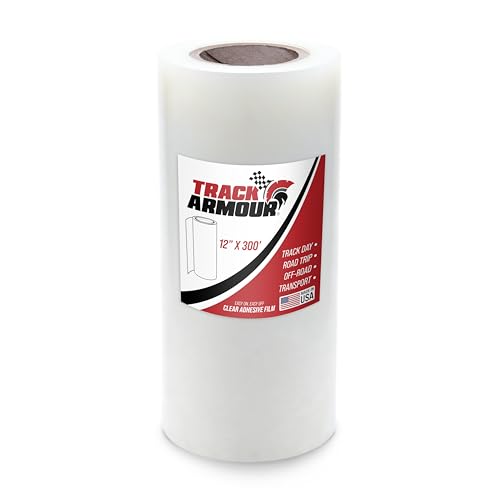
Track Armour fills a unique niche: temporary protection for vehicles that face extreme debris exposure for short periods. The 4-mil film applies like a large sticker with low-tack adhesive that peels off by hand after a day, a week, or up to 1.5 weeks of highway driving. Track-day enthusiasts use it to shield bumpers and leading edges from rubber marbles and gravel without committing to permanent PPF cost or installation time.
The film doesn’t stretch or conform around curves the way permanent PPF does — it lays flat and works best on smooth, continuous panels. Overlaps can lift at triple-digit speeds, so blue-tape anchoring on the leading edges is a common workaround among experienced users. On light-colored cars, the visual appearance is acceptable at highway distance, but on dark paint the film is quite visible and looks like heavy-duty packing tape.
The most critical concern: one BMW X5M owner reported permanent clear-coat damage after leaving the film on for four days in hot weather. The crease pattern couldn’t be fully removed even with wet sanding and compounding. On high-value paint, limit exposure to a few days and avoid parking in direct sun. For track days, rally events, or long road trips where rock chips are guaranteed, this film offers effective sacrifice protection — but it demands careful removal timing.
Why it’s great
- Peels off cleanly by hand within days of application
- Protects against high-speed rock chips and rubber debris
- 300-foot roll covers several trips or multiple vehicles
Good to know
- Can leave clear-coat crease damage in hot weather
- Visually obvious on dark paint; limited stretch capacity
FAQ
Can paint protection film damage my clear coat upon removal?
How long does auto paint protection film actually last?
Is it possible to install PPF without getting air bubbles?
Final Thoughts: The Verdict
For most users, the auto paint protection film winner is the Install Proz Computer-Cut Kit because the pre-cut precision eliminates the highest-risk part of DIY PPF — cutting on paint — while delivering 8-mil self-healing polyurethane that matches professional shop films. If you need full-body coverage in a genuine TPU material, the VViViD Barricade 59″x720″ Roll offers the best square-foot value in a thermoplastic polyurethane that resists yellowing and UV damage. And for track-day enthusiasts who need temporary protection without permanent commitment, the Track Armour 12″x300′ Film provides effective sacrifice protection for short-term debris exposure — just don’t let it sit in the sun for more than a few days.