
Our readers keep the lights on and the weekend projects moving. As an Amazon Associate, I earn from qualifying purchases.
The jump from a smartphone to a dedicated camera with interchangeable lenses is the single most rewarding step you can take in photography. That first taste of real optical zoom, a sensor that actually captures light, and the ability to blur a background at will changes how you see the world. The problem is that the market is flooded with outdated tech, misleading bundles, and cameras that offer little more than your phone with a bigger body.
I’m Rikta — the co-founder and writer behind FitlyFast. I’ve spent hundreds of hours analyzing sensor sizes, autofocus systems, lens ecosystems, and real-world user reports to separate the genuine tools from the marketing fluff in this specific price tier.
Whether you are capturing family memories, building a skill, or starting a side hustle, the right choice determines whether you grow as a photographer or abandon the hobby after a month. This guide is built around the search for a real affordable camera for beginners.
How To Choose The Best Affordable Camera For Beginners
Choosing your first real camera is about understanding the sensor first, then the lens system, and lastly the body features. A cheap camera with a good lens and a large sensor will outshoot an expensive body with a bad kit lens every single time.
Sensor Size: The Foundation of Image Quality
An APS-C sensor is roughly 15 times larger than a typical smartphone sensor. This directly translates to better low-light performance, more natural depth of field, and higher dynamic range. Any entry-level camera worth considering will use an APS-C or a Micro Four Thirds sensor. Full-frame sensors are larger still but push the price up significantly and are often overkill for a true beginner.
DSLR vs Mirrorless: Which Path Do You Take?
DSLRs offer optical viewfinders and massive battery life, and used models are incredibly budget-friendly. Mirrorless cameras are smaller, lighter, and generally offer better video autofocus and a live electronic viewfinder preview of your exposure. For a beginner who wants a pure photography experience and a low entry price, a DSLR is still a fantastic choice. For video or hybrid use, mirrorless is the smarter long-term investment.
The Lens Kit Matters More Than You Think
The kit lens that comes in the box is your first lens. Some kit lenses are soft and slow, while others are surprisingly sharp and versatile. The standard 18-55mm or 12-60mm range is perfect for learning the basics, but you want one with optical image stabilization (IS or OIS) to counter camera shake at slower shutter speeds.
Quick Comparison
On smaller screens, swipe sideways to see the full table.
| Model | Category | Best For | Key Spec | Amazon |
|---|---|---|---|---|
| Sony ZV-E10 | Mirrorless | Vlogging & Content Creation | 24.2MP APS-C, 425 AF Points | Amazon |
| Canon EOS RP | Full-Frame Mirrorless | Full-Frame Image Quality | 26.2MP Full-Frame, 4779 AF Points | Amazon |
| Panasonic LUMIX G85 | Mirrorless | Video & Hybrid Use | 16MP MFT, 5-Axis IBIS | Amazon |
| Canon EOS Rebel T7 Bundle | DSLR | Value Bundle & Learning | 24.1MP APS-C, 9 AF Points | Amazon |
| Canon EOS R100 | Mirrorless | Compact Everyday Camera | 24.1MP APS-C, 143 AF Zones | Amazon |
| Sony a7 III | Full-Frame Mirrorless | Pro-Level Performance | 24.2MP Full-Frame, 693 AF Points | Amazon |
| Nikon Z50 II | Mirrorless | Autofocus & Portability | 20.9MP APS-C, 231 AF Points | Amazon |
| Sony Alpha a3000 | Mirrorless | Budget Mirrorless Entry | 20.1MP APS-C, 25 AF Points | Amazon |
| Canon EOS Rebel T7 (500mm Kit) | DSLR | Telephoto Zoom Learning | 24.1MP APS-C, 9 AF Points | Amazon |
| Canon EOS Rebel T100 | DSLR | Lowest Cost DSLR | 18MP APS-C, 9 AF Points | Amazon |
| Nikon D3100 (Renewed) | DSLR | Rock-Bottom Budget DSLR | 14.2MP APS-C, 11 AF Points | Amazon |
In‑Depth Reviews
1. Sony Alpha ZV-E10

The Sony ZV-E10 is purpose-built for a specific beginner: the content creator who wants to move from phone video to a real camera. Its 24.2MP APS-C sensor oversamples 4K video from a 6K readout, producing remarkably sharp footage with no pixel binning. The Product Showcase setting is a killer feature for anyone reviewing items, instantly pulling focus from your face to the object in your hand.
The real win here is the autofocus system. With 425 phase-detection points and reliable Eye AF for both humans and animals, you can point and shoot without fighting the focus. The body is lightweight at around 12.5 ounces, making it easy to mount on a tripod or gimbal for steady vlogging sessions.
There are notable trade-offs. The camera lacks in-body image stabilization, meaning you rely on lens stabilization or a tripod for smooth handheld video. The tiny LCD screen is hard to see in bright sunlight, and battery life is roughly 25 minutes of continuous 4K recording. For a dedicated vlogging setup, it is a fantastic starting point, but pure photographers may prefer a stabilized body.
Why it’s great
- Excellent 4K video quality from 6K oversampling
- Fast, reliable Eye AF for people and animals
- Lightweight and easy to carry for daily use
Good to know
- No in-body stabilization for video
- LCD screen is small and hard to view in sunlight
- Battery drains quickly during 4K recording
2. Canon EOS RP with RF24-105mm Lens

The Canon EOS RP is the most budget-friendly entry point into full-frame mirrorless photography. Its 26.2MP sensor delivers a significant leap in dynamic range and low-light performance over any APS-C camera near its price tier. The Dual Pixel CMOS autofocus system provides fast and reliable face and eye tracking that feels effortless for portraits and family photography.
The included RF 24-105mm F4-7.1 IS STM lens offers a versatile zoom range from wide-angle to short telephoto. The Optical Image Stabilization provides up to 5 stops of shake correction, which is crucial for sharp hand-held shots in low light. The body is remarkably compact for a full-frame camera, making it an excellent travel companion that fits in a small bag.
Video users should note the 4K recording has a significant crop factor and uses a slower contrast-detect system, making it less ideal for serious filmmaking. The kit lens also lacks a dedicated AF/MF switch, requiring a menu dive to toggle manual focus. For a photographer seeking the look of a full-frame sensor without the premium price, this is a compelling choice.
Why it’s great
- Excellent full-frame image quality and low-light performance
- Compact and lightweight body design for travel
- Fast Dual Pixel AF with reliable face tracking
Good to know
- 4K video recording has a heavy crop and limited AF
- Kit lens lacks a manual focus switch
- Not ideal for fast action or sports photography
3. Panasonic LUMIX G85

The Panasonic G85 is a secret weapon for the beginner who wants great video without a complex setup. Its class-leading 5-axis in-body image stabilization means you can shoot smooth handheld footage without a gimbal, a huge advantage over any DSLR at this price. The 16MP sensor drops the low-pass filter for a noticeable boost in fine detail.
It shoots 4K video without the crippling crop or time limits that plague many entry-level cameras. The 4K Photo mode lets you extract 8MP still frames from video at 30fps, a fantastic way to capture the perfect moment of a moving child or pet. The magnesium-alloy body is splash and dust resistant, adding durability for outdoor shooting.
The Micro Four Thirds sensor is smaller than APS-C, meaning it struggles more in very low light and produces more noise at higher ISOs. The included 12-60mm kit lens is sharp but has a relatively slow variable aperture. For someone who values stabilization and video features over ultimate high-ISO performance, it is a superb tool.
Why it’s great
- Outstanding 5-axis IBIS for smooth hand-held video
- Durable weather-sealed magnesium body
- Unlimited 4K recording with no crop
Good to know
- Smaller sensor results in more noise at high ISO
- Kit lens aperture is slower than some competitors
- Autofocus can struggle in very low light 4K video
4. Canon EOS Rebel T7 Bundle
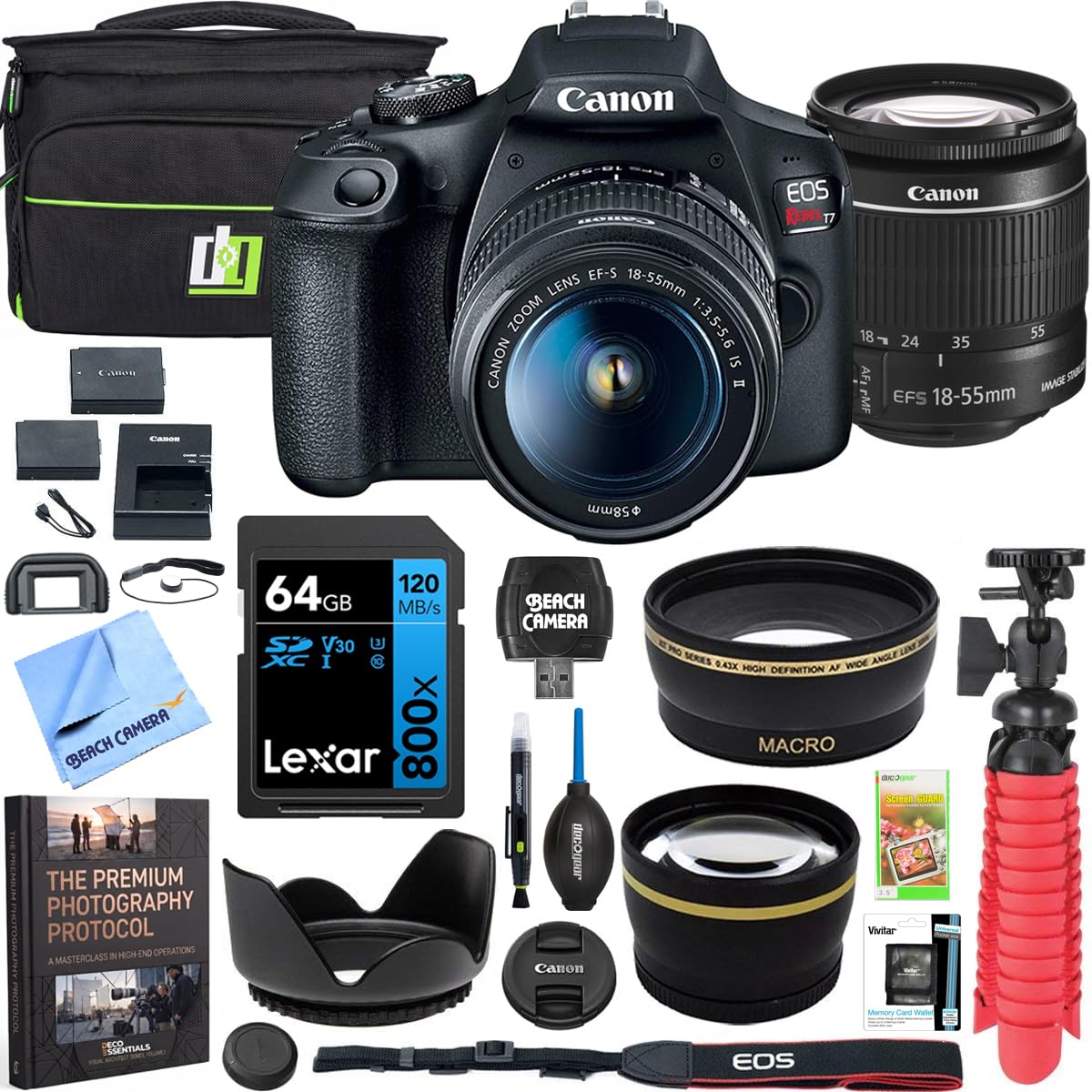
The Canon EOS Rebel T7 is the classic starter DSLR, and this bundle packs in nearly everything you need to get started. The 24.1MP APS-C sensor captures clean, detailed images with Canon’s characteristic color science. The included 18-55mm IS II lens provides optical image stabilization that helps beginners get sharper shots as they learn proper hand-holding technique.
The bundle adds a spare battery, 64GB memory card, tripod, bag, and a set of filters, so you are ready to shoot out of the box. Having a physical optical viewfinder is a huge plus for learning exposure fundamentals without relying on a screen. The built-in Wi-Fi and NFC make it easy to share images to your phone for social media without a computer.
The 9-point autofocus system feels dated compared to modern mirrorless systems, and it is not suitable for fast action or birds in flight. The continuous shooting speed of 3fps is slow, limiting your ability to capture split-second moments. For someone who wants a traditional camera experience and a massive lens ecosystem, it remains a solid foundational choice.
Why it’s great
- Great image quality for the price with a classic DSLR feel
- Value bundle saves money on essential accessories
- Optical viewfinder is excellent for learning manual exposure
Good to know
- Slow 3fps continuous shooting limits action capture
- 9-point AF system is basic and misses fast subjects
- Battery life is average; spare included helps
5. Canon EOS R100

The Canon EOS R100 is the smallest and most affordable entry into the Canon RF mirrorless system. Its 24.1MP APS-C sensor paired with the DIGIC 8 processor delivers sharp stills with pleasing colors straight out of camera. The compact body makes it incredibly easy to carry everywhere, which is the single most important factor for a beginner learning to see photographically.
The Dual Pixel CMOS AF system covers 143 zones and includes human face and eye detection, making autofocus much more reliable than the older 9-point DSLR systems. It can shoot 4K video at 24fps and Full HD at 60fps, giving a solid foundation for hybrid shooting. The creative assist menu and feature guide help beginners understand the effect of each setting in real time.
The 4K video is limited to 24fps and does not support Dual Pixel AF, which is a significant downgrade from its higher-tier siblings. The lack of a touch screen for menu navigation and a small buffer for continuous shooting can frustrate users who want to shoot bursts. It is a fantastic starter for stills photography but not the best for video-centric beginners.
Why it’s great
- Smallest and lightest Canon mirrorless body makes it very portable
- Reliable Dual Pixel AF with face and eye detection
- Clear image quality with great color science for stock photos
Good to know
- 4K video lacks Dual Pixel AF and is limited to 24fps
- No touch screen makes menu navigation slower
- Small buffer for continuous shooting bursts
6. Sony a7 III

The Sony a7 III set a new standard for what an affordable full-frame camera could be. Its 24.2MP back-illuminated sensor delivers 15 stops of dynamic range, meaning you can recover incredible detail from shadows and highlights. The 693-point phase-detection autofocus system covers 93% of the frame and tracks moving subjects with the reliability of cameras costing twice as much.
It shoots at 10fps with full autofocus tracking, making it genuinely usable for sports and wildlife photography. The battery life is exceptional, rated at 710 shots per charge, which is a huge upgrade from the Sony a7 II. The included 28-70mm lens is a decent starter kit that allows you to immediately experience the full-frame look while you save for higher-quality glass.
The menu system is notoriously complex, requiring time to learn how to configure the camera. The 4K video is excellent but the rolling shutter is severe, limiting its use for fast-motion filming. For a beginner who is serious about growing into professional work, the a7 III is a camera you can keep for years without feeling the need to upgrade.
Why it’s great
- Industry-leading dynamic range for recovering shadow detail
- 693-point AF with excellent subject tracking
- Exceptional battery life for all-day shooting
Good to know
- Complex menu system that takes time to learn
- Severe rolling shutter in 4K video mode
- Included kit lens is just average quality
7. Nikon Z50 II

The Nikon Z50 II borrows its processor and autofocus engine from the flagship Z9, giving it subject detection capabilities far beyond its class. It can automatically detect and track nine distinct subjects including people, dogs, cats, birds, and vehicles. The 20.9MP sensor is more than enough for detailed prints and crops, and the image quality is excellent even at higher ISOs.
The built-in 31 Picture Control presets allow you to create a specific look in-camera, saving time on post-processing. The body is compact and light at roughly 17 ounces, making it easy to pack for a hike or a day out. Wireless sharing via the SnapBridge app is fast and reliable for getting images onto your phone for social media.
The single card slot is a limitation for professionals, and battery life is short compared to DSLR alternatives. The lens lineup for the Nikon Z system is growing but still smaller than Canon EF or Sony E mount. For a beginner who wants modern autofocus technology in a portable package, the Z50 II is a strong contender.
Why it’s great
- Excellent subject detection and tracking from the Z9 processor
- Lightweight and portable for travel or hiking
- Great wireless image sharing via SnapBridge app
Good to know
- Single card slot is limiting for extended shoots
- Battery life is below average for mirrorless
- Smaller native lens ecosystem than Canon or Sony
8. Sony Alpha a3000

The Sony Alpha a3000 is an older model that offers a surprising amount of value for the budget-conscious learner. Its 20.1MP APS-C sensor produces excellent image quality that can rival much newer cameras, especially when paired with a good prime lens. The grip is large and comfortable, giving you a secure hold even with heavier zoom lenses.
The electronic viewfinder is functional for framing shots in bright sunlight, but the resolution is low and the image has a significant delay that makes it feel sluggish. It shoots full HD 1080p video and includes built-in features like panorama mode and focus peaking that help beginners learn manual focus. The ability to charge via USB is convenient for travel.
The electronic viewfinder is low resolution and has a noticeable delay, which can make framing fast-moving subjects frustrating. The battery life is poor, draining even when the camera is off, and the body does not come with an external charger. For someone who wants the Sony E-mount system on a tight budget and is willing to deal with quirks, it works.
Why it’s great
- Sony APS-C sensor delivers excellent images for the price
- Comfortable, ergonomic grip for extended shooting
- Access to the vast Sony E-mount lens system
Good to know
- Low-resolution EVF with noticeable delay and lag
- Very poor battery life with no external charger in box
- Aged processor and slower overall operation
9. Canon EOS Rebel T7 with 500mm Lens Kit
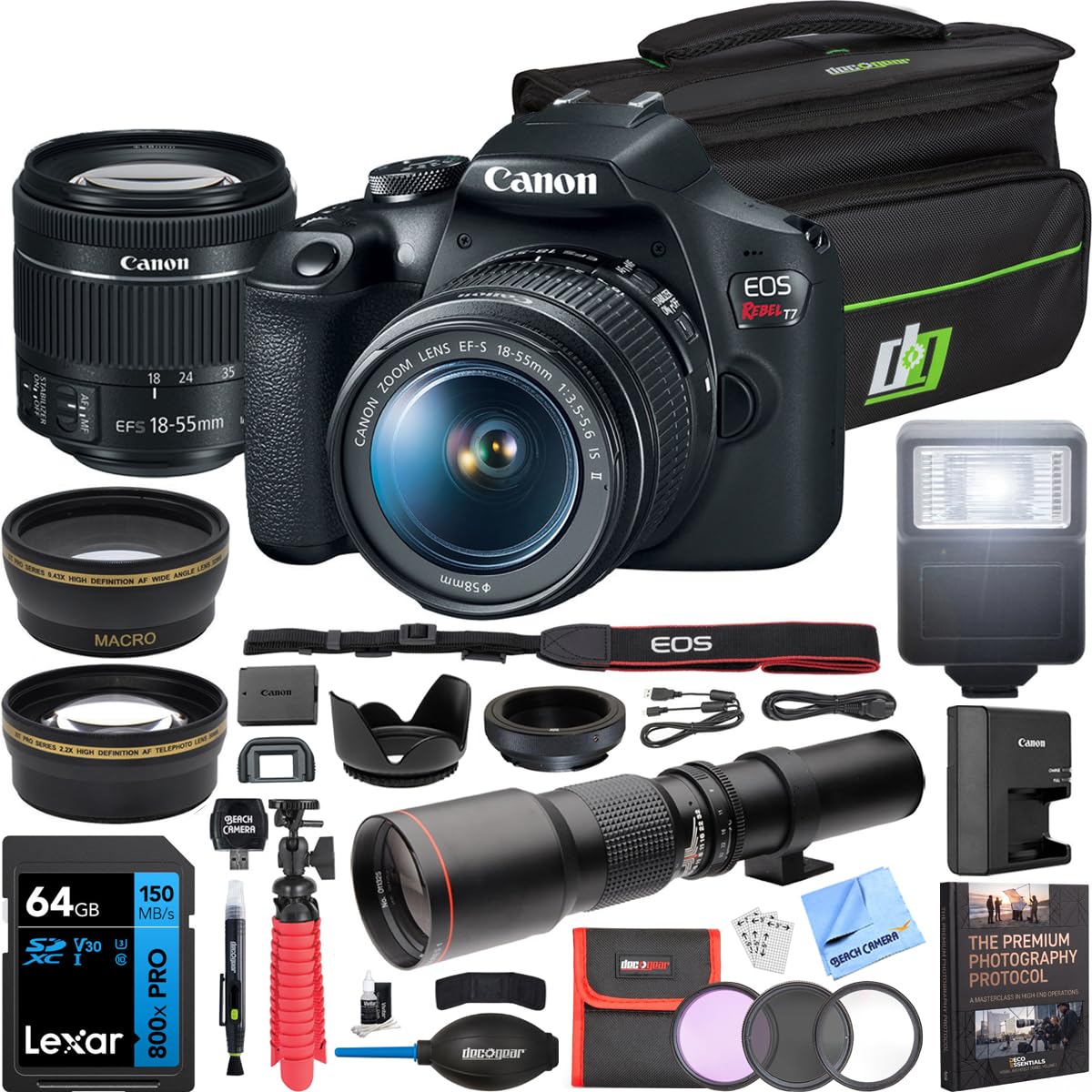
This bundle takes the standard Canon EOS Rebel T7 DSLR and adds a 500mm preset telephoto lens, opening up wildlife and distant landscape photography for the beginner without spending on expensive glass. The 24.1MP sensor and DIGIC 4+ processor handle the core image capture well, providing clean files that respond nicely to editing. The 18-55mm kit lens remains for everyday use.
The bundle also includes a wide-angle converter, telephoto converter, flash, and a tabletop tripod, giving a huge range of creative options to experiment with. Having the ability to zoom out to 500mm allows the beginner to try birding and sports photography without a major additional investment. The built-in Wi-Fi and NFC make it easy to share results and learn from feedback.
The 500mm lens is a budget preset lens that is soft at the long end and requires very good lighting to produce usable images. The flash is a basic manual unit that lacks TTL metering, making it difficult to use correctly without learning manual flash techniques. The battery life in this camera is also reported to drain quickly, sometimes dying after just a handful of shots.
Why it’s great
- Includes a 500mm lens for wildlife and sports experimentation
- Huge accessory bundle provides many learning tools
- Good base image quality from Canon APS-C sensor
Good to know
- 500mm preset lens is soft and needs bright light
- Flash is manual and has no TTL exposure
- Battery drains unexpectedly quickly for some users
10. Canon EOS Rebel T100

The Canon EOS Rebel T100 (also known as the 4000D) is the absolute floor for what constitutes a usable DSLR in 2025. Its 18MP APS-C sensor is a step down from the 24MP found in the T7, but still massively outperforms a smartphone sensor in dynamic range and depth of field control. The Scene Intelligent Auto mode makes it a point-and-shoot experience for complete beginners who just want better photos of their family.
The physical controls are stripped down compared to the T7, which some beginners may actually find less intimidating. The 9-point autofocus system is the same basic system used in older Rebels, reliable for static subjects but not for movement. The 18-55mm III lens includes an aspherical element to control distortion, keeping image quality reasonable throughout the zoom range.
The 18MP sensor crops your ability to print large or crop heavily in post. The build quality feels very plasticky and cheap in hand, and the rear screen has a very low resolution that makes reviewing images on the camera underwhelming. It is a working camera for the lowest possible price, but spending a small amount more on the T7 or R100 provides a dramatically better experience.
Why it’s great
- Cheapest entry point into a real interchangeable lens system
- Very simple operation with Scene Intelligent Auto
- Full compatibility with Canon EF and EF-S lenses
Good to know
- 18MP sensor is low resolution for modern cameras
- Plasticky build feels cheap and fragile
- Low-res rear screen makes reviewing images difficult
11. Nikon D3100 (Renewed)

The Nikon D3100 is an old warrior that, in renewed condition, offers the cheapest possible ticket to a true DSLR with a classic Nikon color profile. Its 14.2MP CMOS sensor and EXPEED 2 processor produce pleasing images with rich tones and surprisingly good noise control up to ISO 3200. The 11-point autofocus system is faster and more responsive than the 9-point system in the cheapest Canon Rebels.
It was the first entry-level Nikon to offer full 1080p HD video recording, and the built-in vibration reduction in the kit lens helps stabilize shaky beginner hands. The 3-inch LCD has a low 230k-dot resolution, but for composing and basic review it is sufficient. The pentamirror viewfinder is bright and provides a clear, uncluttered view for learning manual exposure.
As a discontinued model sold renewed, it carries the risk of used electronics — one user reported a major failure after one month. The 14.2MP sensor is lower resolution than every other camera on this list, limiting your ability to crop and print large. It lacks modern features like Wi-Fi or a touch screen, meaning you must connect via USB to transfer files.
Why it’s great
- Very low cost entry into the excellent Nikon lens system
- Classic Nikon image quality with rich colors and good noise performance
- 11-point AF system is responsive for static subjects
Good to know
- Renewed product carries risk of early failure or defects
- 14.2MP sensor limits cropping and large prints
- No Wi-Fi, Bluetooth, or touch screen for modern workflow
FAQ
Should a beginner start with a DSLR or a mirrorless camera?
Is 18MP enough for a beginner camera today?
What does the kit lens zoom range 18-55mm mean for a beginner?
Final Thoughts: The Verdict
For most users, the affordable camera for beginners winner is the Sony ZV-E10 because it combines a modern autofocus system, excellent 4K video, and a lightweight body that will not sit on a shelf. If you want pure photographic image quality and a full-frame sensor, grab the Canon EOS RP. And for someone who values in-body stabilization and video features above all else, nothing beats the Panasonic LUMIX G85.