
Our readers keep the lights on and the weekend projects moving. As an Amazon Associate, I earn from qualifying purchases.
A freezing truck cab doesn’t just make for an uncomfortable shift — it saps your focus, stiffens your joints, and forces you to idle the engine, burning fuel you didn’t need to burn. A dedicated 12-volt heater solves this by delivering direct, engine-off warmth, letting you sleep in the sleeper berth or work a site without running the big diesel all night. The challenge is picking the right one from a market split between coolant-driven units that tap your truck’s existing heat and standalone diesel-fired heaters that generate their own.
I’m Rikta — the co-founder and writer behind FitlyFast. After analyzing dozens of spec sheets, customer durability reports, and real-world installation photos, I’ve broken down exactly what separates a heater that will last a decade from one that will fail mid-winter.
This guide covers both coolant-based and self-contained diesel-burning systems so you can match the right technology to your driving habits. Let’s find the best 12 volt truck cab heater for your rig.
How To Choose The Best 12 Volt Truck Cab Heater
Choosing between a coolant-based and a diesel-fired system is the first fork in the road. Coolant heaters are simpler, cheaper, and maintenance-free because they borrow heat from your engine — but they only work when the engine is warm. Diesel parking heaters generate their own heat, run independently of the engine, and consume very little fuel, but they require an exhaust route and periodic glow-plug maintenance.
Coolant Heaters vs. Diesel-Fired Heaters: Which Technology?
If you drive a route where the truck runs most of the day and you just need supplemental heat for short stops, a coolant unit is the logical choice. It splices into your existing 5/8-inch heater hoses and uses the engine’s hot coolant to warm a secondary core. If you regularly idle for hours overnight or work at a job site with the engine off, a diesel-fired heater is the only way to get real heat without draining the starter battery.
BTU Output and CFM Airflow
BTU (British Thermal Unit) tells you the raw heat output, while CFM (cubic feet per minute) measures how much air the fan can push. A coolant heater might claim 28,000 BTU, but that number is only achievable if the engine coolant is at full operating temperature. Diesel heaters are more consistent because they control combustion directly. For a standard sleeper cab, 5,000–8,000 BTU is usually sufficient; for a large van or skid-steer, consider units over 12,000 BTU. Pay attention to the CFM rating — a high BTU heater with a weak fan won’t distribute heat evenly.
Build Quality and Material Selection
The toughest environments — construction sites, farming, plowing — demand a heater core made of copper (for thermal efficiency) and a housing of glass-filled nylon or heavy-gauge steel. Look for aluminum fans rather than plastic ones; they won’t warp or crack when the unit cycles from freezing to 120°F. The supplied hose clamps and wiring are often the weakest link — many users report replacing them immediately with aftermarket gear.
Quick Comparison
On smaller screens, swipe sideways to see the full table.
| Model | Category | Best For | Key Spec | Amazon |
|---|---|---|---|---|
| JEGS Auxiliary UTV Heater | Coolant | High BTU cab heat | 28,000 BTU / 260 CFM | Amazon |
| Maradyne Santa Fe Floor Mount | Coolant | Compact floor mount | 13,200 BTU / 3-speed fan | Amazon |
| VEVOR All-in-One Diesel Heater | Diesel | Off-grid parking heat | 8 KW / 5L tank | Amazon |
| WAYSKA Diesel Air Heater | Diesel | Extended run time | 8 KW / 15L tank | Amazon |
| JEABONG Diesel Parking Heater | Diesel | Budget diesel option | 8 KW / LCD display | Amazon |
| Evargc Compact Hydronic Heater | Coolant | Entry-level auxiliary | 8,500 BTU / 80 CFM | Amazon |
| Sallurmose Upgraded Underdash Heater | Coolant | Budget auxiliary heat | 4-port, stepless fan | Amazon |
In‑Depth Reviews
1. JEGS Auxiliary UTV Heater
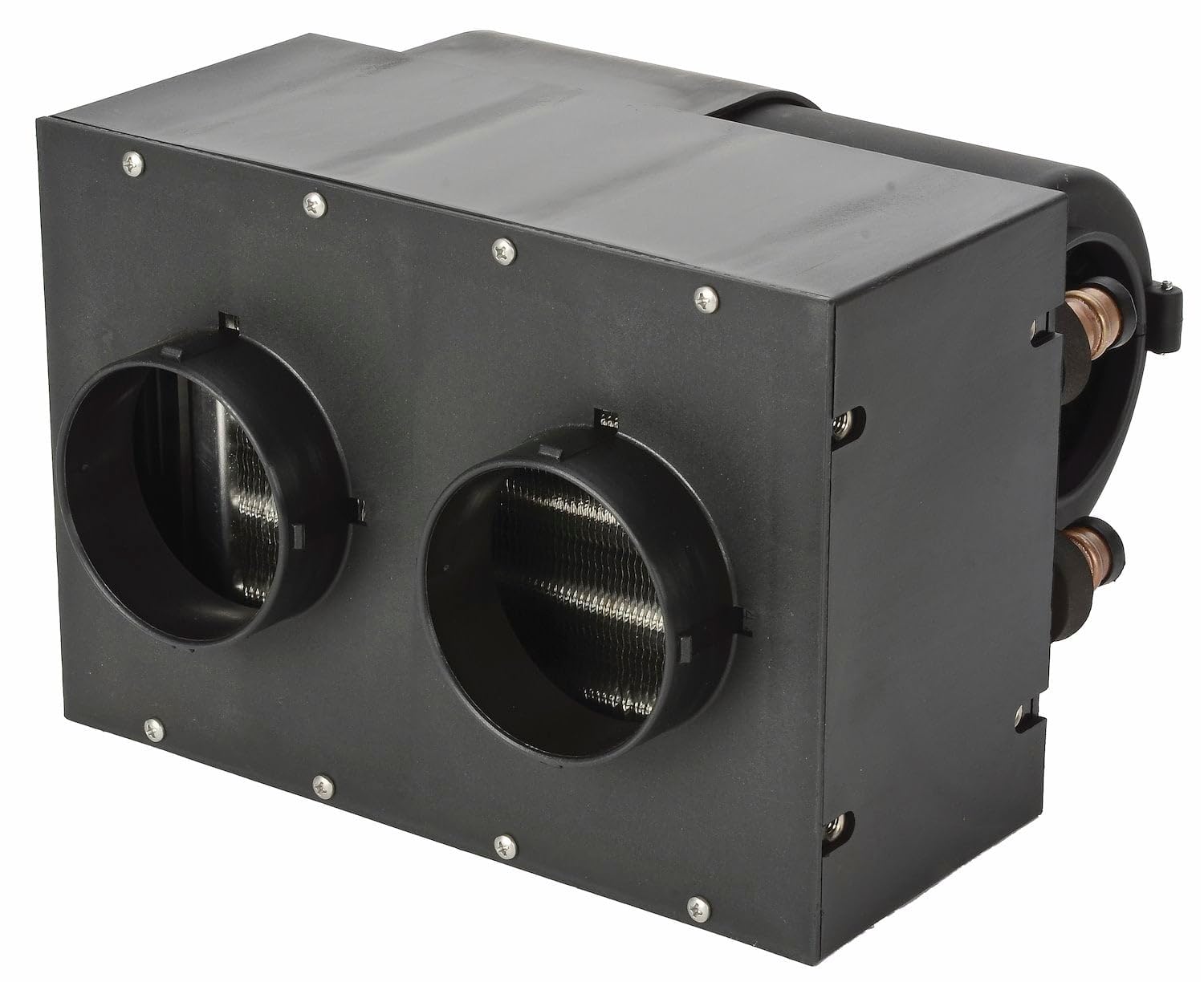
The JEGS heater is the only unit in this lineup that delivers a genuine 28,000 BTU with 260 CFM of forced air, making it the clear choice for anyone who needs to heat a full-sized cab, skid-steer, or van quickly. Its three-speed motor is driven by a long-lasting design, and the glass-filled nylon housing resists cracking in subzero conditions. Users report output air temperatures around 120°F even on the low setting, which is more than enough to work in a t-shirt during a snowplow run.
Installation is straightforward for anyone comfortable splicing into 5/8-inch heater hoses. The compact dimensions (9x9x6 inches) fit under most dashes, and the included mounting brackets make positioning simple. Several users have noted that the unit is loud on high, but the low setting usually provides sufficient heat with less noise. Reverse polarity will stop heat output entirely — double-check your wiring before finalizing the install.
The only consistent complaint is occasional missing hardware or poor customer support from the manufacturer when purchased through Amazon. If you need a coolant heater that can actually keep a large cab warm in negative-degree weather, this is the one to beat. The 9.6-amp draw is reasonable for a unit this powerful, but it benefits from a dedicated 15-amp fuse.
Why it’s great
- Highest BTU output in this comparison — 28,000 BTU actually heats large cabs
- Glass-filled nylon housing is tougher than standard plastic under extreme cold
- Low setting alone is often sufficient, reducing fan noise
Good to know
- Loud on the high blower setting
- Some units arrive with missing parts; Amazon-based support is spotty
2. Maradyne Santa Fe Floor Mount Heater

The Maradyne Santa Fe is a floor-mount coolant heater built with aluminum fans and a glass-filled nylon case — materials that hold up in the corrosive environments of salt-sprayed roads and muddy job sites. Its 13,200 BTU output is lower than the JEGS unit, but the 360-degree adjustable louvers allow you to direct heat exactly where you need it, which makes the effective warmth feel stronger than the raw number suggests.
The 3-speed rocker switch is simple to operate even with gloves on, and the unit draws only 6 amps — light enough for most stock electrical systems without an upgraded alternator. The 30-inch width, 8-inch depth, and 6-inch height mean it needs dedicated floor space, but the universal mounting hardware makes it adaptable to almost any flat surface. Many users have installed it in skid-steers, Ford F-150s, and Polaris RZRs with minimal fabrication work.
One user noted that the heater hose ports arrived slightly bent and had to be corrected. It’s also worth wiring in a coolant shut-off valve for summer use — without it, the cab will get warm even when you don’t want it. The unit works well as a simple cab fan by closing the coolant valve, adding year-round usability.
Why it’s great
- Aluminum fans and glass-filled nylon construction resist corrosion and cracking
- Four fully adjustable louvers for directed heat flow
- Low 6-amp draw leaves headroom for other accessories
Good to know
- Floor-mount design takes up cab space that some drivers can’t spare
- Occasional bent hose ports out of the box require minor correction
3. VEVOR All-in-One Diesel Heater
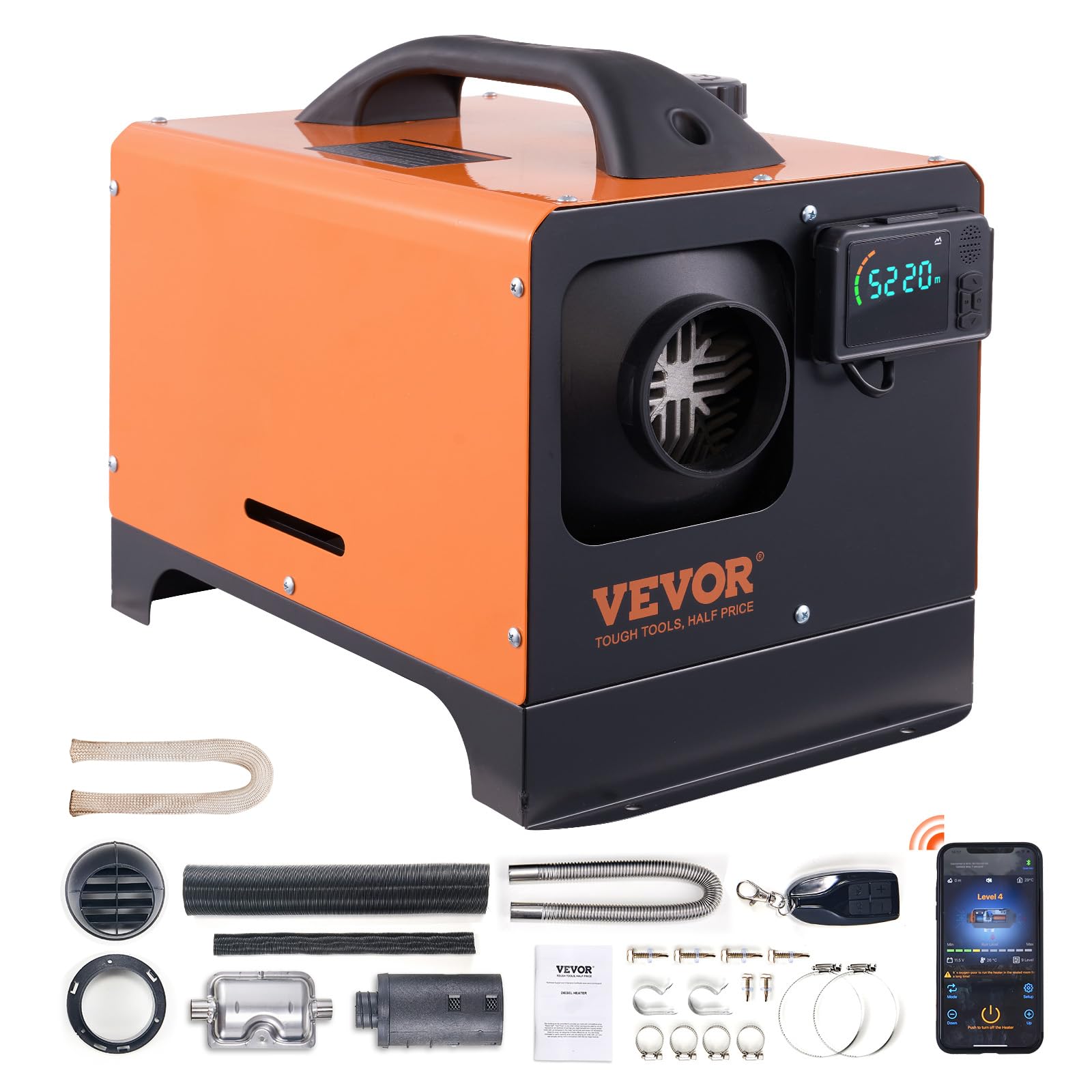
The VEVOR unit is an all-in-one diesel parking heater that requires no permanent installation — just set it on the floor, route the exhaust, and fill the 5-liter tank. The 8 KW output (roughly 27,000 BTU) is enough to heat a 5th wheel trailer or a large insulated garage to 65°F in below-zero conditions, as confirmed by multiple users running it for full winters. The Bluetooth app control lets you preheat from 98 feet away, which is a genuine convenience when you’re walking back to a cold vehicle.
The aluminum heat exchanger is sandblasted for efficient thermal transfer, and the unit includes automatic altitude compensation up to 5,500 meters — a feature that is rare at this price point. The app provides reliable remote start, though some users found the interface not perfectly intuitive.
Quality control is the main caveat. A small number of units have failed after a few uses due to a faulty temperature sensor or fuel leaks from cheap hose clamps. These issues are fixable with basic tools and YouTube guidance, but the inconsistency means you should test the unit thoroughly during the return window. When it works, it delivers diesel-heat performance at a fraction of the cost of premium brands.
Why it’s great
- True 8 KW heat output is proven in subzero conditions
- Bluetooth app control adds convenience and preheating capability
- Automatic altitude compensation for high-elevation use
Good to know
- Quality control can be inconsistent — test within the return window
- Fuel hose clamps are cheap and should be replaced immediately
4. WAYSKA Diesel Air Heater

The WAYSKA diesel heater stands out for its massive 15-liter fuel tank, which delivers continuous heat for roughly 1.5 days at full blast in 5°F weather. The 8 KW output uses the same ceramic spark plug evaporation technology as other modern diesel heaters, but the larger tank means fewer refueling stops during long hauls or extended job site work. Users have reported heating a 39-foot RV comfortably on the mid-level setting, with a 2.5-gallon fill lasting about seven days.
The LCD monitor displays current temperature and fault codes, and the remote control offers adjustments without leaving the bunk. The unit operates down to -40°C, making it suitable for northern climates where coolant-based heaters would be limited by engine temperature. At 16.22 pounds, it’s not the lightest option, but the compact footprint (18x18x11-inch package) fits in most under-bunk compartments.
Durability concerns exist. A few users reported the control board failing completely after a month, leaving the screen blank and the unit inoperable. The supplier’s return policy requires keeping all original packaging, which limits the ability to test-mount before the return window closes. For those willing to accept that risk, the performance when functional is excellent.
Why it’s great
- 15-liter tank provides the longest runtime between refuels in this lineup
- Ceramic spark plug technology for clean, efficient combustion
- Rated for operation down to -40°C
Good to know
- Early control board failures reported by a minority of users
- Must retain all packaging for return eligibility
5. JEABONG Diesel Parking Heater
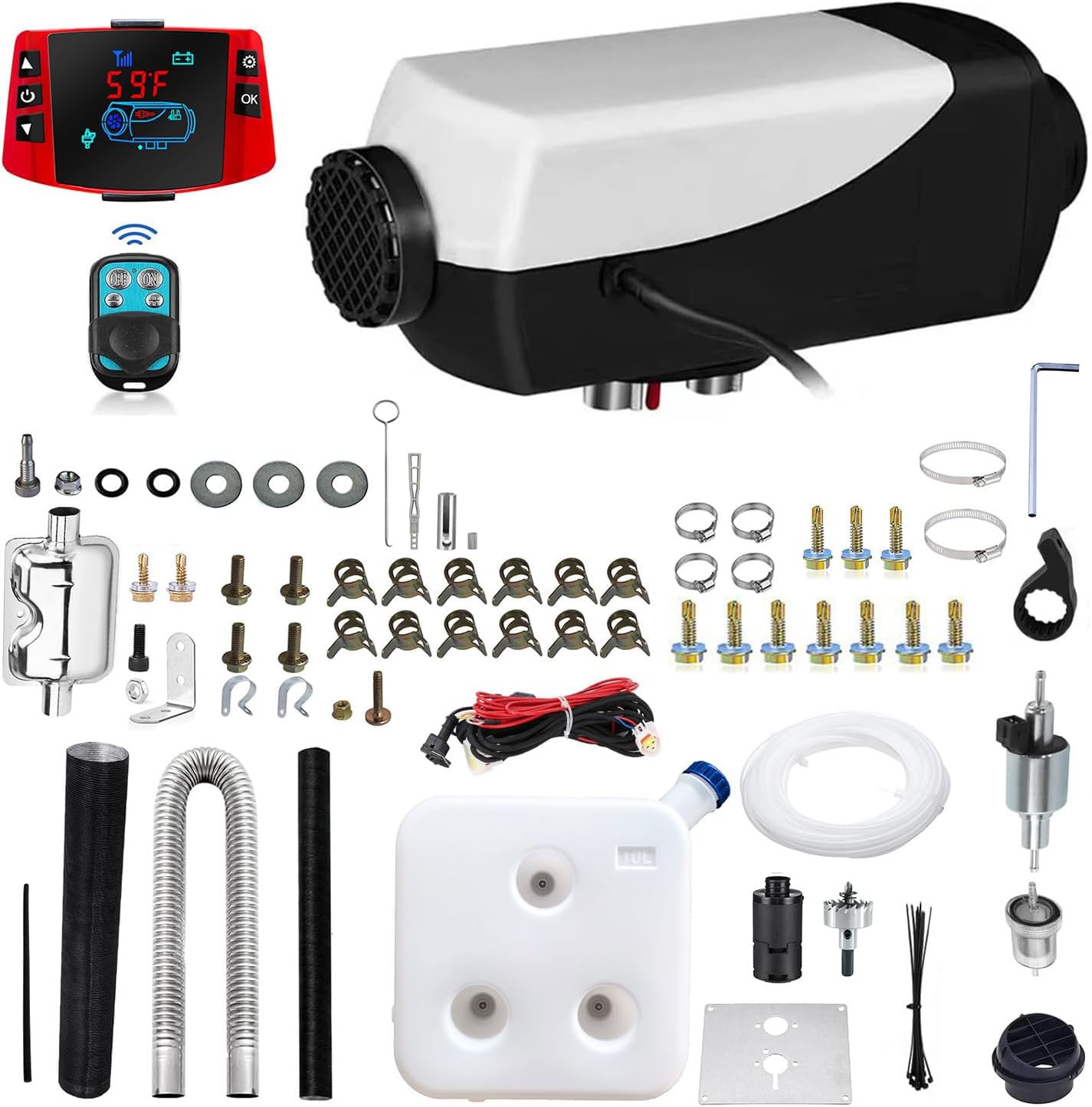
The JEABONG diesel heater is the least expensive self-contained diesel option in this guide, making it an attractive entry point for someone who wants to test diesel-heat technology without a major investment. The 8 KW rating is consistent with the VEVOR and WAYSKA units, and the LCD screen includes altitude compensation up to 5,000 meters — a feature usually reserved for pricier units. It comes with a hole saw and a tool for glow-plug maintenance, which is a thoughtful inclusion for first-time installers.
Many users have used it successfully to heat 2.5-car garages and side-by-side UTVs, reporting that it eliminates the need for heavy winter coats while driving. The fan speed, however, is essentially uncontrolled — it runs at a fixed speed based on the heat setting, which users report as loud and a bit jarring. The included exhaust pipe is only 6 inches long, requiring you to buy additional pipe to route exhaust safely outside the vehicle.
The most damning feedback involves the flimsy outer case and poor hose clamps that cause exhaust leaks. Several units have failed with an E06 error (fan motor failure) within the first week. The manufacturer did eventually send replacements in those cases, but the reliability is clearly below the premium-tier diesel heaters. Consider this a trial unit — if it works, it’s a bargain; if it fails, the seller relationship may be the biggest hassle.
Why it’s great
- Most affordable diesel heater — low barrier to entry for testing the technology
- Altitude compensation up to 5,000 meters is a premium feature
- Includes glow-plug maintenance tool and hole saw
Good to know
- Fan speed is not independently controllable — fixed to the heat level
- Roughly 6-inch exhaust pipe is too short; plan to extend it
6. Evargc Compact Hydronic Heater
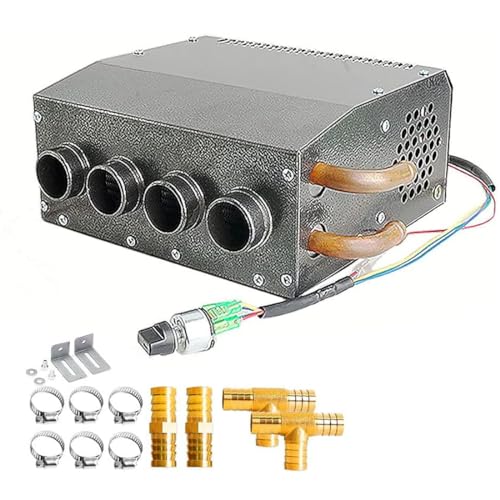
The Evargc heater is a simple four-vent hydronic unit that delivers 8,500 BTU and 80 CFM of airflow — numbers that are modest but adequate for auxiliary heat in a compact cab, skid-loader, or minivan. It connects to your vehicle’s 5/8-inch heater hoses and runs off the 12-volt system, drawing only 96 watts. The three-speed fan offers some noise control, though the switch knob is notoriously flimsy and tends to spin freely on the shaft without actually turning the fan.
Installation is about as simple as coolant heaters get: splice into the heater hose loop, mount the unit under the dash using the included brackets, and connect the power. Users have installed them in 12-passenger buses in Montana and skid-loaders with plexiglass add-ons, reporting that the heat output is sufficient for those spaces. The major limitation is that the hose connections sit on the left side of the unit, which can create routing problems in tight engine bays that expect right-side ports.
The plastic fan switch is the weakest component — virtually every user recommends applying super glue to the knob before installation. Beyond that, the unit is durable and reliable, with no reports of core leaks or motor failure. For the price, this is a solid entry-level coolant heater that gets the job done if you can live with a little DIY on the controls.
Why it’s great
- Simple installation with standard 5/8-inch heater hose connections
- Low 96-watt power draw is easy on the electrical system
- Compact size fits in tight underdash spaces
Good to know
- Fan speed knob is cheap plastic — will need super glue to stay on
- Coolant ports are fixed on the left, which can complicate some installations
7. Sallurmose Upgraded Underdash Heater
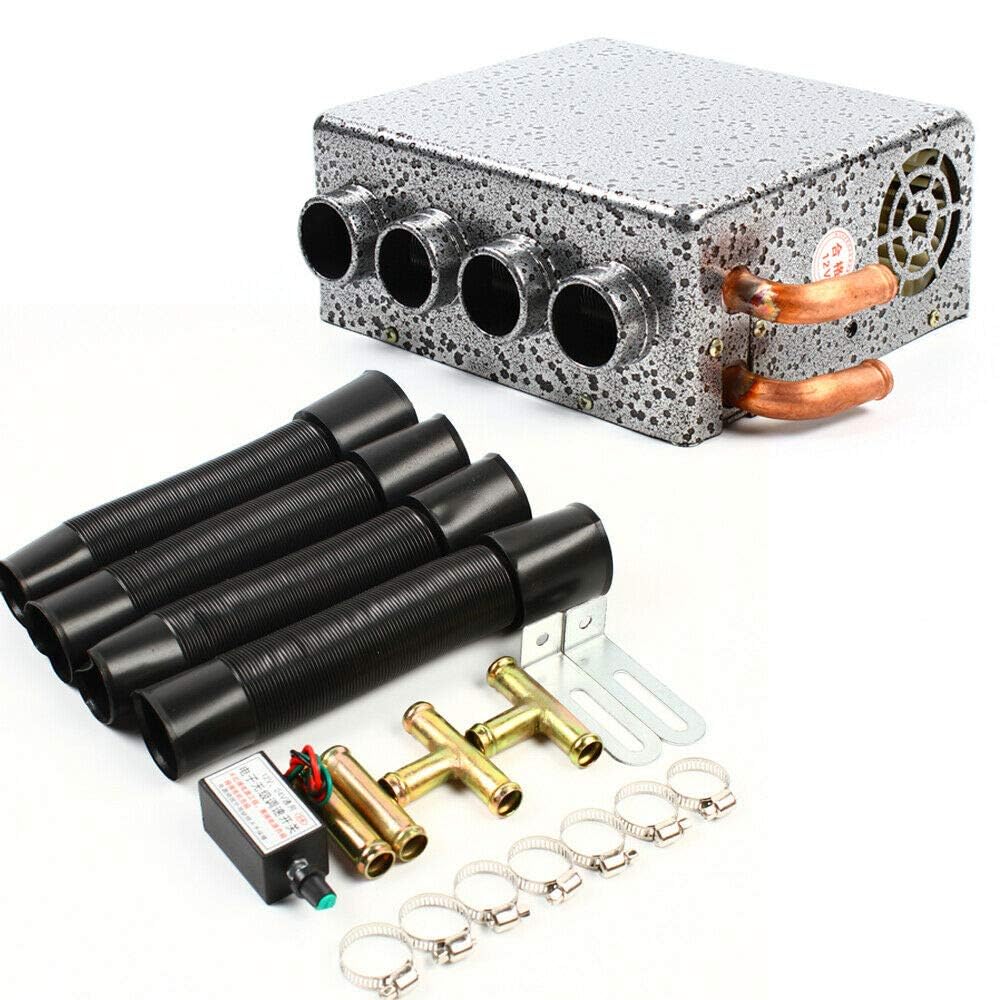
The Sallurmose heater is the most budget-friendly coolant option, priced to appeal to drivers who just need a little extra warmth for their feet or to defog the windshield. Its four-port design distributes air across a wider area than most underdash units, and the stepless adjustment knob gives you variable fan speed control rather than fixed steps. The core is copper with a thickened iron housing, which is a decent material choice for the price point.
Users have installed this in side-by-side UTVs, harvesters, and aging cars where the factory heater core has failed. The compact size (11x9x3.93 inches) squeezes into spaces that larger units can’t reach, and the included mounting brackets make underdash attachment straightforward. Reviews consistently note that the heater works well as an auxiliary source, but it is not powerful enough to serve as the primary heat source in a large cab or in extreme cold.
The included hose clamps are, like many budget heaters, prone to stripping. Replacing them with quality gear clamps before installation is a quick and cheap upgrade that saves headaches later. Some users also note that the wiring is a bit thin for the 8-amp draw, so upgrading to 12-gauge wire and a 10-amp inline fuse is recommended. For the price, this is a functional addition to a winter truck kit, but set expectations accordingly.
Why it’s great
- Very affordable entry point for adding auxiliary cab warmth
- Compact 11-inch width fits in tight underdash spaces
- Stepless fan knob allows fine air volume adjustment
Good to know
- Not powerful enough for primary heat in extreme cold or large cabs
- Hose clamps and wiring should be upgraded for reliability
FAQ
Can a 12 volt truck cab heater drain my battery if I use it overnight?
What size heater hose do most underdash coolant units require?
Do diesel parking heaters produce carbon monoxide inside the cab?
Final Thoughts: The Verdict
For most users, the best 12 volt truck cab heater winner is the JEGS Auxiliary UTV Heater because it delivers the highest BTU output and CFM airflow in a compact, durable housing — real heat for realistic cab sizes. If you want a diesel-fired system that runs independently of the engine for overnight use, grab the VEVOR All-in-One Diesel Heater. And for a compact floor-mount unit that can also double as a summer cab fan, the Maradyne Santa Fe is the most versatile coolant option in this lineup.