
Our readers keep the lights on and the weekend projects moving. As an Amazon Associate, I earn from qualifying purchases.
A flower bed is only as good as the soil you fill it with. The difference between a bed that blooms all season and one that struggles often comes down to the bagged mix you pour into the ground — organic content, drainage, and nutrient availability determine everything from root spread to flower size.
I’m Rikta — the co-founder and writer behind FitlyFast. I have spent many hours analyzing soil formulas, reading real grower feedback, and comparing NPK ratios, organic certifications, and moisture retention data to find the mixes that actually deliver results for flower beds.
This guide breaks down the top performers across different budgets and use cases so you can choose with confidence. Here is my researched list of the best bagged soil for flower beds.
How To Choose The Best Bagged Soil For Flower Beds
Selecting bagged soil for flower beds is not just about grabbing the biggest bag. You need to consider whether the mix is designed for in-ground use, raised beds, or containers, and what nutrients it brings to the table. The wrong choice can lead to poor drainage, nutrient burn, or weak blooms.
Organic vs. Synthetic Nutrient Sources
Organic bagged soils rely on composted manure, worm castings, kelp meal, and other natural inputs that release nutrients slowly over time. Synthetic formulas give a fast nitrogen spike but can leach away quickly and may harm beneficial soil microbes. For flower beds you intend to maintain season after season, organic matter builds long-term soil structure.
Soil Texture and Drainage
Flower beds need a loamy texture — light enough to drain but dense enough to hold moisture. Bagged mixes with sphagnum peat moss, coco coir, or composted bark improve aeration in clay soils and boost water retention in sandy soils. Avoid heavy, clay-based bagged soils for beds that already have poor drainage.
Quick Comparison
On smaller screens, swipe sideways to see the full table.
| Model | Category | Best For | Key Spec | Amazon |
|---|---|---|---|---|
| Espoma Organic Raised Bed Mix | Premium Mix | Nutrient-rich raised beds | 1.5 cu ft; mycorrhizae blend | Amazon |
| Espoma Organic Vegetable & Flower Garden Soil | Premium Mix | In-ground flower & veggie beds | 1 cu ft; added worm castings | Amazon |
| Coast of Maine Organic Planting Soil | Organic Mix | Container & in-ground tomatoes/flowers | 20 qt; composted manure blend | Amazon |
| Harris Worm Castings | Soil Amendment | Boosting existing soil fertility | 5 lb; powder form 1:7 ratio | Amazon |
| MagJo Naturals Coco Coir Block | Soil Amendment | Improving aeration & water retention | 11 lb block; expands to 17 gal | Amazon |
| Miracle-Gro Raised Bed Plant Food | Fertilizer | Feeding raised beds up to 3 months | 2 lb; 5-1-7 NPK granules | Amazon |
| Hoffman Dehydrated Super Manure | Soil Amendment | Adding organic nitrogen to beds | 5 lb; 4-2-3 pelletized | Amazon |
In‑Depth Reviews
1. Espoma Organic Raised Bed Mix

Espoma’s raised bed mix combines earthworm castings, alfalfa meal, kelp meal, and feather meal with a proprietary mycorrhizae blend (Myco-Tone) to create a biologically active soil that supports flower roots from seed to full bloom. The 1.5 cubic foot bag is ready to use straight from the bag — no mixing with native soil required for raised beds.
Users consistently report robust root growth and excellent moisture retention without sogginess, even in wet coastal climates. The mix holds up well for the full growing season and shows no signs of synthetic fertilizer burn. The lack of manure odor also makes it pleasant to work with in tight garden spaces.
Growers of watermelon, kale, peppers, and strawberries have noted strong seed germination results directly in this mix, confirming its versatility beyond just flower beds.
Why it’s great
- Mycorrhizae blend improves root nutrient uptake
- Rich organic ingredients with no synthetic chemicals
- Excellent moisture retention without waterlogging
Good to know
- Premium pricing compared to basic topsoil blends
- Designed primarily for raised beds; less ideal for pure in-ground beds
2. Espoma Organic Vegetable & Flower Garden Soil

This Espoma in-ground mix is formulated specifically for planting and transplanting into native garden soils. The blend of earthworm castings, sphagnum peat moss, and Myco-Tone mycorrhizae is designed to improve poor native soil structure while providing a slow-release nutrient supply that flowers love.
Reviewers note that tomatoes and marigolds planted in this mix outperformed those in comparable organic brands, with richer foliage and more abundant blooms. The soil texture is described as rich and well-structured, making it easy to work into existing garden beds without clumping or dust issues.
Some users experienced mild soil gnats when using the mix indoors for container plants, but outdoor beds showed no pest problems. The bug-free bags and consistent quality across multiple purchases give it strong reliability marks.
Why it’s great
- Specifically designed for in-ground planting & transplanting
- Mycorrhizae and worm castings boost root health
- No synthetic fertilizers or chemicals
Good to know
- Better suited for outdoor use; may introduce gnats indoors
- 1 cu ft bag covers less area than larger bulk options
3. Coast of Maine Organic Planting Soil for Vegetables & Tomatoes

Coast of Maine uses composted manure and sphagnum peat moss in a lightweight potting mix that balances moisture retention with drainage — two factors critical for flower beds that receive inconsistent watering. The OMRI listing confirms it meets organic standards, and the blend supports both in-ground beds and container plantings.
Users growing heirloom tomatoes and flowering plants report that the soil holds water well without becoming compacted, and the cedar and organic aromatics naturally deter some insects. The mix is notably lighter than traditional garden soils, making it easier to lift and pour into beds.
A few buyers noted the presence of fungus gnats when using the soil indoors, but this is common with organic compost blends. Treating with neem oil after watering resolved the issue for most.
Why it’s great
- OMRI listed for certified organic gardening
- Excellent drainage balance for containers and beds
- Lightweight texture reduces back strain
Good to know
- Pricier per quart than economy garden soils
- Fungus gnats can appear if used indoors
4. Harris Worm Castings Organic Fertilizer
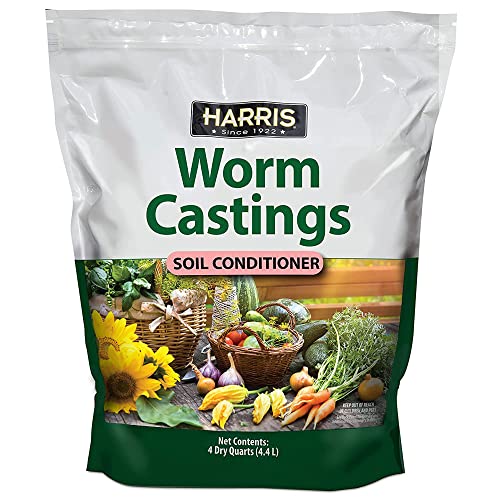
Worm castings are not a stand-alone bagged soil but a powerful amendment that transforms poor flower bed soil into rich, biologically active ground. Harris Worm Castings are dark, moist, and nearly odorless, providing trace minerals like nitrates, potassium, magnesium, calcium, and phosphorus in a form plants can uptake immediately.
Users report noticeable improvement after a single application — houseplants became healthier, tower gardens yielded bigger herbs, and flower bed soil that had been depleted for years bounced back. The powder form mixes easily into existing soil or can be steeped in water at 3/4 cup per gallon for a liquid fertilizer.
The 5-pound bag goes further than you expect: a little mixed into the bottom layer of each planting hole is enough to boost root development for an entire season.
Why it’s great
- Packed with trace minerals and beneficial microbes
- Can be used as top dressing or liquid tea
- Retains water while improving drainage
Good to know
- Not a complete soil — must be mixed with base soil
- Powder consistency can be dusty during mixing
5. MagJo Naturals 100% Pure Coco Coir Block

Coco coir is not a complete soil but an essential amendment for flower beds suffering from compaction or poor drainage. MagJo Naturals’ 11-pound compressed block expands to about 17 gallons when hydrated, creating air pockets that improve oxygenation around root systems and acting like a sponge to retain moisture.
The coir is washed to remove excess salts — a critical step because high salt content can damage flowers. Test results from users show low electrical conductivity (40–200 ppm TDS) and a slightly acidic pH, ideal for most flowering plants. It mixes well with heavier soils like FoxFarm Ocean Forest or native clay to lighten texture.
One downside: the block is extremely compressed, and trying to break it into smaller pieces is difficult. Soak the entire block at once rather than chiseling pieces off.
Why it’s great
- Dramatically improves aeration in dense soils
- Washed to low salt content for safe plant use
- Renewable resource with high water retention
Good to know
- Contains no nutrients — must be combined with fertilized soil
- Block is very hard to break apart; soak whole
6. Miracle-Gro Raised Bed Plant Food

For flower beds that already have a decent base soil but need a nutrient boost, Miracle-Gro Raised Bed Plant Food offers a targeted granular formula with a 5-1-7 NPK ratio. The added calcium and micronutrients support flower development, and the granules are designed to feed for up to three months from a single application.
Users report visible blooming within a week of sprinkling the food onto raised beds. The formula works with Miracle-Gro Raised Bed Soil for those who want a complete system, but it also performs well when top-dressed onto existing organic or native soil mixes.
Each 2-pound bag feeds two 4-by-4-foot raised beds for up to three months, making it an economical choice for larger flower gardens that need consistent nutrition without frequent reapplication.
Why it’s great
- Long-lasting single application feeds up to 3 months
- Contains calcium and micronutrients for robust blooms
- Works with any raised bed soil base
Good to know
- Synthetic formula; not suitable for organic gardening
- Overapplication can cause salt buildup in soil
7. Hoffman Dehydrated Super Manure

Hoffman’s dehydrated poultry manure in pelletized form provides a budget-friendly way to add organic nitrogen and improve soil texture without the burn risk of fresh manure. The 4-2-3 NPK ratio is well-balanced for flower beds, and the pellets break down slowly to feed plants over several weeks.
Users find that a little goes a long way — one teaspoon per 6-inch pot or one tablespoon per 12-inch pot is sufficient for container flowers. The faint, non-offensive odor fades quickly after application, and earthworm activity in treated beds increases noticeably, which further improves soil aeration naturally.
A minor inconvenience: the bag has no snap closure, so you will need a clip or tub for storage. Wearing a mask while handling the fine dust is recommended to avoid respiratory irritation.
Why it’s great
- Pelletized form eliminates fresh manure burn risk
- Encourages earthworm activity for natural aeration
- Very economical for small to medium flower beds
Good to know
- Bag lacks resealable closure; needs separate storage
- Fine dust can irritate lungs; wear a mask
FAQ
Can I use potting mix instead of bagged soil for flower beds?
How much bagged soil do I need for a 4×8 flower bed?
Is organic bagged soil worth the extra money for flowers?
Can I mix worm castings directly into bagged garden soil?
What does mycorrhizae do in bagged soil for flower beds?
Final Thoughts: The Verdict
For most users, the best bagged soil for flower beds winner is the Espoma Organic Raised Bed Mix because its mycorrhizae blend, organic nutrient profile, and excellent moisture retention make it the most complete out-of-bag solution for raised flower beds. If you want a mix specifically for in-ground beds, grab the Espoma Organic Vegetable & Flower Garden Soil. And for enriching poor soil on a budget, nothing beats the Harris Worm Castings as a versatile soil booster that works with any base mix.