
Our readers keep the lights on and the weekend projects moving. As an Amazon Associate, I earn from qualifying purchases.
Cervical fluid, basal body temperature, and luteinizing hormone—each tells a different part of your cycle story. The right at-home fertility tracker assembles that narrative daily, removing guesswork from conception timing.
I’m Rikta — the co-founder and writer behind FitlyFast. My guide distills hundreds of hours of comparative analysis on quantitative hormone monitors, wearable BBT sensors, and lab-grade at-home tests to help you match a device to your cycle’s unique demands.
Whether you manage PCOS, irregular cycles, or simply want doctor-ready data, your choice boils down to what the at home fertility tracker actually measures—and how precisely it confirms ovulation for your body.
How To Choose The Best At Home Fertility Tracker
Not all fertility trackers deliver the same depth of insight. Some simply flag an LH surge (a binary yes/no), while others measure exact hormone concentrations to build a full-cycle profile. The right pick depends on whether you need ovulation *prediction*, ovulation *confirmation*, or both—and how much variability your cycle naturally presents.
Quantitative vs. Qualitative Hormone Detection
Qualitative LH strips turn pink or show a smiley face. They tell you a surge is present but not how strong. Quantitative monitors like Inito and Mira display actual numerical values for estrogen, LH, and PdG. This level of detail reveals whether PdG rises *after* ovulation—the only way to confirm it actually happened—making it indispensable for irregular cycles and post-pill transitions.
PdG Confirmation vs. LH Prediction
An LH surge predicts ovulation may happen in 24–36 hours, but it does not prove ovulation occurred. PdG, the urine metabolite of progesterone, rises only after an egg is released. Trackers that measure PdG confirm ovulation with lab-grade precision, whereas LH-only methods leave a blind spot that can stretch uncertainty across an entire luteal phase.
Wearable BBT vs. Cervical Fluid Analysis
Wearable BBT sensors (Tempdrop, Daysy) capture overnight temperature data automatically—no early alarm required. They rely on a biphasic shift to confirm ovulation retroactively. Cervical fluid trackers like Kegg detect electrolyte changes that presage the fertile window, offering advance warning without hormone strips. Each method suits different preferences: BBT requires a stable sleep pattern; cervical fluid sensors need consistent daily insertion.
Quick Comparison
On smaller screens, swipe sideways to see the full table.
| Model | Category | Best For | Key Spec | Amazon |
|---|---|---|---|---|
| Inito Fertility Monitor | Quantitative Monitor | Full hormone panel in one strip | Measures E, LH, PdG, FSH | Amazon |
| Mira Fertility MAX | Fluorescence Monitor | 99.5% lab-accuracy tracking | Quantifies LH, E3G, PdG | Amazon |
| Oura Ring 4 | Wearable Ring | Multi-metric + sleep insight | Continuous temp, HR, HRV | Amazon |
| Kegg Fertility Tracker | Cervical Fluid Sensor | No-refill fertile window | Electrolyte-based detection | Amazon |
| Daysy Fertility Tracker | Smart BBT Thermometer | 99.4% fertile-day accuracy | Red/green light algorithm | Amazon |
| Tempdrop Wearable Tracker | Armband BBT Sensor | No-morning-alarm tracking | 98.6% fertile window accuracy | Amazon |
| Clearblue Fertility Monitor | Touch-Screen Monitor | 6 fertile days detection | Tracks E + LH dual markers | Amazon |
| Modern Fertility Hormone Test | Lab Send-away Kit | One-time blood panel baseline | AMH, TSH, FSH, E2, fT4, PRL | Amazon |
| Choose Health 6-in-1 Female Hormone Test | Lab Send-away Kit | Cost-effective blood baseline | P, E, TSH, FSH, LH, visceral fat | Amazon |
In‑Depth Reviews
1. Inito Fertility Monitor
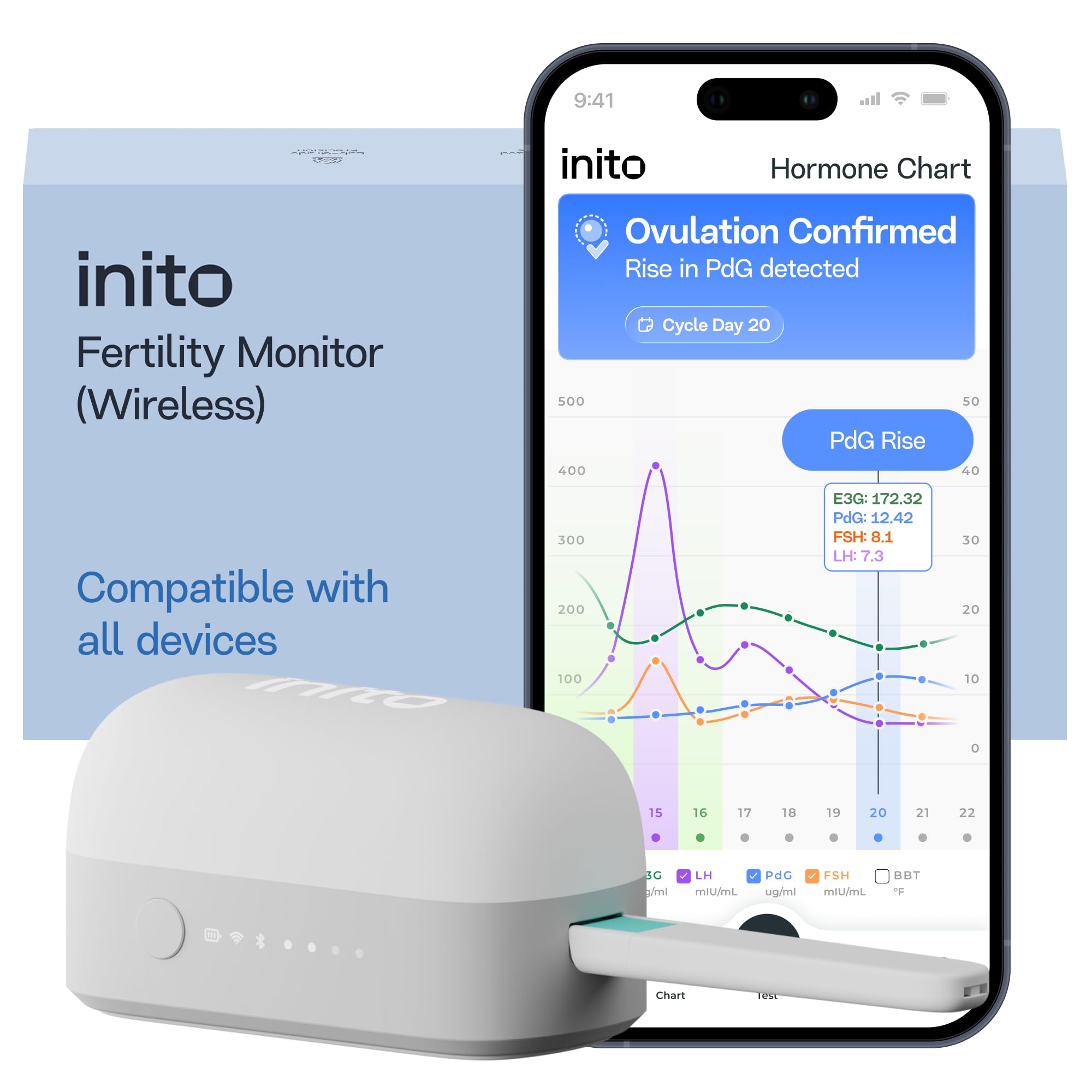
Inito’s Spectral Mapping Technology reads estrogen, LH, PdG, and FSH from a single urine strip and returns actual numerical concentrations—not binary yes/no icons. The wireless reader frees your phone during testing, syncing to the app via Bluetooth so your morning routine stays uninterrupted.
For users with PCOS, anovulatory cycles, or luteal phase defects, Inito’s PdG confirmation closes the gap between prediction and proof. The app overlays day-specific reference ranges onto your chart, flagging when PdG rises above threshold to confirm ovulation actually occurred. The free app houses AI analysis trained on a large fertility hormone dataset, with no subscription lock-in.
Strips cost about 3 per test at typical retail, which places Inito in the mid-range for ongoing consumables. The trade-off is data depth: you see exact PdG trends rising and falling across the luteal phase, which no LH-only system provides.
Why it’s great
- Quantitative values for all four key hormones on a single strip
- Wireless operation compatible with any iOS or Android device
- Free app with AI analysis and no monthly subscription
Good to know
- Consumable strips require regular repurchase
- Daily testing at the same time each day is recommended for consistent trends
2. Mira Fertility MAX
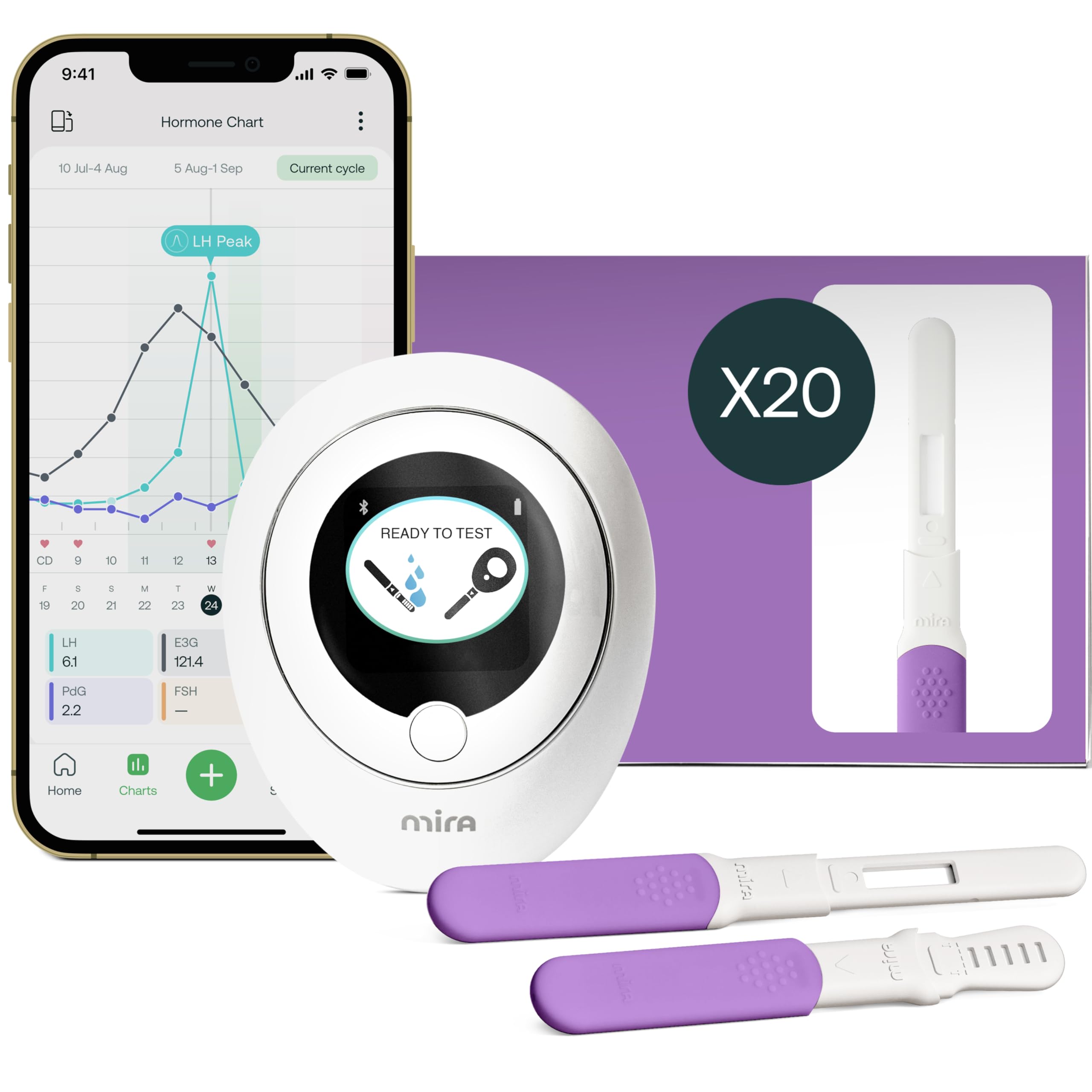
Mira uses advanced fluorescent immunodetection to deliver quantitative readings of LH, E3G (estradiol), and PdG at up to 99.5% accuracy. The MAX kit includes 20 wands and a rechargeable analyzer that logs each test result into the app’s AI engine, which adapts its predictions as more cycles are recorded.
The system’s sensitivity catches subtle hormone shifts that opaque strip tests miss—particularly useful for cycles with weak LH surges or erratic estrogen patterns. Mira’s algorithm is trained on over 30 million hormone data points, so predictions become more personalized over multiple months of use. The app generates doctor-ready reports that graph each hormone’s trajectory across the cycle.
Wands are single-use and sold in packs, making Mira a premium investment for users who want lab-grade tracking at home. The testing window lasts about 21 minutes per wand.
Why it’s great
- Fluorescence technology offers near-lab quantitative accuracy
- AI predictions improve with each recorded cycle
- Doctor-ready reports with full hormone trend graphs
Good to know
- Refill wands represent a recurring consumable cost
- Some users reported app sync issues early in the setup process
3. Oura Ring 4

The Oura Ring 4 captures overnight skin temperature, heart rate, heart rate variability, and respiratory rate through its Smart Sensing platform, then translates those biometrics into fertility predictions via the Oura App. For cycle tracking, the ring detects temperature shifts that signal ovulation has occurred, and period predictions improve as baseline data accumulates over about two weeks of nightly wear.
Beyond fertility, Oura tracks sleep stages, activity, and readiness scores—making it a multi-purpose wearable for users who want women’s health insights alongside general wellness metrics. The titanium-shell ring is lightweight and waterproof, designed for continuous wear without screen distractions. A membership is required after the first month to access detailed cycle analysis and the AI Advisor feature.
This tracker provides retroactive ovulation confirmation rather than forward prediction, so it works best when paired with LH strips or quantitative monitors for users needing advance fertile window alerts.
Why it’s great
- Discreet, continuous overnight temperature and HRV monitoring
- Accurate sleep staging alongside fertility cycle analysis
- Long battery life and fast wireless charging
Good to know
- Requires a monthly membership after the first month
- Retrospective ovulation confirmation rather than advance prediction
4. Kegg Fertility Tracker
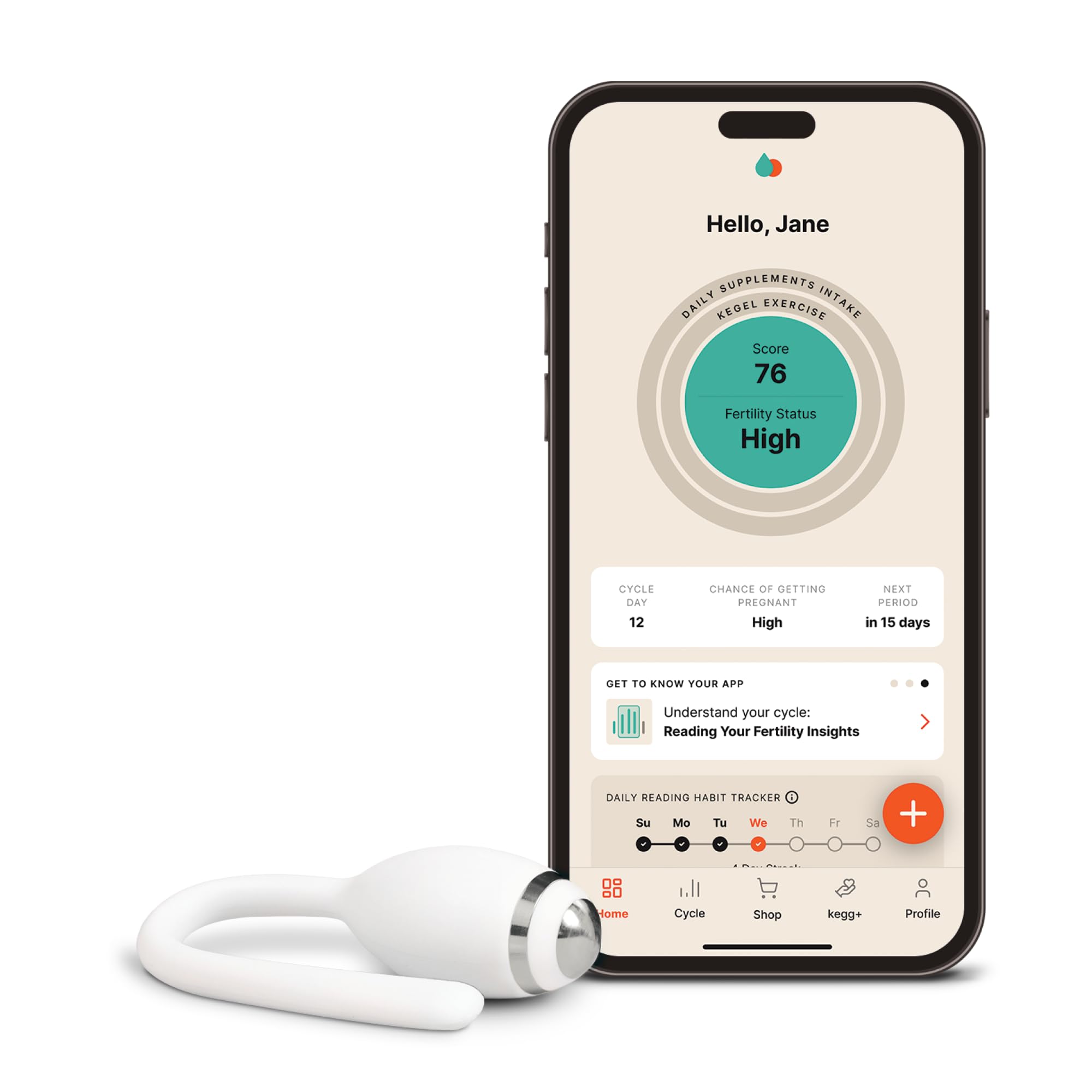
Kegg sits at the intersection of fertility tracking and pelvic floor wellness. The reusable silicone sensor measures electrolyte levels in cervical fluid each day, identifying the fertile window using impedance changes that precede ovulation. There are no test strips, wands, or urine cups—just a daily 60-second insertion and sync to the companion app.
The device learns your baseline electrolyte pattern across cycles and flags the green zone when fertile-quality cervical fluid is detected. For users with irregular cycles, Kegg’s approach bypasses hormone-level variability by measuring the cervical environment directly. The supportive private community allows chart comparisons with other users and direct access to support specialists.
Since Kegg detects the fertile window in advance (rather than confirming ovulation after the fact), it is often paired with BBT or PdG monitoring for full cycle coverage. The unit runs on a rechargeable battery that lasts about three months between charges.
Why it’s great
- One-time purchase with no recurring costs for test refills
- Directly measures cervical fluid quality for advance fertile window prediction
- Includes pelvic floor exercise tracking as a secondary wellness tool
Good to know
- Requires daily insertion at a consistent time for reliable data
- Some users with very dry cervical fluid patterns may see fewer reading changes
5. Daysy Fertility Tracker

Daysy, crafted in Germany, uses a smart BBT thermometer combined with an algorithm refined over 40 years of research. Each morning, you take a single oral temperature reading, and Daysy lights up green (low fertility), yellow (transition), or red (fertile window). The device stores up to 12 months of cycle history on its internal memory and syncs to a free app for deeper analysis.
Daysy is calibrated to identify ovulation retroactively via the thermal shift while also learning your cycle length variability over time. The manufacturer claims 99.4% accuracy at identifying fertile versus non-fertile days. There are no hormone strips, subscriptions, or ongoing fees beyond the initial purchase—just the sensor and the free app.
The learning curve spans about two cycles for the algorithm to stabilize, and the device requires consistent morning measurement at the same time within a 30-minute window. After calibration, users with regular cycles often see more green days each subsequent month as the algorithm refines its baseline.
Why it’s great
- No subscriptions, no consumables—pure one-time investment
- Simple red/green light interface eliminates chart interpretation guesswork
- Proven algorithm based on decades of fertility research
Good to know
- Requires daily oral temperature at the same time within 30 minutes
- Algorithm requires at least two full cycles to reach full accuracy
6. Tempdrop Wearable Ovulation Tracker
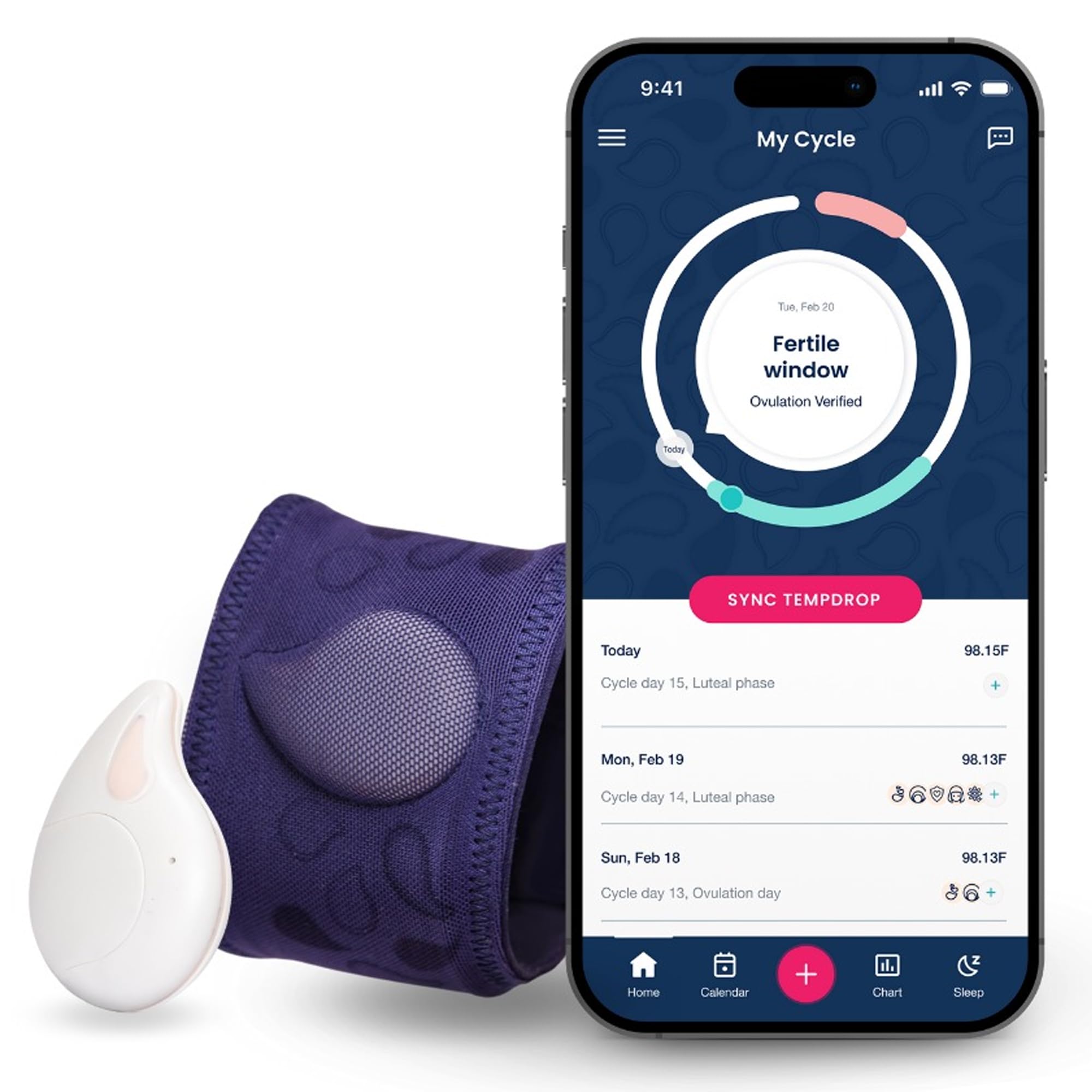
Tempdrop eliminates the 5 AM thermometer alarm by capturing basal body temperature while you sleep. The silicone-armband sensor fits around your upper arm and records temperature data continuously through the night, storing up to 60 hours of readings. Once you sync the device, the companion app applies an algorithm to filter out environmental noise like room temperature fluctuation or restless sleep.
The app identifies ovulation via the biphasic temperature shift and provides fertile window markers with 98.6% accuracy. For postpartum breastfeeding mothers or shift workers whose sleep schedule changes, Tempdrop’s adaptive algorithm handles non-traditional sleep windows better than oral BBT. The coin-cell battery lasts over six months and is user-replaceable.
A premium subscription adds ovulation predictions and more detailed cycle analytics, though core temperature tracking and charting remain free. The armband fits both size S/M and ships with an extender for larger arms.
Why it’s great
- No early-morning wake-ups required for BBT measurement
- Algorithm filters environmental noise for more stable temperature curves
- Stores up to 60 hours of data before syncing is needed
Good to know
- Premium subscription required for advanced ovulation predictions
- Some users find the armband size small without the provided extender
7. Clearblue Fertility Monitor
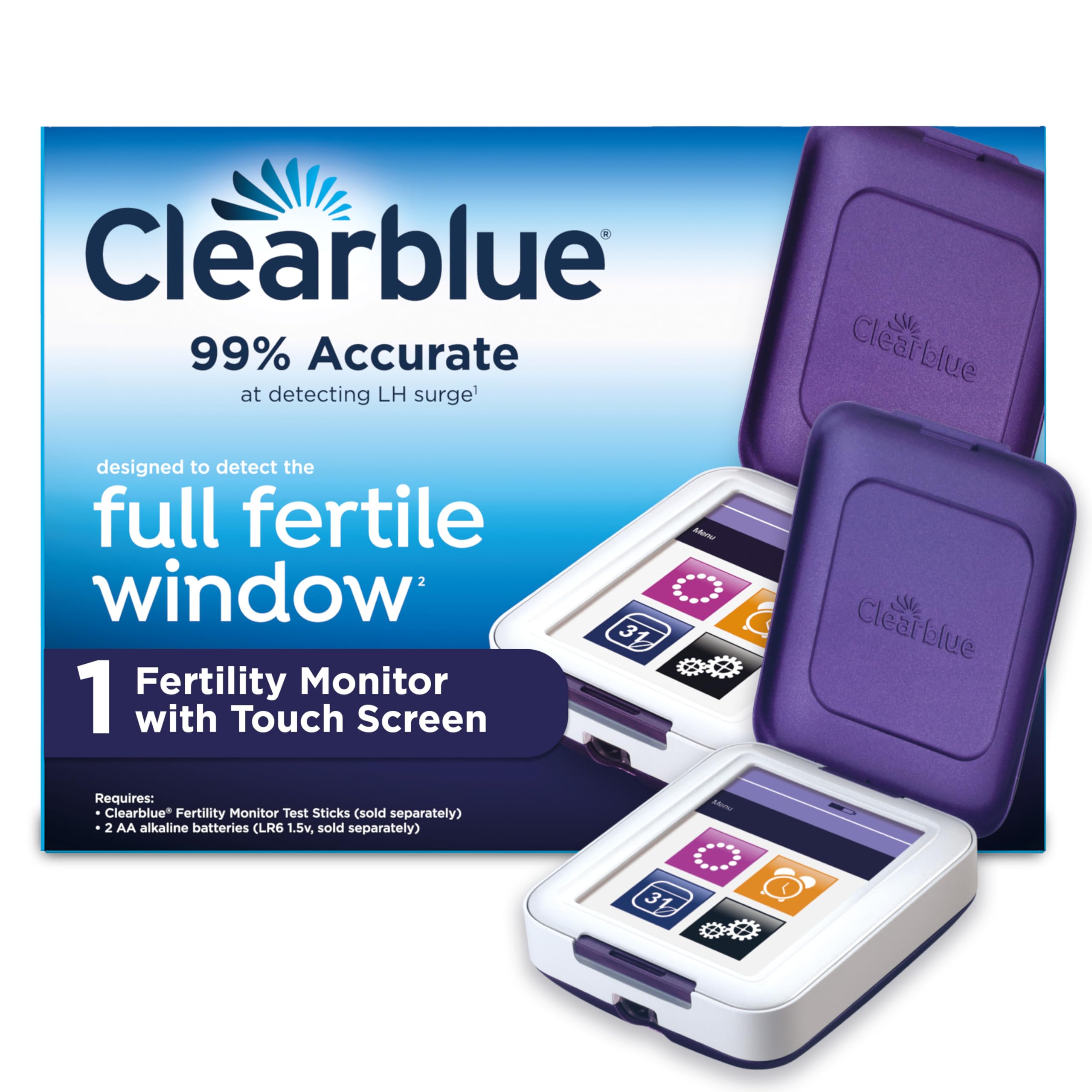
Clearblue’s touch-screen monitor tracks both estrogen and LH to identify up to six fertile days per cycle—four more than standard LH-only test strips. The system uses a color-coded interface: High fertility (estrogen rise) signals the fertile window is opening, and Peak fertility (LH surge) narrows the window to the two most fertile days. The monitor stores up to six cycles of data for review or sharing with a doctor.
Clinical studies show the monitor achieves 97% agreement with ultrasound-confirmed ovulation. For users with relatively regular cycles, the dual-hormone approach reduces the daily testing burden because the monitor automatically adjusts test frequency based on estrogen levels. The device is the #1 OB-GYN recommended ovulation brand and requires test sticks sold separately.
The primary limitations are the fixed testing window (days 1–4 of your cycle to set the baseline) and the lack of PdG confirmation—so while the monitor excels at prediction, it does not confirm ovulation after the fact. Test sticks cost roughly 1.50 each at typical pharmacy retail.
Why it’s great
- Clinically validated 97% agreement with ultrasound ovulation data
- Dual hormone tracking identifies up to 6 fertile days per cycle
- Easy-to-read touch screen with six-cycle data storage
Good to know
- Test sticks are sold separately and cost about 1.50 each
- Does not measure PdG for post-ovulation confirmation
8. Modern Fertility Hormone Test

Modern Fertility is a one-time finger-prick blood test that measures Anti-Mullerian Hormone (AMH), TSH, FSH, Estradiol, Free Thyroxine, and Prolactin—designed to be comparable to a fertility clinic’s initial workup at a fraction of the cost. After mailing the sample to the CLIA-certified lab, results arrive in about three business days via a personalized online report.
The report provides context: where each hormone level falls relative to age-matched reference ranges, and what it might suggest about ovarian reserve, thyroid function, or pituitary regulation. The package includes access to a nurse consultation and community webinars. The target audience is people with ovaries aged 21–45 who want to proactively understand their fertility baseline before or while trying to conceive.
This is not a daily tracker—it is a diagnostic snapshot. Combine it with a cycle-day monitor (like Inito or Tempdrop) to turn that baseline into an ongoing management system. Not available for purchase or lab processing in New York, Rhode Island, or Puerto Rico.
Why it’s great
- Comprehensive 6-hormone panel covering ovarian reserve, thyroid, and pituitary
- Fast turnaround—~3 business days after lab receives sample
- Includes nurse consultation and educational webinars
Good to know
- One-time test, not a daily or cycle-over-cycle tracker
- Not available in NY, RI, or PR
9. Choose Health 6-in-1 Female Hormone Test

The Choose Health kit tests progesterone, estradiol, TSH, FSH, LH, and includes a visceral fat measurement component, all from a single painless finger-prick blood sample. After collection, you mail the sample using the prepaid envelope to a CAP and CLIA-accredited lab, and results arrive via the Choose Health app within 5–10 days.
Where this kit stands out is the personalized recommendations: the app tailors clinical-evidence-backed advice to your specific results, plus your self-reported diet, exercise, and lifestyle habits. For users without insurance coverage for hormone panels, this provides a budget-friendly alternative to a physician-ordered workup. It is only sold and useable in the continental United States.
The test does not include testosterone, and some users had to repeat the collection when blood volume was insufficient from the two included lancets. The company sent replacement kits at no charge in those cases. This is a useful entry-level baseline tool for women curious about their hormone landscape before graduating to a daily quantitative monitor.
Why it’s great
- Affordable hormone panel covering six biomarkers from a single blood sample
- Personalized diet and lifestyle recommendations tied to results
- Fast, painless finger-prick collection process
Good to know
- Testosterone is not included in the panel
- Some users needed multiple attempts to collect enough blood with the two lancets
FAQ
Can an at home fertility tracker confirm ovulation or only predict it?
How many cycles does a BBT-based tracker take to learn my pattern?
Are lab send-away kits like Modern Fertility worth it if I already have a daily tracker?
Will a cervical fluid tracker work for me if I have irregular cycles or PCOS?
Do I need a prescription for any of these at home fertility trackers?
Final Thoughts: The Verdict
For most users, the at home fertility tracker winner is the Inito Fertility Monitor because it measures all four key hormones quantitatively on a single strip, confirms ovulation through PdG, and offers a free app with no subscription lock-in. If you want lab-grade fluorescence accuracy with doctor-ready trend graphs, grab the Mira Fertility MAX. And for a no-refill cervical fluid sensor that predicts the fertile window without consumables, nothing beats the Kegg Fertility Tracker.