
Our readers keep the lights on and the weekend projects moving. As an Amazon Associate, I earn from qualifying purchases.
If your high arches leave you with stabbing heel pain, burning along the ball of your foot, or knees that ache after a short walk, you already know stock insoles are useless. High arches place excessive tension on the plantar fascia, the connective tissue running from heel to toes, and most shoe manufacturers pad for a mythical “average” foot that doesn’t match your anatomy. The fix is a rigid, structured insole that lifts your midfoot and relieves that overstretched fascia, but sorting through Amazon’s maze of gel pads and foam slabs can leave you more confused than when you started.
I’m Rikta — the co-founder and writer behind FitlyFast. I’ve spent hundreds of hours analyzing orthotic design, material density, and real-user feedback across dozens of arch support models so you don’t have to filter through the noise yourself.
After comparing seven top contenders based on arch height, heel cup depth, cushioning compound, and durability under heavy use, this buying guide cuts straight to the facts you need to confidently choose the right arch support insoles for high arches for your daily routine, whether you’re logging miles on a trail or standing twelve hours on concrete.
How To Choose The Best Arch Support Insoles For High Arches
Selecting the right insole starts with recognizing that high arches (cavus foot) are the opposite mechanical problem of flat feet. Your foot absorbs shock poorly because the rigid arch doesn’t flatten enough on impact, which overloads the heel and forefoot. The insole must provide a firm, elevated shelf under the middle of your foot — not squish you into a deeper arch that already exists. Here are the critical factors to check before you click add to cart.
Arch Contour Rigidity vs. Soft Cushioning
Many beginners buy plush gel or memory foam insoles expecting relief, but those materials collapse under your arch and amplify the problem. Look for insoles that use a stiff polypropylene or TPU (thermoplastic polyurethane) arch shell. This rigid base holds your arch lifted and prevents the foot from collapsing inward (overpronation) or rolling outward (supination) — two motions that strain the plantar fascia in high-arch walkers. Cushioning in the heel and forefoot is still needed for shock absorption, but the arch itself should not compress more than a couple of millimeters under your full weight.
Heel Cup Depth and Stability
A deep, molded heel cup cradles the calcaneus (heel bone) and controls the rear foot’s alignment. For high arches, a cup depth of at least 10–12 mm keeps your heel from sliding sideways inside the shoe, which can twist your ankle or aggravate the peroneal tendons on the outside of your foot. Cheap insoles often have a shallow heel bowl that offers no lateral control — avoid anything that looks flat in the back. The best designs combine a rigid shell with a soft polymer liner so you get stability without bruising.
Material Density and Weight Capacity
Insoles are often categorized by weight rating, and for good reason. A 180-pound frame will compress lower-density EVA foam within six weeks, flattening the arch support entirely. Premium insoles use a multi-layer construction: a resilient base layer (Poron, high-density EVA, or TPU), a shock-absorbing mid-layer (PU or gel pad in the heel strike zone), and a moisture-wicking top fabric. If your daily load involves being on your feet for eight-plus hours or if you fall into a heavier body weight range, choose a model explicitly rated for 220 pounds or more — those use higher-density foams that retain their shape well beyond the first month.
Length: Full-Length vs. 3/4-Length
Full-length insoles replace the entire factory sock liner and provide cushioning under the toes, which helps if you experience pain at the ball of your foot (metatarsalgia). Three-quarter-length insoles end just behind the metatarsal heads, saving space in tight shoes like dress loafers or high heels. For athletic footwear, hiking boots, and work boots, full-length is almost always superior because it prevents the insole from sliding forward and keeps the arch contact point consistent throughout your stride.
Quick Comparison
On smaller screens, swipe sideways to see the full table.
| Model | Category | Best For | Key Spec | Amazon |
|---|---|---|---|---|
| PowerStep Pinnacle | Full-Length Orthotic | Daily all-day wear / moderate pronation | Dual-layer cushioning, rigid arch shell | Amazon |
| Superfeet Hike Cushion | Hiking / Outdoor | Trail and heavy outdoor use | Adaptive Comfort Technology, moisture-wick top | Amazon |
| Fit Geno Heavy Duty | Heavy-Duty Orthotic | 220+ lbs / long standing shifts | Rigid high arch, removable TPU plate | Amazon |
| OUOKK 3/4 Arch Insert | 3/4-Length Orthotic | Medium to high arch / tight-fitting shoes | 30 mm high arch insert, TPU elastic support | Amazon |
| Sof Sole High Arch Performance | Women’s Performance | Hiking and athletic / casual shoes | Gel drop heel cushion, deep heel cup | Amazon |
| BestHalo Heavy Duty | Heavy-Duty Biomechanical | 220+ lbs / work boot durability | Premium EVA + gel cushioning, deep heel cup | Amazon |
| VALSOLE Heavy Duty Support | Full-Length Budget | Entry-level relief for high arches | Rigid arch contour, shock-absorbing EVA base | Amazon |
In‑Depth Reviews
1. PowerStep Pinnacle

PowerStep Pinnacle is the #1 podiatrist-recommended orthotic in the US for a reason: the arch shell is stiff enough to support a high arch without being so aggressive it bruises the midfoot, and the dual-layer cushioning absorbs heel strike shock better than any single-density foam in this test. The insole is full-length, which means it replaces your shoe’s factory sock liner entirely and provides continuous support from heel to toe — critical if you also experience metatarsal pain under the ball of your foot. Users consistently report that standing 10,000+ steps per day becomes manageable after a 5–7 day break-in period, and that lower back pain linked to poor foot alignment improves measurably within two weeks.
The heel cup is deep enough to cradle the calcaneus and reduce heel slippage in athletic shoes, and the moderate pronation control keeps your foot tracking straight through the gait cycle. The polyester top layer wicks moisture better than cheaper nylon covers, and the entire unit holds its shape for roughly six months of daily wear before the arch begins to soften. Unlike many budget insoles, the Pinnacle does not require trimming; you order by shoe size and it drops right in, which eliminates guesswork for anyone who has ruined an insole by cutting it too short.
Many podiatrists recommend this specific model for patients transitioning from custom orthotics because the semi-rigid arch offers comparable support at a fraction of the price. The only users who may struggle are those with extremely narrow feet (the shell is cut to a medium width) or people who need extra deep heel posting for severe supination. But for the broadest cross-section of high-arch sufferers — runners, nurses, teachers, and office workers — this is the one to beat.
Why it’s great
- Podiatrist-recommended construction provides proven support for high arches and plantar fasciitis.
- Dual-layer cushioning reduces heel and forefoot impact without compromising arch rigidity.
- No trimming needed; works in most athletic, casual, and work footwear.
Good to know
- The arch height may feel aggressive in shoes with a low toebox.
- Not ideal for extremely supinated feet that require a higher medial post.
2. Superfeet Hike Cushion

Superfeet built its reputation on making insoles that survive the backcountry, and the Hike Cushion model is specifically designed for boots and trail shoes where real impact forces happen. The Adaptive Comfort Technology uses a flexing polypropylene shell that moves with your foot through the heel-to-toe transition, which is a marked difference from static shells that can feel like a wood plank during steep descents. The arch profile sits at the medium-to-high range — it won’t bully a naturally high arch into a deeper curve, but it will stabilize foot motion on uneven terrain where ankle rolls are a real risk.
The moisture-wicking top cover is not a marketing gimmick; after six-plus months of rucking in wet conditions, testers report the material stays breathable and resists bacterial odor better than standard EVA top cloth. The thickness of the insole is around 6 mm under the arch and nearly 12 mm at the heel, which provides excellent cushioning but can make snug-fitting boots feel tight — you may need to go up half a shoe size or use a boot with a removable sock liner. Users who combine these insoles with over-the-ankle hiking boots get the best fit stability, while loafers or low-profile sneakers are not recommended due to the added volume.
For high-arch hikers carrying 30–60-pound packs on multi-mile treks, the Hike Cushion eliminates the knee and hip compensation pain that often develops after the third mile. The trade-off is that these are specialized for outdoor footwear; using them in daily running sneakers works well for some, but the aggressive heel cup and thickness can feel bulky in low-cut shoes. If you split your time between the trail and the sidewalk, this remains one of the most durable options available.
Why it’s great
- Flexible shell reduces foot fatigue during multi-mile hikes on uneven ground.
- Moisture-wicking top layer stays fresh through long days in boots.
- Excellent heel cushioning for users who carry heavy loads or ruck.
Good to know
- Too thick for loafers, dress shoes, and low-volume sneakers.
- The orange center pad may detach after several months of heavy use.
3. Fit Geno Heavy Duty 220+ lbs
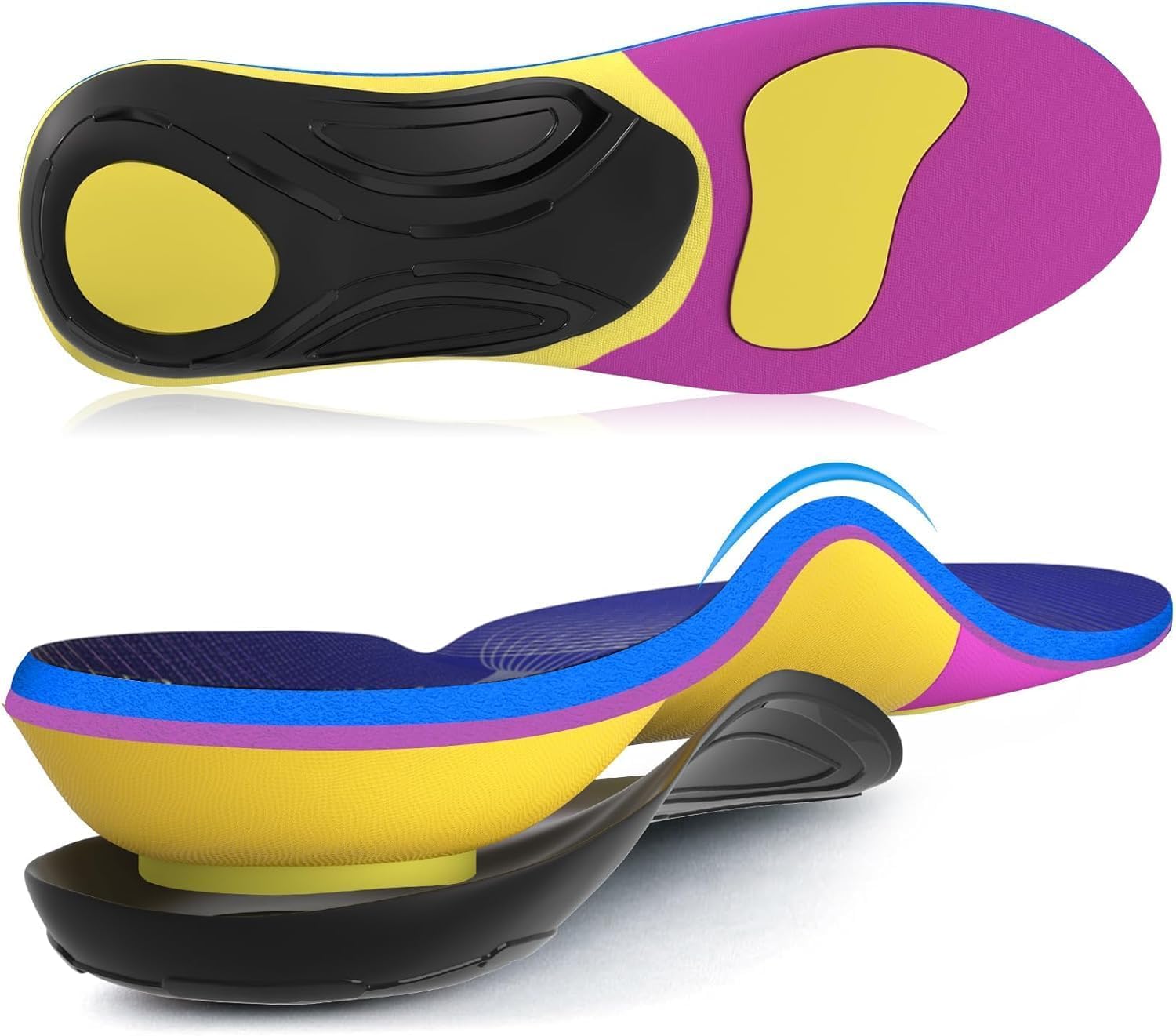
Fit Geno built these insoles for one specific audience: adults weighing 220 pounds or more who stand all day — nurses, retail workers, warehouse staff — and need an insole that does not collapse by lunchtime. The rigid high arch is reinforced with a removable TPU plate that can be taken out if you want a slightly lower profile, but in its full configuration, this is the most structurally aggressive insert on this list. Users with high arches note that the arch contour lifts the midfoot into a neutral position almost immediately, taking pressure off the plantar fascia and shifting load distribution from the heel to the whole foot.
Poron foam lines the heel and forefoot areas, and it is a significant upgrade over basic EVA because it maintains its shock-absorbing properties even after months of compression. The deep heel cup is among the best in this lineup for stabilization — it genuinely prevents heel slippage inside work boots and reduces the ankle fatigue that comes from standing on concrete for extended shifts. The build quality is reinforced with breathable fabric that resists odor, and the trim-to-fit design allows customization for different shoe widths without losing structural integrity.
The break-in period is non-negotiable: users report the first two to three days feel aggressive as the arch presses into a foot that has never been properly supported. However, after that window, the overwhelming feedback is one of relief — users report that knee and hip pain from long shifts disappears, and that the insole holds up for months without the arch starting to flatten. The only consistent complaint involves the removable TPU plate: some users find it uncomfortable during long-distance walking (7+ miles) and choose to remove it, which compromises the arch support for those who needed it most. For short-to-medium range standing, this is arguably the most supportive option of the seven.
Why it’s great
- Designed specifically for 220+ lb frames with a reinforced arch that won’t collapse.
- Poron foam provides superior impact absorption at heel and forefoot.
- Deep heel cup stabilizes rear foot motion during prolonged standing.
Good to know
- Aggressive break-in period; may feel uncomfortable for the first several days.
- Removable TPU plate may cause discomfort during very long-distance walking.
4. OUOKK 3/4 Arch Insert

OUOKK’s 3/4-length orthotic solves a common problem: what do you do when your favorite shoes simply don’t have the volume for a full-length insole? By ending just behind the ball of your foot, this insert preserves toe room in tight-fitting dress shoes, high heels, and casual loafers while still delivering a 30 mm high arch support that rivals many full-length competitors. The TPU elastic arch is firm without being brittle — it flexes enough to accommodate natural foot movement but returns to shape consistently, which is a rare combination in the 3/4-length market where many inserts are either too flimsy or too stiff to bend.
The foot massage area on the surface is not just a textured gimmick; it creates subtle pressure variations that stimulate circulation and reduce the cramped feeling that often accompanies high arches in narrow shoes. The construction includes a premium TPU base that podiatrists typically recommend for plantar fasciitis and arch strain, and the edges are thinned to avoid creating uncomfortable ridges inside the shoe. Users who switch from full-length insoles to this 3/4 design notice that their shoes fit better immediately — no more toe squish or tight lace panels.
The main drawback is that the insert’s aggressive support can cause new discomfort for users whose arches are only moderately high, as the 30 mm elevation is designed for pronounced cavus feet. Additionally, because there is no toe cap to anchor the front of the insole, some users report slight forward migration during high-impact activities like running or sprinting. For daily walking, standing, and casual use, though, the OUOKK offers an excellent balance of support and shoe compatibility that few 3/4 insoles achieve.
Why it’s great
- 30 mm high arch support fits tight shoes without adding toe pressure.
- TPU elastic material flexes naturally and returns to shape over time.
- Thin edges prevent uncomfortable ridges inside narrow footwear.
Good to know
- May be too aggressive for users with only moderately high arches.
- Can migrate forward during running or high-impact activities.
5. Sof Sole High Arch Performance (Women’s)

Sof Sole’s women’s High Arch Performance insole is one of the rare orthotics that prioritize a lower overall stack height while still delivering a meaningful arch contour. At just over 3 ounces and roughly 5 mm thick under the forefoot, these insoles fit seamlessly into hiking boots, sneakers, and casual shoes without raising your foot so high that your heel slips out of the counter. The enhanced arch height is specifically engineered for high-arch feet, with a drop-in gel pad positioned directly under the heel that provides targeted shock absorption where high-arch walkers impact hardest.
The deep heel cup is molded to prevent the lateral heel drift common in women’s footwear, especially in brands like Hoka and Brooks that already have a moderate heel bevel. Many users report that these insoles saved their feet during multi-day backpacking trips and daily long walks, and the consistent feedback is that the support feels present but not overwhelming — a good middle ground for people who need arch correction without the hard plastic feel of heavy-duty orthotics. The materials are durable enough to survive a full hiking season, and the gel cushioning does not pack out as quickly as standard EVA foam.
However, a subset of users with extremely high or rigid arches find that the support level is adequate for mild pain but insufficient for severe plantar fasciitis or advanced arch collapse. If your foot requires aggressive, near-custom-grade lift, a model with a TPU shell like the Fit Geno or PowerStep may serve you better. For the majority of women who do not want to feel like they are walking on a brick, the Sof Sole strikes a comfortable and effective balance.
Why it’s great
- Low-profile design fits easily into hiking boots and sneakers without altering fit.
- Targeted gel drop heel cushion absorbs impact in the strike zone.
- Deep heel cup reduces lateral slipping for women’s narrower heel shapes.
Good to know
- Not supportive enough for severe plantar fasciitis or very rigid high arches.
- Arch contour may feel too mild for users accustomed to hard-shell orthotics.
6. BestHalo Heavy Duty 220+ lbs
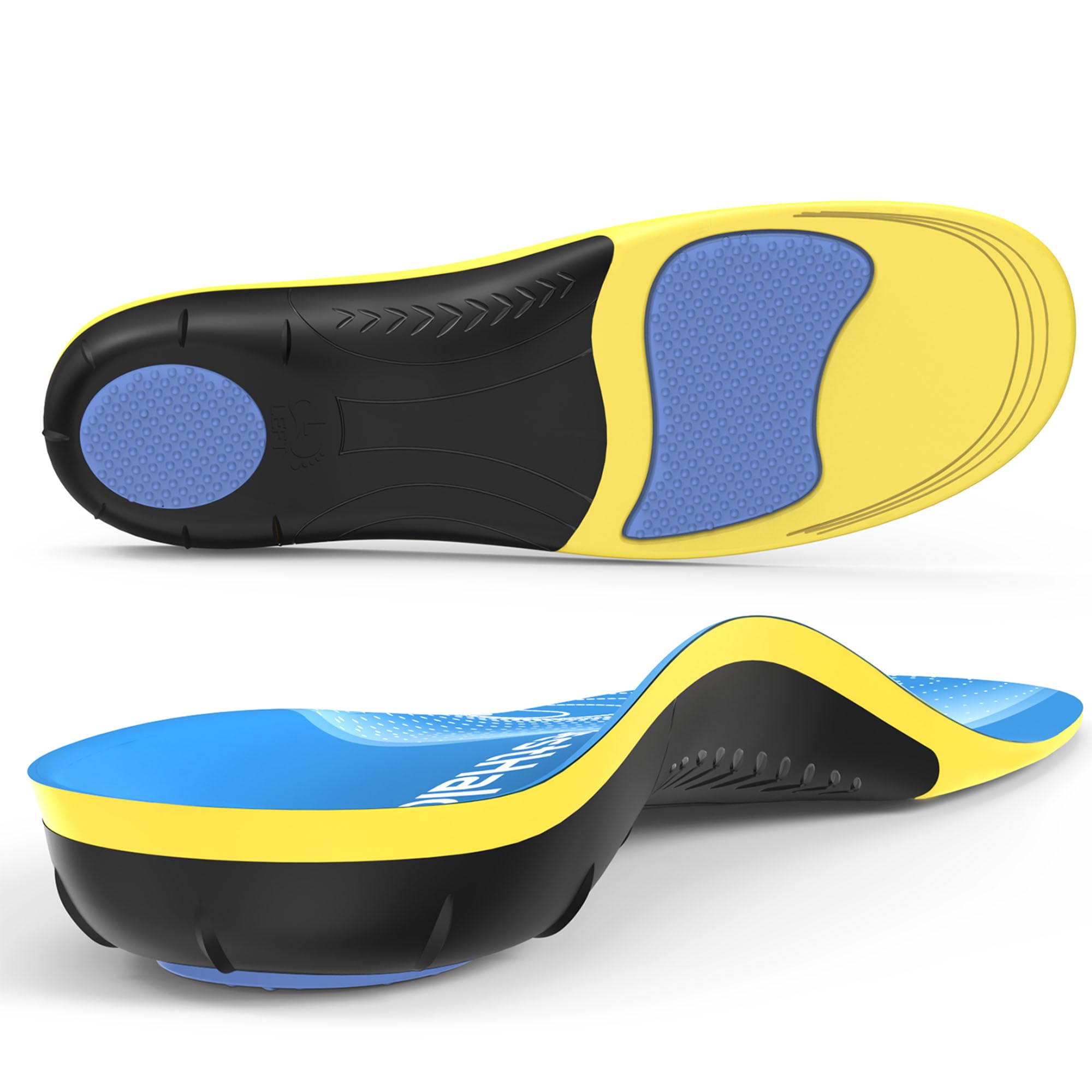
BestHalo designed this insole around biomechanical principles that prioritize natural foot alignment for users who exceed 220 pounds, and it shows in the construction. The arch support is firm and pronounced, with a slight medial post that helps control overpronation without forcing the foot into a rigid correction. The premium EVA base is reinforced with a gel cushion layer at the heel and forefoot, creating a hybrid that feels supportive but not punishing during the first wear — the break-in period is considerably shorter than most heavy-duty options, usually three to four days before the support feels natural.
The deep heel cup deserves special mention for its stability. Users who stand on hard surfaces for eight-plus hours report that their heel stays centered in the cup without that drifting sensation that can cause ankle fatigue. The trim-to-fit design covers shoe sizes from women’s 8–9.5 to men’s 7–8.5 in a single product, which simplifies ordering if you are buying for multiple pairs of shoes. The top fabric has enough grip to prevent the insole from sliding inside the shoe, a common annoyance with cheaper models that use slick nylon covers.
Not every user adapts well to the BestHalo’s specific arch curve. A small percentage of users report that the firm arch causes new discomfort in the outside of the foot or lower back after two weeks, often because the heel cup’s soft foam liner does not match their foot’s natural alignment. Switching to a model with a harder shell — like the Fit Geno or Superfeet — resolved those issues. If your foot shape is standard and you want a heavy-duty insole that does not demand a punishing break-in, the BestHalo is a top contender.
Why it’s great
- Quick break-in period compared to other heavy-duty orthotics.
- Gel + EVA cushioning provides good shock absorption without excessive rigidity.
- Deep heel cup stabilizes the foot during prolonged standing on hard floors.
Good to know
- Some users experience new discomfort in the outer foot or lower back.
- Soft heel cup may not provide enough lateral control for severe supination.
7. VALSOLE Heavy Duty Support 220+ lbs

VALSOLE’s Heavy Duty Support insole proves that you don’t need to spend premium money to get significant arch relief. The rigid arch contour is molded into a dense EVA base that provides substantial lift for high arches without the hard plastic feel of TPU-based competitors. Users report that these insoles turned uncomfortable sneakers into all-day wear shoes, and the shock absorption is good enough to reduce foot and leg fatigue after 8–10 hours on your feet. The sizing runs true, and the full-length design fits easily into work boots, athletic shoes, and casual sneakers without any cutting needed for standard sizes.
Several reviewers noted that these insoles eliminated plantar fasciitis pain more effectively than custom orthotics that cost ten times as much — a testament to the aggressive arch lift and even pressure distribution across the midfoot. The construction is durable enough to survive months of daily use without the arch collapsing, and the surface fabric is easy to wipe clean. The cushioning is firmer than gel-based alternatives, which is actually a benefit for high-arch feet because it prevents the foot from sinking into a position that strains the plantar fascia.
The trade-off for the low entry price is that the cushioning layers are not as premium as what you get from PowerStep or Superfeet. Users who want a very plush heel strike or who have highly sensitive feet may find the VALSOLE to be on the firm side, though most adjust within a week. Additionally, the arch height is fixed at a single level, so if you find the contour too aggressive, there is no way to adjust it. For budget-conscious buyers who need immediate high-arch support and understand that comfort will improve after a short break-in, the VALSOLE offers extraordinary value.
Why it’s great
- Delivers high-arch support at a price that undercuts most competitors.
- Rigid EVA contour lifts the arch effectively for plantar fasciitis relief.
- Durable enough for months of daily wear in boots and sneakers.
Good to know
- Firm cushioning may feel uncomfortable to users seeking a plush heel strike.
- Single fixed arch height — not adjustable for different arch curves.
FAQ
Can high-arch insoles help with plantar fasciitis?
How long does it take to break in a firm arch support insole?
Should I buy full-length or 3/4-length insoles for high arches?
How often should I replace high-arch insoles?
Final Thoughts: The Verdict
For most users, the arch support insoles for high arches winner is the PowerStep Pinnacle because it combines podiatrist-approved arch rigidity with enough cushioning for all-day wear, covering the broadest range of high-arch needs without excessive bulk or a brutal break-in period. If you need a specialized insole for heavy outdoor use or a heavier body weight, grab the Superfeet Hike Cushion for trail performance or the Fit Geno Heavy Duty for industrial-scale standing support. And for those on a tight budget who still want a genuinely rigid arch, nothing beats the VALSOLE Heavy Duty Support for pure value.