
Our readers keep the lights on and the weekend projects moving. As an Amazon Associate, I earn from qualifying purchases.
A crackle, a pop, or a sudden drop in signal during a live set isn’t just an annoyance — it’s the sound of a performance derailing. The right rig needs robust preamps, low-latency drivers, and reliable connectivity to handle the chaos of stages, studios, and streaming setups without hesitation.
I’m Rikta — the co-founder and writer behind FitlyFast. I’ve spent countless hours dissecting the technical specs, driver stability, and real-world feedback from musicians and sound engineers to build this guide around the gear that actually holds up under pressure.
Whether you’re a solo performer running backing tracks or a band leader managing multiple inputs, these picks represent the most trustworthy hardware on the market. This guide narrows the field to the best audio interface for live performance.
How To Choose The Best Audio Interface For Live Performance
Selecting an interface for live use means prioritizing low-latency monitoring, sturdy chassis construction, and enough analog I/O to handle your current gear without requiring a rack full of extras. Portability often competes with channel count, so knowing your minimum requirements is the first step.
Input and Output Count
A solo singer-guitarist can get away with two XLR combo inputs, but a band capturing a full rehearsal or streaming a live set may need eight or more channels. Consider not just your current mics and instruments, but expansion via ADAT or line-level sub-mixers if the interface supports them.
Latency and Driver Performance
Measured in milliseconds, round-trip latency determines how quickly audio from a mic or instrument passes through the computer and back to your headphones. For in-ear monitoring during a live show, anything above 10ms becomes disorienting. Interfaces with dedicated ASIO drivers or Thunderbolt connections consistently deliver the tightest performance.
Form Factor and Power
Rack-mountable units like the Behringer XR18 suit a permanent stage setup, while USB-bus-powered interfaces are ideal for mobile performers using a laptop. Battery-powered options, such as the Zoom LiveTrak L-8, offer total freedom from wall outlets for outdoor gigs or multi-room sessions.
Quick Comparison
On smaller screens, swipe sideways to see the full table.
| Model | Category | Best For | Key Spec | Amazon |
|---|---|---|---|---|
| Universal Audio Apollo Solo | Premium Desktop | Low-latency tracking with UAD plugins | UAD SOLO Core DSP | Amazon |
| Behringer X AIR XR18 | Digital Mixer | Full band live mixing via tablet | 16 Midas preamps | Amazon |
| Zoom LiveTrak L-8 | Portable Mixer | Battery-powered multi-track recording | 6 combo inputs | Amazon |
| MOTU M4 | Desktop Interface | High-headroom desktop recording | 192 kHz converters | Amazon |
| Solid State Logic SSL 2 MKII | Desktop Interface | Vocalists needing built-in HPF | Legacy 4K enhancement | Amazon |
| Behringer UMC1820 | Rack Mount | Multi-mic band recording | 18×20 channels | Amazon |
| Numark Party Mix Live | DJ Controller | Entry-level DJ mixing | Built-in speakers/lights | Amazon |
| Universal Audio Volt 1 | Desktop Interface | Solo creators on a budget | Vintage 610 preamp mode | Amazon |
| Shure MVX2U Gen 2 | Inline Preamp | Portable XLR to USB-C conversion | +60 dB gain | Amazon |
In‑Depth Reviews
1. Universal Audio Apollo Solo Heritage Edition

The Apollo Solo Heritage Edition packs a UAD SOLO Core processor into a bus-powered chassis, allowing real-time tracking through classic compressor and EQ emulations with near-zero latency. This is the defining feature for live performers who want to commit to a studio-quality sound on stage without adding a dedicated effects rack.
The Unison mic preamp technology transforms the input impedance to replicate preamps from Neve, API, and Avalon, making every vocal or DI instrument capture feel authentic. Paired with a best-in-class headphone amplifier, the monitoring detail is loud, clean, and free of noise-floor issues during quiet passages.
Setup requires a Thunderbolt 4 cable and a compatible Mac or Windows system, and the included LUNA Recording System integrates tightly for those who also use it as a studio hub. The Heritage bundle adds five premium plug-in titles valued significantly higher than the interface itself, making this a long-term investment in tone.
Why it’s great
- UAD SOLO Core enables near-zero latency DSP monitoring
- Unison preamp emulations change input impedance for authentic tone
- Superior headphone amplifier for detailed monitoring
Good to know
- Requires a Thunderbolt 4 cable for stable connectivity
- Some Windows users report initial driver installation quirks
2. Behringer X AIR XR18

The XR18 replaces a traditional analog mixing desk with a compact, rack-mountable digital mixer controlled entirely via iPad or Android tablet. Its 16 fully programmable Midas-designed mic preamps deliver the headroom and noise floor that live sound engineers expect, even in tight festival or club environments.
Beyond mixing, the built-in 18×18 USB audio interface allows direct multi-track recording to a laptop, making it seamless to capture a full set while mixing monitors from the same unit. The integrated Tri-mode Wi-Fi module means no external router is needed for wireless control, simplifying stage setup.
Each channel includes a 4-band parametric EQ, gate, compressor, and dedicated effects sends, giving you studio-grade processing without external outboard gear. The Dugan-style auto-mixing feature is a lifesaver for panel discussions or spoken-word segments that suddenly appear between musical sets.
Why it’s great
- 16 Midas preamps with high headroom and low noise
- Full wireless tablet control with built-in Wi-Fi
- Acts as an 18×18 multi-track USB interface
Good to know
- iPad app lacks real-time spectrum analyzer
- Wireless reliability can be affected by crowded Wi-Fi bands
3. Zoom LiveTrak L-8

The Zoom LiveTrak L-8 is a Swiss Army knife for musicians and podcasters who need a standalone mixer that records to SD card while simultaneously functioning as a USB audio interface. Its six combo inputs plus two stereo channels provide enough capacity for a small band, and the battery power option frees you from outlet dependency entirely.
Each of the six preamps delivers up to +54 dB of gain with a -121 dBu noise floor, making it suitable for dynamic mics used in loud stage environments. The three independent monitor mixes with four headphone outputs let each performer dial in their own blend, essential for in-ear monitoring during live rehearsals.
Recording simultaneously to SD card and computer gives you a backup track if the DAW crashes mid-set. The built-in sound pads and phone input add a layer of utility for content creators who transition between live music and spoken-word content on the same rig.
Why it’s great
- Runs on batteries for true portable mixing
- Three independent monitor mixes for four headphone outputs
- Dual recording to SD card and computer simultaneously
Good to know
- Phantom power is global (all six channels on/off together)
- Uses micro USB connector which feels dated
4. MOTU M4

The MOTU M4 delivers four inputs and four outputs with impeccable analog conversion, evidenced by its extremely low noise floor and distortion figures. Its 192 kHz converters capture transients cleanly, making it a strong choice for performers who record acoustic instruments or vocals with wide dynamic range.
The ESS Sabre32 Ultra DAC technology used in the M4 is rare at this level, providing a transparency that reveals the true character of your microphones and instruments. The front-panel LCD meters on each input channel give instant visual feedback on gain staging, so you can dial in levels during soundcheck without relying solely on your DAW.
Physical controls for independent monitor and headphone volume, along with a dedicated loopback channel, make the M4 particularly useful for livestreaming performers who need to mix their mic with backing tracks. ASIO drivers on Windows are widely reported as rock-solid, a rare advantage for PC users.
Why it’s great
- ESS Sabre32 Ultra DAC for transparent conversion
- Rock-solid ASIO drivers on Windows
- Front-panel LCD level meters for precise gain staging
Good to know
- Headphone amp feels anemic when bus-powered
- Volume knobs have a dead zone before 25% rotation
5. Solid State Logic SSL 2 MKII

The SSL 2 MKII brings the legendary British console sound to a compact desktop interface, featuring the updated Legacy 4K analog enhancement circuit that adds presence and harmonic richness to your input signal. This is not a digital emulation — it’s an analog stage you can engage with a single button, making it a favorite for vocalists who want polished results without post-processing.
The built-in high-pass filter is a standout for live capture, cutting rumble and low-frequency stage noise before it ever hits your DAW. The headphone amplifier is notably powerful and clear, driving high-impedance monitoring headphones to satisfying volumes without distortion.
MIDI I/O on 5-pin DIN jacks allows integration with hardware synthesizers and controllers, and the included SSL Production Pack bundles over a dozen plug-in titles and samples. The metal chassis and weighted knobs give it a premium feel that inspires confidence during gig setups and tear-downs.
Why it’s great
- Analog Legacy 4K circuit adds console-grade presence in real time
- Built-in high-pass filter eliminates stage rumble
- Powerful headphone amp with low noise floor
Good to know
- Not a true 32-bit float recording; can clip if gain is too hot
- Larger and heavier than comparable 2-input interfaces
6. Behringer UMC1820

The UMC1820 is an 18-input, 20-output rack-mountable interface built around eight Midas-designed mic preamps, offering an exceptional channel count for the price. Each preamp delivers clean, neutral gain with up to +48V phantom power, making it suitable for condenser microphones used in group vocal or drum recording sessions.
ADAT I/O expansion allows you to add eight more channels via a second unit like the ADA8200, turning the UMC1820 into a 16-mic system without swapping to a higher-end card. The 24-bit/96 kHz resolution may be lower than the 192 kHz offerings from competitors, but for live capture and streaming, the difference is negligible while the stability is proven.
Users consistently report trouble-free plug-and-play operation with macOS and Windows, and the zero-latency direct monitoring switch keeps monitoring tight during recording. The MIDI I/O also makes it easy to sync hardware sequencers or control surfaces for a hybrid live setup.
Why it’s great
- Eight Midas preamps with ample clean gain
- ADAT expansion allows up to 16 mic inputs
- Plug-and-play with most DAWs on Mac and Windows
Good to know
- Maximum sample rate limited to 96 kHz
- Lacks advanced routing features found on Focusrite or RME units
7. Numark Party Mix Live
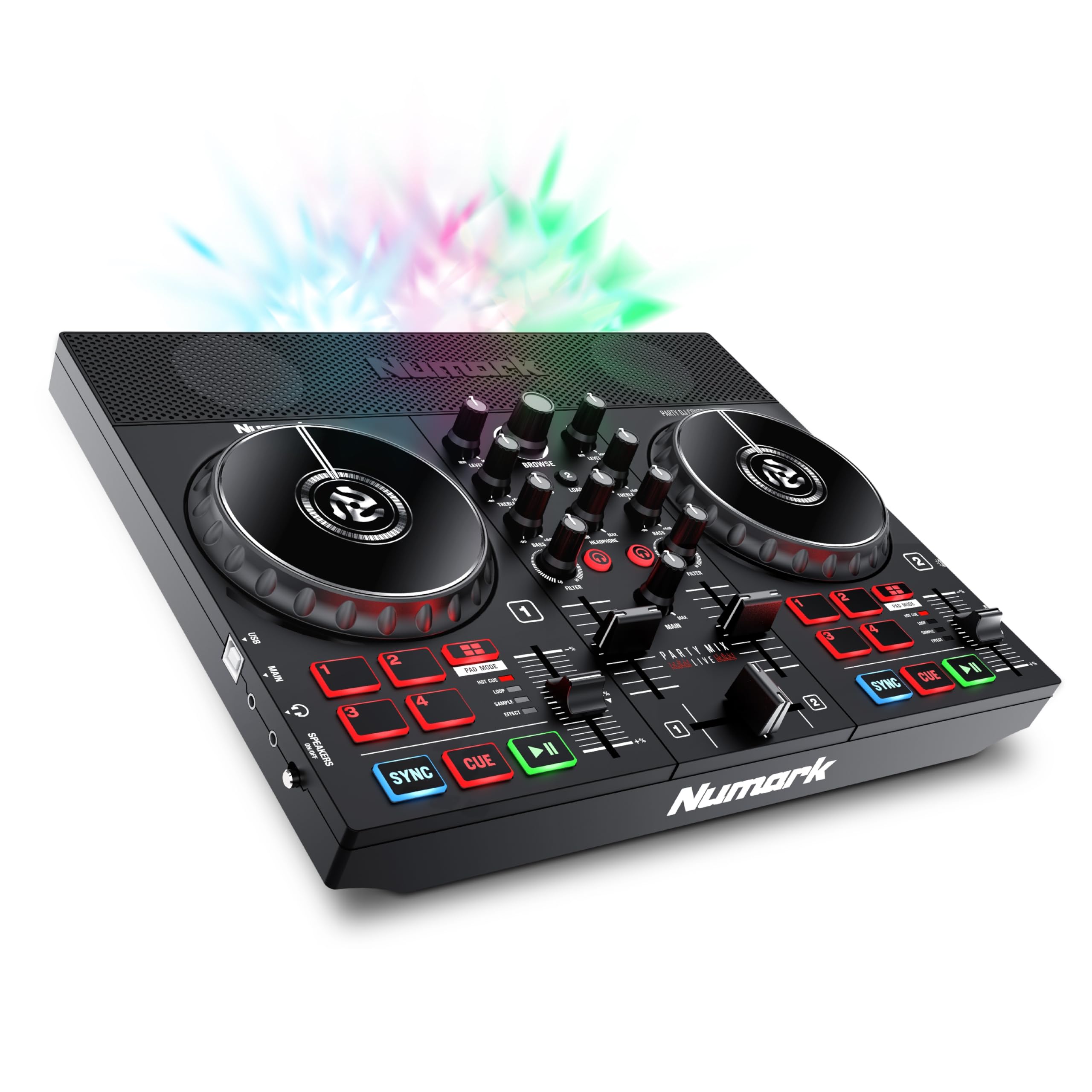
The Numark Party Mix Live is an all-in-one DJ controller that integrates an audio interface, stereo speakers, and a synchronized LED light show into a single affordable package. It’s designed for beginners and mobile DJs who need a compact unit for small parties, house shows, or practice sessions where a full PA system is overkill.
The two-deck controller layout includes performance pads with four Pad FX modes (Effect, Cue, Loop, Sampler), pitch sliders, and filter knobs, providing hands-on control over transitions and scratches. The built-in speakers are adequate for monitoring in a bedroom or small living room, and the 1/8-inch main output connects to larger speakers for bigger gigs.
Serato DJ Lite is included, and the unit supports streaming from Tidal, SoundCloud, and Beatport Link. While the audio interface quality is not on par with studio-focused units, for entry-level live mixing and content creation, it offers a remarkably complete starter ecosystem.
Why it’s great
- Built-in speakers and LED light show for immediate gig setup
- Includes Serato DJ Lite with streaming service support
- Compact all-in-one design for mobile DJs
Good to know
- Serato DJ Lite may not download easily on some Mac systems
- Headphone cueing can be tricky for first-time users
8. Universal Audio Volt 1

The Volt 1 is Universal Audio’s entry-level interface that borrows the vintage-voiced preamp circuit from their classic 610 tube console, activated by a dedicated Vintage mode switch. This analog circuit adds warmth and presence to vocals and acoustic instruments, giving recordings a finished character without any plug-in processing.
With 24-bit/192 kHz converters and a USB-C connection for Mac, Windows, iPad, and iPhone, the Volt 1 is broadly compatible and easy to integrate into a mobile live-streaming or rehearsal setup. The included LUNA DAW and a suite of UAD plug-in essentials provide a complete software ecosystem for users who want to move from tracking to mixing in one environment.
The single XLR/TRS combo input limits you to one microphone or instrument at a time, making it best suited for solo performers, podcasters, or voice actors. The lack of software control for gain and monitoring may feel restrictive to users accustomed to full-featured mixer apps, but the analog knobs are tactile and reliable.
Why it’s great
- Vintage 610 preamp mode adds analog warmth to recordings
- Works with Mac, Windows, iPad, and iPhone
- Includes LUNA DAW and UAD plug-in bundle
Good to know
- Single-input limits multi-mic live setups
- No software control for gain or monitoring settings
9. Shure MVX2U Gen 2
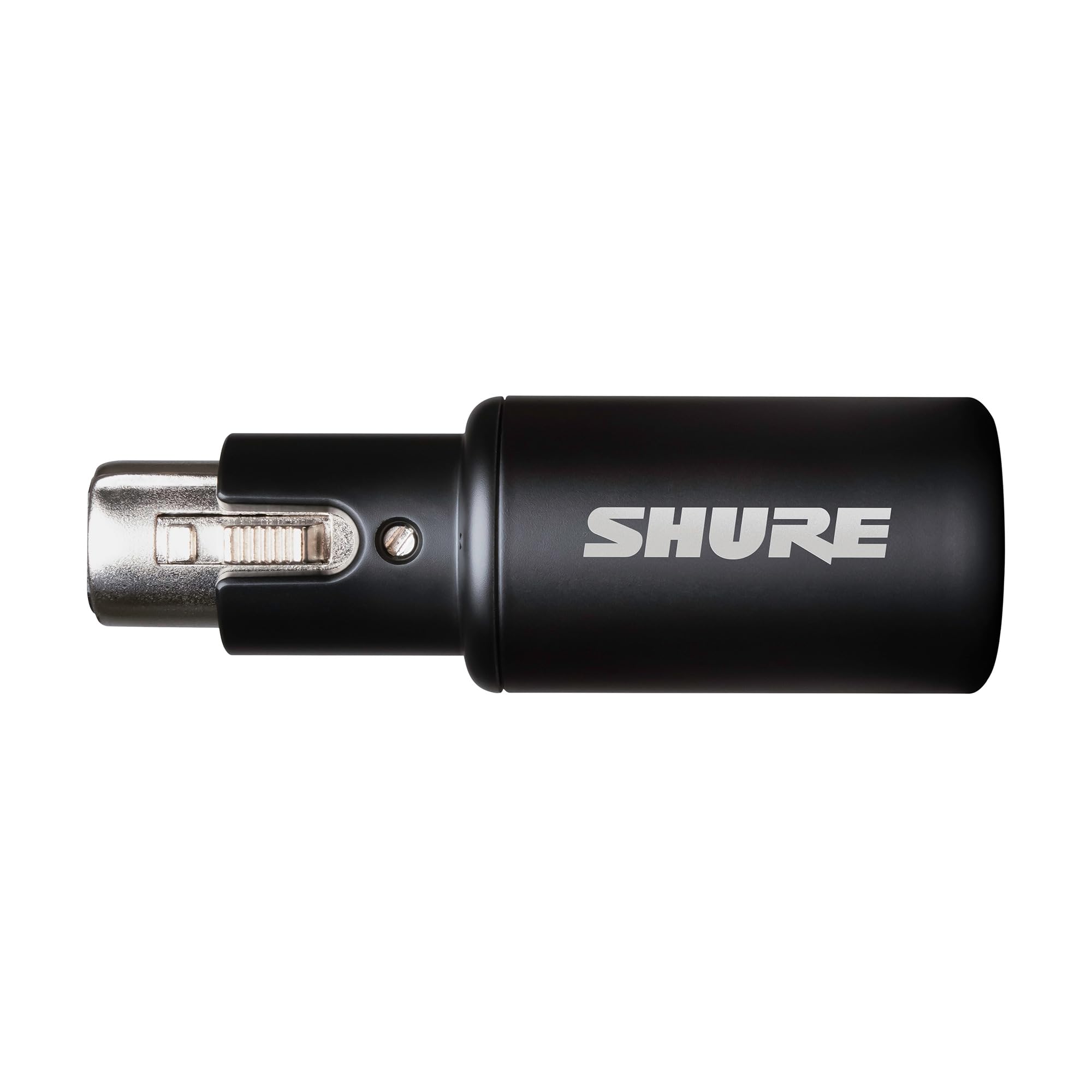
The Shure MVX2U Gen 2 is an ultra-compact XLR-to-USB-C adapter that packs professional-grade Digital Audio Processing into a tiny footprint you can clip to your mic cable. It provides up to +60 dB of clean gain and 48V phantom power, meaning you can drive demanding dynamic mics like the SM7B or condenser mics directly into your phone or laptop.
Onboard DSP includes Auto Level Mode, a Real-Time Denoiser, and a Digital Popper Stopper, all of which operate with zero-latency before the signal reaches your recording software. The MOTIV companion app allows deep control over EQ, compression, and tone shaping, letting you dial in a polished live-streaming or performance sound on the fly.
For performers who need to travel light, the MVX2U eliminates the need for a traditional desktop interface when working with a single microphone. The settings persist in the unit’s memory, so you can set your tone once and then connect to any USB-C device without reconfiguring software every time.
Why it’s great
- 0-latency DSP with Auto Level, Denoiser, and Pop Stopper
- +60 dB gain drives demanding mics without external preamps
- Settings persist in memory for plug-and-play across devices
Good to know
- Limited to a single XLR input only
- Not optimized for direct smartphone use; works best with computers
FAQ
What is the minimum number of inputs I need for a live duo performance?
Does a higher sample rate like 192 kHz matter for live performance?
Can I use a bus-powered interface with a phantom-powered condenser mic on stage?
Final Thoughts: The Verdict
For most users, the audio interface for live performance winner is the Behringer X AIR XR18 because it combines 16 high-quality Midas preamps with full wireless digital mixing and a multi-track USB interface in one rack-mountable unit. If you want UAD’s industry-leading DSP tracking and preamp emulations, grab the Universal Audio Apollo Solo Heritage Edition. And for battery-powered, independent multi-track recording on the go, nothing beats the Zoom LiveTrak L-8.