
Our readers keep the lights on and the weekend projects moving. As an Amazon Associate, I earn from qualifying purchases.
Surface rust on your car’s frame, a flaky patch on a fender, or a seized bolt on an exhaust manifold — these are the realities of metal exposed to oxygen, moisture, and road salt. The wrong rust remover wastes hours and money, while the right one converts corrosion into a paintable, stable surface or dissolves it down to bare metal without scrubbing.
I’m Rikta — the co-founder and writer behind FitlyFast. This guide is built on hundreds of hours of cross-referencing chemical formulations, application methods (spray, soak, dip, convert), and real-world user results across every price tier to separate the phosphate treatments from the acidic wash-offs and the chelating soaks.
Whether you’re restoring a classic car or just trying to keep your daily driver clean, finding the right product requires matching the chemistry to the job. That’s exactly what this guide to the best auto rust remover delivers: a clear breakdown of what works, for which surface, and why.
How To Choose The Best Auto Rust Remover
Picking the wrong product is the most common mistake beginners make. A spray acid converter applied to a heavily pitted frame will fail within a season. An immersion dip used on a large panel that can’t be removed wastes time and chemical. The decision comes down to three factors: the degree of rust, the metal’s location, and what you plan to do after the rust is gone.
Rust Converter vs. Remover vs. Inhibitor
A converter (like Ospho) uses phosphoric acid to turn iron oxide (red rust) into iron phosphate (a stable black surface that accepts paint). This is ideal for surface rust on frames, body panels, or farm equipment you plan to paint over. A remover (like Evapo-Rust) dissolves rust down to bare metal via chelation — it grabs iron ions and pulls them into solution. No sanding, no acid burns. An inhibitor (like CorrosionX) creates a moisture-blocking film after rust is already removed. For automotive use, you almost always need either a converter (before paint) or a remover (before bare-metal preservation).
Application Method: Spray, Soak, or Aerosol
Spray-on converters are best for horizontal accessible surfaces like truck beds, floor pans, or engine bays. Immersion soaking is non-negotiable for complex parts like brake calipers, gas tanks, or chain binders — only total submersion reaches every crevice. Aerosol internal frame coatings (like Eastwood’s) use a wand to inject the product into closed cavities such as chassis rails or rocker panels where neither spray nor soak can reach. Match the method to the geometry of the part, not the size of the bottle.
Measuring the Real Cost Per Application
An entry-level spray bottle may cost less, but you may need multiple cans to cover a full frame. A gallon of concentrate (like Rust911) that makes 4 gallons of working solution often works out to be more economical per square foot, especially if you reuse the solution until it darkens. A ready-to-use product like Evapo-Rust costs more upfront but requires zero mixing, zero waste, and lasts years in a sealed container. Always calculate the total coverage area and the number of applications you need before comparing price.
Quick Comparison
On smaller screens, swipe sideways to see the full table.
| Model | Category | Best For | Key Spec | Amazon |
|---|---|---|---|---|
| Evapo-Rust (5 Gal) | Immersion Remover | Submersion soaking of parts | 5 Gallons, ready-to-use | Amazon |
| Rust911 (32 oz) | Concentrated Remover | High-volume soaking | 32 oz makes 4 gallons | Amazon |
| Ospho (Gallon) | Rust Converter | Pre-paint surface prep | 1 Gallon, phosphoric acid | Amazon |
| CorrosionX (16 oz) | Inhibitor + Lube | Marine/coastal protection | 16 oz aerosol, dielectric | Amazon |
| Eastwood Frame Coating | Aerosol Wand Coating | Internal chassis cavities | 14 oz, 360° spray wand | Amazon |
| CARPRO IronX (500 mL) | Iron Particle Remover | Paint decontamination | 17 oz, pH neutral | Amazon |
| Malco Tire Lube (Gal) | Tire Mounting Lube | Rim rust protection | 1 Gallon, rust-inhibiting | Amazon |
In‑Depth Reviews
1. Evapo-Rust The Original Heavy Duty Rust Remover (5 Gal)

Evapo-Rust sets the standard for immersion rust removal. Its water-based, chelating formula pulls rust off bare metal without acids, fumes, or scrubbing. A 5-gallon bucket is the right volume for soaking brake calipers, gas tanks, engine brackets, or a batch of hand tools — users report the same bucket lasting through multiple projects over several years when kept sealed.
This is not an aerosol or a spray converter. It’s a full submersion approach: degrease the part, drop it in, wait 12-24 hours, rinse with water, and apply a protective coating immediately since the bare metal will flash-rust in humid air. Reviews consistently describe the results as “sorcery” and “unbelievable,” with heavily rusted chain binders and 30-year-old chisels restored to like-new condition.
On the downside, the 5-gallon container lacks a pour spout, which makes dispensing a two-person job. It also cannot be used on large body panels that cannot be removed and submerged. Budget-conscious buyers should note that the ready-to-use formula costs more upfront than concentrates, but the reusability offsets the initial investment over time.
Why it’s great
- Removes rust to bare metal with zero scrubbing
- Non-toxic, non-corrosive, and biodegradable
- Reusable until solution turns black
Good to know
- Large and heavy at 45 pounds
- Requires immediate post-soak rust protection
2. Rust911 Rust Remover Dissolver (32 oz)

Rust911 brings a budget-friendly edge to immersion chemistry without sacrificing performance. The 32-ounce bottle of ultra-concentrate makes four gallons of working solution, giving you volume for larger parts or multiple soaking sessions. Users have successfully de-rusted entire gas tanks from a 1995 BMW 318i and a 77-year-old antique car in a matter of hours to a couple of days.
Like Evapo-Rust, it is acid-free and non-toxic, making it safe for bare metal, aluminum, brass, and chrome. The key difference is the concentration-to-cost ratio: one 32-ounce bottle treats up to 600 pounds of lightly to moderately rusted steel. The unmixed concentrate stores for up to five years, so you can prepare only the amount you need.
Warmth accelerates the reaction — users report better results with a fish tank heater or a halogen work light near the soak tank. Cold water alone may require significantly longer soak times. The product will remove rust but leaves a dark residue that must be scrubbed away or removed with abrasive media on complex parts.
Why it’s great
- Extremely economical per gallon of working solution
- Safe on multiple metals including aluminum and chrome
- Concentrate stores for up to 5 years
Good to know
- Requires heat for best results in cold conditions
- Does not remove paint or primer effectively
3. Ospho Metal Treatment (Gallon)
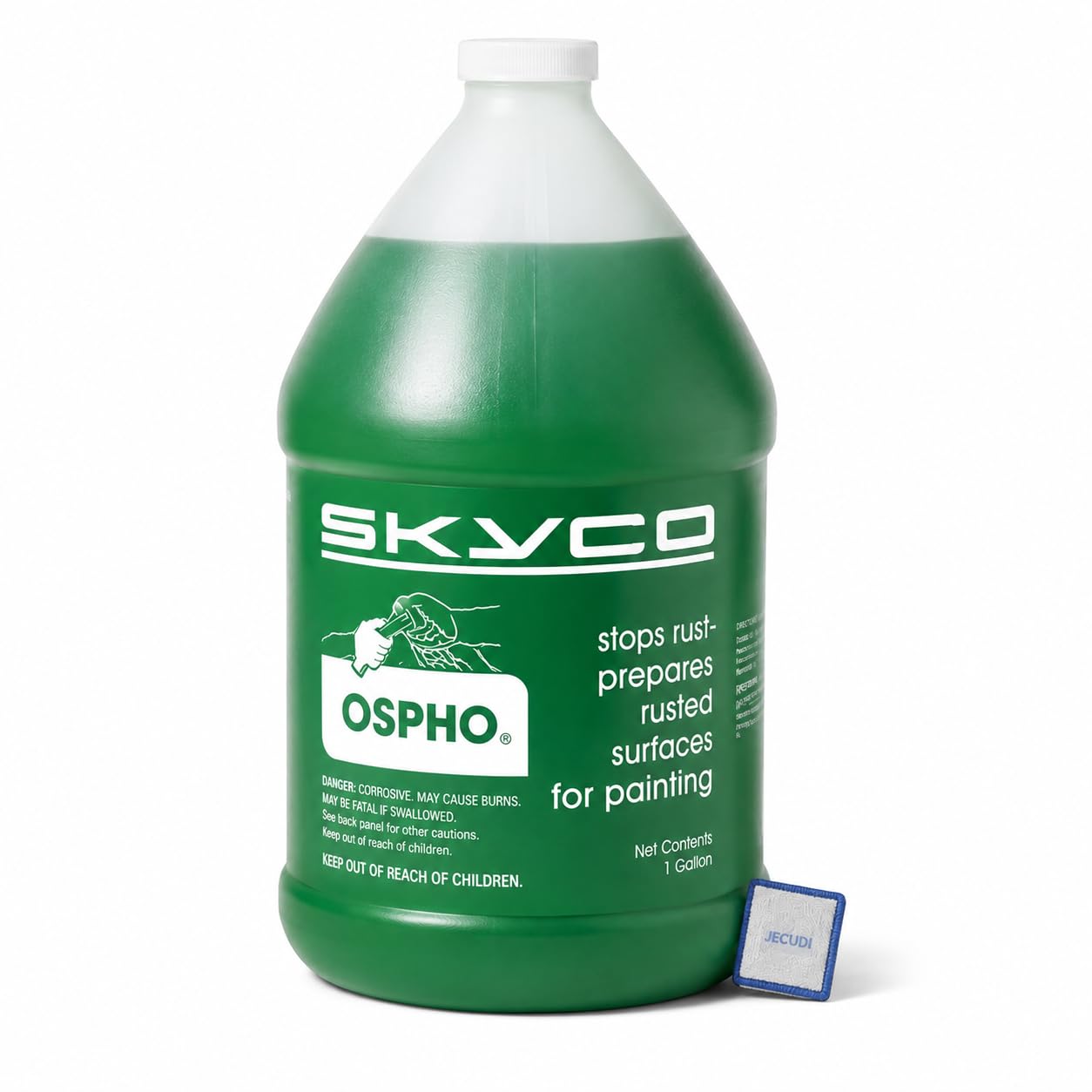
Ospho is the professional’s choice for surface rust conversion before painting. It uses phosphoric acid to chemically change red rust (iron oxide) into black iron phosphate, a paintable primer-like surface. This is not a remover — it leaves the converted layer intact, providing a strong bond for topcoats. Professionals use it on truck frames, boat hulls, and heavy equipment.
Application requires removing loose rust scale first with a wire wheel or needle scaler. A brush-on application followed by a 24-hour wait yields a black, stable surface that rust won’t return through. Multiple reviews confirm it “destroyed all rust” on pickup frames after two coats and a wash with dish soap. The gallon size covers a full frame or a large boat with room to spare.
The formula is compatible with most automotive paints, wiring, hoses, and decals, so overspray is less of a concern than with harsh acid dips. However, it does not remove heavy pitting or loose scale — that mechanical prep is on you. Also, if you leave excess fluid on clean bare metal, it can leave a white crystalline residue that must be wiped off immediately.
Why it’s great
- Converts rust into a paintable surface
- Compatible with most vehicle paints and decals
- Large gallon volume covers big jobs
Good to know
- Requires mechanical rust scale removal first
- Can cause skin irritation — wear gloves
4. Eastwood Internal Frame Coating Aerosol (14 oz)

Eastwood’s Internal Frame Coating is purpose-built for the single hardest rust spot on a vehicle: the inside of frame rails and rocker panels. The aerosol comes with an extension wand that sprays 360 degrees, coating inner cavities that no brush, spray gun, or dip tank can reach. It acts as both a rust preventer and a destroyer, converting light surface rust while sealing future moisture out.
Users on a Jeep JKU project found the “360 spray wand” ensured complete even coverage in all directions. The coating dries to a hard gloss black finish within 24 hours and is waterproof once cured. Reviews consistently mention that you need more cans than you think — a full truck frame may require three or more to cover both rails from front to back.
The downside is the tube’s tendency to flail without support; a taped hanger improves control. The fumes are potent, requiring a well-ventilated area or a respirator with organic vapor cartridges. For the specific use case of protecting closed cavities from internal rust, this product has no direct competitor in its form factor.
Why it’s great
- 360° wand reaches every angle inside a frame rail
- Combines rust converter and moisture-sealing coating
- Hard glossy finish lasts years in cavities
Good to know
- Very strong fumes — requires a respirator
- Plan for 2-3 cans for a full truck frame
5. CorrosionX Rust Inhibitor (16 oz Aerosol)

CorrosionX is not a rust remover — it’s a high-performance inhibitor and lubricant that you apply after the rust is gone. Its oil-based formula bonds to metal at the molecular level, creating a self-healing dielectric film rated over 39,000 volts that displaces moisture and stops galvanic corrosion. The U.S. Navy qualified it under the Advanced Corrosion Preventive Compound military spec, which tells you the level of waterproofing it provides.
On a car, this is the product for battery terminals, electrical connectors, exposed bolts on the undercarriage, and any hardware near the coast or on a winter salt route. It also functions as a penetrating oil and a light lubricant, making it effective on seized bolts, lock mechanisms, and cable pulleys. Users with boats and coastal gear call it “the best thing since oil” and note that WD-40 doesn’t come close.
The aerosol is convenient but messy — overspray on painted surfaces needs immediate wiping. It also cannot be used as a standalone rust converter; it protects, not converts. For long-term preservation in humid, salty, or wet environments, CorrosionX is the undisputed leader in its category.
Why it’s great
- Dielectric protection for electronics and connectors
- Self-healing film resists moisture and washout
- U.S. Navy qualified corrosion protection
Good to know
- Not a rust remover — use only after cleaning
- Overspray must be wiped off painted surfaces quickly
6. CARPRO IronX Iron Remover (500 mL)
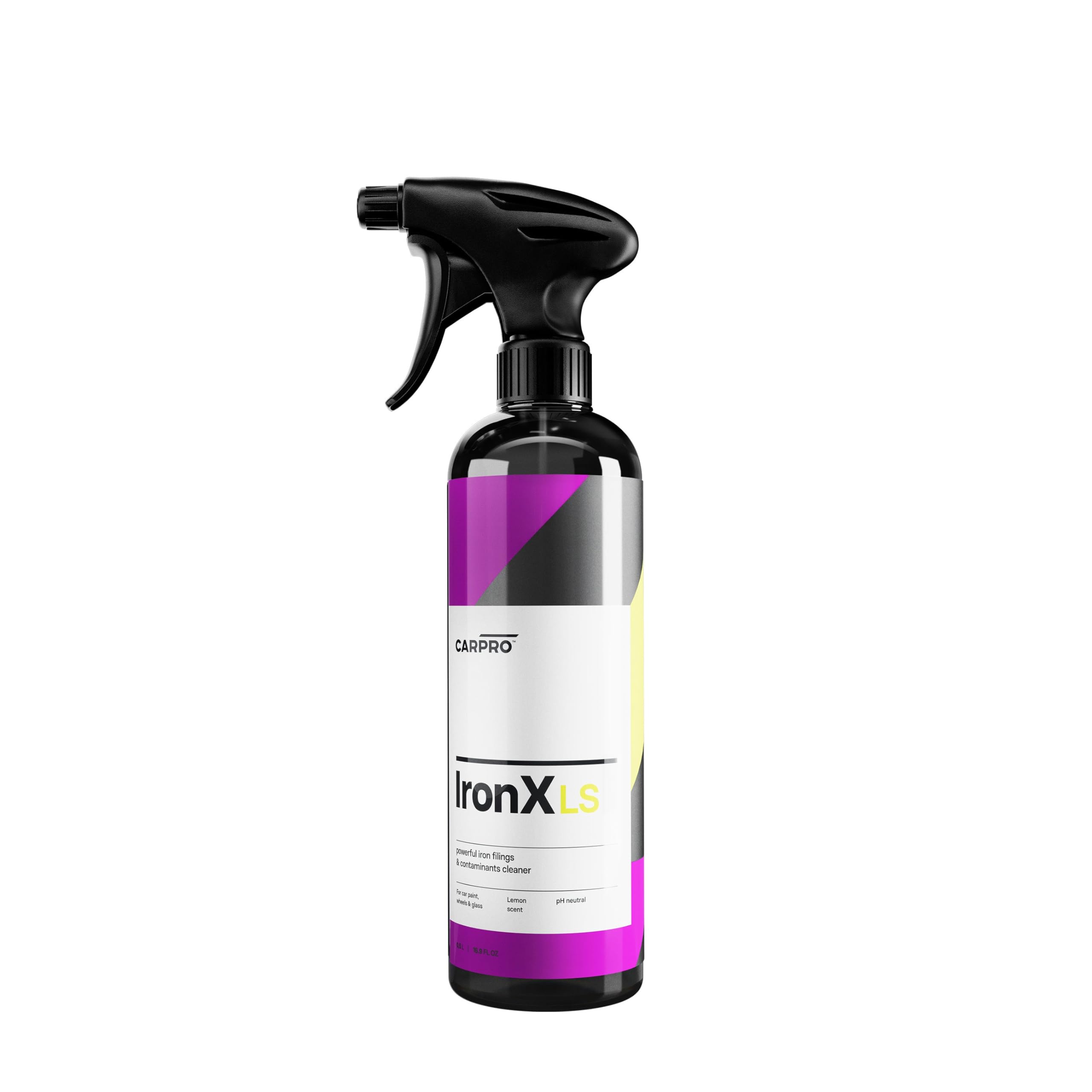
CARPRO IronX is a targeted iron particle remover for painted surfaces, wheels, and glass — not a product for dissolving heavy rust on frames. It is designed to decontaminate automotive paint by chemically breaking down hot brake dust and airborne iron fallout that embeds into clear coat. The new Lemon Scent formula is 10% more potent than the original and smells far better than the sulfur-like odor of earlier versions.
Application is simple: spray onto a dry painted surface while the car is cool and shaded, let it dwell for 3-5 minutes as it reacts (you’ll see purple bleeding as iron dissolves), then pressure rinse. Users report removing 3 years of rail dust from white Audi paint in three applications. It is safe on clear coat, polished metal, and glass, but it is not a heavy-duty rust remover for bare metal parts.
Despite the improved scent, the reaction still has a noticeable and somewhat unpleasant odor, and the included sprayer nozzle may be too long for the bottle’s neck. This is a detailer’s tool for maintaining paint integrity, not for bodywork or frame restoration. If your goal is a smooth, contamination-free surface before waxing or ceramic coating, IronX is the correct choice.
Why it’s great
- Removes embedded iron particles from clear coat
- pH neutral and safe on all wheel types
- Purple reaction shows exactly where iron is
Good to know
- Does not remove thick, flaky rust on bare metal
- Sprayer nozzle is awkward on the bottle
7. Malco Tire Mounting Lubricant (Gallon)

Malco’s Tire Mounting Lubricant is a niche but essential product for anyone who mounts tires at home or in a shop. Its primary job is reducing friction during tire mounting and bead seating, but it includes rust-inhibiting agents designed to reduce corrosion on steel and alloy wheels. This makes it a multi-functional tool for the garage: you get easier tire changes and rim protection in one step.
The silicone-free, soap-free formula is ideal for body shops where contamination control matters. Users on NoMar and Rabaconda tire changers praise its “thick consistency” and the fact that it evaporates within a day, leaving no sticky residue. It also works well for breaking beads on stubborn motorcycle tires and sealing tire stems.
It is not a dedicated rust remover — you won’t use this to soak a rusty bumper or convert rust on a frame. Its value is specific to wheel and tire maintenance. If you change tires regularly or work on trailers, ATVs, or farm equipment, the rust-inhibiting properties save your rims from the corrosion that typically forms at the bead seat over time.
Why it’s great
- Reduces friction during tire mounting
- Rust-inhibiting agents protect rims
- Silicone-free — safe for body shops
Good to know
- Not a general-purpose rust remover
- Runny consistency requires care during application
FAQ
Can I use a rust converter on a painted surface?
How long can I leave Evapo-Rust on a part before it damages the metal?
Does CorrosionX work on painted car surfaces as a rust inhibitor?
Final Thoughts: The Verdict
For most users, the best auto rust remover winner is the Evapo-Rust (5 Gal) because it handles the widest variety of jobs — from hand tools to brake calipers — with zero scrubbing, zero acid burns, and reusable chemistry that beginners and pros alike trust. If you want a concentrated solution that yields more volume per dollar for large soaking projects, grab the Rust911 (32 oz). And for converting surface rust on a frame before a fresh paint job, nothing beats the Ospho Gallon.