
Our readers keep the lights on and the weekend projects moving. As an Amazon Associate, I earn from qualifying purchases.
Bonding soft, porous foam to slick, non-porous plastic is one of the trickiest tasks in any workshop. The wrong adhesive either melts the foam into a gooey mess or simply peels away from the plastic surface after a few days. You need a formula that grabs both materials aggressively without chemically attacking the foam core.
I’m Rikta — the co-founder and writer behind FitlyFast. I’ve spent countless hours analyzing adhesive chemistries, reading real-world user feedback, and cross-referencing technical data sheets to find the few formulas that actually deliver on their promise of a permanent foam-to-plastic bond.
After sorting through dozens of candidates, I’ve narrowed the field to seven proven performers. Whether you are repairing an RC plane, upholstering a car interior, or building props, this guide to the adhesive for foam to plastic will help you pick the right weapon for your specific job.
How To Choose The Best Adhesive For Foam To Plastic
Selecting the right adhesive starts with knowing exactly what kind of foam and plastic you are bonding. Open-cell foams soak up liquid adhesives, while closed-cell EPS foam dissolves on contact with strong solvents. Polyethylene and polypropylene plastics are notoriously low-energy surfaces that reject most glues. The right choice balances chemical compatibility, bond flexibility, and application convenience.
Chemistry Is King: Neoprene vs. Spray vs. Specialty Foam Glue
Neoprene-based contact adhesives create a flexible, waterproof bond that grips both foam and plastic without melting either. Spray adhesives cover large surface areas evenly but require careful masking to avoid overspray. Specialty foam glues like Beacon Foam-Tac include UV blockers and adhesion promoters specifically formulated to grip tricky plastics while remaining foam-safe. Avoid superglue (cyanoacrylate) on flexible foams — it dries brittle and cracks under movement.
Open Time and Clamping Pressure
Open time refers to how long the adhesive remains workable after application. Contact cements need you to wait until the glue is tacky before pressing parts together — typically 10 to 15 minutes. Spray adhesives like the Gorilla Heavy Duty offer a repositionable window of about 10 minutes before the bond becomes permanent. For large panels or complicated assemblies, longer open time reduces stress and improves alignment. Proper clamping pressure ensures intimate contact between the glue line and both surfaces.
Quick Comparison
On smaller screens, swipe sideways to see the full table.
| Model | Category | Best For | Key Spec | Amazon |
|---|---|---|---|---|
| 3M Hi-Strength 94 ET Spray | Heavy-Duty Spray | Large panel lamination | 60-min bonding range | Amazon |
| Beacon Foam-Tac | Specialty Glue | RC plane foam repair | UV-blocking formula | Amazon |
| Gorilla Heavy Duty Spray | Multi-Surface Spray | Craft and DIY projects | 10-min reposition time | Amazon |
| Hot Wire Foam Factory StyroGoo | Foam-Safe Glue | EPS/XPS foam projects | Instant tack formula | Amazon |
| Gorilla Max Strength Construction | Construction Paste | Vertical gap-filling bonds | Waterproof under water | Amazon |
| RH Adhesives S-18 | Contact Cement | Rubber-to-metal bonding | Neoprene-based formula | Amazon |
| Wonshine Contact Cement | Brush-On Cement | Small repairs and edges | Built-in brush tip | Amazon |
In‑Depth Reviews
1. 3M Hi-Strength 94 ET Spray Adhesive
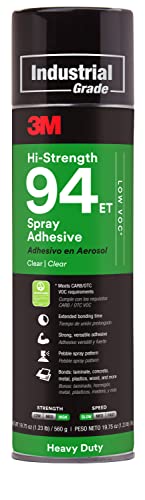
The 3M Hi-Strength 94 ET is the undisputed heavyweight champion for bonding foam to plastic, especially over large surface areas. Its spray pattern delivers an even, aggressive tack that grips low-energy plastics without curling foam edges. The open time extends up to 60 minutes — unheard of in the spray adhesive world — giving you plenty of room to align large panels like soundproofing foam or automotive carpeting.
Users report that this stuff holds foam securely to plastic surfaces even in freezing temperatures, which speaks to its flexible bond line that doesn’t become brittle. It is also CARB compliant and GREENGUARD certified, meaning it emits fewer volatile organic compounds than standard industrial sprays. That said, the solvent smell is still potent — gloves and a respirator are non-negotiable for indoor work.
The 19.75 oz can provides excellent coverage for big jobs, and the longer open time reduces the panic factor during complex laminations. If you need a single adhesive that reliably bonds dense foam to polypropylene or ABS panels, the 94 ET is your go-to.
Why it’s great
- Long 60-minute bonding window allows precise alignment
- Aggressive tack holds foam to low-energy plastics
- GREENGUARD certified with lower VOC output
Good to know
- Strong solvent odor requires good ventilation
- Larger can size may be overkill for small repairs
2. Beacon Foam-Tac Powerful Glue
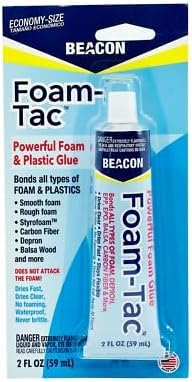
Beacon Foam-Tac was purpose-built for the RC community, and it shows in every detail. The formula includes an adhesion promoter that helps it grab onto low-surface-energy plastics like those used in EPO and EPP foam models. It also contains UV blockers, so repairs exposed to sunlight won’t yellow or degrade over time — a critical feature for outdoor flying machines.
The glue applies as a thick, stringy liquid that behaves like contact cement. You coat both surfaces, let it get tacky for a few minutes, and then press them together. The bond is flexible enough to absorb the vibrations of a flying wing yet strong enough to hold motor mounts. Users appreciate that it doesn’t melt foam the way CA glue can, and cleanup is easier than with epoxy.
One caveat: the extreme thickness makes application messy without a practice run. Some users wish the bottle included a precision nozzle, and the stringy texture can be frustrating until you learn the right technique. For dedicated RC builders, however, Foam-Tac remains the gold standard.
Why it’s great
- UV blockers prevent outdoor yellowing
- Adhesion promoter bonds stubborn plastics
- Flexible cure withstands vibration
Good to know
- Thick, stringy application takes practice to control
- No applicator nozzle included in the bottle
3. Gorilla Heavy Duty Spray Adhesive
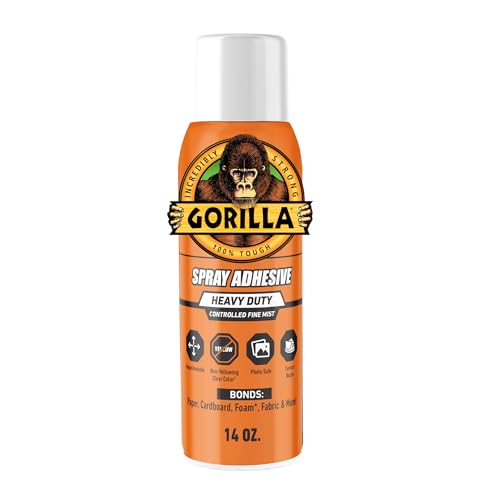
Gorilla’s entry into spray adhesives delivers exactly what the brand is known for: brute-force bonding in a user-friendly package. The wide-pad nozzle produces a controlled, fine mist that coats foam and plastic evenly without pooling. The 10-minute repositionable window is generous enough for mounting foam board to plastic signs or attaching fabric-backed foam to plastic car parts.
The formula dries crystal clear and resists yellowing over time, which matters for visible seams on craft projects. Users consistently praise the can’s longevity — a single 14 oz can lasts through multiple sizable projects. It bonds paper, cardboard, fabric, foam, wood, metal, and plastic, making it a versatile addition to any workshop.
Overspray is minimal compared to cheaper aerosol cans, but the spray still drifts in open air. Work outdoors or in a well-ventilated area with drop cloths. For a multi-surface spray that handles foam-to-plastic joints without melting or wrinkling, this is the one to beat for the price.
Why it’s great
- Fine mist spray reduces waste and pooling
- 10-minute reposition window aids alignment
- Non-yellowing finish for visible seams
Good to know
- Overspray still requires careful masking
- Best used in ventilated or outdoor spaces
4. Hot Wire Foam Factory StyroGoo
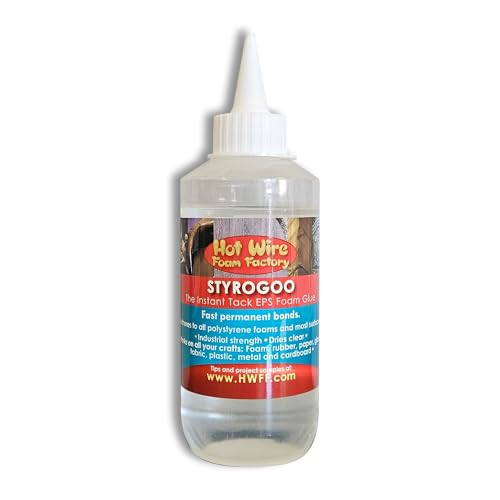
Hot Wire Foam Factory built StyroGoo specifically for EPS and XPS foam, the delicate white and pink insulation boards that dissolve under most solvent-based adhesives. Its water-clear, solvent-free formula bonds foam to wood, metal, glass, and plastic without any chemical melting. The “instant tack” claim holds up — you get immediate grab that lets you position parts and trust them to stay.
This glue is a favorite among model railroaders and holiday village creators who need to attach foam scenery elements to plastic bases. The squeeze bottle offers good control for fine work, and the 12-hour full cure is faster than many contact cements. Users report it stays flexible after curing, which prevents cracking when the foam expands or contracts with temperature changes.
Because it is solvent-free, there is virtually no odor, making it one of the few adhesives in this category that is pleasant to use indoors. The trade-off is that it may not have the sheer peel strength of neoprene-based products on very smooth plastics. For lightweight foam attachments, it is an excellent, non-toxic choice.
Why it’s great
- Solvent-free formula won’t melt EPS/XPS foam
- Instant tack allows immediate positioning
- Low odor and safe for indoor use
Good to know
- Lower peel strength on very smooth plastics
- Not ideal for high-stress structural bonds
5. Gorilla Max Strength Construction Adhesive
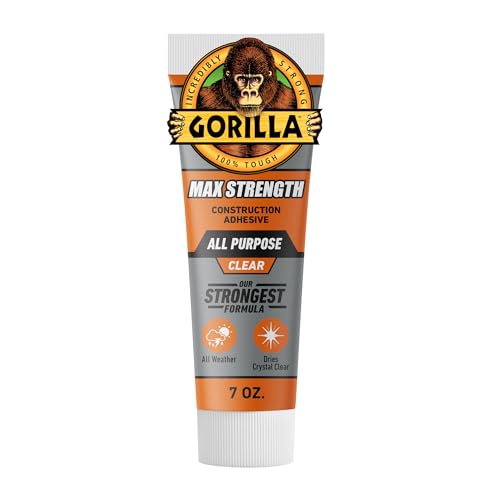
When you need a construction-grade bond that fills gaps and works underwater, the Gorilla Max Strength Construction Adhesive steps up. This clear hybrid paste applies like a thick caulk and remains workable for up to 30 minutes. It is 100% waterproof and bonds wet surfaces, making it the go-to for bonding foam insulation panels to plastic shower surrounds or outdoor foam props to plastic bases.
The cured adhesive is paintable and sandable, which is rare for a foam-safe construction adhesive. Users have used it to repair car interiors, seal outdoor wood projects, and bond foam to plastic with impressive tensile strength. The reusable nozzle design is practical for multiple uses, and the paste consistency supports vertical application without sagging.
The main trade-off is cure speed — it needs a full 24 hours to reach maximum strength and requires clamping during that period. It is also very sticky and difficult to clean off skin without rubbing alcohol. For heavy-duty projects where waterproofing and gap-filling matter more than speed, this is the best option.
Why it’s great
- 100% waterproof and bonds wet surfaces
- Gap-filling paste stays on vertical panels
- Paintable and sandable after curing
Good to know
- 24-hour cure time requires patience and clamping
- Very sticky; hard to remove from skin
6. Wonshine Contact Cement Adhesive
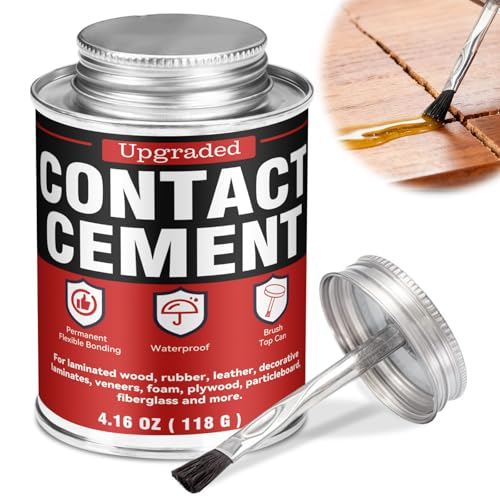
The Wonshine Contact Cement brings a practical brush-tip applicator that gives you pinpoint control for small repairs. This neoprene-based formula creates a strong, flexible bond ideal for attaching foam edge banding to plastic shelving, fixing foam-backed sneaker soles, or repairing foam padding on plastic furniture. The brush reaches into tight corners without overspray or waste.
Users report excellent results on laminate repairs, shoe soles, and stair treads — all applications where foam meets plastic with constant flexing. The bond remains pliable after curing, which prevents delamination under stress. The 4.16 oz bottle is small, but that is an advantage for occasional users who don’t want a half-cured tube sitting in their drawer.
The smell is typical of solvent-based contact cement — strong and pungent, requiring ventilation. The brush tip also means the glue can dry and clog the bristles if you don’t clean it immediately after use. For precision work on small foam-to-plastic joints, the control this bottle offers is hard to beat.
Why it’s great
- Brush tip allows clean, precise application
- Flexible bond resists cracking under stress
- Small size prevents waste for occasional users
Good to know
- Strong solvent odor needs good ventilation
- Brush can clog if not cleaned after each use
7. RH Adhesives S-18 All-Purpose Adhesive
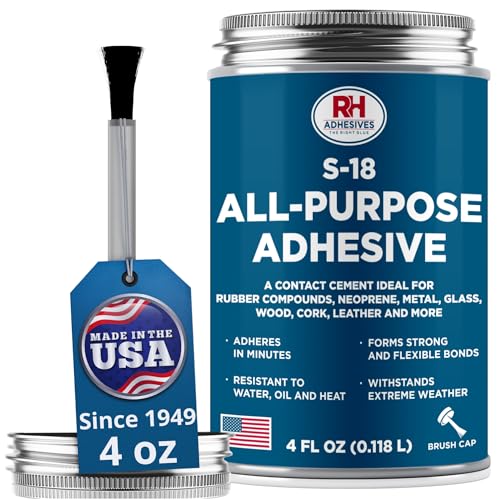
The RH Adhesives S-18 is an old-school neoprene contact cement that has been made in the USA since 1949. Its off-white liquid consistency spreads easily and creates a waterproof bond that works on rubber, metal, leather, felt, wood, neoprene, glass, and many plastics. It is particularly effective for bonding foam-backed rubber mats to plastic trays or attaching neoprene foam to plastic surfaces in marine applications.
Users have used it for leather boot repairs and attaching neoprene sheets to car bodies for hail protection, though one user noted that outdoor use in heat and rain eventually caused failure. Surface preparation is critical — sanding both sides and cleaning off old glue dramatically improves results. The 4 oz can is small but covers several small to medium jobs.
The formula requires a 24-hour full cure, and the solvent smell is intense enough that even customers warn about using it only in very well-ventilated areas. To revive thickened glue, adding a small amount of acetone works well. For DIYers who want a traditional contact cement that handles foam-to-plastic bonding with proper prep, the S-18 is a solid workhorse.
Why it’s great
- Proven neoprene formula made in America since 1949
- Water-resistant for marine and outdoor use
- Works on porous and non-porous materials
Good to know
- Intense solvent smell requires heavy ventilation
- Failed in outdoor heat and rain for some users
FAQ
Can I use superglue to bond foam to plastic?
How long do I need to clamp foam to plastic after applying adhesive?
Why does my adhesive keep peeling off the plastic side?
Final Thoughts: The Verdict
For most users, the adhesive for foam to plastic winner is the 3M Hi-Strength 94 ET Spray Adhesive because its long open time and aggressive tack handle both large panels and tricky low-energy plastics without melting foam. If you want a precision glue for RC planes and UV-exposed projects, grab the Beacon Foam-Tac. And for a budget-friendly spray that covers a wide range of craft and DIY jobs, nothing beats the Gorilla Heavy Duty Spray Adhesive.