
Our readers keep the lights on and the weekend projects moving. As an Amazon Associate, I earn from qualifying purchases.
A dedicated battery backup for your CPAP turns a blackout into a footnote, keeping your therapy running from the first drowsy breath until your alarm goes off.
I’m Rikta — the co-founder and writer behind FitlyFast. Over many hours of research, I’ve analyzed CPAP battery capacity specs, inverter efficiency ratings, and brand-specific compatibility requirements to build a guide that matches real machines to real power needs.
Whether you need a compact unit for weekend camping trips or high-capacity home backup for extended outages, this guide to the best battery backup for cpap breaks down every crucial spec so you can sleep soundly no matter what the grid does.
How To Choose The Best Battery Backup For CPAP
Buying a CPAP battery means matching three things: your machine’s power consumption, the number of nights you need to cover, and the ports required to connect everything. Here’s what matters most.
Capacity (Wh) vs. Your CPAP’s Power Draw
A ResMed AirSense 11 without a humidifier draws around 8–12 watts per hour. With a heated hose and humidity turned up, that number jumps to 30–60 watts. Divide the battery’s watt-hour (Wh) rating by your CPAP’s hourly draw to get runtime. For one night (8 hours), aim for at least 100Wh if you run dry, or 250Wh+ with a humidifier.
Pure Sine Wave Inverter Output
CPAP motors and pressure sensors are sensitive electronics. Pure sine wave output delivers clean, stable AC power that mimics wall current — dirty power or modified sine wave can cause buzzing, erratic pressure, or premature pump wear. Every product in this list uses pure sine wave inverters.
Port Compatibility & Pass-Through Charging
You need the right barrel connector or voltage setting for your specific CPAP brand — ResMed, Philips, and Fisher & Paykel all use different adapters. Some batteries include a dedicated CPAP cable kit. Pass-through charging lets you run the CPAP from grid power while the battery recharges, so it’s always topped off for the next outage.
Quick Comparison
On smaller screens, swipe sideways to see the full table.
| Model | Category | Best For | Key Spec | Amazon |
|---|---|---|---|---|
| BLUETTI Elite 30 V2 | Power Station | Compact home backup with UPS | 288Wh / 600W output / 10ms UPS | Amazon |
| GRECELL EB300 | Power Station | Multi-device camping and home use | 288.6Wh / 330W output / 9 ports | Amazon |
| BLUETTI Elite 100 V2 | Power Station | Multi-night CPAP + home essentials | 1024Wh / 1800W output / 10ms UPS | Amazon |
| Anker SOLIX C2000 Gen 2 | Power Station | High-power home backup + expandable | 2048Wh / 2400W output / 58-min charge | Amazon |
| EASYLONGER ES960 | CPAP Battery | Multi-night CPAP with cable kit | 297.6Wh LiFePO4 / 4 CPAP cables | Amazon |
| DaranEner NEOZ | Power Station | Budget single-night CPAP backup | 192Wh / 300W output / 5.73 lbs | Amazon |
| EASYLONGER ES400 AIR | CPAP Battery | Dedicated one-night CPAP travel unit | 148Wh / 4 CPAP cables / 2.05 lbs | Amazon |
| Jackery HomePower 3000 | Power Station | Whole-home backup for extended outages | 3072Wh / 3600W output / ≤20ms UPS | Amazon |
| EF ECOFLOW DELTA Pro | Power Station | Maximum capacity CPAP + home power | 3600Wh / 3600W output / expandable | Amazon |
In‑Depth Reviews
1. BLUETTI Elite 30 V2
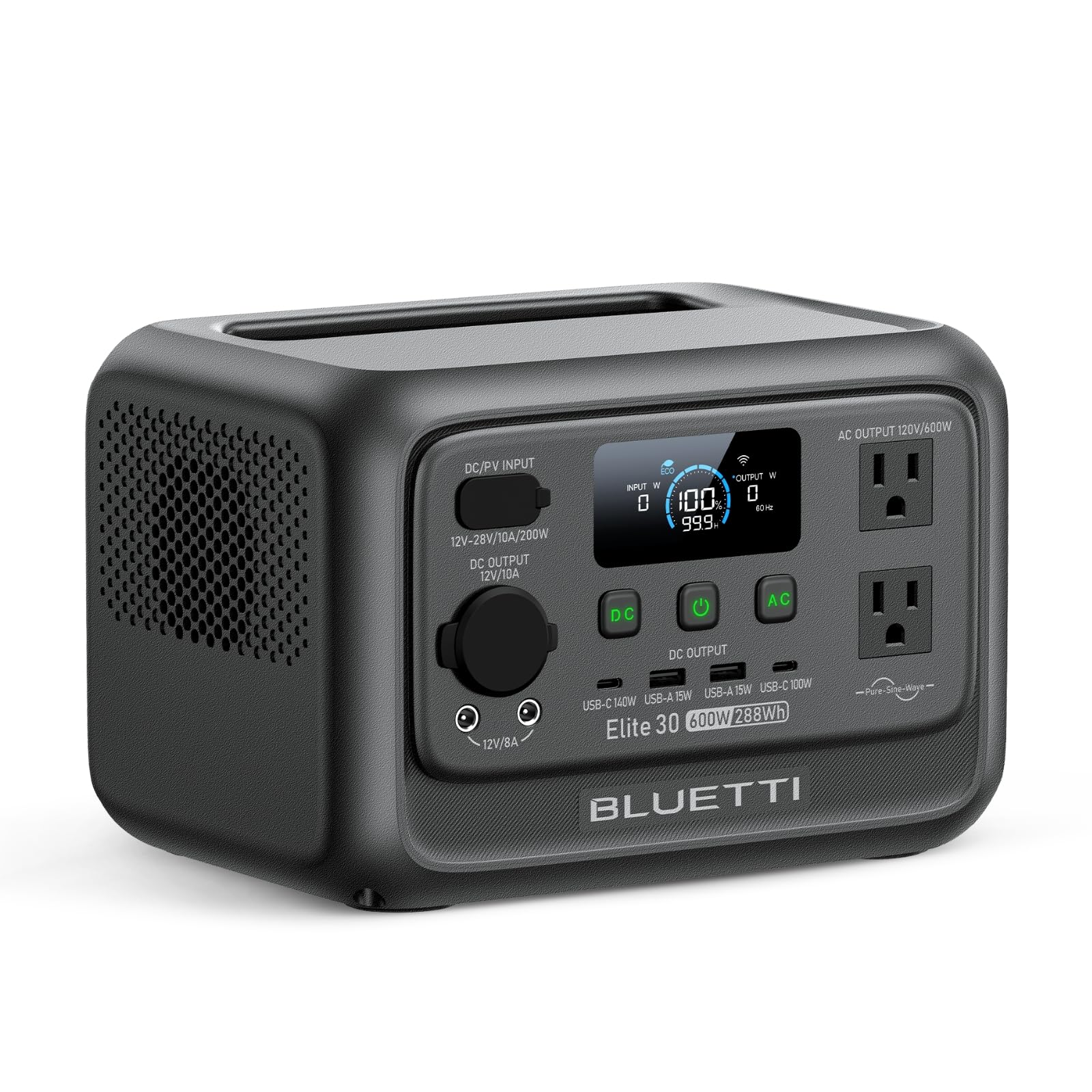
The BLUETTI Elite 30 V2 strikes an ideal balance between capacity, portability, and smart features for CPAP users. Its 288Wh LiFePO4 battery delivers enough juice for a full night on most machines with the humidifier turned low, and the 600W pure sine wave output handles any CPAP model without electrical noise.
You won’t even see the machine flicker. The Power Lifting mode pushes 1500W for brief surges, which covers the startup spike on machines with integrated heated humidifiers.
Weighing only 9.4 pounds, it’s light enough to carry from the nightstand to the campsite. Fast wall charging reaches 80% in 45 minutes, so even a short power window between outages tops you up. The BLUETTI app adds remote monitoring, letting you check remaining runtime from bed.
Why it’s great
- True 10ms UPS keeps CPAP running through grid blips
- LiFePO4 chemistry rated for 3500+ cycles
- Compact at 9.4 lbs for grab-and-go use
Good to know
- Not enough capacity for a full night with max humidifier + heated hose
- AC adapter included but solar panel sold separately
2. GRECELL EB300
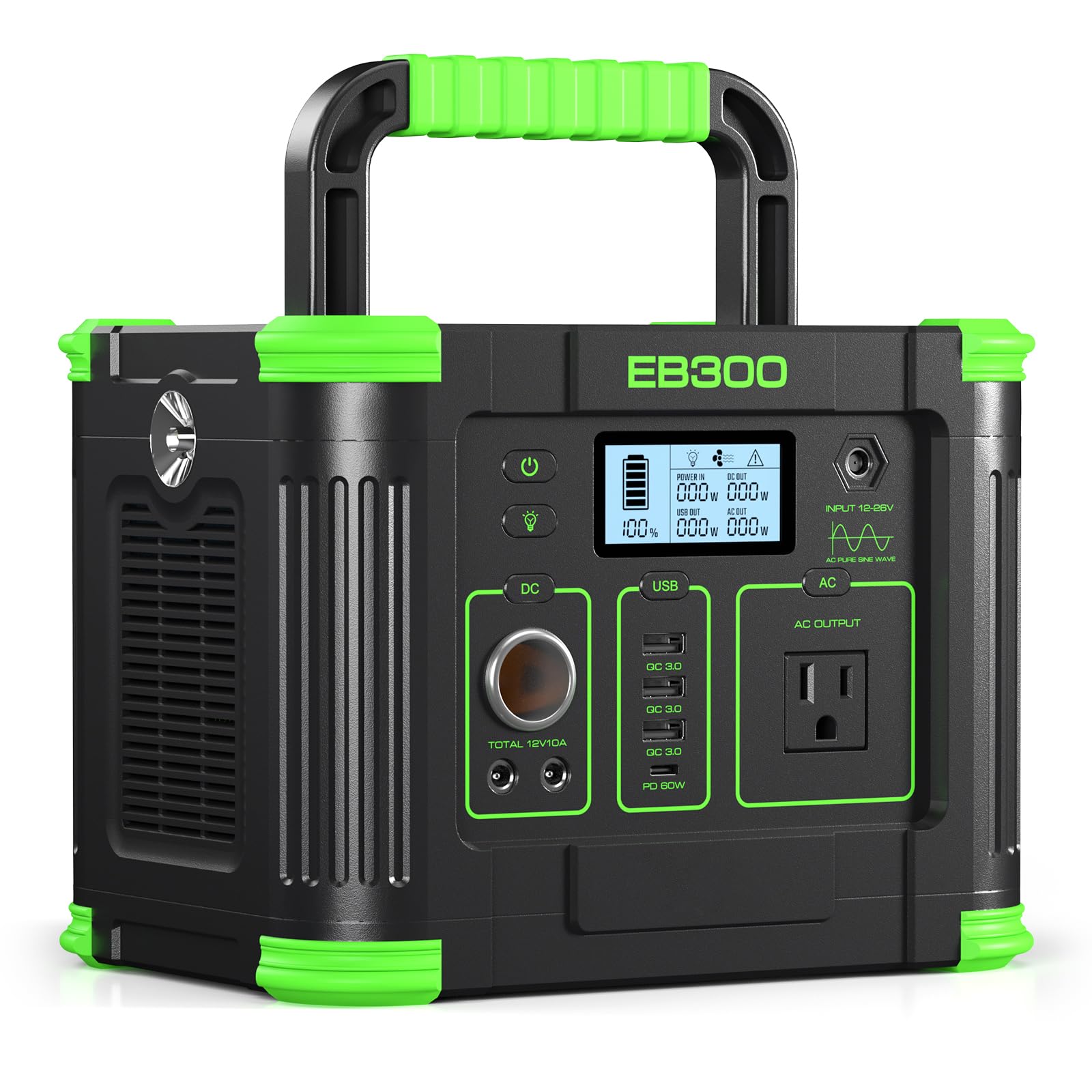
The GRECELL EB300 packs 288.6Wh into a rugged 5.3-pound chassis, making it one of the lightest mid-capacity options for CPAP backup. Its 330W pure sine wave inverter runs most CPAP machines with headroom to spare, and the 60W USB-C PD port can fast-charge a MacBook alongside your therapy device.
Nine output ports — including a 5W wireless charging pad on top — mean this unit earns its keep beyond sleep therapy. Use it to charge phones, run a laptop, or power a travel fan during camping trips. The smart MPPT solar controller boosts solar charging efficiency by 30%, handy for off-grid multi-day trips.
Real-world testing shows this battery powers a CPAP for 2–4 nights depending on humidity settings. Dual whisper-quiet fans keep temperatures safe without disturbing your sleep, and the built-in SOS flashlight adds emergency utility during blackouts.
Why it’s great
- Extremely portable at 5.3 lbs with grab handle
- Wireless charging pad eliminates cable clutter
- 9-port hub powers CPAP plus multiple accessories
Good to know
- No dedicated CPAP cable kit included — you supply your own adapter
- Fan can activate under heavy AC load
3. BLUETTI Elite 100 V2
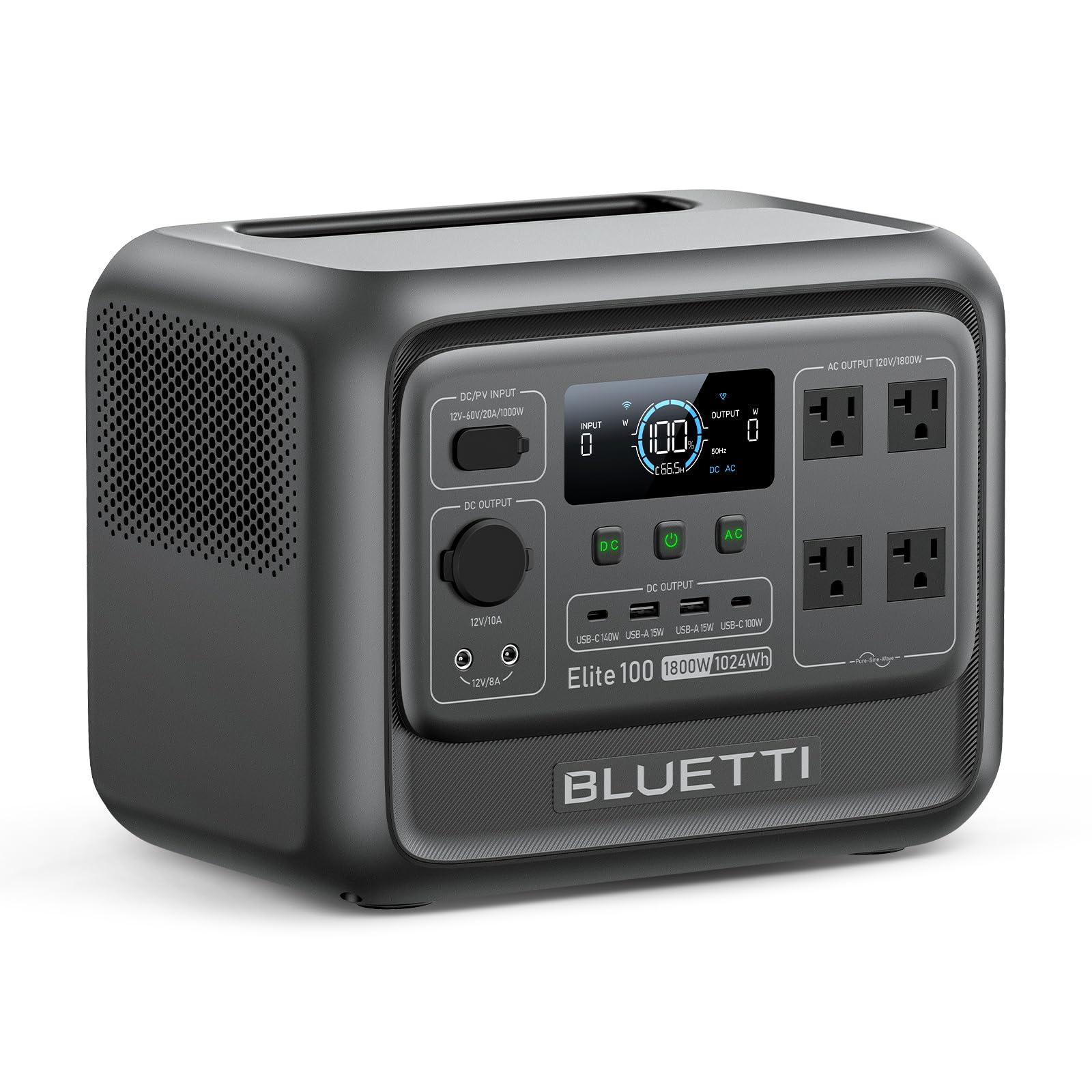
When you need multiple nights of uninterrupted CPAP therapy, the BLUETTI Elite 100 V2 delivers 1024Wh of LiFePO4 power in a surprisingly compact 25-pound package. It runs a ResMed AirSense 11 with humidifier for roughly 2–3 nights, or over 5 nights without humidity — enough to weather extended outages or week-long camping trips.
The 1800W pure sine wave inverter handles any CPAP on the market with massive headroom, plus you can simultaneously power a mini-fridge, laptop, and phone chargers. Its silent mode operates at just 30dB — quieter than a library — so the fan won’t disturb your sleep even when running AC loads.
Full recharge in 70 minutes via 1200W TurboBoost AC input means you can top up between sleep sessions. The built-in 10ms UPS keeps your CPAP running through zero-downtime switchover. Smart app control via Wi-Fi/Bluetooth gives real-time battery status and remote load management from your pillow.
Why it’s great
- 1024Wh covers 2–5 nights for most CPAP users
- 30dB silent mode won’t wake light sleepers
- Fast 70-minute wall recharge between uses
Good to know
- 25 lbs is manageable but heavier than compact units
- No built-in light or wireless charger
4. Anker SOLIX C2000 Gen 2
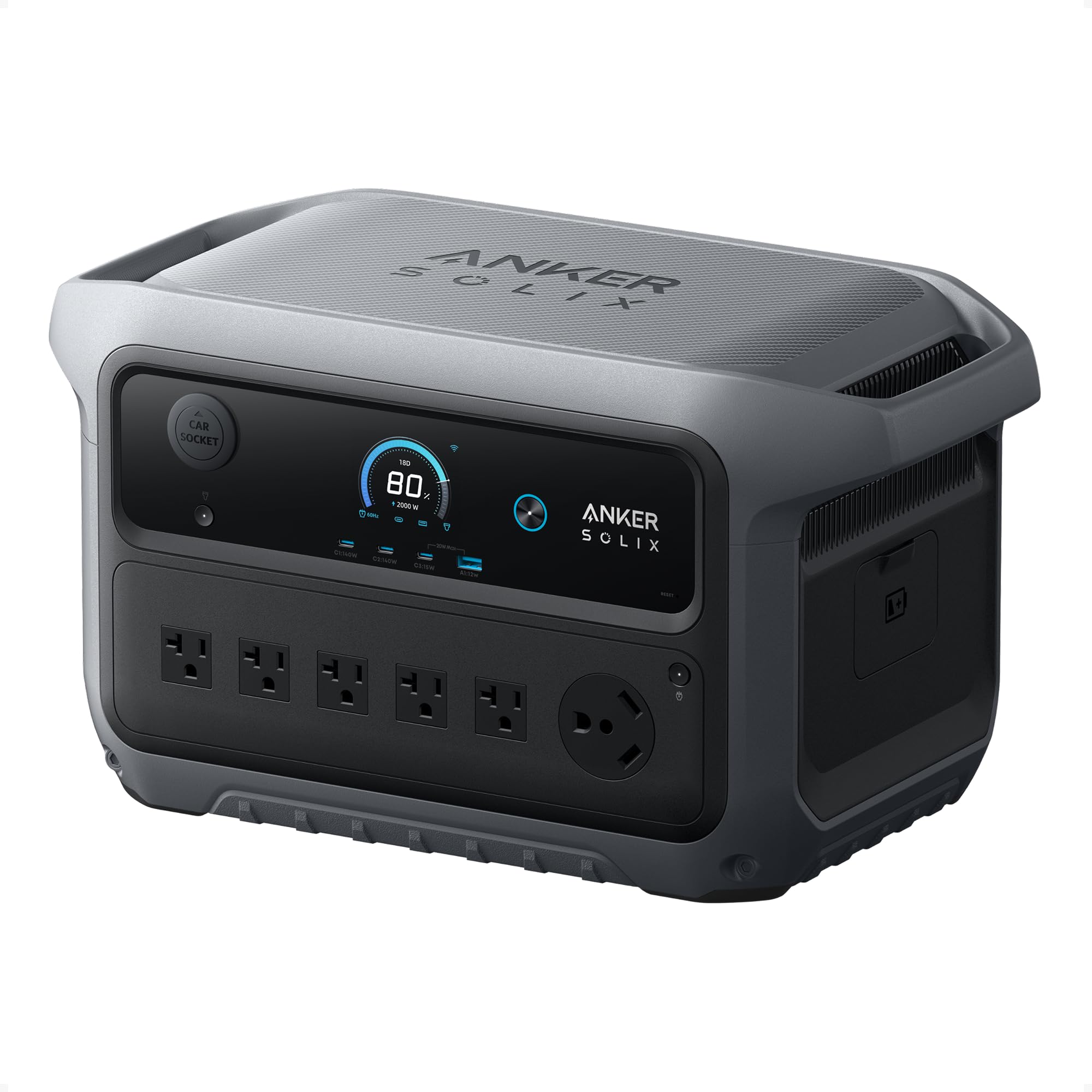
The Anker SOLIX C2000 Gen 2 brings 2048Wh of LiFePO4 storage with a staggering 2400W rated output (4000W peak), enough to run a CPAP machine for a week straight while simultaneously powering a mini-fridge, TV, and lights. For CPAP users who want home backup that doubles as whole-house emergency power, this is the sweet spot.
Full recharge in just 58 minutes via AC is the fastest in this class — you can juice it back to 100% during a single meal break. The 800W alternator charging option refills from your car in 3 hours, making it road-trip ready. Standby power draw is only 9W, so it won’t drain itself sitting idle between uses.
Expandable to 4kWh with an extra battery, the C2000 Gen 2 runs a dual-door fridge for up to 64 hours alongside CPAP therapy. Despite the massive capacity, Anker shrunk the footprint 29% compared to similar units, and at 41.7 lbs it rolls easily on its built-in handle design.
Why it’s great
- 2048Wh capacity runs CPAP for 6–10 nights
- 58-minute full recharge is industry-leading fast
- Expandable to 4kWh for extended emergencies
Good to know
- 41.7 lbs is best kept stationary rather than daily carry
- No dedicated CPAP adapter kit — use standard AC cord
5. EASYLONGER ES960

The EASYLONGER ES960 is built specifically for CPAP users, not general power needs. Its 297.6Wh LiFePO4 battery supports 2+ nights of therapy without humidifier, and it ships with four DC cables covering ResMed AirSense 10/11, AirCurve 10/11, AirMini, S9, Philips DreamStation 1/2, and Luna G3 (heated tube excluded).
This unit solves the voltage-setting headache many CPAP batteries create — you dial in your machine’s required voltage on the display, and the battery delivers clean DC power directly without inverter losses. That efficiency translates to more runtime per watt-hour compared to running AC through a power supply.
The ES960 also functions as a general power station with six output ports for laptops, phones, and car accessories. Pass-through charging lets you power your CPAP while the battery recharges from the wall, keeping it topped off between sleep sessions. The 3000+ cycle LiFePO4 cells mean years of nightly use.
Why it’s great
- 4 CPAP cables included — no adapter shopping needed
- Direct DC output minimizes inverter efficiency loss
- 3000+ cycle lifespan for long-term daily use
Good to know
- Exceeds TSA 160Wh limit — not allowed in carry-on luggage
- No 12V car charging cable included
6. DaranEner NEOZ
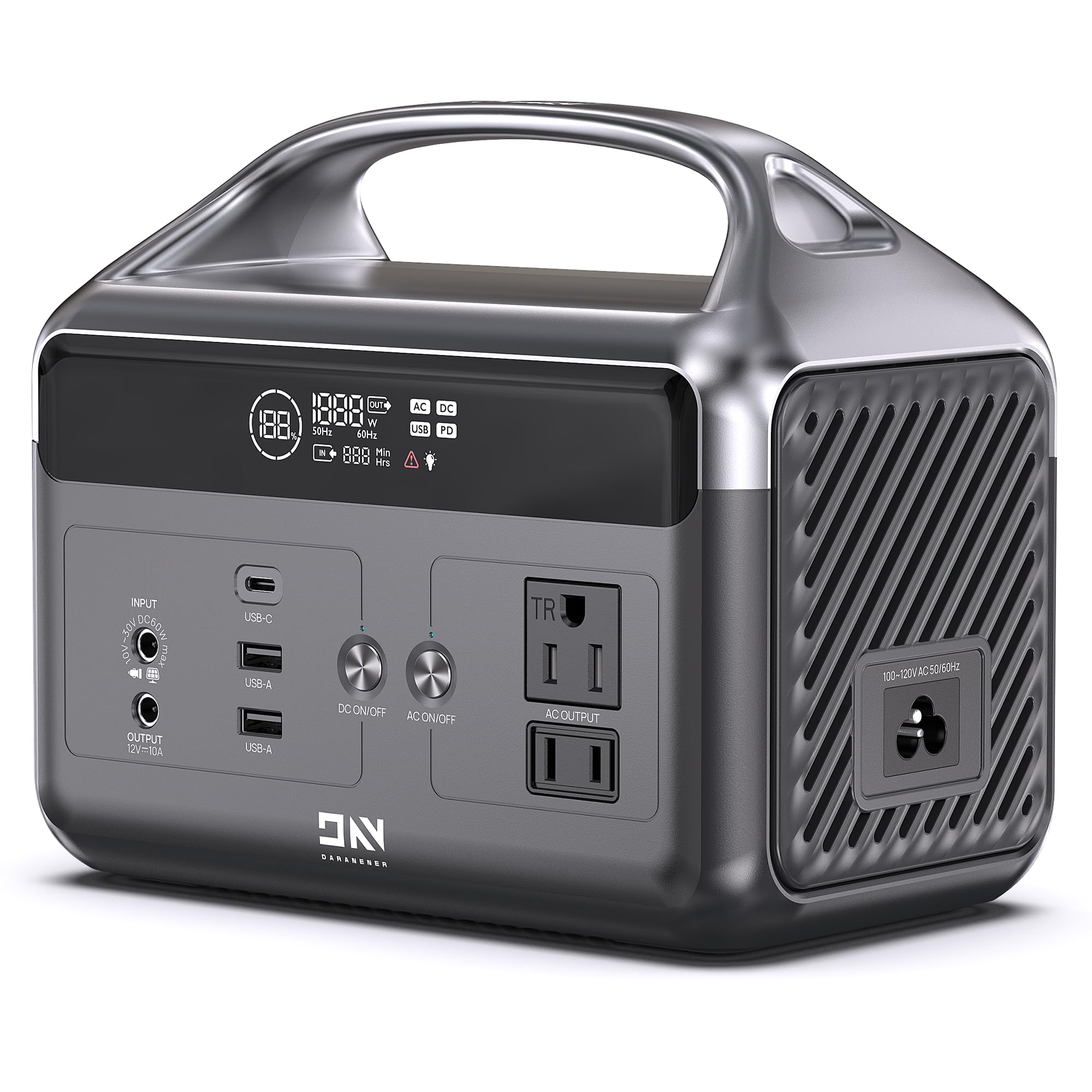
The DaranEner NEOZ proves effective CPAP backup doesn’t require a big budget. Its 192Wh capacity delivers roughly one full night for most machines running without humidifier, and the 300W pure sine wave AC output handles the startup load of ResMed and Philips units without issue.
At just 5.73 pounds and smaller than a toaster, this slips into a CPAP travel bag or bedside drawer easily. Six output ports (2x AC, USB-C PD 60W, 2x USB-A QC 3.0, 12V DC) cover both your machine and phone charging overnight. The built-in SOS flashlight with four brightness modes is a practical addition for blackout scenarios.
LiFePO4 chemistry with 3500+ cycles means this budget unit won’t degrade after a dozen uses. Customer reports confirm it runs a CPAP machine most of the night on a single charge, and the company’s responsive customer service handles any defects quickly. For occasional backup or short camping trips, it punches well above its weight.
Why it’s great
- Excellent entry-level price for LiFePO4 chemistry
- Ultra-portable at 5.73 lbs
- SOS flashlight adds emergency utility
Good to know
- 192Wh requires humidifier/heated tube off for full night
- No dedicated CPAP cable kit included
7. EASYLONGER ES400 AIR
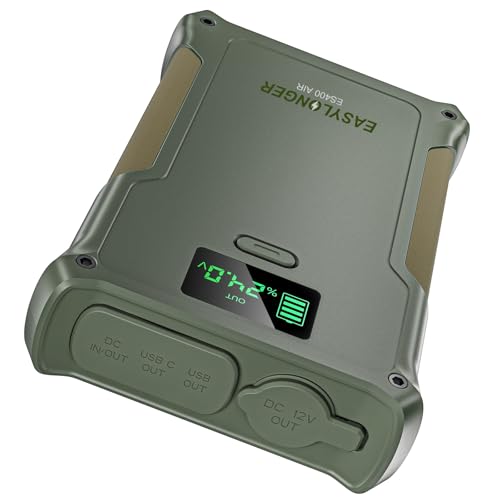
The EASYLONGER ES400 AIR is purpose-built for CPAP travel and one-night backup. Its 148Wh capacity falls under the TSA 160Wh limit, making it the only unit on this list that can legally fly in your carry-on. Weighing just 2.05 pounds, it’s barely heavier than a tablet and slides into any CPAP bag pocket.
Four CPAP cables ship in the box — covering ResMed AirSense 10/11, AirCurve 10/11, AirMini, S9, Philips DreamStation 1/2, and Luna G3. Just set the voltage on the display, plug in, and go. Real-world testing shows an AirSense 11 at humidity level 1 with tube temp off runs 7+ hours and the battery still shows 100% in the morning.
Pass-through charging keeps your CPAP powered while the battery recharges from the wall, so it’s always ready for the next blackout. The compact 7.28 x 4.76 x 1.57-inch footprint means it tucks behind the nightstand or into a car camping kit without displacing anything.
Why it’s great
- TSA-compliant for carry-on air travel
- Incredibly lightweight at 2.05 lbs
- 4 CPAP cables included — plug-and-play for major brands
Good to know
- 148Wh barely covers one night with any humidity
- Some units produce electronic buzzing noise near the bed
8. Jackery HomePower 3000
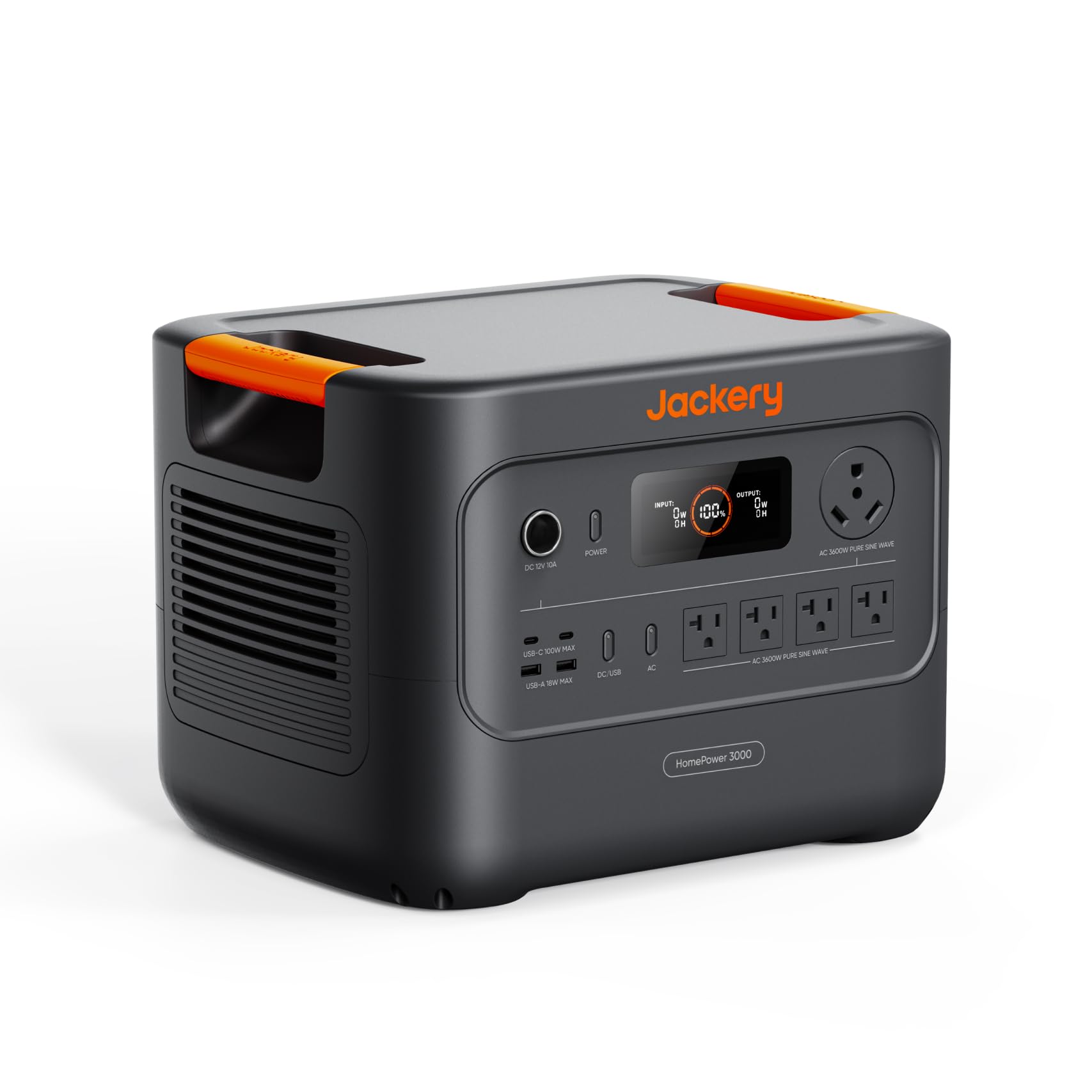
The Jackery HomePower 3000 is for CPAP users who need more than sleep therapy backup — it’s a whole-home emergency power system. Its 3072Wh LiFePO4 battery runs a CPAP machine for a week or more, and the 3600W inverter handles a refrigerator, lights, Wi-Fi, and medical devices simultaneously through a built-in TT-30 RV port.
The ≤20ms UPS switchover keeps your CPAP running through outages without a blip. ChargeShield 2.0 technology with AI algorithms extends battery life to 4000 cycles while maintaining 70% capacity — that’s roughly a decade of nightly CPAP backup. Full AC recharge in 2.2 hours or 1.7 hours with hybrid AC+DC input.
Jackery’s CTB (cell-to-body) technology makes this 47% smaller and 43% lighter than comparable 3kWh units, yet at 59.5 pounds it’s still a stationary fixture. The dual 100W USB-C PD ports fast-charge phones and tablets alongside CPAP therapy, and the honeycomb bottom shell adds structural stability for floor placement.
Why it’s great
- 3072Wh provides a full week of CPAP backup
- TT-30 RV port powers entire camper or backup circuits
- 4000-cycle LiFePO4 with 10-year design life
Good to know
- 59.5 lbs is not portable for travel
- Fan noise at ~60 dB under any load may disturb light sleepers
9. EF ECOFLOW DELTA Pro
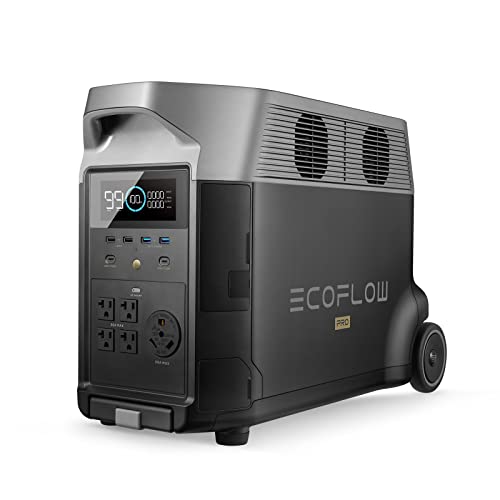
The EF ECOFLOW DELTA Pro is the ultimate CPAP backup for users who want zero compromises — 3600Wh of LiFePO4 capacity runs a CPAP machine for 10–14 nights without recharge. Its 3600W pure sine wave output powers any CPAP plus simultaneously runs a full kitchen refrigerator, medical oxygen concentrator, or home office equipment.
X-Stream fast charging fills the battery in 2.7 hours from a standard 1800W wall outlet, or 1.8 hours from a 240V outlet. Five AC outlets, USB-C 100W, USB-A fast charge, and Anderson port give 15 total output methods. The system expands to 25kWh by adding extra batteries and smart generators, making it a permanent home backup solution.
Smart app control via Wi-Fi/Bluetooth lets you monitor CPAP runtime, set charge/discharge schedules, and track energy usage from bed. X-Boost technology pushes output to 4500W for high-draw devices without tripping. For CPAP users with home oxygen concentrators or other essential medical equipment, the DELTA Pro provides total peace of mind during extended outages.
Why it’s great
- 3600Wh capacity for 10+ nights of CPAP backup
- Expandable to 25kWh — scalable for whole-house use
- 15 output ports including 5 AC outlets
Good to know
- 99 lbs is heavy — best placed on a dolly or stationary cart
- Premium tier price reflects maximum capacity
FAQ
Can I use any portable power station with my CPAP machine?
How many hours will a 288Wh battery run my ResMed AirSense 11?
What does TSA compliance mean for CPAP batteries?
Can I run my CPAP humidifier from a battery backup?
How do I calculate the exact battery capacity I need?
Final Thoughts: The Verdict
For most users, the battery backup for cpap winner is the BLUETTI Elite 30 V2 because its 288Wh capacity, 10ms UPS switchover, and 9.4-pound weight hit the perfect balance for both home backup and travel — plus the LiFePO4 chemistry ensures years of nightly use without capacity fade. If you want a multi-night solution with dedicated CPAP cables, grab the EASYLONGER ES960 for its 297.6Wh capacity and direct DC efficiency. And for maximum whole-home backup that keeps CPAP therapy running through extended outages, nothing beats the Jackery HomePower 3000 with its 3072Wh capacity and 10-year design life.