
Our readers keep the lights on and the weekend projects moving. As an Amazon Associate, I earn from qualifying purchases.
A ski boot that doesn’t fit right can turn a bluebird day into a cramp-filled chore, sapping the fun out of every turn. The wrong last width or flex index leaves you either fighting the boot or lacking the control to carve confidently, which is why choosing the correct pair is the single most important gear decision you will make this season.
I’m Rikta — the co-founder and writer behind FitlyFast. I’ve spent hundreds of hours analyzing market data, studying boot construction across flex ratings and shell materials, and cross-referencing user experiences to build this guide on the best ski boots available right now.
This guide breaks down the key specs — from last widths and flex indexes to heat-moldable liners and entry systems — so you can confidently pick the right best ski boots for your foot shape, ability level, and skiing style.
How To Choose The Best Ski Boots
Buying ski boots involves more than just picking a size. The flex index determines how much leverage you have over the ski, the last width decides if your foot will feel hugged or pinched, and the closure system affects how easy it is to get in and out. Below are the three critical factors that separate a great boot from a painful one.
Flex Index — The Leverage You Need
The flex index (typically 50 to 130) measures how much force is required to bend the boot forward. Beginners and lighter skiers should look for a flex between 50 and 80 for forgiveness and comfort, while intermediate and aggressive skiers need 80 to 100 or higher to transmit power quickly to the ski edge. A too-stiff boot can leave you fighting the hill, but a too-soft boot will feel unresponsive at speed.
Last Width — The Shape of Your Foot
The last width is the widest part of the boot’s shell, measured in millimeters across the forefoot. A 98mm last suits a narrow foot, a 100mm last is the standard medium fit, and a 102mm last accommodates high-volume or wider feet. Many skiers buy a boot that is simply the wrong width, leading to pressure points, cold toes, or sloppy heel hold — all of which can be avoided by matching this spec to your foot shape.
Entry System and Adjustability
Traditional multi-buckle boots offer the most micro-adjustability but can require effort to get in and out of. Newer easy-entry shells and BOA systems allow quick, hands-free entry — a major advantage for skiers with limited mobility or those spending time in and out of the boot in the parking lot. Heat-moldable liners add another layer of custom fit, adapting to your foot’s unique contours for all-day comfort.
Quick Comparison
On smaller screens, swipe sideways to see the full table.
| Model | Category | Best For | Key Spec | Amazon |
|---|---|---|---|---|
| Nordica HF 100 | Premium | All-day comfort + easy on/off | 100 flex / 102mm last | Amazon |
| Fischer RC One 8.5 | Premium | Advanced carving precision | 85 flex / high-volume last | Amazon |
| Nordica Sportmachine 3 80 | Mid-range | Intermediate progressing skiers | 80 flex / 102mm last | Amazon |
| K2 BFC 80 | Mid-range | Hands-free entry, wide feet | 80 flex / heat-moldable shell | Amazon |
| Nidecker Altai | Mid-range | Dual BOA, all-mountain riding | BOA closure / Vibram sole | Amazon |
| Atomic HAWX Magna 75 | Mid-range | Wider calves, warm fit | 75 flex / Memory Fit liner | Amazon |
| Rossignol Kelia 50 | Mid-range | Beginner women, thicker calves | 50 flex / 104mm relaxed last | Amazon |
| Dalbello Veloce 90 MV | Value | Entry-level performance | 90 flex / medium volume | Amazon |
| Oakley Vertex | Value | Lightweight daily driver | Soft flex / sneaker-like weight | Amazon |
In‑Depth Reviews
1. Nordica HF 100

The Nordica HF 100 delivers a premium blend of convenience, warmth, and performance that makes it stand out in the intermediate all-mountain category. Its easy-entry shell opens at a 40-degree angle, allowing you to step in and lock the back buckle with your foot rather than bending over — a feature cited repeatedly by users with limited mobility or fused ankles.
The 100 flex paired with a 102mm last offers a forgiving yet responsive feel that suits skiers who are comfortable cruising groomers and venturing into bumps. Users raved about the roomy toe box, with one noting zero bunion pain even after six days of use, while the infrared technology lets you heat and vacuum out pressure points for a bespoke fit.
The Primaloft insulation keeps feet warm in temps as low as 5°F, and the HF back buckle closure system means you can open them with a ski pole while standing. Weighing in at nine pounds, these boots are hefty, but the structural integrity translates to solid lateral support and edge hold.
Why it’s great
- Excellent easy-entry shell for effortless on/off
- Infrared heat-moldable shell for custom fit
- PrimaLoft insulation maintains warmth in extreme cold
Good to know
- Heavy construction (9 lbs) with no carrying strap
- Best suited for intermediate skiers, not advanced racers
2. Fischer RC One 8.5
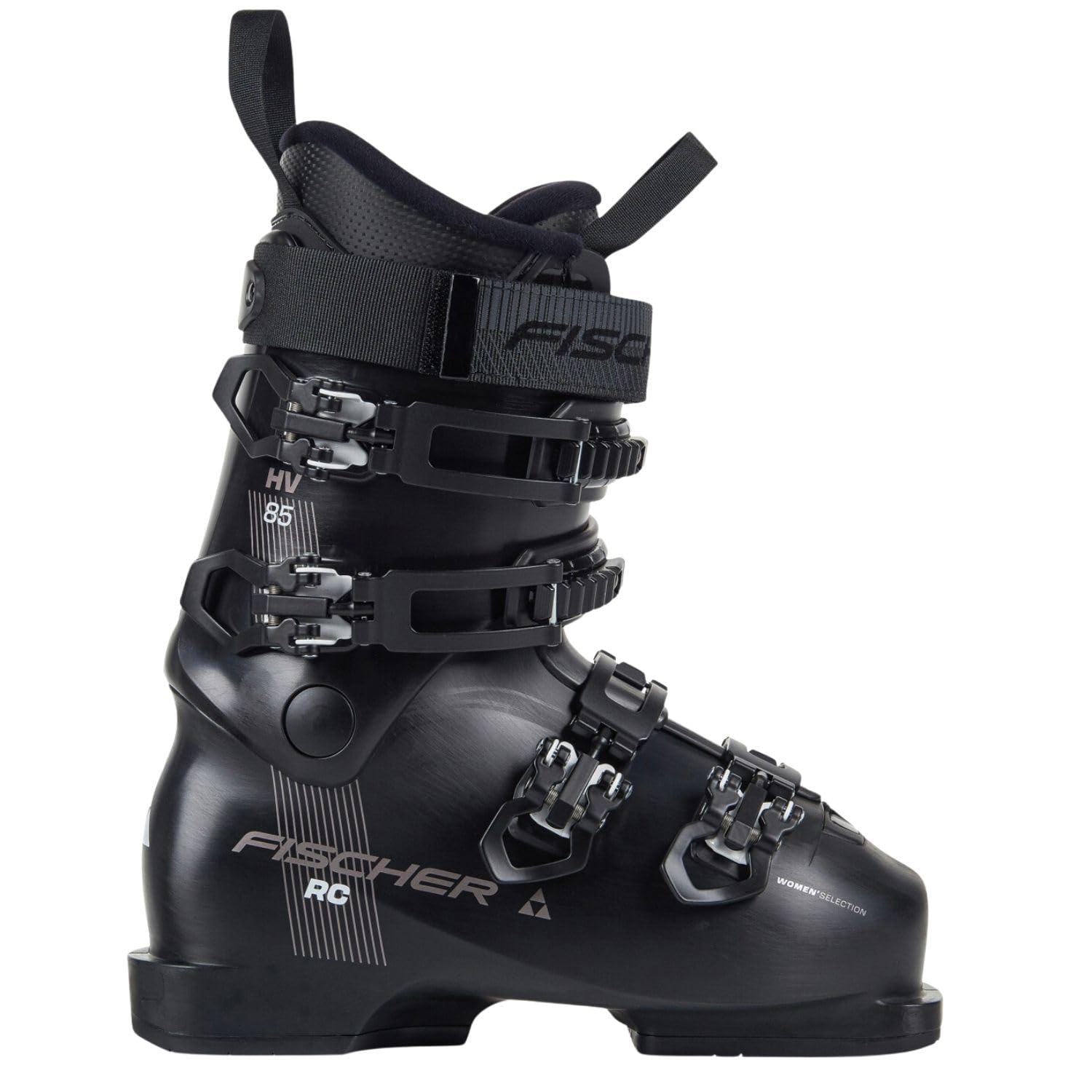
The Fischer RC One 8.5 is engineered for advanced and expert skiers who demand a precise, responsive connection to the ski. The 8.5 hardness paired with a high-volume fit gives a snug, performance-oriented wrap that still accommodates wider feet without creating painful pinch points on the forefoot.
Fischer uses a polyurethane shell with advanced materials designed to optimize power transfer, making this boot an excellent match for aggressive skiing styles and challenging terrain like steeps and moguls. One user with wide calves found the boots initially tight but noted they molded perfectly after a brief break-in, resulting in all-day comfort without pressure sores.
The RC One 8.5 features a customizable liner that can be heat-molded for a personalized fit, and its intuitive buckle system provides plenty of micro-adjustment. European reviewers praised its combination of comfort and precision, calling it the most comfortable ski boot they had ever worn after multiple day trips.
Why it’s great
- Exceptional power transfer for aggressive skiing
- High-volume last fits wider feet without sacrificing control
- Heat-moldable liner for custom comfort
Good to know
- Relatively stiff flex may feel demanding for beginners
- Some users found the initial break-in snug
3. Nordica Sportmachine 3 80

The Nordica Sportmachine 3 80 is purpose-built for intermediate skiers who want a forgiving flex and a roomy 102mm last that accommodates high-volume feet without pinching. Its 80 flex index provides enough stiffness for confident carving on blue groomers while remaining compliant enough for slower, less aggressive turns.
The 3D cork liner uses natural cork material to cover the heel surface, which not only improves lateral power transmission but also adds thermal insulation that keeps feet warm and dry throughout a full day on the hill. Multiple users noted the boots were comfortable right out of the box and remained so after multiple day-long sessions, with one 25-year snowboard convert calling them perfect for a less aggressive skiing style.
Soft plastic inserts integrated into the throat make stepping in and out significantly easier than traditional shell designs, reducing the morning struggle in the parking lot. The 3 Force technology channels energy efficiently from leg to shell for better edge control without requiring a high degree of athleticism.
Why it’s great
- 102mm last provides excellent room for high-volume feet
- Cork liner delivers natural insulation and warm feet
- Easy-entry throat inserts simplify stepping in and out
Good to know
- Some units may show cosmetic wear from storage
- 80 flex may feel soft for more powerful skiers
4. K2 BFC 80
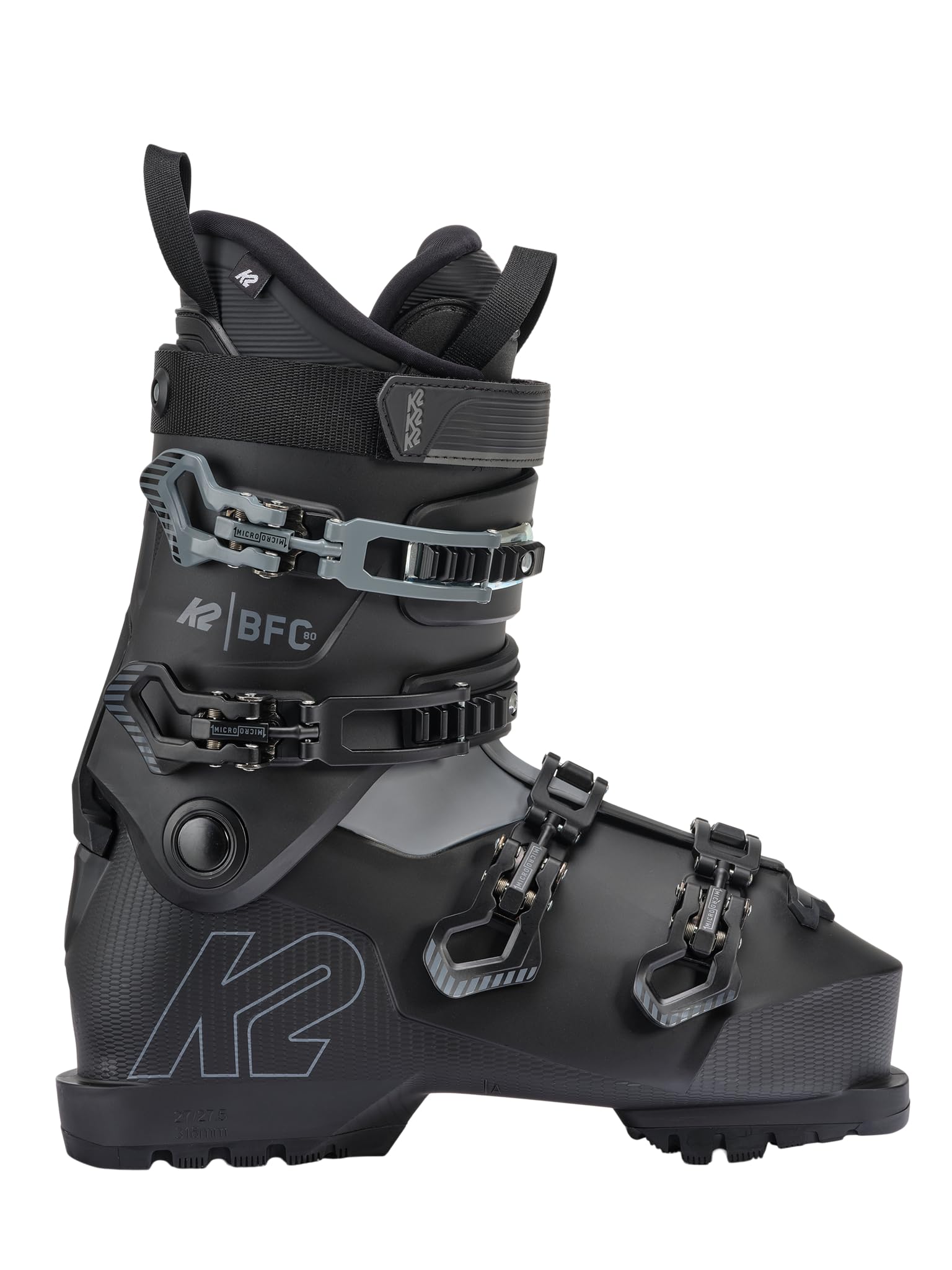
The K2 BFC 80 is the boot that skiers with wide feet have been waiting for. Its hands-free entry system uses a dual-material overlap that practically opens itself, allowing you to slide in without wrestling with buckles. Once inside, the Cushfit comfort liner delivers a plush, out-of-the-box feel that several users compared to wearing sneakers — even after six consecutive days on the hill.
Both the shell and cuff are fully heat-moldable, meaning you can custom-shape the boot to match your unique foot anatomy, including bunions or prominent ankle bones. The GripWalk sole provides a noticeably better walking feel in the parking lot and base lodge, reducing the clunky heel-slapping gait common with traditional alpine soles.
The 80 flex is ideal for beginner to intermediate skiers who want a forgiving stance, though some users noted the boot feels slightly older in design compared to more modern competitors. That said, the ankle support is notably stiff for a soft-flex boot, giving a secure wrap that one user found better than their Dalbello boots.
Why it’s great
- Excellent hands-free entry for quick transitions
- Fully heat-moldable shell and cuff for custom fit
- Cushfit liner provides extraordinary out-of-box comfort
Good to know
- Color depicted online may differ from actual unit
- Design feels slightly dated compared to newer models
5. Nidecker Altai
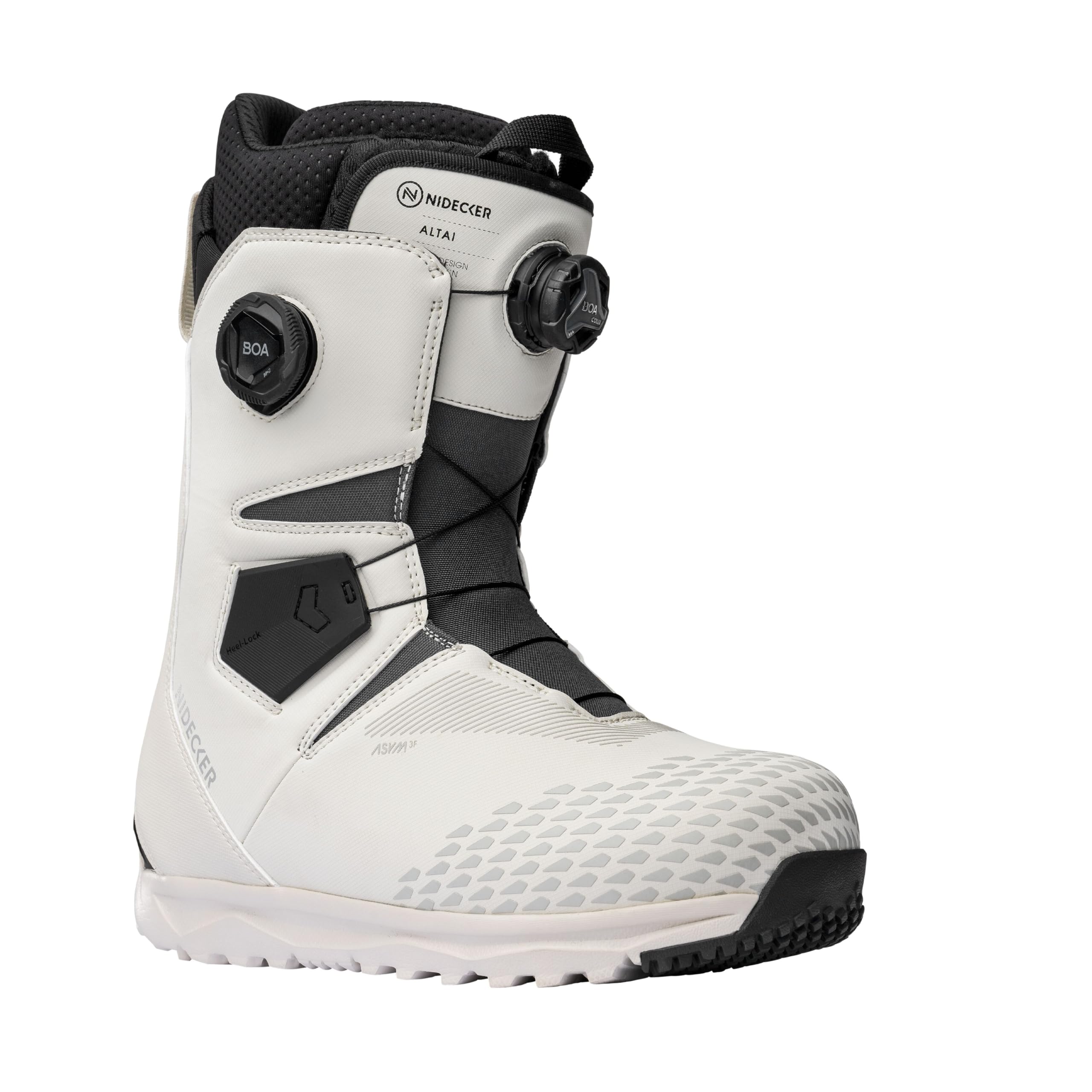
The Nidecker Altai brings dual BOA closure precision to the all-mountain category, letting you dial in two distinct tension zones across the boot for a truly customized fit. The Vibram traction sole offers excellent grip on icy parking lots and cat tracks, and the 3D-molded lasted toe box and tongue minimize volume displacement for a consistent flex.
Users consistently praised the comfort, with one noting that after heat molding, the boots allowed all-day riding with zero discomfort. The stiff-yet-flexible feel suits both park riders and backcountry enthusiasts, thanks to the articulating flex zone that lets the boot move naturally while maintaining heel hold.
The silver liner and fleece-lined footbed with silicone top-print keep feet warm and locked in place, while the asymmetrical lacing (ASYM3F) reduces pressure over the instep. Although these are snowboard boots, they offer crossover appeal for skiers seeking BOA-driven convenience in a build that one rider described as the most beautiful and comfortable snowboard boot they own.
Why it’s great
- Dual BOA system for separate tension zones
- Vibram traction sole provides secure off-snow grip
- Excellent all-day comfort with heat molding
Good to know
- Designed as a snowboard boot, not a ski boot
- Needs break-in before achieving ideal fit
6. Atomic HAWX Magna 75

The Atomic HAWX Magna 75 is built for women who want a forgiving, comfortable ride with the option to fine-tune the fit through Atomic’s Memory Fit system. The Select Bronze inner shoe provides continuous warmth, and the removable spoiler on the cuff allows you to reduce the cuff height, which is helpful for skiers with larger calves who often feel pressure at the top of the boot.
The Prolite design trims material in low-stress areas while reinforcing key zones, resulting in a boot that is noticeably lightweight yet stable in the flex. The 75 flex is approachable for newcomers while still offering enough resistance for controlled parallel turns on moderate terrain.
Some international users reported receiving used or damaged units from warehouse fulfillment, so inspecting the packaging and condition upon arrival is wise. That said, when the boot arrives in good condition, owners describe the comfort as excellent after a brief break-in period, with the heat-moldable shell molding around the foot beautifully.
Why it’s great
- Memory Fit system offers customizable shell and liner
- Removable spoiler accommodates larger calves
- Lightweight Prolite construction reduces fatigue
Good to know
- Sporadic reports of used/ damaged units from Amazon
- Soft flex is not suitable for aggressive skiing
7. Rossignol Kelia 50
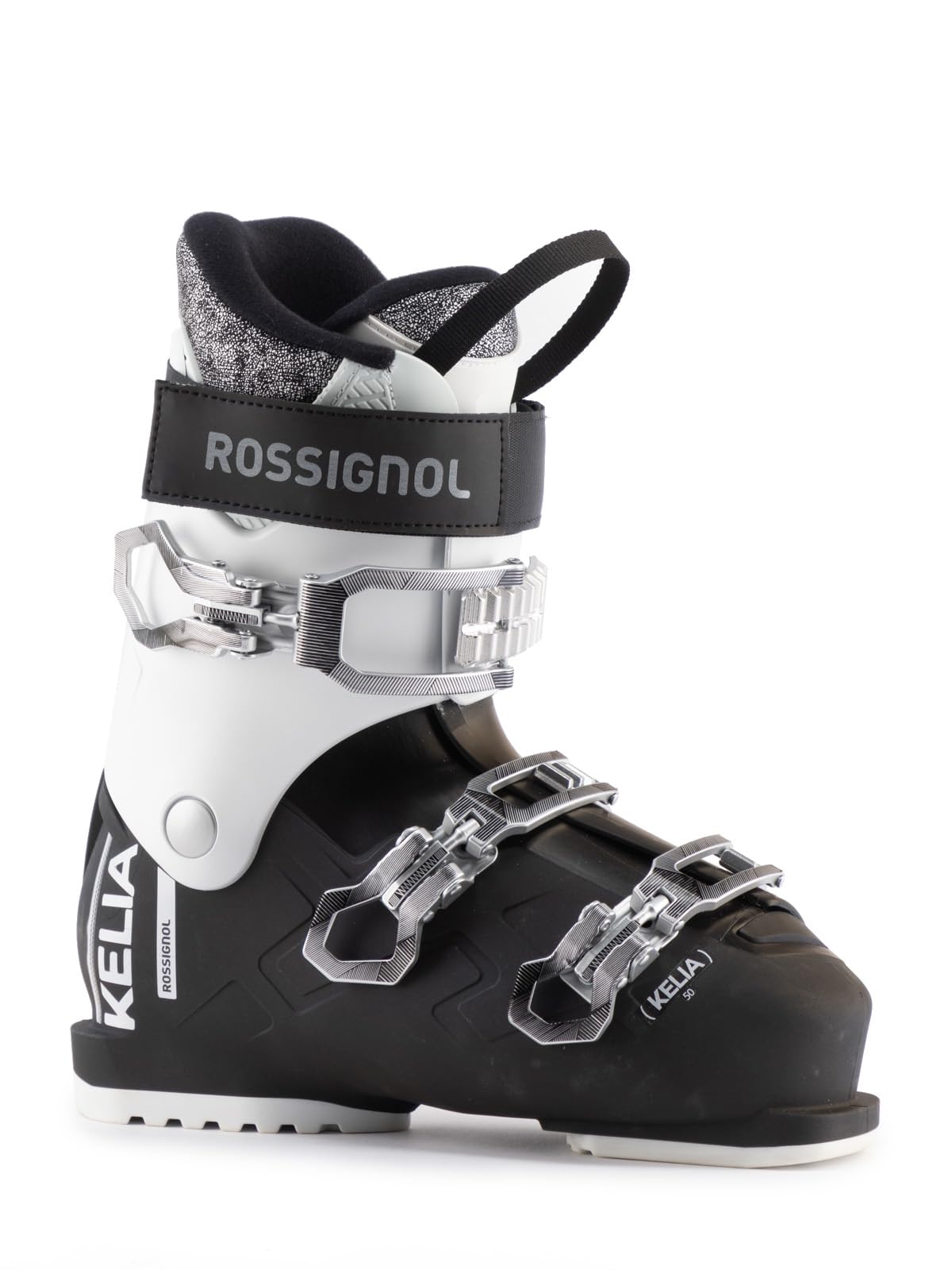
The Rossignol Kelia 50 is designed specifically for women who need extra room in the calf and a relaxed fit through the forefoot. Its 104mm last is the widest in this guide, making it an ideal match for skiers with wider feet or high-volume lower legs who struggle to find boots that don’t pinch or restrict circulation.
The Sensor Matrix shell reduces overall weight while maintaining power transfer, and the Tulip-shaped cuff is tailored to female anatomy, relieving pressure on the shin and calf for improved circulation. The 50 flex is the softest here, perfect for absolute beginners who are still learning to balance and steer without fighting the boot’s resistance.
Users with thick calves specifically highlighted the Kelia 50 as the boot that finally worked, noting no rubbing or ankle discomfort even after full-day sessions. The three-buckle shell is straightforward to adjust, and the soft plastic around the instep makes entry and exit smooth even on cold mornings. Heat molding the liner takes the comfort to another level, and the boot is compatible with GRIPWALK soles for safer walking.
Why it’s great
- Widest last (104mm) for high-volume feet and calves
- Tulip-shaped cuff relieves calf and shin pressure
- Forgiving 50 flex builds confidence in new skiers
Good to know
- Soft flex limits use for intermediate or aggressive skiers
- Some practice needed to learn the entry/ exit technique
8. Dalbello Veloce 90 MV

The Dalbello Veloce 90 MV is a straightforward, no-nonsense ski boot that delivers solid performance at a budget-friendly price point. Its 90 flex slots into the performance category more than beginner territory, offering enough stiffness for controlled carving without demanding the strength of an expert — making it a great bridge boot for skiers advancing past the rental stage.
The medium-volume (MV) last fits standard-width feet well, and users consistently reported that the size 27.5 matched their size 10 shoe perfectly, with better comfort than their old rental boots. Multiple users described the boots as comfortable out of the box with only minor break-in required, and one called them a great entry-level ski boot for the price.
The plastic shell and straightforward buckle system are durable enough for multiple seasons, and the boot fits true to size for most users. The main trade-off at this price point is the absence of heat-moldable liners or premium insulation, but for skiers who only get a few days on the mountain each year, the Veloce 90 MV represents a smart, no-compromise value proposition.
Why it’s great
- 90 flex provides responsive control for advancing skiers
- True-to-size fit, especially for standard-width feet
- Solid build quality with good durability
Good to know
- No heat-moldable liner for custom fit
- Best for light to moderate weekly skiing, not heavy use
9. Oakley Vertex
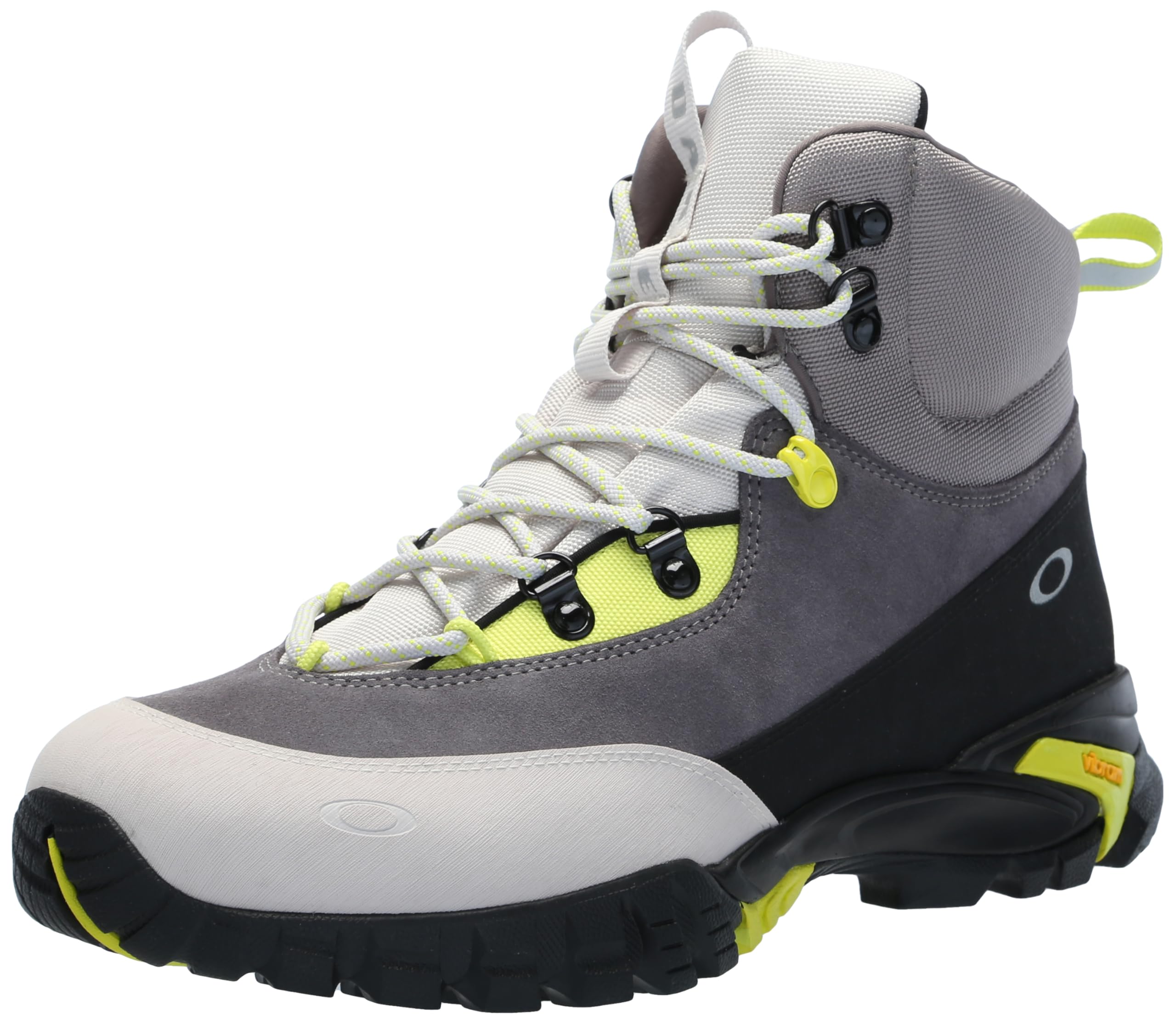
The Oakley Vertex brings a surprisingly lightweight feel to the budget category, with a size 14 user enthusiastically noting they feel as light as sneakers but as durable as steel-toe work boots. This makes the Vertex an excellent choice for skiers with larger feet who are tired of lugging around heavy, clunky boots that tire their legs before the first run.
Its construction uses materials that keep the boot warm and waterproof, with one user reporting excellent insulation throughout a Massachusetts winter. However, a more critical review noted that the seams began to fail after approximately 90 days of heavy 10-hour use, and the Vibram soles showed accelerated wear under daily abuse — suggesting these boots are better suited for casual resort skiers than ski instructors or patrollers.
The Vertex features a sneaker-like aesthetic that blurs the line between tech boot and casual winter footwear, and multiple users praised the build quality and quick shipping. For the skier who needs a reliable, lightweight boot for a few trips a season and values comfort in the lodge and lift line as much as on the slope, the Oakley Vertex delivers strong value.
Why it’s great
- Remarkably lightweight feel for large sizes
- Warm and waterproof in winter conditions
- Comfortable sneaker-like fit out of the box
Good to know
- Seams may fail under heavy daily use
- Vibram soles wear quickly with frequent use
FAQ
Should I buy a flex index that matches my weight or my skill level?
Can I heat-mold a ski boot at home or should I use a shop?
What is the difference between a 3-buckle and a 4-buckle shell?
Do I really need GripWalk soles for my ski boots?
Final Thoughts: The Verdict
For most skiers, the best ski boots winner is the Nordica HF 100 because it combines the easy-entry shell convenience with a warm, comfortable build and the versatility to handle a full range of intermediate all-mountain conditions. If you want a performance-focused boot with a tighter, more precise feel, grab the Fischer RC One 8.5. And for a budget-friendly lightweight boot that saves your legs in larger sizes, nothing beats the Oakley Vertex.