
Our readers keep the lights on and the weekend projects moving. As an Amazon Associate, I earn from qualifying purchases.
The wrong base layer traps sweat against your skin, leaving you clammy and cold the second you stop moving. The right one wicks moisture, regulates temperature, and feels like a second skin whether you’re hiking a ridgeline in 20-degree wind chill or sitting through a frigid office. Picking the right fabric weight, fit, and material for your specific activity is the difference between a productive day outdoors and a miserable one spent shivering.
I’m Rikta — the co-founder and writer behind FitlyFast. This guide is the result of spending dozens of hours cross-referencing customer feedback, analyzing fabric specifications, and comparing real-world performance data across seven of the most popular contenders in the category.
Your base layer is your first line of defense against the cold, and finding the right one means balancing moisture-wicking, warmth, and comfort without bulk. I’ve narrowed the field to the seven best options and compiled everything you need to know in this guide to finding the best base layer.
How To Choose The Best Base Layer
The ideal base layer depends on your activity level and the ambient temperature. A static wearer in a 40-degree office needs less wicking but more insulation, while a skier in single-digit temps needs maximum moisture transport and breathable warmth. Start by matching fabric weight to your environment, then choose material based on your tolerance for odor and itch.
Fabric Weight: Lightweight, Midweight, or Heavyweight
Fabric weight is measured in grams per square meter (GSM). Lightweight base layers (around 150 GSM) are ideal for high-output activities like running or cycling, where breathability matters most. Midweight (around 200-250 GSM) is the all-rounder for hiking, snowboarding, or daily wear in moderate cold. Heavyweight (300 GSM and above) is built for extreme cold and low-activity scenarios like ice fishing or sitting on a frozen stand.
Material: Merino Wool vs. Synthetic Polyester
Merino wool is naturally odor-resistant and regulates temperature by trapping air in its fibers. It stays warm even when damp but dries slower than synthetics. Synthetic polyester base layers wick moisture faster, dry quickly, and cost less, but they tend to retain odor after heavy use. For multi-day trips or sensitive skin, merino is the superior choice. For high-sweat workouts or budget builds, synthetic wins.
Fit: Close vs. Relaxed
A base layer must sit close to the skin to wick effectively. Loose fabric creates air gaps that reduce thermal transfer and trap cold air. A compression or slim fit is ideal for active use, while a relaxed or standard fit works for casual layering. Always check sleeve and torso length — a too-short sleeve pulls when you raise your arms, compromising the cold barrier at the wrist.
Quick Comparison
On smaller screens, swipe sideways to see the full table.
| Model | Category | Best For | Key Spec | Amazon |
|---|---|---|---|---|
| Smartwool Women’s Classic Thermal Merino Base Layer | Merino Crew | Premium warmth & durability | 150 GSM Merino Wool | Amazon |
| MERIWOOL Mens Base Layer 250g Half Zip | Merino Midweight | Skiing & cold weather sports | 250 GSM Merino Wool | Amazon |
| LAPASA Men 100% Merino Wool Shirt | Lightweight Merino | Cycling & daily underlayering | Lightweight Merino Knit | Amazon |
| Merino Wool Base Layer Women (Half Zip) | Merino Mid/Heavy | Snowboarding & active cold | Midweight/Heavyweight 250 | Amazon |
| Merino Wool Base Layer Mens 100% | Classic Merino | All-round cold office & outdoors | Midweight 250 GSM | Amazon |
| Carhartt Men’s Force Lightweight Stretch Grid Base Layer | Synthetic Grid | High-output work & athletics | 100% Polyester Grid Fleece | Amazon |
| NebuKinex 5 Pack Long Sleeve Thermal Shirts | Synthetic Fleece | Budget multi-pack & casual wear | Fleece-Lined Polyester | Amazon |
In‑Depth Reviews
1. Smartwool Women’s Classic Thermal Merino Base Layer Crew
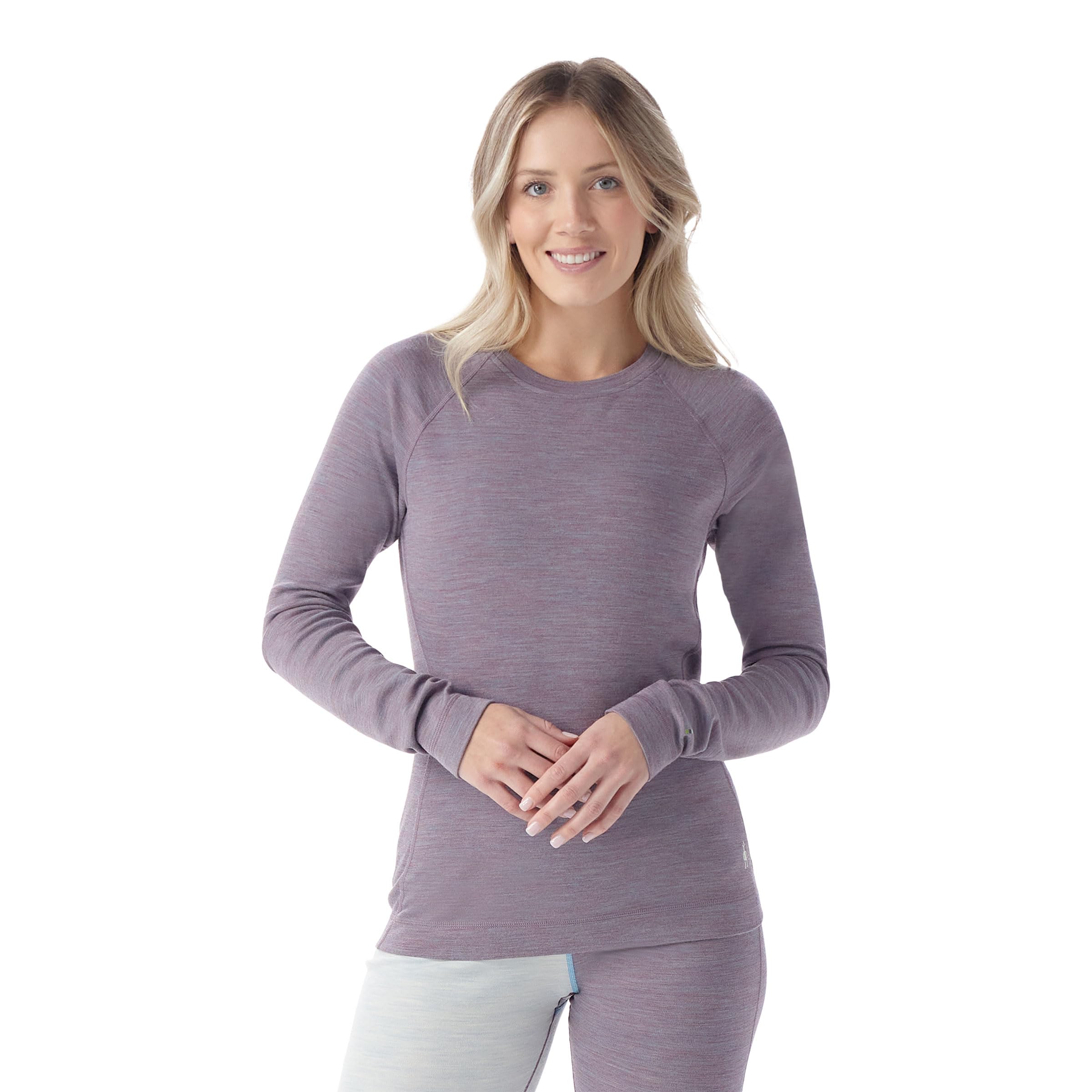
The Smartwool Classic Thermal is the gold standard for merino base layers. Its 100% merino wool interlock knit delivers a balanced 150 GSM weight — thin enough for moderate activity without bulk, yet warm enough for cold-weather layering. The flatlock seam construction is designed to minimize chafing under a pack strap or shell, and the raglan sleeves allow full arm mobility without pulling the torso fabric. Reviewers consistently note the fabric’s durability: it holds its shape and softens after repeated washes, with no pilling or snagging reported even after years of use.
The slim fit is intentionally body-contouring for maximum wicking efficiency. At 5’3” and 140 lbs, a size Medium offers a generous hip-length hem that stays tucked in during movement. The fabric is not stretchy, but the tailored cut eliminates the need for stretching — it stays put. The marbled color option disguises minor dirt, and the odor resistance is genuine, holding up through multi-day trips without washing. The only catch is the care regimen: lay flat to dry is mandatory to prevent shrinkage.
This is the most expensive option in the roundup, but the longevity justifies the investment. Buyers who have owned previous Smartwool generations report identical quality over a decade. For anyone who wants a do-everything merino base layer that doubles as a standalone top for casual use, the Classic Thermal is the definitive pick.
Why it’s great
- Proven durability — holds shape and softens over years of use
- Flatlock seams eliminate chafing under heavy loads
- Odor resistant for multi-day adventures
Good to know
- Must be laid flat to dry to prevent shrinkage
- High price point compared to synthetic options
2. MERIWOOL Mens Base Layer 100% Merino Wool Midweight 250g Half Zip
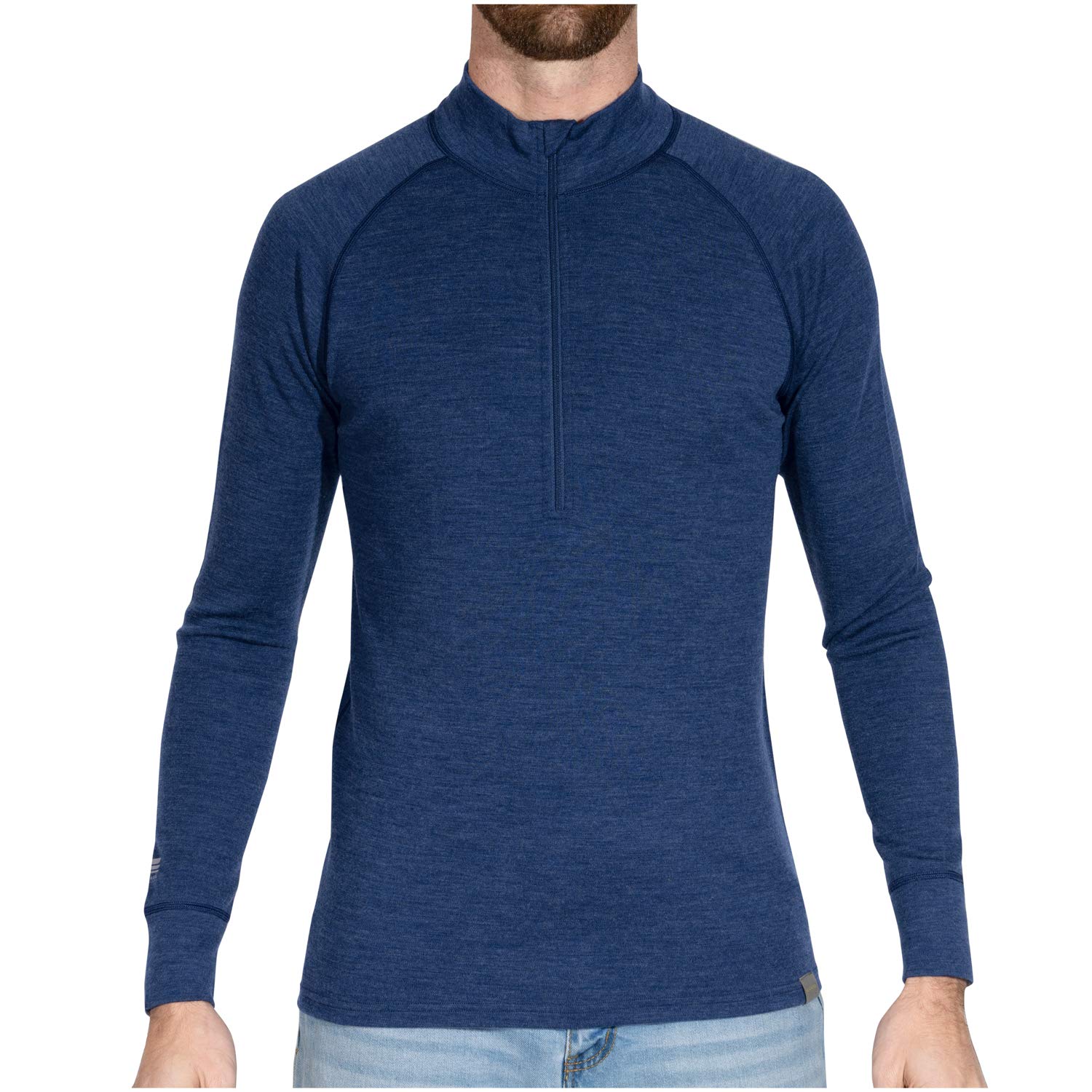
At 250 GSM, the MERIWOOL Half Zip sits firmly in the midweight-to-heavyweight territory, making it the go-to choice for skiing, snowboarding, and deep winter hikes. The half-zip design offers active venting — unzip to dump heat during a climb, zip back up for the descent. The fabric is a dense, super-soft merino jersey that feels substantial against the skin without the scratchiness often associated with heavier wools.
Fit is snug but not restrictive. A 6’2” 215 lb reviewer found the XL to have generous torso length with a slightly longer back hem, which is critical for staying tucked during dynamic movement. The sleeves run long with thumb loops — a feature that seals the gap between glove and sleeve. The warmth is comparable to a fleece hoodie but with significantly less bulk, allowing unrestricted arm motion under a shell. Some users note a slight “tingle” sensation typical of merino wool; it softens after the first wash.
Value is strong at this mid-range price point. The construction is clean with no loose threads, and the fabric shows no wear after several washes (hand wash recommended). For cold-weather sports where you need active temperature regulation and substantial insulation, the MERIWOOL 250g delivers on all fronts.
Why it’s great
- Half-zip for on-the-go ventilation without removing layers
- Super-soft merino at a 250 GSM weight for serious warmth
- Secure fit with long torso and thumb loop sleeves
Good to know
- Slightly tighter fit may not suit all body types
- Merino tingle reported by sensitive skin users initially
3. LAPASA Men 100% Merino Wool Shirt Base Layer Lightweight
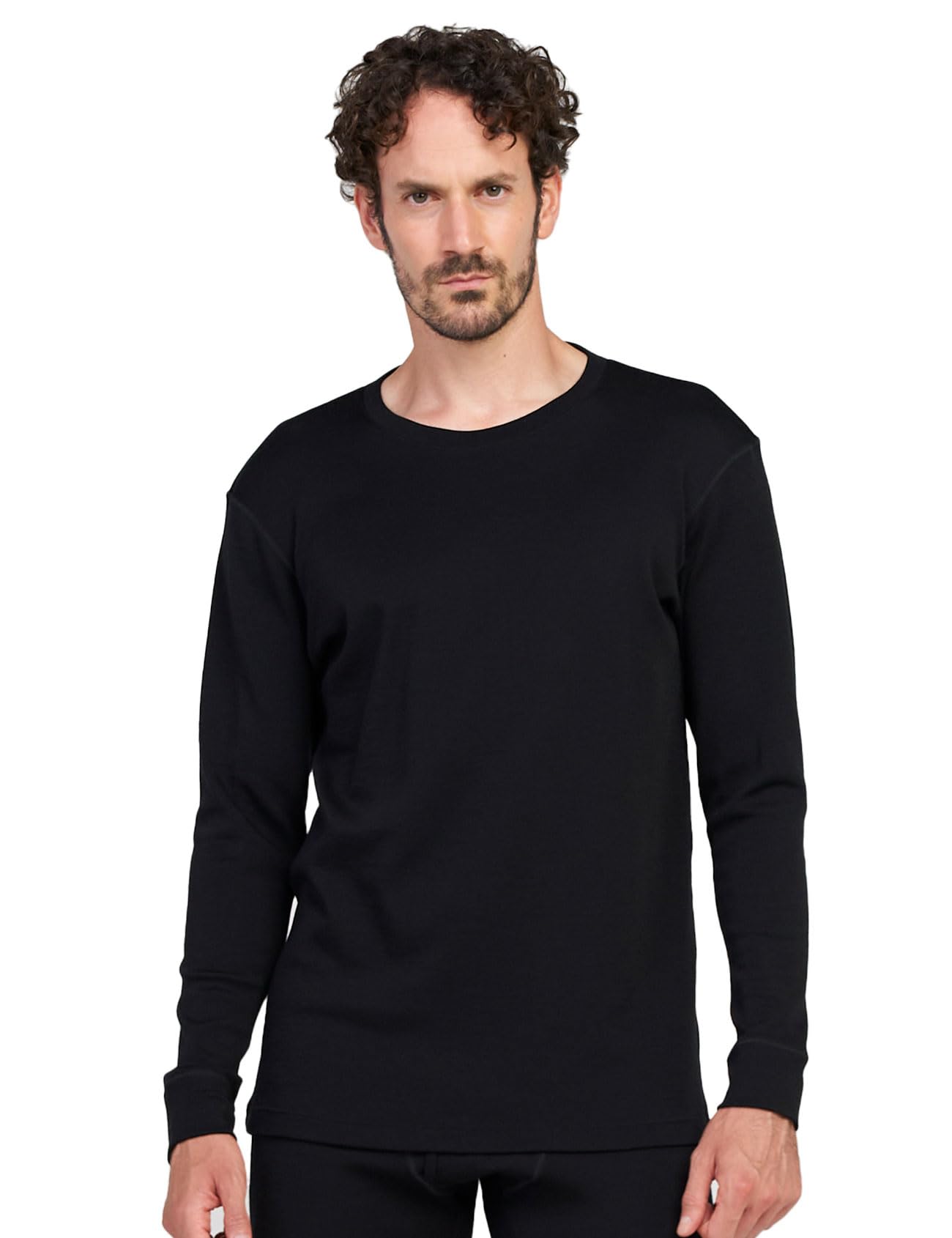
The LAPASA merino shirt hits a sweet spot between performance and polish. Its lightweight knit is thin enough to disappear under a dress shirt or suit jacket — a reviewer specifically uses the black version as an elegant undershirt for the office. The fabric is soft and stretchy, and the collar sits flat without any irritating bulk. This is the base layer for the person who needs temperature regulation at a desk job without looking like they’re dressed for an expedition.
On the athletic side, cyclists and hikers praise its moisture-wicking and temperature regulation. One reviewer used it as a cycling base layer and bought three more for his wife. The merino handles sweat without feeling wet against the skin, and the odor resistance is reliable for daily wear. Sizing runs slightly generous: a 6’1” 185 lb reviewer found a Medium fits well with sleeves hitting the wrists and the hem sitting past the beltline. If you prefer a compression fit, consider sizing down.
The price sits comfortably in the mid-range, offering a cost-effective entry into 100% merino without sacrificing quality. It lacks a half-zip or thumb loops, so it’s less specialized for high-output winter sports than the MERIWOOL or Smartwool options. But for everyday wear — commuting, light hiking, office layering — the LAPASA is a remarkably comfortable and versatile choice.
Why it’s great
- Lightweight knit layers seamlessly under dress or casual shirts
- Soft, stretchy merino with excellent temperature regulation
- Competitive price for 100% merino construction
Good to know
- Sizing runs slightly loose — snug fit requires sizing down
- No thumb loops or half-zip for active venting
4. Merino Wool Base Layer Women — 100% Merino Half Zip (Midweight/Heavyweight)
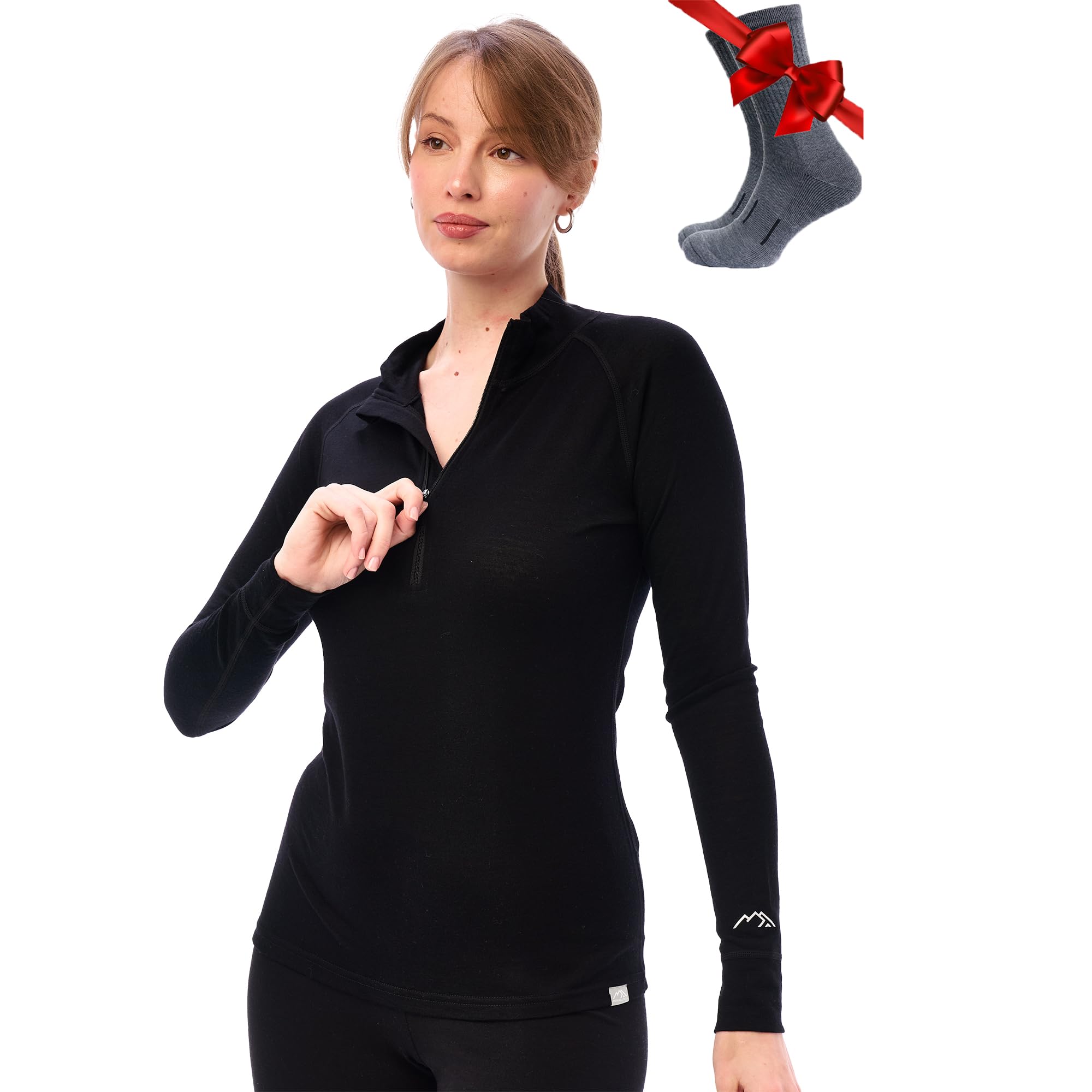
This women’s merino base layer offers both midweight and heavyweight options, but the 250 GSM midweight is the standout for active winter use. A snowboarder who tested the heavyweight top in below-freezing temps reported staying warm and dry all day on the slopes. The fabric is very soft with no scratchiness, and the generous stretch accommodates a range of motion without binding. The half-zip is a welcome addition for managing temperature during high-exertion runs.
Fit is true to size with a standard length that works well for a range of heights. A 5’9” 185 lb reviewer wearing a Large reported a good fitted shape without being constricting, and noted that the 250 weight is not see-through. The zipper feels solid and doesn’t snag. Some wearers found the sleeves slightly short — a 5’9” customer in a Small noted the sleeves didn’t reach her wrists, so taller frames may want to size up for sleeve length.
Minor pilling after six wears was reported by one reviewer, which is common with many merino knits at this price point. The included merino socks are a nice bonus and have received separate praise for their quality. For women seeking a warmer merino base layer with venting capability at a fair price, this is a solid competitor that performs well in real cold conditions.
Why it’s great
- Heavyweight option tested successfully in sub-freezing snowboard conditions
- Half-zip for adjustable ventilation
- Very soft and non-itchy against the skin
Good to know
- Sleeves may run short for taller women
- Some pilling reported after a few wears
5. Merino Wool Base Layer Mens — 100% Merino Wool Long Sleeve Henley
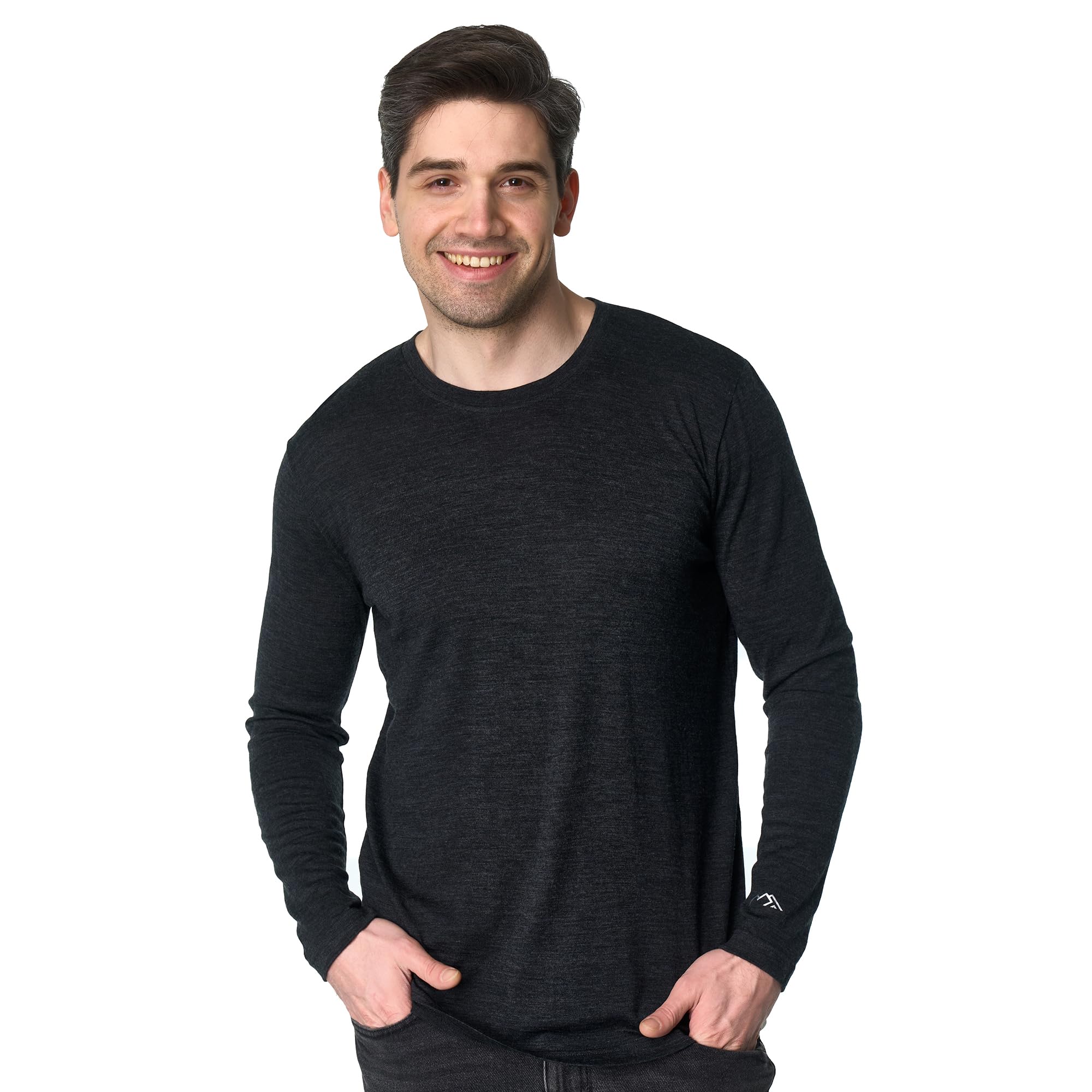
This merino Henley from an established brand offers a classic midweight 250 GSM build that bridges the gap between outdoor performance and casual style. The three-button Henley neck provides a bit more versatility than a standard crew neck — unbuttoned it works as a smart-casual layer, buttoned up it seals warmth under a flannel or jacket. The fabric is a stretchy jersey weave that moves with the body without feeling restrictive.
Reviewers with athletic builds praise the close-but-not-constricting fit. One 5’11” reviewer found a Medium to be snug in the right way for a base layer, though the sleeves may be slightly short for very long arms. The 100% merino is noticeably soft after washing, and the smooth jersey knit isn’t as delicate as thinner merino offerings. Durability has been tested over a year of regular use with no signs of wear.
The color representation is a known quirk — the blue option photographs brighter than it appears in person, which is more of a denim-grey. But the quality of the garment itself is strong for the mid-range price. For a versatile merino base layer that you can wear to the trailhead and then to a casual dinner, this Henley is a smart all-rounder that offers solid value.
Why it’s great
- Henley neck adds style versatility beyond standard base layers
- Stretchy jersey weave for full range of motion
- Proven durability after a year of regular wear
Good to know
- Sleeves may run slightly short for long-armed wearers
- Color online may differ from actual garment
6. Carhartt Men’s Force Lightweight Stretch Grid Base Layer Crew
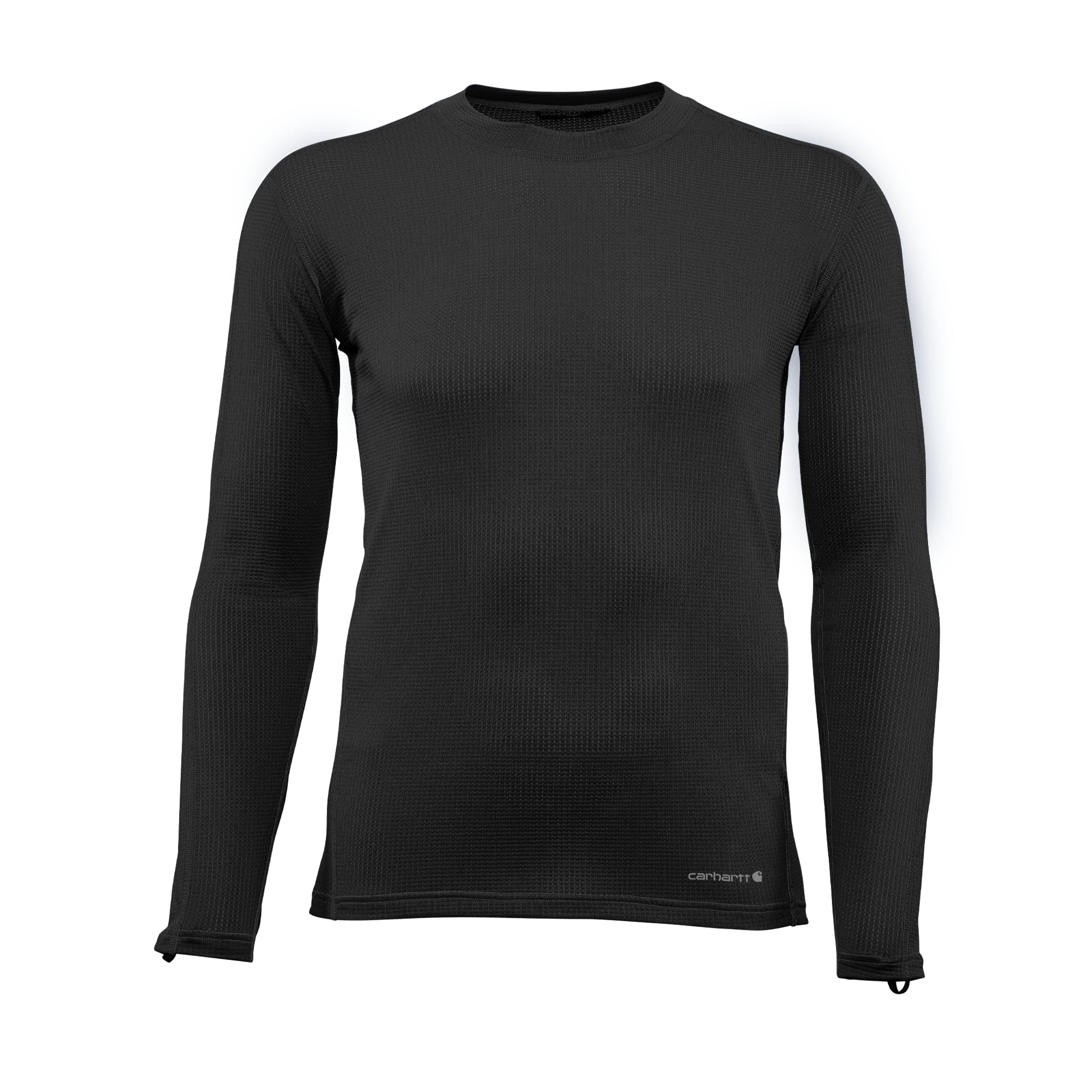
Carhartt’s Force base layer is a synthetic workhorse built for high-sweat scenarios. The grid fleece pattern creates channels that trap warmth while allowing moisture to escape, making it ideal for physical labor in cold conditions. At 100% polyester, it dries faster than any merino option in this roundup — critical if you’re working up a sweat and need to avoid the chill that comes from wet fabric against your skin.
The fit is athletic without being compressive. A 6’4” reviewer in an XL Tall found the sleeve length perfect, with thumb loops that seal the cuff. The waistband doesn’t ride up during bending or lifting, a common complaint with thinner base layers. Despite the lightweight feel, it performed well in 20°F wind chill with just a single shell over it — users who “run hot” report staying warm without overheating.
Avoid the dryer to preserve the polyester fibers. The fabric is not as soft as merino, but it excels in moisture transport and durability. For the budget-conscious buyer who sweats hard and needs a base layer that dries fast and lasts through many wash cycles, the Carhartt Force is the most practical choice. Its price makes it an easy decision for stocking multiple units.
Why it’s great
- Grid fleece design wicks moisture fast and dries quickly
- Thumb loops and long torso keep fabric in place during activity
- Excellent warmth-to-weight ratio for active users
Good to know
- Polyester retains odor more readily than merino
- Not as soft against the skin as wool options
7. NebuKinex 5 Pack Long Sleeve Thermal Shirts for Women
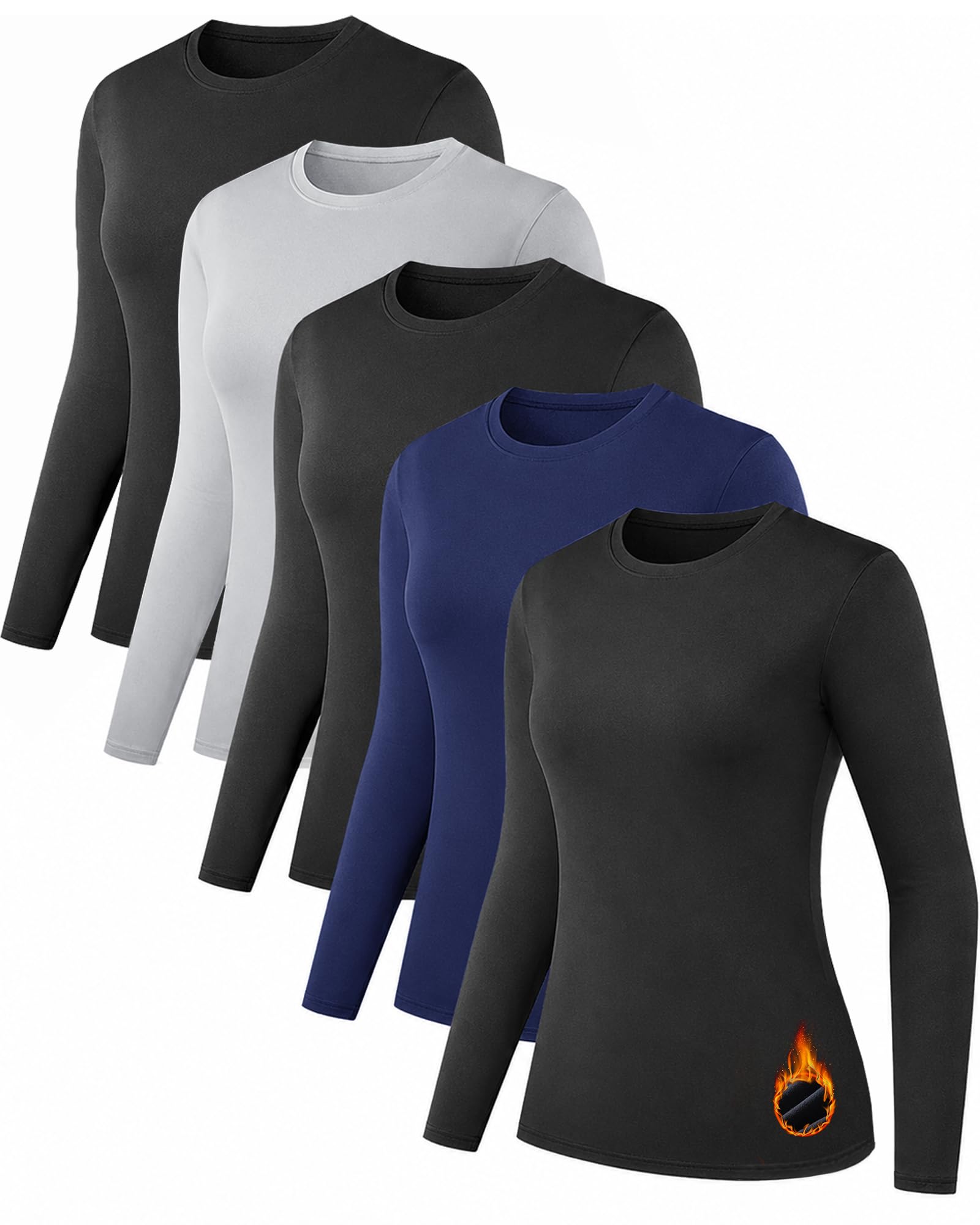
The NebuKinex 5-pack is the ultimate entry-level buy, offering a complete base layer wardrobe at a fraction of the cost of a single merino shirt. Each shirt features a fleece-lined interior that provides noticeable warmth without being heavy. The fabric is a stretchy polyester blend that moves with the body and fits true to size — a reviewer at 5’3” and 230 lbs found the XXL to be a perfect, comfortable fit for her frame without being restrictive.
Warmth is the standout feature here. Night-shift workers and outdoor laborers report that these shirts replace the need for heavy coats when worn under a thin jacket. The material is softer than expected for the price point, and the deep black and navy dyes hold well through multiple washes. Sleeves run slightly long but have a tendency to stay rolled up if pushed, which is a minor annoyance for some.
The primary trade-off is thickness — these are thinner than dedicated midweight thermals, meaning they work best as a layering piece rather than standalone warmth. Quality control on returns is worth noting: one reviewer received a previously worn shirt, so inspect your package upon arrival. For those who need a bulk set of reliable thermal tops for daily wear without breaking the bank, the NebuKinex 5-pack is the most cost-effective solution on the list.
Why it’s great
- Outstanding value — five shirts for the price of one merino
- Fleece lining adds real warmth without excess bulk
- Stretchy fabric fits a wide range of body sizes comfortably
Good to know
- Thinner construction requires layering in very cold temps
- Quality control issues on returned items
FAQ
Can I wear a cotton shirt as a base layer in cold weather?
What does 250 GSM mean in a merino base layer?
How do I wash a merino wool base layer without ruining it?
Final Thoughts: The Verdict
For most users, the best base layer winner is the Smartwool Women’s Classic Thermal Merino Base Layer Crew because it combines proven durability, a comfortable 150 GSM weight, and odor-resistant merino in a package that survives years of abuse. If you want a high-sweat workhorse that dries fast and won’t break the bank, grab the Carhartt Men’s Force Lightweight Stretch Grid Base Layer. And for the budget-conscious buyer who needs a full rotation — or someone wanting to try merino without a big commitment — the Merino Wool Base Layer Mens 100% Henley delivers impressive quality at a fair price.