
Our readers keep the lights on and the weekend projects moving. As an Amazon Associate, I earn from qualifying purchases.
Bonding plastic to metal is a notoriously difficult task. The materials expand, contract, and flex at different rates, meaning most household glues fail within weeks when subjected to vibration, temperature swings, or moisture. A successful bond requires an adhesive that can bridge the gap between a non-porous, slick plastic surface and a rigid, often oily, metal substrate.
I’m Rikta — the co-founder and writer behind FitlyFast. I’ve spent countless hours analyzing adhesive formulations, cure mechanics, and real-world failure data to build a guide that separates the truly durable bonds from the ones that just look good on the shelf.
Whether you’re repairing a cracked car bumper bracket or mounting a bracket in a damp garage, finding the right adhesive for plastic to metal means choosing a formula that compensates for differential expansion and delivers a permanent, load-bearing hold.
How To Choose The Best Adhesive For Plastic To Metal
Not all adhesives handle the stress of dissimilar materials. The wrong choice will either remain brittle and crack under vibration or simply refuse to wet out the plastic surface. Focus on three criteria to zero in on the right formula for your specific repair.
Surface Energy & Preparation
Plastics like polypropylene, polyethylene, and nylon have low surface energy, meaning most adhesives bead up rather than spread. A bond that fails at the plastic interface isn’t weak—it never adhered. Scuff sanding both sides, cleaning with isopropyl alcohol, and priming low-energy plastics (using a dedicated plastic primer or a dab of cyanoacrylate) makes the difference between a temporary tack and a permanent weld.
Flexibility vs. Rigidity
Metal expands and contracts with temperature while many plastics are much more thermally reactive. A rigid epoxy that works beautifully for steel-to-steel will shear apart when the plastic substrate moves. Flexible adhesives—like hybrid construction formulas or neoprene-based cements—absorb that differential movement. For rigid, structural bonds (like replacing a broken car part), a high-PSI epoxy remains the standard, but you must mechanically reinforce the joint with screws or clamps.
Cure Time & Working Window
Fast-setting cyanoacrylate gels offer a 30-second fix but leave zero room for repositioning. Two-part epoxies give you 4-6 minutes to align parts, then require 15-24 hours to reach full strength. Spray adhesives offer a 15 to 30-minute reposition window, ideal for laminating large panels. Match the working time to your assembly complexity: simple repair, fast gel; complex alignment, epoxy or construction adhesive.
Quick Comparison
On smaller screens, swipe sideways to see the full table.
| Model | Category | Best For | Key Spec | Amazon |
|---|---|---|---|---|
| J-B Weld 8281 | Epoxy Paste | Highest tensile strength repairs | 5,020 PSI tensile strength | Amazon |
| 3M Panel Bonding Adhesive | Two-Part Epoxy | Auto panel & structural bonding | 50 mL cartridge volume | Amazon |
| Loctite Super Glue Gel Control | Cyanoacrylate Gel | Precision, no-drip repairs | Sets in 30-45 seconds | Amazon |
| Gorilla Max Strength Construction | Hybrid Construction | Gap-filling outdoor builds | Dries crystal clear | Amazon |
| Loctite Glass Glue | Cyanoacrylate Liquid | Small, clear glass-to-plastic fixes | Dishwasher safe finish | Amazon |
| 3M Super 77 Spray | Aerosol Spray | Large panel lamination & upholstery | 15 sec to 30 min tack | Amazon |
| S-18 All-Purpose Adhesive | Neoprene Cement | Flexible rubber-to-metal bonds | Water resistant formula | Amazon |
In‑Depth Reviews
1. J-B Weld 8281 Professional Size Steel Reinforced Epoxy

J-B Weld Original is the benchmark for structural plastic-to-metal repairs. Its two-part epoxy formula is packed with microscopic steel particles, giving the cured bond a tensile strength of 5,020 PSI and a temperature ceiling of 550°F. This is the adhesive to reach for when you need to reattach a broken bracket on an engine mount, repair a leaking plastic valve body, or fill a gap in a metal frame that sees constant stress.
The 1:1 mix ratio is forgiving, and the paste consistency stays put on vertical surfaces without sagging. Users have successfully repaired leaking rain barrel fittings, concrete statues, and even snapped cast-iron parts. The 15-hour cure time is a trade-off for the permanent, drillable, and tappable finish it delivers. Once cured, the dark grey bond line can be sanded flush and painted over.
This product does demand patience—full chemical cross-linking takes overnight. It also requires thorough surface roughening and cleaning for best results. Some users note that tubes can contain a small air gap leading to slightly less product than expected. But no other adhesive in this roundup matches the raw mechanical strength for load-bearing mixed-material repairs.
Why it’s great
- Highest tensile strength (5,020 PSI) in the group
- Heat resistant up to 550°F
- Can be drilled, tapped, sanded, and painted after cure
Good to know
- Requires 15-24 hours to reach full cure
- Mixing creates some mess; tubes may contain air pockets
- Best for rigid bonds; less forgiving on flexible substrates
2. 3M Panel Bonding Adhesive, 38315

3M’s 38315 panel bonding adhesive is a two-part epoxy engineered for automotive bodywork where welding isn’t practical. It bonds steel, aluminum, SMC, and fiberglass—making it a direct substitute for spot welds on non-structural and semi-structural panels. The red paste dispenses through a static mixing nozzle, and the glass bead technology ensures consistent bond-line thickness.
This adhesive is extremely grabby. Once the two surfaces make contact, sliding is nearly impossible, so alignment must be perfect before assembly. Users have used it to reattach broken headlight mounting tabs and to join quarter-panel patches on older vehicles, reporting bonds that hold as well or better than welds without burning the surrounding coatings. It forms a waterproof barrier when applied to bare, roughened metal.
The 50 mL cartridges are small—each tube delivers roughly 47.5 mL of mixed adhesive. For larger jobs or full panel replacements, expect to use multiple cartridges. An applicator gun and extra mixing nozzles are required but not included. Despite the premium cost per cartridge, its shear strength and gap-filling ability make it the top choice for structural metal-to-plastic repairs in the automotive context.
Why it’s great
- Replaces welding for panel bonding without heat damage
- Extremely strong initial grab and final bond
- Glass bead technology ensures consistent bond thickness
Good to know
- Very grabby; no repositioning once surfaces meet
- Requires separate applicator gun and mixing nozzles
- 50 mL cartridges are small; buy multiples for large panels
3. Loctite Super Glue Gel Control, 6 Pack

When a project demands instant fixation without drips or mess, the Loctite Gel Control delivers on its promise. The thixotropic gel formula stays exactly where you place it—ideal for vertical plastic-to-metal joints where a liquid cyanoacrylate would run down the surface. The patented side-squeeze bottle design allows pinpoint application, and the cap seal prevents the tube from turning into a solid brick after the first use.
Bonds set in 30-45 seconds, and the clear finish disappears on most surfaces. Users praise its performance on hard plastics, metal brackets, ceramics, and rubber. The gel fills microscopic gaps better than thin super glues, creating a more robust joint for small repairs like reattaching a plastic trim clip to a metal frame or fixing a broken eyeglass temple. The 6-pack provides multiple fresh tips, reducing the frustration of a clogged nozzle.
The main limitation is shock resistance—cyanoacrylate is inherently brittle. For flexible plastic parts or joints exposed to heavy vibration, the Loctite Gel may crack over time. It also bonds skin instantly, so gloves are a must. For fast, clean, and precise repairs where the joint won’t be under constant stress, this is the most user-friendly option in the lineup.
Why it’s great
- No-drip gel formula for vertical and overhead application
- Sets in 30-45 seconds with a clear, invisible finish
- Side-squeeze bottle and re-sealable cap prevents clogging
Good to know
- Brittle bond under continuous vibration or flexing
- Bonds skin instantly; wear gloves during application
- Not suitable for large gaps or load-bearing repairs
4. Gorilla Max Strength Construction Adhesive
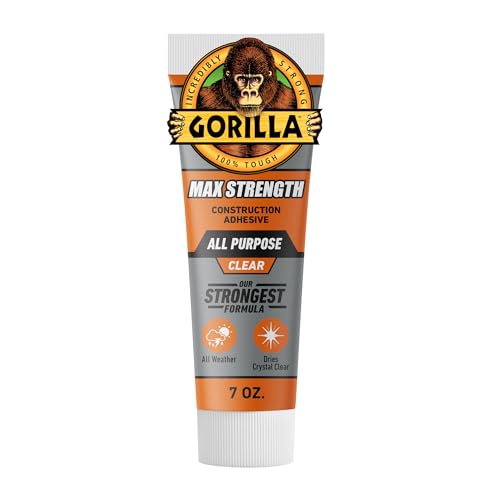
Gorilla’s Max Strength Construction Adhesive is a hybrid polymer formula that bridges the gap between a cyanoacrylate and an epoxy. It dries crystal clear, making it the best-looking option for visible repairs on transparent plastics or glass-to-metal assemblies. The formula is 100% waterproof, works on wet surfaces, and can even be applied underwater for shower and tub repairs.
The paste-like consistency fills gaps up to 1/4 inch, which is useful when the plastic and metal surfaces don’t mate perfectly. Users have successfully bonded magnets inside a hot car interior, sealed a wood AC cover, and attached metal brackets to plastic trim. The 30-minute working time allows repositioning, while the initial tack grabs within 30 seconds. After 24 hours, the cured bond is paintable and sandable.
The 7 oz squeeze tube is easy to use with the reusable nozzle, but patience is required—full cure takes a full day, and clamping is recommended for the first few hours. One customer reported that while the bond was strong on wood-to-metal, the slow cure on certain plastics required extra support. This is a versatile, all-weather pick for outdoor projects where clarity and water resistance matter more than raw PSI.
Why it’s great
- Dries clear for invisible repairs on transparent materials
- 100% waterproof and bonds on wet surfaces
- Gap-filling formula with up to 30 minutes repositioning time
Good to know
- Full cure takes 24 hours; clamping recommended
- Very sticky and difficult to remove from skin
- Not as strong as dedicated epoxies for structural loads
5. Loctite Glass Glue, 3 Pack

Loctite Glass Glue is specifically formulated to bond glass to itself, to certain metals, and to plastics. It dries clear and colorless, leaving a nearly invisible seam on transparent repairs. The cyanoacrylate base grabs quickly without clamping, making it ideal for delicate items like glass vases, crystal stemware, and picture frames where clamping could cause further breakage.
The 2 g bottles in this 3-pack are small but sufficient for a dozen or more small repairs. Users have used it to fix chipped table tops, reattach broken stems on wine glasses, and bond glass artwork. The bond is heat resistant, waterproof, and—critically—dishwasher safe, so repaired kitchenware can withstand regular washing cycles without delaminating.
This glue is designed for indoor use only and is not recommended for exterior applications. The bond is strong on non-porous surfaces, but like all cyanoacrylates, it can be brittle under heavy shear loads. The small bottles also mean the precision tip can clog if not wiped clean after each use. For small, clean, indoor glass-to-metal or glass-to-plastic repairs, this is the category leader.
Why it’s great
- Dries crystal clear for invisible glass repairs
- Dishwasher safe and heat resistant
- Bonds quickly without clamping
Good to know
- For indoor use only
- Small 2 g bottles; tip may clog if not cleaned
- Brittle under high shear or impact stress
6. 3M Super 77 Multipurpose Spray Adhesive
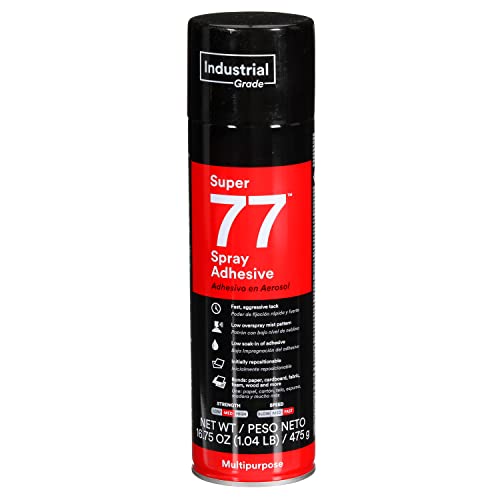
3M Super 77 is the go-to spray adhesive when you need to laminate large plastic sheets to metal surfaces or bond upholstery, fabric, or insulation to metal frames. The aerosol spray covers broad areas evenly, and the aggressive tack provides a fast initial grab while still allowing repositioning for 15 seconds to 30 minutes depending on the substrate.
Users have used it to install carpet padding in automotive restorations, set O-rings in injector pump housings, and attach foam to metal panels. The low soak-in formula prevents the glue from bleeding through thin fabrics, and the clear spray leaves no yellowing over time. Because it’s a contact adhesive, both surfaces are sprayed, allowed to dry briefly, then pressed together for an immediate bond.
For heavy structural loads or large gaps, Super 77 is not strong enough on its own—it’s best suited for laminations, insulation, and trim attachments where peel strength matters more than shear strength. One user noted it required multiple coats for a sufficient hold on certain smooth plastics. This is a specialized tool for large-area applications, not a primary choice for fixing a broken bracket.
Why it’s great
- Fast, even coverage on large surfaces
- Initially repositionable; reduces misalignment waste
- Low soak-in and non-yellowing formula
Good to know
- Not intended for structural or load-bearing repairs
- May require multiple coats on smooth plastic
- Overspray control needed; mask surrounding areas
7. RH Adhesives S-18 All-Purpose Adhesive
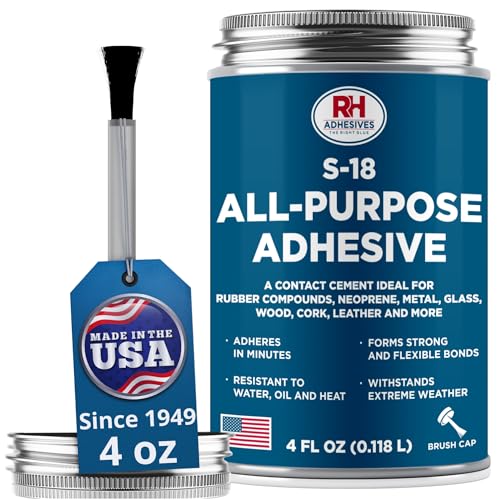
The S-18 from RH Adhesives is a neoprene-based contact cement that excels at bonding rubber, neoprene, and a wide range of plastics to metal surfaces. Unlike rigid epoxies, the S-18 film remains flexible, absorbing vibration and thermal expansion without cracking. This makes it a strong candidate for marine applications, automotive interior repairs, and projects where the bonded parts will continue to move independently.
Users have used it to glue neoprene sheets for car hail protection, repair leather boots, and affix rubber to metal brackets. The water-resistant solvent-based formula handles difficult temperatures and delivers excellent peel strength. The 4 oz can provides enough material for multiple medium-sized repairs, and the brush-in-lid applicator makes coverage straightforward.
The main drawbacks are the strong solvent fumes—ventilation is absolutely required—and the potential for bond failure in extreme heat and prolonged rain exposure. One user reported the S-18 failed on an outdoor car hail protector after summer heat and heavy rain. This product is best suited for interior, low-heat, and dry applications where flexibility and peel strength are the priority over ultra-high shear load.
Why it’s great
- Flexible bond ideal for rubber and neoprene to metal
- Excellent water resistance for marine use
- Good peel strength and resistance to oil
Good to know
- Strong solvent fumes; requires excellent ventilation
- Bond can weaken in prolonged heat and rain exposure
- Can lose strength if stored opened for long periods
FAQ
Why do most glues fail on plastic to metal bonds?
Can I use super glue for plastic to metal repairs?
How should I prepare the surfaces before bonding plastic to metal?
Final Thoughts: The Verdict
For most users, the adhesive for plastic to metal winner is the J-B Weld 8281 because its steel-reinforced epoxy delivers the highest tensile strength and heat tolerance, making it the only true structural option for load-bearing repairs. If you need precision and instant grab, grab the Loctite Super Glue Gel Control. And for large-area laminations or flexible rubber-to-metal bonds, nothing beats the 3M Super 77 Spray Adhesive for its even coverage and repositioning window.