
Our readers keep the lights on and the weekend projects moving. As an Amazon Associate, I earn from qualifying purchases.
Living in a rural area means trading city noise for peace and quiet, but it often means sacrificing reliable over-the-air TV reception. The terrain, trees, and sheer distance from broadcast towers turn a simple antenna setup into a frustrating game of signal roulette. An attic-mounted antenna offers a hidden, weather-protected solution, but choosing the wrong model for your specific fringe-location needs can mean hours of climbing and zero results.
I’m Rikta — the co-founder and writer behind FitlyFast. My research for this guide involved analyzing dozens of antenna gain patterns, build materials, and hundreds of real-world user reports to determine which models actually overcome the specific signal challenges of rural and fringe reception zones.
After comparing reception range, VHF/UHF gain, interference filtering, and installation ease, you can find the best attic tv antenna for rural areas that delivers consistent, crystal-clear channels without a monthly bill.
How To Choose The Best Attic TV Antenna For Rural Areas
Selecting an antenna for an attic in a rural setting is different from a standard suburban install. The attic itself acts as a signal barrier (roofing materials, insulation, and wiring all attenuate the signal), and the sheer distance to towers demands a higher-performance unit. Here are the critical factors that separate a successful install from a wasted weekend.
Focus on Gain, Not Just Mile Range
Every antenna boasts a “mile range,” but that number is theoretical, measured under perfect, open-field conditions. For real-world performance in a rural attic, the gain specification (measured in dBi) is far more important. Look for a unit with a UHF gain of at least 12 dBi and a VHF gain ideally above 10 dBi. The Televes models in this guide, for instance, offer intelligent gain control that adjusts amplification to prevent signal overload from strong nearby stations while still pulling in weak distant ones.
UHF vs. VHF Element Design
Not all antennas handle both UHF and VHF frequencies equally. Many modern flat-panel designs are UHF-only and will completely miss VHF channels (often channels 2-13), which are common in rural areas for major networks. A proper Yagi-style or multi-element design, like the RCA Yagi or GE Yagi, has dedicated, longer elements for VHF. If you need channel 7 (VHF), a compact indoor leaf won’t cut it.
Interference Filtering is Critical
Rural areas often have cell towers, FM radio stations, and now 5G infrastructure that can swamp a TV antenna’s preamplifier. High-end units like the Televes line include built-in LTE, 4G, and 5G filters. Without this filtering, strong cellular signals can overload the amplifier, causing the TV tuner to drop channels entirely. If you live near a cell site, an antenna with proper filtering is not optional—it is mandatory for reliable reception.
Quick Comparison
On smaller screens, swipe sideways to see the full table.
| Model | Category | Best For | Key Spec | Amazon |
|---|---|---|---|---|
| Televes DAT BOSS Mix LR | Premium | Extreme fringe reception | 46 dBi UHF Gain | Amazon |
| Televes DiNova Boss Mix | Premium | High interference areas | 34 dBi UHF Gain | Amazon |
| Five Star Outdoor Antenna | Premium | Reaching 200-mile claimed range | Extended 46″ length | Amazon |
| Antennas Direct ClearStream MAX-V | Mid-Range | Multi-directional attic install | 65-degree beam angle | Amazon |
| GE Outdoor Yagi Antenna | Mid-Range | Budget-friendly 80-mile range | 200 channels support | Amazon |
| RCA Yagi Antenna | Mid-Range | Easy assembly attic install | 2 pounds weight | Amazon |
| Mohu Leaf Amplified | Budget | Simple indoor/attic setup | 0.04-inch thickness | Amazon |
In‑Depth Reviews
1. Televes DAT BOSS Mix LR 149884
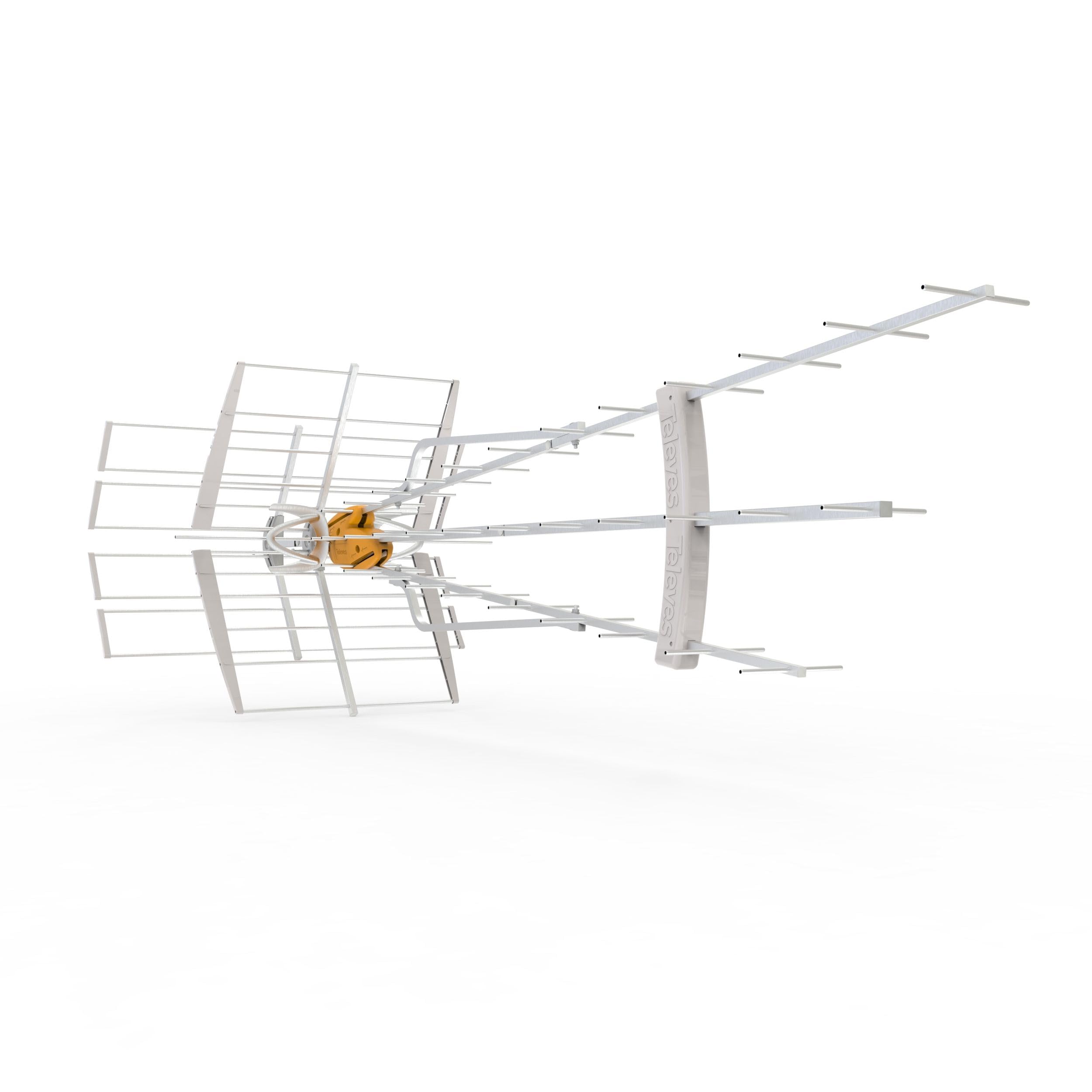
This is the reference standard for extreme fringe reception. The Televes DAT BOSS Mix LR uses a proprietary stacked triple-boom design that delivers a market-leading 46 dBi UHF gain and 38 dBi High VHF gain, numbers that outclass nearly everything else on this list. Its TForce Intelligent Gain Control automatically adjusts amplification band by band to prevent overload from stronger local signals while still pulling in distant weak ones—a critical feature for rural areas where signal strength is inconsistent.
The built-in FM, LTE, 4G, and 5G filtering is comprehensive, protecting your reception from the interference that plagues antennas near cell towers. User reports confirm it succeeds where others fail, with one Wisconsin user 70 miles from towers receiving 37 usable channels after it replaced a Dish Network subscription. Another Seattle-area user on the extreme fringe eliminated persistent pixelation on high-UHF channels that no previous antenna could solve.
Assembly is straightforward, but this is a large unit (84 inches long) requiring a sturdy mast. The included power inserter and weather boot make outdoor or attic mounting professional-grade. For the rural user who is serious about cord-cutting and unwilling to compromise on channel count, this is the investment that pays for itself in reliability.
Why it’s great
- Industry-leading 46 dBi UHF gain for extreme fringe zones.
- Automatic band-specific gain control prevents overload.
- Comprehensive built-in cellular and FM filtering.
Good to know
- Large physical size (84 inches) needs substantial mounting space.
- Premium tier investment—not for entry-level budgets.
2. Televes DiNova Boss Mix 144286

If the DAT BOSS is the sledgehammer, the DiNova Boss Mix is the precision scalpel. It packs Televes’ signature intelligent gain control and filtering into a significantly smaller 31-inch radome housing that is easier to fit in a cramped attic. The 34 dBi UHF and 29 dBi High VHF gains are still class-leading for its size, making it perfect for the rural user who only needs 50-60 mile reach but must contend with heavy interference from nearby towers.
One user installed it in a hilly rural area and got 53 channels with zero pixelation indoors, then added 20 more after moving it to an attic location. Another reviewer 90 miles from a CBS affiliate still managed to pull it in. The 5G/LTE/4G filtering (above 608MHz) is explicitly designed for the current broadcast repack environment, protecting your reception from modern cellular interference that older antennas struggle with.
The white low-profile design is less obtrusive than traditional Yagi antennas, and the no-assembly-required radome saves significant setup time. The included J-mount and dual-output power inserter simplify the process. For the rural homeowner who needs top-tier filtering and reliable gains without the huge footprint of a full-size array, this is the smart compromise.
Why it’s great
- Compact, all-in-one radome design fits tight attics.
- Excellent filtering against LTE/4G/5G interference.
- No assembly required—install in minutes.
Good to know
- Range tops out around 60 miles, not for extreme fringe.
- Premium price for compact form factor.
3. Five Star Outdoor HDTV Antenna

The Five Star antenna takes a “more is more” approach, with an extended 46-inch physical length designed to capture weaker signals. While the 200-mile claim is aggressive marketing, real-world results are strong: one user 45 miles from towers with a mountain obstruction still pulled in 60 channels, citing an 11dB VHF gain. The longer elements genuinely help capture low-VHF signals that shorter antennas miss entirely.
Assembly requires attention—the instructions for the VHF vibrator alignment are not the clearest, and several users noted that the included mounting bracket is flimsier than the antenna itself. One reviewer replaced the mount with an old DirectTV bracket for stability. The coaxial cable run tolerance is robust: 80 feet works fine, though 175 feet caused one user to lose a low-power station, which is expected for any passive antenna at that distance.
This unit includes a splitter for feeding up to 4 TVs, making it a solid choice for a whole-home solution on a budget. It does not have built-in filtering, so if you are near a cell tower, consider adding an external filter or preamplifier. For the price-conscious rural user who needs maximum raw element length, this delivers surprising performance.
Why it’s great
- Extra-long elements improve VHF reception.
- Includes 4-way splitter for multi-room install.
- Strong gain performance for the price tier.
Good to know
- Mounting bracket may need reinforcement.
- No built-in interference filtering.
4. Antennas Direct ClearStream MAX-V
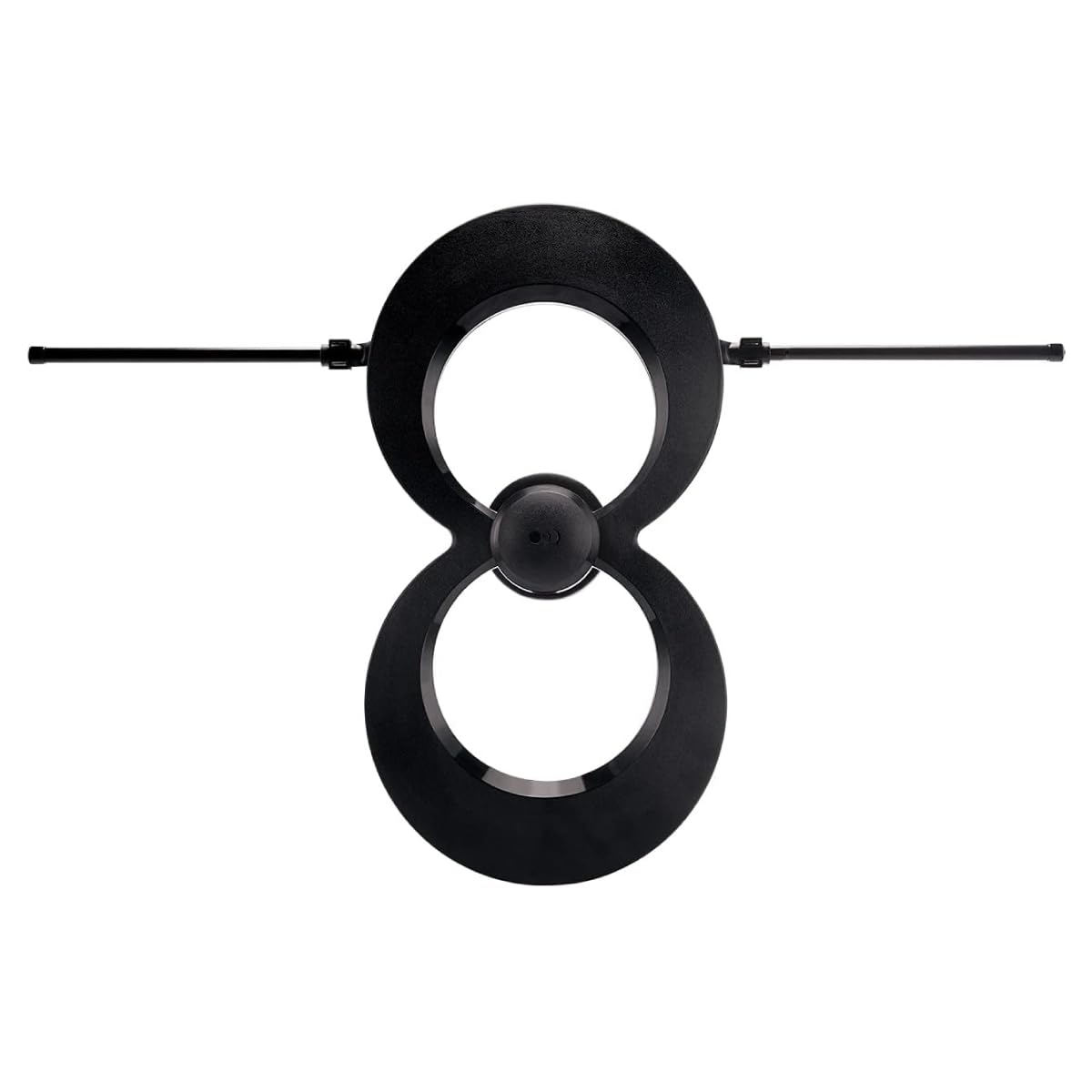
The ClearStream MAX-V is the anti-Yagi: a multi-directional design that uses two phased loops to receive signals from a 65-degree beam angle, unlike the narrow focus of a directional Yagi. This is a huge advantage for rural attics where you cannot always aim directly at every tower. One user in a rural area received 67 channels from all directions after finding the sweet spot with a booster at the TV.
It handles both UHF and Hi-VHF (channels 7-13) with dedicated elements, making it more versatile than flat-panel alternatives. The steel wall bracket included is a rare and welcome addition for attic mounting without needing a mast. One reviewer replaced a roof-mounted Winegard that had failed after years, and the ClearStream outperformed it even without external amplification, pulling in PBS reliably from just a mile away.
Assembly is minimal—users report it takes about 10 minutes. The lifetime warranty from Antennas Direct adds confidence. For the rural user who wants a balance of price and performance without committing to a precise directional aim, this is the sweet spot of the mid-range category.
Why it’s great
- Multi-directional design catches towers at different angles.
- Includes steel wall bracket for easy attic mounting.
- Lifetime warranty for long-term value.
Good to know
- Will miss Lo-VHF channels (2-6).
- May need external amplifier for deep fringe zones.
5. GE Outdoor HD Digital TV Antenna 33685

The GE Yagi is the workhorse of this list—a traditional design that has been refined over years and is backed by America’s number one antenna brand. It hits an 80-mile range with a proper Yagi element array that handles both UHF and VHF signals. One user mounted it in an attic under a concrete tile roof at 35 miles from transmitters and reported solid, pixelation-free reception even during storms, outperforming their previous cable signal.
Assembly is required, and the instructions are not the strongest (several reviewers noted they needed to watch online videos). However, the included J-mount and weather-resistant bracket make outdoor or attic installation feasible. A Colorado user picking up stations from Nebraska 93 channels strong shows its reach when properly positioned. The limited-lifetime replacement pledge from GE provides solid backup.
This antenna lacks any built-in filtering, so users near cell towers may need an add-on filter. Also, its 37-inch length is moderate—not as large as the Five Star but larger than the ClearStream. For the rural user who prefers a proven, no-frills design with strong brand support and a competitive price, the GE Yagi is a safe bet.
Why it’s great
- Proven Yagi design with 80-mile real-world reach.
- Included J-mount makes attic install straightforward.
- Limited-lifetime replacement pledge from trusted brand.
Good to know
- Assembly instructions are minimal.
- No built-in cellular/FM filtering.
6. RCA Compact Outdoor or Attic Yagi ANT751Z

This RCA Yagi is surprisingly compact for a directional antenna, weighing just 2 pounds with a fold-out UHF reflector that makes assembly tool-free and fast. One user mounted it in an attic without an amplifier and still picked up 79 channels with major networks at 80-85% signal strength. Another added a Winegard LNA-200 preamp and jumped from 14 to 51 channels with full strength on all major networks in 1080 HD.
Critical note for attic installs: this antenna catches UHF and Hi-VHF well, but a few users reported that it misses low-VHF (channel 2-6) stations, which are sometimes used by ABC affiliates in rural markets. The included mast, clamp, and matching transformer are solid, but you must supply your own coax cable and grounding hardware. The free RCA Signal Finder app is useful for initial aiming.
Its lightweight build makes it ideal for attic rafters or smaller mounting points where a heavier antenna would be impractical. The price-to-performance ratio is excellent, making it a strong contender for the value-minded rural cord-cutter.
Why it’s great
- Lightweight, compact design perfect for attic mounting.
- Easy snap-lock assembly with no tools needed.
- Strong 75-mile range with optional preamp.
Good to know
- Will not reliably catch low-VHF channels (2-6).
- Coaxial cable not included in package.
7. Mohu Leaf Amplified

The Mohu Leaf is a different breed from the Yagi-style antennas above. It is an ultra-thin (0.04 inches), multi-directional amplified flat panel designed for indoor use, but it can work in a favorable attic location. The Jolt Switch amplifier lets you toggle signal boost at the flip of a switch, which is handy for fine-tuning. One user found 47 crystal-clear channels after replacing a budget antenna that only got 21, calling it “well worth the cost.”
However, for rural areas, this antenna has distinct limitations. It is essentially UHF and Hi-VHF only—it will almost certainly miss low-VHF channels. One frustrated reviewer reported worse performance than a 40-year-old RCA antenna, describing it as “modern junk” that could not pull in NextGenTV channels. The 60-mile range is optimistic for rural attics, and the thin design offers no shielding against interference.
This is the entry-level option in this guide for a reason. If you are in a light suburban fringe area with towers relatively close (within 30 miles) and no low-VHF stations, it can work. For serious rural reception, the Yagi-style antennas are far more reliable. Consider this only if you have a very favorable attic location and modest expectations.
Why it’s great
- Ultra-thin design hides easily on wall or window.
- Jolt Switch amplifier gives control over boost.
- Easy setup for non-technical users.
Good to know
- Weak VHF reception; misses many rural channels.
- 60-mile range is unreliable in deep fringe zones.
- Less durable construction than Yagi antennas.
FAQ
Can I use an indoor flat antenna in my attic for rural reception?
Do I always need a preamplifier for an attic antenna?
Final Thoughts: The Verdict
For most users, the best attic tv antenna for rural areas winner is the Televes DAT BOSS Mix LR because its market-leading gain and intelligent filtering overcome the most challenging fringe conditions. If you want a smaller footprint without sacrificing interference rejection, grab the Televes DiNova Boss Mix. And for the best value in a multi-directional form that works in moderate rural zones, nothing beats the Antennas Direct ClearStream MAX-V.