
Our readers keep the lights on and the weekend projects moving. As an Amazon Associate, I earn from qualifying purchases.
Nothing kills the joy of tending your garden like finding a cluster of aphids sucking the life out of your rosebuds or vegetable starts. These soft-bodied pests multiply fast, and the wrong spray can either harm your plants, miss the mark on the infestation, or wash away with the next rain. Selecting an effective aphid insecticide means matching the active ingredient to the plant type, the severity of the outbreak, and your tolerance for reapplication.
I’m Rikta — the co-founder and writer behind FitlyFast. I’ve spent hundreds of hours analyzing customer reports, ingredient labels, and application methods to separate the proven aphid solutions from the ones that offer only short-term knockdown.
This guide breaks down seven top-rated products that use different mechanisms — contact killers, systemic formulas, organic oils, and sticky traps — so you can confidently choose the best aphid insecticide for your specific garden battle.
How To Choose The Best Aphid Insecticide
Choosing the right aphid insecticide involves understanding where your plants live, how fast you need results, and whether you want to avoid synthetic chemicals. Here is what matters most.
Understanding Active Ingredients
Look for products containing pyrethrins, acephate, or malathion for fast, broad-spectrum control. Pyrethrins are plant-derived contact killers that break down quickly, while acephate is a systemic that moves through the plant to protect new growth. Malathion is a potent organophosphate best reserved for stubborn infestations. Organic options use neem oil or canola oil to suffocate aphids on contact.
Ready-to-Use vs. Concentrate
Ready-to-use sprays save time and require no mixing — ideal for quick spot treatments on roses or container plants. Concentrates offer better value per application and allow you to adjust strength, but they require a sprayer and careful measurement. Stick with ready-to-use for small gardens and concentrates for large beds or multiple treatments.
Plant Compatibility
Not every insecticide is safe for every plant. Some systemic formulas are labeled only for ornamentals and trees, not edible crops. Check the label for the specific plants you grow — vegetables like tomatoes and peppers need a product labeled for edibles, while roses and shrubs can tolerate stronger formulas.
Quick Comparison
On smaller screens, swipe sideways to see the full table.
| Model | Category | Best For | Key Spec | Amazon |
|---|---|---|---|---|
| Monterey Take Down Garden Spray | Contact Killer | Fruit, vegetables, ornamentals | 0.01% Pyrethrins + Canola Oil | Amazon |
| Bonide Systemic Insect Control | Systemic Concentrate | Ornamentals, long-term control | 16 oz concentrate (makes 16 gal) | Amazon |
| Hi-Yield 55% Malathion Spray | Broad-spectrum | Heavy infestations, tough bugs | 55% Malathion Concentrate | Amazon |
| Bayer BioAdvanced Tomato & Vegetable | Edible Safe | Vegetables, harvest-day safety | 24 oz Ready-to-Use | Amazon |
| Ortho Rose and Flower Insect Killer | Systemic Spray | Roses, flowering plants | 24 oz Ready-to-Use | Amazon |
| DR EARTH Garden Insect Killer | Organic | Organic gardens, sensitive plants | 24 oz Concentrate | Amazon |
| Maxguard Yellow Sticky Traps | Non-toxic | Indoor plants, monitoring | 30-Pack Sticky Stakes | Amazon |
In‑Depth Reviews
1. Monterey Take Down Garden Spray RTU
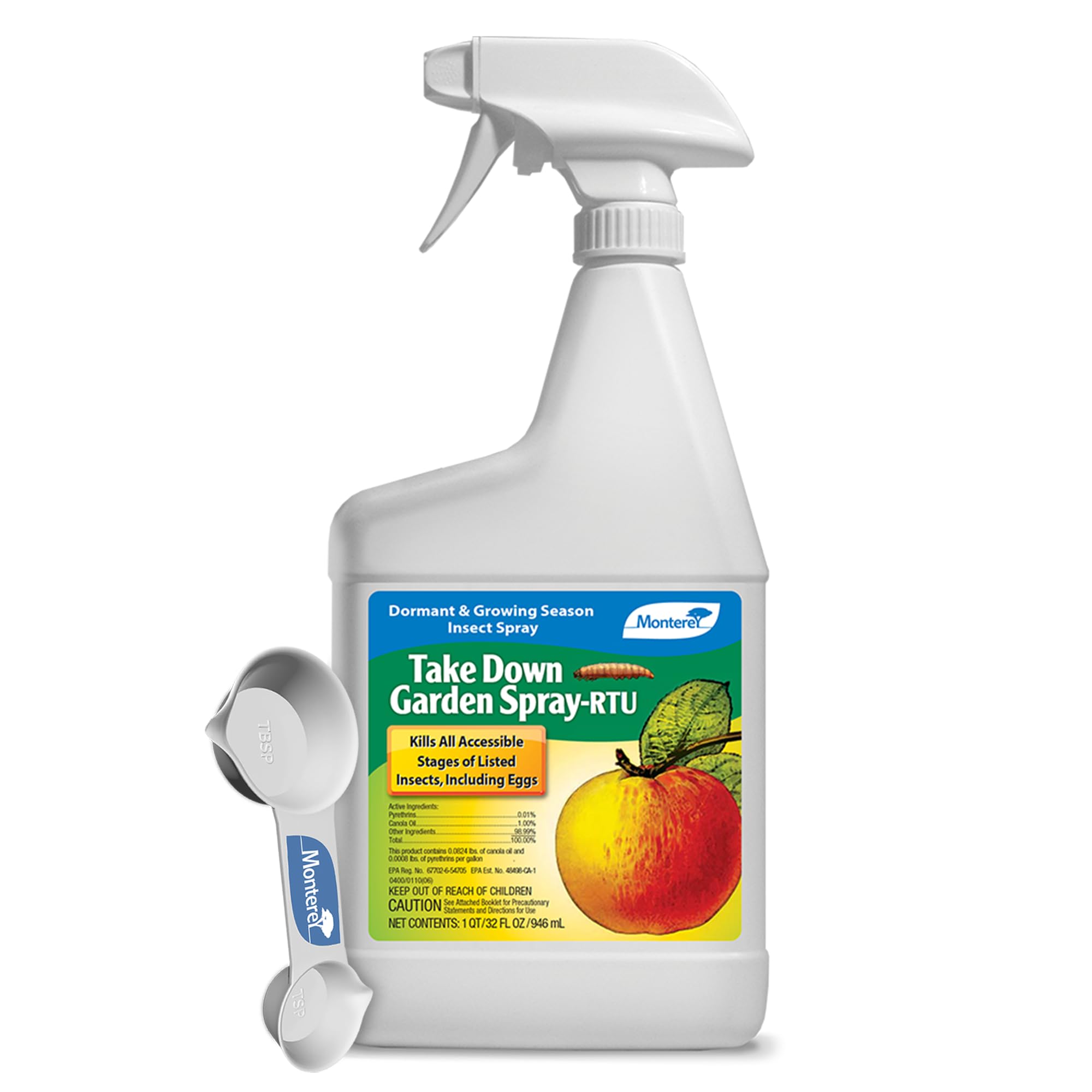
Monterey Take Down combines 0.01% pyrethrins with 1.00% canola oil to kill aphids, caterpillars, and mealybugs on contact, including the egg stage — a rare feature in a ready-to-use spray. Users report that two treatments eliminate aphids within a day on carnivorous plants and ornamentals, a speed that outpaces most organic alternatives.
The canola oil coats the insect’s body and smothers it, while the pyrethrins disrupt its nervous system. This dual-action approach makes the formula effective even on mature aphids that have developed some resistance to single-ingredient sprays. The non-persistent nature of pyrethrins also means beneficial pollinators are safer when the spray has dried.
Gardeners appreciate the low odor compared to neem-based products, though the spray requires direct contact to be effective and may need reapplication after rain. For a natural, fast-knockdown option that works on edibles and ornamentals alike, this is the most balanced choice on the list.
Why it’s great
- Kills eggs and adults on contact
- Low odor and relatively safe for beneficials when dry
- Works on vegetables, fruits, and ornamentals
Good to know
- Needs direct contact with aphids to work
- May require reapplication after heavy rain
2. Bonide Systemic Insect Control Concentrate

Bonide Systemic Insect Control uses acephate, a water-soluble insecticide that the plant absorbs through its roots and distributes to all tissues — including new growth where aphids love to feed. This means you are not just killing the aphids you see today; you are protecting the leaves and stems that emerge tomorrow. One 16-ounce bottle makes up to 16 gallons of spray, offering serious value for large ornamental gardens.
Customer reports highlight its ability to stop fungus gnats, thrips, and spider mites on arborvitae, canna lilies, and roses. The systemic action is especially valuable for bagworms and leaf-rolling caterpillars that are hard to hit with contact sprays. However, this product is labeled for ornamentals only — not for vegetables or fruit trees — so keep it on your flower beds and shrubs.
The main trade-off is the odor. Multiple users describe the smell as intense, reminiscent of a dumpster on a hot day, and it is noticeable indoors if used on houseplants. If you can tolerate the smell for a few hours, the long-lasting systemic protection is hard to beat for ornamentals.
Why it’s great
- Systemic — protects new growth for weeks
- One bottle makes 16 gallons for large areas
- Effective against hard-to-kill pests like bagworms
Good to know
- Very strong odor during application
- Not labeled for use on vegetables or fruit trees
3. Hi-Yield 55% Malathion Spray
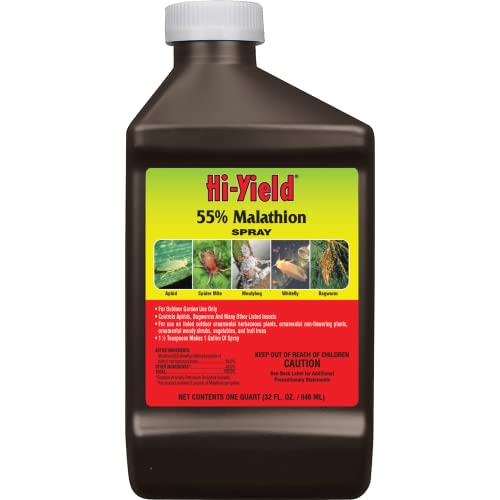
Hi-Yield 55% Malathion Spray is the nuclear option for aphid infestations that have resisted everything else. Malathion is a potent organophosphate that kills aphids, spider mites, thrips, and lace bugs on contact and has some residual action. Users on dahlias and bushes report wiping out severe spider mite populations after other products failed.
This is a concentrate — you mix it with water and apply with a hose-end or tank sprayer. It is labeled for use on vegetables, fruit trees, and ornamentals, making it one of the most versatile heavy-duty options. The product label recommends applying in calm weather with no rain expected for 24 hours, which is a standard precaution for most potent insecticides.
The caution level is higher here than with any other product in this guide. Malathion requires protective gear — long sleeves, gloves, and a respirator — and users treat it as a last resort. If you have a moderate infestation on roses or vegetables, start with a contact spray or systemic option before reaching for this.
Why it’s great
- Extremely effective on stubborn infestations
- Works on vegetables, fruit trees, and ornamentals
- Strong residual action after application
Good to know
- Requires protective gear during application
- Potent chemical — use as a last resort
4. Bayer BioAdvanced Tomato & Vegetable Pest Control

When you are growing food, the last thing you want is an insecticide that leaves a residue on your tomatoes or peppers. Bayer BioAdvanced Tomato & Vegetable Pest Control is formulated specifically for edible crops and allows harvest on the same day as application — a major convenience for gardeners picking produce daily. The ready-to-use spray kills aphids, cutworms, and other listed pests on contact.
Customer feedback highlights its ease of use in raised beds and large containers. The spray nozzle delivers a wide, even mist that covers leaf undersides where aphids cluster. Users on grapevines report that it keeps spotted lanternflies away with bi-monthly reapplication, suggesting decent residual activity compared to purely organic sprays.
The trade-off is that its action is primarily contact-based and not systemic, meaning you need thorough coverage and may need to respray after rain or heavy dew. If you grow a mix of ornamentals and edibles, you might prefer a more versatile product, but for dedicated vegetable gardens, this is the most practical ready-to-use solution.
Why it’s great
- Approved for use on tomatoes up to day of harvest
- Ready-to-use — no mixing required
- Wide spray pattern for covering large beds
Good to know
- Contact-only — needs thorough coverage
- May require reapplication after rain
5. Ortho Rose and Flower Insect Killer

Ortho Rose and Flower Insect Killer is a dual-action spray that kills aphids, Japanese beetles, and over 100 other listed insects by contact while providing limited systemic protection that lasts up to four weeks. This is a go-to for rose enthusiasts who want a simple, ready-to-use solution that does not require measuring or mixing.
User reviews consistently praise its effectiveness on roses where something was eating the leaves and blooms. After a few sprays, the damage stopped and the plants recovered. The systemic component provides some ongoing protection between applications, though some users note the systemic effect is weaker than dedicated systemic concentrates.
One weakness is that the formula is not labeled for edible plants, so keep it on your flowers and ornamentals. For the best results on roses, apply when Japanese beetles or aphids first appear, and reapply every two to four weeks during the active growing season.
Why it’s great
- Kills over 100 insect species by contact
- Provides up to 4 weeks of protection
- Easy ready-to-use spray bottle
Good to know
- Systemic action is weaker than dedicated concentrates
- Not labeled for use on vegetables or fruit
6. DR EARTH Garden Insect Killer

DR EARTH Garden Insect Killer is a 100% organic and natural oil-based concentrate that provides protection for weeks after application. Users report that it eliminates aphids overnight when applied to the soil, and it also works against thrips, mealybugs, and even powdery mildew — making it a versatile addition to an organic garden.
The pleasant scent sets it apart from other organic sprays. Many users mention that it smells far better than neem oil, which can be a deterrent for indoor applications. The formula mixes easily with water and can be used on vegetables, ornamentals, and herbs, provided you follow the dilution instructions carefully.
The main limitation is that it washes off with rain and requires reapplication after wet weather. Some users found it rolled off cabbage leaves and did not stick well to waxy surfaces. For aphids on most garden plants, it is an effective and gentle option that aligns with organic gardening principles.
Why it’s great
- 100% organic and natural ingredients
- Eliminates aphids overnight with soil application
- Pleasant scent compared to neem-based sprays
Good to know
- Washes off with rain — needs reapplication
- May not adhere well to waxy leaf surfaces
7. Maxguard Yellow Sticky Traps

Maxguard Yellow Sticky Traps take a completely different approach — they use bright yellow color to attract aphids, fungus gnats, whiteflies, and leaf miners, then trap them on industrial-grade adhesive. This is a non-toxic solution ideal for indoor plants, greenhouses, or as a monitoring tool alongside other treatments.
The stake design is sturdy and doubles as a hanging trap. Each trap lasts up to six months or until it is full of insects. Users love that they can insert the stake directly into potting soil without tools, and the adhesive stays sticky through rain and sun. The traps are particularly effective for fungus gnats and fruit flies indoors.
Note that sticky traps are a passive control method — they will not eliminate a severe aphid infestation on their own. They work best as part of an integrated pest management plan, catching winged adults and reducing the breeding population while you treat the plants with a spray. For a low-effort, chemical-free first line of defense, this is an excellent choice.
Why it’s great
- Non-toxic and safe for indoor use around pets
- Each trap lasts up to 6 months
- Dual-sided design with industrial-grade adhesive
Good to know
- Passive control — not a standalone solution for heavy infestations
- Traps can be large for small potted plants; may need trimming
FAQ
Can I use a systemic insecticide on my vegetable garden?
How often should I reapply an aphid insecticide?
Will neem oil or organic sprays kill aphids as effectively as synthetic chemicals?
Final Thoughts: The Verdict
For most users, the best aphid insecticide winner is the Monterey Take Down Garden Spray because it combines natural pyrethrins and canola oil for fast, egg-to-adult control on edibles and ornamentals without harsh odor. If you want long-term systemic protection for your flower beds and shrubs, grab the Bonide Systemic Insect Control Concentrate. And for a non-toxic approach to monitor and reduce flying adult aphids indoors, nothing beats the Maxguard Yellow Sticky Traps.