
Our readers keep the lights on and the weekend projects moving. As an Amazon Associate, I earn from qualifying purchases.
Bluebirds have specific feeding habits that standard open-tray feeders cannot accommodate. They prefer live or dried mealworms served in a protected environment where larger birds like starlings, grackles, and squirrels cannot dominate the food source. A feeder designed for bluebirds must balance easy access for these cavity-nesting birds with exclusion features that keep competitors out.
I’m Rikta — the co-founder and writer behind FitlyFast. I analyze hundreds of hours of backyard birding field reports and scrutinize build materials, mesh spacing, and weatherproofing specs to identify which designs actually work for bluebirds in real suburban and rural settings.
For birders who want to attract Eastern and Western Bluebirds without wasting mealworms on bullies, choosing the right bird feeder for bluebirds comes down to exclusion cage size, roof adjustability, and ease of cleaning. This guide breaks down the seven best designs on the market today.
How To Choose The Best Bird Feeder For Bluebirds
Bluebirds are cavity nesters but they feed on the ground and in open perches. The ideal feeder mimics a safe platform — protected from rain, competitors, and predators — while offering easy escape routes. Here are the critical factors to evaluate.
Mesh Size and Cage Design
The most reliable way to exclude starlings, grackles, and jays is a wire mesh cage with openings no larger than 1.5 x 1.5 inches. Bluebirds can slip through easily, but average-sized starlings cannot. Some feeders use adjustable dome roofs instead of full cages; these work well when lowered to roughly 3 inches above the feeding tray.
Material Durability and Weather Resistance
Recycled poly-lumber feeders resist cracking, fading, and warping across freeze-thaw cycles and full sun exposure. Metal frames with powder-coated or stainless-steel construction resist rust better than thin-gauge galvanized wire. Wood feeders require periodic sealing or painting to prevent mold growth in humid environments.
Ease of Filling and Cleaning
Mealworm feeders need refilling every 2–4 days in warm months. Look for removable roofs, screw-off bases, or slide-out trays. Avoid designs that require tools to access the food chamber. Clear viewing windows let you monitor levels without opening the feeder, reducing stress on nesting birds.
Quick Comparison
On smaller screens, swipe sideways to see the full table.
| Model | Category | Best For | Key Spec | Amazon |
|---|---|---|---|---|
| Kettle Moraine Recycled Bluebird | Premium Recycled Plastic | Starling-proof mealworm station | 1″ viewing windows, 4 entry points | Amazon |
| PFNRTH Rotating Dome Platform Feeder | Adjustable Dome | Bluebirds with mixed-species flocks | Adjustable 2.7″-5.5″ dome height, 2.8 lb capacity | Amazon |
| Gbekery Caged Bluebird Feeder | Metal Cage with Glass Bowl | Squirrel and larger bird exclusion | 1.5″ x 1.5″ mesh, removable glass bowl | Amazon |
| Kingsyard Platform Feeder | Recycled Plastic Platform | Small birds with fly-through freedom | Metal mesh tray with 1.5″ grid | Amazon |
| Amish Poly Lumber Bluebird Feeder | Handcrafted Poly Lumber | Eco-conscious long-term investment | Removable sides & top, 12″x8″x8″ | Amazon |
| Wildlife Sciences Mealworm Feeder | Powder-Coated Mesh Bowl | Budget-friendly starling deterrent | 5″x5″ mesh bowl, stainless steel roof | Amazon |
| STARSWR Wooden Feeder | Budget Wood Platform | Entry-level open feeding station | 10.5″x7.5″x7.5″ wood platform | Amazon |
In‑Depth Reviews
1. Kettle Moraine Recycled Bluebird Mealworm Feeder
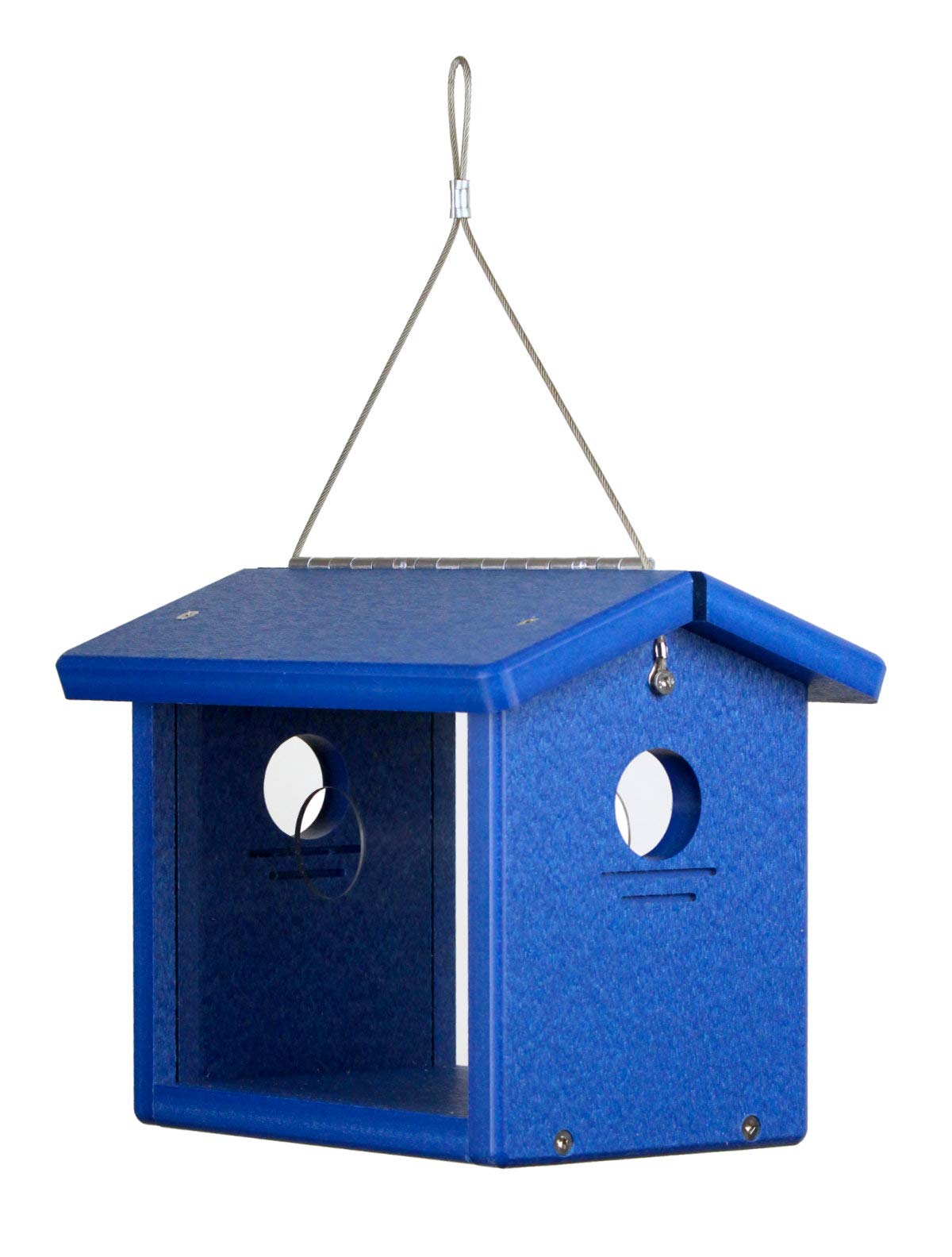
The Kettle Moraine feeder is constructed from recycled milk jugs — a dense poly-lumber that carries a factory guarantee against cracking, splitting, peeling, or fading. Four entry holes allow bluebirds to access the interior from any direction, preventing the entrapment panic that some enclosed feeders cause. The heavy acrylic viewing windows let you track mealworm levels without opening the top, and the stainless steel hanging cable resists corrosion longer than standard chain.
The four-entry-hole design is intended to keep bluebirds from feeling trapped while limiting the angles starlings and blackbirds can use to reach the mealworms through the small openings. The recycled-plastic material does not absorb moisture the way wood does, which should help limit mold growth in humid climates.
One thing to watch is the acrylic side panels around the screw holes — over-tightening the hardware during assembly can risk hairline cracks, so hand-tighten only. At 3.6 pounds, the feeder should hang steadily in wind from a sturdy hook or shepherd’s pole.
Why it’s great
- Starlings give up after repeated failed attempts — proven exclusion design
- Guaranteed never to crack, split, or fade, even in full sun
- Clear windows allow quick mealworm level checks
Good to know
- Acrylic panels can crack if hardware is over-tightened
- Heavier than average — needs a strong hanging point
2. PFNRTH Rotating Dome Platform Feeder

The PFNRTH feeder uses a clear plastic dome mounted on a 304 stainless-steel frame, with a tray that adjusts from about 2.7 to 3.9 inches high for small birds like sparrows and robins, or 3.9 to 5.5 inches for medium-sized birds such as bluebirds and cardinals. Manufacturer specs list a 2.8-pound feeding capacity and a detachable tray with drainage holes, so the feeder can hold mealworms, seed, or fruit without water pooling after rain.
The dome sits on a bearing at the top of the post, letting it rotate freely — the listed purpose is to keep squirrels from getting a stable grip and climbing onto the feeder, rather than to exclude birds. The stainless-steel structure is built to resist rust, and the clear plastic dome and tray are described as resistant to sun discoloration.
Because this is a platform-style feeder rather than a full cage, it does not physically block small-to-medium birds like starlings from landing on the tray — the main exclusion mechanism here is the adjustable height gap, not a mesh barrier. If starlings are a persistent problem in your yard, pairing this with a smaller height setting or a caged design nearby may work better than relying on the dome alone.
Why it’s great
- Height-adjustable dome lets you set the gap for bluebirds and cardinals specifically
- Rotating dome design is intended to keep squirrels from climbing on
- Stainless-steel frame resists rust; tray detaches for easy cleaning
Good to know
- Platform-style design does not fully exclude smaller starlings by itself
- 2.8-lb capacity means more frequent refills than larger platform feeders
3. Gbekery Caged Bluebird Feeder with Glass Bowl
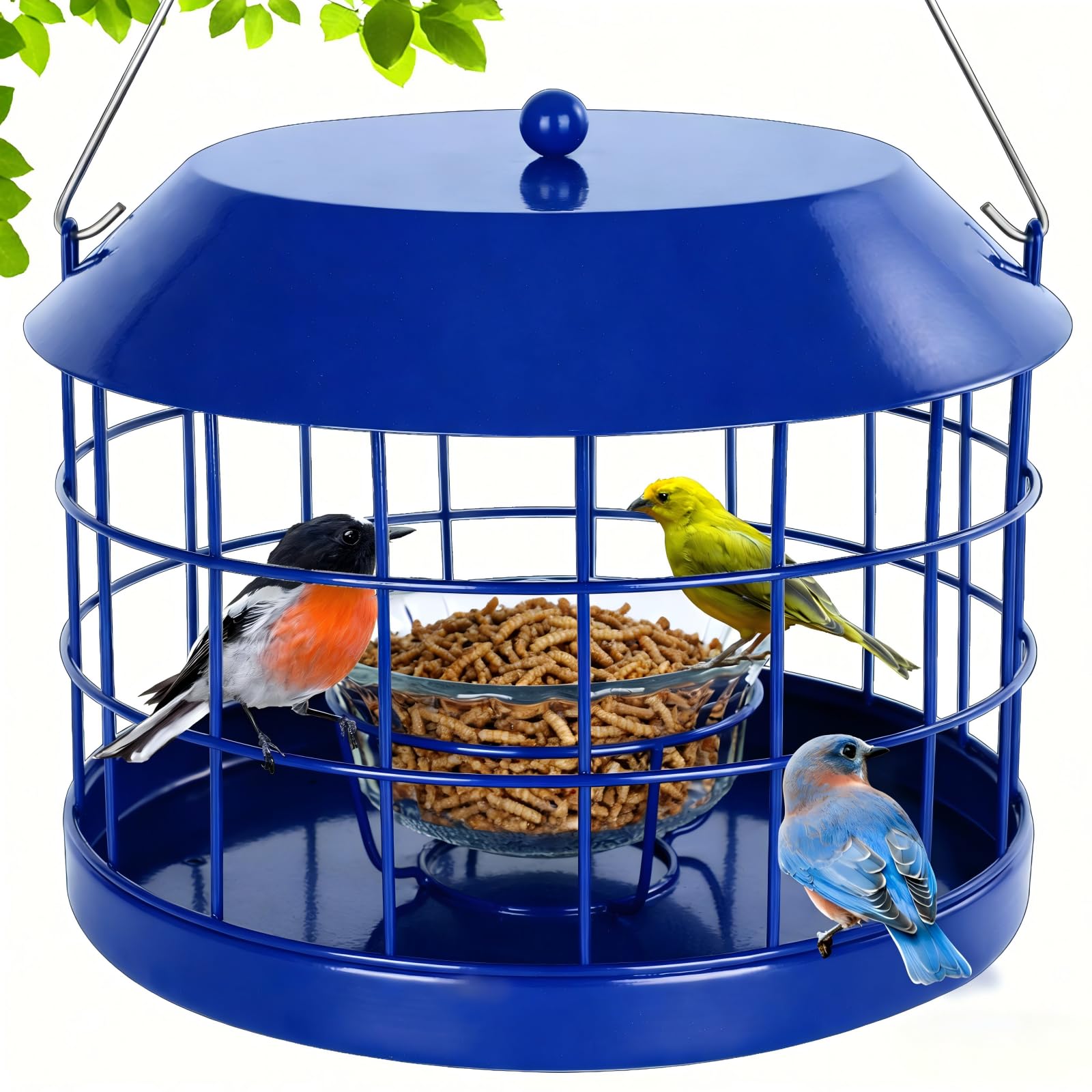
The Gbekery feeder uses a full metal cage with 1.5 x 1.5-inch mesh openings — the industry standard for excluding adult squirrels while letting bluebirds and goldfinches pass through. The cage surrounds a removable glass bowl that holds mealworms, fruit, suet, or even a shallow water source for drinking. The blue powder-coated finish resists rust and holds its color better than painted wood alternatives.
Because the cage allows only one bird inside at a time by design, it should reduce competition and give shyer individuals a chance to feed. Squirrels are the main target of the 1.5-inch mesh, while larger birds like crows are blocked outright. The hook-on top lifts off for refilling, and the glass bowl slides out for cleaning without disassembly.
The main limitation is that starlings small enough to squeeze through 1.5-inch mesh can still reach the mealworms, though the cage should slow them down. If you have a determined starling population, consider pairing this feeder with an adjustable dome roof or a smaller-mesh exclusion cage. The glass bowl’s capacity is on the smaller side, so expect more frequent refills than with larger platform designs.
Why it’s great
- Cage mesh keeps out adult squirrels and most large birds effectively
- Glass bowl is easy to remove and clean without tools
- Colorful blue finish blends naturally with garden environments
Good to know
- Some small starlings may still fit through the mesh
- Frequent refilling required during peak feeding seasons
4. Kingsyard Squirrel Proof Platform Feeder
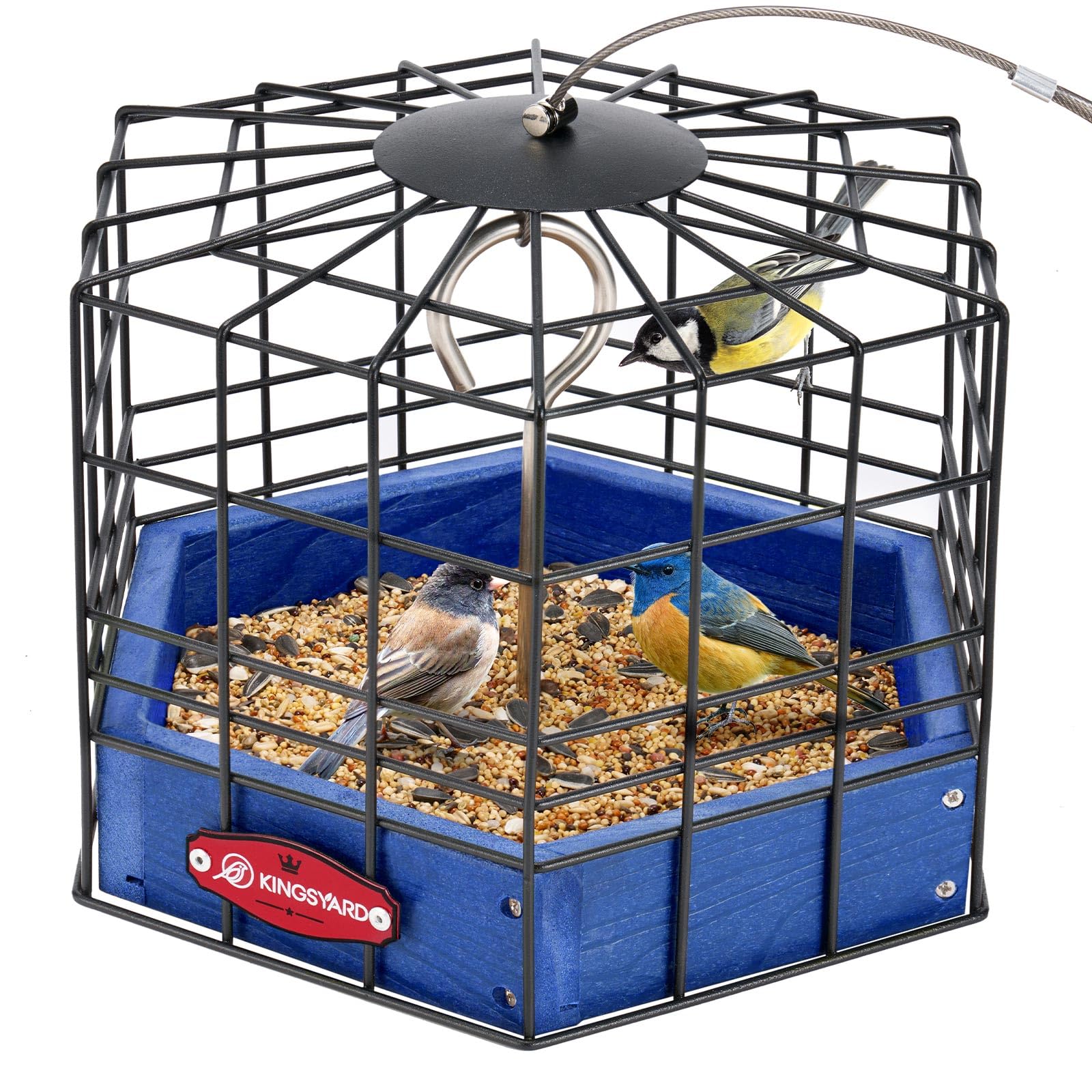
The Kingsyard feeder combines a recycled plastic base with a metal mesh cage that has 1.5 x 1.5-inch openings. The fly-through design — openings on all four sides — encourages bluebirds to enter from any direction and exit quickly if startled. The mesh tray floor provides ventilation that keeps mealworms and seeds dry, reducing mold and spoilage compared to solid-bottom platforms.
Build quality is solid with heavy-duty recycled plastic that does not warp in summer heat or crack in freezing temperatures. The feeder holds up to 5 pounds of seed or mealworms, which reduces refill frequency for households with multiple feeding stations. The metal mesh tray is rust-resistant and can be lifted out for cleaning without detaching the entire feeder from its hanging hook.
The cage is designed primarily for small birds. Cardinals and woodpeckers may struggle to access the interior, and starlings that can fit through the mesh will still be able to eat. Adding a rain cover on top can help prevent larger birds from landing there and using the feeder as a perch. The open platform design also likely makes this feeder easier for chipmunks to access compared to fully enclosed options.
Why it’s great
- Fly-through design gives bluebirds quick escape routes
- Mesh tray floor improves airflow and keeps mealworms dry
- Large 5-pound capacity minimizes refill frequency
Good to know
- Cardinals and woodpeckers may be too large to enter the cage
- Starlings that fit through the mesh can still access the food
5. Amish Poly Lumber Bluebird Feeder
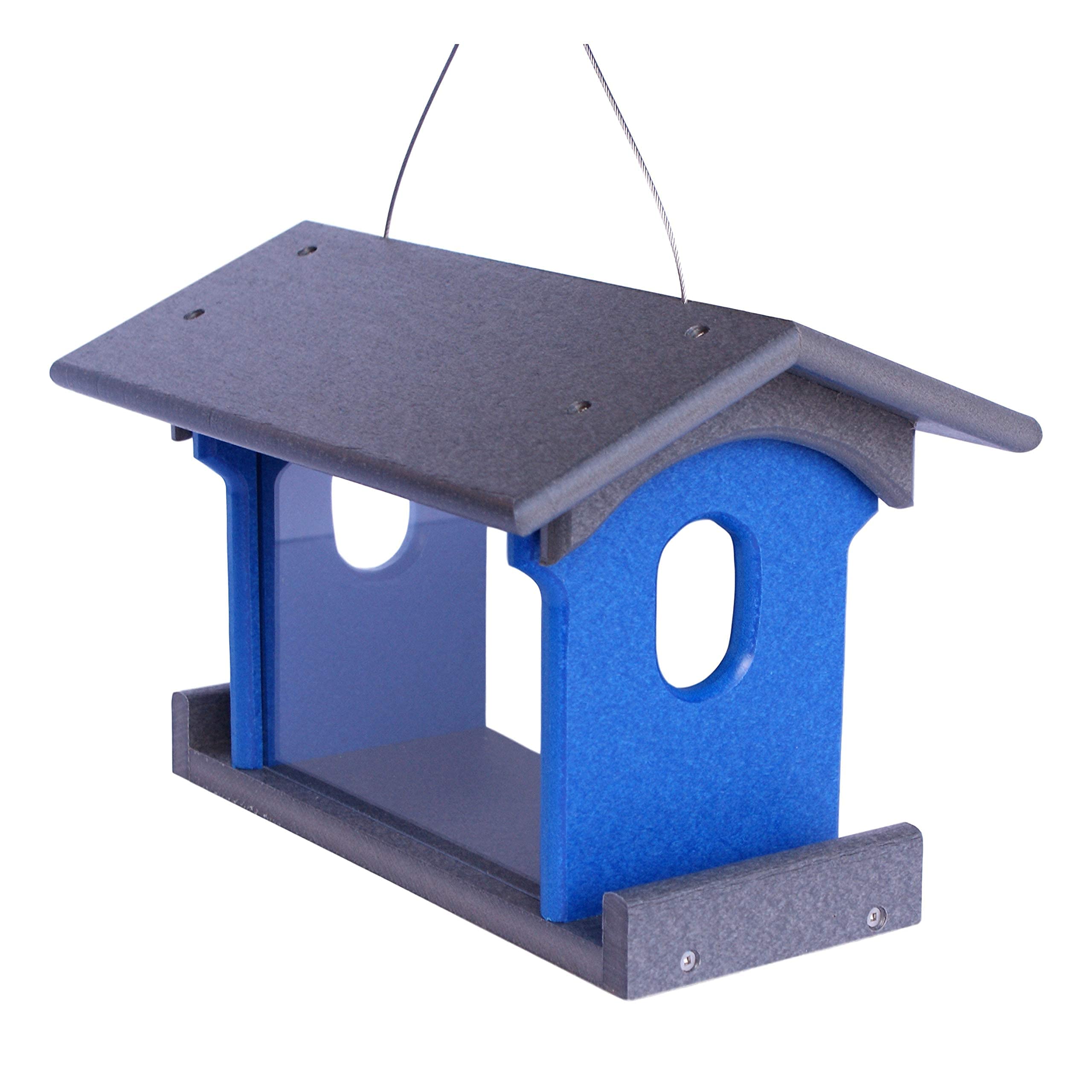
Handcrafted by Amish artisans in Shipshewana, Indiana, this feeder uses poly-lumber made from recycled milk jugs. The material will never rot, peel, or fade, and it carries the same weatherproof properties as premium decking boards. The feeder features removable sides and a removable top for easy cleaning — you can access every interior surface without tools, which is essential for preventing mold in the damp nooks where mealworm residue accumulates.
The entry holes are sized for bluebirds, allowing Eastern and Western Bluebirds to pass through while excluding larger birds like grackles and jays in most cases. If fledglings have trouble gripping a smooth interior wall below the entry hole, adding small wooden perches or lightly scoring the surface can help. Placing the feeder near a bluebird nest box may also speed up acclimation.
The gray-and-blue color combination is designed to be visually appealing without deterring bluebirds. The hanging wire is sturdy, and the roof overhang helps keep rain out of the feeding chamber. As with most oval-entry designs, some starlings small enough to fit through the opening may still get in.
Why it’s great
- Handcrafted from recycled poly-lumber that never rots or fades
- Fully removable sides and top for thorough cleaning
- Blue color specifically attracts bluebirds
Good to know
- Smooth interior below entry holes may require grip modifications for fledglings
- Some starlings small enough to fit through oval holes
6. Wildlife Sciences Mealworm Feeder

The Wildlife Sciences feeder uses a 5 x 5-inch powder-coated mesh bowl with a stainless steel roof that slides up and down the central stake. Lowering the roof to roughly 3 inches above the mesh top restricts access to bluebirds and small songbirds, excluding larger competitors. The mesh bowl is made from heavy-duty window screen material that will not rust, and the built-in hanger allows you to hang it from a hook or mount it on a shepherd’s pole.
This feeder is designed to keep mealworms dry because the roof overhangs the mesh on all sides. A common risk with adjustable-roof designs is that the spring clips holding the roof in place can lose tension over time, letting the roof slide down and cover the food. If that happens, hot-gluing the roof into position once you have set the correct height is a practical fix. Given the budget-friendly price point, this is a reasonable trade-off for starling deterrence.
The bowl size is compact, which likely means more frequent refilling during active bluebird nesting seasons. If the bowl proves too small, consider swapping it for a larger one or using this feeder as a supplementary station alongside a platform feeder.
Why it’s great
- Adjustable roof keeps starlings out when set to the correct height
- Powder-coated mesh bowl does not rust in wet conditions
- Compact size works well as a dedicated mealworm feeder
Good to know
- Roof spring clips weaken over time and may need adjustment or gluing
- Small bowl capacity requires frequent refills during busy feeding periods
7. STARSWR Wooden Bluebird Feeder

The STARSWR feeder is an open wooden platform with a sloping roof, designed to attract a wide variety of birds including bluebirds, finches, cardinals, and chickadees. At 10.5 by 7.5 inches, the platform provides generous space for multiple birds to feed simultaneously. The hemp hanging rope is sturdy, and the wood construction has a rustic appearance that fits naturally in garden settings.
The main concern with this feeder is that the untreated wood is vulnerable to moisture. Several buyers reported mold developing on the platform within weeks of outdoor use, and the wood does not appear to have a factory-applied weather seal. Painting or sealing the wood before hanging is strongly recommended. The open design also means there is no exclusion feature — starlings, grackles, jays, and squirrels can access the platform without any barrier. If your yard has aggressive bully birds, this feeder may cause more frustration than joy for bluebird watchers.
On the positive side, the feeder is very cute and well-constructed for its price point. The sloped roof provides some rain protection, and the platform is large enough to hold a substantial amount of mealworms, seeds, or fruit. For birders with a calm backyard where larger birds are not a problem, this wooden feeder offers a charming and affordable way to attract bluebirds. It works best as a supplementary station rather than a primary bluebird feeder.
Why it’s great
- Spacious wooden platform fits multiple birds at once
- Rustic appearance blends naturally into garden decor
- Very affordable entry point for new bluebird enthusiasts
Good to know
- Untreated wood requires sealing to prevent mold growth
- No exclusion features — starlings and squirrels can access freely
FAQ
What is the ideal mesh size for a bluebird feeder to keep starlings out?
Can I use a standard platform feeder for bluebirds or do I need a specialized design?
How often should I clean a bluebird mealworm feeder?
Final Thoughts: The Verdict
For most users, the bird feeder for bluebirds winner is the Kettle Moraine Recycled Bluebird Mealworm Feeder because its four-entry-point design prevents entrapment panic, the recycled plastic construction is guaranteed for life, and the viewing windows let you monitor levels without opening the feeder and scaring birds. If you want the flexibility of an adjustable dome that also works for mixed-species flocks, grab the PFNRTH Rotating Dome Platform Feeder. And for a budget-friendly starling deterrent that fits in small spaces, nothing beats the Wildlife Sciences Mealworm Feeder once you stabilize the roof with a dab of hot glue.