
Our readers keep the lights on and the weekend projects moving. As an Amazon Associate, I earn from qualifying purchases.
Board games can either save a family night or turn it into a negotiation about screen time. The best ones let kids learn a skill, laugh at bad draws, or solve a puzzle without realizing they are working their brains. The wrong ones collect dust because the rules are too complex or the theme just doesn’t click. This guide cuts through the shelf noise to find the games that actually get played.
I’m Rikta — the co-founder and writer behind FitlyFast. I’ve spent many hours analyzing the builds, age ranges, and educational mechanics of the most popular board games on the market to find the ones that hold up to repeated play.
Whether you need something for a preschooler learning to match pictures or a 10-year-old hungry for a strategy challenge, this guide to the best board games for kids will help you pick a game the whole family will actually want to play again.
How To Choose The Best Board Games For Kids
Picking a board game for a child is not just about the theme on the box. The age recommendation, the number of players, the learning goals, and the physical durability of the components all determine how much that game will actually get played. Here are the key factors to consider before you buy.
Age Range and Skill Level
Age suggestions on the box are a starting point, but every kid develops at a different pace. Look for games with adjustable difficulty levels or progressive challenges. A pre-reader needs picture matching or simple deduction, while a 9-year-old can handle multi-step strategy and reading cards independently. Games like ThinkFun Zingo Bingo work well for ages 4 to 7 because the two-sided boards let you increase the complexity as the child improves.
Re-Playability
The best kids’ games are the ones that don’t get boring after the first playthrough. Variable setups, randomized card draws, or a large pool of challenges keep a game fresh. A game with 60 different puzzles, like the SmartGames Smart Farmer, offers a lot more long-term play than a linear race-to-the-finish game. Also consider whether the game supports different player counts so it works whether you have two kids or a full house.
Educational vs. Pure Fun
Not every game needs to be a stealth lesson, but many of the best options build skills without feeling like homework. Phonics games embed reading practice into a race against friends, while logic puzzles teach spatial reasoning and cause-and-effect thinking. Decide whether you want a game that reinforces a specific school skill or one that just teaches good sportsmanship and turn-taking. A cooperative game like Concept Kids Animals teaches deduction and teamwork without any reading at all.
Quick Comparison
On smaller screens, swipe sideways to see the full table.
| Model | Category | Best For | Key Spec | Amazon |
|---|---|---|---|---|
| Exploding Kittens: The Board Game | Party/Family | Action-packed family nights | 65 Action + 26 Move Cards | Amazon |
| SmartGames Smart Farmer | Logic Puzzle | Building spatial reasoning | 60 progressive challenges | Amazon |
| ThinkFun Zingo Bingo | Preschool/Matching | Pre-readers learning words | 2 levels of play per board | Amazon |
| The World Game | Educational/Geography | Learning countries and capitals | 1,500+ country facts | Amazon |
| Concept Kids Animals | Cooperative/Animal | Team-based animal guessing | 110 animals, 2 difficulty tiers | Amazon |
| SimplyFun Whirly’s World | Math/Snail Race | Teaching even and odd numbers | 15-minute playtime | Amazon |
| The Fidget Game SquishyLand | Phonics/Sensory | Struggling and early readers | Science of Reading aligned | Amazon |
In‑Depth Reviews
1. Exploding Kittens: The Board Game
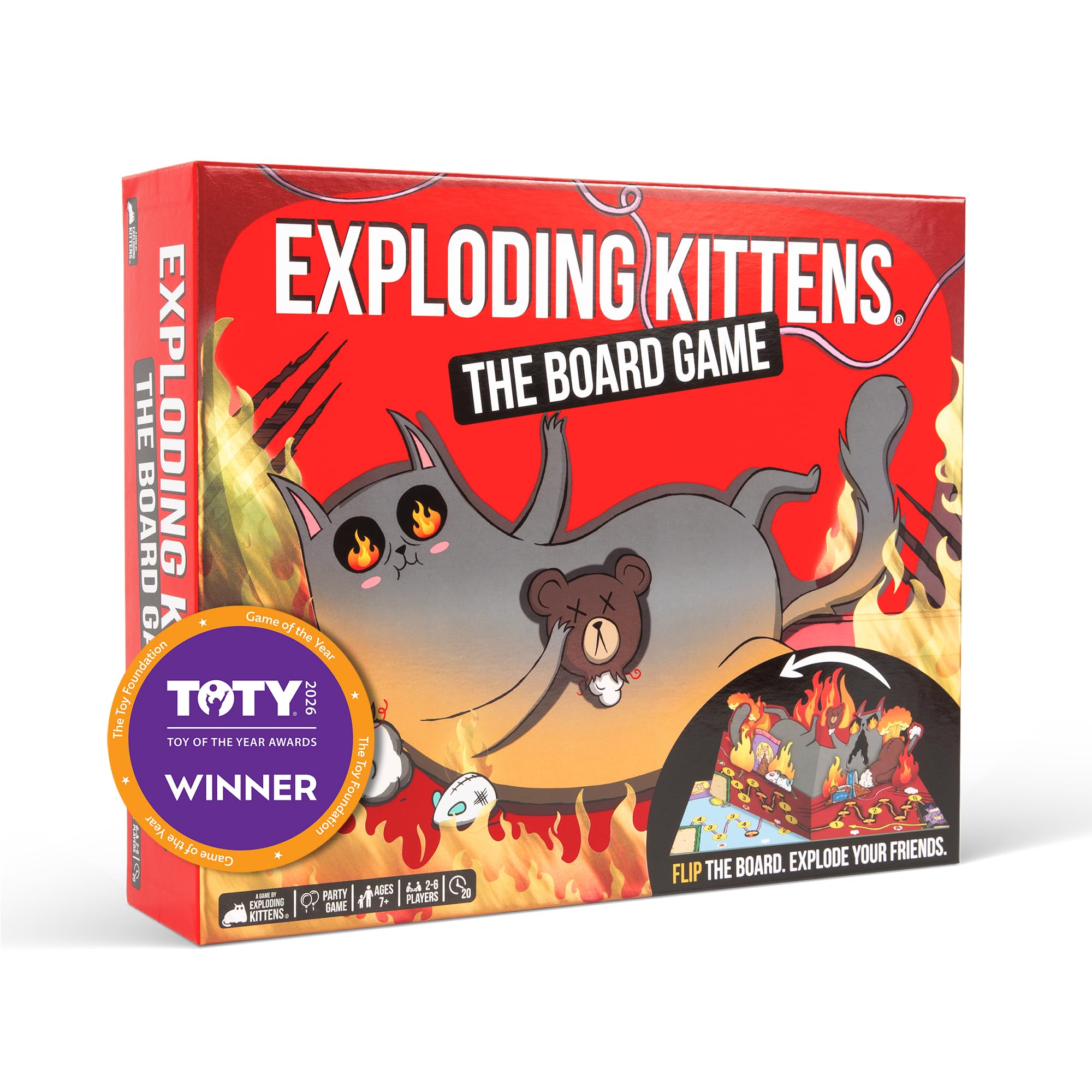
The Toy Foundation 2026 Toy of the Year award speaks to the raw energy this game brings to a table. Unlike the original card game, this board version adds a physical twist: the board flips mid-game to reveal a completely new path, keeping players from memorizing a single route. The 65 Action Cards and 26 Move Cards introduce chaos through character powers like Meatpants and the Litterbox Sandworm, which makes every turn feel unpredictable.
Customer feedback confirms the board is a genuine hit with kids 7 and up, with glowing notes about the beautiful artwork and hologram flames on the box. The physical components are solid, though a few users noted the fold in the board is stiff initially. Play sessions run between one and two hours, which gives it more depth than a quick filler game but still fits into a family evening.
This is not a quiet, contemplative game. It thrives on loud laughs, sudden alliances, and the thrill of nearly exploding. If your family enjoys high-stakes fun and doesn’t mind some friendly betrayal, this is the top pick for action-packed game nights.
Why it’s great
- Board-flip mechanic completely changes strategy mid-game
- High-quality card art and character standees
- Supports up to 6 players without slowing down
Good to know
- Board fold is stiff at first and needs breaking in
- Not as action-packed as the original card game for some fans
2. SmartGames Smart Farmer

Smart Farmer takes a simple premise — separate the animals into their own pastures using fences — and turns it into a serious spatial reasoning workout for kids as young as 5. The 60 progressive challenges ramp up from easy to expert, so a kindergartner can start with basic enclosures while a 9-year-old can wrestle with complex multi-animal arrangements. The 3D farm animals and sturdy board add a tactile layer that keeps hands busy.
Reviews from teachers and parents highlight how this game engages kids who might not usually gravitate toward puzzles. The compact box size and included challenge booklet make it ideal for travel or quiet afternoons. Most sessions last 10 to 20 minutes per puzzle, and the single-player design means kids can work independently while still learning planning and concentration skills.
One honest review noted that their daughter naturally stops after two puzzles, which is just enough brain work for one sitting. That restraint is actually a strength — the game respects a child’s attention span. If you want a screen-free activity that builds logic without any reading required, this is a top-tier pick.
Why it’s great
- 60 puzzles with genuine difficulty progression
- No reading required, perfectly solo-friendly
- Compact and travel-friendly box design
Good to know
- Single-player only, not designed for group play
- Younger kids may need parent help with early puzzles
3. ThinkFun Zingo Bingo

Zingo is essentially bingo designed for pre-readers, but the “Zinger” device — a plastic dispenser that shoots out tiles — adds an element of surprise and speed that kids find irresistible. The double-sided boards offer two levels of play: the easy side uses pictures only, while the advanced side includes words for early readers to sound out. This dual-level design means one game can challenge a 4-year-old and a 7-year-old at the same table.
Customer feedback consistently mentions the durable board and thick plastic tiles that survive rough handling. The game supports up to 7 players thanks to an extra card included in the box, making it a solid choice for classroom settings or larger family gatherings. Teachers have adopted it as a reading center activity because it builds vocabulary and matching skills without feeling like drill work.
Some parents recommend sorting out unused tiles before gameplay to avoid opening the Zinger repeatedly. The only functional downside is that very tall stacks of tiles can jam the dispenser, but this is easily managed. For a fast-paced, laugh-out-loud game that helps kids learn words, Zingo remains the gold standard in its category.
Why it’s great
- Zinger dispenser creates excitement with every turn
- Two difficulty levels grow with the child
- Durable components withstand repeated play
Good to know
- Tile stacks can jam the Zinger dispenser
- Best for ages 3 to 7, limited appeal for older kids
4. The World Game
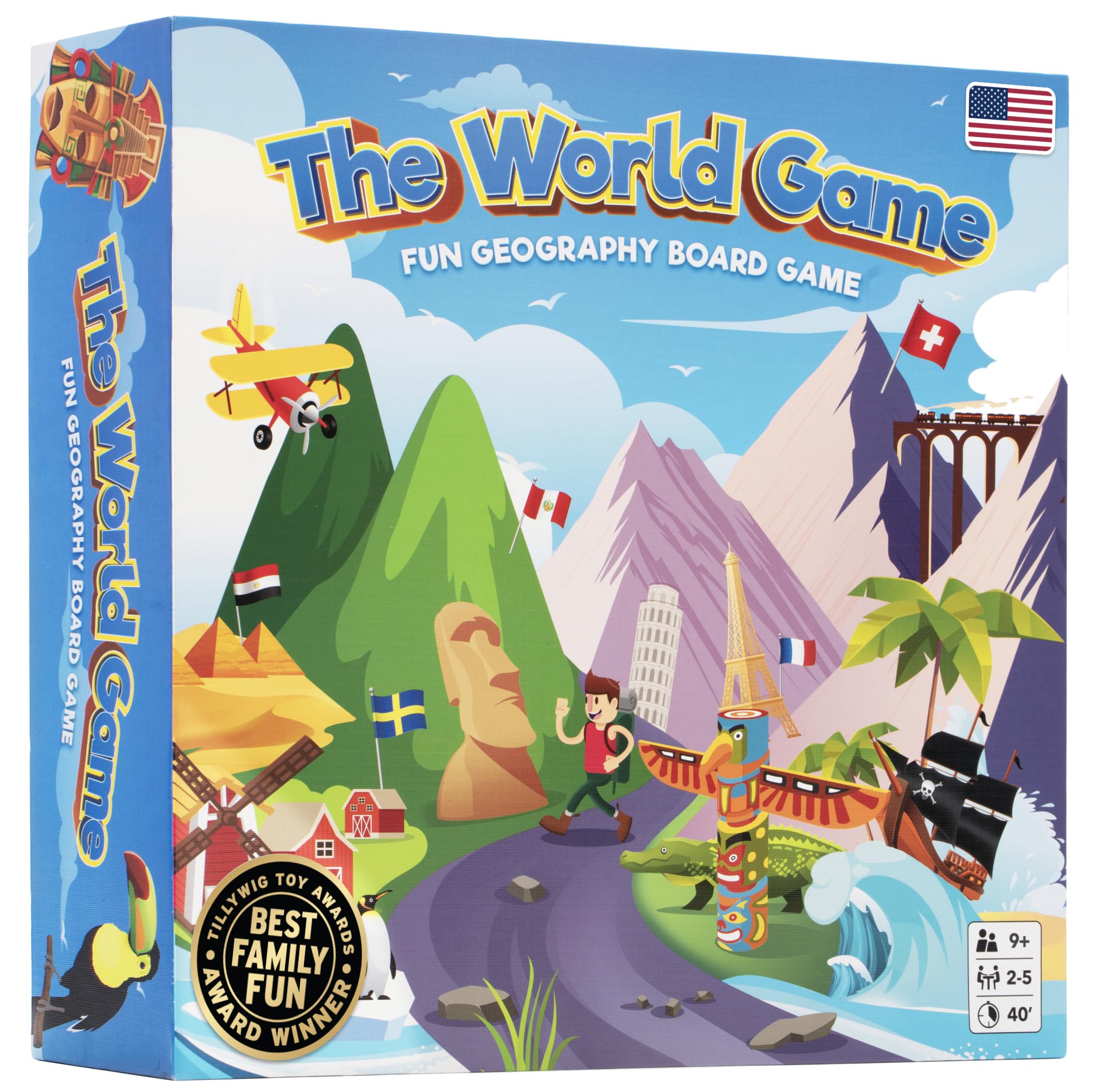
The World Game takes a trivia approach to global geography, and it packs a serious amount of data into the box. The cards include over 1,500 facts covering flags, capitals, population, GDP, and land area for all 194 countries. Players race around the board by correctly identifying countries on a map, which turns geography drills into a competitive race that appeals to kids 9 and up.
Reviews from educators and parents highlight the game’s ability to bridge age gaps. A 10-year-old can compete with an adult because the knowledge is randomized — everyone must learn as they play. The board and card quality earn consistent praise, and several buyers noted that the cards double as standalone flash cards for road trips or quick study sessions.
The main criticism is that the game can run long, especially with four or five players, making it tough to fit into 45-minute classroom periods. Some groups have modified the rules to shorten play. This is not a casual 15-minute filler; it is a deep educational experience that rewards genuine curiosity about the world.
Why it’s great
- Comprehensive coverage of all 194 countries
- Cards double as standalone flash cards
- Encourages learning through competition
Good to know
- Play sessions can exceed 40 minutes
- Best suited for ages 9 and up, younger kids may struggle
5. Concept Kids Animals

Concept Kids Animals flips the competitive model by making everyone on the same team. Players work together to guess animals by placing pawns on illustrated icons representing colors, habitats, sounds, and other features. The lack of reading requirements makes it accessible to 4-year-olds, while the cooperative structure reduces the pressure of losing and encourages discussion between turns.
The 110 animal cards are split into two difficulty tiers, with easier animals like cat and dog at the entry level and tougher ones like narwhal and pangolin for the advanced side. Each round runs about 20 minutes, making it easy to squeeze in before dinner. The artwork by Éric Azagury is warm and engaging, and the simple rules mean even grandparents can jump in without a lengthy explanation.
A notable flaw is that the animal names do not appear on the cards, which can frustrate kids who do not recognize the illustration. Some parents also found the “hard” animals were inconsistently matched to the difficulty level. Despite this, the game teaches deduction, teamwork, and animal knowledge without any competition, which is rare in this category.
Why it’s great
- Fully cooperative, no winner or loser
- No reading required, great for pre-readers
- Short 20-minute rounds fit busy schedules
Good to know
- Animal names are not printed on the cards
- Some “hard” animals are too obscure for young kids
6. SimplyFun Whirly’s World
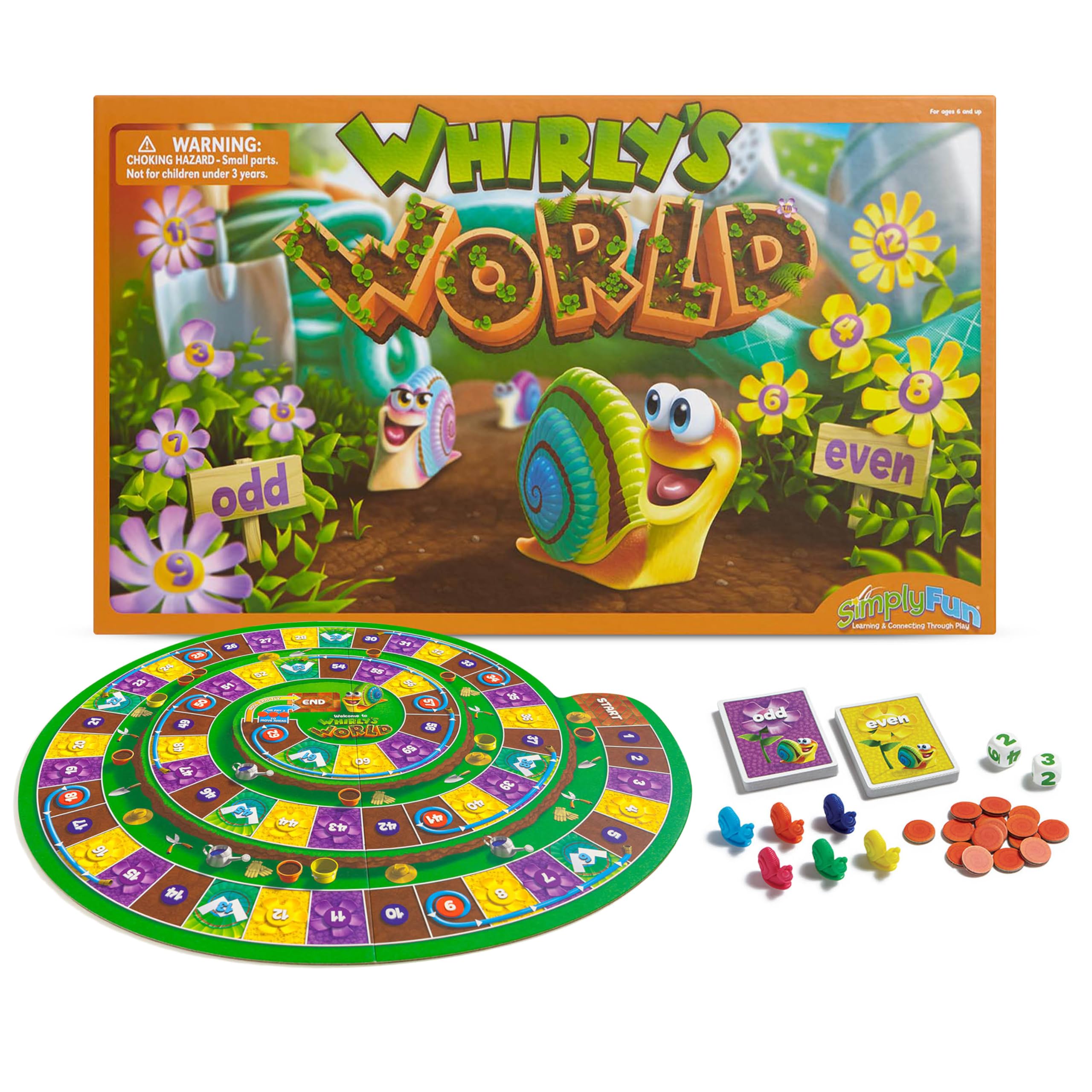
Whirly’s World embeds math learning in a garden-themed snail race. The core mechanic involves rolling dice to move along the path, then drawing cards that present even and odd number challenges. Kids must identify whether a number is even or odd, compare placeholder values, and do basic arithmetic to advance. This turns a standard roll-and-move format into a stealth math lesson.
The components include a vibrant board, colorful snail pawns, and high-quality cards that survived heavy classroom use. Customer feedback shows that 6-year-olds pick up the rules quickly, and the game runs in about 15 minutes, which is short enough to play multiple rounds. Teachers have adopted it for math centers because it reinforces place value and number sense without feeling like a worksheet.
Some reviews noted that the game includes vocabulary-building elements that were a pleasant surprise, though the core focus remains math. The box stores the pieces neatly, though the packaging is on the narrower side. For a targeted math game that gets kids thinking about number parity, Whirly’s World delivers exactly what it promises.
Why it’s great
- Teaches even/odd and place value through play
- Short 15-minute rounds keep kids engaged
- High-quality board and card construction
Good to know
- Limited to 2-6 players, no solo mode
- Math focus may not appeal to kids who dislike numbers
7. The Fidget Game SquishyLand in Rainbow Reef

SquishyLand stands out by combining tactile squishy toys with a phonics board game, targeting foundational reading skills from phoneme manipulation through decoding syllables. Developed by teachers and aligned with both U.S. State and Canadian Provincial Standards, the game is rooted in the Science of Reading methodology. The squishies serve a dual purpose: they keep restless hands busy and provide a sensory reward for correct answers.
The game supports 2 to 6 players and runs about 15 minutes per round. The cards cover blending sounds, rhyming, prefixes, and suffixes, making it suitable for children in Pre-K through 2nd grade. Reviews from parents of kids with dyslexia and ADHD specifically praise the game’s inclusive design, noting that the squishies help maintain focus and reduce anxiety during play.
The board is larger than average at 16.54 x 10.63 inches, and the pieces are vibrant and sturdy. Some players found the “Go Back Shark” cards frustrating, but parents saw them as a good lesson in resilience. If you want a multisensory approach to early literacy that actually works for different learning styles, SquishyLand is a standout.
Why it’s great
- Multisensory squishies boost focus and reduce stress
- Science of Reading aligned, teacher-developed curriculum
- Inclusive design supports kids with learning differences
Good to know
- Shark cards can frustrate younger players
- Larger box may not fit neatly on a game shelf
FAQ
What age is appropriate for cooperative board games like Concept Kids Animals?
How do I choose between a phonics game and a logic puzzle for my kindergartner?
Which board game teaches the most geography for kids 9 and up?
Final Thoughts: The Verdict
For most users, the true best board games for kids winner is the Exploding Kittens: The Board Game because it brings the highest energy, the most laughs, and the unique board-flip mechanic that keeps every game fresh. If you want quiet logic practice, grab the SmartGames Smart Farmer. And for a cooperative animal guessing session that builds teamwork without any reading, nothing beats the Concept Kids Animals.