
Our readers keep the lights on and the weekend projects moving. As an Amazon Associate, I earn from qualifying purchases.
That sharp, familiar pop in your lateral ankle ligaments during a sudden sidestep or a lunging volley can end your season in seconds. For tennis players, the repetitive stop-start and multi-directional cutting motions put unique stress on the peroneal tendons and the anterior talofibular ligament, making a dedicated sports brace a non-negotiable piece of kit rather than an afterthought.
I’m Rikta — the co-founder and writer behind FitlyFast. For this guide, I spent hours researching the specific biomechanical demands of tennis footwork and cross-referencing real user feedback to find which ankle braces actually prevent inversion sprains during serve-and-volley play without restricting the plantar flexion needed for an explosive first step.
Whether you’re recovering from a Grade 2 sprain or simply want proactive lockdown for your next league match, the right brace can make the difference between a confident performance and a frustrated limp. This guide breaks down the top models to help you find the ideal ankle brace for tennis that matches your court movement.
How To Choose The Best Ankle Brace For Tennis
Selecting a brace for the court involves more than just picking the cheapest sleeve on the shelf. Tennis-specific movements demand a blend of lateral lockdown, full-range plantar flexion for toe-off, and a slim enough profile to slide inside your match-day shoes without bunching. Here are the critical factors to weigh.
Lace-Up Closure vs. Strap-On Designs
A full lace-up system allows for micro-adjustments across the entire midfoot and ankle, distributing pressure evenly and preventing localised hot spots. Many premium braces combine lacing with Velcro figure-8 straps that lock the heel in place. Strap-only designs are quicker to put on but tend to concentrate tension on a single point, which can slip during a long match.
Removable Splints and Stabilizers
Look for lightweight aluminum or ballistic nylon stays on the medial and lateral sides. These rigid inserts provide the mechanical block against inversion — the most common ankle injury in tennis. Removable splints let you dial up the protection during early recovery and then take them out once you transition to sport-level activity.
Low-Profile Fit and Breathability
A bulky brace will not fit inside a standard tennis shoe, causing pressure on the toes and heel. Opt for models that use a thin neoprene or CoolFlex tongue with a mesh top to avoid overheating during a humid summer match. A good brace should feel like a second skin inside your shoe, not a bulky cast.
Quick Comparison
On smaller screens, swipe sideways to see the full table.
| Model | Category | Best For | Key Spec | Amazon |
|---|---|---|---|---|
| Med Spec ASO Ankle Stabilizer | Lace-up + Figure-8 | All-court lockdown | CoolFlex padding, bilateral fit | Amazon |
| Ultra 360 Lace Up | Lace-up + Figure-8 | Volleyball-style support | Low-profile nylon shell | Amazon |
| DonJoy Stabilizing Speed Pro | Speed Lace + Stay | Fast application | 800D ballistic nylon | Amazon |
| Active Ankle AS1 Pro | Lace-up + Strap | Low-profile stability | Non-slip silicone sole | Amazon |
| AGPTEK Lace-Up Brace | Lace-up + Splints | Versatile recovery | Removable aluminum splints | Amazon |
| McDavid Ankle Support with Strap | Neoprene Sleeve | Moderate compression | 1/8″ neoprene + strap | Amazon |
| Dr.Welland Side Stabilizer | Adjustable Strap | Custom arch fit | Neoprene + side stabilizers | Amazon |
In‑Depth Reviews
1. Med Spec ASO Ankle Stabilizer
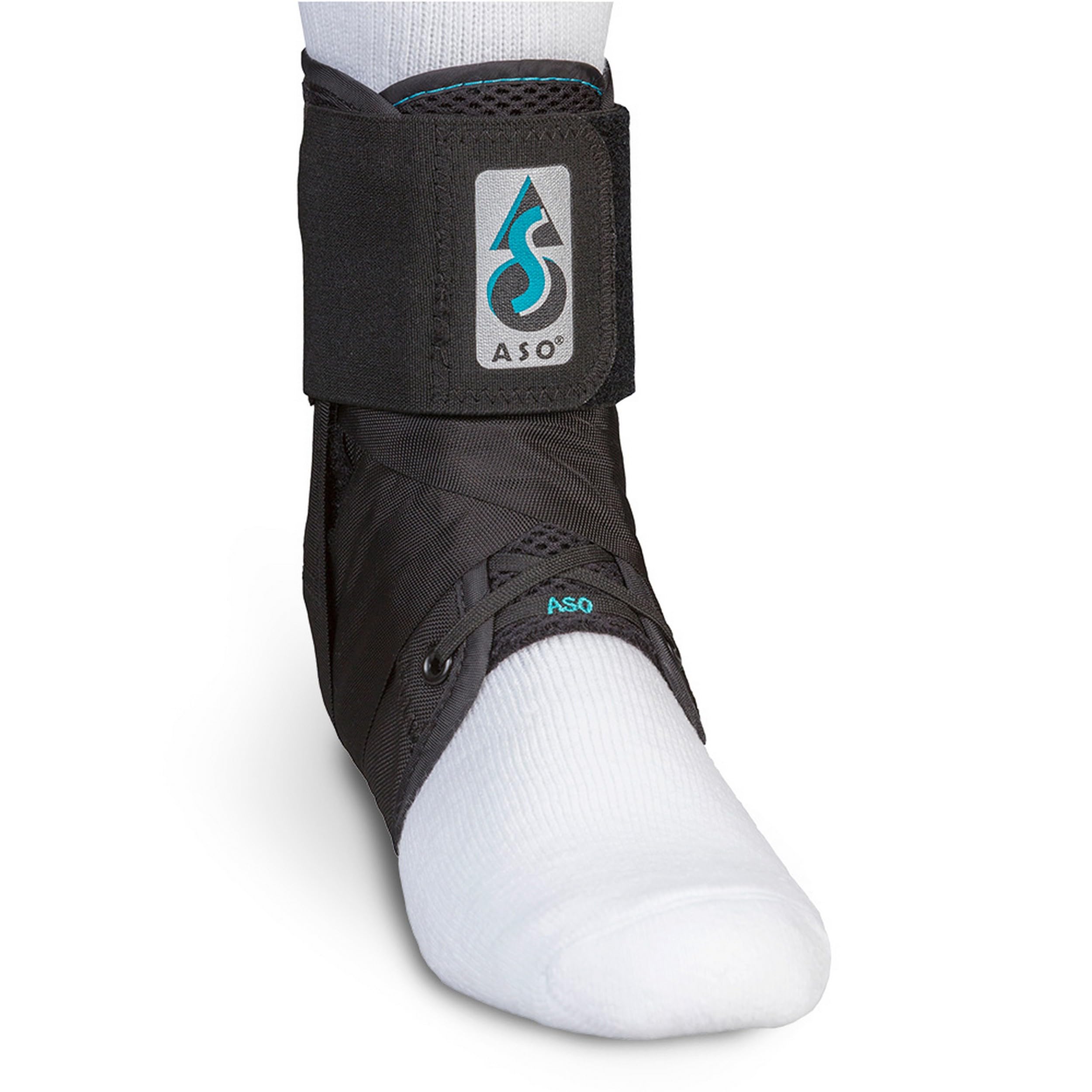
The Med Spec ASO is arguably the most widely recommended ankle stabilizer by athletic trainers and physical therapists for lateral movement sports, and for good reason. Its lace-up closure runs the full length of the tongue, allowing micro-adjustments from the midfoot up to the tibia, while two non-stretch figure-8 straps directly mimic the basket-weave and heel-lock techniques of traditional athletic taping. The CoolFlex padding and durable nylon shell keep the brace breathable during long baseline rallies.
Real users consistently report that this brace resists inversion and eversion effectively, making it a solid choice for players with chronic instability or recovering from a Grade 2 sprain. The lace-up string has a centre stitch that prevents uneven tension, and the final top strap locks down the fibula compression area. It fits inside most standard tennis shoes without creating pressure points, though a thin cushioned sock is recommended to avoid irritation from the lace eyelets.
For tennis players who want the closest thing to a professional tape job without the hassle, the ASO delivers reliable, reproducible support. Several reviewers noted it helped them return to play faster after ankle injuries and even reduced peroneal tendon soreness during matches. The only downside is that it takes slightly longer to put on compared to a sleeve, but the added security is well worth the extra minute.
Why it’s great
- Figure-8 straps mimic athletic tape technique for inversion resistance
- Lace-up closure provides even, adjustable tension across the whole ankle
- Lightweight, breathable CoolFlex padding fits inside court shoes
Good to know
- Requires a brief learning curve for proper lace tension
- May feel warm during extended play in humid conditions
2. Ultra 360 Lace Up Ankle Brace
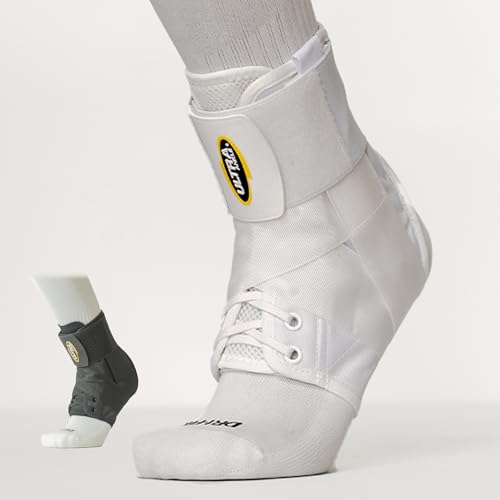
The Ultra 360 brace focuses on mimicking professional-grade athletic taping with its combination of a full lace-up chassis and adjustable figure-8 stabilising straps. The slim nylon construction is designed to be worn inside cleats and sneakers without bulk, making it ideal for tennis players who need to maintain a low-to-the-ground feel on the baseline while still receiving substantial lateral protection.
Customer reviews from volleyball and basketball players (whose cutting motions closely mirror tennis footwork) highlight that the brace effectively prevents severe sprains even when a player rolls her ankle mid-air or during a quick pivot. The Velcro straps remain secure after repeated use, and the lightweight feel means you don’t feel like you’re wearing a restrictive boot. One reviewer noted their daughter twisted her ankle on the court but the brace absorbed the worst of the impact, reducing injury severity significantly.
For tennis athletes who want dependable protection that doesn’t interfere with their shoe fit or court feel, the Ultra 360 is a strong mid-range contender. It is also FSA/HSA eligible, which can be a practical bonus for those managing ongoing recovery costs. The low-profile design and durable stitching suggest this brace will hold up well over a full season of training.
Why it’s great
- Slim design fits comfortably inside standard athletic shoes and boots
- Figure-8 straps provide targeted support without restricting natural motion
- FSA/HSA eligible for cost-conscious buyers
Good to know
- May require lace adjustments to avoid foot pain if pulled too tight
- Not ideal for severe post-surgical immobilisation
3. DonJoy Stabilizing Speed Pro

The DonJoy Stabilizing Speed Pro is engineered for athletes who need to get their brace on and off in seconds without sacrificing stabilisation. It replaces the traditional full-lace system with four Velcro lace tabs that gather the lacing eyelets, plus a full circumferential elastic strap that compresses the tibia and fibula. The removable articulated medial and lateral stays enhance proprioception—your brain’s awareness of the ankle joint’s position—which is critical for quick reaction movements on the court.
Made with 800D ballistic nylon, this brace is built to withstand aggressive use. Reviewers recovering from fractures and Achilles tendonitis praise its ability to transition them safely from a walking boot back to sport-specific activity. The speed lace system is consistently described as superior to messing with standard laces, especially when you are sweaty after a match and need to remove the brace quickly. Some users note the D-rings can create a pressure point on the ankle bone if not positioned carefully.
For the tennis player who values application speed and a high level of structural rigidity, the Speed Pro is a top-tier option. It is slightly bulkier than some competitors, but the trade-off is a pronounced sense of security and stability. One long-term reviewer, wearing it for 40-plus hours a week during physical work, reported the stability strip eventually warped, but still called it their favourite brace for severe Achilles tendonitis.
Why it’s great
- Speed laces with Velcro tabs allow fast, hassle-free application
- Removable articulated stays improve joint proprioception
- High-durability 800D ballistic nylon withstands heavy use
Good to know
- D-rings may press on the ankle bone for some foot shapes
- Bulky compared to simpler sleeve-style braces
4. Active Ankle AS1 Pro Lace Up
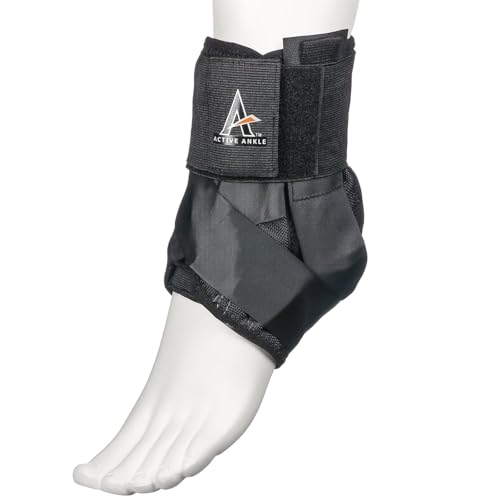
The Active Ankle AS1 Pro is designed with a “Pro Fit” that removes excess material at the forefoot and widens the heel hole, reducing the rubbing and irritation that can plague other lace-up braces during long tennis matches. It uses speed lacing eyelets to reduce hot spots and reinforced laces to prevent fraying. A non-slip silicone print on the sole keeps the brace from sliding down inside your shoe during intense lateral shuffles.
This brace is a favourite among volleyball and basketball players, but its performance translates directly to tennis because it provides a secure basket-weave and heel-lock effect without the bulk. Figure-8 and circumferential straps stabilise the brace, preventing unwanted slippage even during aggressive play. Multiple long-term users report that the criss-cross straps may loosen slightly after months of regular use, but the overall durability is excellent—one review noted buying only two braces in five years.
If you have a history of minor ankle sprains and want a brace that offers more mobility than a full boot but more security than a simple sleeve, the AS1 Pro hits a sweet spot. It fits well inside low-profile shoes and does not compromise your ability to feel the court, making it a sensible pick for competitive league players.
Why it’s great
- Wider heel hole and reduced forefoot material minimises chafing
- Non-slip silicone printing keeps the brace planted inside the shoe
- Speed lacing eyelets reduce hot spots and fraying
Good to know
- Figure-8 straps can loosen over repeated wear
- Sizing may require close attention to avoid excessive tightness
5. AGPTEK Lace-Up Ankle Brace
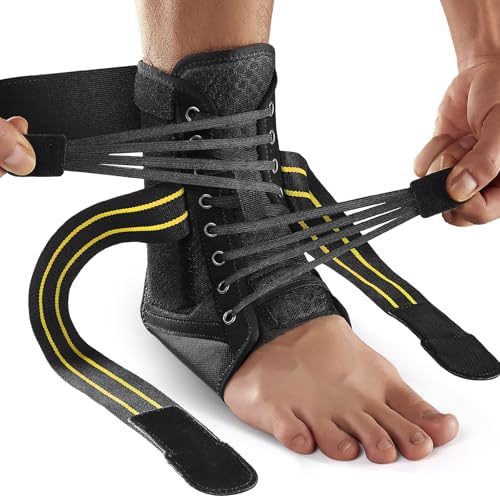
The AGPTEK brace adopts a cross-shoelace design rather than traditional straps, which many users find easier to put on and take off—a significant advantage when your ankle is already sore. The key differentiator here is the pair of lightweight aluminum splints fixed to both sides, giving 360-degree all-round protection. These splints are fully detachable, allowing you to wear the brace for immobilisation during recovery and later use it as a lighter sports brace once you’ve returned to hitting.
Reviewers recovering from fractures and post-surgery found this brace more supportive and comfortable than the one provided by their orthopaedic surgeon. The polyester and nylon construction is breathable and sweat-free, which matters during a three-set match. One tennis-adjacent user (playing pickleball with a sore Achilles) reported the brace allowed them to keep playing without aggravating the injury, and the issue resolved within weeks. The brace works on either foot and is suitable for walking, basketball, running, and tennis.
If you want one brace that can graduate from acute recovery to sport-level protection, the AGPTEK offers impressive versatility. It runs slightly small, so measure your ankle circumference carefully and consider sizing up if you wear a larger shoe size or have a wider midfoot.
Why it’s great
- Removable aluminum splints allow transition from immobilisation to active use
- Cross-shoelace design is easier to put on than strap-only braces
- Breathable polyester and nylon construction prevents overheating
Good to know
- Tends to run slightly small; consider sizing up
- Aluminum splints may feel rigid during early break-in
6. McDavid Ankle Support with Strap

The McDavid Ankle Support is a simpler, compression-based option designed for players who need moderate support and therapeutic heat retention rather than rigid stabilisation. The 1/8-inch thick neoprene sleeve provides warmth that can help relax stiff tendons before warm-up, while the integrated strap offers additional compression around the midfoot. This is not a brace for acute Grade 2 sprains, but it works well for mild instability or as a preventive measure during light practice.
Many reviewers appreciate the all-day comfort, noting they can wear it comfortably for hours off the court or even during sleep. The strap adds a layer of adjustable support without the bulk of a full lace-up system. However, some users found the sizing inconsistent—one woman with a size 10 shoe could barely get her toes into the brace—so careful measurement is essential. The neoprene also tends to retain heat, which can be a problem during hot summer matches.
For tennis players who want a low-profile brace that provides gentle compression and proprioceptive feedback without the time commitment of lacing up, the McDavid is a solid entry-level choice. It is best suited for warm-ups, casual play, or days when your ankle feels slightly tired but not acutely injured.
Why it’s great
- Neoprene sleeve provides therapeutic heat retention and gentle compression
- Comfortable for all-day wear, including during sleep
- Durable Velcro holds up well over extended use
Good to know
- Sizing can be inconsistent; measure carefully before ordering
- Not supportive enough for moderate to severe sprains or instability
7. Dr.Welland Ankle Brace with Side Stabilizers
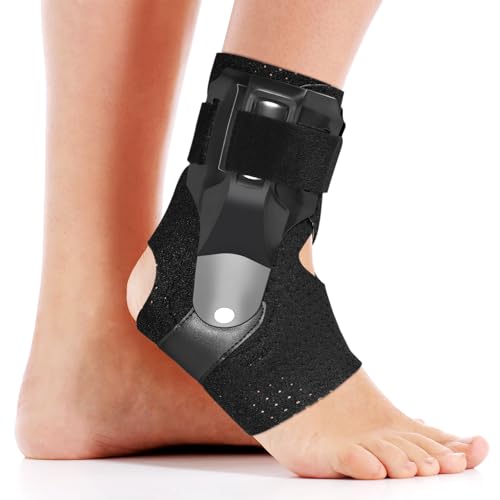
The Dr.Welland brace is designed by orthopaedic surgeons and features a neoprene construction with adjustable arch and ankle position straps, allowing you to dial in the exact level of compression needed. The side stabilizers—thin plastic inserts—help prevent the ankle from rolling outward, which is the primary failure mode during a tennis sidestep. The neoprene material wicks moisture and provides comfortable compression that can help reduce swelling after a match.
Customer feedback highlights that this brace solves the common problem of ankle rotation during sleep, which is especially useful for players who wake up with a stiff or sore joint after a hard session. Several reviewers with chronic instability reported that the brace restored their confidence in walking and light exercise. However, a recurring note is that the plastic buckle can break under stress, which may require a replacement unit if you rely on the brace for daily training.
For tennis players on a tighter budget who want a brace with adjustable compression and basic lateral stabilisation, the Dr.Welland offers decent value. It is not as robust as the lace-up models from DonJoy or Med Spec, but it provides enough support for mild sprains and daily wear without the complexity of a full lacing system.
Why it’s great
- Adjustable arch straps allow customised compression fit
- Neoprene material wicks moisture and reduces swelling
- Designed by orthopaedic surgeons for targeted support
Good to know
- Plastic buckle may be prone to breakage under heavy use
- Side stabilizers are thin and may not suffice for high-intensity play
FAQ
Can I wear an ankle brace with my tennis shoes?
How tight should I lace my ankle brace for a match?
Will an ankle brace prevent all lateral sprains during tennis?
Final Thoughts: The Verdict
For most users, the ankle brace for tennis winner is the Med Spec ASO Ankle Stabilizer because its lace-up plus figure-8 strapping system provides the closest replication of professional athletic taping, offering reliable lateral lockdown without excessive bulk. If you want speed of application and removable stays for progression from recovery to sport, grab the DonJoy Stabilizing Speed Pro. And for a budget-sensitive entry-level option that still provides adjustable compression and basic side stabilizers, nothing beats the Dr.Welland Ankle Brace with Side Stabilizers.