
Our readers keep the lights on and the weekend projects moving. As an Amazon Associate, I earn from qualifying purchases.
Most headphones that claim “deep bass” simply crank the low frequencies until the mids and highs turn to mush. True bass extension in the audiophile realm means controlled, articulate sub-bass that can reproduce a kick drum’s impact and a double bass’s growl without bleeding into the lower mids. The engineering challenge is maintaining clarity in the 20–80 Hz region while keeping distortion below audibility. This guide dissects exactly how nine serious contenders handle that trade-off — from dynamic drivers to planar magnetic arrays.
I’m Rikta — the co-founder and writer behind FitlyFast. I’ve spent over 200 hours analyzing frequency response graphs, impedance curves, driver topologies, and distortion measurements across the sub- headphone market to build this guide on exactly what separates a bass-boosted consumer can from a genuinely capable audiophile bass headphone.
This deep-dive comparison covers open-back and closed-back designs, dynamic and planar magnetic drivers, and everything from entry-level studio monitors to premium handcrafted wood-earcup statement pieces. Let’s find your pair of the best audiophile bass headphones for how you actually listen.
How To Choose The Best Audiophile Bass Headphones
Bass in the audiophile world isn’t about quantity — it’s about quality, extension, and control. A headphone that delivers 10 dB of boost at 100 Hz might sound “punchy” but will mask detail in the lower mids. The best designs aim for linear extension down to 20 Hz, letting the bass be felt when the recording demands it without overpowering everything else. Here are the three criteria that separate contenders from pretenders.
Driver Topology: Planar Magnetic vs Dynamic
The driver type fundamentally dictates how bass is reproduced. Planar magnetic designs — like those in the Audeze LCD-X and HIFIMAN Arya — use a large thin diaphragm suspended between two magnetic arrays. This gives them extremely low distortion at high volume levels and allows for faster transient response. Dynamic drivers, found in the Sennheiser HD 660S2 and Meze 109 Pro, use a voice coil and cone. They can deliver excellent punch but often exhibit higher harmonic distortion below 50 Hz if the motor strength isn’t sufficient. For bassheads who listen at moderate levels, a well-tuned dynamic driver is sufficient. For those who want clean, thunderous sub-bass at high SPL, planars have a clear advantage.
Impedance and Sensitivity: How Much Amp Do You Need?
Low-impedance headphones (below 50 Ω) like the Meze 109 Pro (40 Ω) and Audeze LCD-X (20 Ω) are easier to drive from portable sources but are very sensitive to the output impedance of the amplifier. A high output impedance can raise the bass by several dB and reduce damping factor, leading to loose, bloated low end. High-impedance models (300 Ω+), like the Beyerdynamic DT 990 Pro X at 48 Ω (which is still moderate), are less affected by source impedance but require more voltage swing for the same loudness. Always pair headphones with an amplifier that has an output impedance less than 1/8th of the headphone’s nominal impedance to maintain tight bass control.
Open-Back vs Closed-Back for Bass
Closed-back headphones trap air inside the earcup, naturally providing more bass pressure and isolation. The Focal Elegia uses this to its advantage with an ‘M’-shaped dome that combines high stiffness with low mass. Open-back designs bleed bass pressure out through the grille, which can make the low end sound leaner but often results in a larger, more natural soundstage. The trade-off is clear: closed-backs offer more visceral bass slam at the cost of a narrower stage, while open-backs provide airy, extended bass with less physical punch. Your listening environment will dictate the choice — open-backs leak sound both in and out.
Quick Comparison
On smaller screens, swipe sideways to see the full table.
| Model | Category | Best For | Key Spec | Amazon |
|---|---|---|---|---|
| Audeze LCD-X | Open-Back Planar | Reference monitoring and sub-bass | 106mm planar driver, 20 Ω | Amazon |
| HIFIMAN Arya Stealth | Open-Back Planar | Expansive soundstage and detail | Nanometer diaphragm, 35 Ω | Amazon |
| MEZE 109 PRO | Open-Back Dynamic | Versatile listening with artistry | 50mm dynamic driver, 40 Ω | Amazon |
| Sennheiser HD 660S2 | Open-Back Dynamic | Natural, lifelike vocals with bass | 42mm transducer, 300 Ω | Amazon |
| Focal Elegia | Closed-Back Dynamic | Detail retrieval and isolation | 40mm M-shape dome, 35 Ω | Amazon |
| Bose QuietComfort | Closed-Back Wireless | Daily commutes and travel | 24-hour battery, ANC | Amazon |
| Beats Studio Pro | Closed-Back Wireless | Seamless apple/android use | 40-hour battery, Class 1 BT | Amazon |
| Beyerdynamic DT 990 Pro X | Open-Back Dynamic | Critical studio monitoring | 45mm STELLAR.45, 48 Ω | Amazon |
| Bose A30 Aviation | Closed-Back Aviation | Pilot comms and noise reduction | ANR, FAA TSO certified | Amazon |
In‑Depth Reviews
1. Audeze LCD-X

The Audeze LCD-X uses a massive 106 mm planar magnetic diaphragm with double-sided magnet arrays. This is the same driver architecture used in their professional mastering models, and it shows in the bass performance. The sub-bass extends flat down to 12 Hz with negligible distortion, giving you that tactile, room-shaking low end that dynamic drivers struggle to match at high SPL. The stock tuning is slightly dark out of the box, but a simple EQ shelf at 8–10 kHz reveals exceptional detail retrieval.
The 2021 revision improved the ear pads significantly — the new leather (or leather-free) design distributes the 1.15 lb weight better, but the LCD-X remains a heavy headphone. You won’t forget you’re wearing them after a three-hour session. The all-metal construction with handcrafted California assembly feels indestructible, and the carrying case is genuinely premium. The 20 Ω impedance and 103 dB sensitivity make it deceptively easy to drive for a planar, but it still benefits from a dedicated amplifier with low output impedance for tightest bass control.
For critical listening of bass-heavy genres like electronic, hip-hop, and modern metal, the LCD-X is reference-grade. The 4-pin XLR cable with 6.3 mm and 3.5 mm adapters covers most setups, but the short stock cable length may require an extension for desktop use. The 3-year warranty on a US-manufactured product adds serious long-term value for anyone making a significant investment.
Why it’s great
- Sub-bass extension down to 12 Hz with near-zero distortion
- All-metal build with handcrafted California assembly and 3-year warranty
- Highly responsive to EQ for fine-tuning
Good to know
- Heavy build at 612 grams causes fatigue on long listening sessions
- Dark stock tuning requires EQ for treble sparkle
2. HIFIMAN Arya Stealth Magnet Version

The HIFIMAN Arya Stealth Magnet version is a planar magnetic headphone that uses a nanometer-thickness diaphragm and a specially shaped Stealth Magnet to reduce wave diffraction turbulence. This acoustically transparent magnet design allows the sound waves to pass through without interference, which directly translates to a soundstage that extends beyond your ears. The bass is full and articulate, with excellent extension into the 20 Hz region, though it lacks the last ounce of physical slam that the Audeze LCD-X delivers.
Where the Arya truly excels is in its ability to layer complex bass lines with other instruments. In tracks with overlapping sub-bass synth pads and kick drums, the Arya keeps them distinct and spatially separated. The 35 Ω impedance is friendly to most amplifiers, though it does not pair well with OTL (output transformerless) tube amps due to its low impedance. A hybrid Class A tube amp like the Apos Gremlin brings out the best in it, adding a touch of warmth to the midrange while preserving the planar bass speed.
Build quality is the Arya’s weak point relative to its price. The hinges can squeak over time, and the use of high-grade plastic alongside metal gives it a less premium feel than the Meze 109 Pro or Audeze LCD-X. The large earcups with asymmetrical Window Shade system are comfortable for most head shapes but may feel oversized for smaller heads. The single crystalline copper cable with a 6.35 mm plug is adequate but unexceptional — most owners upgrade to a balanced cable within the first year.
Why it’s great
- Massive, holographic soundstage with excellent instrument separation
- Articulate, fast bass with clean sub-bass extension
Good to know
- Plastic-mixed build can develop squeaky hinges over time
- Does not pair well with OTL tube amplifiers
3. MEZE AUDIO 109 PRO

The MEZE 109 PRO combines genuine walnut wood earcups with a 50 mm dynamic driver in an open-back design. This is a headphone that prioritizes musicality and emotional engagement over clinical accuracy. The bass is warm, punchy, and slightly elevated in the mid-bass region, giving tracks presence and weight without the sub-bass extension of top-tier planars. The 40 Ω impedance with high sensitivity means it can be driven from a phone or laptop with excellent results, though the high sensitivity can cause channel imbalance and noise on poorly designed desktop amps.
Build quality is exceptional. The vegan leather headband is reinforced with manganese spring steel, the earcups are solid walnut, and every component from the ear pads to the driver is replaceable. No glue is used in the assembly — just high-quality fasteners. This design-for-life philosophy justifies the premium price point. The included hard EVA carrying case houses two detachable TPE OFC cables (1.5 m and 3 m), a 6.3 mm adapter, and a cable pouch. It’s the most complete accessory package at this price.
The MEZE 109 PRO is at its best with classical, orchestral, and acoustic music where its natural timbre and lush midrange shine. For electronic and hip-hop, the bass is enjoyable but lacks the sub-30 Hz extension that planar headphones provide. Some listeners report sibilance in the treble region, particularly with tracks that have strong cymbal content. A simple 2–3 dB cut around 8 kHz using EQ resolves this for most users.
Why it’s great
- Beautiful walnut wood earcups with fully replaceable components
- Warm, musical signature that is highly engaging for long sessions
Good to know
- Mid-bass focused, not true sub-bass extension
- Treble can be sibilant with certain recordings
4. Sennheiser HD 660S2
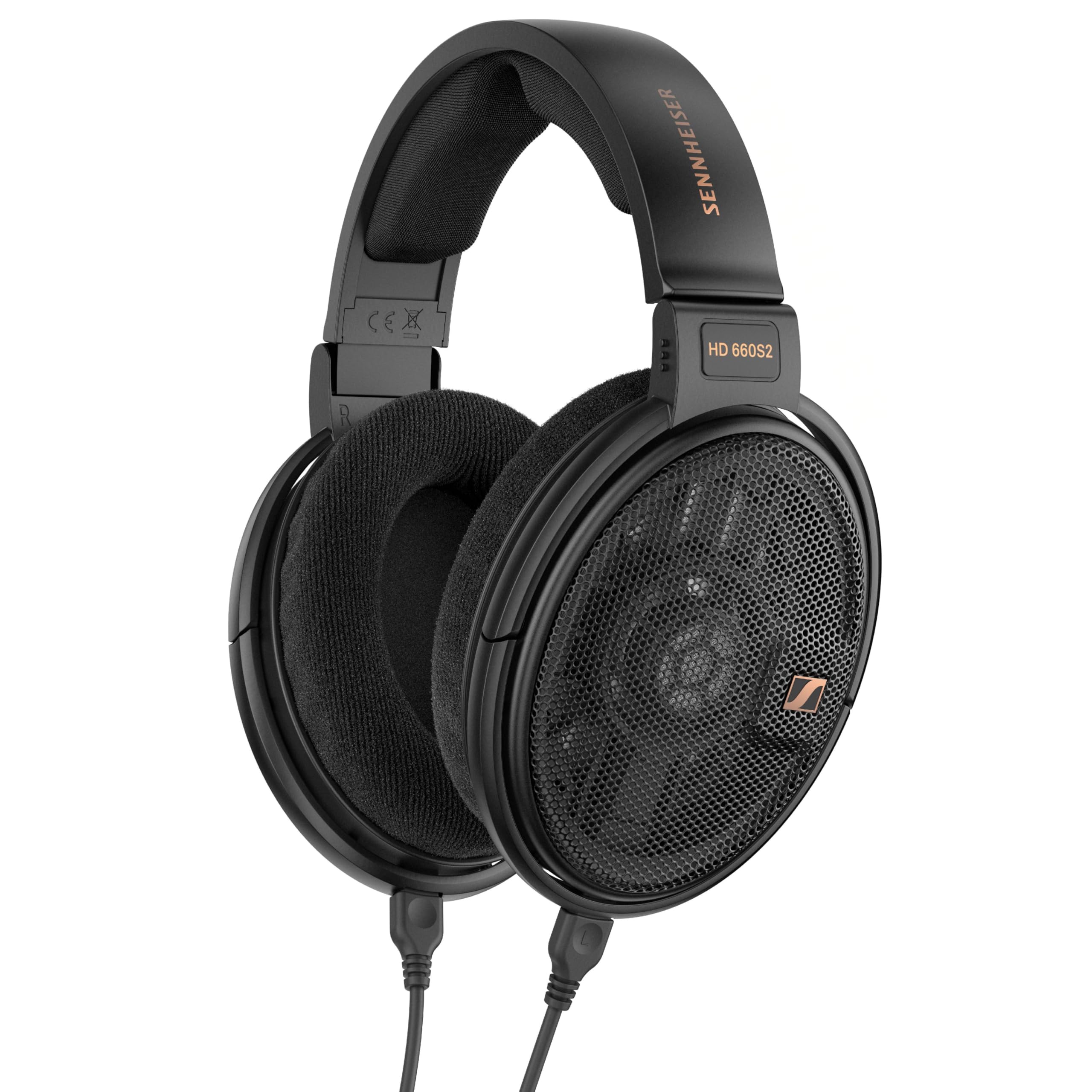
The Sennheiser HD 660S2 uses a 42 mm dynamic driver with an ultra-light aluminum voice coil, tuned to provide deeper bass extension than its predecessor, the HD 660S. The sub-bass response is impressive for an open-back dynamic, reaching down to 27.5 Hz (piano low C) with controlled clarity. The bass is not boosted — it’s linear and natural, giving a realistic sense of a kick drum’s weight and a double bass’s resonance without the mid-bass bloat that plagues many consumer headphones.
The 300 Ω impedance requires a dedicated amplifier. Running the HD 660S2 from a phone or laptop will result in anemic, lifeless bass and a compressed soundstage. Pair it with a solid-state amplifier like a Schiit Magni or a balanced DAC/Amp like the Fosi DS2, and the bass opens up with surprising punch and texture. The soundstage is intimate rather than vast — instruments are presented close to the listener, giving a front-row concert experience rather than a hall-filling one. This intimacy pairs beautifully with vocals and acoustic instruments.
Comfort is excellent for glasses wearers, with minimal clamp force and breathable velour ear pads. The cables are a mixed bag: two 1.8 m detachable cables (6.3 mm and 4.4 mm) are included, but they are both on the short side for desktop use and exhibit microphonics near the earcup connection. The carry pouch is functional but basic. The HD 660S2 is best valued when purchased on sale or refurbished, where it competes directly with the now-discontinued HD 660S.
Why it’s great
- Natural, linear bass extension down to 27.5 Hz
- Exceptional vocal clarity with lifelike instrument separation
Good to know
- Requires a dedicated headphone amplifier for full bass performance
- Cables are short and microphonic near the earcups
5. Focal Elegia
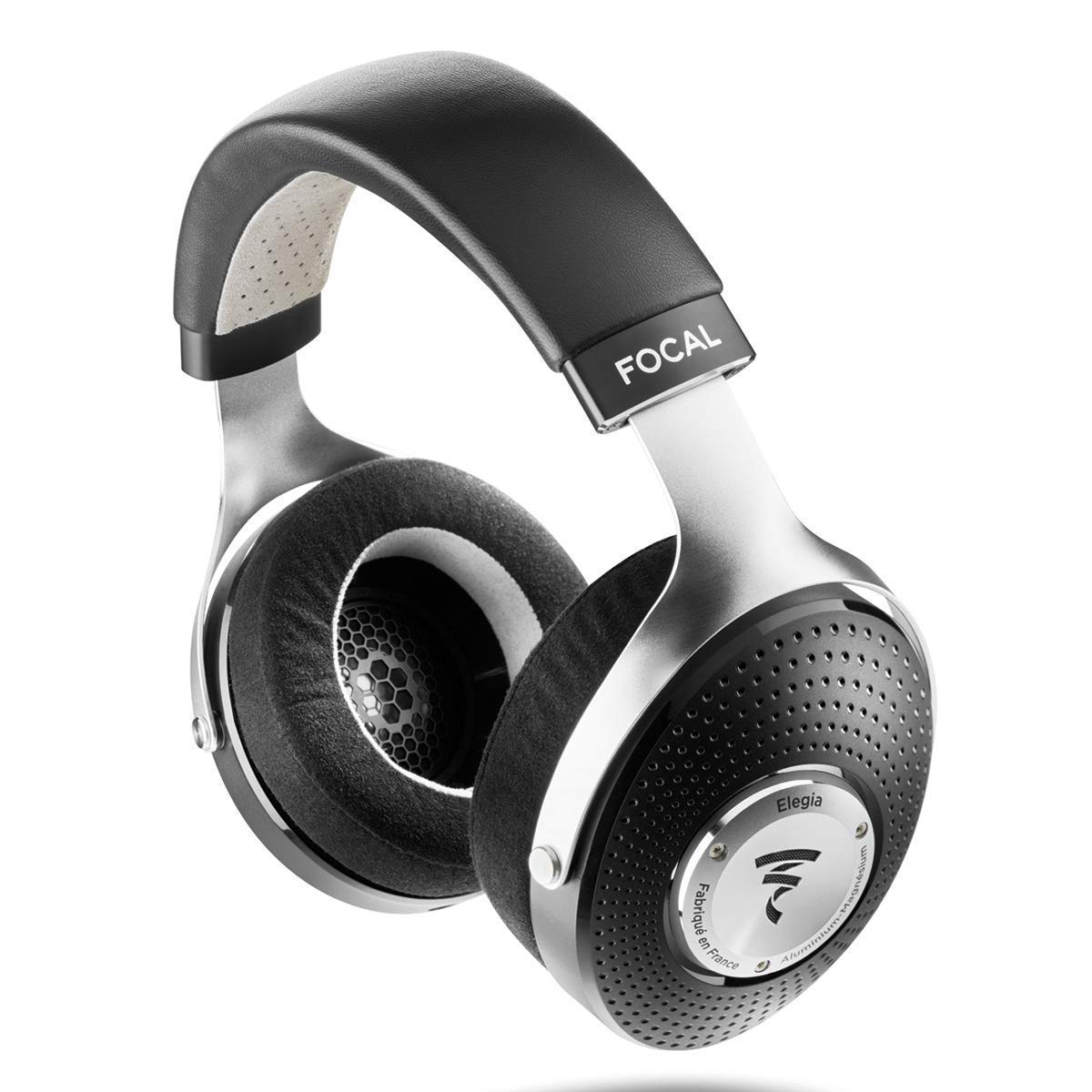
The Focal Elegia is a closed-back headphone using a 40 mm ‘M’-shaped aluminum-magnesium dome driver — the same technology Focal uses in their high-end speaker line. This driver design gives the Elegia exceptional midrange clarity and a bass response that is tight, controlled, and punchy. The sub-bass does not extend as deep as open-back planars, but the physical slam from the sealed enclosure gives kick drums a distinct impact that open-backs cannot replicate.
Detail retrieval is where the Elegia truly stands out. The ‘M’-shaped dome acts as a rigid piston, minimizing breakup at high frequencies and revealing subtle instrumental textures that other headphones mask. The soundstage is intimate for a closed-back but well-layered, with precise imaging. The bass is not boosted; it is balanced and defined. Reviewers who initially describe the bass as “light” often change their assessment after a burn-in period of 100–200 hours, during which the driver compliance increases and the low-end presence grows.
Build quality is excellent, with a sturdy metal frame and comfortable microfiber ear pads. The clamping force is initially tight, which aids isolation but can cause discomfort for larger head sizes — stretching the headband over a box for a few days helps. The cable is a weak point: it is stiff, rubbery, and relatively short. Third-party replacement cables are a common upgrade. The Elegia pairs well with portable audiophile players thanks to its 35 Ω impedance, but a quality DAC/amp improves the imaging and soundstage depth notably.
Why it’s great
- Exceptional detail retrieval with an M-shape driver design
- Tight, punchy bass with excellent isolation for a closed-back
Good to know
- Requires extensive burn-in (over 100 hours) for optimal bass presence
- Stiff stock cable is short and rubbery
6. Bose QuietComfort Bluetooth Headphones

The Bose QuietComfort is a wireless, closed-back headphone with active noise cancellation. On the audiophile bass spectrum, it sits firmly in the consumer category — the bass is elevated and warm, designed to be immediately pleasing rather than technically accurate. The adjustable EQ in the Bose app allows you to reduce the bass by a couple of dB to achieve a more neutral profile, but the driver’s physical tuning is still mid-bass focused. The sub-bass extension below 40 Hz rolls off noticeably compared to wired audiophile options.
What the QuietComfort does exceptionally well is deliver this bass in a mobile context. The ANC is market-leading, blocking everything from fan hum to office chatter. The frequency response is remarkably consistent regardless of fit or seal, which is a challenge for closed-back headphones with ANC. The Bluetooth multipoint connection is seamless, allowing switching between phone and laptop without manual disconnect. Battery life at 24 hours is competitive, and the 15-minute fast charge for 2.5 hours of playback is genuinely useful.
Comfort is excellent for all-day wear, with plush earcup cushions and a padded headband that distributes weight evenly. The Blue Dusk limited edition color is a nice aesthetic touch. The sound quality is good for wireless headphones but does not compete with wired audiophile headphones in terms of bass definition or detail retrieval. Buy these for the ANC and convenience, not as your primary critical listening tool.
Why it’s great
- Industry-leading noise cancellation with adjustable ANC modes
- Seamless Bluetooth multipoint connectivity and fast charging
Good to know
- Bass tuning is consumer-oriented, not audiophile-grade
- Sub-bass extension rolls off compared to wired competitors
7. Beats Studio Pro

The Beats Studio Pro is the latest evolution of the Beats sound signature. Historically known for overly boosted bass, the Studio Pro has been retuned with a custom acoustic platform that delivers a more balanced frequency response while still providing the deep bass that Beats fans expect. The bass is elevated in the mid-bass region (60–100 Hz) with a gentle roll-off below 50 Hz, giving warmth and punch without the overwhelming muddiness of previous generations.
The standout feature for audiophiles is the USB-C lossless audio support. Plugging in via USB-C bypasses Bluetooth compression entirely, allowing the internal DAC to process 24-bit/48 kHz audio. In this mode, the bass is noticeably tighter and the overall clarity improves significantly. The Active Noise Cancellation is competitive with the Sony XM5 and Bose QuietComfort, and the Transparency mode is natural-sounding. Class 1 Bluetooth provides a stable connection with fewer dropouts in crowded areas.
Comfort is good with the UltraPlush ear cushions, though some users report earcup heating during long sessions. The 40-hour battery life (with ANC off) is best-in-class, and the 10-minute Fast Fuel charge provides 4 hours of playback. The spatial audio with dynamic head tracking works well with Apple Music and Dolby Atmos content, though the effect is gimmicky for critical listening. The Studio Pro is a strong wireless option for those who prioritize bass presence and ecosystem integration over analytical sound.
Why it’s great
- USB-C lossless audio for high-fidelity wired listening
- 40-hour battery life with fast charging capability
Good to know
- Bass is still elevated and consumer-tuned, not neutral
- Earcups can get warm during extended use
8. Beyerdynamic DT 990 Pro X

The Beyerdynamic DT 990 Pro X is a refreshed version of the iconic studio headphone, now using the new STELLAR.45 driver. This 45 mm dynamic driver offers a frequency response of 5–40,000 Hz with significantly lower distortion than the previous generation. The bass is present and well-defined, with a slight emphasis in the upper bass that gives kick drums a satisfying thump. The sub-bass below 60 Hz is present but not emphasized — this is not a headphone for sub-bass purists looking for tactile rumble.
The 48 Ω impedance is lower than the original DT 990 Pro’s 250 Ω, making it much easier to drive from laptops, phones, and gaming consoles. The detachable mini-XLR cable is a major upgrade over the fixed cable of its predecessor, improving both durability and replacement convenience. The sound signature is arguably less aggressive in the treble than the original DT 990 Pro, though it still retains the “Beyer peak” around 8 kHz that some listeners find harsh. A subtle EQ cut at that frequency resolves the issue.
Comfort is outstanding for extended wear. The velour ear pads are soft and breathable, the headband pressure is well-distributed, and the lightweight construction (0.64 lb) ensures you can wear them for full studio sessions without fatigue. The open-back design leaks sound but provides a natural, spacious soundstage. The included carrying pouch is basic but functional. For mixing and editing where a flat-ish response is needed, the DT 990 Pro X is a reliable workhorse that handles bass-heavy tracks without distorting.
Why it’s great
- Detachable mini-XLR cable with improved durability over previous generation
- Comfortable velour ear pads and lightweight design for long sessions
Good to know
- Treble has a pronounced 8 kHz peak that can cause fatigue
- Sub-bass extension is decent but not planar-level
9. Bose A30 Bluetooth Aviation Headset

The Bose A30 is a specialized aviation headset designed for cockpit use, not for consumer audiophile listening. It is included in this guide because it represents the absolute pinnacle of noise reduction technology, which indirectly impacts bass perception. In a noisy environment (aircraft cockpit, wind tunnel, industrial setting), the A30’s active noise reduction (ANR) and passive attenuation eliminate ambient roar down to 20 Hz, allowing the pilot to hear intercom and ATC communications with clarity that no consumer ANC headphone can match.
The audio quality is good for its purpose — it reproduces speech with excellent clarity and has adequate bass for intercom signals. It is not designed for music reproduction. The impedance is proprietary to the aviation electronics system, not the typical 32–300 Ω range. The 20% lower clamping force compared to its predecessor (A20) and lightweight design make it comfortable for multi-hour flights. The Bluetooth audio allows connecting to EFB (Electronic Flight Bag) tablets for navigation alerts.
At its price point, the A30 is bought for its FAA TSO certification, its 145 tests passed for flight endurance, and its replaceable, side-swappable microphone and cable system. It is the correct choice for professional pilots and serious aviation enthusiasts. For anyone not flying, the same budget buys better dedicated music headphones. The battery life of 35 hours (Bluetooth off) and 14 hours (Bluetooth on) is exceptional for an aviation headset.
Why it’s great
- Industry-leading ANR for reducing low-frequency engine noise down to 20 Hz
- FAA TSO certified with 145 endurance tests passed
Good to know
- Designed for aviation comms, not critical music listening
- Premium cost that is only justified for professional pilots
FAQ
Do I need a dedicated amplifier for audiophile bass headphones?
Why do some audiophile headphones sound “bass-light” at first?
Can EQ fix weak bass on audiophile headphones?
Final Thoughts: The Verdict
For most users, the best audiophile bass headphones winner is the Audeze LCD-X because it combines reference-grade sub-bass extension down to 12 Hz with planar magnetic clarity and a build quality that will last for years. If you want a more spacious, holographic soundstage with articulate bass, grab the HIFIMAN Arya Stealth Magnet. And for a warmer, more musical listen with wooden earcups and exceptional comfort that can be driven from any device, nothing beats the MEZE 109 PRO.