
Our readers keep the lights on and the weekend projects moving. As an Amazon Associate, I earn from qualifying purchases.
Cardinals and blue jays are among the most striking backyard visitors, yet finding a mix that satisfies both their appetite and your patience for feeder cleanup is surprisingly difficult. A single wrong seed choice leaves you with piles of discarded hulls, a feeder full of filler, and birds flying to a neighbor’s yard instead.
I’m Rikta — the co-founder and writer behind FitlyFast. This guide is built on hours of cross-referencing seed composition data, customer feedback on palatability, and brand freshness reports to find the blends that actually deliver what these two bird species need.
Whether you aim to draw in a bright male cardinal or a raucous flock of blue jays, choosing the right bird seed for cardinals and blue jays means prioritizing high-energy ingredients like sunflower hearts, safflower, and shelled peanuts.
How To Choose The Best Bird Seed For Cardinals And Blue Jays
Cardinals and blue jays share a preference for large, high-fat seeds and nuts. A mix heavy on millet or cracked corn will be ignored in favor of sunflower seeds and peanuts. Look for blends where black oil sunflower seeds, sunflower hearts, safflower, or shelled peanuts are the first ingredients listed.
Filler Seeds: The Silent Waster
Many economy blends add red milo, wheat, or raw oats to lower cost. Cardinals and blue jays typically kick these out of the feeder or leave them to rot on the ground. Over time, this creates a moldy mess that attracts unwanted pests. Stick with mixes that list zero filler grains.
Mess vs. No-Mess: Your Time Matters
Standard sunflower seeds produce hulls that pile up under feeders, attracting rodents and requiring constant sweeping. Shell-free seeds — like sunflower hearts and shelled peanuts — eliminate this completely. The trade-off is a slightly higher upfront cost, but you lose zero weight to inedible shells, making it more efficient per pound of actual food.
Quick Comparison
On smaller screens, swipe sideways to see the full table.
| Model | Category | Best For | Key Spec | Amazon |
|---|---|---|---|---|
| Audubon Park Sunflower Hearts | No-Mess | Zero cleanup under feeders | 100% Sunflower Kernels | Amazon |
| Pennington Select Safflower | Squirrel Deterrent | Discouraging squirrels naturally | 15 lb Bag Safflower | Amazon |
| Schoen Farms Gourmet Mix | Balanced Blend | Variety of songbird species | 10 lb Multi-Seed Blend | Amazon |
| Pennington Critter-Proof Bucket | Storage Friendly | Keeping seed fresh and pest-free | 22.5 lb Bucket | Amazon |
| Desert Valley Shelled Peanuts | High Protein | Attracting jays and woodpeckers | 10 lb Shelled Peanuts | Amazon |
| Armstrong All Season Blend | Budget Bulk | Large volume on a budget | 40 lb Multi-Grain Mix | Amazon |
| CountryMax Black Oil Sunflower | Bulk Value | High-volume year-round feeding | 50 lb Black Oil Sunflower | Amazon |
In‑Depth Reviews
1. Audubon Park Sunflower Hearts

This bag contains 100% sunflower kernels with zero shells, meaning every ounce is edible. Cardinals and blue jays both hammer these soft pieces because they require no cracking effort, and the lack of hulls eliminates the gritty mess that accumulates under standard sunflower feeders.
Customer feedback consistently highlights the cleanliness of this product, with multiple users reporting no fallen seed or sprouting grass below the feeder. The 15-pound bag provides a strong price-to-quality ratio, especially when compared to mixed seeds that contain inedible fillers.
Tube, hopper, and platform feeders all work well with these hearts, though the small kernel size means you may need to adjust the feeder port openings to prevent excessive spillage from jays flinging seeds while feeding.
Why it’s great
- Zero waste — every seed is edible
- Attracts both cardinals and blue jays reliably
- No hull mess under the feeder
Good to know
- Small kernel size may slip through large feeder ports
- Higher cost per pound than shelled sunflower blends
2. Pennington Select Safflower Seed
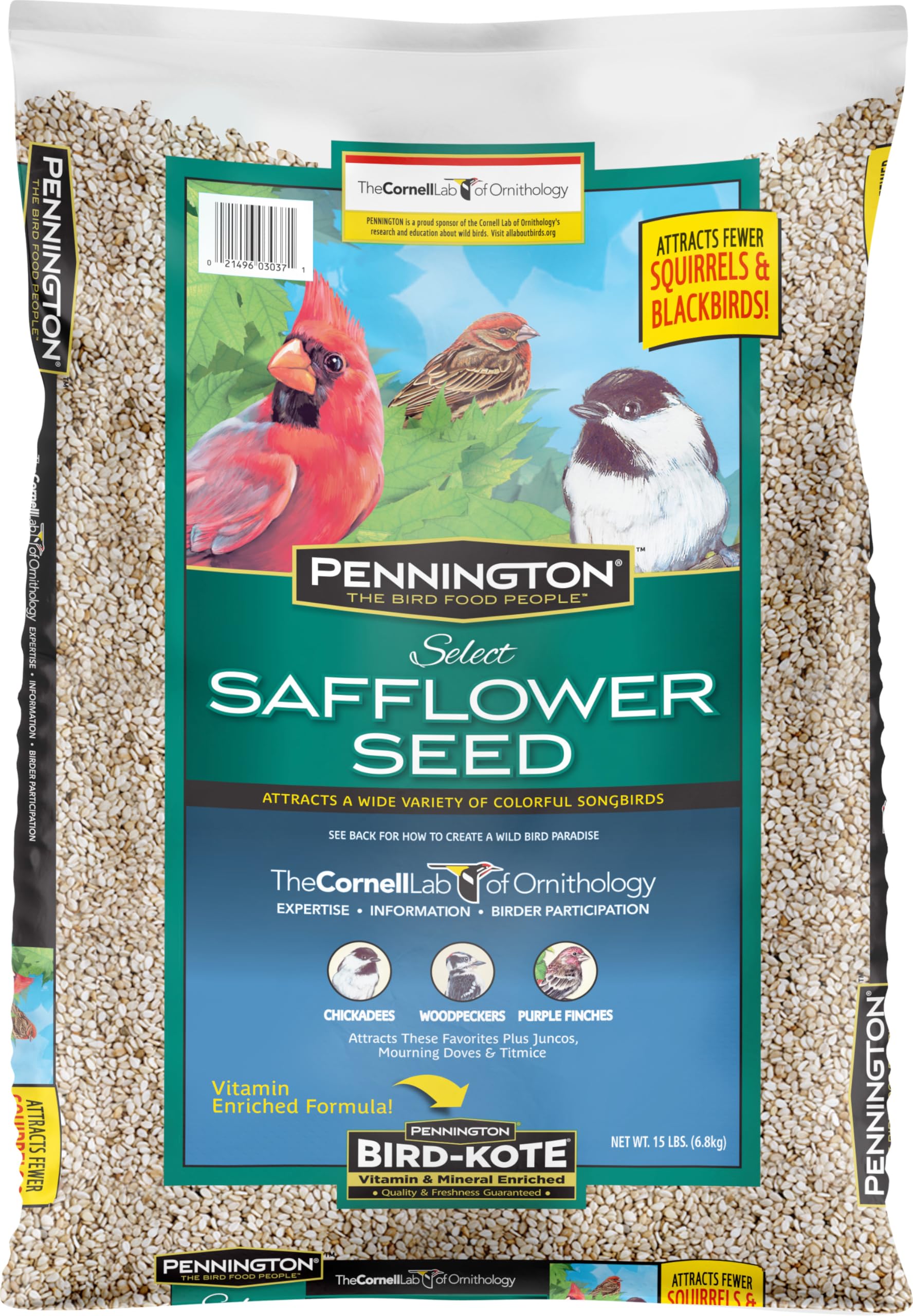
Safflower seed has a bitter taste that squirrels actively avoid, making this bag a top choice for anyone tired of raiders emptying feeders. Cardinals, chickadees, finches, and titmice love it, while blackbirds and grackles also tend to pass it over, leaving more for your target species.
Pennington fortifies this seed with added vitamins and minerals, supporting year-round bird health during both winter cold and summer molt. The 15-pound bag is manageable for most hopper and tube feeders, and the seed stores well in a dry location.
Some bags may contain a small percentage of twigs or sticks, which can clog finch feeders but rarely cause problems with the larger ports favored by cardinals and jays. Rinsing the seed briefly before filling removes most debris.
Why it’s great
- Effectively discourages squirrels
- Cardinals, chickadees, and finches flock to it
- Fortified with vitamins for bird health
Good to know
- Occasional sticks and twigs in the bag
- Blue jays are less enthusiastic than with peanuts
3. Schoen Farms Gourmet Wild Bird Food Mix
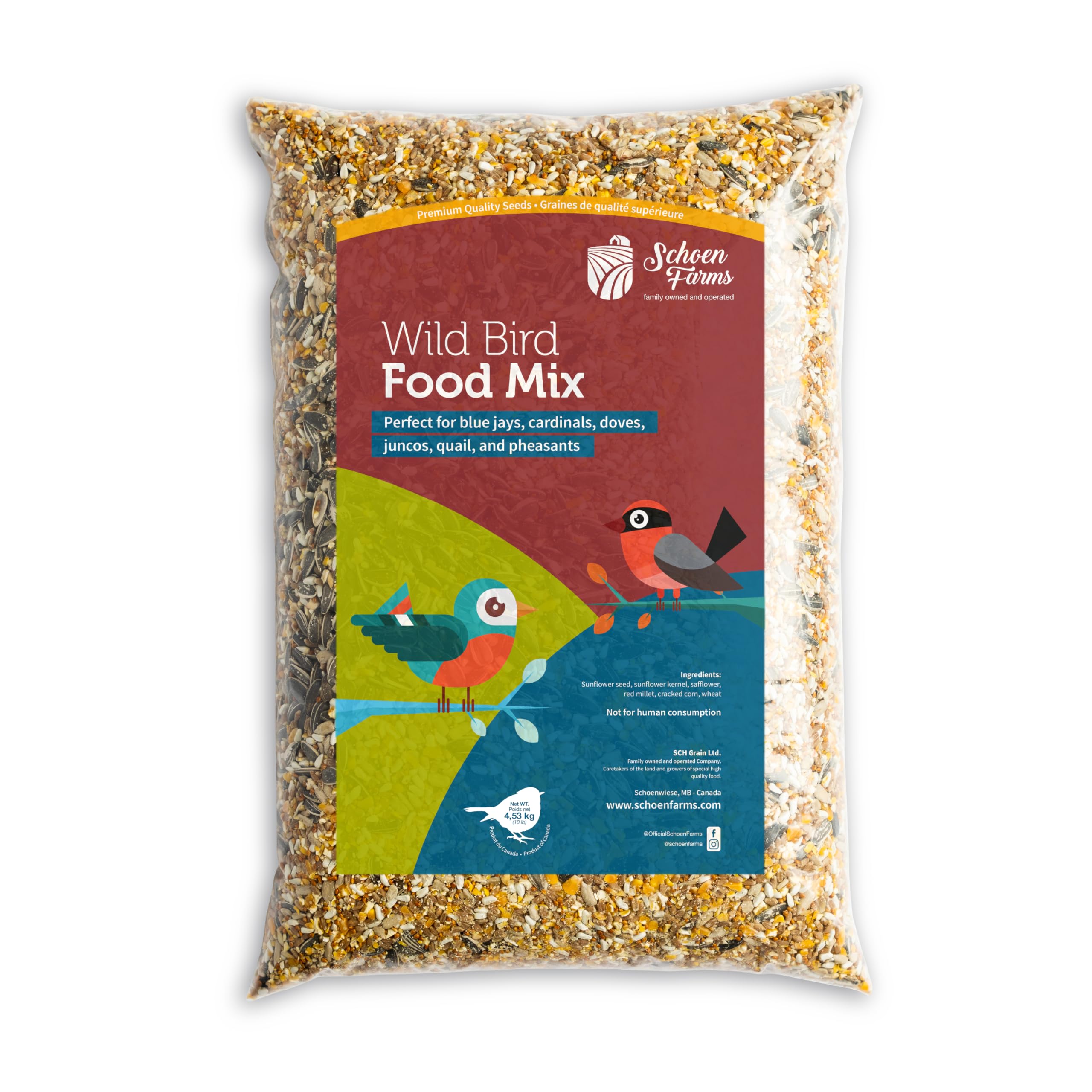
This gourmet blend combines sunflower seeds, sunflower kernels, safflower, red millet, cracked corn, and wheat to attract a wide array of songbirds including cardinals, grosbeaks, woodpeckers, and blue jays. The inclusion of multiple high-fat ingredients gives cardinals the energy they need without relying on a single seed type.
Sourced from a family-owned farm, the freshness of this mix stands out — customers report vigorous feeding activity and far less waste compared to grocery store brands. The 10-pound bag size is ideal for single-feeder setups where you want to rotate seed types frequently.
The cracked corn and wheat content may end up on the ground as jays tend to sort through mixes. If you notice corn accumulating under the feeder, try offering this blend in a platform feeder where ground-feeding doves and juncos will clean up the leftovers.
Why it’s great
- Fresh, farm-sourced ingredients
- Attracts cardinals, jays, woodpeckers, and more
- Minimal sprouting under the feeder
Good to know
- Smaller 10-pound bag refills quickly
- Corn content may create ground waste
4. Pennington Wild Bird Food Critter-Proof Bucket

This bucket doubles as a rodent-proof storage container once the seal is snapped back into place. The blend inside features sunflower seeds as the primary ingredient, which both cardinals and blue jays prioritize, along with a mix of grains to attract titmice, chickadees, and nuthatches.
Pennington’s Bird-Kote technology adds vitamins, minerals, and nutrients to the seed coating, supporting overall bird health even during harsh winter conditions. The 22.5-pound capacity fits neatly under a porch shelf or in a garage without taking up too much floor space.
A few users note that the lid’s sealer ring can be difficult to remove initially, but once opened, the bucket maintains an airtight seal that keeps weevils and moisture out. If you prefer bag refills, Pennington does not currently sell this exact blend in a bag format.
Why it’s great
- Sturdy bucket doubles as pest-proof storage
- Vitamin-enriched seed supports bird health
- Sunflower-heavy blend attracts target species
Good to know
- No bag refills available separately
- Hard-to-remove sealer ring on first open
5. Desert Valley Shelled Peanuts
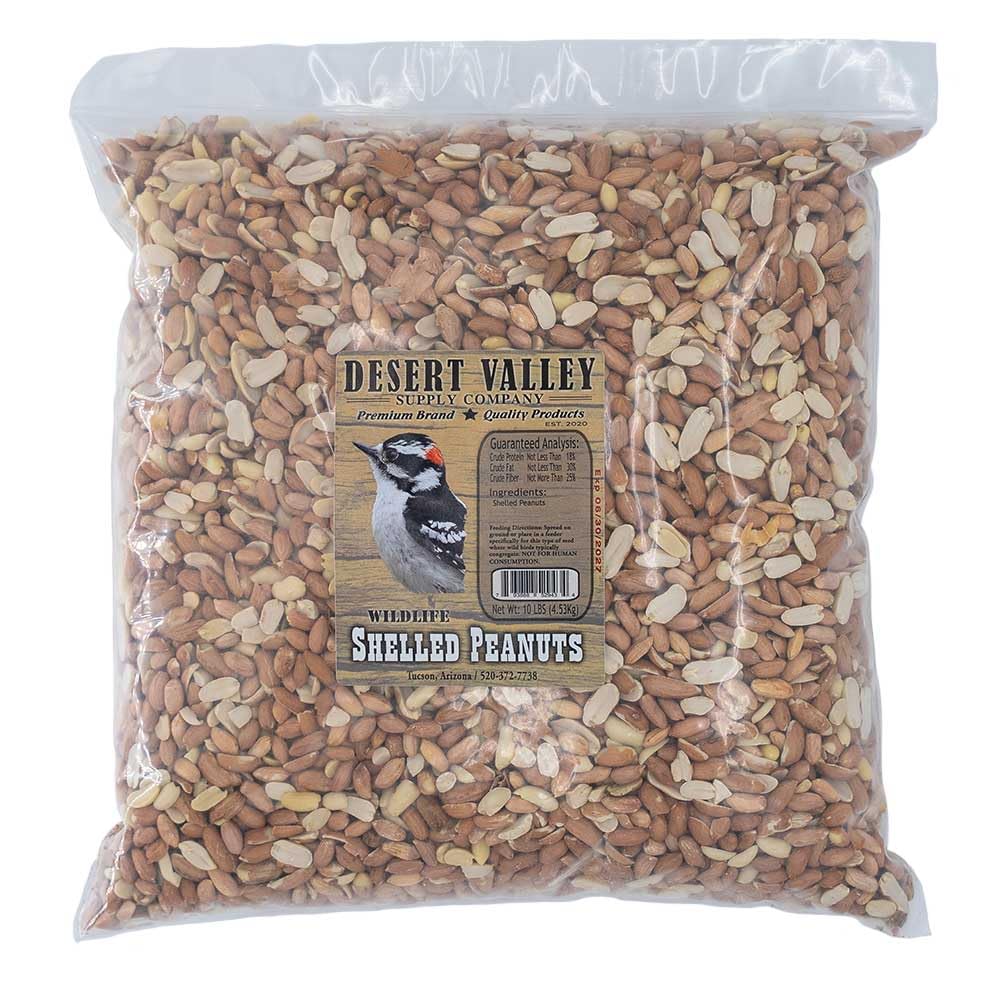
Blue jays are notorious peanut enthusiasts, and this 10-pound bag of shelled, all-natural peanuts delivers the high-protein, high-fat treat they crave. Cardinals, nuthatches, titmice, and woodpeckers also visit regularly when these peanuts are offered in mesh or platform feeders.
These peanuts are raw and unsalted, with the red skins still on. While the skins can create a light mess if squirrels peel them before eating, the peanuts themselves are clean — customers consistently report no chaff, sticks, or debris in the bag. The resealable packaging helps maintain freshness between fills.
Because peanuts are calorie-dense, birds fill up fast, meaning a 10-pound bag can last several weeks even with heavy jay activity. If squirrels are a problem in your yard, these peanuts will attract them too, so pair with a squirrel-proof feeder or offer peanuts on a dedicated station away from seed feeders.
Why it’s great
- Blue jays and woodpeckers are instantly drawn to them
- All-natural, non-GMO, no added ingredients
- Resealable bag locks in freshness
Good to know
- Red skins may create a light mess
- Squirrels will target these aggressively
6. Armstrong Wild Bird Food All Season Blend
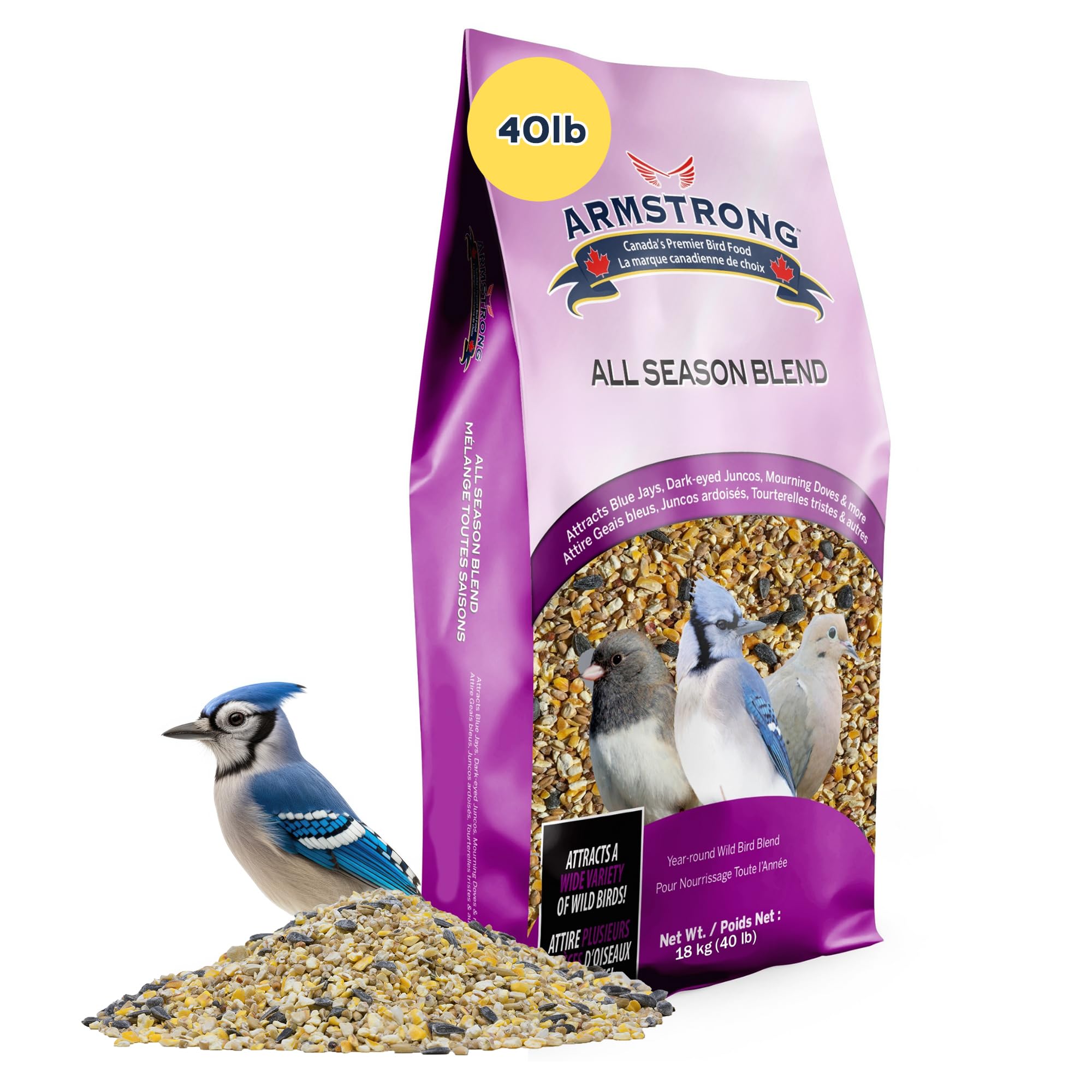
This 40-pound bag offers the lowest per-pound cost in this lineup, making it a viable option for those feeding multiple large feeders or a flock of birds daily. The blend includes black oil sunflower seeds, white and red millet, cracked corn, and wheat, which attract blue jays, mourning doves, house sparrows, and cardinals.
The barrier bag packaging is CO2 flushed to preserve freshness, and the seal holds well during shipping. Many customers report active feeding from cardinals and jays, especially during colder months when high-calorie corn and sunflower seeds are in demand.
A small number of buyers have reported inconsistent quality, with some bags containing a higher proportion of filler ingredients like red milo or sawdust-like fines. If you receive a batch with excessive filler, the birds will avoid the feeder until only the sunflower seeds remain, forcing you to dump the uneaten material.
Why it’s great
- Extremely low cost per pound for bulk feeding
- CO2 flushed packaging keeps seed fresh
- Attracts a wide variety of ground and feeder birds
Good to know
- Inconsistent filler content between batches
- Blue jays and cardinals will sort out corn and millet
7. CountryMax Black Oil Sunflower Seeds
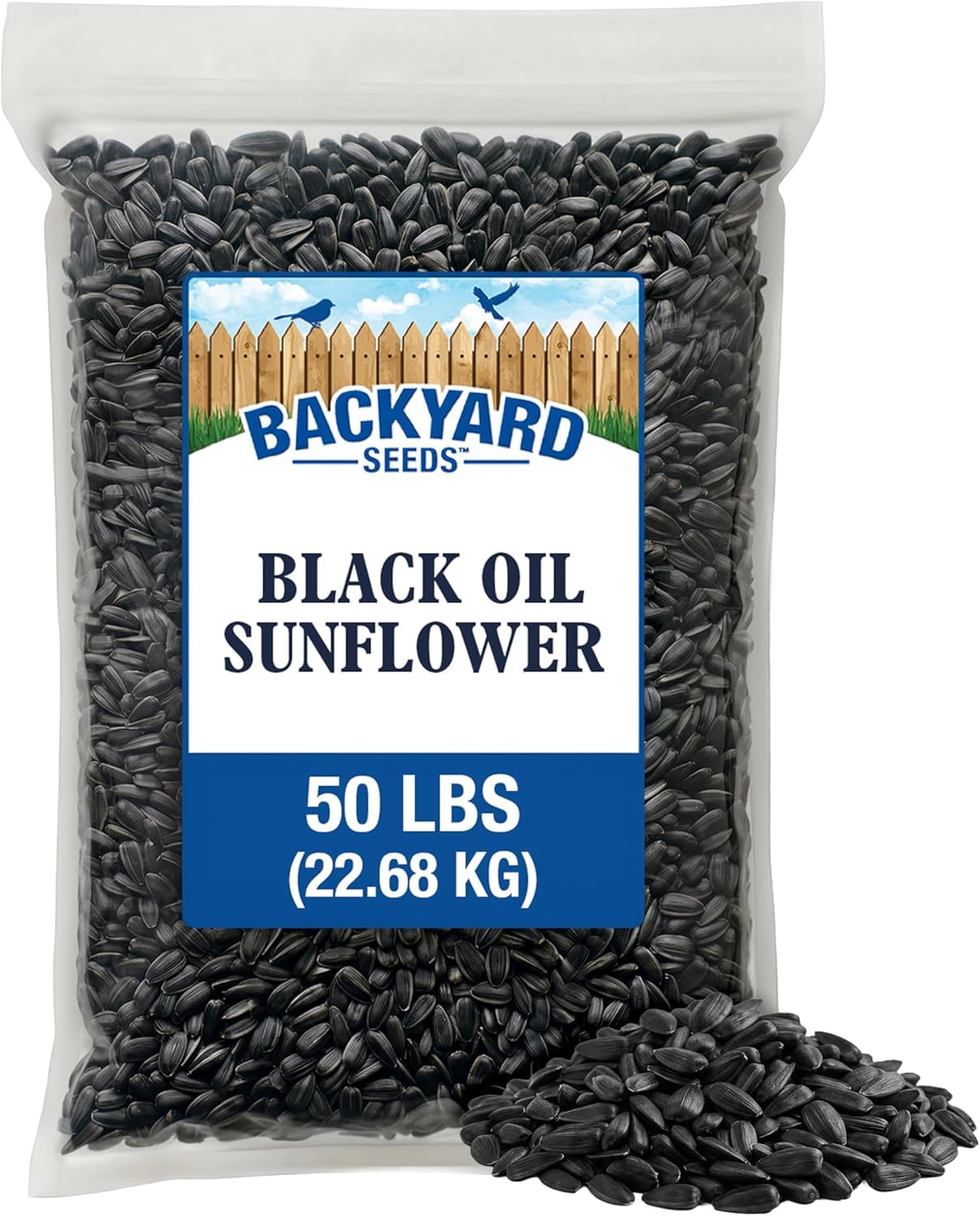
Black oil sunflower seeds are the single most effective food for attracting both cardinals and blue jays, and this 50-pound bag delivers them in a clean, filler-free form. The thin shells make it easy for cardinals to crack open, while the high oil content provides the energy jays need for their active foraging style.
Customers consistently describe these as the freshest, cleanest sunflower seeds they have purchased, with zero sticks, stones, or dust in the bag. The thin shells also mean less waste volume compared to striped sunflower seeds, making this a more efficient option for heavy feeding stations.
Because this is a pure sunflower seed product, you will get hull accumulation under the feeder. Plan to rake or sweep the area weekly, or consider using it alongside a no-mess tray to catch shells before they reach the ground. A 50-pound bag easily lasts several months for a typical backyard setup.
Why it’s great
- Highest appetite appeal for both cardinals and blue jays
- Extremely clean bag — no filler or debris
- Bulk size provides excellent value per pound
Good to know
- Hulls create mess under the feeder
- Requires a large, dry storage container
FAQ
Will cardinals eat from a tube feeder?
Why do blue jays sometimes avoid safflower seed?
How do I stop squirrels from eating sunflower seeds meant for cardinals?
Final Thoughts: The Verdict
For most users, the bird seed for cardinals and blue jays winner is the Audubon Park Sunflower Hearts because it combines zero-waste convenience with the high-fat, high-protein content both species actively seek. If you want to discourage squirrels naturally, grab the Pennington Select Safflower Seed. And for a pure, no-filler bulk supply that cardinals love, nothing beats the CountryMax Black Oil Sunflower Seeds.