
Our readers keep the lights on and the weekend projects moving. As an Amazon Associate, I earn from qualifying purchases.
The biggest mistake families make when buying a large camping tent is confusing capacity numbers for actual livable square footage. A tent that claims to fit 10 people but has sloped walls that force everyone to crawl to the edges is just a giant bivy sack. The real test of a big tent is not how many sleeping bags you can stack inside, but whether you can stand up, change clothes, and walk around without stooping. After analyzing dozens of models across the budget, mid-range, and premium tiers, the one spec that matters above all else is the center height and wall angle — straight-wall cabin designs consistently deliver more usable space than dome tents with the same floor footprint. This guide breaks down exactly which tents give you real room versus those that just stretch your budget.
I’m Rikta — the co-founder and writer behind FitlyFast. This guide is built on countless hours of cross-referencing customer field reports, comparing hydrostatic head ratings, pole gauge thickness, and floor seam construction across nine models ranging from budget-friendly family shelters to premium multi-room cabins.
Whether you’re gearing up for a week-long car camping trip with the whole crew or upgrading from a cramped backpacking tent to a proper base camp, finding the right big tent for camping means looking past the marketing and focusing on how the tent handles real weather, real setup frustration, and real family gear loads.
How To Choose The Best Big Tent For Camping
Choosing a large family tent is fundamentally different from picking a backpacking shelter. You aren’t counting grams — you are counting square feet of livable space, rainfly coverage area, and how many minutes it takes two adults to get the thing standing. Every big tent involves tradeoffs between weight, weather resistance, setup speed, and interior volume. Here is what actually matters.
Center Height and Wall Angle
A dome tent with a 72-inch center height sounds tall, but the walls slope immediately. You can stand in the dead center but not anywhere near the edges. Cabin-style tents with straight or near-straight walls convert the entire floor footprint into usable volume. If you want to fit queen air mattresses, stand to change clothes, or let kids play on the floor, a straight-wall cabin is the way to go. Look for center heights above 76 inches.
Rainfly Coverage and Fabric Waterproofing
Many large tents come with a partial rainfly that leaves the mesh ceiling exposed. That is fine for star-gazing in dry weather, but a full-coverage fly is essential for real rain protection. Check the hydrostatic head rating: 1000mm to 1500mm handles light rain, while 2000mm or higher is needed for sustained downpours. Also look for taped seams — untaped seams are the most common leak point in budget tents.
Setup Time and Pole Construction
Instant-setup tents with pre-attached poles can go up in under 60 seconds, but the tradeoff is often thinner fabric and less wind resistance. Pole gauge matters — steel poles are heavier but more durable than fiberglass. For a tent you plan to use a few weekends a year, fiberglass is fine. For a tent that needs to handle high winds and repeated use, look for thicker fiberglass or steel poles.
Ventilation and Condensation Management
Large tents trap a lot of warm, moist air from breathing, cooking, and wet gear. A tent with mesh windows on all sides, ground vents, and a mesh ceiling (under the rainfly) will breathe far better than one with only a single door. Poor ventilation leads to condensation on the tent walls, which can soak your sleeping bag even if the rainfly is doing its job.
Quick Comparison
On smaller screens, swipe sideways to see the full table.
| Model | Category | Best For | Key Spec | Amazon |
|---|---|---|---|---|
| Core 12 Person Cabin Tent | Premium Cabin | Maximum family space | 16×11 ft floor, 86-inch height | Amazon |
| Vidalido 8-10 Person Cabin | Multi-Room Cabin | Room divider privacy | 13.1×9.1 ft, 150D polyester | Amazon |
| Ever Advanced 10 Person Blackout | Blackout Cabin | Dark interior for sleeping in | 14×8 ft, 80-inch center height | Amazon |
| FanttikOutdoor 8 Person Instant | Instant Cabin | 60-second setup | 13×9 ft, 78-inch height | Amazon |
| Portal 6-10 Person with Porch | Cabin with Porch | Gear storage + living space | 14×8 ft, 80-inch height, attached porch | Amazon |
| KTT 12 Person Cabin | 2-Room Cabin | Budget extra-large space | 14×10 ft, 6.58 ft height | Amazon |
| Coleman 8/10 Person Instant | Instant Dome | Quick weekend trips | 10×9 ft, 6 ft height, 1-min setup | Amazon |
| Timber Ridge 8 Person Tunnel | Tunnel with Screened Room | Bug-free screened living area | 20×8 ft, 76-inch height | Amazon |
| GoHimal 8 Person Dome | Budget Dome | Entry-level family camping | 14×8 ft, 76-inch height | Amazon |
In‑Depth Reviews
1. Core 12 Person Cabin Tent

The Core 12 Person Cabin Tent is the closest thing to a portable house you can buy for camping. With a massive 16 by 11 foot floor and an 86-inch center height, it fits four queen-size air mattresses with zero wall slope issues — you can stand tall at the edges, not just in the middle. The straight-wall design is the headline feature here: it eliminates the wasted perimeter space that plagues dome tents. Families who have used this tent report fitting a full table, gear bins, and dog crates alongside sleeping areas without feeling cramped.
Weather protection comes from Core’s H20 Block Technology, which combines 1200mm fabric with a fully taped rainfly and sealed seams. In sustained rain, the taped seams prevent the capillary wicking that causes untaped seams to fail. The rainfly offers full coverage, not the partial “dolphin-nose” fly that leaves mesh exposed. Users consistently report the tent stayed completely dry through multi-day storms, though the included stakes are lightweight and many recommend upgrading to heavy-duty L-bolts for hard ground.
The room divider creates two separate spaces, which is ideal for families who want a parents’ side and a kids’ side. Setup takes 10-20 minutes with two people, and the pole structure is sturdy enough to handle strong winds without flex. The bag is heavy — this is strictly a car camping tent — but for sheer usable space per dollar, nothing in this class matches the Core’s combination of height, floor area, and dry weather performance.
Why it’s great
- Straight walls provide full standing room across the entire floor
- Fully taped seams and rainfly deliver reliable rain protection
- Room divider adds privacy for multi-family or multi-generational camping
Good to know
- Heavy — not suitable for backpacking or hike-in sites
- Included stakes are weak and should be upgraded for windy conditions
2. Vidalido 8-10 Person Cabin Tent

The Vidalido 8-10 Person Cabin Tent manages a rare trick: it feels genuinely roomy without being absurdly oversized. At 13.1 by 9.1 feet with a 76.7-inch center height, it fits two queen air mattresses comfortably. The real differentiator here is the three-door layout — two side doors plus a front door means no one has to crawl over anyone else to get out at night. The full rainfly is included and covers the mesh roof completely, which is critical for keeping the interior dry when the weather turns.
The 150D anti-tear polyester fabric with PU1500mm coating handles light to moderate rain well, but the manufacturer explicitly warns against use in heavy downpours. This is a 3-season tent for fair-weather family camping. The included room divider creates two distinct sleeping areas, and several users have noted the tent’s fabric works well as a movie projection screen at night. The ventilation setup — three mesh doors, two mesh windows, and a mesh top — provides excellent cross-breeze and reduces condensation compared to tents with fewer openings.
Setup takes about 10 minutes with two people, though the instructions are minimal and first-timers should watch the manufacturer’s video. The carry bag is large but the tent weighs around 40 pounds, so this is strictly car camping territory. After a year of use, some users reported zippers starting to wear, though the tent remained functional. For families who prioritize privacy, multiple entry points, and a dedicated awning porch, the Vidalido delivers strong value at the mid-range price point.
Why it’s great
- Three doors eliminate the “middle sleeper” problem
- Full rainfly with decent waterproof coating for moderate rain
- Awning poles create covered porch space
Good to know
- Not recommended for heavy rain or storms
- Room divider is not removable, limiting mattress placement
3. Ever Advanced 10 Person Blackout Tent
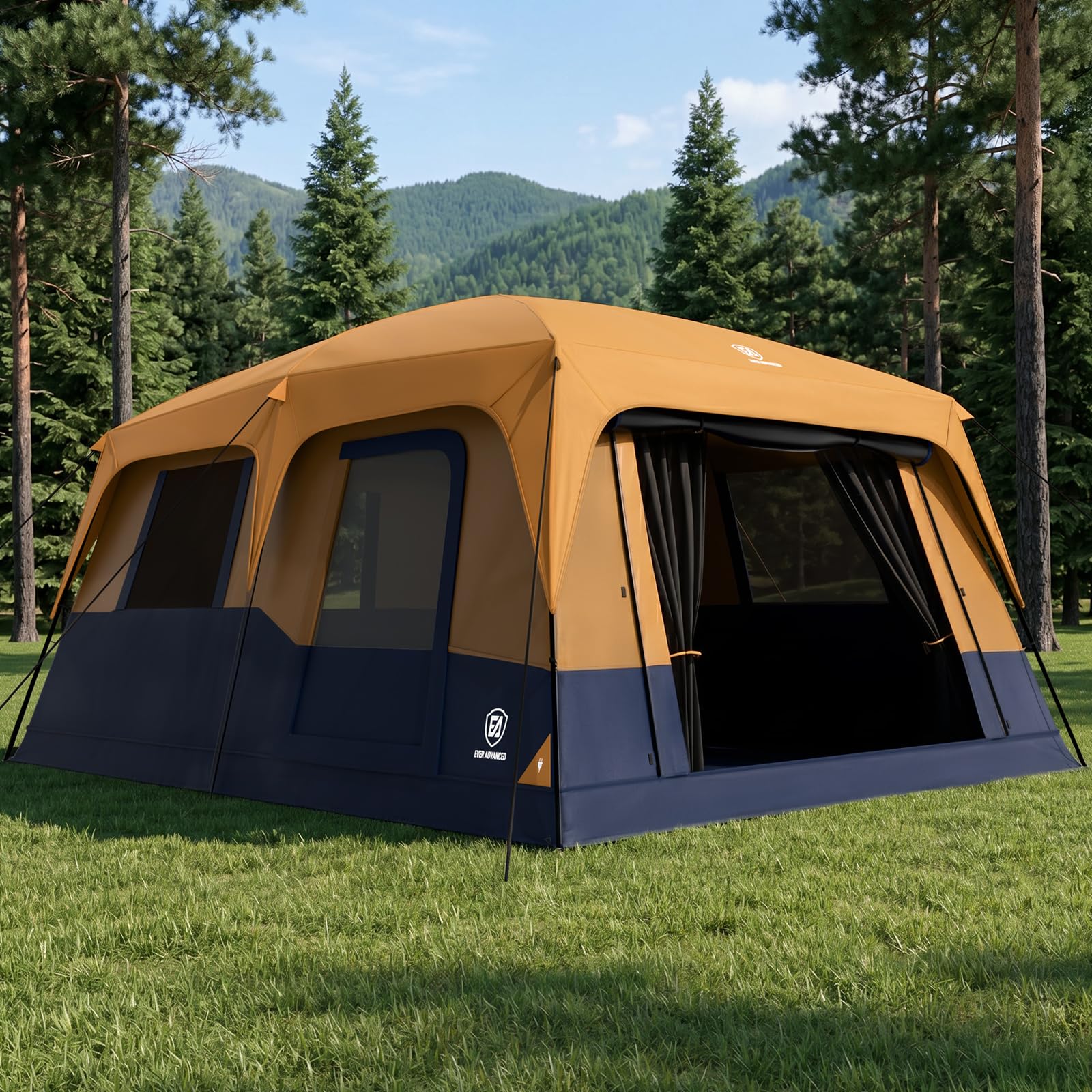
The Ever Advanced 10 Person Blackout Tent solves the single biggest annoyance of camping with kids or shift workers: the sun wakes everyone up at 5:30 AM. The Dark Rest Technology fabric blocks enough light that the interior stays pitch black even in the middle of a sunny afternoon. Multiple users confirm they could sleep past 10 AM, and parents of infants report it made nap time at the campsite actually possible. The tradeoff is that the blackout fabric holds heat — you will need a battery-powered fan for hot summer nights, as several field reports note the tent gets noticeably warm inside.
Beyond the light-blocking feature, this tent measures 14 by 8 feet with an 80-inch center height, offering generous headroom for campers up to 6’3″. The floor uses thick high-mil polyethylene that resists punctures from rocky ground. Users who camped through five days of heavy rain reported zero leaks, though humidity caused some interior moisture on the walls — a condensation issue common to any large tent in wet weather. The rainfly is full-coverage and taped at the seams, which is essential for that leak-free performance.
The side door converts into an awning for shade, adding versatility at the campsite. Setup is straightforward but requires two people — the blackout fabric is heavy and the poles need coordination. The carry bag is large with end hubs, making disassembly easier than most. Zipper quality is a step below premium brands like Kelty or Marmot, but for the price, the combination of blackout capability, spacious interior, and solid weather resistance makes this a standout for families who value sleep quality above all else.
Why it’s great
- True blackout interior blocks daylight for sleeping in
- Tall center height accommodates 6’3″ users standing upright
- Full-coverage rainfly with taped seams for wet weather
Good to know
- Blackout fabric traps heat — a fan is necessary for summer comfort
- Setup is heavier and requires two adults
4. FanttikOutdoor 8 Person Instant Cabin Tent

The FanttikOutdoor 8 Person Instant Cabin Tent delivers on its core promise: it sets up in under 60 seconds. The pre-attached poles and seamless construction mean you unfold, extend, and stake it down. For solo campers or single parents who need a tent they can handle alone, this is a huge advantage. The 13 by 9 foot floor and 78-inch center height provide enough room for two queen air mattresses, and the near-straight walls keep the space feeling open. Users who are 5’8″ report being able to stand comfortably, though taller campers will have to hunch slightly near the edges.
Weather protection is a mixed bag. The tent is made from water-resistant fabric with a bathtub floor design, and the rainfly covers the top — but the inner roof is mesh and must be used with the rainfly in wet weather. The manufacturer rates the wind resistance at 35 MPH when properly guyed out. In light rain, the tent performs fine, but several users reported minor water entry at the bottom vents and door zipper during heavy downpours. The zippers are SBS brand and function smoothly, though the tent fabric can catch if you rush them.
Ventilation is excellent: mesh windows on all four sides plus a full mesh ceiling create strong cross-breeze, and ground vents help reduce condensation. The carbon steel frame with protective sleeves adds durability without excessive weight — the whole package is 24 pounds, making it one of the lighter instant cabins in this class. For weekend car campers who prioritize fast, frustration-free setup over extreme weather durability, the FanttikOutdoor is a compelling choice. It won’t survive a storm, but it excels at making camping spontaneous and easy.
Why it’s great
- True one-minute setup with pre-attached poles
- Excellent cross-ventilation with mesh on all sides and ceiling
- Lightweight at 24 pounds for an 8-person instant tent
Good to know
- Zipper catches fabric easily if not handled carefully
- Minor water leakage reported at bottom vents in heavy rain
5. Portal 6-10 Person with Porch
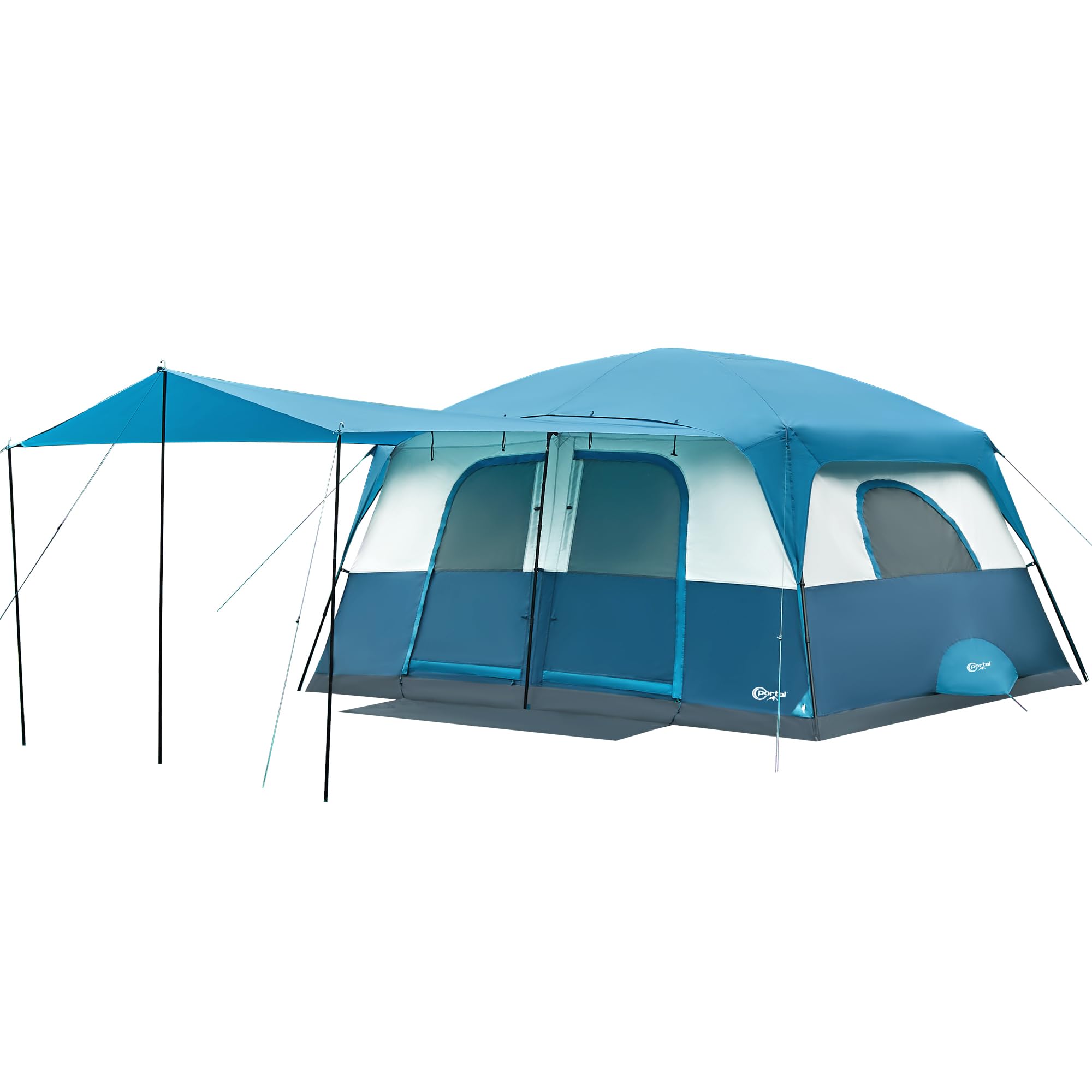
The Portal 6-10 Person Tent with Porch solves the gear-and-living-space problem that plagues family campers. The main body measures 14 by 8 feet with an 80-inch center height, and the attached porch adds another 14 by 7.5 feet of covered space. That porch is not a tiny vestibule — it is large enough for a table and chairs, creating a mud room or dining area separate from the sleeping quarters. Users report the porch provides shade and rain cover equivalent to a standalone 10×10 pop-up canopy, which effectively doubles your livable footprint.
The weather-ready construction features PU-coated waterproof polyester, fully taped seams, and a combination of fiberglass and steel poles. The tent survived 24 MPH gusts and heavy rain with no leaks according to multiple field reports. The porch poles are a known weak point — they are too short, causing rain to pool on the porch roof, but several users replaced them with adjustable poles for a perfect pitch. The floor is made from a quiet, thick material that does not rustle like cheap polyethylene, adding to the overall quality feel.
Ventilation is a standout: two D-shaped doors, six mesh windows, two ground vents, and a full mesh ceiling provide airflow that keeps condensation manageable even with multiple sleepers. The included mud mat, gear loft, wall pockets, and E-ports for power cables show Portal thought through the details. Setup is straightforward at about 10 minutes with two people, though the bag is heavy and the handles could be reinforced. For extended car camping trips where you want a true living room setup, the Portal’s porch design is a category leader.
Why it’s great
- Massive attached porch creates true indoor/outdoor living space
- Excellent ventilation with mesh ceiling and ground vents
- Thoughtful details: E-ports, gear loft, mud mat, wall pockets
Good to know
- Porch poles are too short and cause rain pooling — plan to upgrade
- Initial quality control issues reported with missing parts from some units
6. KTT 12 Person Cabin Tent

The KTT 12 Person Cabin Tent offers the largest floor area in the budget tier at 14 by 10 feet, which fits four full air mattresses. The straight-wall design maximizes the space, and the 6.58-foot center height is adequate for average-height adults, though taller campers will have to watch their heads near the edges. The two-room layout with a zippered divider creates distinct sleeping zones, and the eight top corner hooks plus a middle hook give plenty of options for hanging lanterns or gear storage.
The materials are entry-level: Oxford polyester rainfly and PE polyester floor with a 3-season rating. KTT explicitly states this tent is suitable for sunny and light rain only — not for bad weather or heavy rain. In light showers, users report the tent stays dry, but condensation can be an issue in cooler temperatures because ventilation is limited compared to more expensive designs. The fiberglass poles are functional but fragile; the instruction sheet warns against sharp ground and recommends using a ground tarp to protect the floor from punctures.
Setup is the main challenge here. The KTT is not a pop-up — it requires full manual assembly with separate poles, and the instructions are notoriously poor. First-time setup can take 20 minutes even for experienced campers. The door curtain poles create an awning over the entrance, which is a nice touch for the price. For families on a tight budget who need the largest possible interior volume and can accept the weather limitations, the KTT delivers unmatched square footage per dollar, but it demands patience during setup and careful site selection to avoid puddles.
Why it’s great
- Massive 14×10 foot floor at a budget-friendly price
- Straight-wall design provides full usable interior space
- Awning poles convert door curtain into shaded entrance
Good to know
- Explicitly not rated for heavy rain or strong winds
- Setup is manual with confusing instructions — not a quick pitch
7. Coleman 8/10 Person Instant Tent

The Coleman 8/10 Person Instant Tent is the undisputed king of convenience in the big tent category. The pre-attached poles allow the tent to go from bag to fully standing in about 60 seconds — you simply unfold, extend the legs, and stake it down. For the “let’s go camping right now” crowd, this is a genuine game-changer. The 10 by 9 foot floor fits two queen air beds, and the 6-foot center height is workable for average-height adults, though you will have to stoop slightly. The WeatherTec system with welded corners and inverted seams helps keep water out in light rain.
However, the instant setup convenience comes with serious compromises. The fabric is thin — multiple users report the tent leaks at the seams in sustained rain, and one detailed field report from Burning Man described the tent soaking everything inside during a storm. The rainfly is sold separately, which is an unusual cost-saving measure for a tent in this price range. Without the rainfly, the mesh ceiling offers no protection from rain. The included stakes are basic and the structure can sag when wet, making this a fair-weather tent that struggles in real storms.
Ventilation is decent with multiple zip-up windows, and the Polyguard 2X fabric is thicker than standard Coleman tent material from a decade ago. Setup and takedown are genuinely easy enough for a single parent to handle alone, and the carry bag is compact. For families who camp only in good weather, prioritize speed over everything, and are willing to buy the separate rainfly, the Coleman Instant is a solid choice. For anyone who camps in variable weather or needs a tent to survive a rainy weekend, look at the fully-rainfly-included options higher in this guide.
Why it’s great
- True 60-second setup with pre-attached poles
- WeatherTec welded corners and inverted seams add weather resistance
- High brand availability and parts support
Good to know
- Rainfly sold separately — essential for rain protection
- Thin fabric prone to seam leaks in sustained storms
8. Timber Ridge 8 Person Tunnel Tent with Screen Room
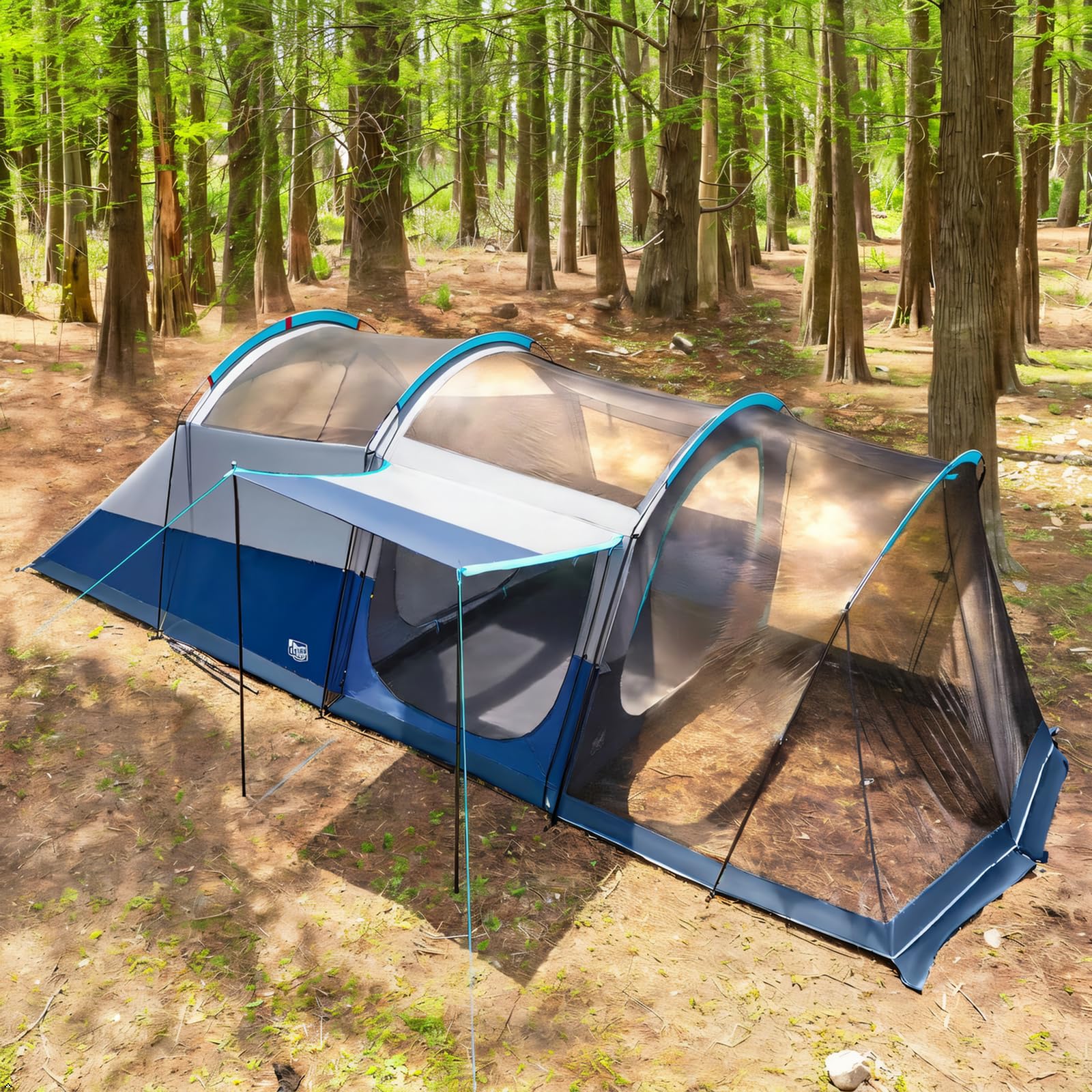
The Timber Ridge 8 Person Tunnel Tent takes a different approach to family camping space: instead of a wide cabin, it uses a long tunnel shape measuring 20 by 8 feet with a 76-inch center height. The front section functions as a screened room or living area, while the rear serves as the sleeping compartment. This layout is ideal for families who want a bug-free zone for eating and hanging out without sealing themselves into the sleeping area all day. The wind-resistant tunnel shape performs better in gusty conditions than boxy cabin tents of similar volume.
The weather protection is respectable for a mid-range tent. The 66D fabric has a water-resistant coating, and the removable rainfly adds an extra layer. Users report the floor kept the interior dry despite standing in 2 inches of water, and the tent withstood strong winds without collapsing. The front door window is usable in light rain, but the rainfly is not full-coverage across the entire tunnel length — the screened section relies on its own coating for weather protection. The zippers and seams are well-constructed, contributing to the overall dry performance reported by multiple owners.
Setup is straightforward with color-coded poles and illustrated instructions, taking about 15 minutes with two people. The full mesh ceiling, windows, and doors create excellent cross-ventilation, and on clear nights you can unzip the rainfly to stargaze from your sleeping bag. The built-in E-port allows you to run an extension cord inside for electronics or a fan. At 32 pounds, it is heavy but manageable for car camping. The main limitation is the tunnel shape — the interior feels narrower than a cabin tent of the same capacity, so fitting multiple queen air mattresses side by side is tight.
Why it’s great
- Screened room offers bug-free living space separate from sleeping area
- Tunnel shape handles windy conditions better than cabin tents
- Full mesh ceiling for stargazing and superior ventilation
Good to know
- Narrower interior than cabin tents — queen mattresses fit side by side but not with much extra room
- Rainfly does not fully cover the screened room section
9. GoHimal 8 Person Dome Tent

The GoHimal 8 Person Dome Tent is the entry-level option for families who want a big tent without a big investment. The dome shape measures 14 by 8 feet with a 76-inch center height, fitting three queen air mattresses or eight sleeping bags. The PU2000mm waterproof coating on the 190T ripstop polyester is actually a higher hydrostatic head rating than many tents costing twice as much — it handles sustained rain better than you would expect at this price point. Users report no leaks after two days of rain, which is impressive for the budget tier.
The dome design is the main spatial compromise. Unlike cabin tents with straight walls, the GoHimal’s walls slope inward from the peak, meaning the usable perimeter space is reduced. Sleeping bags near the edges will brush against the tent walls, which can lead to condensation transfer. The single large mesh door and four mesh windows provide decent ventilation, but one side wall has no window — a design choice that reduces cross-breeze, especially noticeable in humid climates like Florida where several users wished all walls had screened openings.
Setup takes about 10 minutes with two people, and the included rainfly adds important weather protection. The fiberglass poles are standard for the price range, and the carry bag is compact enough to stow easily. The stakes bent after multiple uses, which is common at this price point. For families who camp a few times a year in fair weather and want to spend their money on camping experiences rather than gear, the GoHimal offers solid waterproof specs and enough room to sleep the family without breaking the bank. Just know that the dome walls limit how much of that floor area you can actually use.
Why it’s great
- PU2000mm coating outperforms many pricier tents in rain resistance
- Quick 10-minute setup with straightforward assembly
- Good value for entry-level family camping
Good to know
- Dome walls reduce usable floor space near the edges
- One wall lacks a window, limiting cross-breeze
FAQ
How many people actually fit in a 10-person tent?
Can I use a big camping tent in the rain without a rainfly?
What is the best tent shape for windy conditions?
Final Thoughts: The Verdict
For most users, the big tent for camping winner is the Core 12 Person Cabin Tent because it offers the best combination of straight-wall standing room, reliable weather protection with taped seams, and enough square footage to comfortably sleep a large family without feeling cramped. If you want the convenience of instant setup and don’t mind buying a separate rainfly, grab the Coleman 8/10 Person Instant Tent. And for a camping experience where sleep quality matters most — especially with light-sensitive sleepers or young kids — nothing beats the Ever Advanced 10 Person Blackout Tent with its Dark Rest Technology.