
Our readers keep the lights on and the weekend projects moving. As an Amazon Associate, I earn from qualifying purchases.
A cutting garden needs varieties that don’t quit after one harvest. The best annuals for this job regrow from the base after snipping, producing wave after wave of stems from spring through frost. Whether you are filling a vase for your kitchen table or supplying a weekly bouquet habit, the right seed mix determines whether you get a handful of blooms or months of cutting material.
I’m Rikta — the co-founder and writer behind FitlyFast. This guide compiles hundreds of hours of analyzing seed germination reports, bloom timelines, and customer growth data to find the annuals that deliver the heaviest, longest vase harvest for the effort invested.
Below you will find the seven seed packets and mixes that consistently produce the most cuttable stems per square foot, ranked by real-world performance across USDA zones. Whether you want a single zinnia variety or a curated blend of multiple species, this guide to the best annuals for cut flowers will help you pick the right packet for your garden.
How To Choose The Best Annuals For Cut Flowers
Not every annual makes a good cut flower. Some stems flop in water within hours, others bloom once and stop. The traits that separate a reliable cutting annual from a garden-only plant come down to a few measurable characteristics you can check before buying.
Cut‑and‑Come‑Again Growth Habit
Varieties labeled “cut and come again” produce new flowering stems from lower leaf nodes after the central stem is harvested. Zinnias and cosmos both exhibit this behavior strongly, while many marigolds and petunias do not. A cut‑and‑come‑again annual increases your total harvestable stems by 3x to 5x over a single flush variety, making it the single most important trait for cutting gardens.
Stem Length and Rigidity
A cut flower needs a stem at least 12 inches long to sit properly in a standard vase without looking stunted. Look for seed packets that list mature plant height of 24 inches or more. Stems should also hold themselves upright — floppy stems that need staking in the garden also wilt faster in water. Annuals with thicker, semi‑woody stems like zinnias and cosmos outperform thin‑stemmed species like alyssum in vase life.
Species Diversity in Pre‑Mixed Packets
Pre‑mixed seed packets offer convenience, but the mix matters. Good cutting‑garden blends include species with different bloom shapes (round zinnias, daisy‑style cosmos, spike‑form larkspur) and staggered bloom times so you are never waiting for the next flush. Avoid mixes heavy on filler species like baby’s breath unless you specifically want those — the vase value comes from the showy focal flowers, not the wispy accents.
Quick Comparison
On smaller screens, swipe sideways to see the full table.
| Model | Category | Best For | Key Spec | Amazon |
|---|---|---|---|---|
| Sweet Yards Zinnia Cut & Come Again | Zinnia | Best Overall | 4,000 seeds / 1 oz | Amazon |
| Eden Brothers All Annual Mixed | Mixed | Species Variety | 20 species, 120,000+ seeds | Amazon |
| Organo Republic Zinnia | Zinnia | Peak Germination | 3,800+ seeds, 90%+ rate | Amazon |
| Sweet Yards Cut Flower Garden | Mixed | Chaos Cutting Garden | 7,500+ seeds, 17 species | Amazon |
| Outsidepride Cosmos Sensation Mix | Cosmos | Tall, Drought‑Tolerant | 1 lb, 36–60 inch height | Amazon |
| Marde Ross Mixed Zinnia | Zinnia | Entry‑Level | 300 seeds, 24–36 inch | Amazon |
| IPOPU Artificial Snapdragon | Artificial | Zero‑Maintenance | 8 stems, 29.2 inch silk | Amazon |
In‑Depth Reviews
1. Sweet Yards Zinnia Cut & Come Again Mix

This 1‑ounce packet holds over 4,000 pure live zinnia seeds, enough to cover 125 square feet of cutting garden. The “cut and come again” label is not marketing — every harvested stem triggers two or three new shoots from the base, extending your bloom window from late spring well into fall. Gardeners in zone 7b report continuous flowering from late May onward with just routine deadheading.
Multiple verified reviews confirm near‑100 percent germination when sown directly after the last frost. Seeds sprout within 5 to 10 days, and plants reach 5 feet tall in good soil, producing stems long enough for any standard vase. The color mix leans toward warm, cheerful shades — pinks, oranges, yellows, and reds — with no single color dominating the packet.
For a dedicated cutting garden, this is the highest‑value zinnia seed available per dollar. The reusable zipper pouch keeps leftover seeds viable for at least three years when stored in a cool, dark place. Buyers report using the same packet for multiple seasons with no drop in germination rate.
Why it’s great
- Over 4,000 seeds per ounce covers 125+ sq ft
- True cut‑and‑come‑again habit for months of harvests
- Consistent near‑100% germination in verified reviews
Good to know
- May need staking if grown in rich, nitrogen‑heavy soil
- Single zinnia species — no mix of other flower types
2. Eden Brothers All Annual Wildflower Mixed Seeds
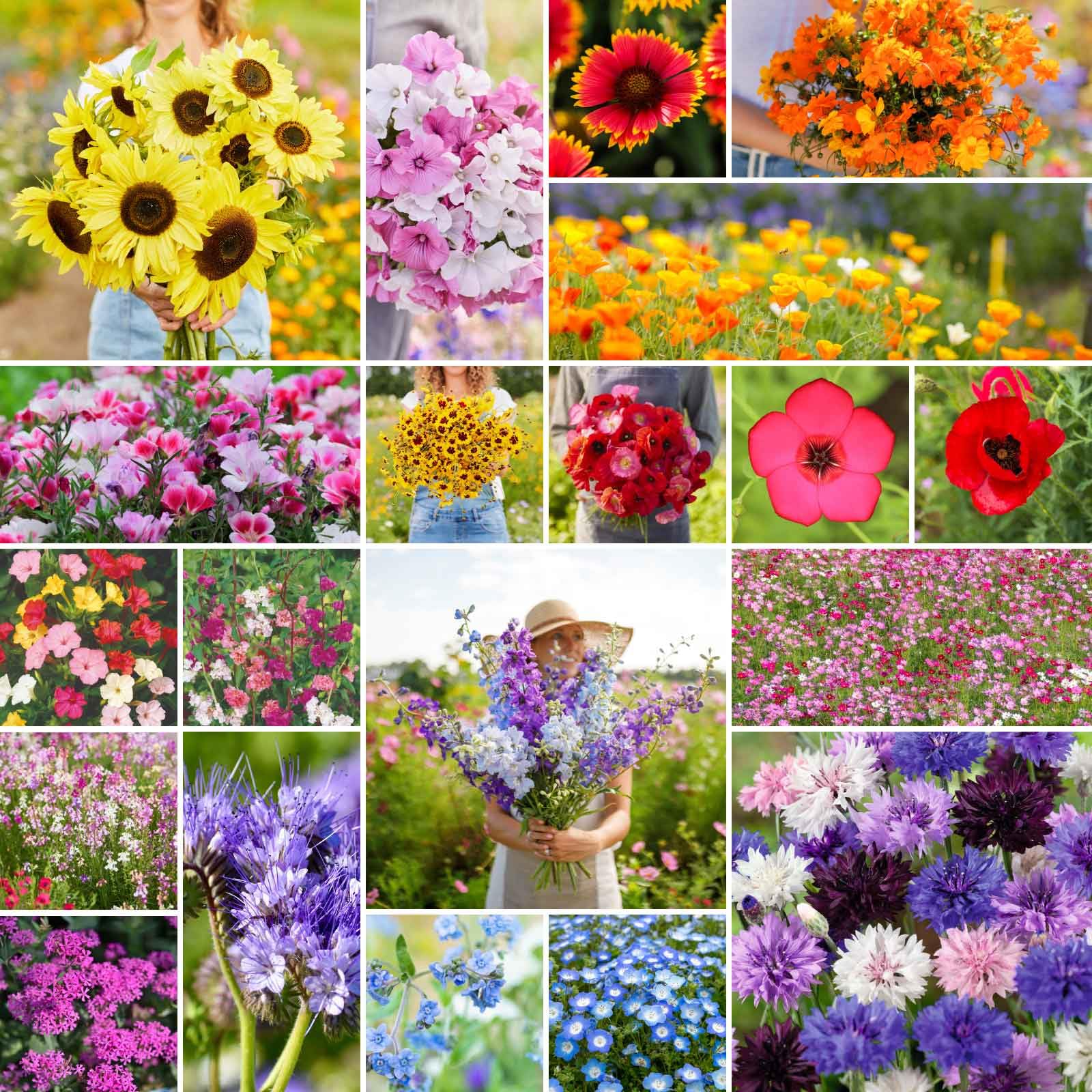
Eden Brothers packs 20 different annual species into a 4‑ounce bag, including cosmos, cornflower, rocket larkspur, and wild annual sunflower. This is not a monoculture — you get tall focal flowers, mid‑height accents, and low fillers all in one mix. The blend covers 250 to 500 square feet, making it ideal for larger cutting patches or meadow‑style gardens where you want multiple bloom shapes in every vase.
Reviews highlight fast germination (sprouts visible within a week) and strong performance in zones 3 through 10. The mix includes both heat‑tolerant and cool‑season annuals, so some species bloom early while others peak in late summer. Buyers report a chaotic but beautiful spread of color that butterflies and bees visit constantly.
Because this is a true wildflower blend rather than a refined cutting mix, you will get some filler species that produce shorter stems. That is not a flaw — it creates natural volume in arrangements. But if you want every seed to produce a 24‑inch vase stem, a zinnia‑only packet is a tighter fit for that goal.
Why it’s great
- 20 distinct species for diverse vase arrangements
- Large 4‑oz bag covers up to 500 sq ft
- Non‑GMO, heirloom, and organic seeds included
Good to know
- Not all species produce long cutting stems
- Some filler varieties included over focal flowers
3. Organo Republic Zinnia Seeds Pack
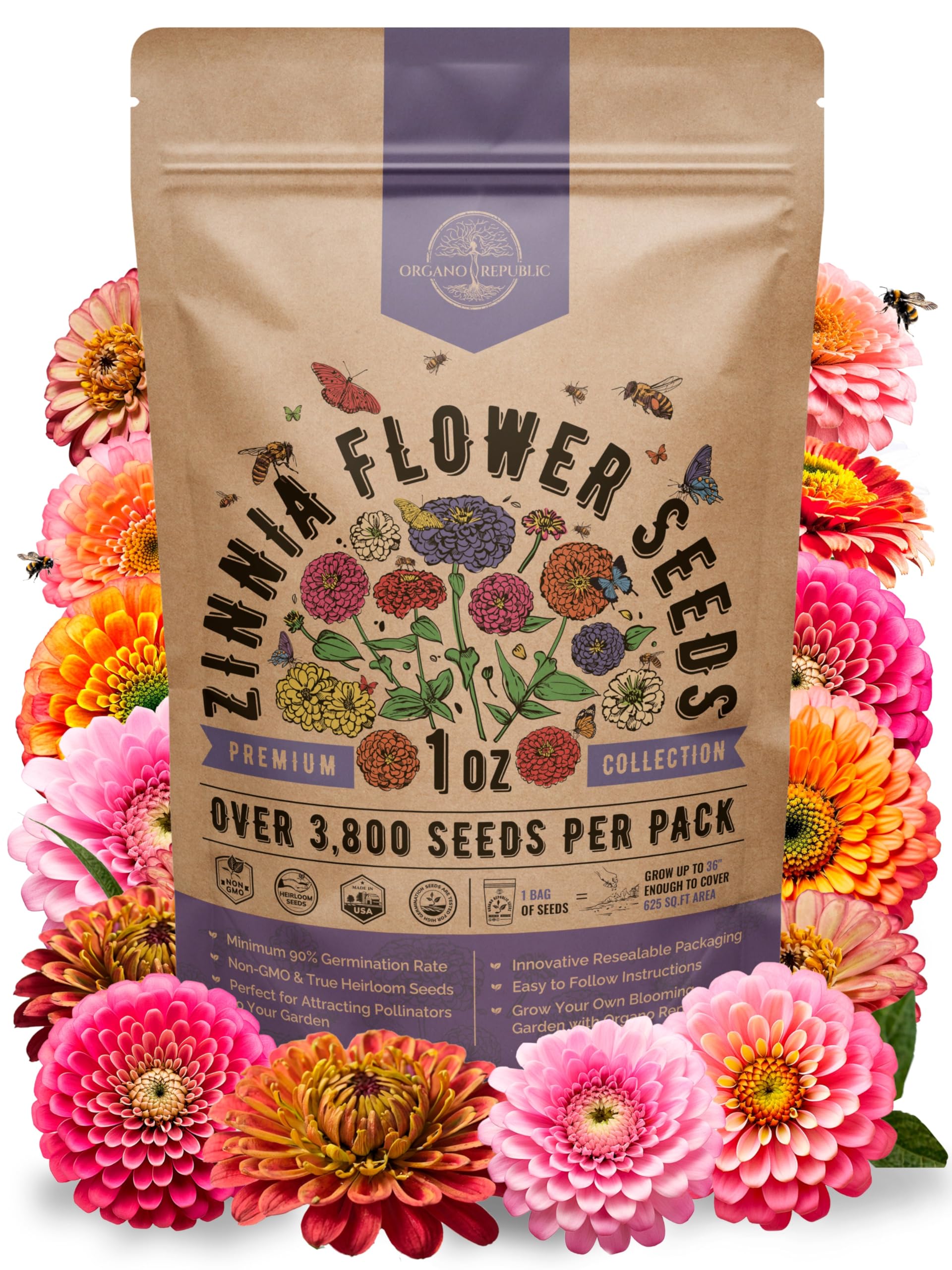
Organo Republic’s 1‑ounce packet contains over 3,800 non‑GMO heirloom zinnia seeds with a tested germination rate above 90 percent. Multiple reviews confirm seeds sprout in as little as two days under optimal conditions, with one user reporting a 95 percent germination rate across a full bed. The blooms come in shades of purple, pink, green, and orange — a cooler palette than the warm mix from Sweet Yards.
The packet includes a waterproof, resealable bag with a QR code linking to an online growing guide. Each seed is sourced from domestic US farmers and packaged in Florida, so you are not getting stale inventory from overseas suppliers. The 8‑inch expected plant height listed on the spec sheet is conservative — real gardeners report 2‑ to 3‑foot plants with proper spacing of 3 to 4 inches between seedlings.
This is the best choice for gardeners who prioritize germination reliability above all else. The 90 percent+ guarantee is backed by rigorous testing, and the heirloom classification means you can save seeds from the strongest plants for next year. Beginners especially benefit from the low failure rate.
Why it’s great
- 90%+ lab‑tested germination rate
- Heirloom seeds can be saved for future seasons
- Waterproof storage bag with QR growing guide
Good to know
- Cooler color palette may not suit warm‑tone lovers
- Listed height is shorter than actual garden performance
4. Sweet Yards Cut Flower Garden Seeds Mix
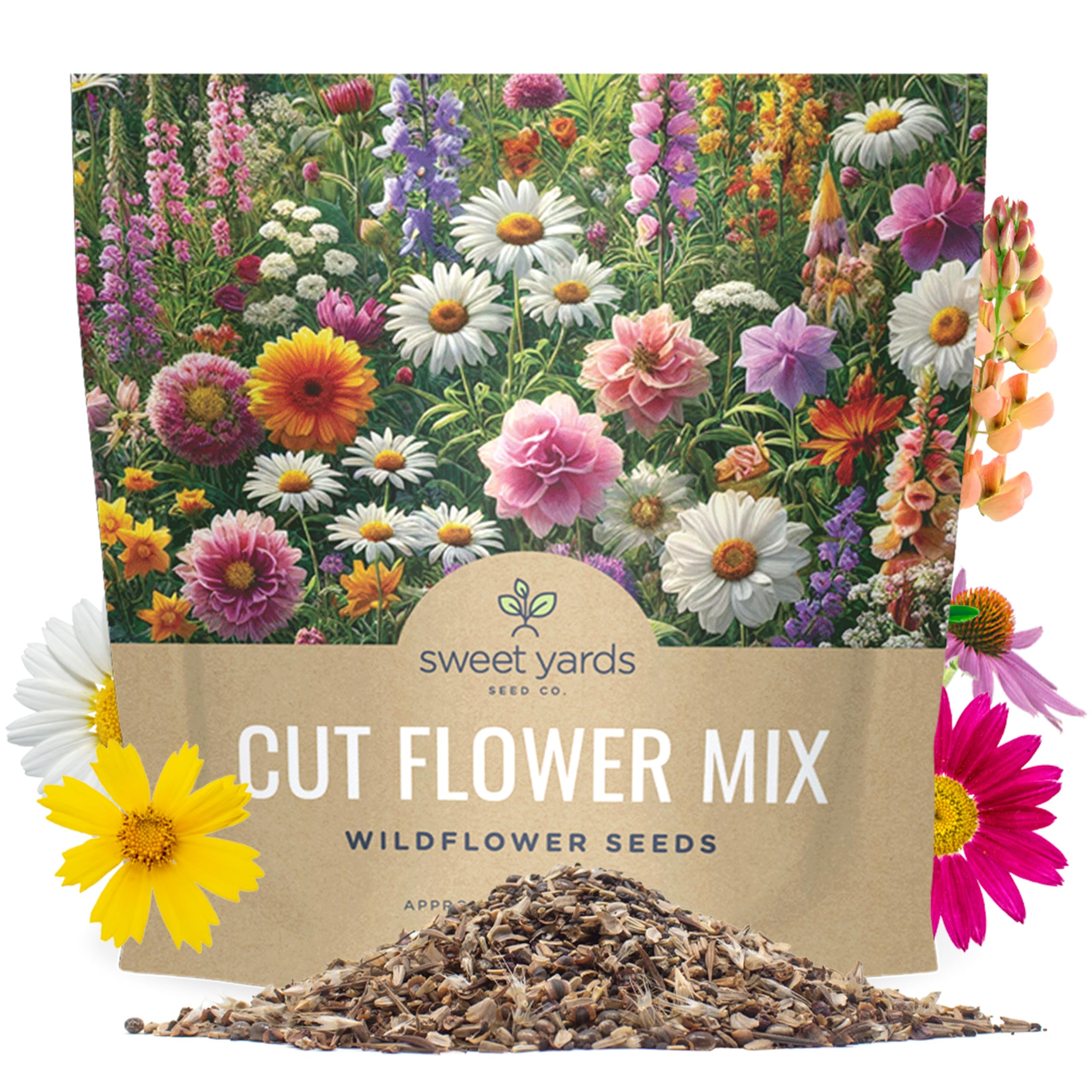
This extra‑large 1‑ounce packet packs 7,500+ seeds from 17 distinct species, including China aster, cosmos, blanket flower, Iceland poppy, and purple coneflower. Unlike many wildflower blends that prioritize filler species, this mix leans heavily on focal‑worthy annuals that produce substantial stems. The species list reads like a florist’s order sheet — larkspur, shasta daisy, and clarkia all make appearances.
Customer feedback highlights the ease of sowing: gardeners report simply scattering seeds on tilled soil and getting rapid germination. The mix is designed to bloom from spring through fall, with early‑blooming poppies giving way to mid‑summer cosmos and late‑season asters. The variety ensures you always have something to cut, even during the awkward gap between spring bulbs and summer perennials.
Because this mix includes both annuals and short‑lived perennials, you may see some species return the following year. The packaging includes a reusable zipper and full planting instructions. At this seed count and species diversity, it is one of the most complete single‑packet cutting garden solutions available.
Why it’s great
- 17 species with staggered bloom times for continuous harvest
- 7,500+ seeds cover 150 sq ft of garden
- Includes long‑stemmed focal flowers like larkspur and aster
Good to know
- Some species are short‑lived perennials, not true annuals
- Requires full sun for best stem length and bloom density
5. Outsidepride Cosmos Sensation Mix
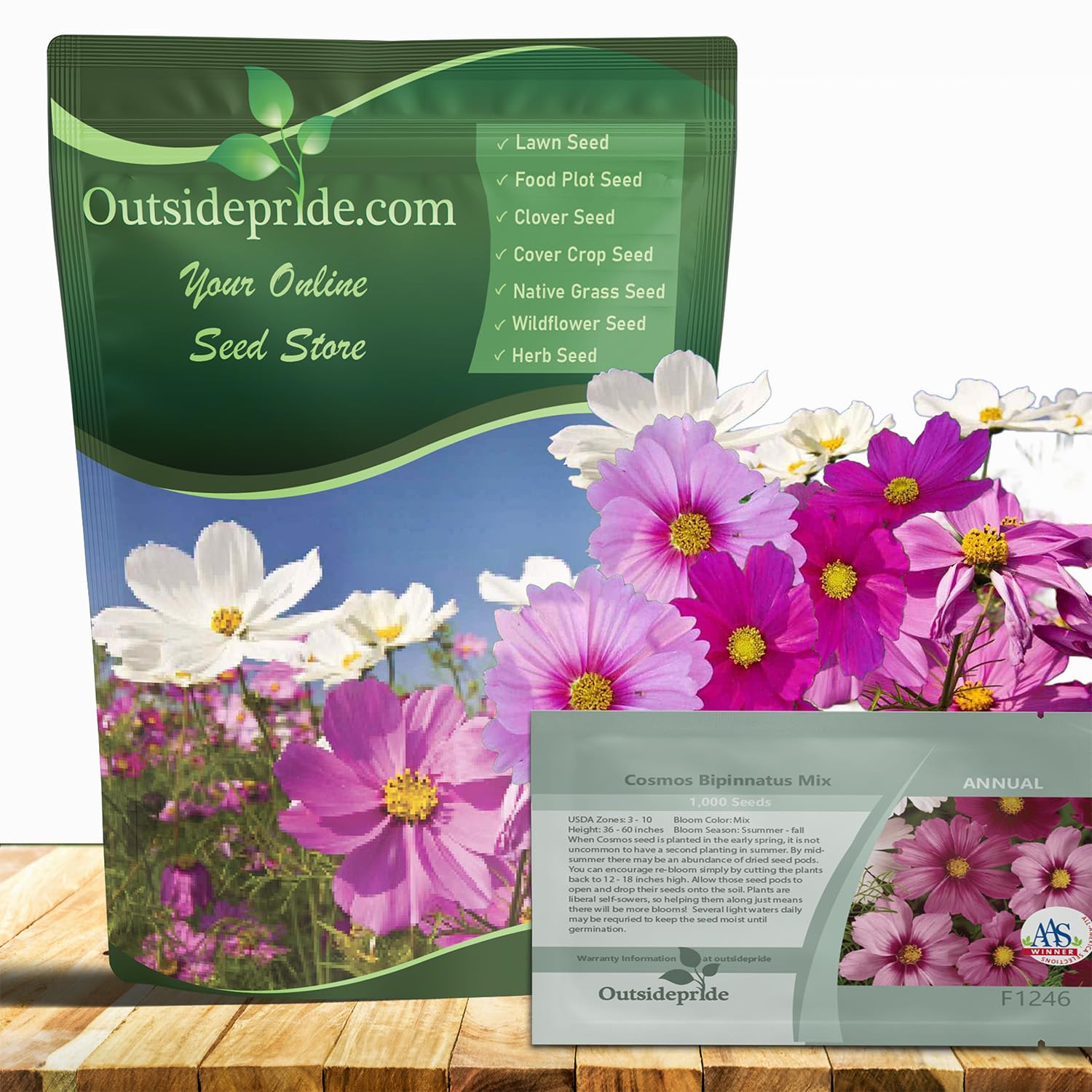
Cosmos bipinnatus is one of the most forgiving cut flowers you can grow, and this 1‑pound packet from Outsidepride delivers an AAS‑award winning mix of pink, white, and maroon blooms on stems that reach 36 to 60 inches tall. The plants require almost no water once established — reviews mention thriving with little to no watering even in dry spells — and they bloom repeatedly until the first hard frost.
Customers report sprouts appearing in under a week with minimal effort: just cover the seeds with soil and water. The mix attracts butterflies and bees heavily, making it a dual‑purpose choice for gardeners who want both cut flowers and pollinator support. At a recommended planting rate of 15 pounds per acre, this 1‑pound bag covers a substantial area without needing to supplement with other packets.
One review notes a lower germination rate than expected, so you may want to sow densely. But the plants that do germinate grow aggressively and produce dozens of stems each. For a low‑maintenance cutting garden that does not demand daily watering, cosmos is the clear winner, and this packet offers the best cost per seed in the premium tier.
Why it’s great
- Drought‑tolerant — thrives with minimal watering
- 36‑ to 60‑inch stems for tall vase arrangements
- AAS award‑winning variety with proven genetics
Good to know
- Some customers report lower germination than expected
- Cosmos stems are thinner and more delicate than zinnias
6. Marde Ross & Company Mixed Zinnia Seeds
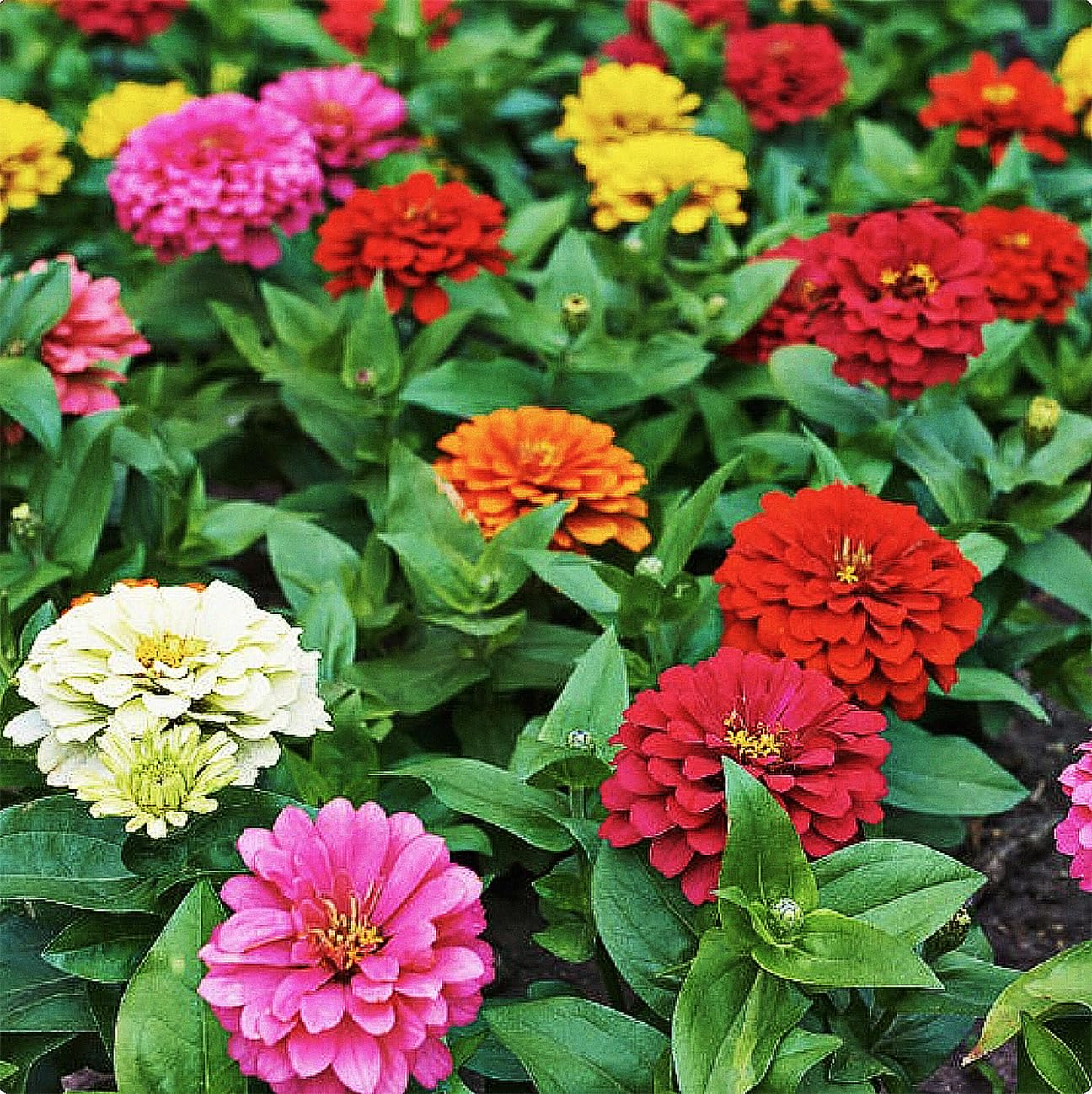
This 300‑seed packet from Marde Ross & Company is a solid entry point for gardeners who want to try zinnias without committing to a bulk quantity. The seeds produce dahlia‑style blooms in rich, warm colors on stems 24 to 36 inches tall. A California nursery since 1985, Marde Ross temperature‑controls its seed storage to preserve peak freshness, which shows in the germination reports — most reviews note sprouts within 6 to 8 days.
One customer in South Florida reported 2‑foot growth and flowers at 8 weeks despite heavy rain, indicating good disease resistance. Another gardener simply shook the seeds onto bare ground and got strong germination without any soil preparation. The packet contains about 300 seeds, which is enough for a modest 4×4 foot bed or a few large containers.
At this seed count, you will need to be more selective about where you plant, and the smaller quantity means fewer stems for weekly cutting. But for a first‑time grower or a small space gardener, this is a low‑risk introduction to the category. The blooms are true cut‑and‑come‑again types, so each plant will still produce multiple flushes.
Why it’s great
- Trusted California nursery with temperature‑controlled storage
- Dahlia‑style blooms for full, ruffled flower heads
- Forgiving for no‑till or scatter‑and‑grow sowing
Good to know
- Only 300 seeds — small compared to bulk packets
- Single variety mix, no species diversity
7. IPOPU Artificial Snapdragon Flowers

This set includes 8 artificial snapdragon stems made from high‑quality silk with plastic stems reinforced by internal iron wire. Each stem measures 29.2 inches tall and can be bent, trimmed, or arranged to fit any vase. The white color option is popular for wedding centerpieces and home decor where a clean, minimalist look is desired — reviews mention using them for bridal bouquets with excellent results.
Unlike real annuals, these require zero water, no sunlight, and no deadheading. The silk construction means the petals do not fade or wilt, and the iron‑wire core allows you to shape the stems into arches or curves for dynamic floral designs. One reviewer noted they look realistic enough to fool house guests, though another pointed out they are still visibly fake from a few feet away.
This is the only non‑living option in the lineup, and it serves a very different purpose. If you want the look of tall delphinium‑style flowers in a spot where real annuals cannot survive — low light, indoor desks, rental properties — these are a smart alternative. They will outlast any seed packet by years, but they will never produce new stems or fragrance.
Why it’s great
- Zero maintenance — never wilts or needs watering
- Adjustable iron‑wire stems for custom arrangements
- Good for indoor spaces without natural light
Good to know
- Visibly fake from close distance
- No fragrance or real flower texture
FAQ
What is the difference between annuals and perennials for cut flowers?
How often should I cut zinnias to keep them producing?
Can I grow cut flower annuals in containers?
Final Thoughts: The Verdict
For most users, the annuals for cut flowers winner is the Sweet Yards Zinnia Cut & Come Again Mix because it combines the highest seed count per packet with proven cut‑and‑come‑again genetics and consistent germination. If you want maximum species diversity for varied vase arrangements, grab the Eden Brothers All Annual Mixed Seeds. And for a low‑maintenance, drought‑tolerant garden that keeps cutting into October, nothing beats the Outsidepride Cosmos Sensation Mix.