
Our readers keep the lights on and the weekend projects moving. As an Amazon Associate, I earn from qualifying purchases.
Choosing the wrong substrate can crash your water parameters before your fish even settle in. The gravel you pick determines how waste breaks down, how rooted plants feed, and whether your tank stays clear or turns into a cloudy mess. This is not just decoration — it is the biological floor of your entire aquatic system.
I’m Rikta — the co-founder and writer behind FitlyFast. I have spent weeks pulling apart customer reviews, researching grain sizes, and comparing how different types of natural versus manufactured gravels behave under real aquarium conditions to build this guide.
Whether you keep live plants, sensitive bottom-dwellers, or just want a tank that looks clean for weeks, finding the right best aquarium gravel means understanding grain size, weight per gallon, and whether the rock is truly inert.
How To Choose The Best Aquarium Gravel
Gravel is the first thing you layer into an empty tank, and it sets the stage for every biological process that follows. Picking the wrong grain size or material means fighting algae, cloudy water, or stressed fish from the start. Here is what actually matters.
Grain Size: Fine Sand vs Pea Gravel vs Large Pebbles
Grain size controls how waste moves. Fine sand less than 1/8 inch traps debris in the top layer, creating anaerobic pockets if not stirred. Pea gravel around 1/4 to 3/8 inch lets water flow through while holding plants in place. Large pebbles over 1 inch look dramatic but leave gaps where uneaten food sinks out of reach — your filter misses it and ammonia spikes.
Weight Per Gallon and Bed Depth
A standard planted tank needs roughly 1 to 2 pounds of gravel per gallon of water to achieve a two-to-three inch depth. A bag that says 5 pounds covers roughly a 5-gallon tank. For a 20-gallon tank, plan on two 20-pound bags. Buying based on visual volume rather than weight leads to shallow beds that expose plant roots.
Natural vs Dyed or Polished Gravel
Natural river rock is inert — it will not leach minerals, fade, or peel. Dyed gravel uses a painted coating that can chip over time, especially when scrubbed. Polished gravel is tumbled for smoothness but sometimes carries a waxy or oily residue that must be removed with boiling water and vinegar before it hits the tank. If your fish are sensitive or you keep bottom-scavenging species like corydoras, natural uncoated gravel is the safer bet.
Quick Comparison
On smaller screens, swipe sideways to see the full table.
| Model | Category | Best For | Key Spec | Amazon |
|---|---|---|---|---|
| Aqua Natural Galaxy Sand | Fine Sand | Dark aquascapes & corydoras | 20 lb, 0.5-1mm black sand | Amazon |
| imagitarium Blue Jean | Dyed Gravel | Bright colored community tanks | 20 lb, classic pea gravel | Amazon |
| YISZM River Rocks | Small Gravel | Small tanks & plant drainage | 20 lb, 1/4 inch multicolor | Amazon |
| FANTIAN 20 lbs Pea Gravel | Natural Gravel | Natural aquariums & succulents | 20 lb, 1/4 inch mixed colors | Amazon |
| Polished River Rock 18lbs | Polished Pebbles | Large tanks & turtle habitats | 18 lb, 1-2 inch tumbled | Amazon |
| Pulovin Pea Gravel | Small Gravel | Potted plants & small bowls | 5 lb, 3/8 inch mixed colors | Amazon |
| FANTIAN 5 lbs Large Pebbles | Large Pebbles | Reptiles, garden paths & décor | 5 lb, 2-3 inch river rock | Amazon |
In‑Depth Reviews
1. Aqua Natural Galaxy Sand 20lb — Black

This is the substrate that makes planted aquascapes pop. The deep black color creates high contrast against green plants and bright fish, and the fine grain behaves like sand without compacting into a hard layer. Each granule has a subtle metallic shimmer that catches light from your aquarium LED, giving the entire tank floor a natural sparkle effect without looking artificial.
Ethically sourced in the USA, the bag arrives with minimal dust. Rinsing still matters — customers report that two to three washes in a bucket clears the residual fines, and after that the water stays crystal clear. The fine texture is soft enough for corydoras and khuli loaches to sift through without damaging their barbels. One 20-pound bag covers roughly a 20-gallon tank at one to two inch depth.
Some buyers found the bag slightly delayed due to label damage during shipping, but the product itself consistently earns five-star reviews for its clean, uniform grain and natural appearance. If you want the darkest possible background that does not look synthetic, this is the right call.
Why it’s great
- Deep black with natural shimmer — no painted coating
- Soft fine grain safe for bottom-dwelling fish
- Sustainably sourced in the USA
Good to know
- Requires thorough rinsing (2-3 times) before use
- Not ideal for heavy root-feeding plants without root tabs
2. imagitarium Blue Jean Aquarium Gravel, 20 lbs
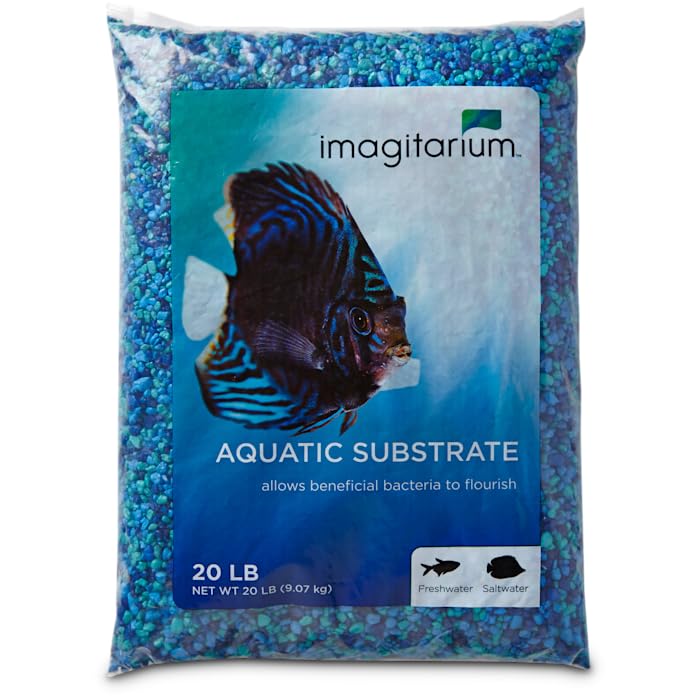
If you are building a bright community tank and want a colored substrate that stays vibrant, this blue jean mix delivers the look reliably. The gravel is a standard pea-gravel size — roughly 1/8 to 1/4 inch — which provides good water flow and supports biological filtration. The color is a blend of blue tones that mimics denim, and customers report the hue holds well even after several years in the tank.
The bag comes relatively clean with minimal dust, though some buyers noted paint chipping primarily from the last quarter of the bag and from aggressive scrubbing. Gentle rinsing without rubbing the stones together reduces this. The gravel promotes healthy bacteria growth according to the manufacturer, and many users mix it with black or natural gravel for a layered look.
One experienced aquarist switched from white rocks to this blue jean mix and described it as the best aesthetic decision for their tank. The color works especially well under LED lighting and does not wash out the way lighter substrates can. If you are after a statement floor that still functions as biological media, this is a solid candidate.
Why it’s great
- Vibrant blue color holds for years without fading
- Classic pea gravel size supports biofiltration
- Mixes well with natural or black gravel
Good to know
- Dyed coating can chip with rough handling
- Not suitable for tanks with very sensitive species
3. YISZM 20lbs Natural River Rocks, 1/4 Inch Gravel

This bag contains real, uncoated river pebbles in a tight 1/4 inch size range — perfect for small tanks, betta bowls, and planters where larger gravel looks out of proportion. The stones are naturally multicolored with browns, tans, grays, and occasional warmer tones. Because they are not polished or dyed, there is zero risk of paint flaking or waxy residue entering the water.
The 20-pound bag provides good coverage for a 10 to 15 gallon tank at a two-inch depth. Customers use this gravel for everything from betta tanks to resin art crafts and container fountains. It requires minimal rinsing — just enough to knock off surface dust. The small diameter makes it suitable for use as drainage rock in potted plants and for preventing fungus gnats in soil.
Some buyers feel the price per pound is high compared to bulk landscape gravel, but the convenience of a clean, aquarium-ready product saves the sorting and washing effort required for hardware store gravel. For a natural-looking substrate that blends into any aquascape without competing for attention, this works well.
Why it’s great
- Natural uncoated river rock — zero chemical leaching
- Small 1/4 inch size ideal for nano tanks and plants
- Works as drainage layer for potted plants
Good to know
- Price per pound is higher than bagged landscape rock
- May need multiple bags for larger aquariums
4. FANTIAN 20 lbs Natural Fish Tank Gravel, 1/4 Inch Pea Gravel

This is an honest bag of natural river gravel — no dyes, no polish, no surprises. The stones range around 1/4 inch in diameter, making them small enough for a planted tank but large enough to avoid getting sucked into a standard gravel vacuum. The mixed color palette includes shades of brown, tan, grey, and black that read as natural and organic in the tank.
The 20-pound bag covers a 10 to 15 gallon tank adequately, but some customers with larger setups needed an extra small bag to reach the depth required for rooted plants. Washing is straightforward: two to three rinses in a bucket until the water runs clear. The gravel settles quickly and does not cloud the tank after the initial fill.
Several buyers use this gravel in outdoor pots for drainage, and it performs well for that purpose too. The natural appearance hides detritus well — the multicolor pattern makes fish waste less visually obvious than it would be on a solid black or white substrate. For a dependable, affordable natural gravel that does not try to be fancy, this is a strong choice.
Why it’s great
- Natural river rock — no coating, no paint, no leaching
- 1/4 inch works with gravel vacuums and plant roots
- Multicolor pattern hides waste visually
Good to know
- One bag may not be enough depth for a 20-gallon tank
- Dry color is lighter than the damp photo shows
5. Polished River Rock 18lbs — 1-2 Inch Natural Pebbles

These are tumbled river rocks in the 1 to 2 inch range — smooth, polished, and free of sharp edges. The size makes them unsuitable as a full substrate for most community tanks because waste falls into the gaps, but they excel in turtle tanks, reptile enclosures, and large cichlid setups where the animals need a smooth surface that will not damage their shells or skin.
The polishing process leaves a waxy residue on some stones. Customers consistently advise boiling the rocks or soaking them in a vinegar solution before adding them to an aquarium — otherwise a waxy film can form on the water surface. This extra step is standard for any tumbled stone and is not a defect, but it does add prep time.
For outdoor use as garden accents, pond lining, or pathway edging, these rocks are ready out of the bag and look attractive. The mixed natural colors include browns, blacks, and whites. If you need large, smooth stones for a heavy-duty aquarium or landscaping project, the 18-pound bag offers decent value compared to buying them individually.
Why it’s great
- Smooth polished surface safe for turtles and cichlids
- Natural multicolor looks authentic in large tanks
- Versatile for aquarium, terrarium, and garden use
Good to know
- Must be boiled or vinegar-soaked to remove waxy polish
- Large size traps debris — not ideal for planted community tanks
6. Pulovin 5 lbs Pea Gravel — 3/8 Inch Decorative Pebbles

This 5-pound bag targets small-scale use — a single desktop bowl, a plant vase, or a succulent pot. The stones run roughly 3/8 to 1/2 inch, which is slightly larger than traditional pea gravel. They are colorful with a glossy finish that catches light well, making them a strong choice for decorative glass containers where the gravel will be visible rather than submerged.
A couple of customers noticed that some stones appear to be painted rather than naturally colored. If you plan to use this gravel in an aquarium with sensitive fish, that painted coating is a risk factor — dyed stones can chip into the water column over time. The manufacturer advises washing two to three times before first use, which is standard practice.
For top-dressing potted plants and preventing soil splatter during watering, these pebbles perform well. The 5-pound bag covers the surface of a medium planter with a thin layer. If your only need is a small decorative quantity for a non-aquatic setup, this is a budget-friendly way to get a colorful finish without buying 20 pounds of gravel you will not use.
Why it’s great
- Shiny, colorful appearance great for display vases
- Small bag size avoids waste for tiny projects
- Requires minimal cleaning for plant top-dressing
Good to know
- Some stones appear painted — risk of chipping in aquariums
- 5 lbs is too little for full tank coverage beyond 5 gallons
7. FANTIAN 5 lbs Natural Aquarium Rocks — 2-3 Inch Large Pebbles
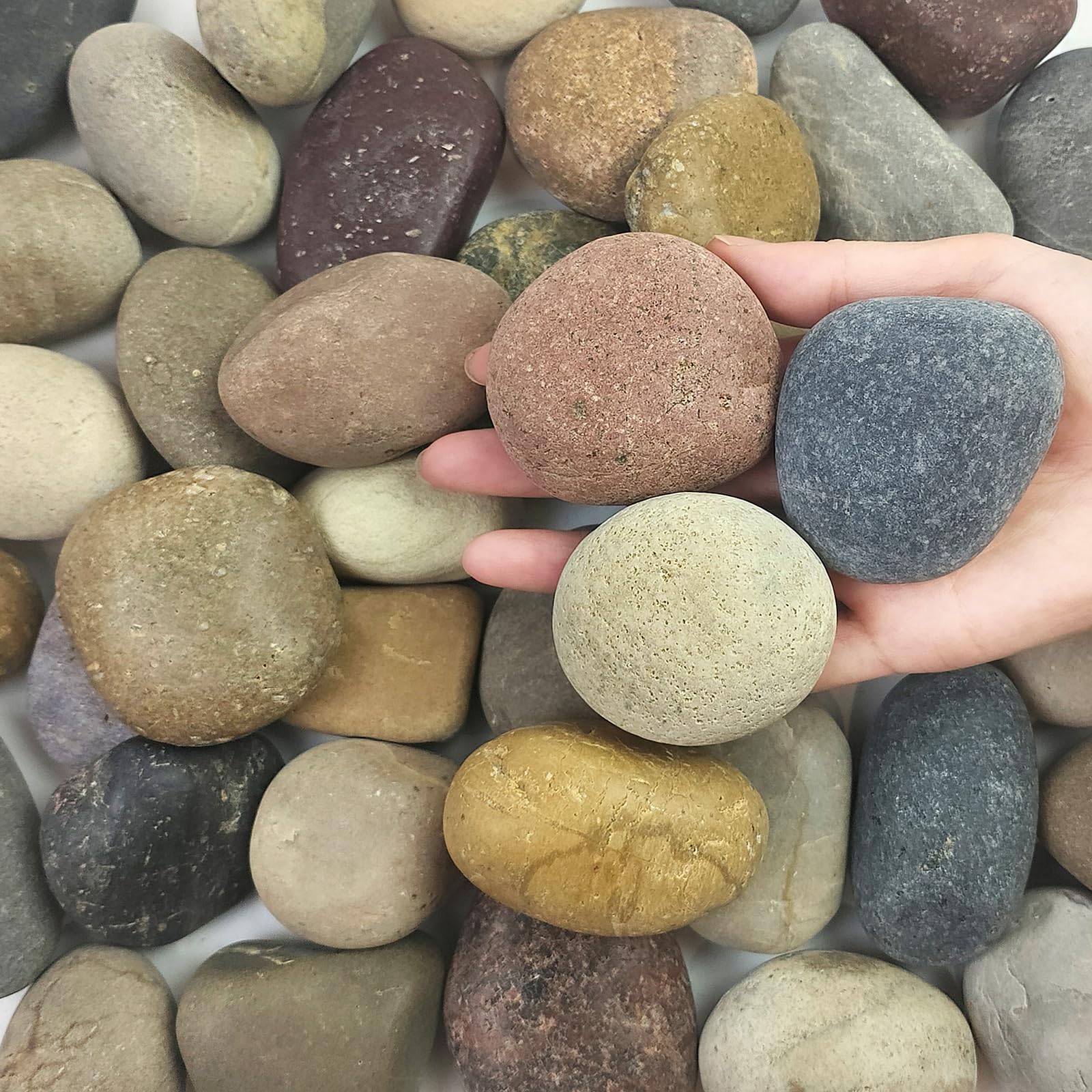
These are large, natural river rocks ranging from 2 to 3 inches — not a substrate, but accent stones. In an aquarium, they function as hardscape elements: anchor points for driftwood, hiding cave roofs, or visual breaks in a monotone gravel bed. The 5-pound bag contains roughly eight to twelve stones depending on size variation, which is enough to create a small rock formation in a 20-gallon tank.
Because they are unpolished and untreated, there is zero chemical risk to your fish. The stones are smooth enough to be safe for fish scales but have enough texture for beneficial bacteria to colonize. Customers have used them as wedding ceremony stones and garden keepsakes, which speaks to their appealing natural shape and color mix.
The main limitation is quantity — 5 pounds of 2-3 inch rocks covers very little surface area. This product is best viewed as a hardscaping add-on rather than a primary substrate. If you want a full bed of large pebbles, you will need many bags. For accent rocks, planters, or reptile setups, the price per stone is reasonable and the quality is consistent.
Why it’s great
- Large, smooth, natural river rocks — no coatings
- Versatile for aquascaping, gardens, and crafts
- Safe for reptiles and fish with no sharp edges
Good to know
- 5 lbs yields only a few stones — not a full substrate
- Overpriced per pound if used as primary gravel
FAQ
How many pounds of gravel do I need for a 20 gallon tank?
Is dyed aquarium gravel safe for fish?
Should I vacuum gravel or leave it for the nitrogen cycle?
Final Thoughts: The Verdict
For most users, the best aquarium gravel winner is the Aqua Natural Galaxy Sand because it gives you a clean, dark, natural base that works with planted tanks, sensitive fish, and low-maintenance setups without any coating risk. If you want vibrant color that stays bright for years, grab the imagitarium Blue Jean. And for a pure, uncoated natural gravel that keeps things simple, nothing beats the FANTIAN 20 lbs Pea Gravel.