
Our readers keep the lights on and the weekend projects moving. As an Amazon Associate, I earn from qualifying purchases.
The search for hiking boots that don’t crush your forefoot or turn a ridge walk into a lesson in pain tolerance ends with a proper 4E (extra-extra-wide) fit. A standard D-width boot compresses the metatarsals, numbs the toes, and ruins traction by forcing your foot to fight the upper instead of the terrain. That is the true cost of ignoring width.
I’m Rikta — the co-founder and writer behind FitlyFast. After weeks of cross-referencing last shapes, waterproofing membranes, outsole compounds, and hundreds of verified fit comments from hikers with wide feet, I have filtered the market down to the boots that actually honor the 4E measurement.
This guide compares nine models built specifically to accommodate wider forefeet and higher-volume insteps, from budget-friendly trail sneakers to premium leather expedition boots. Here is my definitive list of the best 4e hiking boots that keep your feet stable and comfortable mile after mile.
How To Choose The Best 4E Hiking Boots
A 4E boot is not simply a D-width boot stretched wider. The entire last — the mold the boot is built around — must be redesigned to ensure the midfoot and heel do not slip while the forefoot has adequate room. If the manufacturer just expands the toe box without adjusting the instep height and heel cup, you end up with heel lift and blisters.
Last Shape and Volume Distribution
The most common complaint in 4E boots is a heel that slips because the volume is too high for a low-arched foot. Brands like KEEN and Topo Athletic use a “foot-shaped” last that mirrors the natural splay of the forefoot, while Oboz and Vasque tend to offer a narrower heel combined with a wider forefoot. Try boots with locking lacing systems — a speed-hook at the top offers quick tension adjustments that can lock the heel in place without crushing the toes.
Waterproof Membrane vs. Breathability
A Gore-Tex liner adds a barrier that can trap heat. For warm-weather hikes in 4E boots, a non-waterproof version (or a boot with a membrane like KEEN.DRY or Oboz B‑DRY) breathes better. However, if you hike in wet grass, stream crossings, or persistent rain, the membrane is critical — just be prepared for the boots to run slightly warmer, which matters when you add thick wool socks to fill the 4E volume.
Outsole Traction for Wide Feet
A wider boot has a larger contact patch. Vibram Megagrip and similar compounds deliver predictable bite on wet rock, but the lug pattern must be aggressive enough to shed mud. For 4E boots that double as work or tactical footwear — like the Merrell Moab 3 8″ Zip — the tread is often more shallow for pavement use, which sacrifices grip on loose scree.
Break-In Period and Cushioning
Leather 4E boots (such as the Vasque St. Elias or Asolo TPS 535) require a break-in period because the full-grain upper moulds to your foot over 10-20 miles. Synthetic boots with foam midsoles — the New Balance Fresh Foam X Hierro or Topo Trailventure — feel comfortable immediately but sacrifice long-term durability. If you cover high mileage with a heavy pack, the structured leather boot will last longer before the midsole collapses.
Quick Comparison
On smaller screens, swipe sideways to see the full table.
| Model | Category | Best For | Key Spec | Amazon |
|---|---|---|---|---|
| KEEN Targhee 4 Mid | Premium Mid | Immediate wide-fit comfort | 620g; FUSION construction; LuftCell midsole | Amazon |
| Merrell Moab 3 GTX | Mid-Range | Zero break-in all-day wear | Gore-Tex; Vibram TC5+ outsole | Amazon |
| Oboz Sawtooth X Mid B-DRY | Premium Mid | Cold/wet conditions | Oboz B-DRY; 5mm lug depth | Amazon |
| Vasque St. Elias WP | Premium Leather | Heavy loads & durability | Full-grain leather; Vibram outsole | Amazon |
| Asolo TPS 535 LTH V EVO | Expedition | Technical backpacking | PU midsole; ANIT‑suspension system | Amazon |
| Topo Athletic Trailventure 2 WP | Lightweight | Sneaker-like feel for wide feet | 5mm drop; waterproof membrane | Amazon |
| New Balance Fresh Foam X Hierro V9 | Trail Runner | Trail running & fast hiking | Fresh Foam X midsole; Vibram Megagrip | Amazon |
| Timberland White Ledge Mid WP | Budget | All-terrain budget comfort | Seam-sealed waterproof; rubber lug outsole | Amazon |
| Merrell Moab 3 8″ Zip WP | Tactical/Work | Quick on/off & ankle support | Side zip; Vibram TC5+; 8″ height | Amazon |
In‑Depth Reviews
1. KEEN Men’s Targhee 4 Mid Height Waterproof Hiking Boots
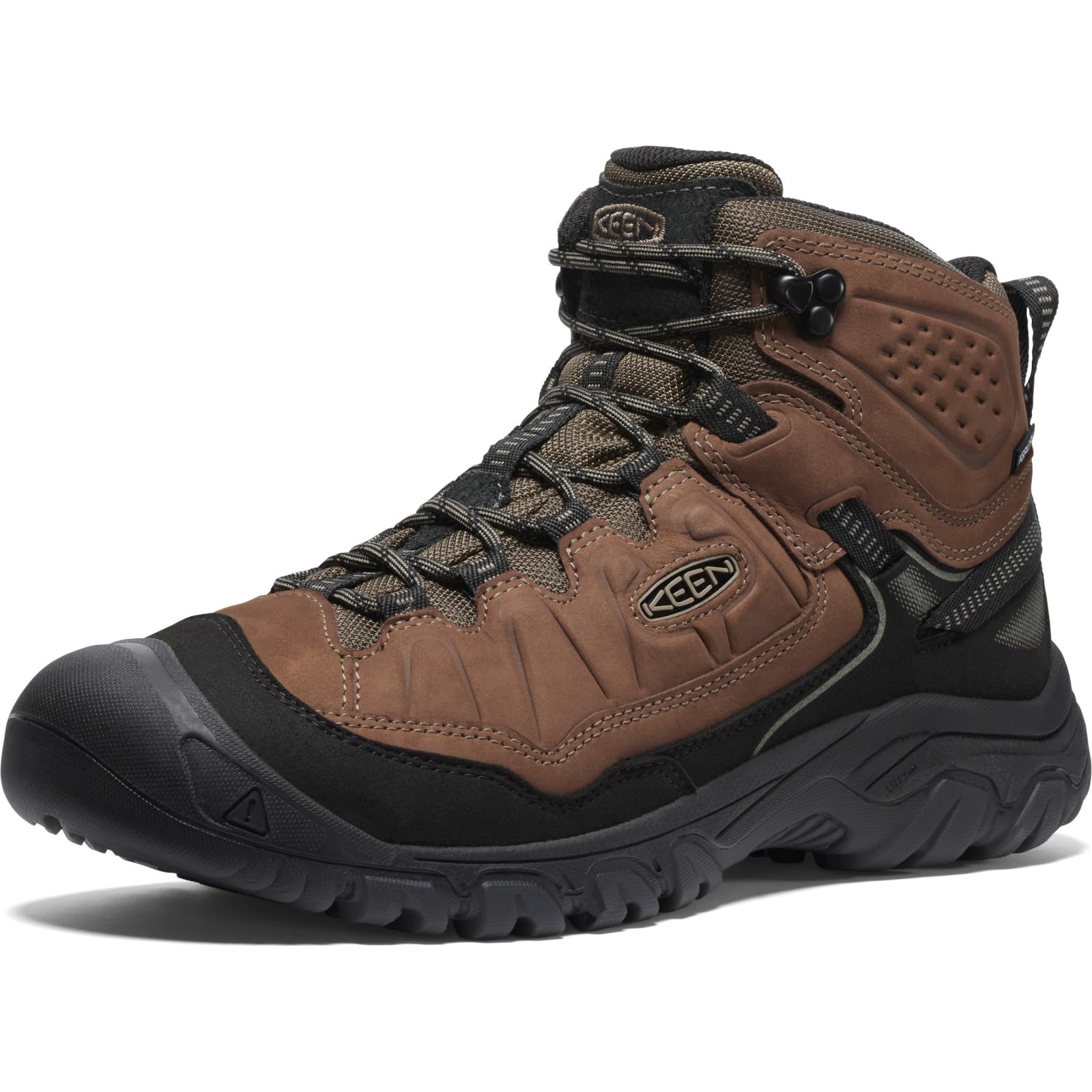
The Targhee 4 represents the fourth generation of a boot that has become synonymous with wide-foot hiking. KEEN’s signature foot-shaped last provides a naturally roomy toe box that allows the metatarsals to splay on descents, while the FUSION construction bonds the upper to the outsole without glue, eliminating the common failure point of delamination after wet hikes. The LuftCell midsole offers exceptional out-of-box comfort — several reviewers with neuropathy and prescription inserts reported pain-free hiking immediately.
At 620g per boot, the Targhee 4 is heavier than the previous generation (the Targhee III was 540g), but the added weight comes from a more robust chassis that resists compression under a full pack. The KEEN.DRY membrane holds up against stream crossings and sustained rain without overheating the foot in moderate temperatures. The Vibram outsole uses multidirectional lugs that grip loose gravel and wet rock with confidence.
The factory insoles are thin; most hikers will swap them for a third-party orthotic, which the generous 4E volume accommodates easily. The metal speed-hooks are sturdy but sit close to the tongue, so lace tension feels precise. For anyone who prioritizes a zero-compromise wide fit out of the box, this is the benchmark.
Why it’s great
- Foot-shaped last eliminates toe pinch on steep descents
- FUSION construction prevents sole separation after repeated wet-dry cycles
- Excellent volume for orthotics without feeling sloppy
Good to know
- Heavier than Targhee III if weight is your priority
- Factory insoles are basic; plan to upgrade
2. Merrell Mens Moab 3 GTX

The Moab series is the best-selling hiking boot on the market for a reason, and the Moab 3 GTX refines the formula with a softer heel cushion, a more accommodating midfoot, and a Gore-Tex membrane that actually breathes. The 4E version adds 4mm of additional forefoot volume over the standard Moab 3, making it suitable for hikers with higher insteps. The Vibram TC5+ outsole uses a 5mm lug pattern that sheds mud cleanly and grips slick rock better than the previous TC5 compound.
Multiple reviewers noted zero break-in required — the boot felt comfortable from the first mile, even on 30-mile trips over rocky, muddy terrain. The EVA midsole is firm enough to prevent foot fatigue on long approaches but soft enough for daily wear. The Gore-Tex liner kept feet dry through wet grass and shallow puddles, though some users warned that the GTX version runs a half-size smaller than the non-GTX Moab 3, so ordering a full size up is recommended.
The construction quality is consistent with Merrell’s reputation: the suede-and-mesh upper resists abrasion, and the rubber toe cap protects against stubbed rocks. The only downside is that the 4E width still tapers slightly at the little toe for some wearers — if your foot is particularly square-shaped, the KEEN Targhee will offer more splay.
Why it’s great
- No break-in period; comfortable immediately on long hikes
- Gore-Tex membrane balances waterproofing and breathability well
- Proven durability — many users report 5+ years of life
Good to know
- GTX version fits smaller than non-GTX — size up a full size
- Toe box tapers slightly, not ideal for extremely square feet
3. Oboz Men’s Sawtooth X Mid B-DRY Hiking Boot

Oboz builds boots on a last that tends to feature a narrower heel with wider forefoot volume, making the Sawtooth X Mid an excellent choice for hikers who need heel lock in a 4E boot. The B-DRY membrane is less insulating than Gore-Tex, which works well for active hikers in cold conditions — reviewers hiked in 20°F snow and slush without soaked feet, while noting that the boot breathes enough to dry quickly after stream crossings. The 5mm Vibram outsole lugs bite into loose soil and packed snow with confidence.
The break-in period is longer than the Moab or Targhee — expect 10-15 miles before the full-rubber rand and EVA midsole mould to your stride. Once broken in, the boot offers excellent arch support and a stable platform for medium loads. The recycled PET lining is comfortable against thin wool socks, and the Oboz Fit Series ensures that the 4E version does not feel baggy in the heel.
The laces are the most common complaint: they are thin and prone to fraying, and the speed-hooks lack a locking mechanism. Many users replace them immediately with a thicker waxed lace. The B-DRY membrane is not as breathable as unlined boots in hot weather, so this is primarily a cold-to-moderate-temperature boot.
Why it’s great
- Narrow heel cup prevents slip in 4E forefoot
- B-DRY membrane breathes better than GTX in cold conditions
- Excellent snow and slush performance with wool socks
Good to know
- Longer break-in period (10-15 miles)
- Stock laces are thin and wear quickly
4. Vasque Men’s St. Elias Waterproof Hiking Boot
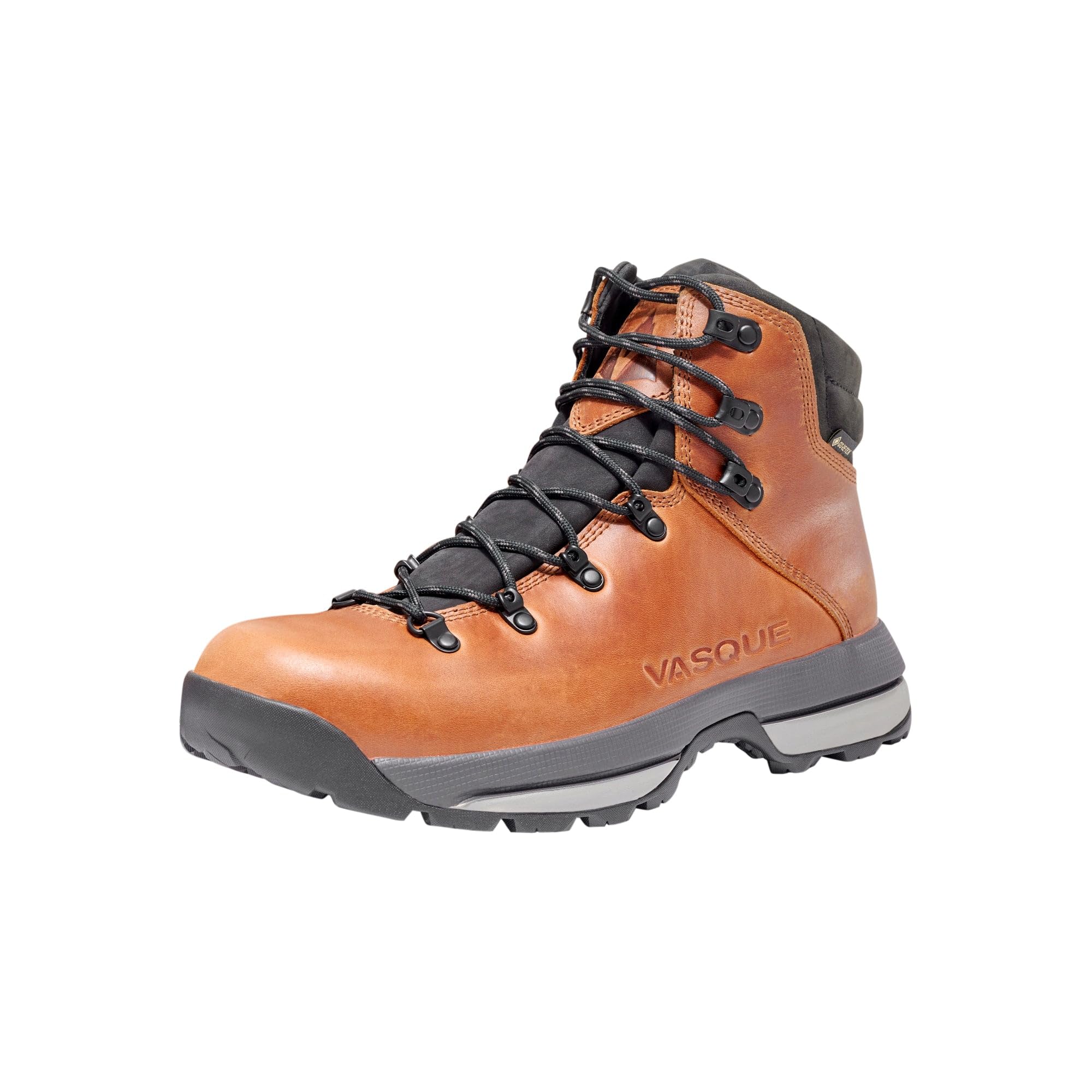
The St. Elias is a throwback to the era of full-grain leather boots built to last years of heavy use. The 4E version offers a generous forefoot volume with a precise heel fit, and the waterproof membrane remains effective from day one — no waiting for the leather to saturate and seal. The Vibram outsole uses a deep, self-cleaning lug pattern that provides reliable traction on loose scree and wet trails. Multiple reviewers reported wearing this boot daily for turf work and contracting, with the upper holding up to abrasion and the midsole retaining support for a full year of hard use.
The Ankle support is excellent thanks to the structured collar and stiff heel counter, making the St. Elias a strong choice for hikers carrying heavy packs on technical terrain. The seamless interior prevents hot spots and blisters even during long approaches, and the overall construction feels premium — the leather is thick enough that the boot stands up on its own when not worn.
The main trade-off is weight and break-in: these boots require 10-20 miles before the leather conforms to your foot. The speed-hooks are narrow, so laces can loosen if not cinched carefully. Some users reported the outsole cushioning wearing out after six months of daily use, which is reasonable for a soft-ground hiking boot but worth noting if you cover pavement regularly.
Why it’s great
- Full-grain leather provides unmatched durability and abrasion resistance
- Excellent ankle support for heavy pack loads
- Seamless interior prevents blisters from the first hike
Good to know
- Requires 10-20 miles of break-in
- Midsole foam compresses faster if used on pavement daily
5. ASOLO Men’s TPS 535 LTH V Evo Boots
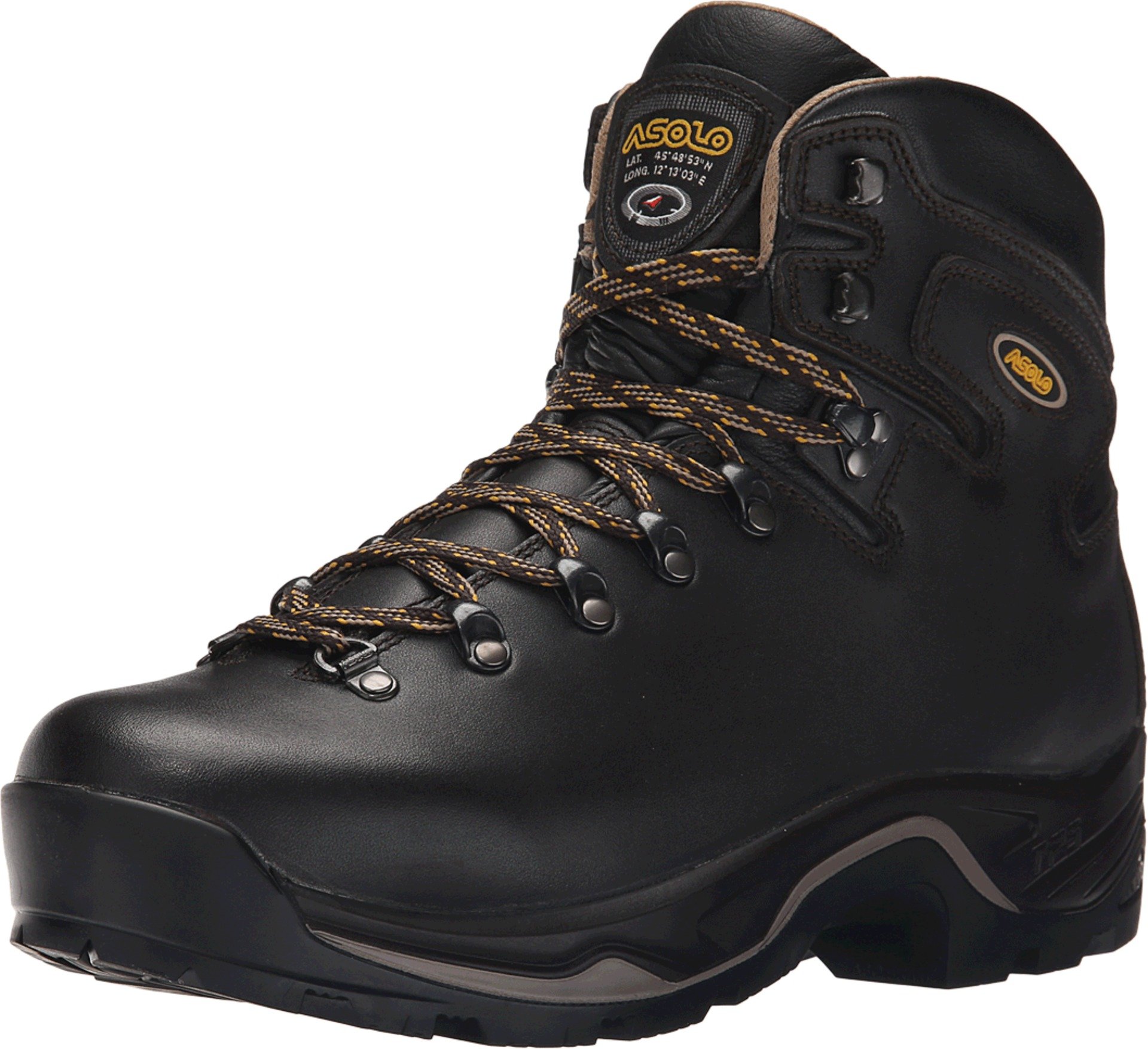
The Asolo TPS 535 LTH V EVO is the most technically capable boot on this list, designed for multi-day backpacking trips with heavy loads over rough, alpine terrain. The PU midsole is incredibly stiff, providing excellent torsional rigidity and lateral stability that reduces ankle fatigue on uneven ground. The ANIT-suspension system adds a layer of shock absorption in the heel, making steep descents with a full pack more manageable. Reviewers reported 1,000-1,500 miles before the outsole needs resoling, and some have worn the same pair for five years of daily use.
The 4E fit is generous in the forefoot but the boot does run about a half-size short, so going up a full size is common. The full-grain leather upper with Gore-Tex liner is exceptionally waterproof and breathable — users noted that the boot cured plantar fasciitis symptoms thanks to the stable platform and arch support. The self-cleaning lugs shed mud effectively, and the toe rand protects against rock strikes.
The critical limitation is that Asolo does not offer a true EE width in this model. The “extra-wide” volume comes from the boot running long and the leather stretching over time. Those with very wide feet (beyond 4E) may find the forefoot still snug after break-in. The boot is also heavy and not suitable for ultralight hiking or warm-weather use.
Why it’s great
- Unmatched durability — 1,500+ miles before resoling
- PU midsole offers superior torsional stability for heavy loads
- Excellent waterproofing and breathability with Gore-Tex
Good to know
- No true EE width — the fit depends on leather stretch and sizing up
- Too heavy and stiff for trail running or casual day hikes
6. Topo Athletic Men’s Trailventure 2 WP
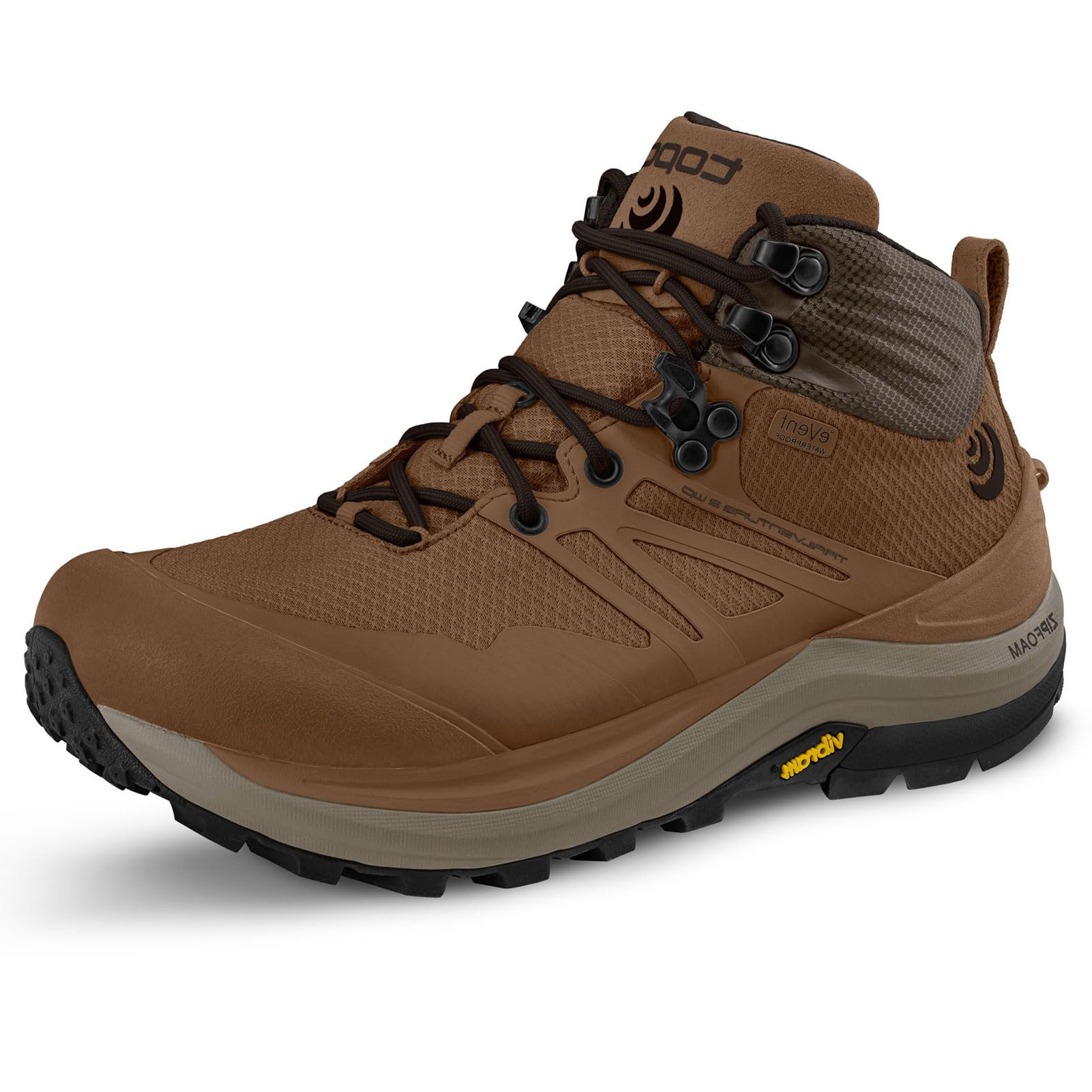
The Trailventure 2 is the answer for hikers who want the ground feel of a trail runner with the ankle protection of a mid boot. Topo Athletic’s signature wide toe box allows the toes to fully splay, which explains why reviewers with wide feet called this the most comfortable boot they had ever worn. At only 5mm drop, the platform encourages a natural mid-foot strike, reducing knee impact on long descents. The waterproof membrane handles puddles, snow, and mud without the clammy feel of a thick Gore-Tex liner.
The shoe runs light — well under 500g per boot — and the Vibram outsole provides average traction on dry rock but struggles on wet slab and loose gravel. The lace hooks are functional but feel less durable than metal speed-hooks, and the laces require a double knot to stay secure during steep side-hilling. The waterproof version fits tighter than the non-WP model, so users planning to wear thick socks should go up a half size.
The midsole cushioning is medium-density: soft enough for 15-mile days on packed trail, but not supportive enough for loads over 25 pounds. This is a boot for fast-and-light hikers and thru-hikers with ultralight kits, not for expedition backpacking.
Why it’s great
- Extra-wide toe box allows full metatarsal splay
- Lightweight design ideal for ultralight backpacking
- 5mm drop promotes a natural, low-impact stride
Good to know
- Waterproof version fits tighter — size up a half
- Traction is average on wet, algae-covered slate
7. New Balance Men’s Fresh Foam X Hierro V9
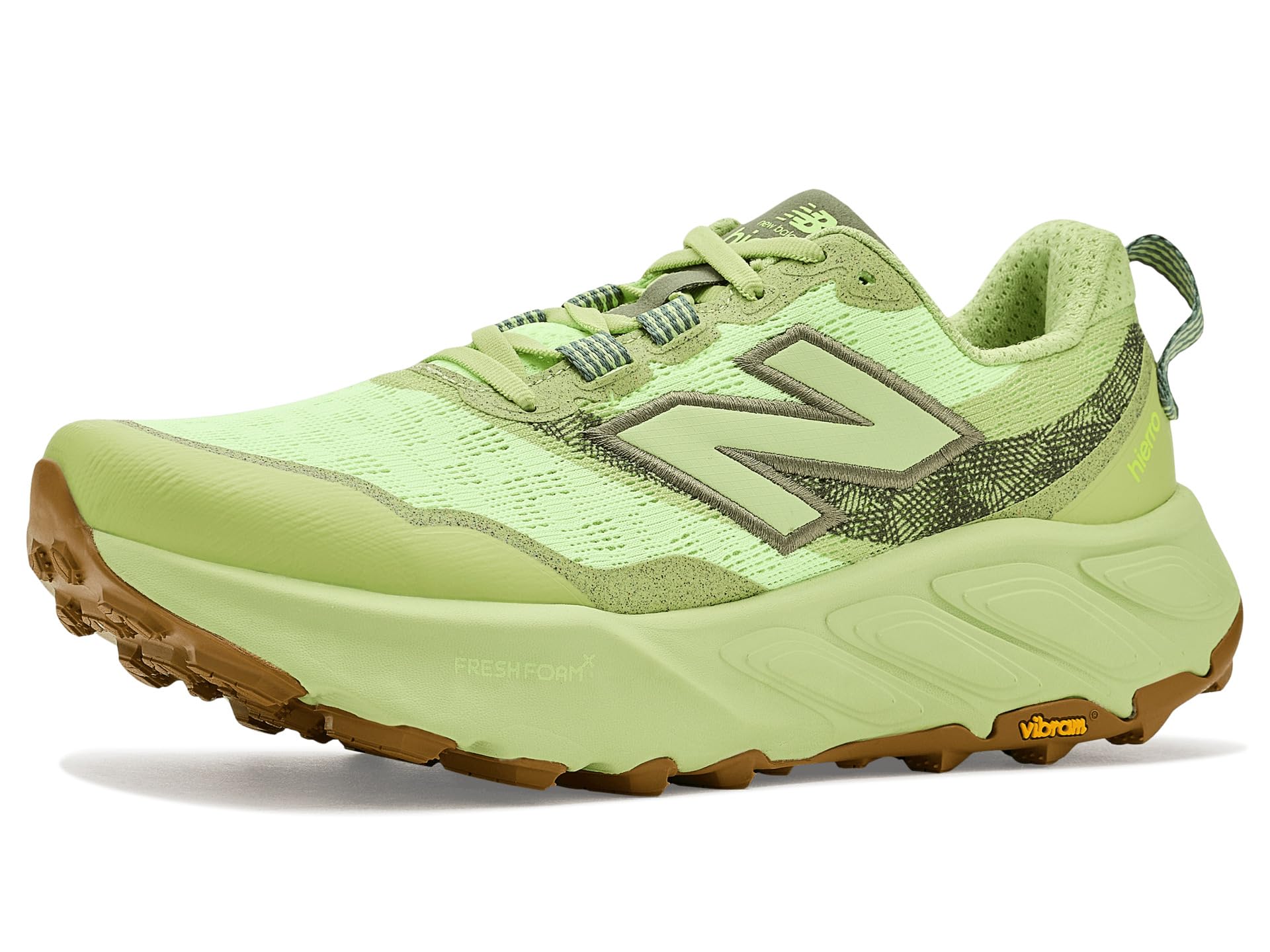
The Fresh Foam X Hierro V9 is a trail runner with a hiking boot attitude. The 4E version delivers generous forefoot width, but the toe box is slightly tapered compared to KEEN or Topo, which means hikers with very square feet may feel pressure at the side of the little toe. The Fresh Foam X midsole is the standout — it’s plush without being mushy, offering excellent shock absorption on rocky descents while still providing enough ground feel for technical terrain.
The Vibram Megagrip outsole is one of the stickiest compounds on the market, providing reliable traction on wet rock and loose dirt. Several reviewers noted that the shoe runs short, so ordering a half-size up is standard practice. The mesh upper is breathable and dries quickly after stream crossings, but it lacks the toe protection of a rubber rand, so sharp rocks can be felt through the material.
This is not a boot for heavy backpacking — the cushioning is not dense enough to support loads over 20 pounds. It shines as a fast day-hiking shoe or a trail-running shoe for those who need 4E width. The lack of a waterproof membrane means your feet will get wet, but they will also dry quickly, making this a good choice for warm, dry climates where breathability matters more than puddle-proofing.
Why it’s great
- Fresh Foam X midsole provides industry-leading trail cushioning
- Vibram Megagrip outsole is one of the best for wet rock
- Excellent breathability for warm-weather hiking
Good to know
- Runs short — order a half size up
- No waterproof membrane; not for wet conditions
8. Timberland Men’s White Ledge Mid Waterproof Hiking Boots

The Timberland White Ledge is a budget entry that punches above its price. The 4E version provides a large toe box that accommodates thick socks and wide feet, and the seam-sealed waterproof construction does an adequate job of keeping feet dry in snow, mud, and shallow streams if treated with mink oil. The rubber lug outsole offers reliable grip on hills, grass, gravel, and even ice, though it struggles on wet, algae-slicked rock.
Reviewers consistently highlight the immediate comfort — no break-in required for many, and the mid-height collar prevents ankle rub even in new boots. The sole is soft enough for casual walking but durable enough for day hikes on mixed terrain. The boot lacks the lateral stability of more expensive models, so it is not recommended for heavy loads or technical scrambling, but for easy to moderate hiking it performs admirably.
The main concessions to the lower price point are the build quality: the leather is a lower grade that requires conditioning to extend its life, and the laces are basic. Some users reported the waterproofing failing after several months of hard use, though regular application of mink oil or wax helps maintain the seal. This is a great entry point for hikers who want a 4E boot without a premium investment.
Why it’s great
- Large toe box with immediate comfort for wide feet
- Solid all-terrain traction for moderate hiking
- Very good value for a waterproof 4E boot
Good to know
- Leather requires regular conditioning to stay waterproof
- Not stiff enough for heavy loads or technical terrain
9. Merrell Mens Moab 3 8 Inch Tactical Zip Waterproof Boot

The 8″ Zip variant of the Moab 3 delivers the same out-of-box comfort as the standard Moab 3, but with side zipper access and a taller collar for enhanced ankle support. The 4E version uses the same last as the standard Moab 3, so consistent sizing applies — though several reviewers with low arches found the volume slightly spacious, an issue easily fixed with an aftermarket insole.
The boot is lightweight for an 8-inch model, weighing in well under typical tactical boots. The side zipper does allow quick on/off, but the laces must still be loosened enough that the boot does not slip on through the zipper — it saves about a minute of lacing, not the lazy slip-on some expect. The Vibram TC5+ outsole handles pavement and packed dirt well, but the tread is too shallow for deep mud.
The main drawback is heat: the waterproof lining combined with the tall leather upper makes this boot very warm, with several reviewers describing it as unwearable in summer. It is best reserved for cold-weather use, hunting, or work environments where water and mud are common. The build quality is excellent for the price, and the boot feels supportive enough for light backpacking.
Why it’s great
- Side zipper makes on/off faster for work and daily wear
- Tall 8″ collar provides superior ankle stability
- Same proven Moab 3 comfort and traction
Good to know
- Very warm — not suitable for hot-weather hiking
- Zipper still requires lacing; not a true slip-on
FAQ
Is 4E the same as X-Wide in all hiking boot brands?
Should I size up in a 4E hiking boot if I wear thick socks?
Do waterproof membranes make 4E boots run warmer?
How do I prevent heel slip in a 4E boot that fits my forefoot?
Final Thoughts: The Verdict
For most users, the 4e hiking boots winner is the KEEN Targhee 4 Mid because it delivers a zero-compromise wide fit out of the box with no break-in, robust waterproofing, and the most reliable construction in this category. If you want a lightweight boot that feels like a sneaker, grab the Topo Athletic Trailventure 2 WP. And for expedition-level durability with heavy loads, nothing beats the Asolo TPS 535 LTH V EVO.