
Our readers keep the lights on and the weekend projects moving. As an Amazon Associate, I earn from qualifying purchases.
A blade designed for wood will leave your acrylic sheet looking like shattered glass. The wrong tooth geometry creates melting, chipping, and stress cracks that ruin a workpiece in seconds. To get a polished, factory-like edge on polycarbonate or plexiglass, you need a blade purpose-built for non-ferrous materials—one with the correct hook angle, tooth count, and grind pattern to prevent impact fractures and heat buildup.
I’m Rikta — the co-founder and writer behind FitlyFast. My approach to this guide involved studying real user reports across multiple acrylic thicknesses, reviewing tooth-form engineering from TCG to ATB, and cross-referencing performance data from shops that run these blades daily.
The right blade for cutting acrylic uses a Triple-Chip Grind (TCG) with a negative or zero hook angle to shear the material cleanly without grabbing or melting the cut line.
How To Choose The Best Blade For Cutting Acrylic
Acrylic is a brittle thermoplastic that behaves nothing like wood or metal. Standard wood-cutting blades with high positive hook angles will grab the material, leading to chipped edges, melted kerfs, and dangerous kickback. The following three specs define a blade that actually works for acrylic.
Tooth Count and Grind
For thin acrylic (under 1/4 inch), you want 80 to 100 teeth to create a smooth, polished finish. A Triple-Chip Grind (TCG) is non-negotiable—it alternates a chamfered tooth with a flat raker to shear the material rather than tear it. Lower tooth counts around 60 work for thicker stock above 1/2 inch, but expect a slightly rougher edge that may need sanding.
Hook Angle
Negative hook angles (between -5 and 0 degrees) are the single most important factor for acrylic. A negative hook prevents the blade from self-feeding too aggressively into the material, reducing the risk of cracking and chipping. A positive hook angle will cause the blade to climb the workpiece and shatter thin sheets.
Coating and Body Design
Non-stick coatings like Perma-SHIELD or Black Ice reduce friction and prevent acrylic melt from gumming up the carbide tips. Laser-cut stabilizer vents in the blade body trap vibration and dissipate heat, both of which are critical when cutting plastics that soften at relatively low temperatures.
Quick Comparison
On smaller screens, swipe sideways to see the full table.
| Model | Category | Best For | Key Spec | Amazon |
|---|---|---|---|---|
| Diablo D1080N | Premium | Clean cuts on medium acrylic | 80 TCG, -5° Hook | Amazon |
| Diablo D10100N | Premium | Thin acrylic, no chipping | 100 TCG, -5° Hook | Amazon |
| CRALY C10100AL | Mid-Range | Smooth acrylic with anti-stick | 100 TCG, Black Ice Coat | Amazon |
| IVY Classic 35056 | Mid-Range | Thin plexi under 1/8″ | 200 Teeth, Steel Body | Amazon |
| Oshlun SBNF-065060 | Mid-Range | Compact saws, thicker cuts | 60 TCG, Negative Hook | Amazon |
| TWIN-TOWN TTA1080 | Budget | General plastic cutting | 80 TCG, Anti-Rust Coat | Amazon |
| FOXBC FOX1080TCG | Budget | Budget burr-free cuts | 80 TCG, .094″ Kerf | Amazon |
In‑Depth Reviews
1. Diablo D1080N
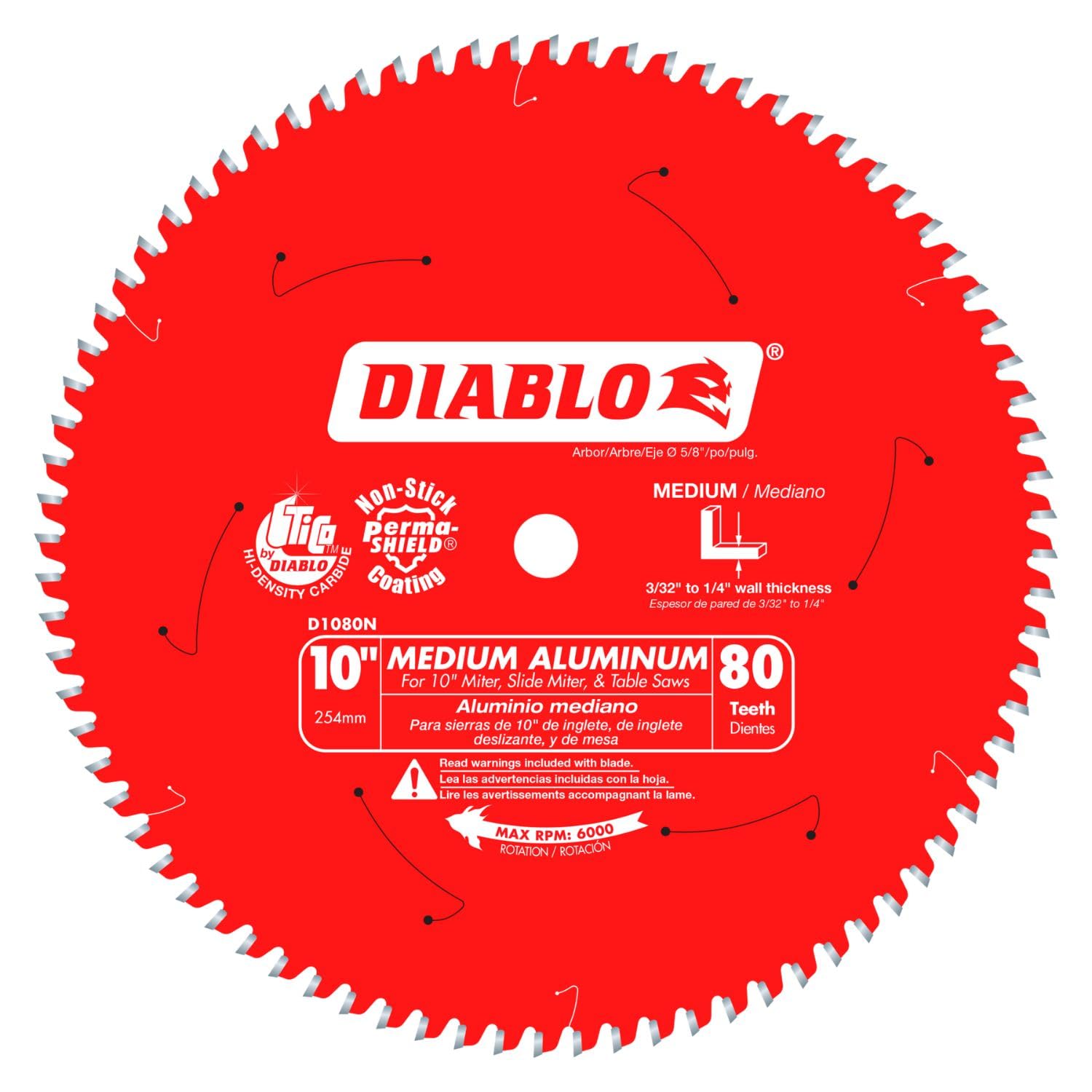
The Diablo D1080N is the benchmark for acrylic cutting in the 10-inch category. Its -5 degree negative hook angle prevents the blade from grabbing the sheet, while the 80-tooth TCG grind delivers a burr-free finish on material up to 3/4 inch thick. Users consistently report that it cuts 3/4-inch plexiglass with a surface so smooth it requires no secondary edge finishing.
The Tri-Metal shock-resistant brazing on this blade means it holds up even when you occasionally hit a tough spot in recycled or cast acrylic. The Perma-SHIELD non-stick coating actively resists the gumming that happens when plastic melts from friction, which is a common failure point on uncoated blades. Laser-cut stabilizer vents keep vibration low, reducing the risk of stress fractures along the cut line.
This blade also handles ABS, polycarbonate, and melamine without switching tools, making it a versatile shop investment. The only trade-off is the premium price, but for a primary blade that produces consistent, glassy edges on acrylic, it earns its place at the top of the list.
Why it’s great
- Neg hook angle prevents chipping and self-feeding
- Perma-SHIELD coating stops acrylic melt adhesion
- Cuts thick acrylic (3/4″) to a sanded finish
Good to know
- Premium investment compared to budget options
- Not ideal for very thin sheets under 1/8″
2. Diablo D10100N
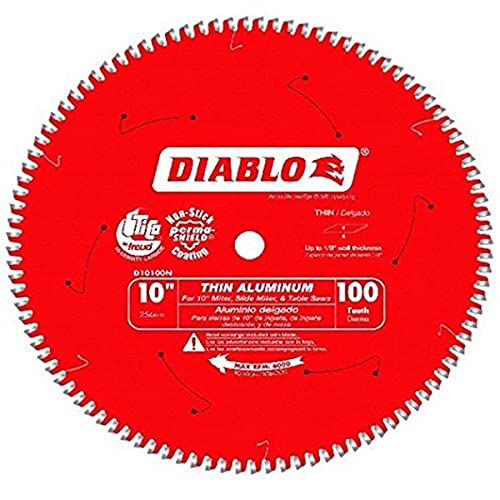
Where the D1080N excels at medium acrylic, the D10100N is the specialist for thin-gauge work. Its 100-tooth TCG configuration creates more cutting edges per revolution, reducing chip load per tooth to a level that prevents breakout on sheets as thin as 1/16 inch. Users cutting plexiglass for display cases or window glazing report edge quality that needs zero sanding.
The TiCo super-density micro-grain carbide formulation extends edge life significantly beyond standard carbide, which matters when you are making hundreds of repetitive cuts. The Tri-Metal brazing adds impact resistance for when you hit a stress concentration in cast material. At a 0.091-inch kerf, it removes less material per pass, reducing heat generation that can cause acrylic to soften and weld to the blade body.
This blade is explicitly designed for thin aluminum but translates perfectly to plastics because the cutting mechanics are identical—low hook, high tooth count, and non-stick protection. The main limitation is that it should not be used on thick stock above 7/16 inch, where the thin kerf may cause instability.
Why it’s great
- High tooth count produces mirror-finish edges on thin material
- Perma-SHIELD prevents friction welding
- Laser-cut vents reduce vibration on lightweight sheets
Good to know
- Not designed for acrylic thicker than 7/16″
- Premium cost, but lower than dedicated plastic blades
3. CRALY C10100AL
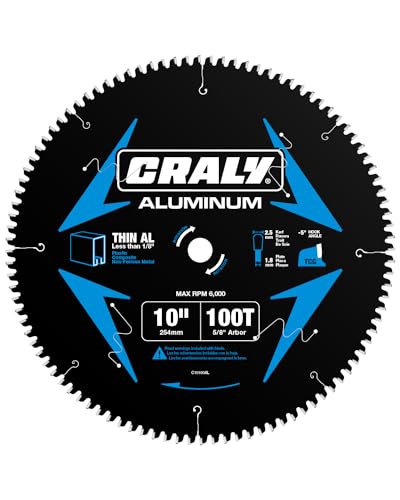
The CRALY C10100AL punches well above its price bracket by packing a 100-tooth TCG grind, a thin 2.5mm kerf, and the Black Ice anti-stick coating into a package that costs less than half of some premium offerings. Users cutting acrylic closet rods and aluminum railing report smooth edges that require no filing, with the blade still sharp after 100 cuts.
The laser-cut expansion slots serve double duty—they manage thermal expansion during sustained cuts while also acting as vibration dampeners. This is critical when cutting thin acrylic, where blade flutter can cause instantaneous chipping. The ultra-fine grain carbide holds its edge well for a mid-range blade, though it won’t outlast a Diablo in a high-volume shop environment.
This blade is a smart pick for the weekend fabricator who needs professional results on acrylic up to 1/2 inch thick without the professional price tag. The thin kerf also puts less strain on smaller cordless saws, making it a good match for job site work where saw power is limited.
Why it’s great
- 100 teeth and TCG grind for polished finishes
- Black Ice coating prevents acrylic buildup
- Excellent value for the tooth count
Good to know
- May not hold edge as long as premium brands
- Thin kerf less stable on very thick acrylic
4. IVY Classic 35056
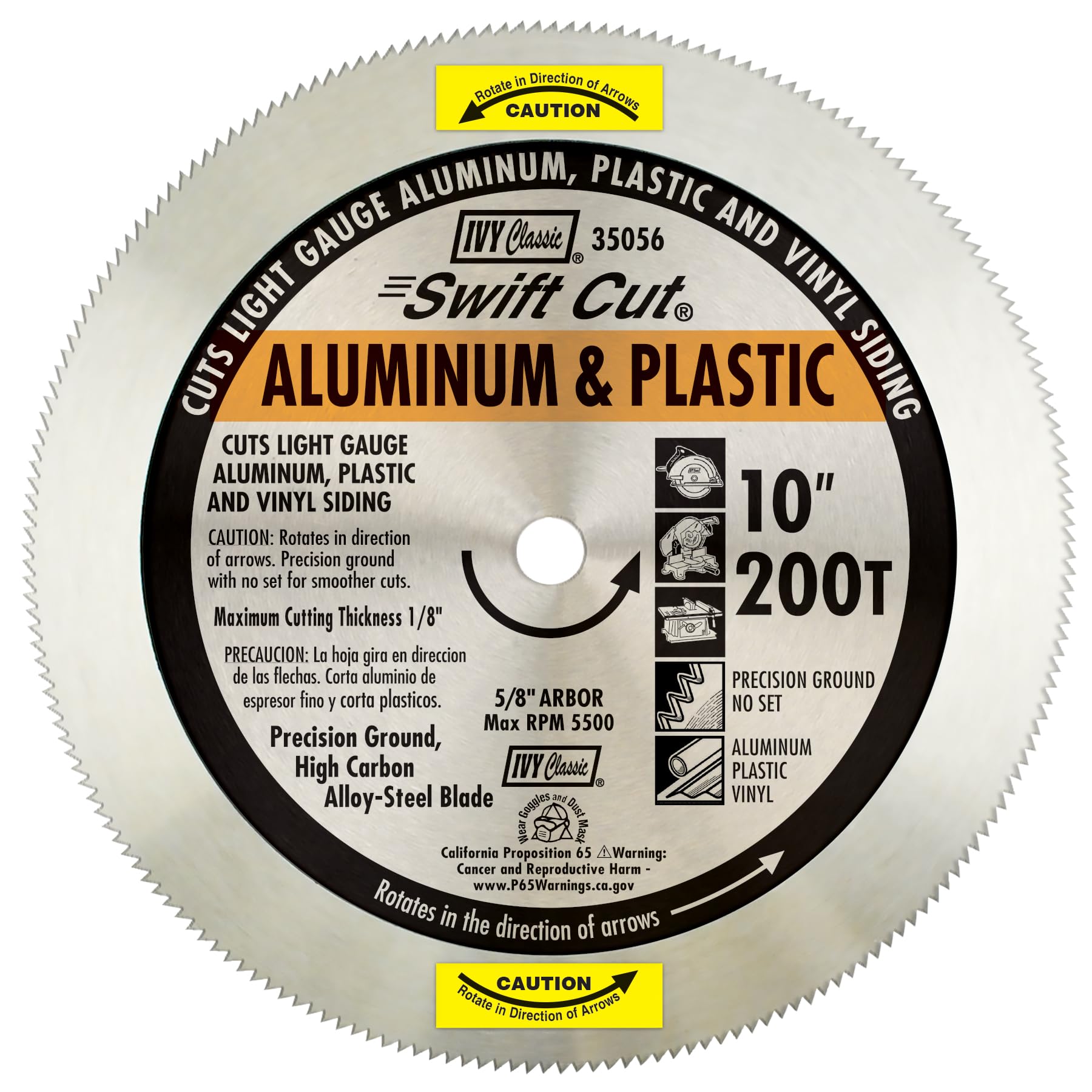
The IVY Classic 35056 is an outlier in the best way—200 teeth on a 10-inch steel body, purpose-built for material under 1/8 inch thick. This blade uses precision-ground teeth with no set, meaning every tooth cuts on the same plane, eliminating the wandering and chipping that occurs when teeth are alternately set left and right. Users report clean, non-melting cuts on 1/8-inch plexiglass when feed speed is kept consistent.
The high-carbon alloy steel body is less rigid than carbide-tipped blades, but this works in its favor on thin material by allowing some flex that reduces shock loading. The trade-off is a sharp drop in performance on material thicker than 1/8 inch—the manufacturer explicitly warns against using it on stock above that threshold. For its intended use case, however, it produces some of the cleanest edges available.
This blade should be paired with a zero-clearance insert on a table saw to minimize the gap under the material, which prevents thin sheets from dropping into the throat and snapping. It is the best choice for sign makers, model builders, and anyone working with thin display acrylic.
Why it’s great
- 200 teeth provide glass-smooth edges on thin stock
- No-set ground teeth prevent lateral chipping
- Budget-friendly for specialized thin cutting
Good to know
- Strictly limited to material under 1/8″
- Steel body less durable for repeated use
5. Oshlun SBNF-065060

The Oshlun SBNF-065060 fills a specific gap—a 6.5-inch blade with a negative hook angle and TCG grind for compact circular saws. This is the blade you need when you are cutting acrylic on a jobsite with a cordless saw, where the smaller diameter provides better control on narrow sheets. The 60-tooth count is lower than most recommendations but appropriate for the smaller blade because the reduced circumference means each tooth makes more frequent contact with the material.
Users have successfully cut 2-inch aluminum extrusions and 3/8-inch acrylic extrusions on a 6.5-inch miter saw, reporting buttery smooth cuts. The negative hook angle prevents the saw from lurching forward on plunge cuts, a safety-critical feature when working with brittle plastic. The C-1 grade carbide is a professional-grade material that maintains edge sharpness longer than standard grades.
Heat vents in the blade body keep operating temperatures down, which is important because smaller saws often spin at higher RPMs. The main limitation is the lower tooth count means the edge finish will be slightly coarser than a 100-tooth blade, requiring light sanding for optical clarity on clear acrylic.
Why it’s great
- Fits compact 6.5-inch saws with negative hook
- Professional C-1 carbide for extended life
- Heat vents reduce acrylic gumming
Good to know
- Lower tooth count needs post-cut sanding
- Limited to 6.5″ arbor compatibility
6. TWIN-TOWN TTA1080
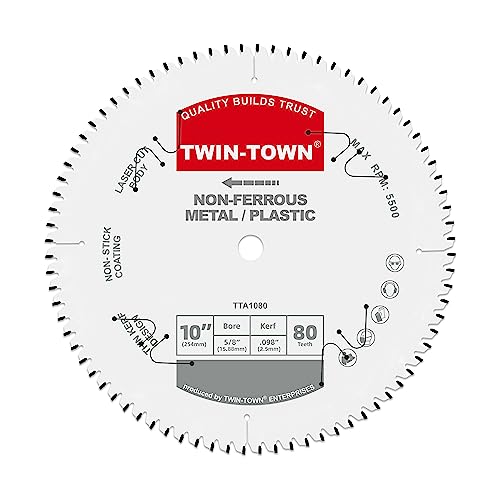
The TWIN-TOWN TTA1080 is a solid entry-level 10-inch blade that handles acrylic without breaking the bank. Its 80-tooth TCG grind and C4 ultra-fine grain carbide provide decent edge quality for general plastic cutting tasks, and the electrophoretic coating protects against rust in humid shop environments. Users cutting PVC baseboard and thin acrylic report clean cuts as long as the feed rate is kept brisk enough to avoid melting.
The unique ID code on each blade allows you to trace quality assurance, a feature usually found on more expensive industrial blades. The thick kerf provides stability on a table saw but produces more waste material than thin-kerf alternatives. This is a minor concern for most acrylic cuts, but it matters when you are optimizing yield from expensive cast acrylic sheets.
This blade performs well for occasional use, but the edge retention is noticeably shorter than premium options—users report needing to sharpen or replace after heavy production runs. For the DIYer making a dozen cuts on a weekend project, it is a cost-effective choice that still delivers the TCG geometry required for acrylic.
Why it’s great
- Affordable entry into TCG geometry
- C4 carbide holds edge adequately for hobbyist use
- Rust-resistant coating extends storage life
Good to know
- Thick kerf creates more material waste
- Edge life shorter than mid-range competitors
7. FOXBC FOX1080TCG

The FOXBC FOX1080TCG positions itself as a direct value competitor to the Diablo line, offering an 80-tooth TCG configuration with laser-cut stabilizer vents and high-density tungsten carbide at a fraction of the cost. Users running it on Dewalt and Makita saws report it competes favorably with top brands, producing burr-free cuts on aluminum extrusions and acrylic sheeting without the premium sticker price.
The 0.094-inch kerf splits the difference between thin-kerf efficiency and full-kerf stability, making it a versatile choice for miter saws and table saws alike. The stabilizer vents effectively trap noise and reduce vibration, which translates to less chattering on thin acrylic where blade stability is paramount. Several users noted the blade arrives well-packaged in protective tubing, indicating good quality control during shipping.
The main distinction from the TWIN-TOWN is that the FOXBC holds its edge slightly better over the first hundred cuts, likely due to the denser tungsten carbide formulation. It still falls short of the Diablo in long-term durability, but for a budget-conscious buyer who needs immediate, clean acrylic cuts, it is a strong alternative that does not compromise on the core TCG geometry requirement.
Why it’s great
- Strong value for TCG geometry with stabilizer vents
- Dense tungsten carbide holds edge decently
- Quieter operation on miter saws
Good to know
- Edge life not as long as Diablo blades
- Finish quality depends on consistent feed rate
FAQ
Can I use a standard wood blade to cut acrylic?
What tooth count is best for cutting 1/4 inch acrylic?
Do I need a non-stick coating on an acrylic blade?
Final Thoughts: The Verdict
For most users, the blade for cutting acrylic winner is the Diablo D1080N because its -5 degree hook angle and 80-tooth TCG grind deliver consistent, glassy edges on the widest range of plastic thicknesses. If you primarily cut thin sheets under 3/16 inch, grab the Diablo D10100N for its higher tooth count and thin kerf. And for the best value on a budget, nothing beats the CRALY C10100AL which matches professional features at a fraction of the cost.