
Our readers keep the lights on and the weekend projects moving. As an Amazon Associate, I earn from qualifying purchases.
When an artery is severed, you have roughly three minutes to act. A bleeding control kit is not a first-aid accessory; it is a legal-duty essential for anyone who carries a firearm, works on a remote site, or simply drives a car. The difference between a kit that works under pressure and one that fails comes down to tourniquet type, hemostatic agent quality, and package design.
I’m Rikta — the co-founder and writer behind FitlyFast. I’ve spent hundreds of hours researching trauma kit components, analyzing customer field reports, and comparing the real-world performance specs that separate lifesaving gear from shelf clutter.
After comparing vacuum-sealed IFAKs, intermediate packs with chest seals, and full EMS backpacks, I’ve narrowed the market to the seven most reliable options for the bleeding control kit category that actually work when adrenaline is pumping.
How To Choose The Best Bleeding Control Kit
Selecting a bleeding control kit requires understanding injury scenarios first. A kit meant for a law enforcement officer’s duty belt must prioritize compactness and one-handed deployment, while a remote hiking kit needs more gauze and a survival blanket. Focus on the tourniquet type first—it is the single most important component.
Tourniquet Selection: CAT vs. SWAT-T
The Combat Application Tourniquet (CAT) is the military standard, featuring a windlass rod that applies precise, high-pressure constriction to a single limb. The SWAT-T uses a stretch-and-wrap method that can double as a pressure dressing but requires more training to avoid overtightening. For most civilians, a CAT is easier to apply correctly under stress.
Hemostatic Agents: QuikClot vs. Celox
QuikClot accelerates clotting using kaolin, an inorganic mineral that activates the body’s natural clotting cascade. Celox uses chitosan, a shrimp-derived polymer that forms a gel plug on contact with blood, working independently of the body’s clotting factors. Both are effective, but Celox is advantageous for users on blood-thinning medications.
Kit Packaging: Vacuum-Sealed vs. Pouch
Vacuum-sealed kits protect components from moisture, dirt, and UV degradation, making them ideal for vehicle storage or long-term readiness. The trade-off is that removing the seal during a high-stress event adds a step. Pouch-style kits allow faster access but are bulkier and more exposed to environmental wear.
Quick Comparison
On smaller screens, swipe sideways to see the full table.
| Model | Category | Best For | Key Spec | Amazon |
|---|---|---|---|---|
| North American Rescue IPOK | Premium IFAK | Daily carry & duty belt | Gen 7 CAT tourniquet included | Amazon |
| Stop The Bleed Basic Kit | Premium | Vehicle & home storage | DoD-licensed, CAT tourniquet | Amazon |
| MediTac Intermediate Pack | Mid-Range | Torso & limb trauma | 2 vented chest seals included | Amazon |
| First Aid Only 91512 | Mid-Range | Remote worksites & camps | 7-piece bleed control set | Amazon |
| MediTac Zip Pack with QuikClot | Mid-Range | Comprehensive home kit | QuikClot & Celox gauze included | Amazon |
| Rescue Essentials Pocket Trauma Kit | Budget | Ultra-compact EDC | 3 oz, vacuum-sealed | Amazon |
| Lightning X EMS Backpack | Premium | Full EMS responder kit | 247 pieces, backpack format | Amazon |
In‑Depth Reviews
1. North American Rescue IPOK
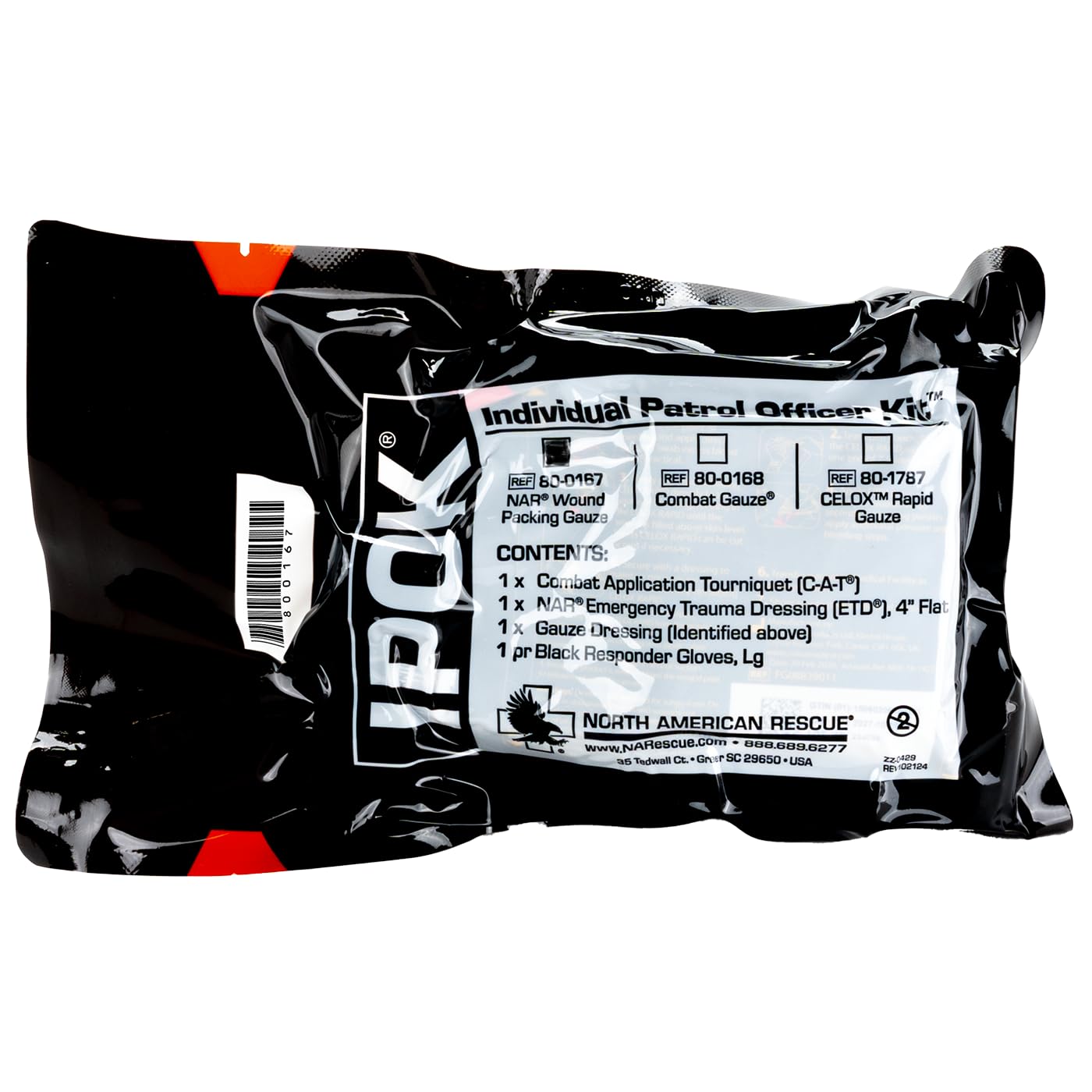
North American Rescue sets the benchmark for individual hemorrhage control. The IPOK (Individual Patrol Officer Kit) contains a genuine Gen 7 CAT tourniquet, an Emergency Trauma Dressing (ETD), compressed gauze, and gloves—all vacuum-sealed in a package that fits in a BDU pocket or vest pouch. The Red Tip Technology tear notches allow rapid opening without fumbling.
User reports confirm the Gen 7 CAT applies reliable limb occlusion, and the ETD provides effective wound compression. The vacuum seal protects contents from moisture and dirt, making this kit viable for long-term vehicle storage. Experienced users have added chest seals and tape to round out the kit for torso wounds.
This is the kit that law enforcement professionals trust on their duty belts. The components are individually replaceable, and the compact footprint (6 x 6 x 3 inches) makes it the most carry-friendly premium option available for daily wear.
Why it’s great
- Industry-standard Gen 7 CAT tourniquet
- Vacuum-sealed for long-term durability
- Compact enough for daily pocket or vest carry
Good to know
- No hemostatic agent included
- Vacuum seal must be removed before carrying on person
2. Stop The Bleed Basic Kit

This kit is officially licensed by the U.S. Department of Defense and follows the nationally recognized Stop The Bleed curriculum. It includes a C-A-T tourniquet, Z-fold hemostatic gauze (kaolin-impregnated), an emergency bandage, trauma shears, gloves, and a marker—all vacuum-packed in a tamper-proof clear pouch.
The hemostatic gauze is a critical upgrade over plain gauze; it actively promotes clotting when packed into a wound. The included 7.5-inch trauma shears are sturdy enough to cut through denim and boot laces. The vacuum seal keeps the kit clean and organized, and the transparent pouch lets you verify contents at a glance.
Users strongly recommend removing the vacuum seal before storing the kit in a ready bag, then transferring contents to the included ziplock. The kit fits neatly in a vehicle glove box or go-bag, and the printed instructional insert serves as a quick refresher during training.
Why it’s great
- DoD-licensed with hemostatic gauze
- Includes trauma shears and marker
- Tamper-proof vacuum packaging
Good to know
- No chest seals included
- Must be opened before carrying for quick access
3. MediTac Intermediate Bleeding Control Pack
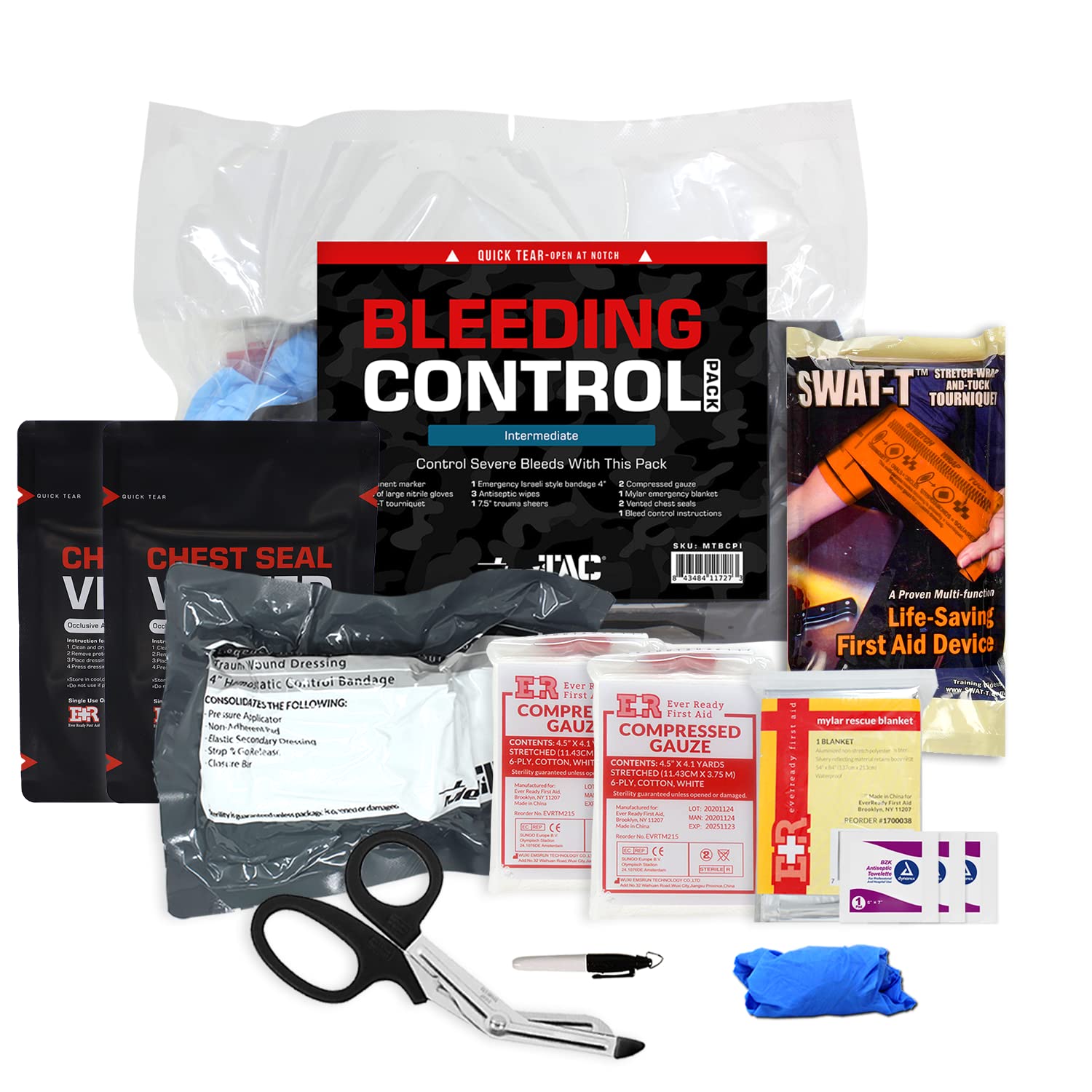
The MediTac Intermediate Pack bridges the gap between basic limb kits and full trauma bags. It includes a SWAT-T tourniquet, a 4-inch Israeli-style pressure bandage, two compressed gauze dressings, and two vented chest seals—making it the only mid-tier kit on this list that addresses open chest wounds directly.
Vented chest seals prevent tension pneumothorax while allowing air to escape, which is critical for sucking chest wounds. The SWAT-T works well as both a tourniquet and a pressure dressing, though users on blood thinners should note its stretch-wrapping requires more deliberate application than a CAT windlass.
The kit also includes trauma shears, nitrile gloves, a mylar survival blanket, and antiseptic wipes. At just over one pound, it fits in a range bag or vehicle pack without taking up excessive space. Users with stents or blood thinners routinely stash this kit in cars, offices, and golf bags for peace of mind.
Why it’s great
- Two vented chest seals for torso wounds
- SWAT-T doubles as pressure dressing
- Mylar blanket included for shock prevention
Good to know
- SWAT-T requires training to avoid overtightening
- Package is non-resealable
4. First Aid Only 91512 Critical Essentials

This 7-piece kit from First Aid Only is streamlined for limb-wound response. It contains a tourniquet, nitrile gloves, trauma bandages, a marker to record tourniquet application time, and bleeding control instructions—all housed in a lightweight clear bag that makes contents immediately visible.
The clear bag design is a smart safety feature: first responders can instantly assess what’s inside without rummaging or opening pouches. The kit measures 2 x 8 x 9 inches and weighs under 7 ounces, making it easy to toss into a hiking pack, hunting vest, or classroom emergency cabinet.
Users report the tourniquet works as advertised, and the trauma bandages are sized appropriately for adult limb wounds. The included marker is a small but vital tool—recording the time of tourniquet application prevents ischemic damage during transport to definitive care.
Why it’s great
- Clear bag for instant content identification
- Marker included for tourniquet timing
- Lightweight at 6.74 ounces
Good to know
- No hemostatic agent or chest seal
- Tourniquet is a generic model, not CAT or SWAT-T
5. MediTac Bleeding Control Zip Pack

This zip-pack kit is unique for including both QuikClot (kaolin) and Celox (chitosan) hemostatic gauzes, giving the user two distinct clotting mechanisms in one package. The resealable pack design allows partial use and re-storage—handy for training or staged response scenarios where you might access supplies incrementally.
The kit also includes 2×2 and 4×4 gauze pads, a triangular bandage, a 3-inch roll gauze, BZK antiseptic wipes, nitrile gloves, and duct tape. The triangular bandage can be used as a sling or additional pressure dressing, adding versatility for non-hemorrhage injuries. The red packaging is highly visible in a cluttered bag or glove box.
Users on blood thinners especially appreciate the Celox component, since chitosan forms a plug independently of the body’s clotting cascade. The pack is compact enough for motorcycle first aid kits or camping gear, but still contains 15 pieces—a solid balance between portability and comprehensiveness.
Why it’s great
- Both QuikClot and Celox gauze included
- Resealable pack for partial use
- Triangular bandage adds splint/sling capability
Good to know
- No tourniquet included in the kit
- Pack is larger than vacuum-sealed alternatives
6. Rescue Essentials Pocket Trauma Kit

At just 3 ounces and roughly 5 x 7 inches, the Rescue Essentials Pocket Trauma Kit prioritizes carry convenience above all else. It includes a SWAT-T tourniquet, Z-fold gauze dressing, nitrile gloves, and 3 feet of duct tape—enough to manage a single penetrating injury like a gunshot wound.
The vacuum-sealed package with tear notches ensures environmental protection and fast opening. NTOA-tested and developed with law enforcement input, this kit was designed for pocket or duty-belt carry where real estate is tight. The SWAT-T’s dual function as tourniquet and pressure dressing adds flexibility in austere environments.
Users note the kit is best for self-aid or buddy-aid scenarios focused on extremity hemorrhage. The absence of a hemostatic agent limits its effectiveness on large wounds, but the compact size means you’ll actually carry it every day. The duct tape can create an occlusive dressing when combined with the packaging.
Why it’s great
- Extremely lightweight at 3 ounces
- Fits in a front pocket or BDU pocket
- SWAT-T doubles as compression bandage
Good to know
- No hemostatic agent included
- Not designed for chest wounds
7. Lightning X EMS Trauma Backpack

The Lightning X PB89 is a full EMS responder backpack filled with 247 pieces of medical gear. It includes airway management tools, trauma bandages, tourniquets, splints, a blood pressure cuff, stethoscope, CPR mask, and multiple organizational pouches for burns, first aid, and chest seals. The backpack format with MOLLE webbing supports external accessory attachment.
The bag itself is water-resistant with a reinforced carry handle and padded shoulder strap. It has four main exterior compartments plus a rear velcro compartment, allowing organized storage of the included kit while leaving room for additional supplies like hemostatic dressings and Israeli bandages. The top flip clip can secure the bag to a car headrest for rapid vehicle deployment.
Users highlight the quality of the included medical materials—many are name-brand—and the bag’s overall durability. The kit is ideal for volunteer EMTs, school nurses, or anyone needing a comprehensive trauma response solution rather than a pocket IFAK. The limited lifetime warranty covers manufacturing defects.
Why it’s great
- 247-piece comprehensive EMS solution
- Water-resistant backpack with MOLLE webbing
- Includes airway, splints, BP cuff, and stethoscope
Good to know
- Bulky for everyday carry or vehicle storage
- Some users add hemostatic dressings and chest seals separately
FAQ
Can I use a SWAT-T tourniquet on a small child?
Does hemostatic gauze expire?
Should I remove a tourniquet once applied?
Final Thoughts: The Verdict
For most users, the bleeding control kit winner is the North American Rescue IPOK because it combines a genuine Gen 7 CAT tourniquet with a vacuum-sealed, pocketable form factor that law enforcement professionals trust daily. If you want chest seal capability for torso wounds, grab the MediTac Intermediate Pack. And for the most comprehensive individual response, nothing beats the Stop The Bleed Basic Kit with its DoD-licensed hemostatic gauze and trauma shears.