
Our readers keep the lights on and the weekend projects moving. As an Amazon Associate, I earn from qualifying purchases.
A doorway that turns into a waterfall every time it rains transforms a simple entry into a daily frustration. Wet packages, slippery floors, and the constant battle against water seeping under the door are the real reasons you’re searching for a solution that actually channels water away, not just looks decorative. The difference between an awning that leaks and one that creates a truly dry zone comes down to specific design features like integrated drainage, material density, and proper slope angle—details that are rarely obvious from a product photo.
I’m Rikta — the co-founder and writer behind FitlyFast. I’ve spent countless hours analyzing the material science, structural engineering, and real-world performance data behind outdoor awnings to separate marketing claims from genuine rain deflection.
Water management is the single most critical factor in an outdoor covering, and knowing which materials handle pooling, which bracket systems resist wind-driven rain, and how drainage grooves actually work will save you from buying a glorified sunshade. This guide breaks down nine contenders to help you find the right awning for rain that keeps your entryway genuinely dry.
How To Choose The Best Awning For Rain
Choosing an awning for rain is fundamentally different than picking a sunshade. The primary goal is water diversion, not just UV blockage. This means the material, the slope, and the method for moving water away from the structure are the deciding factors, not the color or the fabric’s breathability. Understanding these three elements will prevent you from buying an awning that simply transfers the problem from your doorstep to the ground beside it.
Solid Panel vs. Fabric: The Waterproofing Divide
The most significant choice is between a rigid, solid panel (like polycarbonate) and a stretched fabric (like polyester or vinyl). Solid panels are inherently waterproof — they have no weave for water to penetrate. Fabric awnings rely on a coating (PU or PVC) to repel water. Over time and under persistent rain, the water pressure can force moisture through coated fabric, especially at stitched seams. For heavy, continuous rain, a solid polycarbonate awning with a sealed frame is the more reliable barrier. Fabric awnings are better suited for light showers or areas where you need the flexibility to retract the cover.
Drainage Engineering: Grooves, Channels, and Slope
An awning that merely keeps rain off your door but dumps a waterfall onto the side of your house is only half a solution. Look for models with built-in drainage grooves or channels that guide water to the sides and away from the foundation. The awning’s installation angle is just as important — a minimum slope of 10 to 15 degrees is necessary for gravity to effectively shed water. Polycarbonate models often feature an integrated gutter system in the panel itself, while fabric sails require you to install them at a steep angle with high tension to prevent pooling, which can lead to sagging and eventual tearing.
Seal Integrity and Mounting Hardware
Even the best awning will leak if the connections between panels and the wall are not sealed. The weakest points are always the joints: where the panel meets the bracket, where two panels connect in an expandable setup, and the screws penetrating the wall. Budget-friendly awnings often come without pre-drilled pilot holes or included sealant. A leak-proof build requires applying silicone or glass glue (often not included) at every bracket contact point and screw head. Also, examine the bracket material — aluminum alloy and powder-coated steel resist rust far better than standard iron, which will corrode and weaken the seal over time.
Quick Comparison
On smaller screens, swipe sideways to see the full table.
| Model | Category | Best For | Key Spec | Amazon |
|---|---|---|---|---|
| VEVOR 12×10 ft Retractable | Retractable Fabric | Versatile patio shielding | 280g PU-coated polyester | Amazon |
| HIAPES 40×40 Door Awning | Solid Polycarbonate | Compact entryway cover | Integrated drainage groove | Amazon |
| GGNEBAI 40×120 Door Awning | Solid Polycarbonate | Wide window/door coverage | 120-inch projection length | Amazon |
| GUANSU-CN 40×48 Expandable | Solid Polycarbonate | Expandable coverage | Seamless one-piece panel | Amazon |
| HOMEDEMO Manual Retractable | Retractable Fabric | Adjustable height/shade | 220g polyester with PU coating | Amazon |
| Xenjum RV Awning Replacement | Heavy-Duty Vinyl | RV and camper use | 19.5oz 5-layer rip-stop | Amazon |
| VEVOR Retractable Side Awning | Retractable Fabric | Privacy screen/side cover | 180 g/m² PU-coated fabric | Amazon |
| Quictent Waterproof Shade Sail | Fabric Shade Sail | Large area coverage | 185GSM with IPX6 coating | Amazon |
| GGNEBAI 32×60 Door Awning | Solid Polycarbonate | Budget entry protection | Integrated drainage sink | Amazon |
In‑Depth Reviews
1. VEVOR Manual Retractable Awning 12×10 ft
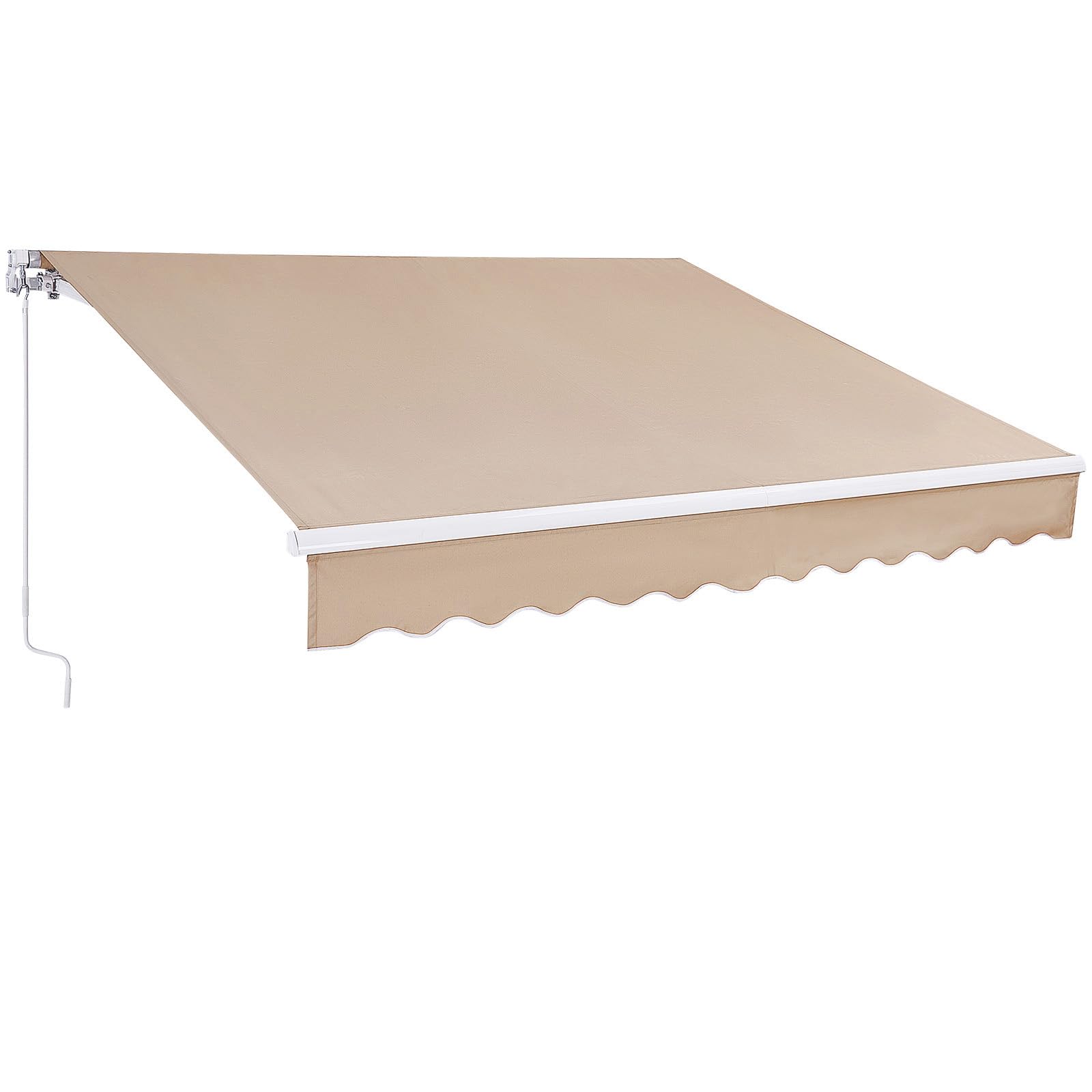
This VEVOR retractable awning uses a 280g polyester fabric with a double-sided PU coating, which is significantly denser than the 180g or 185g fabrics found on many patio covers. That material weight translates directly to better water resistance, as the tighter weave and thicker coating create a more effective barrier against light-to-moderate rain. The steel and aluminum frame, reinforced with screw connections, provides a solid foundation that resists warping and maintains tension.
The crank-handle angle adjustment from 40 to 90 degrees is a practical feature for redirecting runoff. When retracted, the fabric rolls into a neat protective case, extending its lifespan. Users note that the included anchors are a weak point, recommending replacement with higher-grade masonry bolts for a secure hold on brick or concrete walls. The instructions can be confusing due to multiple guide versions, but the core assembly is straightforward with two people.
For a retractable awning, the ability to angle the canopy to shed water rather than catch it is essential. At 12 by 10 feet, this covers a standard patio door or window with room to spare. The water-resistant coating is effective for its class, but like all fabric awnings, it is not designed for prolonged heavy downpours — retracting during storms is advised to prevent pooling and fabric stress.
Why it’s great
- Thick 280g fabric provides superior water resistance among retractable models.
- Steel and aluminum frame offers strong wind resistance for a fabric awning.
- Crank handle allows precise angle adjustment for optimal rain runoff.
Good to know
- Fabric coating is water-resistant, not fully waterproof for heavy storms.
- Instructions are poorly organized and can be confusing during assembly.
- Included wall anchors are low quality and should be replaced.
2. HIAPES Awning for Door Entrance 40×40
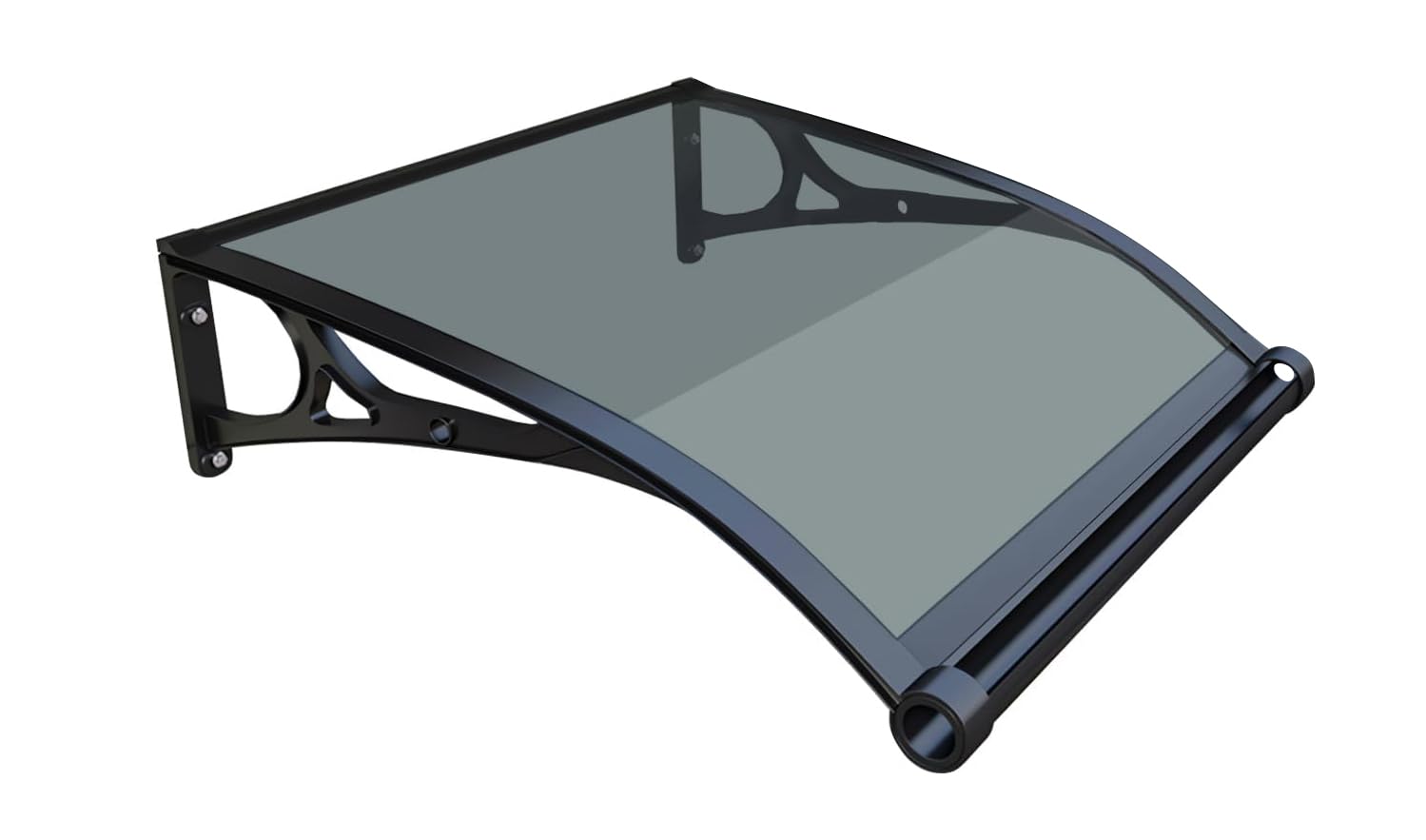
The HIAPES awning is a solid polycarbonate design built for direct rain deflection. Its transparent smoke gray panel allows natural light through while blocking UV rays, and the front gutter drain system is engineered to channel rainwater to the sides, preventing the typical waterfall effect found on flat canopies. The aluminum alloy brackets are a genuine upgrade over standard ABS plastic, offering better corrosion resistance and structural rigidity for supporting the panel against wind uplift.
Assembly requires careful attention because the panel slots are very tight, and the instruction manual can be misleading. The recommended method among experienced users is to fully assemble the awning on the ground, apply sealant at every joint, and then lift the unit onto the wall with multiple people. The 40-inch projection is ideal for a standard single door, providing enough overhang to keep rain away from the threshold even during wind-driven storms.
Customer feedback highlights that the unit is capable of preventing water from seeping into basement doors when mounted over an exterior entry. The powder-coated finish on the aluminum supports resists chipping and rusting, maintaining its appearance and sealing integrity. For its size and material quality, this is a solid choice for homeowners needing a permanent, low-maintenance waterproof cover over a specific entrance.
Why it’s great
- Solid polycarbonate panel is inherently waterproof with no seams to leak.
- Front gutter drain actively directs water sideways to protect the entry path.
- Aluminum brackets offer superior rust resistance for long-term durability.
Good to know
- Panel slots are very tight; careful alignment and sealant are required.
- Manual is unclear; ground assembly before wall mounting is recommended.
- Best suited for single doors; wider coverage requires multiple units.
3. GGNEBAI Door Awning 40×120
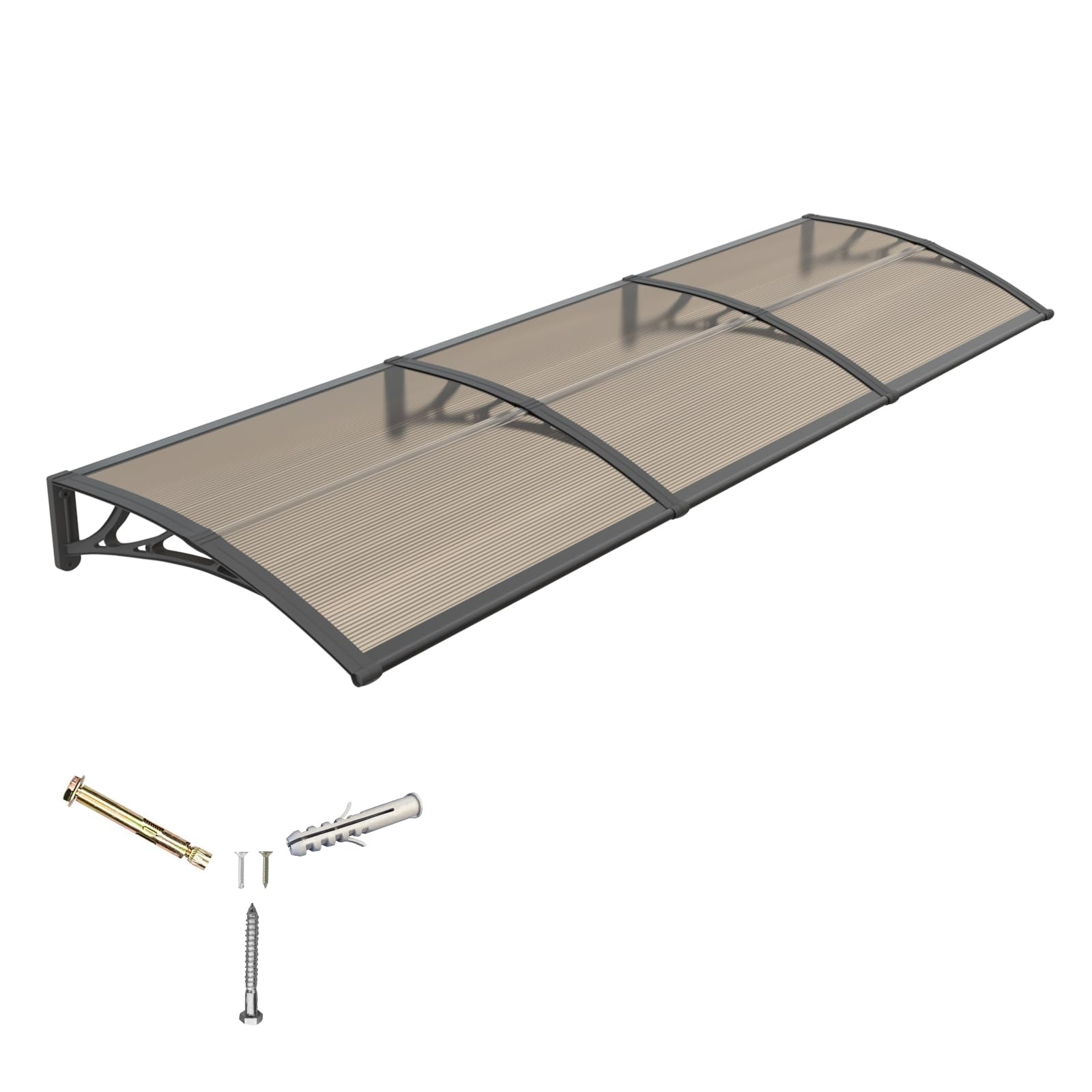
Stretching 120 inches in length, this GGNEBAI awning is designed for covering wide windows, double doors, or long patio sections. The polycarbonate hollow sheet construction is lightweight while maintaining high impact resistance, capable of withstanding hail and moderate snow loads. The black bracket and brown board color combination offers a classic look that blends with most home exteriors, and the high-impact material provides a year-round shield against rain and sun.
Installation is a two-person job due to the extended length. The brackets are made of ABS plastic and aluminum alloy bars, which are generally durable but require careful sealing at each contact point with glass glue to prevent water seepage. Some users report that the panels can warp slightly under extreme heat, though this does not typically affect their water-shedding capability. The hollow sheet design means the panel has internal air channels, which provide insulation but are not a structural weak point.
For rain protection at this price point and width, this awning is effective. The key is in the preparation: applying sealant generously during assembly separates a leak-free install from a frustrating one. It holds up well in high winds due to its low profile, and the lightweight nature of polycarbonate reduces stress on the wall anchors. This is a budget-conscious solution for large doorways that need consistent weather protection.
Why it’s great
- 120-inch length covers large windows and double doors effectively.
- Hollow polycarbonate sheet is lightweight yet impact resistant.
- Classic color scheme blends well with most home exterior styles.
Good to know
- ABS brackets and aluminum bars require thorough sealing to prevent leaks.
- Panels may show slight warping under intense direct heat.
- Two-person assembly is mandatory for safe handling of the length.
4. GUANSU-CN 40×48 Expandable Polycarbonate Awning
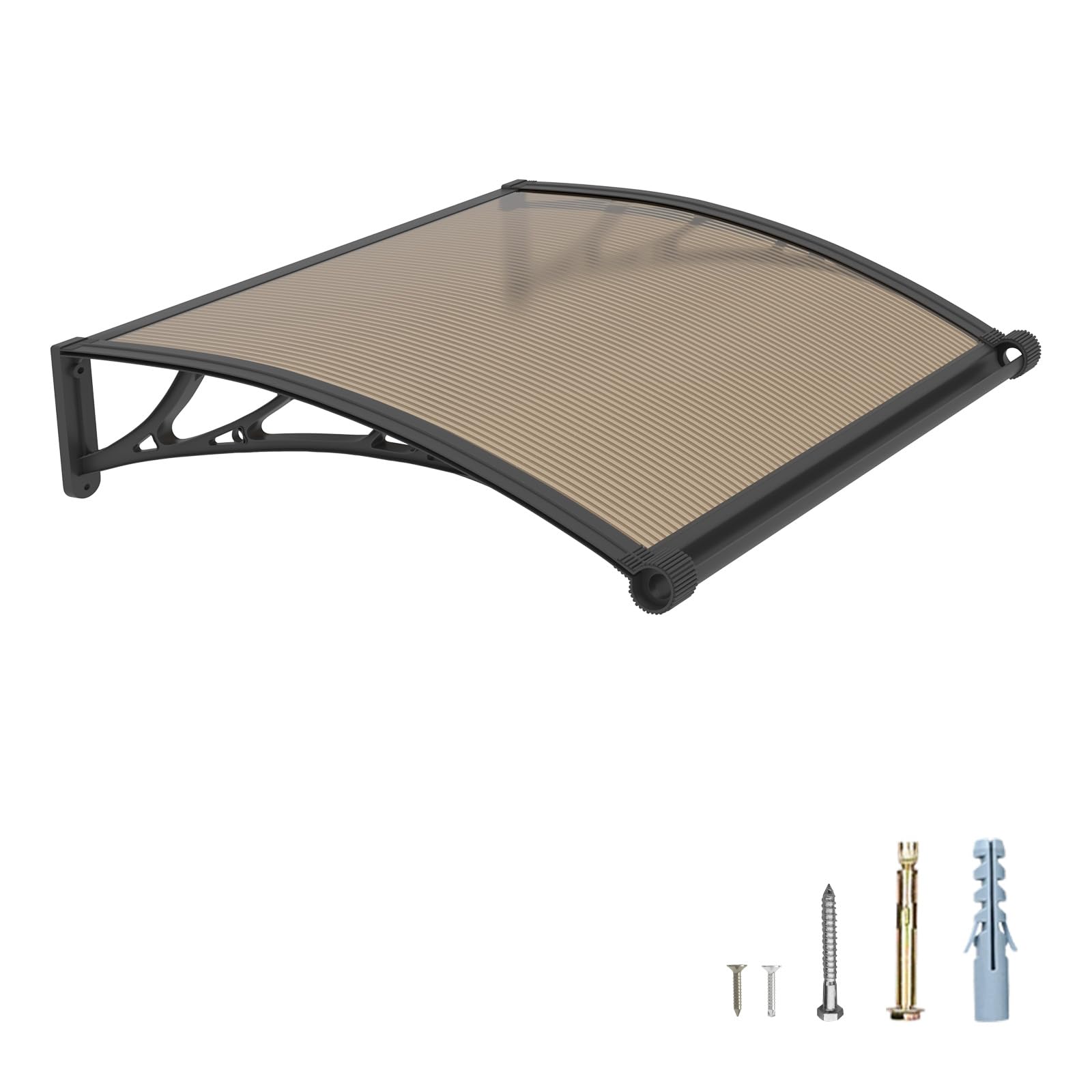
The GUANSU-CN awning distinguishes itself with a seamless, one-piece polycarbonate panel that eliminates the risk of leaking at a center seam. This is a major advantage over cheaper designs that require joining two panels. The built-in drainage channel is integrated directly into the panel mold, providing a reliable path for rainwater to flow toward the edges and away from the door frame. The reinforced ABS brackets and aluminum fixing bar add rigidity to the structure.
Assembly has a notable flaw: no pre-drilled pilot holes. Users must drill through the plastic brackets themselves, which carries a risk of cracking the material. The included screws are also too short for many wall types. Replacing them with longer 1.25-inch drywall screws is a common workaround. The expandable design is clever — identical units can be linked end-to-end for unlimited width, making it perfect for covering long patios or storefronts.
For rain protection, the integrated drainage and seamless panel are top-tier features at this tier. The polycarbonate blocks 99% of UV rays while maintaining clarity. The 40-inch projection is generous enough to keep rain off a standard entryway, and the 48-inch width covers a standard door comfortably. This is a solid choice for those who plan to expand coverage later or who need a leak-proof solution for a wide patio area.
Why it’s great
- Seamless one-piece panel design eliminates the most common leak point.
- Built-in drainage channel directs water away from entryways effectively.
- Expandable design allows connecting multiple units for custom width.
Good to know
- No pilot holes; drilling risks cracking the plastic brackets.
- Included wall screws are too short for most exterior walls.
- Instructions are unclear about bracket positioning and assembly steps.
5. HOMEDEMO Manual Retractable Awning 59×118
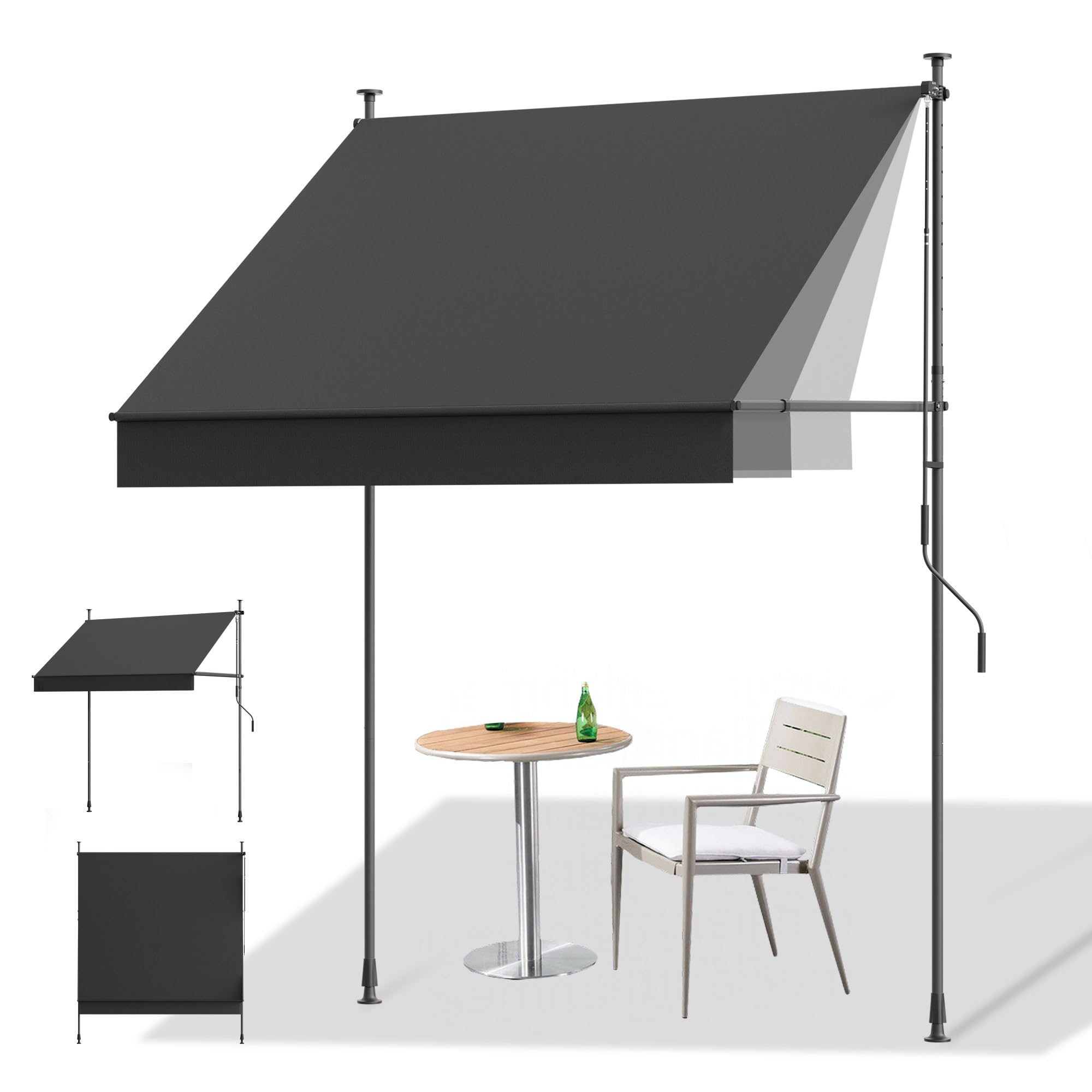
The HOMEDEMO awning features an upgraded 220g polyester fabric with a PU waterproof coating, a step up from the 180g standard that gives it better resistance to light rain. Its 2-in-1 structure allows it to function as both a horizontal awning and a vertical shade screen, offering flexibility for different weather conditions. The three-level adjustable crank handle makes operation easy for users of different heights.
Waterproofing is the main concern here. Several user reports confirm that the fabric is not entirely waterproof; water can soak through during heavy or prolonged rain. The awning is best used for light rain and sun shade. The frame is sturdy when installed correctly, but it acts as a sail in winds over 5 mph, making it unsuitable for unattended use in breezy areas. The telescopic poles and 2-degree tilt design help reduce fabric sagging, but the structure needs robust anchoring.
For its adjustable height and angle features, this awning is a good match for renters or those who need a temporary solution. The ability to retract it completely is a key advantage, as it extends the fabric’s life by protecting it from the elements when not in use. It is not a permanent rain solution, but for patios that need flexible coverage from light showers, it provides a practical and adaptable shelter.
Why it’s great
- 220g fabric with PU coating offers improved water resistance over lighter materials.
- 2-in-1 design provides both horizontal and vertical shading options.
- Fully retractable, protecting fabric from UV and rain damage when stored.
Good to know
- Fabric is not fully waterproof; rain can soak through in heavy downpours.
- Frame is unstable in winds over 5 mph and acts as a sail.
- Best suited for temporary or light-duty rain protection.
6. Xenjum Heavy Duty RV Awning Replacement 12ft
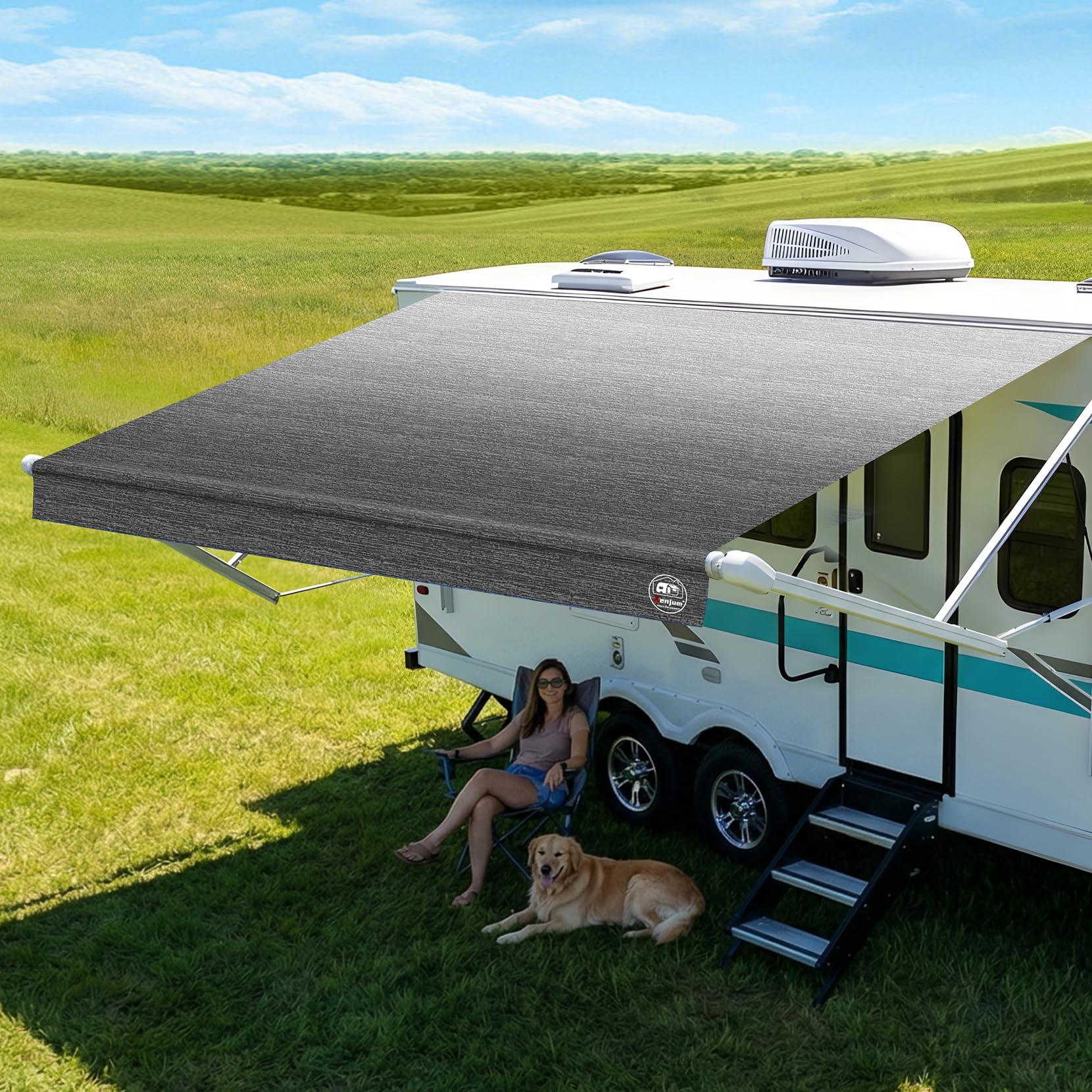
This is not a standard house awning; it is a dedicated replacement fabric for RV, camper, and trailer awnings. The material is a heavy 19.5-ounce 5-layer vinyl with a 1200D rip-stop construction. This density is significantly higher than standard patio awning fabric, making it nearly impenetrable to water and highly resistant to tearing. The dual-sided heat-sealed seams ensure that the primary stitch holes are sealed against moisture intrusion.
Installation is designed to fit most major RV brands including Carefree and Dometic. The universal fit relies on three included polycords that slide into the roller tube groove. It is a multi-person job, requiring three to four people to manage the heavy fabric and align it correctly. Users report that it held up against 40 mph winds without damage, a testament to the thick vinyl construction. The thermal balance technology keeps the fabric flexible down to -40°F without cracking.
For RV owners, this is the most reliable waterproof option at this tier. The material weight alone makes it superior to any standard polyester or canvas awning for rain. The UPF 50+ rating and dirt-resistant colors are bonuses. It is not a DIY project for one person, and the 11-foot-2-inch fabric length is shorter than the advertised 12-foot awning size, so careful measurement of the awning arm distance is critical before purchase.
Why it’s great
- Ultra-dense 19.5oz vinyl provides exceptional waterproof performance.
- 5-layer rip-stop construction resists tears and pinholing.
- Withstands extreme cold (-40°F) without cracking or stiffening.
Good to know
- Purpose-built as a replacement fabric; not for standard house installation.
- Requires 3-4 people for safe and proper installation.
- Fabric length is shorter than the awning size (e.g., 11’2″ vs 12′).
7. VEVOR Retractable Side Awning 71×118
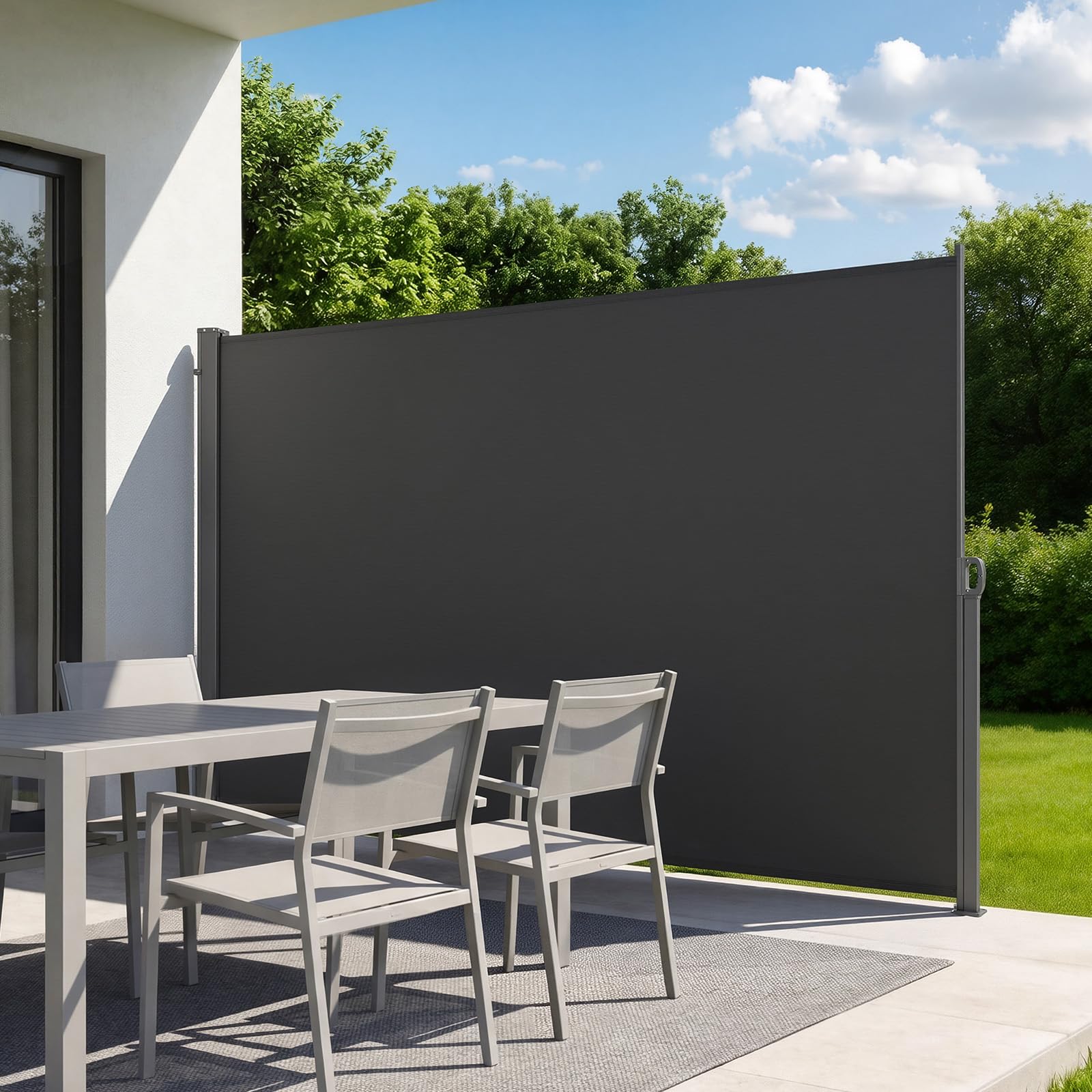
This VEVOR side awning is designed for vertical coverage, making it a privacy screen, windbreak, and rain blocker for the sides of patios, decks, or balconies. The 180 g/m² polyester fabric with PU coating provides basic water resistance. The powder-coated iron frame includes a telescopic pole and support post for stability. The smooth retraction system uses an aluminum roller with a spring steel mechanism.
Rain performance is limited. The PU coating is for light rain resistance, not heavy downpours. The manufacturer explicitly advises retracting the awning during heavy rain or strong winds. A significant issue reported by users is fabric stretch after rain, where the fabric droops by about a foot, allowing neighbors to see over the top. The stitching is only rated for light winds, so this is strictly a mild-weather solution.
If your goal is to block side rain from hitting a specific area while maintaining privacy from neighbors, this awning works well in calm conditions. The build quality of the retracting mechanism is praised, though the screws provided are cheap and prone to rust. It is best used in a sheltered location (like a covered deck side) where it won’t face the full brunt of a storm.
Why it’s great
- Provides both side rain protection and visual privacy screening.
- Smooth retraction mechanism for easy deployment and storage.
- Sturdy powder-coated iron frame for vertical applications.
Good to know
- Fabric stretches and droops after rain, reducing privacy coverage.
- Not suitable for heavy rain or winds over 8 mph.
- Included screws are low quality and should be upgraded to rust-resistant options.
8. Quictent Waterproof Sun Shade Sail 12×16 ft

The Quictent shade sail is a 12×16 ft fabric canopy designed for large patio, yard, or pool coverage. It uses 185GSM polyester with a two-layer PU coating, giving it an IPX6 water resistance rating. This rating means it can handle light rain and splashing, but is not designed to withstand heavy downpours or wind-driven storms. The curved edges and double-webbing nylon straps with stainless steel D-rings are built for high tension.
Critical to its rain performance is installation angle. The instructions explicitly require a 20-40 degree slope to prevent water from pooling in the center. Even at a steep angle, heavy rain can cause the fabric to balloon and sag. The included hardware kit is functional, but many users replace the rope-like tie-downs with ratchet straps to achieve the necessary tension for water runoff. Without maximum tension, water pools instantly and risks ripping the fabric.
This sail is a hybrid product that prioritizes sun blocking (98% UV blockage) over rain protection. It works best as a rain shield for light coastal or seasonal showers, not as a primary storm cover. For large areas needing basic rain defense combined with high sun protection, this is a cost-effective fabric option, but the owner must be diligent about tensioning and retracting it in severe weather.
Why it’s great
- IPX6 rating provides effective defense against light rain and splashes.
- Large 12×16 ft coverage is ideal for patios, pools, and yards.
- Reinforced edges and stainless steel D-rings handle high tension well.
Good to know
- Requires a steep 20-40° installation angle to prevent water pooling.
- Not suitable for heavy rain; water can collect and cause tearing.
- Included hardware is basic; ratchet straps are recommended for proper tension.
9. GGNEBAI Door Awning 32×60 with Drainage Sink

The GGNEBAI 32×60 is the budget-tier option in this lineup. Its main selling point is the integrated drainage sink feature, which channels rainwater to the sides of the canopy. It is made from polycarbonate sheets with aluminum fixing bars and ABS brackets. The transparent design allows natural light to pass through while providing UV protection, making it a dual-purpose rain and sun shield for a standard entryway.
The lightweight build is a double-edged sword. It is easy to transport and install alone, with many users reporting a straightforward DIY setup. However, the polycarbonate panels and ABS brackets feel flimsy before installation. Once mounted and sealed, the structure feels much firmer. The manufacturer recommends glass glue for all joints to prevent leaks, which is essential for this model as the plastic components do not form a tight seal on their own.
For rain protection on a budget, this awning performs adequately for sun and light rain. User reviews consistently note it keeps rain off the door but express uncertainty about its ability to handle snow load due to the light frame. It is an entry-level solid panel awning that works well for those on a tight budget or for a temporary solution. For heavy rain zones, investing in the thicker aluminum-framed models would be a wiser long-term choice.
Why it’s great
- Integrated drainage sink effectively channels rain away from the door.
- Lightweight and easy to install solo for a DIY project.
- Polycarbonate panel blocks UV while maintaining natural light.
Good to know
- Frame feels flimsy during assembly and may not support heavy snow loads.
- Requires glass glue (not included) for proper leak-proof sealing.
- Best suited for light rain; durability in storms is unproven.
FAQ
Is polycarbonate or fabric better for heavy rain?
What does an integrated drainage groove do?
Do I need to seal the joints on my awning?
Final Thoughts: The Verdict
For most users, the awning for rain winner is the VEVOR Manual Retractable Awning because it offers the best balance of large coverage, wind resistance, and crank-adjustable water runoff. If you want solid, permanent rain protection that never needs retracting, grab the HIAPES Door Awning for its integrated drainage. And for RV owners or those needing an ultra-durable, temporary rain shelter for a vehicle, nothing beats the sheer waterproof density of the Xenjum Heavy Duty RV Awning Replacement.