
Our readers keep the lights on and the weekend projects moving. As an Amazon Associate, I earn from qualifying purchases.
Few things are more frustrating than a smart lock, keyless deadbolt, or electronic door strike dying mid-cycle. A security system that stops communicating, a keypad that won’t light up, or a latch that refuses to retract at 11 PM is not a minor inconvenience—it’s a failure of preparation. The difference between a lock that lasts six months and one that dies in two weeks often comes down to the specific chemistry sitting inside that battery compartment.
I’m Rikta — the co-founder and writer behind FitlyFast. My work focuses on analyzing real-world performance data and battery discharge curves so you can match the right cell chemistry to the demanding power profile of modern electronic door locks.
After reviewing hundreds of customer test reports and comparing voltage stability across alkaline, lithium, and rechargeable chemistries, what stands out is clear: picking the right batteries for door locks is less about brand loyalty and more about understanding constant 1.5V output requirements.
How To Choose The Best Batteries For Door Locks
Electronic door locks are a unique power consumer. They sit idle most of the time but require a sudden burst of high current to drive a motor that retracts or extends a deadbolt. A battery that sags under load—voltage dropping from 1.5V to 1.1V when the motor engages—will cause the lock to stall, miss cycles, or report false low-battery warnings. Choosing the right cell means understanding four specific traits.
Voltage Stability Under Load
The motor inside an electronic deadbolt demands a steady 1.5V even during the peak current draw of the latch cycle. Standard alkaline batteries drop voltage under load as they age, triggering performance issues long before the battery is truly empty. Lithium primary cells, by contrast, maintain a flat discharge curve—staying near 1.5V until the very end of their life. This is the single most critical spec for lock reliability.
Leak Resistance and Device Safety
A leaking battery inside a lock’s sealed compartment can corrode the spring contacts, ruin the logic board, and permanently destroy the lock. Alkaline batteries have a known failure mode where hydrogen gas builds up and vents corrosive fluid. Lithium cells are inherently leak-proof because their chemistry does not produce the same gas. For a lock that you expect to last years, leak-proof construction is a mandatory safety feature.
Temperature Tolerance
Door locks are often installed on exterior doors, exposed to seasonal temperature swings. Standard alkaline batteries lose capacity rapidly below 32°F, sometimes delivering only 20-30% of their rated power. Lithium primary cells operate from -40°F to 140°F with minimal capacity loss. If your lock lives on a front door in a climate with cold winters, lithium chemistry is the only reliable choice.
Rechargeable vs. Single-Use Economics
High-quality 1.5V lithium rechargeable AA batteries now deliver 1600+ charge cycles with a constant voltage output that matches primary lithium cells. The upfront cost is higher per battery, but after five or six charge cycles, the per-use cost becomes dramatically lower than any single-use alkaline or lithium cell. For households with multiple smart locks, this is the long-term value play.
Quick Comparison
On smaller screens, swipe sideways to see the full table.
| Model | Category | Best For | Key Spec | Amazon |
|---|---|---|---|---|
| RayHom 3400mWh Rechargeable | Rechargeable Lithium | Long-term savings, constant voltage | 3400mWh, 1600+ cycles | Amazon |
| Energizer Ultimate Lithium | Primary Lithium | Maximum single-use lifespan | 25-year shelf life | Amazon |
| EBL 3700mAh Lithium | Primary Lithium | Bulk value for smart locks | 3700mAh, 12-pack | Amazon |
| Duracell Optimum Alkaline | Premium Alkaline | Best alkaline for lock use | 4X Power Boost Ingredients | Amazon |
| Duracell Coppertop Alkaline | Standard Alkaline | Everyday household backup | 12-year storage life | Amazon |
| Energizer MAX Alkaline | Standard Alkaline | Bulk household supply | 48-count, 12-year shelf life | Amazon |
| Amazon Basics 100-Pack Alkaline | Budget Alkaline | Low-drain devices, stockpile | 100-pack, 10-year shelf life | Amazon |
In‑Depth Reviews
1. RayHom 3400mWh 1.5V Rechargeable (4-Pack)
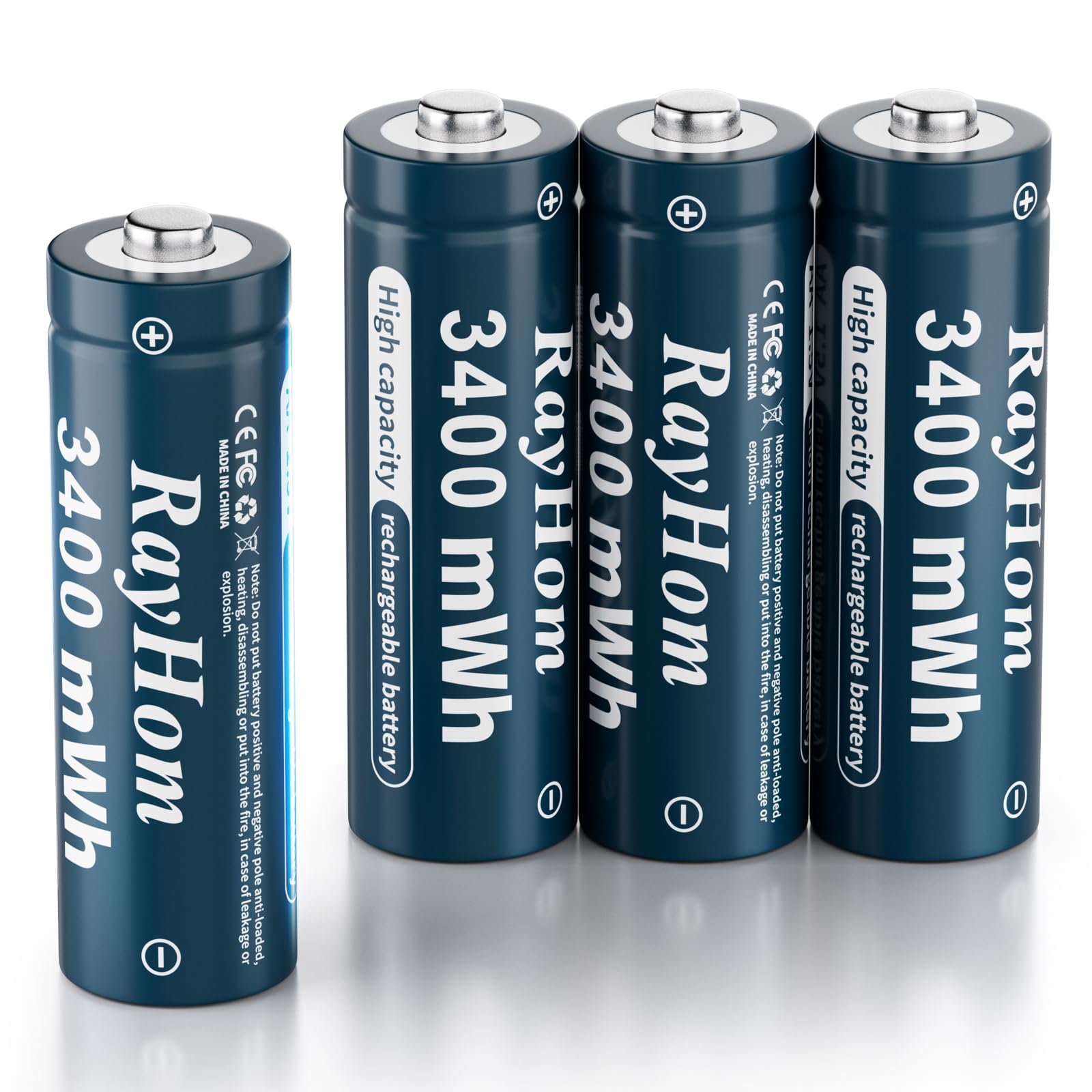
The RayHom 3400mWh rechargeable lithium AA battery is the smartest long-term investment for an electronic door lock. It delivers a steady 1.5V output until the cell is completely depleted—no voltage sag that causes your deadbolt motor to hesitate. With 1600+ charge cycles, this single set of four batteries can power a lock for a decade or more, completely eliminating the recurring cost of single-use alternatives.
These cells use CPBI Sealing Technology for improved energy density and include built-in protection modules that prevent over-current, over-temperature, and short-circuit damage. The 3A instant current rating is more than enough to handle the peak draw of a deadbolt motor. They come in a 4-pack, which is exactly the count most smart locks require, so there’s no waste or leftover cells sitting in a drawer.
The only catch is that these require a dedicated 1.5V lithium charger—standard NiMH chargers won’t work. If you already own a compatible lithium charger, this is a no-brainer for door lock use. For those who don’t, the initial investment in a charger plus these batteries still pays for itself within six to eight months of replacing primaries.
Why it’s great
- Constant 1.5V output prevents lock motor stalls
- 1600+ charge cycles, near-zero waste
- Built-in safety protections for long-term reliability
Good to know
- Requires a 1.5V lithium-specific charger
- Higher upfront cost for batteries + charger
2. Energizer Ultimate Lithium AA (8-Pack)

The Energizer Ultimate Lithium AA is the benchmark for single-use door lock batteries. It holds power for up to 25 years in storage, performs reliably in extreme temperatures from -40°F to 140°F, and is leak-proof by design—no risk of corroding your lock’s internal contacts. Real-world reports from users putting these in electronic door locks show battery level still reading near full after several months of daily use.
The key advantage here is the flat discharge curve. While standard alkalines drop voltage as they drain, the Ultimate Lithium maintains a near-constant 1.5V until the very end. This means your lock’s low-battery warning will trigger only when the cell is genuinely empty, not when voltage sags under load. The 8-pack gives you enough for two full lock replacements plus spares.
These are a premium choice, costing more per cell than alkaline options. But for an exterior door lock that’s frequently used in cold weather or left unattended for long periods, the reliability is worth the premium. No lockouts, no mid-winter failures, no leaking green goo inside a smart lock.
Why it’s great
- True 1.5V output until empty, no sag
- 100% leak-proof construction
- Extreme temperature tolerance (-40°F to 140°F)
Good to know
- Non-rechargeable, recurring cost
- Premium price per cell compared to alkaline
3. EBL Lithium AA 3700mAh (12-Pack)

The EBL 3700mAh lithium primary cell offers the highest capacity rating in this roundup, which translates to noticeably longer runtimes in smart locks compared to standard lithium AA batteries. Users report their Blink doorbells and smart deadbolts running for months without a low-battery alert. The 12-pack provides exceptional value for households running multiple battery-dependent locks or sensors.
EBL claims 100% leak-proof construction, matching Energizer’s guarantee, which is critical for any battery left inside a lock for six-plus months. The cells operate reliably between -68°F and 140°F, a wider temperature window than most competitors, making this a solid choice for locks on unheated garages, sheds, or front doors in extreme climates. They’re also 35% lighter than alkaline cells, though that weight advantage matters less in a stationary lock.
The main trade-off is that these are non-rechargeable. At a mid-range price point per cell, you get strong performance without the premium cost of the Energizer Ultimate Lithium. If you cycle through batteries across multiple locks and smart home devices, the 12-pack format minimizes per-unit shipping waste and provides a convenient storage case.
Why it’s great
- Highest capacity (3700mAh) among lithium primaries
- Wide temperature tolerance
- Bulk 12-pack with reusable case
Good to know
- Non-rechargeable, single-use only
- Not quite as long shelf life as Energizer Ultimate
4. Duracell Optimum AA (28-Count)

The Duracell Optimum is the company’s best-performing alkaline cell, containing four times the Power Boost ingredients of the standard Coppertop. This translates to better voltage stability under load—the battery holds higher voltage longer into its discharge cycle compared to standard alkalines. Users report these outlast generic alkaline brands significantly in high-drain devices, including electronic locks.
The re-closable packaging is a practical touch for door lock users: you can open the pack, pull out four cells for the lock, and securely store the rest without hunting for a rubber band or Ziploc bag. The 12-year storage guarantee means a stockpile of these in a drawer will be fresh even after years of sitting. They’re leak-resistant but not fully leak-proof like lithium cells—though Duracell’s leak resistance is better than most alkaline brands.
For door lock use, the Optimum is the best alkaline option available. It still won’t match a lithium cell’s flat discharge curve or cold-weather performance, but in a mild climate with a moderate-use lock, it’s a reasonable mid-range choice. The 28-count pack provides excellent per-cell value for a premium-tier alkaline.
Why it’s great
- Best voltage stability among alkaline cells
- Re-closable packaging for organized storage
- 12-year storage guarantee
Good to know
- Alkaline, not lithium—still risks voltage sag under load
- Higher cost than standard Coppertop
5. Duracell Coppertop AA (24-Count)

The Duracell Coppertop is the most trusted household alkaline battery in North America, and for good reason. Its Power Boost Ingredients formulation provides up to 50% more power in high-drain devices compared to generic alkaline batteries. For an electronic door lock with moderate use in a temperate climate, the Coppertop delivers reliable performance that typically lasts several weeks to a few months depending on lock usage frequency.
What sets the Coppertop apart from cheaper alkaline alternatives is its leak resistance. Duracell has invested heavily in seal technology to minimize the risk of battery corrosion inside expensive devices. While no alkaline battery is 100% leak-proof, the Coppertop has one of the best track records in the industry. The 12-year storage guarantee ensures that the pack you buy today will still be fresh when you need replacements.
The limitation remains chemistry: alkaline batteries lose voltage under load as they discharge. A lock that works perfectly with fresh Coppertops may start showing intermittent failures or false low-battery warnings as the cells drop below 1.3V. For a lock that you absolutely cannot have fail, lithium is safer. But for secondary doors or moderate-use locks, the Coppertop is a proven, affordable solution.
Why it’s great
- Trusted brand with strong leak resistance
- Power Boost Ingredients for better high-drain performance
- 12-year storage life in original packaging
Good to know
- Voltage sag under load as battery depletes
- Not suitable for extreme cold or heavy-use locks
6. Energizer MAX Alkaline AA (48-Count)
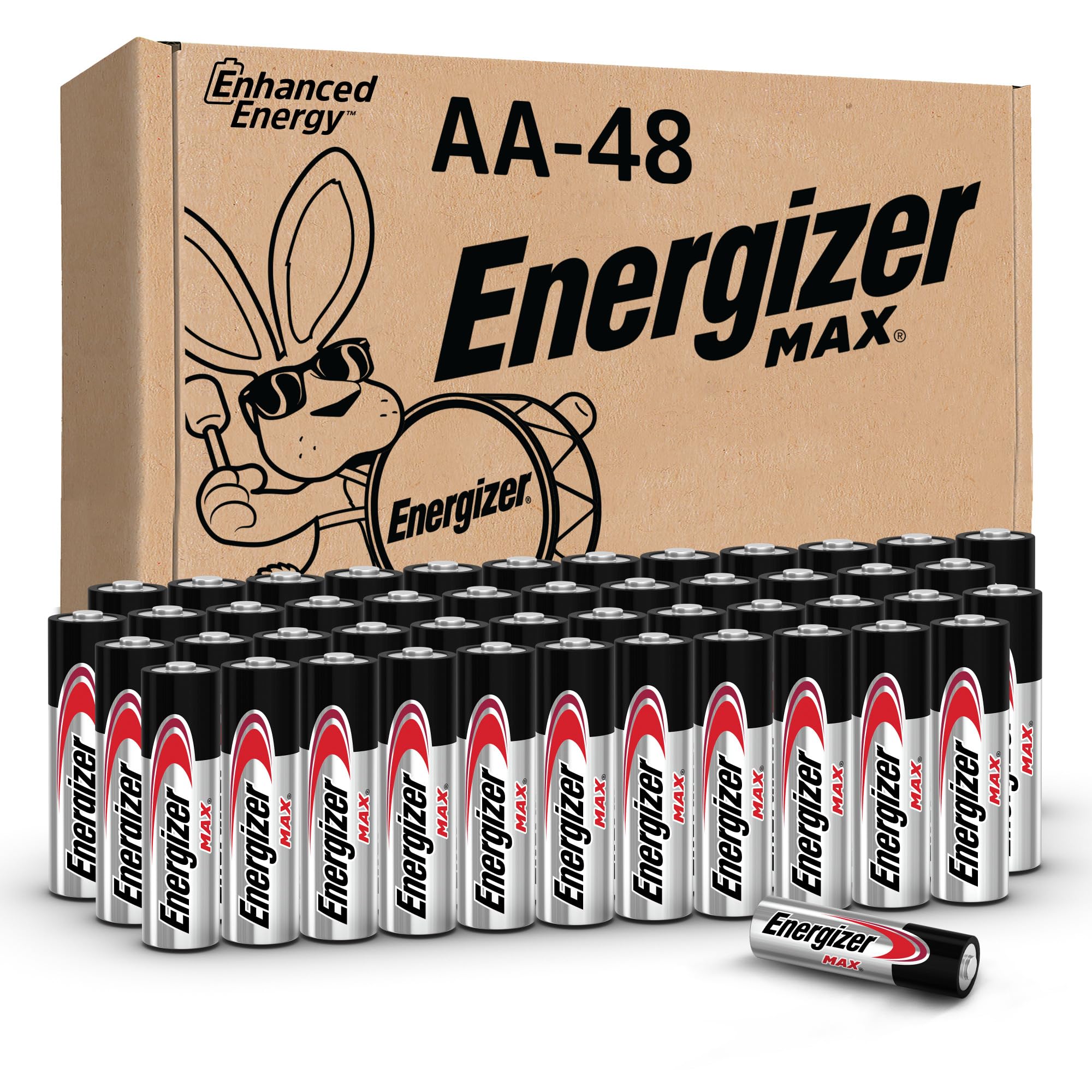
The Energizer MAX AA is the brand’s longest-lasting alkaline cell, designed to last up to 50% longer than Eveready Gold in demanding devices. For a door lock user, this means more cycles before replacement compared to basic-value alkaline cells. The 48-count pack is ideal for households that want to stock a single battery format for locks, remotes, clocks, and toys without maintaining separate inventory.
Energizer’s leak-resistant design protects your lock’s contact points for up to two years after the battery is fully used, which is a useful safety margin if you forget to remove dead cells immediately. The 12-year shelf life means the 48-pack can sit in a pantry or emergency kit and still be ready when your lock starts chirping for fresh power. The per-cell cost is lower than buying smaller packs at retail stores.
These are standard alkaline cells, so they share the same fundamental limitation as all non-lithium options: voltage drop under load as they age. In a lock that sees heavy daily use—think a busy family front door with frequent keypad entries—you may see a noticeable decline in performance after a few weeks. These are best suited for locks on secondary doors or for users who are comfortable swapping batteries every month or two.
Why it’s great
- Excellent bulk value for household supply
- Leak-resistant construction protects devices
- Up to 50% longer lasting than budget alkalines
Good to know
- Standard alkaline voltage curve—drops under load
- 48-pack is excessive if only used for locks
7. Amazon Basics 100-Pack AA Alkaline

The Amazon Basics 100-pack AA alkaline battery is the pure value play—more cells per dollar than any name-brand option. These batteries deliver roughly 1900mAh capacity, which is on par with standard alkaline cells from major brands. For low-drain devices like TV remotes, clocks, and toys, they perform reliably. The 10-year leak-free shelf life means you can stockpile them without worrying about expiration.
However, for door lock use, these have a notable limitation. User reports indicate that in high-drain devices like electronic locks or security cameras, the Amazon Basics alkaline cells deplete faster than premium alkalines or lithiums. The voltage sag under load is more pronounced than name-brand alkaline cells, which means your lock may show low-battery warnings or intermittent motor hesitation earlier in the discharge cycle.
These are not the right choice for a primary front door lock that you rely on daily. They work passably for locks on less-used secondary doors, but the risk of an unexpected mid-cycle stall is higher than with any lithium or premium alkaline option. For households that need a massive general-purpose battery supply and just need something to put in an occasional-use lock, the price-per-cell is unmatched.
Why it’s great
- Lowest cost-per-cell in this guide
- 10-year shelf life for long-term storage
- Leak-free construction for basic safety
Good to know
- Voltage sag more pronounced under high draw
- Shorter effective life in door locks than premium cells
FAQ
Why do my door lock batteries die faster in winter?
Can I use NiMH rechargeable batteries in my smart lock?
Do all door locks require the same battery voltage?
How long should a good battery last in a door lock?
Will a battery leak damage my lock permanently?
Final Thoughts: The Verdict
For most users, the batteries for door locks winner is the RayHom 3400mWh Rechargeable because it combines a constant 1.5V output, 1600+ charge cycles, and built-in safety protection into a format that eliminates recurring cost. If you want maximum single-use reliability with zero maintenance, grab the Energizer Ultimate Lithium for its leak-proof build and 25-year shelf life. And for bulk lithium power across multiple devices, nothing beats the EBL 3700mAh 12-pack at its price point per cell.