
Our readers keep the lights on and the weekend projects moving. As an Amazon Associate, I earn from qualifying purchases.
Starting piano means choosing between a toy that collects dust and an instrument that builds real skill. The wrong keyboard kills motivation with spongy keys and tinny sound, while the right one makes practice feel natural and progress feel fast. You need a beginner piano that matches your space, your budget, and your commitment level — without confusing specs or marketing fluff.
I’m Rikta — the co-founder and writer behind FitlyFast. I’ve spent hundreds of hours analyzing digital piano specifications, comparing key action mechanisms, polyphony counts, and learning features across dozens of models to assemble this definitive guide for real beginners.
Whether you want a full 88-key weighted cabinet setup or a compact 61-key board with lighted keys, this guide breaks down nine top contenders to help you find the very best beginner piano for your home and goals.
How To Choose The Best Beginner Piano
Choosing your first digital piano is exciting but the options can feel overwhelming. Focus on a few key specifications that directly affect how you learn and how long the instrument will serve you. Ignore gimmicks like hundreds of built-in drum loops — prioritize the elements that build real piano skills.
Weighted Keys Are Non-Negotiable for Real Technique
Unweighted, springy keys teach your fingers nothing about dynamics or control. A beginner piano with fully weighted, hammer-action keys mimics the resistance of an acoustic upright, building muscle memory that transfers to any real piano. Semi-weighted keys are a compromise for portability but fall short for serious technique development.
88 Keys vs. 61 Keys — Match Your Goals
Full-size 88-key boards cover the entire piano range and let you play standard repertoire without running out of octaves. A 61-key keyboard is lighter, cheaper, and fine for the first year of lessons, but you will eventually need those extra low and high notes for classical pieces and two-handed arrangements. Think about how long you plan to use this instrument before upgrading.
Polyphony Count Determines Note Cut-Off
Polyphony is the number of notes a digital piano can produce simultaneously. Beginners should look for at least 64-note polyphony — 128 is better. Lower counts cause notes to drop unexpectedly when playing with sustain, layered voices, or using both hands on complex passages, which is frustrating and disrupts practice flow.
Quick Comparison
On smaller screens, swipe sideways to see the full table.
| Model | Category | Best For | Key Spec | Amazon |
|---|---|---|---|---|
| Yamaha YDP105 | Premium Upright | Long-term learning & home decor | 88 GHS weighted keys, 3-pedal unit | Amazon |
| Donner DDP-90 Pro | Weighted Cabinet | Apartment living & USB connectivity | 88 hammer-action weighted keys, 128 polyphony | Amazon |
| Best Choice Products 88-Key | Full Set Bundle | Complete all-in-one package | 88 fully weighted keys, triple pedals | Amazon |
| AODSK B-83S | Weighted Cabinet | Budget-weighted 88-key with pedals | 88 weighted keys, triple pedals, 128 timbres | Amazon |
| Casio Casiotone LK-S250 | Lighted Key Portable | Self-teaching via lighted keys | 61 touch-responsive keys, 400 tones | Amazon |
| Amazon Basics Keyboard | Portable 61-Key | Simple practice on a budget | 61 full-size keys, 255 timbres | Amazon |
| Hamzer Lighted Key Set | Lighted Key Bundle | Kids and complete starter bundles | 61 lighted keys, 255 timbres | Amazon |
| Ktaxon 61-Key Set | Budget Bundle | Value set with teaching modes | 61 keys with 3 teaching modes | Amazon |
| ZIPPY 37-Key Kids Piano | Toddler Starter | Very young children ages 3+ | 37 keys, wood cabinet design | Amazon |
In‑Depth Reviews
1. Yamaha YDP105
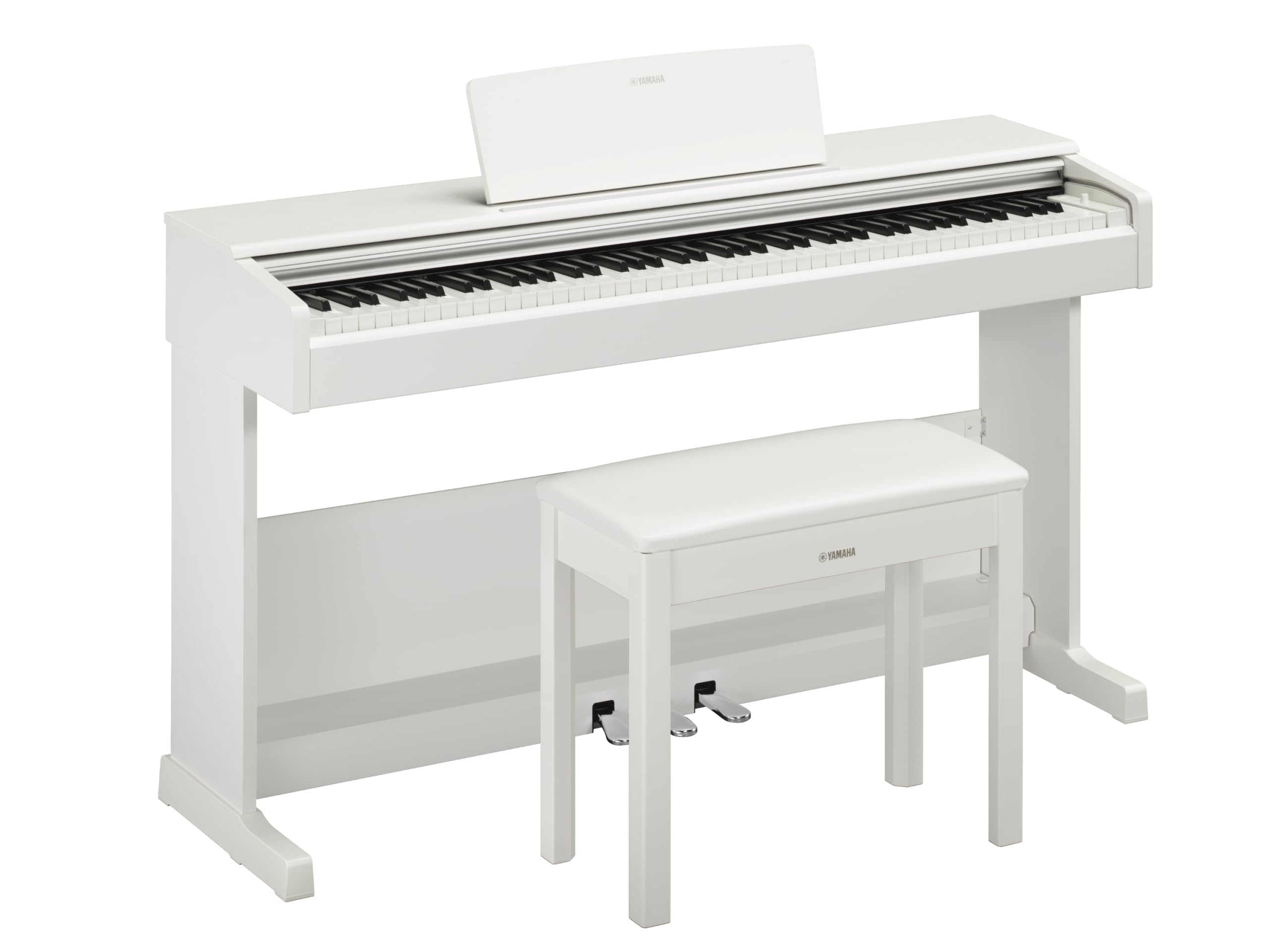
The Yamaha YDP105 delivers the most authentic acoustic piano experience in this guide with its Graded Hammer Standard (GHS) action, which makes lower keys heavier and upper keys lighter just like a real grand. The 88 fully weighted keys respond dynamically to your touch, and the built-in CFIIIS grand piano sound engine is the same voice used in Yamaha’s professional concert grands. You get 10 additional instrument voices, but the primary piano tone is so rich and natural that you will rarely switch.
The upright cabinet design with elegant wood grain and a three-pedal unit makes this feel like a permanent furniture piece rather than a temporary learner board. Dual headphone jacks allow silent practice with a teacher or friend, and the included padded bench completes the package. The 64-note polyphony is adequate for early intermediate repertoire, though advanced players may occasionally notice note drop-off with heavy sustain pedal use.
Assembly requires two people due to the 82.7-pound weight, but the clear manual makes it straightforward. The YDP105 is an investment in proper technique from day one — you will never need to upgrade for a lack of key resistance or poor sound quality. For learners who are serious about progressing through method books and into classical or jazz repertoire, this is the gold standard.
Why it’s great
- Graded hammer weighted keys build real finger strength
- Grand piano sound engine with rich dynamic range
- Elegant upright design with full triple-pedal system
Good to know
- Heavy unit at 82.7 pounds requires two people for setup
- 64-note polyphony is fine for beginners but not future-proof for advanced repertoire
- Higher upfront investment compared to portable keyboard alternatives
2. Donner DDP-90 Pro
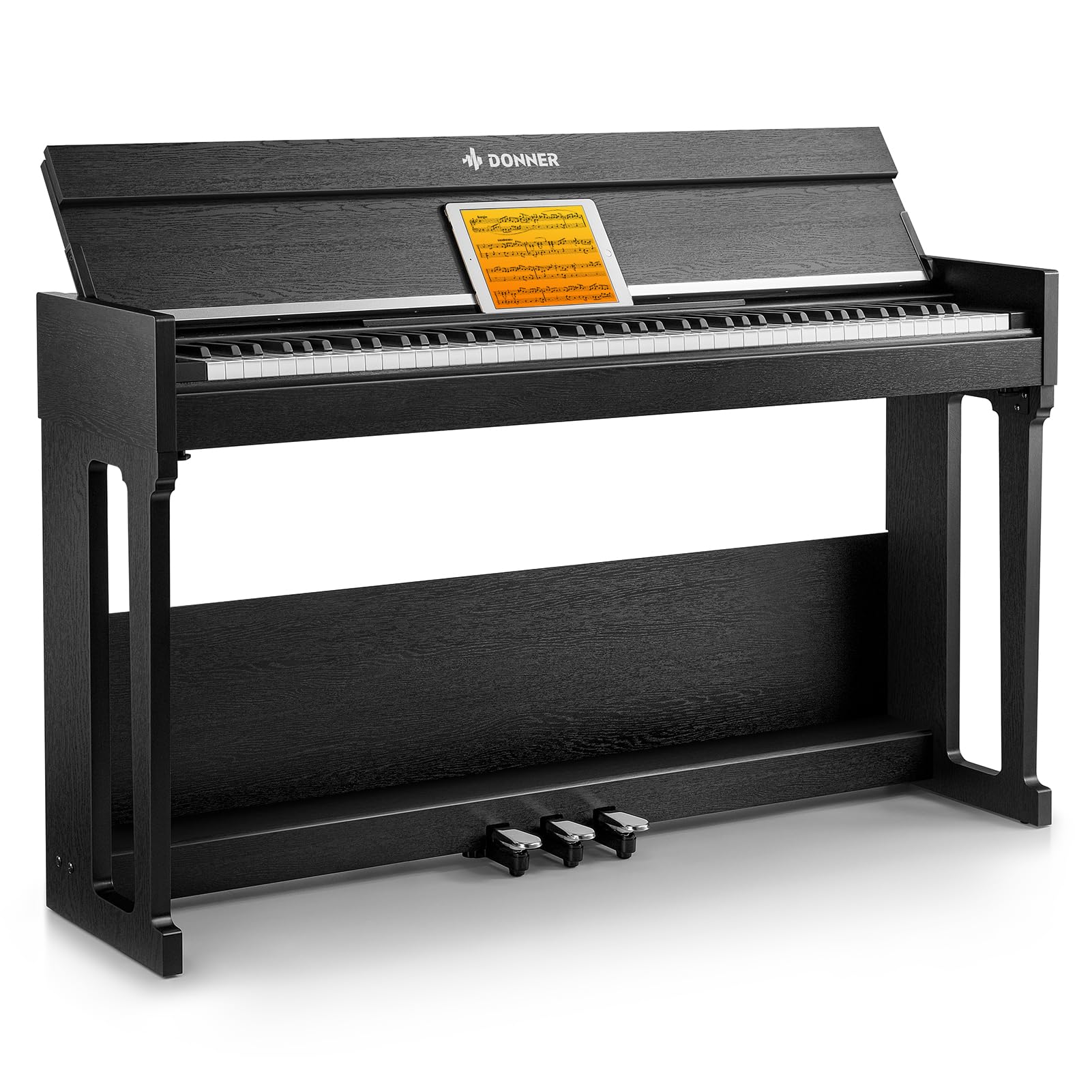
The Donner DDP-90 Pro packs 88 hammer-action weighted keys with an ivory-feel texture into a cabinet that is notably smaller and lighter than full-size uprights, making it ideal for apartments and smaller living rooms. The key resistance is heavier than budget weighted keyboards, providing satisfying feedback that helps beginners develop proper finger control. Equipped with 238 tones, 200 rhythms, and 100 demo songs, this board offers extensive variety for exploration.
The 128-note polyphony is a significant advantage — notes will never cut off during complex sustain-pedal passages, which gives you room to grow technically without hitting a hardware ceiling. The metal triple-pedal system includes soft, sustain, and sostenuto functions, matching acoustic piano pedal layout. USB-MIDI connectivity works seamlessly with PCs, tablets, and smartphones for music apps and recording software.
The flip cover includes a slow-close mechanism to protect fingers and keys, a thoughtful safety detail often missing at this level. Headphone mode is quiet enough for late-night practice, and the built-in speakers fill a room with clear, dynamic sound. Assembly requires careful attention to pre-installed screws, and the 75-pound cabinet is heavy enough to stay stable during enthusiastic playing. Overall, the DDP-90 Pro offers the best balance of weighted key feel, polyphony, and connectivity in the mid-range cabinet category.
Why it’s great
- 128-note polyphony prevents note drop during sustain-heavy playing
- Ivory-feel textured keys provide realistic grip and resistance
- Compact footprint fits small rooms without sacrificing key length
Good to know
- Assembly instructions can be confusing with pre-installed screws
- Sustain pedal feel is lighter than entry-level acoustic pianos
- High notes can sound slightly thinner than the rich midrange
3. Best Choice Products 88-Key Digital Piano Set

Best Choice Products delivers an impressive all-in-one package with 88 fully weighted keys, hammer-action mechanism, and a triple-pedal unit — everything you need out of the box. The U-stand, padded stool, keyboard cover, sheet music stand, and two headphone jacks mean zero additional purchases are necessary. The 140 timbres and 128 rhythms give beginners plenty of sounds to experiment with, and the weighted key action can be disabled for organ-style playing if desired.
The key feel is weight-sensitive, mimicking an acoustic piano response reasonably well for this price tier. The sound quality is good without the “pingy” digital tone that plagues cheaper keyboards, and the built-in speakers project clearly for home practice. The dual headphone jacks are a practical feature for shared lessons or silent practice with a partner.
Some users report that the stand can tilt slightly backward during aggressive playing, a fixable issue by adding small shims during assembly. The included stool is functional but basic — heavier players may want to replace it for long practice sessions. For beginners who want a full-size weighted keyboard with minimal assembly fuss and all accessories included, this set offers tremendous value without sacrificing key feel.
Why it’s great
- Fully weighted keys mimic acoustic piano resistance
- Includes stand, stool, cover, pedals, and dual headphone jacks
- Weighted action can be disabled for versatile playing styles
Good to know
- Stand design can tilt backward without minor assembly adjustments
- Included stool is basic and may need upgrading for comfort
- Sound quality is good but lacks the richness of premium piano samples
4. AODSK B-83S 88-Key Weighted Keyboard
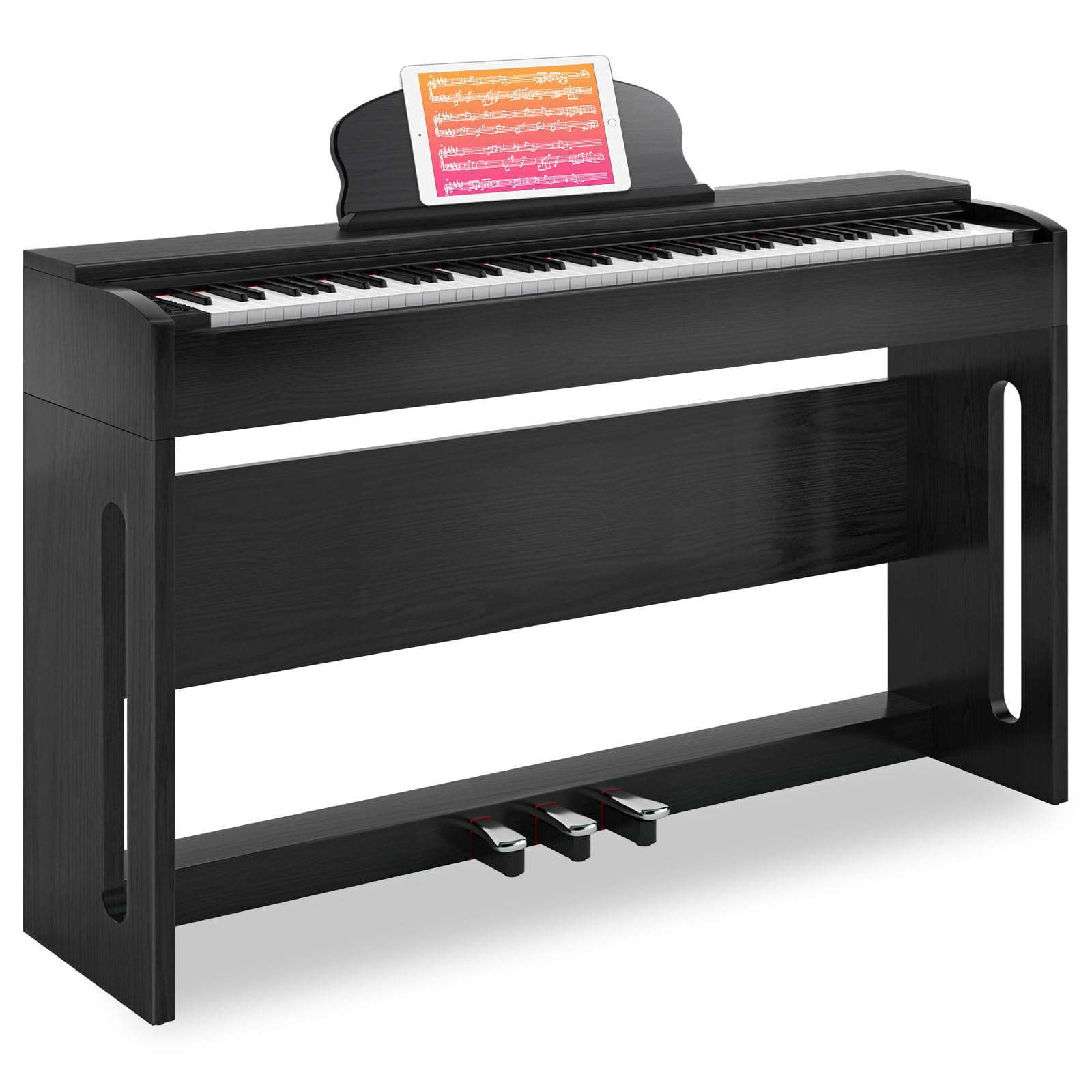
The AODSK B-83S brings 88 fully weighted keys, a furniture-style wooden cabinet, and a full triple-pedal unit to an entry-level price point that competitors rarely match. The weighted keys provide a smooth, high-response feel that is noticeably closer to an acoustic upright than semi-weighted alternatives. The 128 timbres and 88 demo songs give beginners plenty of material to work through, and the 128-note polyphony ensures clean playback during sustained passages.
The included beginner course is a nice bonus for absolute novices who want structured guidance. The headphone jack supports two headphones simultaneously, making it easy for teacher-student practice without disturbing the household. The cabinet design is streamlined and attractive, with hand-hold cutouts that make moving the 71.2-pound unit slightly easier than solid uprights.
Assembly takes about 20 minutes with the included tools, though the instruction manual is sparse and requires some interpretation. The bass frequencies can overwhelm the treble out of the box, but adjusting the built-in equalizer helps balance the sound. For beginners on a tighter budget who insist on 88 weighted keys and a proper pedal system, this is the most cost-effective path to proper technique development.
Why it’s great
- 88 weighted keys at a price point usually reserved for unweighted boards
- Full triple-pedal system with soft, sustain, and sostenuto
- 128-note polyphony prevents note dropout during complex pieces
Good to know
- Bass frequencies can overpower treble without EQ adjustment
- Assembly instructions are minimal and can be confusing
- Key action is slightly lighter than premium weighted keyboards
5. Casio Casiotone LK-S250

The Casio Casiotone LK-S250 stands apart with its Key Lighting System — LEDs inside each key illuminate to guide finger placement during built-in songs, making it one of the most effective self-teaching tools on the market. The 61 touch-responsive keys are velocity-sensitive, meaning they respond to how hard you press, which teaches dynamic control better than completely unweighted keyboards. With 400 tones, 77 rhythms, and a Dance Music Mode for creating EDM tracks, this board is fun enough to keep beginners engaged for months.
The four-stage lesson system breaks songs into parts you can learn at your own pace, and the scoring feature gamifies practice sessions — one user reported a child self-teaching 15 songs in four months using this method. USB-MIDI and audio-in connectivity let you connect to apps and play along with your favorite music without driver installation. The integrated handle and battery-ready design make it genuinely portable for playing anywhere.
The touch response is not the same as true weighted keys — there is no hammer resistance, so finger strength development is limited. The lighted keys only illuminate four notes at a time, which can be confusing for chord-heavy pieces. For motivated beginners who want to teach themselves using interactive methods, the LK-S250 is the most engaging portable option available, but it is a stepping stone to a weighted instrument, not a final destination.
Why it’s great
- Key lighting system provides visual guidance for self-teaching
- Touch-responsive keys teach dynamic control and expression
- Extremely portable with built-in handle and battery power option
Good to know
- Unweighted keys do not build proper finger strength for acoustic piano transfer
- Lighted keys limited to 4 notes at a time — not ideal for chords
- Smaller 61-key range restricts classical repertoire options
6. Amazon Basics Portable Keyboard

The Amazon Basics Portable Keyboard offers 61 full-size keys, 255 timbres, 255 rhythms, and 50 demo songs in a straightforward package that cuts out unnecessary complexity. The keys are semi-weighted with good resistance — not fully weighted, but firmer than the toy-like spring keys on ultra-budget boards. The upward-facing speakers sound decent at moderate volumes, and the LCD display makes navigation simple.
The included headphones, sheet music stand, power adapter, and note stickers make this a complete starter kit for a very accessible price. The transposition feature is genuinely useful for matching vocal ranges, and the easy-to-find middle C helps beginners orient themselves quickly. At just 12.5 pounds, this keyboard is genuinely portable for carrying to lessons or moving around the house.
The sustain pedal port uses a proprietary 6-pin PS/2 connector, meaning only the included pedal works — you cannot upgrade to a better sustain pedal without an adapter. The power cord is an awkward length that is both too short for some setups and too long for others. For absolute beginners who want a reliable, straightforward keyboard to start lessons without overthinking specs, this Amazon Basics model delivers solid value and comes backed by easy return policies.
Why it’s great
- Semi-weighted keys offer better resistance than fully unweighted alternatives
- Lightweight design at 12.5 pounds for easy portability
- Complete starter kit with headphones, stand, stickers, and power adapter
Good to know
- Proprietary sustain pedal port limits upgrade options
- Power cord length is awkward for many furniture arrangements
- 61 keys will require eventual upgrade for standard piano repertoire
7. Hamzer 61-Key Lighted Keyboard Set

The Hamzer 61-Key Lighted Keyboard Set is built for families who want a complete, ready-to-play package for children and teens. The 61 lighted keys illuminate to guide finger placement, and the included transparent key stickers help beginners identify notes without memorization. The 255 timbres, 255 rhythms, 61 keyboard percussions, and 24 demo songs provide enough variety to keep young players exploring for hours.
The bundle includes a sturdy metal stand with three height settings, a padded stool supporting up to 220 pounds, headphones, a microphone, and a sheet music stand — everything fits in one box and assembles quickly. The record and playback function lets kids hear their own playing and identify mistakes, while the microphone adds a fun karaoke element that makes practice feel like play.
The sound quality is good for this price tier, though the built-in speakers are not powerful enough to fill a large room. Some units may have a single key slightly out of tune, a common tolerance issue at this price level. For parents introducing young children to piano without a major financial commitment, the Hamzer set provides all the tools needed to spark interest and support early learning.
Why it’s great
- Lighted keys and note stickers accelerate note recognition
- Complete bundle includes stand, stool, headphones, and microphone
- Record and playback function helps self-correction during practice
Good to know
- Built-in speakers are modest and may not fill larger rooms
- Occasional single-key tuning variations reported
- Unweighted keys limit technique development for serious learners
8. Ktaxon 61-Key Keyboard Set
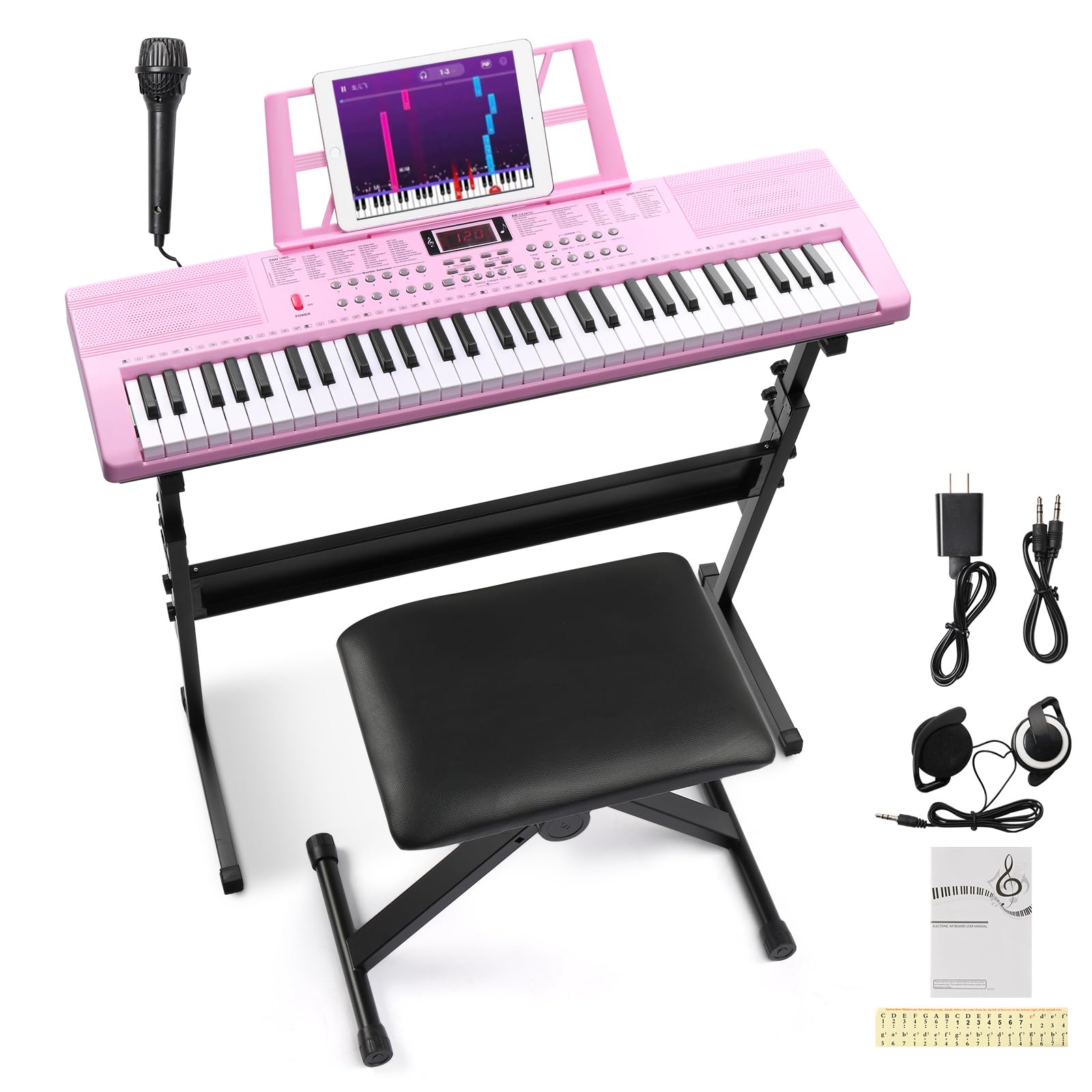
The Ktaxon 61-Key Keyboard Set delivers the most budget-friendly complete package in this guide, including an H-type stand, padded stool, headphones, microphone, and sheet music holder. The 61 keys simulate a heavy hammering mechanism for slightly better rebound than fully unweighted keyboards, and the 200 timbres, 200 rhythms, and 60 demo songs offer substantial variety. The three teaching modes — One-Key, Follow, and Ensemble — provide structured progression for absolute beginners.
The dual power supply mode lets you use either the included adapter or 4 AA batteries for outdoor use. The 3-digit LED display shows functions clearly, and the record/playback feature helps beginners review their practice. The microphone adds a fun vocal element that younger users especially enjoy, and the headphone jack allows silent practice.
The sound quality is decent for the price but the speakers are not powerful at 1.5W each, and the microphone quality is notably poor according to several users. The sheet music holder is flimsy and may fall off during use. For the absolute lowest entry point to a complete keyboard kit with teaching features, the Ktaxon set works well for very young children or casual exploration, but serious learners will outgrow it quickly.
Why it’s great
- Three teaching modes provide structured beginner progression
- Complete bundle with stand, stool, headphones, and microphone
- Dual power supply for indoor and battery-powered outdoor use
Good to know
- Built-in speakers are low-power at 1.5W each
- Microphone quality is poor and distorts easily
- Music sheet holder is flimsy and detaches easily
9. ZIPPY 37-Key Kids Piano

The ZIPPY 37-Key Kids Piano is designed specifically for children ages 3 and up, with a beautiful wood cabinet that looks like a miniature acoustic piano rather than a plastic toy. The 37 keys span three full octaves and are digital-tuned for precise pitch, eliminating the need for manual tuning. The keys are full size, which helps young children build correct finger spacing and hand positioning from the start.
The solid MDF construction and non-tipping bench make this exceptionally sturdy for active toddlers. The color-coded key stickers and illustrated songbook help very young beginners associate colors with notes, making early music exposure intuitive and screen-free. Adult volume control is a welcome feature that keeps sound at parent-approved levels — though there is no headphone jack and no variable volume knob on the unit itself.
Assembly is required and straightforward with the included tools. The sound is simple and clean — no extra rhythms or timbres, just a pure piano tone that won’t overwhelm young ears. For parents who want an attractive, durable first instrument that teaches proper finger positioning and looks good in the living room, the ZIPPY is the best toddler option. It is not suitable for older children or adults due to the limited 37-key range.
Why it’s great
- Wood cabinet design looks like a real miniature piano
- Full-size keys build correct finger spacing from the start
- Sturdy MDF construction withstands active toddler use
Good to know
- Limited to 37 keys — not suitable for children beyond early elementary
- No headphone jack for quiet practice
- No variable volume knob — sound level is fixed
FAQ
Can I learn piano properly on a 61-key keyboard?
Do I need weighted keys as a complete beginner?
What polyphony number should a beginner look for?
Are lighted keys useful for learning?
Should I buy a bundle with stand and stool or just the keyboard?
Final Thoughts: The Verdict
For most users, the beginner piano winner is the Yamaha YDP105 because it delivers the most authentic weighted key action and grand piano sound in a beautiful upright cabinet that will serve you through years of lessons. If you want the best combination of 88 weighted keys, 128-note polyphony, and compact apartment-friendly design, grab the Donner DDP-90 Pro. And for young children who need a sturdy, attractive first instrument with full-size keys, nothing beats the ZIPPY 37-Key Kids Piano.