
Our readers keep the lights on and the weekend projects moving. As an Amazon Associate, I earn from qualifying purchases.
That daily finger prick is rarely pleasant, but the wrong lancet can turn a quick check into a frustrating, painful hassle. The difference between a sharp, smooth puncture and a painful, inconsistent stick comes down to the gauge, depth, and activation mechanism—details that matter when you test multiple times a day.
I’m Rikta — the co-founder and writer behind FitlyFast. I’ve spent countless hours analyzing needle sharpness, gauge thickness, and depth consistency across dozens of lancet packs to help you find the most reliable and comfortable option for your routine.
Whether you need ultra-thin 33G needles for sensitive fingers or a pressure-activated design for quick, no-fuss sampling, this guide breaks down the seven best contenders to help you choose the best blood lancet for your needs.
How To Choose The Best Blood Lancet
Selecting the right lancet is a balance between comfort, blood volume needs, and ease of use. The wrong choice can lead to sore fingertips, inadequate samples, or even safety risks. Focus on three core specs to narrow down your options.
Needle Gauge: The Comfort Decoder
The gauge number indicates needle thickness—higher numbers mean thinner needles. A 33G lancet is exceptionally fine and nearly painless, ideal for sensitive skin or frequent testing. A 28G is a standard mid-range option that works for most users. Thicker gauges like 23G or 21G draw more blood faster but can cause more discomfort, making them better suited for lab settings or when a larger sample is needed.
Penetration Depth: One Size Doesn’t Fit All
Depth is measured in millimeters. A shallow depth (1.5mm to 1.8mm) is sufficient for most fingertip tests and reduces pain. Deeper settings (2.0mm or more) are useful for those with tougher skin or who need a larger blood drop. Some lancets offer a fixed depth, while others are adjustable. For daily home use, a shallower, fixed-depth lancet is generally the most comfortable choice.
Activation Style: Push-Button vs. Pressure-Activated
Push-button lancets require you to press a button to fire the needle. This gives you control over the timing but can cause a slight flinch if not done smoothly. Pressure-activated lancets fire automatically when you press them against your skin. This can feel more consistent and reduces the tendency to jerk away, making them a favorite for users with a needle phobia or limited dexterity.
Quick Comparison
On smaller screens, swipe sideways to see the full table.
| Model | Category | Best For | Key Spec | Amazon |
|---|---|---|---|---|
| OneTouch Delica Lancet 33G | Premium | Pain-free daily testing | 33G ultra-thin needle | Amazon |
| TRUEplus Single-Use Safety Lancets | Premium | No lancing device needed | 28G, 4 cm length | Amazon |
| ONE-CARE Opti Safety Lancets | Mid-Range | Ergonomic comfort grip | 28G x 1.6mm, T-shape | Amazon |
| ReliOn 30G Ultra Thin Lancets | Value | Budget-friendly bulk supply | 30G ultra-thin | Amazon |
| Medline Sterile Safety Lancets | Value | Reliable 28G standard | 28G x 1.6mm | Amazon |
| McKesson Lancets 23G | Mid-Range | Larger blood samples | 23G x 1.8mm | Amazon |
| McKesson Lancets 21G | Premium | Higher blood volume needed | 21G x 2.0mm | Amazon |
In‑Depth Reviews
1. OneTouch Delica Lancet 33G

The OneTouch Delica features an ultra-thin 33G needle, making it the finest point in this lineup. For users who test multiple times a day, this gauge reduces the sensation of the stick significantly, turning what can be a painful chore into a nearly imperceptible event. The tamper-resistant packaging ensures sterility, and each lancet is marked with an expiration date.
Users consistently describe the experience as painless, and the small needle requires very little pressure to achieve a good blood drop. It is designed specifically for OneTouch lancing devices, so if you already use a OneTouch meter, this is a seamless fit. The 100-count box offers a solid supply for several weeks of regular testing.
The trade-off is that the 33G needle draws blood more slowly than thicker gauges. If you have very dry or calloused skin, you might need to warm your hands first or ensure you use a depth setting that reaches the capillary bed.
Why it’s great
- 33G is the thinnest gauge for minimal pain
- Tamper-resistant packaging with expiration dates
- Seamless compatibility with OneTouch devices
Good to know
- Smaller blood drop may require proper skin warming
- Higher cost per lancet compared to value options
2. TRUEplus Single-Use Safety Lancets
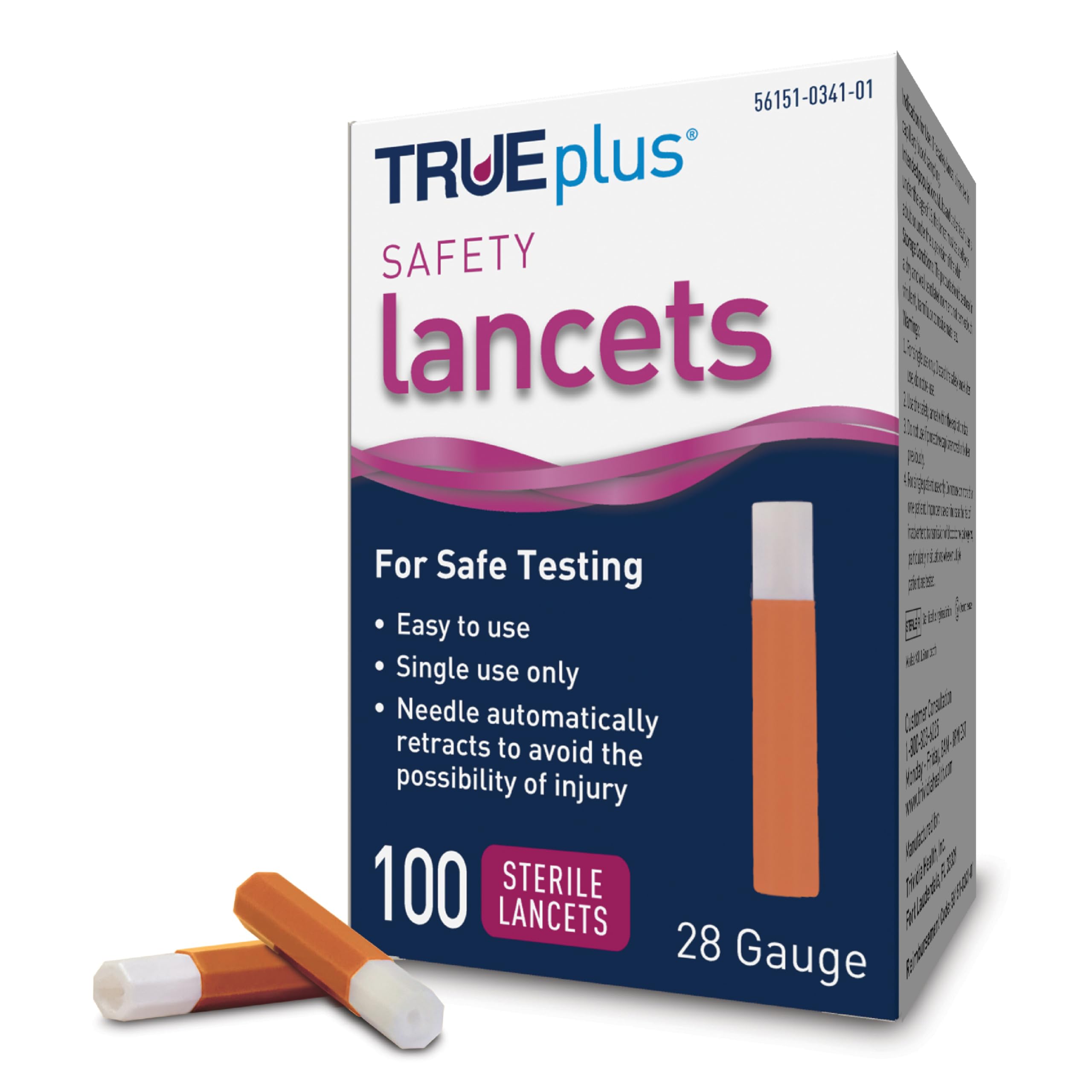
The TRUEplus lancet stands out because it requires no separate lancing device. The unibody design integrates the needle and firing mechanism into one piece—you twist off the cap, press it against your finger, and the needle fires and retracts automatically. This eliminates the need to carry a bulky device, making it ideal for travel or tossing in a purse.
At 28G, the needle is a standard thickness that reliably produces a blood drop on the first try for most users. The automatic retraction makes it very safe around children or in shared environments, as the needle locks away and cannot be reused. The 100-count pack provides a generous supply for daily testers.
Some users report slight inconsistency in the firing force. Applying a bit more pressure against the finger can help ensure a clean puncture. It also generates a bit more waste than a reusable device, as each test uses an entire plastic unit.
Why it’s great
- All-in-one design eliminates need for lancing device
- Automatic needle retraction ensures safety
- Reliable 28G provides consistent blood drops
Good to know
- Firing force can be slightly inconsistent
- More plastic waste than reusable device options
3. ONE-CARE Opti Safety Lancets
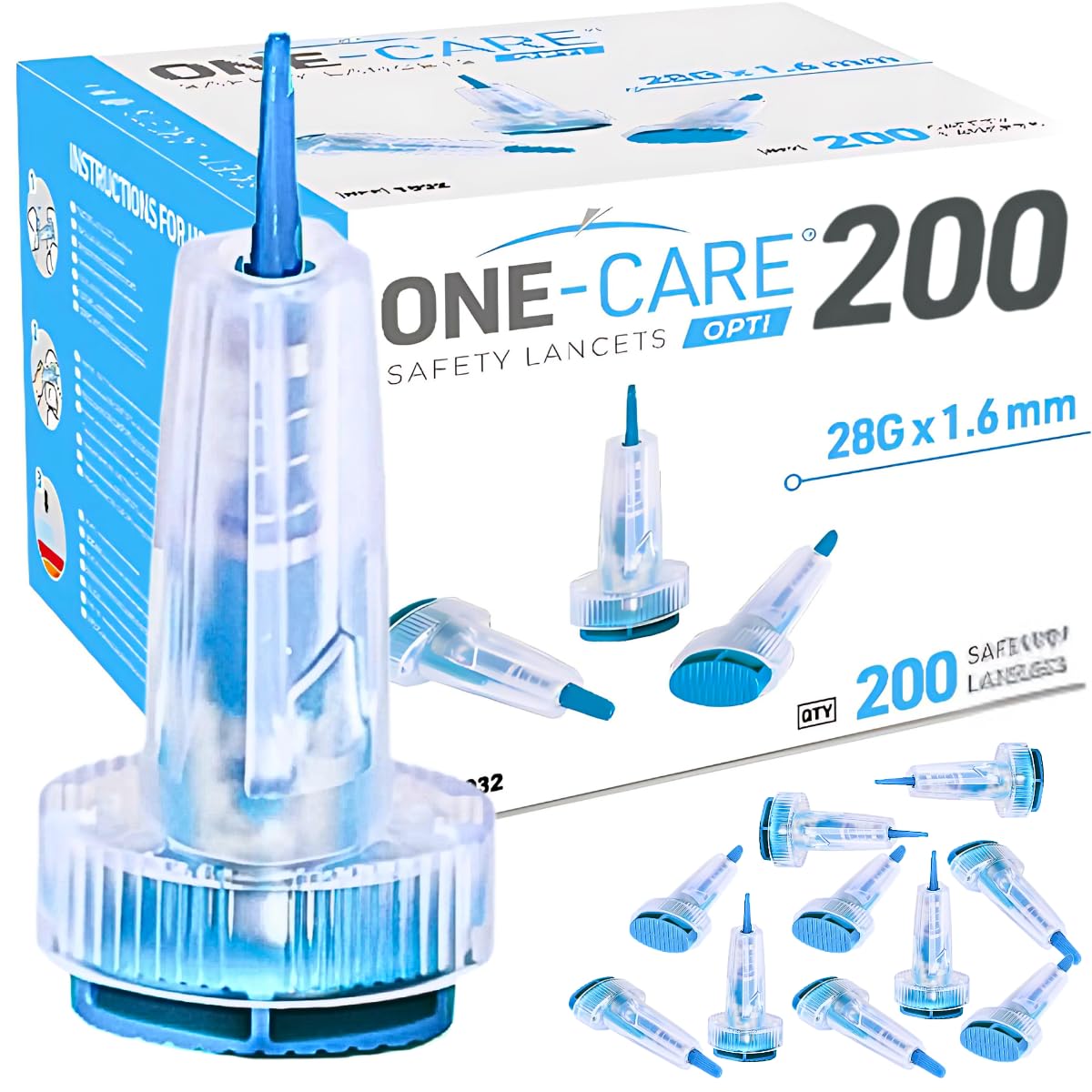
The ONE-CARE Opti lancet features an ergonomic T-shape design that fits naturally in the hand, providing a comfortable and secure grip. This is especially helpful for users with arthritis or reduced hand strength, as the shape makes it easy to press the top button with the thumb. The long safety tab is simple to twist off, requiring no fine motor skills.
These lancets use a 28G ultra-thin, tri-bevel, electro-polished needle. The tri-bevel geometry creates a very sharp point, and the electro-polishing removes microscopic burrs, resulting in a puncture that users describe as smooth and relatively painless. The low trigger force means you don’t need to press hard to activate the mechanism.
The 200-count pack offers excellent value, providing months of supply for daily testers. While the T-shape is a strong selling point for ergonomics, it is slightly larger than slim, pen-style lancets, which may feel bulky in a small carrying case.
Why it’s great
- Ergonomic T-shape is excellent for arthritic hands
- Tri-bevel needle with electro-polished tip for smooth entry
- Low trigger force for easy activation
Good to know
- Larger T-shape may feel bulky in a small kit
- Some users report occasional misfires
4. ReliOn 30G Ultra Thin Lancets

The ReliOn 30G lancets are a budget-friendly workhorse. They are ultra-thin at 30G, which is a nice middle ground between the standard 28G and the finer 33G. This gauge offers a good balance of comfort and reliable blood flow, making it a versatile choice for a wide range of users.
The 200-count pack (sold as a 2-pack of 100) provides one of the best per-lancet values in this list. Users report very few failures, with nearly every stick producing a usable sample. They are simple to load into the ReliOn lancing device (or compatible devices) and are widely available, making them a reliable staple.
The main drawback is that they require a separate lancing device, which adds an extra step to the testing process. Some users also note that the lancets could be thinner and easier to load into the holder.
Why it’s great
- Excellent value for a 200-count supply
- 30G is a comfortable, reliable gauge
- Very low failure rate reported by users
Good to know
- Requires a separate lancing device
- Loading can be a bit fiddly for some
5. Medline Sterile Safety Lancets

Medline’s safety lancets are a practical, no-frills option. They offer a standard 28G needle with a penetration depth of 1.6mm, which is a common and effective spec for routine blood glucose testing. The push-button activation is straightforward, and the needle retracts automatically to prevent accidental sticks.
These lancets are designed to be compatible with the Medline EvenCare G2 monitor but work as a general-purpose lancet for many testing needs. Users praise the low price point and note that the stick is gentle and easy on the fingers. The 100-count box is a good starting point for new diabetics or those on a tight budget.
The primary feedback is that the lancets have a slight quality control issue, with a small percentage of units either failing to fire or misfiring. While the majority work perfectly, this inconsistency is something to be aware of if you rely on a perfect stick every time.
Why it’s great
- Very affordable 100-count box
- Standard 28G x 1.6mm for reliable testing
- Automatic needle retraction for safety
Good to know
- Occasional misfire or failure reported
- No separate lancing device required but basic build
6. McKesson Lancets 23G x 1.8mm

When you need a larger blood sample—for certain lab-grade meters or alternate site testing—the McKesson 23G lancet is a practical choice. The 23G needle is thicker than standard lancets, which allows it to draw blood more quickly and reliably. The fixed 1.8mm depth ensures consistency, so you get the same amount of blood each time.
These lancets are spring-activated with a simple push-button and feature an electro-polished, silicone-coated needle. The coating and high puncture speed are designed to reduce the sensation of the stick, which is a thoughtful touch for a thicker gauge. The needle retracts and locks automatically after use.
Users note that despite the larger gauge, the pain is manageable, especially for those who are accustomed to finger sticks. However, it is generally more noticeable than a 28G or 30G lancet, making it less ideal for very sensitive skin or toddlers.
Why it’s great
- 23G provides fast, reliable blood flow
- Electro-polished needle reduces drag
- Fixed 1.8mm depth for consistent sampling
Good to know
- More painful than thinner 28G+ options
- Overkill for standard home glucose meters
7. McKesson Lancets 21G x 2.0mm

The McKesson 21G lancet is the heaviest-duty option in this guide. With a 21G needle and a 2.0mm depth, it is designed for situations where a significant blood sample is required, such as for certain point-of-care tests or when working with patients who have very tough, calloused skin that thinner needles struggle to penetrate.
These lancets are pressure-activated, meaning they fire automatically when pressed against the skin. This is a beneficial safety feature, as it prevents accidental activation before placement. The preloaded design is ready to use instantly, and the safety mechanism helps prevent needlestick injuries.
Users who need a reliable, deep stick find these to be the most effective option, and some report that the quick puncture is less painful than the more gradual push of a button. However, for routine daily blood glucose monitoring, this gauge is far more aggressive than necessary and will cause unnecessary discomfort.
Why it’s great
- 21G x 2.0mm produces a large blood sample quickly
- Pressure-activated safety mechanism
- Ideal for tough, calloused skin
Good to know
- Most painful option for standard testing
- Not suitable for daily home use by most diabetics
FAQ
Can I reuse a single-use safety lancet to save money?
What is the best gauge for a child with diabetes?
Why do my lancets sometimes not draw blood?
Final Thoughts: The Verdict
For most users, the blood lancet winner is the OneTouch Delica Lancet 33G because its ultra-thin gauge offers the most comfortable daily testing experience. If you want a lancet that requires no separate device and is perfect for travel, grab the TRUEplus Single-Use Safety Lancets. And for the best balance of ergonomics and value, nothing beats the ONE-CARE Opti Safety Lancets.