
Our readers keep the lights on and the weekend projects moving. As an Amazon Associate, I earn from qualifying purchases.
The moment you land wrong and feel that familiar roll, the entire season flashes before your eyes. A sprained ankle doesn’t just end a game—it introduces weeks of rehab, weakened ligaments, and a constant fear of re-injury every time you cut or jump. The right brace bridges the gap between healing and returning to the court with confidence.
I’m Rikta — the co-founder and writer behind FitlyFast. I’ve spent hundreds of hours researching the biomechanics of lateral ankle instability, comparing material stiffness, strap configurations, and lace-up tension systems to find the braces that actually prevent inversion sprains during explosive play.
Whether you’re recovering from a Grade 1 tweak or a full ligament tear, a well-chosen ankle brace for basketball after sprain can make the difference between a cautious return and a permanent sideline seat.
How To Choose The Best Ankle Brace For Basketball After Sprain
Not every ankle brace is built for the demands of a basketball court. After a sprain, you need controlled mobility—a brace that resists inversion and eversion without locking your foot into a rigid cast. The wrong choice can either give you false confidence or restrict the ankle movement you still need for a functional jump shot.
Lace-Up vs. Sleeve Design: The Lateral Support Factor
A simple compression sleeve might feel snug, but it offers almost no resistance against the roll that caused your injury. Lace-up braces, especially those paired with figure-8 straps, provide the mechanical resistance needed to prevent the ankle from folding inward during a hard pivot. For basketball, a lace-up system with at least one cross-strap is the baseline.
Removable Splints: Balancing Protection and Range of Motion
Many braces include medial and lateral stays—removable aluminum or plastic splints that add structural rigidity. During the early weeks of recovery, leaving the splints in offers maximum protection. As you transition back to sport, removing them trades some stability for a more natural range of motion, allowing your peroneal muscles to retrain their reflex response.
Fit and Shoe Compatibility
A bulky brace that won’t fit inside your basketball shoe is a non-starter. Look for low-profile designs that sit flush against the foot without creating pressure points at the heel counter or lace eyelets. The brace should be snug enough to prevent slippage but not so tight that it restricts blood flow or causes discomfort during a full-court run.
Quick Comparison
On smaller screens, swipe sideways to see the full table.
| Model | Category | Best For | Key Spec | Amazon |
|---|---|---|---|---|
| DonJoy Stabilizing Speed Pro | Premium Lace-Up | Transitioning from a boot to sport | 800D Ballistic nylon build | Amazon |
| Med Spec ASO Ankle Stabilizer | Lace-Up Stabilizer | Chronic instability & PT recovery | Figure-8 strapping system | Amazon |
| Active Ankle AS1 Pro | Low Profile Lace-Up | Volleyball & basketball players | Silicone non-slip sole print | Amazon |
| MUELLER The One Ankle Brace | Speed Lace-Up | All-day wear post-fracture | Integrated speed lacing system | Amazon |
| Swede-O Ankle Lok | Reinforced Lace-Up | Weak ankle stabilization | Removable side stabilizers | Amazon |
| McDavid Ankle Support with Strap | Sleeve+Strap | All-day comfort & sleep wear | 1/8″ neoprene compression | Amazon |
| AGPTEK Lace-Up Ankle Brace | Adjustable Splint | Budget-friendly recovery | Removable aluminum splints | Amazon |
In‑Depth Reviews
1. DonJoy Stabilizing Speed Pro Ankle Support Brace

The DonJoy Speed Pro is built from 800D Ballistic nylon, making it the most durable option in this lineup. The quick lace-up system uses two broad Velcro tabs that replace the tedium of threading traditional laces—you can have this brace on in under ten seconds. A full circumferential elastic strap wraps around the top to compress the tibia and fibula, while articulated medial and lateral stays add proprioceptive feedback that mimics the feel of athletic tape.
Multiple physical therapists and surgeons specifically recommend this brace for patients transitioning out of a walking boot. The speed laces gather evenly without creating hot spots, and the figure-eight configuration provides firm resistance against inversion. Users recovering from severe Achilles tendonitis report pain dropping from a 9 to a 2-3 when wearing this brace during daily activities.
The brace is slightly bulkier than purely sleeve-style supports, but it still fits inside most basketball shoes if you remove the insole for extra volume. Some users note that the D-rings on the straps can dig into pressure points during prolonged wear, and the lacing stability strip may warp after months of heavy use. For the protection it offers, these trade-offs are minimal.
Why it’s great
- Ten-second speed lacing system eliminates hassle
- Articulated stays provide excellent proprioceptive feedback
- Durable 800D nylon resists fraying and abrasion
Good to know
- D-rings can create pressure points on the top of the foot
- Heel material may bunch and feel uncomfortable with thin socks
2. Med Spec ASO Ankle Stabilizer
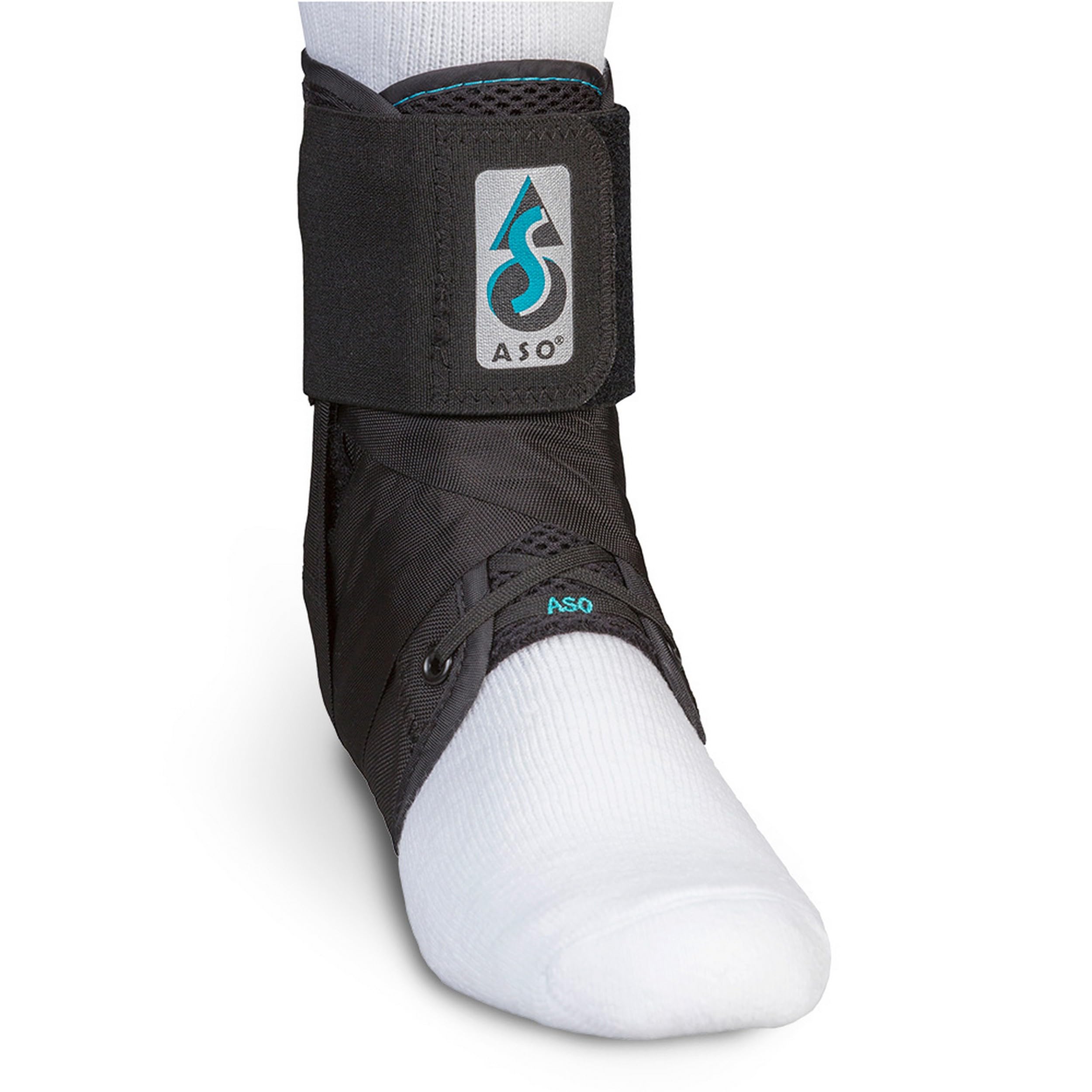
The Med Spec ASO is the brace you’ll see in nearly every athletic trainer’s bag for a reason. Its foundation is a durable nylon lace-up shell that integrates figure-8 straps designed to mimic the basket-weave and heel-lock techniques of traditional tape jobs. The final strap wraps high around the ankle to secure the entire assembly, preventing the brace from migrating inside your shoe during lateral cuts.
Users recovering from Grade 2 sprains report that the ASO resists inversion and eversion effectively without completely immobilizing the joint, allowing controlled movement for walking and light jogging. The CoolFlex padding and tongue reduce irritation along the top of the foot, though wearing a thin sock underneath is still recommended for extended sessions. The bilateral design fits either foot, which simplifies purchasing if you have a dominant side.
On the court, the ASO fits comfortably inside most basketball and cross-training shoes thanks to its low-profile build. The lace system is fully adjustable, and the even-knot feature lets you tighten precisely without creating a bulge. Velcro durability holds up for years, and the brace is lightweight enough that you hardly notice it after a few minutes of play.
Why it’s great
- Figure-8 straps replicate functional tape techniques
- Low-profile design fits easily inside basketball shoes
- Lightweight nylon build with CoolFlex padding
Good to know
- Requires a sock for skin comfort during long wear
- May limit heel rise slightly during explosive jumps
3. Active Ankle AS1 Pro Lace Up Ankle Brace
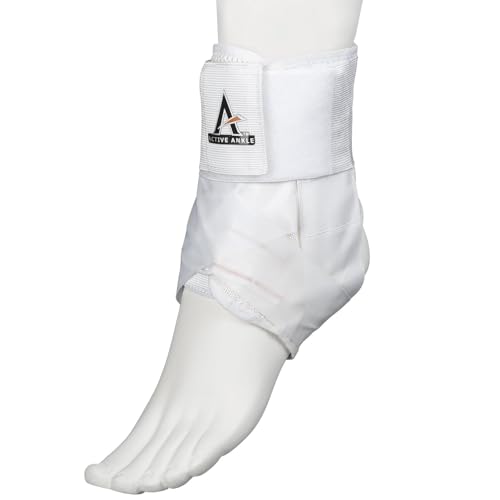
The Active Ankle AS1 Pro is designed with a “pro fit” that removes excess material at the forefoot, making it one of the most shoe-friendly lace-up braces available. The wider heel hole reduces rubbing and irritation, while silicone printing on the sole keeps the straps locked in place during high-speed direction changes. This is a brace built specifically for athletes who rely on explosive lateral movement—volleyball, basketball, and rugby players are the primary audience.
Speed lacing eyelets reduce application time and eliminate the hot spots that traditional laces can create across the top of the foot. The non-stretch vertical straps imitate the basket weave and heel lock technique used by athletic trainers, giving you the security of a tape job without the waste or skill requirement. Users with chronic loose ankles report this brace lasting over two years of regular practice before needing replacement.
One trade-off is that the criss-cross straps can loosen slightly over extended play, requiring a quick re-tightening during halftime. The brace provides excellent mobility compared to bulkier models, which makes it a strong choice for players who want protection without feeling restricted. For anyone returning from a sprain who still wants to cut hard, this is a top contender.
Why it’s great
- Silicone sole grip prevents strap migration during play
- Forefoot material removal improves shoe compatibility
- Reinforced laces resist fraying over multiple seasons
Good to know
- Criss-cross straps may loosen slightly during extended sessions
- White color shows dirt quickly on outdoor courts
4. MUELLER Sports Medicine The One Ankle Brace

The Mueller “The One” is a premium entry that combines a figure-8 strapping system with an integrated speed lacing closure. The lacing uses fewer eyelets than traditional designs, which speeds up tightening and reduces the number of pressure points across the top of the foot. Flat laces and a grip coating on the bottom surface help the brace stay fixed inside your shoe during aggressive cuts and jumps.
Users who tried multiple braces before settling on this one consistently highlight the balance of support and comfort. The brace is not overly bulky on the bottom, which means it fits inside standard basketball shoes without requiring you to loosen the laces to an uncomfortable degree. The criss-cross straps are adjustable, allowing you to dial in the exact level of resistance based on how far along you are in recovery.
One user wore this brace daily for three full sports seasons after a sprain and reported that it survived a re-injury with only top-of-foot soreness, not a full re-sprain. The sole trim piece can begin to separate at the seam after a year of heavy use, but for a product that offers this level of protection, that lifespan is reasonable. It’s a versatile choice for everything from yoga to full-court play.
Why it’s great
- Grip coating prevents brace slippage inside shoes
- Flat laces with fewer eyelets reduce pressure points
- Adjustable criss-cross straps for progressive recovery
Good to know
- Sole trim may rip at seam after extended daily use
- Sizing can be tricky; measure ankle circumference carefully
5. Swede-O Ankle Lok Reinforced Laced Ankle Brace
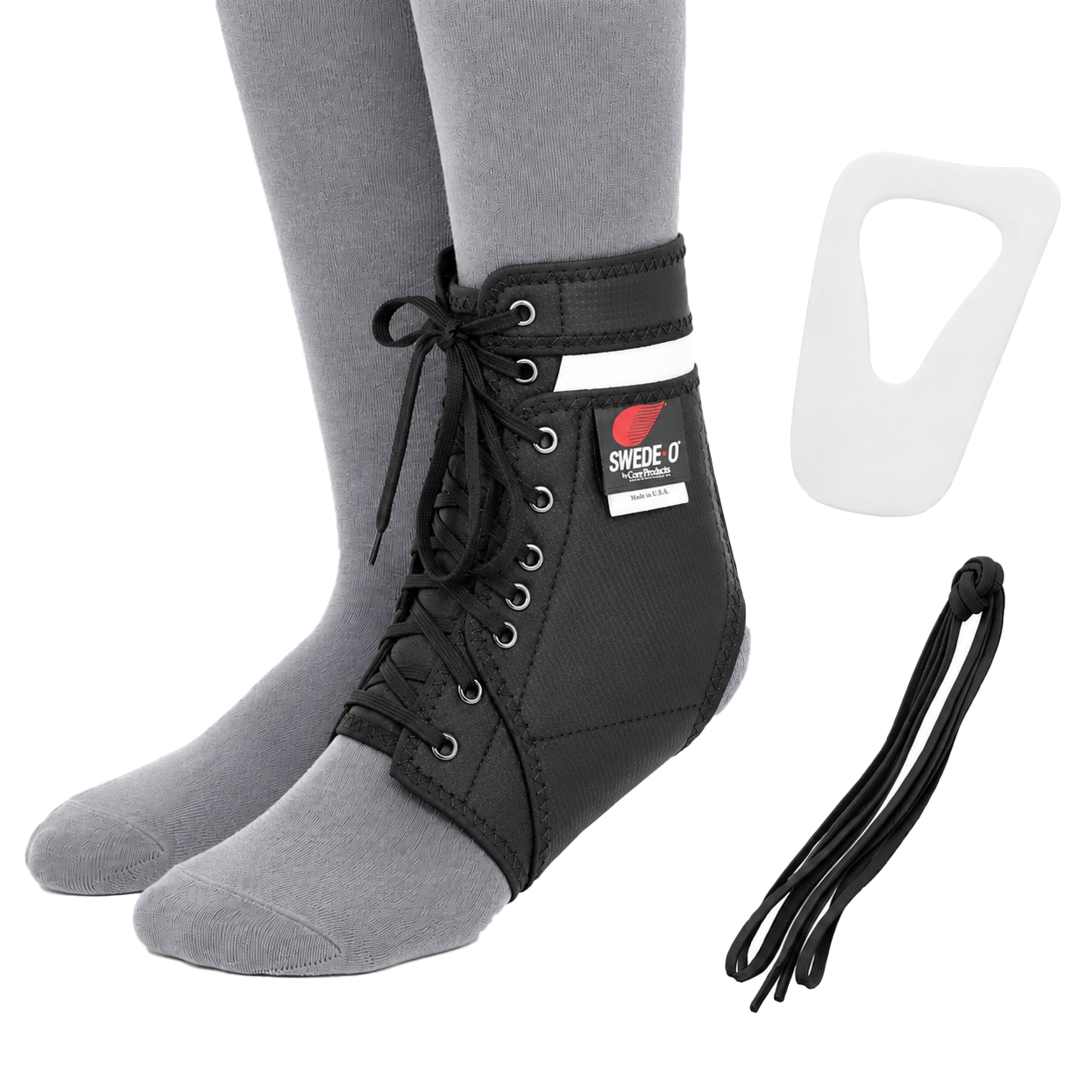
The Swede-O Ankle Lok is a classic, heavy-duty lace-up brace manufactured in the USA. Its defining feature is the exclusive lacing system combined with removable side stabilizers that lock the ankle in a protected neutral position. The full elastic back panel reduces the risk of blistering and irritation that can occur with stiffer brace materials, making it a solid choice for players who plan to wear the brace for extended practices.
Users with weak ankles from previous sprains find that the Swede-O provides the rigidity they need without causing foot cramping. The bilateral design fits either the right or left ankle, and the sizing runs slightly large, so you can lace tighter for a more locked-in feel. The brace works well for stabilizing the ankle during walking, hiking, and light sport, though it requires a wider shoe to accommodate the stabilizing staves.
The main drawback reported is difficulty putting the brace on and taking it off compared to speed-lace models. A few users experienced the side stabilizers breaking after several months of regular use, and customer service for replacement parts is limited to US residents. For the price, the build quality is solid, but durability over multiple seasons can be inconsistent.
Why it’s great
- Full elastic back reduces blister risk during extended wear
- Removable stabilizers allow adjustable support levels
- Made in the USA with quality materials
Good to know
- Difficult to put on and take off quickly
- Side stabilizers may break after several months of heavy use
6. McDavid Ankle Support with Strap

The McDavid Ankle Support with Strap is a sleeve-style brace with a built-in strap that offers moderate compression and stabilization. The 1/8-inch neoprene construction provides therapeutic heat retention, which can help soothe sore ligaments and improve blood flow during the early stages of recovery. The sleeve design makes it one of the most comfortable options for all-day wear and even sleep, if your sprain is still tender.
Users who compared this against six other braces noted that the McDavid is easier to wear comfortably than full lace-up models, though it provides less lateral resistance. The strap adds a layer of security that a plain sleeve lacks, but it’s not going to stop a full-force inversion roll during a game. The brace is best suited for lighter activity, walking, and as a transitional tool when you’re not ready for high-intensity play.
Sizing can be a problem—some users found the brace too tight for their foot size, especially with post-sprain swelling. The Velcro strap also shows wear after a few months of regular use. For moderate sprains where you need compression rather than rigid stabilization, this is a comfortable option, but it should not be your primary brace for returning to basketball.
Why it’s great
- Neoprene provides therapeutic heat and compression
- Comfortable enough for all-day and sleep wear
- Strap adds moderate support beyond a basic sleeve
Good to know
- Not supportive enough to prevent a full inversion sprain during play
- Velcro may show wear after a few months of daily use
7. AGPTEK Lace-Up Ankle Brace with Removable Splints
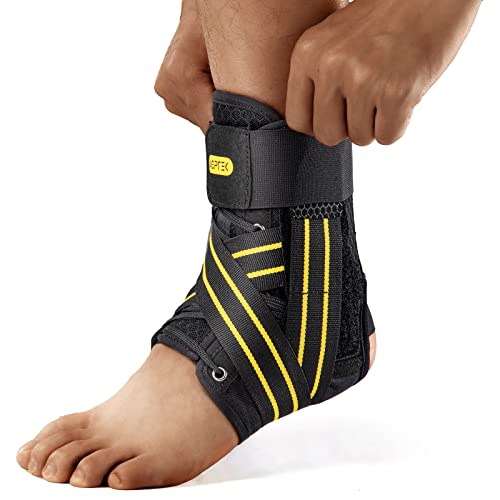
The AGPTEK Lace-Up Ankle Brace offers a compelling value proposition by including lightweight aluminum splints in a cross-lace design typically found on much pricier models. The splints are detachable, giving you the flexibility to wear the brace with full rigidity during early recovery and then remove them for less restrictive sport protection as you heal. The premium polyester and nylon blend keeps the brace breathable during intense activity.
Users recovering from fractures and post-surgery report that this brace provides better support and comfort than the braces issued by their orthopedic surgeons. The adjustable Velcro straps are easier to manage than threading traditional laces, and the brace fits inside most athletic shoes without excessive bulk. The cross-lace design distributes tension evenly across the top of the foot, reducing localized pressure points.
The main concern is sizing accuracy—several users found the brace runs small, so ordering up if you’re between sizes is wise. The Velcro straps offer good grip initially, but long-term durability compared to premium brands like DonJoy or Med Spec is unproven. For the price, the feature set is impressive, making it a strong entry-level option for players who need rigid support on a tighter budget.
Why it’s great
- Includes removable aluminum splints for adjustable rigidity
- Breathable polyester/nylon blend reduces sweat buildup
- Cross-lace design distributes pressure evenly
Good to know
- Sizing runs small; consider ordering one size larger
- Long-term Velcro durability is below premium rivals
FAQ
How tight should my ankle brace be for basketball?
Can I wear a lace-up brace with removable splints while playing?
How long should I wear an ankle brace after a basketball sprain?
Final Thoughts: The Verdict
For most players returning to the court, the ankle brace for basketball after sprain winner is the DonJoy Stabilizing Speed Pro because its speed-lacing system and articulated stays give you the security of a tape job with the convenience of a ten-second application. If you want the proven standard recommended by athletic trainers, grab the Med Spec ASO Ankle Stabilizer. And for a low-profile option that fits seamlessly inside your game shoes, nothing beats the Active Ankle AS1 Pro.