
Our readers keep the lights on and the weekend projects moving. As an Amazon Associate, I earn from qualifying purchases.
A dead key fob on a freezing morning or a silent digital scale mid-weigh is the instant you realize not all coin cells deliver the same staying power. The difference between a battery that quits at three months and one that powers your device for a year comes down to chemistry, quality control, and the raw capacity stamped on the cell.
I’m Rikta — the co-founder and writer behind FitlyFast. My approach to this guide involved cross-referencing customer voltage reports, discharge tests, and shelf-life data across several dozen consumer reports to separate consistent performers from cells that lose their charge before you ever open the package.
Whether you’re stocking up for AirTags, medical monitors, or garage remotes, the right 2032 battery saves you the headache of premature failure. The picks below were chosen for their voltage stability, leakage resistance, and honest advertised capacity.
How To Choose The Best 2032 Battery
A 2032 coin cell might look like a simple disc of lithium, but small differences in chemistry, packaging, and coating determine whether it powers your device for a full year or conks out by month three. Focus on these three factors to avoid wasted time and a drawer full of duds.
Capacity and Voltage Stability
The industry standard for a CR2032 is 220–240 mAh at 3 volts. Lower-capacity cells (often unbranded or repackaged bulk batches) drop below 2.8V quickly, causing devices to report “low battery” prematurely. Stick with cells that clearly state their mAh rating — and check user reviews for real-world voltage readings.
Avoiding AirTag Interference
Apple AirTags require a battery with no bitter coating on the positive terminal. That coating — added to deter children from swallowing — can insulate the contact and prevent the AirTag from recognizing the battery. Dedicated AirTag replacement packs or standard cells advertised as “no bitter coating” solve this issue instantly.
Pack Size vs. Storage Life
Buying in bulk saves money, but only if the cells have a long shelf life (5–10 years from manufacture). Check the expiration date on the package. A 100-pack that expires next year forces you to rush through them, while a 20-pack with a 2032 expiration gives you years of worry-free storage.
Quick Comparison
On smaller screens, swipe sideways to see the full table.
| Model | Category | Best For | Key Spec | Amazon |
|---|---|---|---|---|
| Maxell CR2032 (20-Pack) | Mid-Range | General devices, sensors | 220 mAh capacity | Amazon |
| TagSaver CR2032 (4-Pack) | Mid-Range | Apple AirTag replacement | 240 mAh, no bitter coating | Amazon |
| Panasonic CR2032 (20-Pack) | Mid-Range | Key fobs, thermometers | 225 mAh capacity | Amazon |
| Philips CR2032 (20-Pack) | Premium | Kid-safe household devices | 220 mAh, bitter coating | Amazon |
| Panasonic CR2032 (24-Pack) | Premium | Bulk supply, electronics | 3.21V tested voltage | Amazon |
| PKCELL CR2032 (100-Pack) | Budget | High-volume tea lights, toys | 210 mAh capacity | Amazon |
| Energizer CR2032 (24-Pack) | Premium | Medical devices, remotes | 10-year storage life | Amazon |
In‑Depth Reviews
1. Maxell CR2032 (20-Pack)

Maxell brings Japanese manufacturing discipline to the CR2032 market, with a nominal capacity of 220 mAh and a wide operating range from -20°C to +85°C. Users consistently report these cells arrive at full voltage and hold stable power in alarm system sensors and key fobs for extended periods.
The 20-pack offers a strong per-unit value without forcing you to buy a hundred cells you might not use before the expiry date. Buyers who tested them in security contacts noted consistent performance with no premature drop-offs, a common issue with cheaper unbranded alternatives.
One downside is the lack of a child-safe bitter coating, so this pack is not ideal for households with young children who might open battery compartments. For general-purpose use, however, the Maxell hologram-backed cells represent one of the most reliable options on the market.
Why it’s great
- Reliable 220 mAh output from a known Japanese manufacturer
- Excellent performance in alarm sensors and daily-use electronics
Good to know
- No bitter coating, so not the safest choice in homes with small children
- Packaging is straightforward but not child-resistant
2. TagSaver CR2032 (4-Pack)
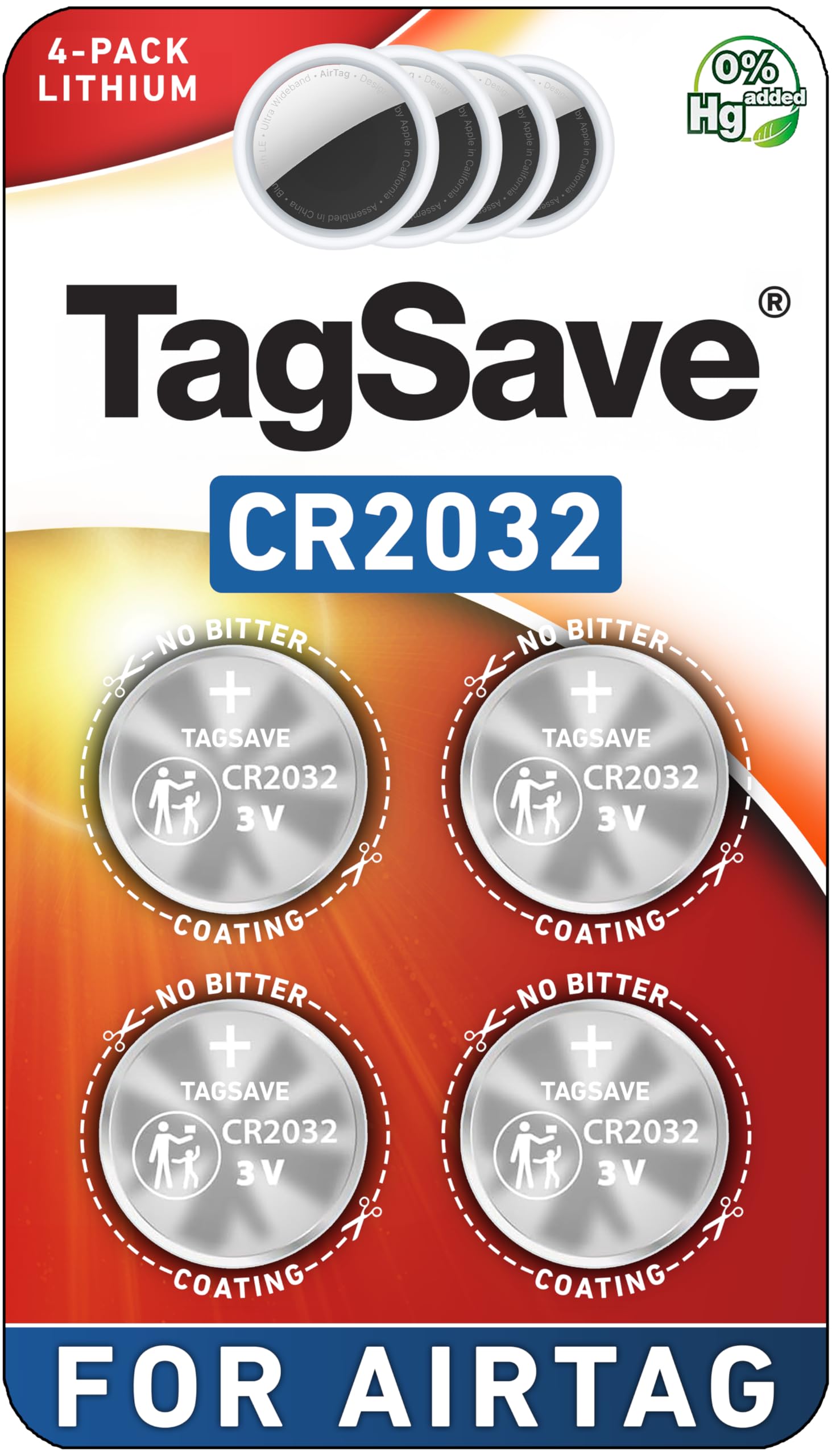
TagSaver designed this 4-pack specifically to solve the AirTag connection problem: standard CR2032 batteries with bitter coatings often fail to make reliable contact with the AirTag’s terminals. These cells skip that coating entirely, ensuring the AirTag recognizes the battery immediately without any wiping or cleaning.
At 240 mAh, the capacity slightly exceeds the typical CR2032 standard, which translates to longer intervals between replacements for AirTags, key finders, and other low-drain trackers. Multiple verified buyers confirm that name-brand alternatives they tried previously simply would not work in their AirTags, while these fired up without issue.
The price per battery is higher than bulk packs, which makes this a specialized purchase rather than a general supply. If you are exclusively replacing AirTag batteries, this focused solution removes the guesswork, but for mixed-device households, a larger multi-purpose pack might be more economical.
Why it’s great
- Guaranteed AirTag compatibility with no bitter coating interference
- Higher capacity (240 mAh) than standard CR2032 cells
Good to know
- Only 4 batteries per pack, so not ideal for bulk stocking
- Higher per-unit cost compared to multi-purpose 20-packs
3. Panasonic CR2032 (20-Pack)

Panasonic’s CR2032 cells strike a middle ground between affordability and brand consistency, with a rated capacity of 225 mAh. Buyers using them in car key fobs and digital thermometers report they fit perfectly and hold their voltage through the full discharge cycle — a sign of solid quality control.
The bulk packaging prevents individual batteries from rattling and shorting against each other during storage, and the 20-count is large enough to supply a household of remotes and scales without requiring a dedicated storage system. Users testing them in Ring window alarms found no performance gap compared to premium-priced competitors.
A small fraction of customers mention that the plastic blister pack is difficult to open without scissors, which is a minor inconvenience for a product that otherwise delivers predictable performance. For those who want a trusted brand without paying a premium for specialized features, this pack hits the sweet spot.
Why it’s great
- Trusted Panasonic quality with a 225 mAh capacity
- Bulk pack prevents loose rolling and accidental shorting
Good to know
- Blister packaging requires strong scissors to access each cell
- No bitter coating for child safety
4. Philips CR2032 (20-Pack)
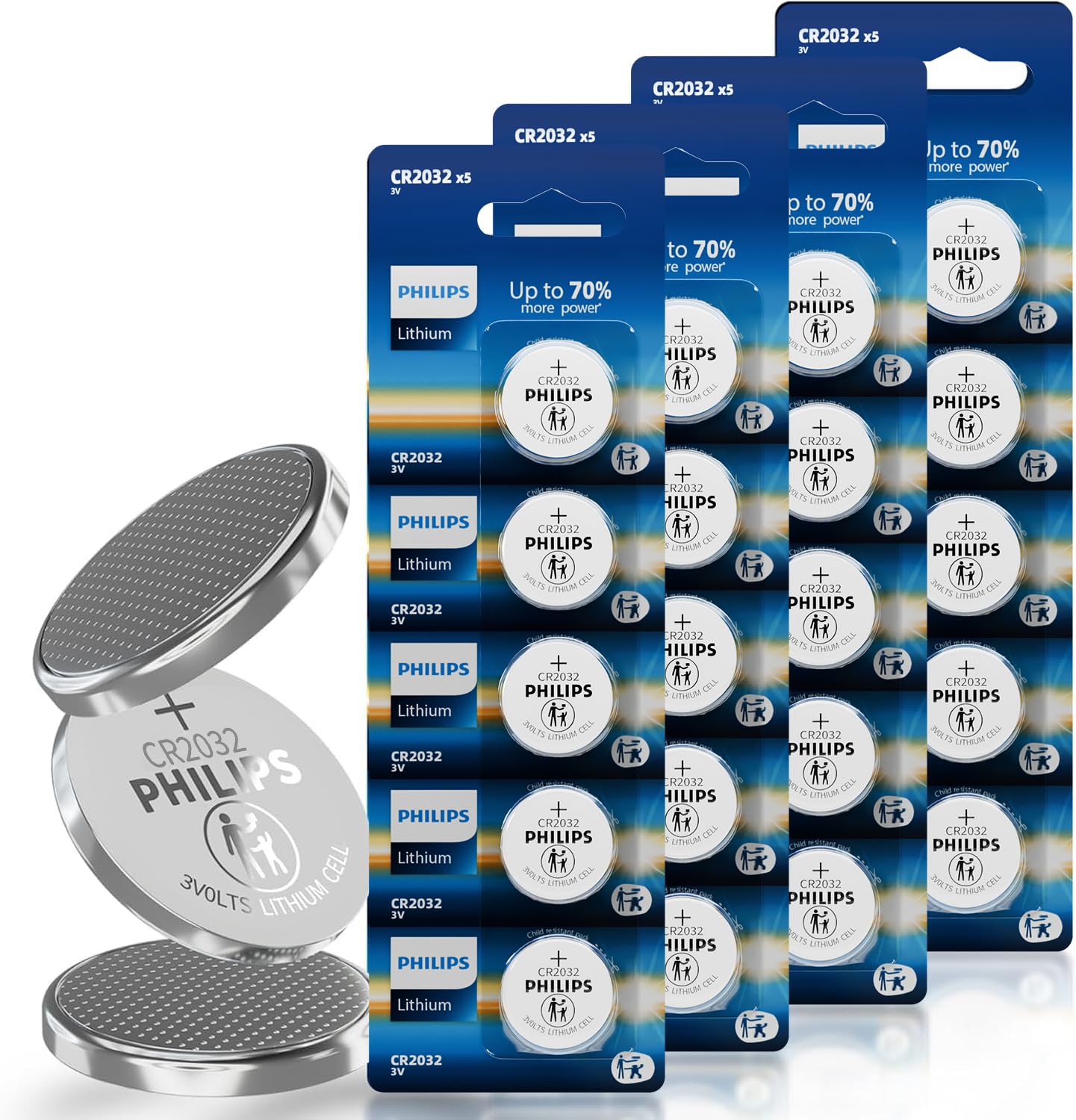
Philips differentiates its CR2032 cells by adding a bitter anti-swallow coating and safety-sealed packaging certified to EN71-3 standards, making this one of the few coin cell packs designed with child safety as a primary feature. The coating is the same type that can interfere with AirTags, so these are best used in devices where accidental ingestion is a real concern — such as toys or scales accessible to toddlers.
The cells themselves deliver a stable 3V output with a 220 mAh capacity, and Philips claims a 10-year shelf life based on unopened storage. Customer feedback consistently praises the value and longevity, with many users noting they last as long as more expensive brands like Energizer in their home devices.
The packaging is notably difficult to open — buyers report needing to cut aggressively into the sealed blister to extract each battery. This trade-off is intentional for child safety but becomes a minor annoyance when you need a replacement in a hurry.
Why it’s great
- Child-safe packaging and bitter coating meet international safety standards
- 10-year shelf life with minimal annual decay
Good to know
- Bitter coating causes connectivity issues with Apple AirTags
- Packaging is extremely difficult to open without tools
5. Panasonic CR2032 (24-Pack)
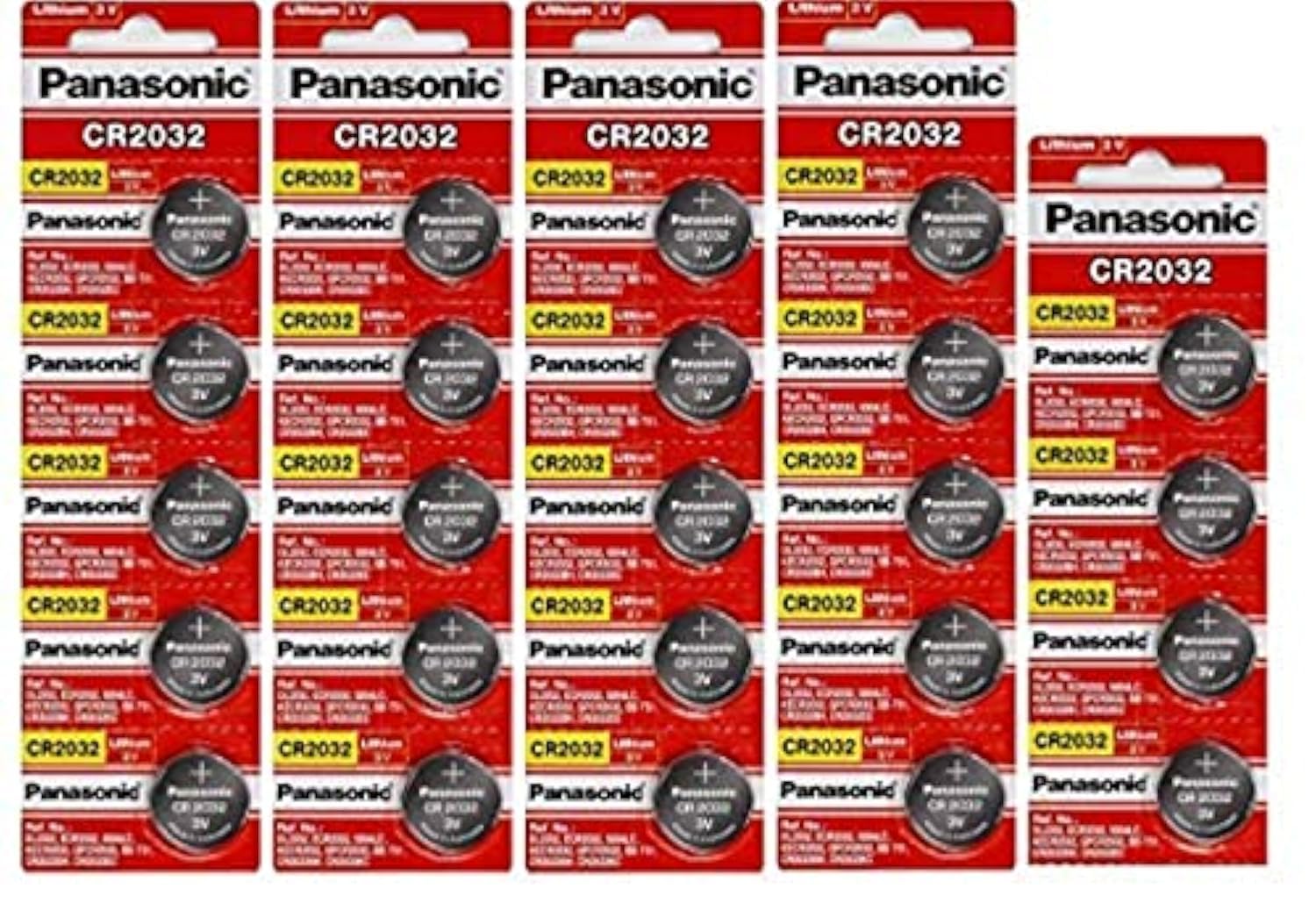
This larger 24-count Panasonic pack offers the same reliable chemistry as the 20-pack but adds four extra cells, which is useful for households that go through CR2032s at a steady clip. A verified customer voltage test clocked one cell at 3.21V — slightly above the nominal 3V — indicating fresh, healthy chemistry from the factory.
The stated expiration date on these cells extends to August 2032, giving you nearly a decade of shelf life if stored properly. Users report no power loss or leakage even after several months of storage, and the cells perform equally well in key fobs, Christmas ornaments, and small electronics.
The packaging is the main frustration point — the plastic blister is dense and requires sharp scissors to open each cavity, which has led to some complaints about blisters after cutting out multiple batteries. If you plan to use them over time, you will need to commit to that effort each time you open a fresh cell.
Why it’s great
- 24 cells at a competitive per-battery cost
- Tested voltage above 3.2V confirms fresh stock
Good to know
- Blister packaging is tough to open without strong scissors
- No child-safety features or bitter coating
6. PKCELL CR2032 (100-Pack)

PKCELL’s 100-pack targets high-volume users who need to power multiple devices or bulk items like tea lights, where each cell runs a six-hour timer for about 28 days before dying. The rated capacity of 210 mAh is slightly lower than the industry standard of 220 mAh, which is a trade-off you accept for the extreme per-unit economy.
Buyers confirm the cells arrive with a full 3-volt charge and hold up well in moderate-drain applications. The 5-year shelf life means you have ample time to work through the pack, though the lower mAh means you will replace them slightly more often than higher-capacity alternatives in continuous-use devices.
The biggest consideration is that a 100-pack is a commitment — unless you have multiple devices eating through coin cells regularly, you risk having a large stash that ages past its prime before you finish it. For tea light enthusiasts or property managers maintaining many key fobs, this is a solid entry-level pick.
Why it’s great
- Extremely low per-unit cost for the 100-cell format
- 5-year shelf life gives plenty of time to use the supply
Good to know
- 210 mAh is 10 mAh below the standard CR2032 capacity
- Not ideal for households that only use 2-3 batteries per year
7. Energizer CR2032 (24-Pack)

Energizer’s CR2032 cells are the most expensive per battery in this list, but they bring a proven track record of long-term storage and wide temperature tolerance — operating reliably from -22°F to 140°F. This makes them the strongest choice for devices exposed to extreme conditions, such as bike lights, outdoor sensors, or car key fobs parked in heat or cold.
The 24-count pack delivers a 10-year shelf life from manufacture, meaning you can store the bulk pack and rely on each cell being fresh for a full decade. Users consistently report they last longer in continuous-drain devices compared to mid-tier alternatives, which justifies the price premium for mission-critical applications like heart rate monitors or glucose meters.
For general household use where a thermostat sits at 70°F and a remote never leaves the living room, the extra cost may not translate into noticeable runtime gains. If you need a battery that withstands the elements or powers a device where failure is not an option, Energizer’s consistency is worth the added spend.
Why it’s great
- 10-year shelf life and wide temperature tolerance (-22°F to 140°F)
- Long-running performance in medical and outdoor devices
Good to know
- Highest per-unit cost in this comparison
- Overkill for low-drain devices in stable indoor temperatures
FAQ
Can a CR2032 with a bitter coating be used in an AirTag after wiping it off?
What is the real-world difference between 210 mAh and 240 mAh in a coin cell?
How should I store bulk CR2032 packs to maximize their shelf life?
Why do some CR2032 batteries die faster in tea lights than others?
Final Thoughts: The Verdict
For most users, the 2032 battery winner is the Maxell CR2032 (20-Pack) because it balances proven Japanese manufacturing, a solid 220 mAh capacity, and a competitive per-cell cost without unnecessary frills. If you need guaranteed AirTag compatibility, grab the TagSaver CR2032 (4-Pack). And for extreme-temperature environments or mission-critical devices like glucose monitors, nothing beats the Energizer CR2032 (24-Pack).