
Our readers keep the lights on and the weekend projects moving. As an Amazon Associate, I earn from qualifying purchases.
Getting a lush, dark green lawn starts with choosing the right grass seed for your region, sun exposure, and soil. But between blends, coating technologies, and coverage claims, picking the best bluegrass seed can feel like a gamble with your weekend labor.
I’m Rikta — the co-founder and writer behind FitlyFast. I’ve spent countless hours digging through technical specs, germination data, and real-world customer results across dozens of cool-season grass blends to land on the most reliable options for a resilient lawn.
Whether you are overseeding a patchy yard or starting fresh, finding the best bluegrass seed means matching the right blend to your local climate and sun conditions, not just the biggest bag.
How To Choose The Best Bluegrass Seed
Cool-season grasses like Kentucky bluegrass have specific needs. Bypass the generic advice and focus on the three specs that determine whether your seed patch turns into a carpet or a disappointment.
Sun Exposure vs. Shade Tolerance
Kentucky bluegrass demands at least 4–6 hours of direct sunlight. If your lawn has dense shade from trees or north-facing walls, look for a blend that includes fine fescues (creeping red, Chewings, or hard fescue). These species photosynthesize efficiently in low light and prevent the thinning that pure bluegrass suffers under a canopy.
Coatings and Germination Speed
Plain seed is vulnerable to drying out, especially if you miss a single watering. Coated seeds carry a thin layer of nutrients, fungicides, or moisture-absorbing polymers. An OptiGrowth or similar coating buys you a 2–3 day buffer against forgetfulness and improves seed-to-soil contact on uneven ground. However, coating also adds weight, so a 3 lb bag of coated seed covers less area than 3 lb of raw seed.
Weed Seed Content
A bag labeled “99.9% weed-free” means fewer crabgrass and dandelion headaches later. Cheaper blends often include annual ryegrass or contain inert filler, which germinates fast but dies after one season, leaving bare spots. For permanent turf, prioritize blends with high bluegrass content and a weed-free guarantee.
Quick Comparison
On smaller screens, swipe sideways to see the full table.
| Model | Category | Best For | Key Spec | Amazon |
|---|---|---|---|---|
| GreenView Pure Grass KBG (20 lb) | Kentucky Bluegrass | Large lawns in full sun | 99.9% weed-free, 20 lb bag | Amazon |
| Pennington Smart Seed Northeast Mix | Cool-Season Mix | Harsh winters and summer heat | 20 lb, covers 6,600 sq ft | Amazon |
| Outsidepride Legacy Fine Fescue Mix | Fine Fescue | Dense shade and high-traffic areas | OptiGrowth coating, 5 lb | Amazon |
| Scotts Turf Builder Sun and Shade Mix | Seed + Fertilizer | Quick patches with built-in nutrition | 5.6 lb, covers 2,240 sq ft | Amazon |
| GreenView Pure Grass KBG (3 lb) | Kentucky Bluegrass | Overseeding small lawns or spots | 99.9% weed-free, 3 lb bag | Amazon |
| Jonathan Green Black Beauty Mix | Heat-Tolerant Mix | Transition zone lawns with hot summers | Texas bluegrass, 3 lb bag | Amazon |
| Pennington Annual Ryegrass Seed | Annual Ryegrass | Winter overseeding of warm-season lawns | Germinates in 3 to 7 days | Amazon |
In‑Depth Reviews
1. GreenView Pure Grass Seed Kentucky Bluegrass Blend (20 lb)
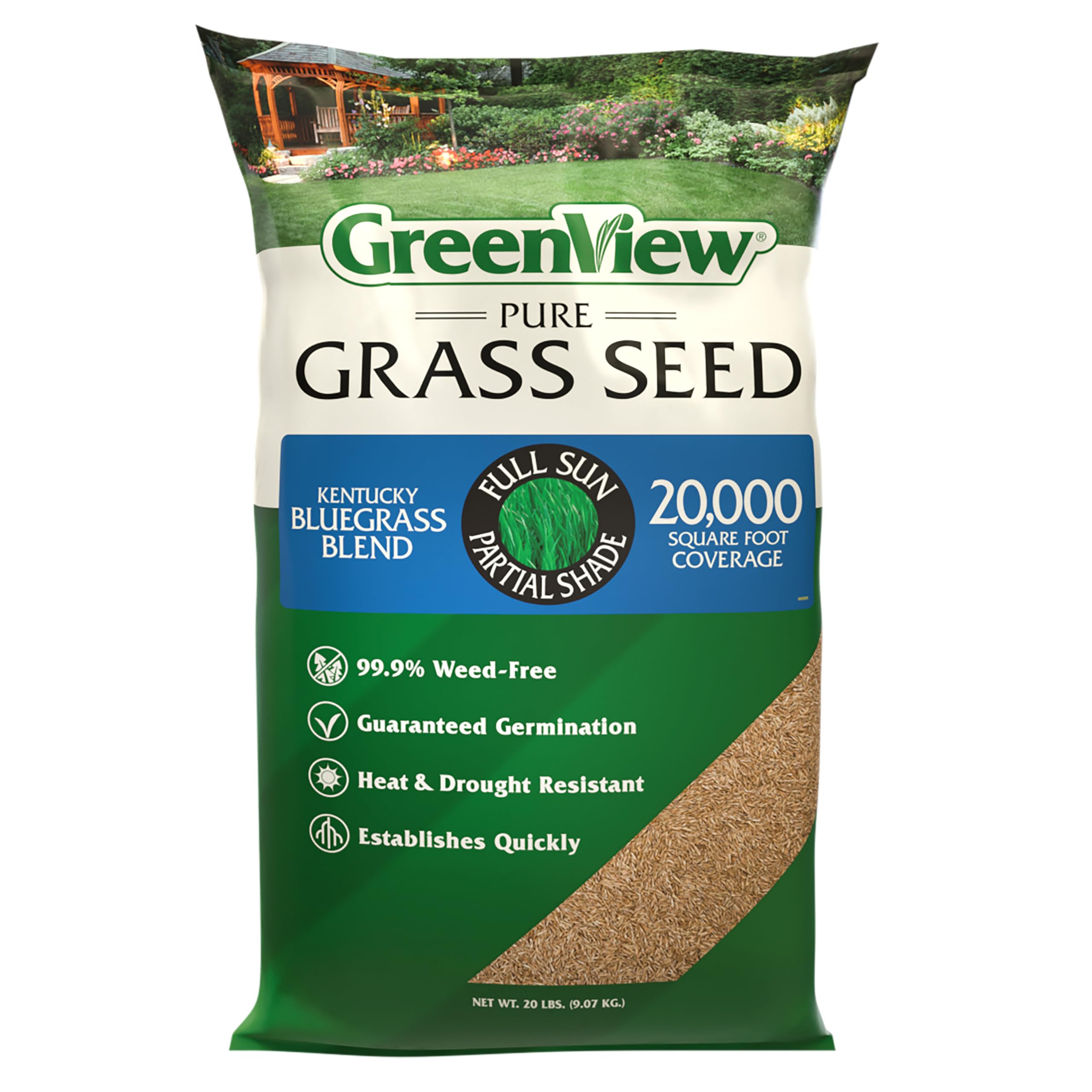
This 20 lb bag is the heavy hitter for large-lot owners who want a consistent, dark-green stand of pure Kentucky bluegrass. The 99.9% weed-free guarantee means less time pulling crabgrass later. Customers report visible germination inside three weeks when soil temperatures stay above 55°F and moisture is consistent.
The blend is bred to resist heat, drought, and brown patch once deep roots establish. Several users noted that shaded sections performed noticeably better than patches in full scorching sun, so this seed works best where you can guarantee at least half a day of direct light. The coverage math is generous: overseeding up to 20,000 sq. ft. from a single bag.
The main catch is that Kentucky bluegrass is slower to establish than ryegrass or fescue. Patience with watering for the first four weeks is non-negotiable. A few buyers reported zero germination despite following instructions, which usually points to soil temperatures dipping below the bluegrass threshold or insufficient watering depth.
Why it’s great
- Massive coverage for large properties
- Virtually no weed seeds in the mix
- Tolerates light shade decently for a bluegrass blend
Good to know
- Slow to germinate — up to 28 days
- Direct sun in late spring can scorch young blades
2. Pennington Smart Seed Northeast Mix (20 lb)

Pennington’s Smart Seed Northeast Mix is a three-way handshake of Kentucky bluegrass, fine fescues, and perennial ryegrass designed to survive both bitter winters and humid summer heat. The built-in starter fertilizer gives seedlings a nutritional boost, which translates to visible growth within a week when watered twice daily.
Users who seeded in early fall reported the thickest results, with the ryegrass component filling in fast while the bluegrass and fescue established deeper roots. The bag is sized for medium properties, overseeding about 6,600 sq. ft. Many reviewers noted that this mix outperformed comparable Scotts products at a more accessible price point.
The downsides are that this is not a pure bluegrass stand — the ryegrass will stand out slightly in texture if you are matching an existing bluegrass lawn. Also, the fertilizer component means you should wait at least a month before applying any weed-and-feed product to avoid burning tender seedlings.
Why it’s great
- Fast germination from the ryegrass component
- Built-in fertilizer simplifies the first feeding
- Handles both full sun and moderate shade
Good to know
- Not a pure bluegrass lawn — texture varies
- Requires heavy watering for first two weeks
3. Outsidepride Legacy Fine Fescue Grass Seed Mix (5 lb)
This blend is a masterclass in fescue genetics — 20% Hard Fescue, 40% Chewings Fescue, and 40% Creeping Red Fescue. If your property is shaded by mature trees or a north-facing house, the fine fescue family photosynthesizes where bluegrass starves. The OptiGrowth coating delivers zinc, phosphorus, and kelp directly to the seed coat, improving contact with dry or sandy soil.
Reviewers consistently praise the fine, dark green texture that resembles a golf course fairway. The blades are thin and soft, creating a luxurious feel underfoot. Germination took about two weeks for most users, with the thickest growth appearing in areas that received morning sun and afternoon shade.
The trade-off is that fine fescue demands more frequent mowing because it grows upright, and it does not handle heavy foot traffic as well as tall fescue or bluegrass. A minority of buyers reported very low germination rates, though the company’s customer service stance on refunds has drawn mixed feedback.
Why it’s great
- Superior shade tolerance among cool-season grasses
- Luxurious fine-bladed texture
- Coating holds moisture during establishment
Good to know
- Lower traffic tolerance than bluegrass blends
- Not all germinations guaranteed per policy
4. Scotts Turf Builder Grass Seed Sun and Shade Mix (5.6 lb)

Scotts combines seed, fertilizer, and soil improver into a single bag, which simplifies the seeding process for homeowners who do not want to buy separate products. The root-building nutrition in the coating encourages deep establishment, and the blend is designed for the widest range of sun conditions — from full sun to moderate shade.
Real-world results show sprouts appearing around day ten with diligent twice-daily watering. Several customers used this to patch bare spots from dog damage or winter kill and were satisfied with the density within a month. The pleasant smell during application was a small but appreciated detail.
Some recent batches have drawn complaints about increased weed content compared to previous years. The grass also grows slower than pure ryegrass options, so it is not the fastest fix for high-visibility patches. For the price per square foot, it remains a solid all-rounder for the casual lawn keeper.
Why it’s great
- All-in-one formula reduces product complexity
- Works across varied sun exposures
- Root-building nutrients aid establishment
Good to know
- Slower growth than annual ryegrass blends
- Some bags reported higher weed seed content recently
5. GreenView Pure Grass Seed Kentucky Bluegrass Blend (3 lb)

This is the same 99.9% weed-free Kentucky bluegrass as the 20 lb version, scaled down for smaller projects or patch repair. It covers up to 3,000 sq. ft. for overseeding — enough for a typical suburban front lawn. The blend adapts to all common soil types and tolerates light shade once established.
Customers who sowed in early spring saw germination within two to three weeks, with fine-textured dark green blades filling in evenly. Compatibility with Tenacity herbicide was a bonus for those fighting poa annua or crabgrass during establishment. Users who failed likely under-watered: bluegrass seed must stay continuously moist for the first 14 days or germination stalls.
The smaller bag is convenient for testing a new blend before committing to a 20 lb investment. However, the per-pound cost is higher than the bulk version, so if you know you like the results, buy the large bag for the second application.
Why it’s great
- Virtually weed-free, clean start for patches
- Compatible with selective herbicides
- Low commitment size for trial runs
Good to know
- Higher per-pound cost than bulk bag
- Direct sun can kill young seedlings in late spring heat
6. Jonathan Green Black Beauty Heat & Drought Resistant Mix (3 lb)

Jonathan Green’s Black Beauty line was developed specifically for the transition zone — the band across the middle of the country where northern cool-season grasses fry in July and southern warm-season grasses freeze in January. This mix includes Texas bluegrass, a heat-tolerant relative of Kentucky bluegrass that keeps its color through 100°F days.
The waxy leaf coating acts like an apple skin, reducing evaporation and helping the grass survive dry spells without browning. Customers moving from cool climates to the Carolinas reported it gave them the bluegrass look they missed, with sprouts visible in seven days when the soil was properly prepared with aeration and topsoil.
Germination can be inconsistent if the seed is planted too late in the spring. The three-pound bag is light for large areas, and some users felt the coverage claim of 750 sq. ft. for new lawns was optimistic. Proper watering and soil prep are absolutely required — this seed does not thrive on neglect.
Why it’s great
- Tolerates heat up to 100°F without dormancy
- Waxy coating reduces water loss during hot spells
- Roots can reach 4 feet deep for drought resilience
Good to know
- Small bag size for the coverage claim
- Inconsistent results if planted past mid-May
7. Pennington Annual Ryegrass Seed (10 lb)

Annual ryegrass serves a narrow but important role: quick winter color over dormant warm-season lawns in the South, or temporary erosion control on bare soil. Pennington’s version germinates in as little as three days — the fastest option in this lineup — and holds up well under foot traffic during the cooler months.
Users who overseeded Bermuda or Zoysia lawns in late fall reported a vibrant green winter carpet that faded naturally as the warm-season grass emerged in spring. The 10 lb bag covers 2,000 sq. ft., and spreading is straightforward with any broadcast spreader. It also works as a nurse crop for slow-starting bluegrass, providing shade and soil stability while the permanent grass establishes.
The downside is that this is strictly a temporary grass. It will die off in summer heat, leaving bare patches if you were relying on it as a permanent lawn. The visual texture is coarser than bluegrass or fescue, and it requires full sun — at least six hours daily — to perform well.
Why it’s great
- Visible green in under a week
- Excellent winter color for southern lawns
- Disease-resistant and traffic-tolerant in cool weather
Good to know
- Annual — dies after one growing season
- Coarser texture than bluegrass or fescue
FAQ
Can I plant Kentucky bluegrass in full shade?
How long should I water new bluegrass seed each day?
Why did my bluegrass seed not germinate at all?
Final Thoughts: The Verdict
For most users, the best bluegrass seed winner is the GreenView Pure Grass Kentucky Bluegrass Blend (20 lb) because its 99.9% weed-free guarantee and massive coverage make it the most efficient path to a uniform dark green lawn. If you need a blend that survives both harsh winters and summer heat with built-in fertilizer, grab the Pennington Smart Seed Northeast Mix. And for dense shade where bluegrass struggles, nothing beats the fine texture of the Outsidepride Legacy Fine Fescue Mix.