
Our readers keep the lights on and the weekend projects moving. As an Amazon Associate, I earn from qualifying purchases.
A kid’s ant farm is either a window into one of nature’s most organized societies or a dusty plastic box on a shelf. The difference comes down to the substrate, the viewing clarity, and whether the kit makes the ants want to work. A great ant farm captures the moment a single tunnel breaks through the sand — and keeps kids coming back to check on progress day after day.
I’m Rikta — the co-founder and writer behind FitlyFast. I’ve spent dozens of hours comparing ant farm designs, reading through customer experiences with gel vs. sand habitats, and analyzing what keeps a colony digging, feeding, and thriving long enough for a child to really learn from it.
If you want a setup that turns screen time into observation time, you need the right ant farm for kids — one with real sand, escape-proof walls, and enough space for the ants to build a visible network of tunnels.
How To Choose The Best Ant Farm For Kids
Not all ant farms are built for real tunneling. Many gel-based kits lose moisture, develop mold, or simply fail to sustain the colony. The best farms use sand or a sand-like substrate that holds tunnel shape and allows the ants to exhibit natural digging behavior. Focus on three things: viewing area, ventilation, and ease of maintenance.
Sand vs. Gel Substrate
Sand is the winner for long-term observation. It allows ants to dig complex tunnels and chambers that stay intact. Gel habitats look clean initially but often liquefy after a few weeks, filling tunnels and stressing the colony. A good sand farm includes sterilized quartz sand that won’t compact into mud when watered.
Viewing Area and Lighting
A wide, clear viewing window matters more than any extra feature. Kids want to see the tunnel network, not just the top layer. Lighted bases or LED strips help show activity even when the room is dim, and some farms include built-in magnifiers for close-up inspection of ant behavior.
Escape-Proof Design and Ventilation
Ants are small and determined. The farm must have ventilation holes smaller than the ant’s body — typically 0.01mm to 0.5mm — or a solid lid with a sealed feeding tube. If the top pops off easily or the side panel has gaps, expect escapes. Look for farms with locking mechanisms or smooth acrylic walls that ants cannot climb.
Quick Comparison
On smaller screens, swipe sideways to see the full table.
| Model | Category | Best For | Key Spec | Amazon |
|---|---|---|---|---|
| ELNMLHT Ant Farm Castle | Sand Castle | Long-term colony viewing | 10.8 x 5.8 x 1.6 inches | Amazon |
| Educational Insights GeoSafari Ant Factory | Classroom Sand | Hands-on STEM learning | Escape-proof viewing area | Amazon |
| wtsyant Ant Farm Castle | Large View | Multi-zone behavior study | 10.8 x 5.8 x 1.6 inches | Amazon |
| Nature Gift Store Lighted Gel Habitat | Gel + LED | All-in-one with live ants | 6.5 x 5.5 x 1.5 inches | Amazon |
| National Geographic Light-Up Terrarium | Gel Lighted | Night viewing with magnifiers | Built-in dual magnifiers | Amazon |
| Tigerific Real Sand Ant Farm | Sand Starter | Budget-friendly sand habitat | 9 x 2 x 7 inches | Amazon |
| WodGod Illuminated Ant Habitat | LED Sand | Authentic ecosystem study | 8.66 x 3.15 x 11.02 inches | Amazon |
In‑Depth Reviews
1. ELNMLHT Ant Farm Castle
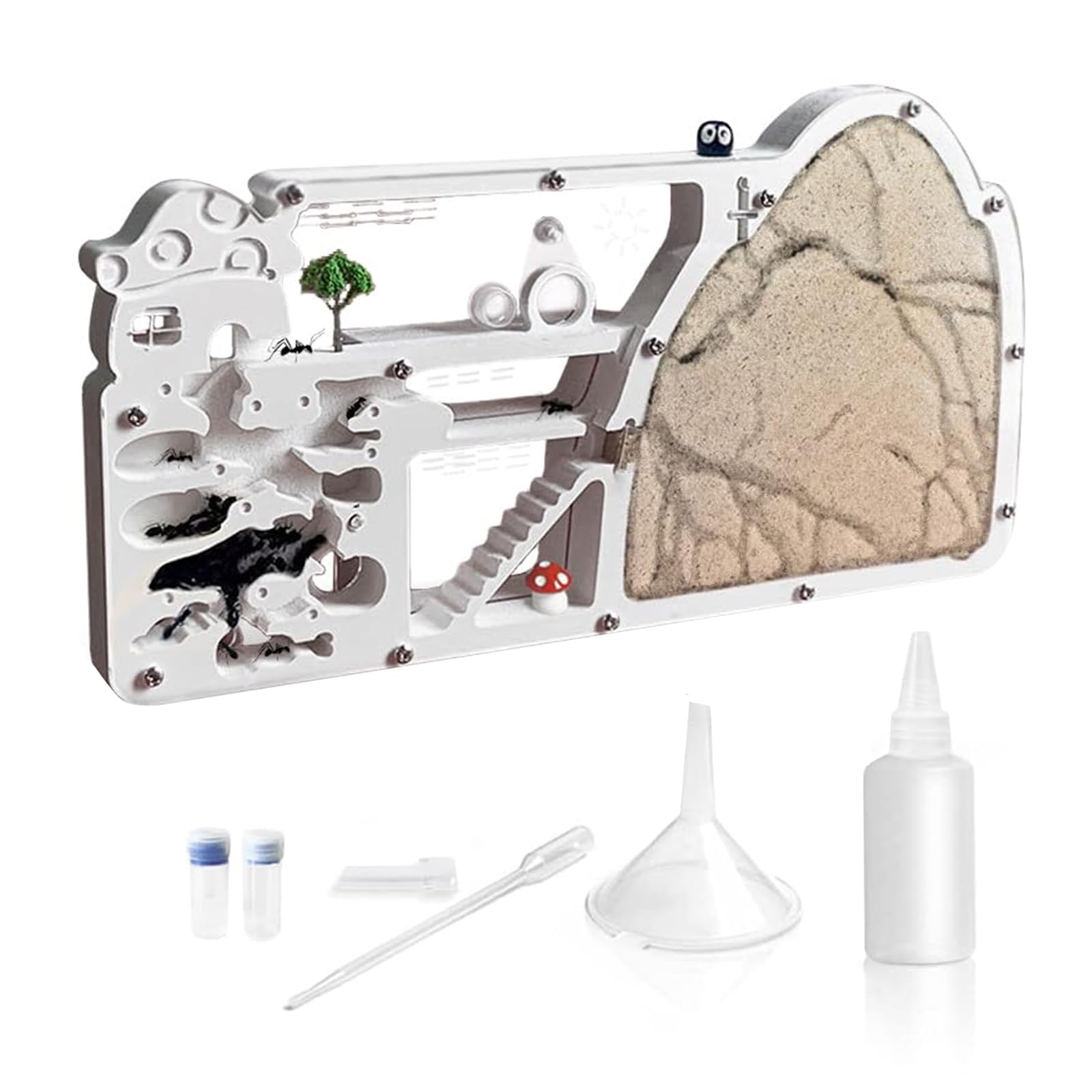
The ELNMLHT Ant Farm Castle uses real sand and an automatic water system that keeps the substrate moist for stable tunneling without daily maintenance. The 10.8-inch double-sided viewing area gives kids a full front-to-back look at the colony — feeding zone, egg-laying area, and excavation dump zone are clearly separated. The acrylic walls are smooth, and the sand is fine enough to hold tunnels without collapsing.
The automatic water refill port means you add water every ten days, not every few hours. This is a real advantage for classroom settings or busy households where the farm might not get daily attention. The included tool kit — dropper, funnel, water tower — covers the essentials, though you will need to source live ants separately.
Parents report that ants started tunneling within hours of transfer, and the colony remained active for months. The instructions are a little light on setup detail, but the overall build quality and thoughtful zoning make this the most complete sand-based ant farm for sustained observation.
Why it’s great
- Double-sided viewing allows full tunnel visibility
- Automatic water system needs refill only every ten days
- Multiple behavioral zones for feeding, digging, and egg-laying
Good to know
- Instructions are vague on initial water amounts
- Live ants not included — must order separately
2. Educational Insights GeoSafari Ant Factory
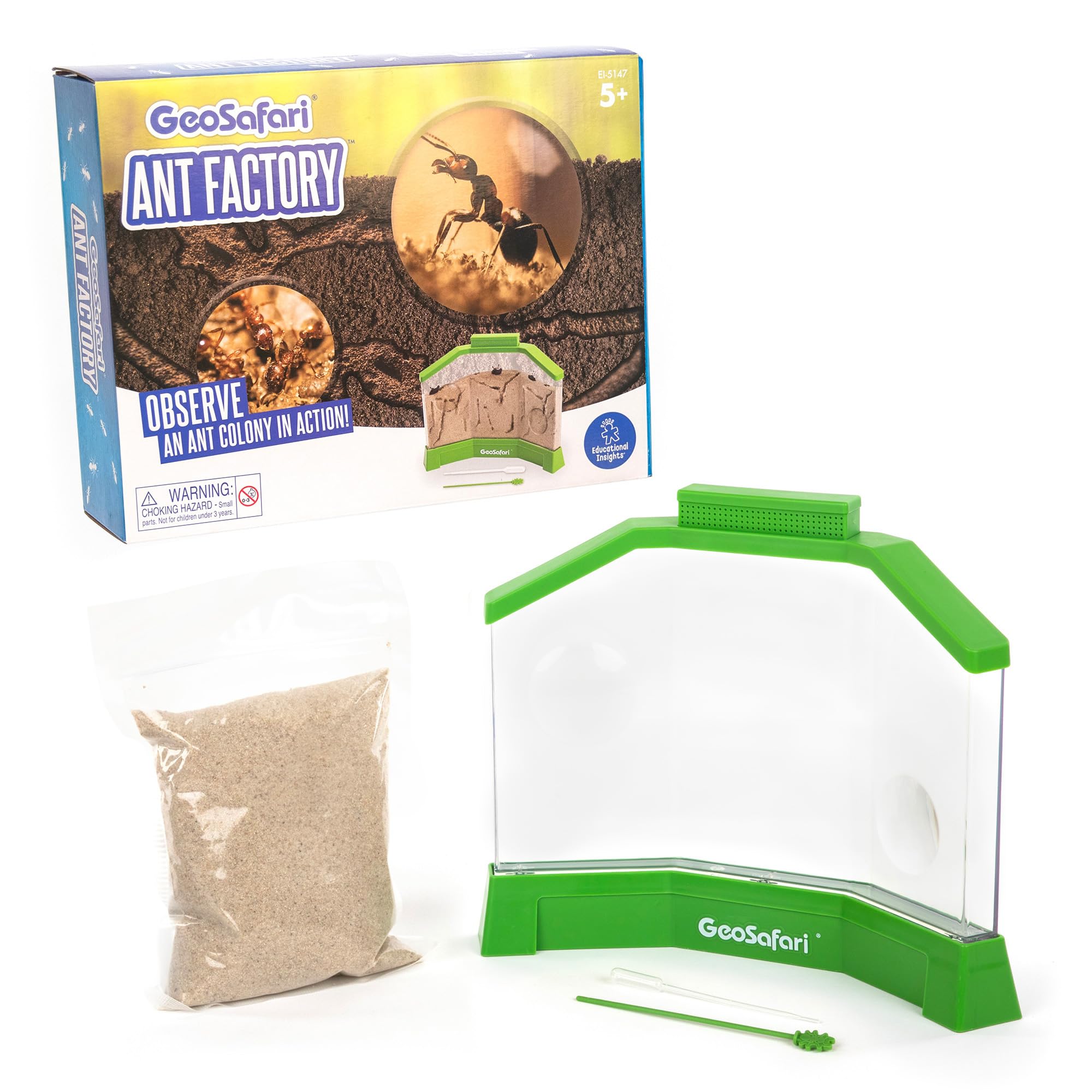
The GeoSafari Ant Factory from Educational Insights comes with the right kind of sand for tunneling and an escape-proof habitat with a large viewing area and built-in magnification spots. The kit includes a feeding tool, activity guide, and a card to order live ants — though you pay a small separate fee for the ants themselves. The sand is specially formulated to hold tunnels without compacting.
The activity guide includes scientific journaling prompts and fun facts, which makes this more aligned with classroom STEM goals than a basic farm. The habitat measures 12 x 9 x 5 inches and has a sturdy stand that prevents tipping. The magnification spots let kids examine individual ants without removing the lid.
One major practical advantage: the GeoSafari accepts ants collected from outside. Several customers successfully used backyard ants with no tunneling issues. This removes the hassle of ordering live harvester ants and handling temperature-dependent shipping. It is a strong pick for first-grade classrooms or family science nights.
Why it’s great
- Sand substrate supports natural tunnel building
- Magnification spots for detailed observation
- Works with ants collected from the backyard
Good to know
- Some assembly required for the stand
- Live ants ship separately and incur a small fee
3. wtsyant Ant Farm Castle
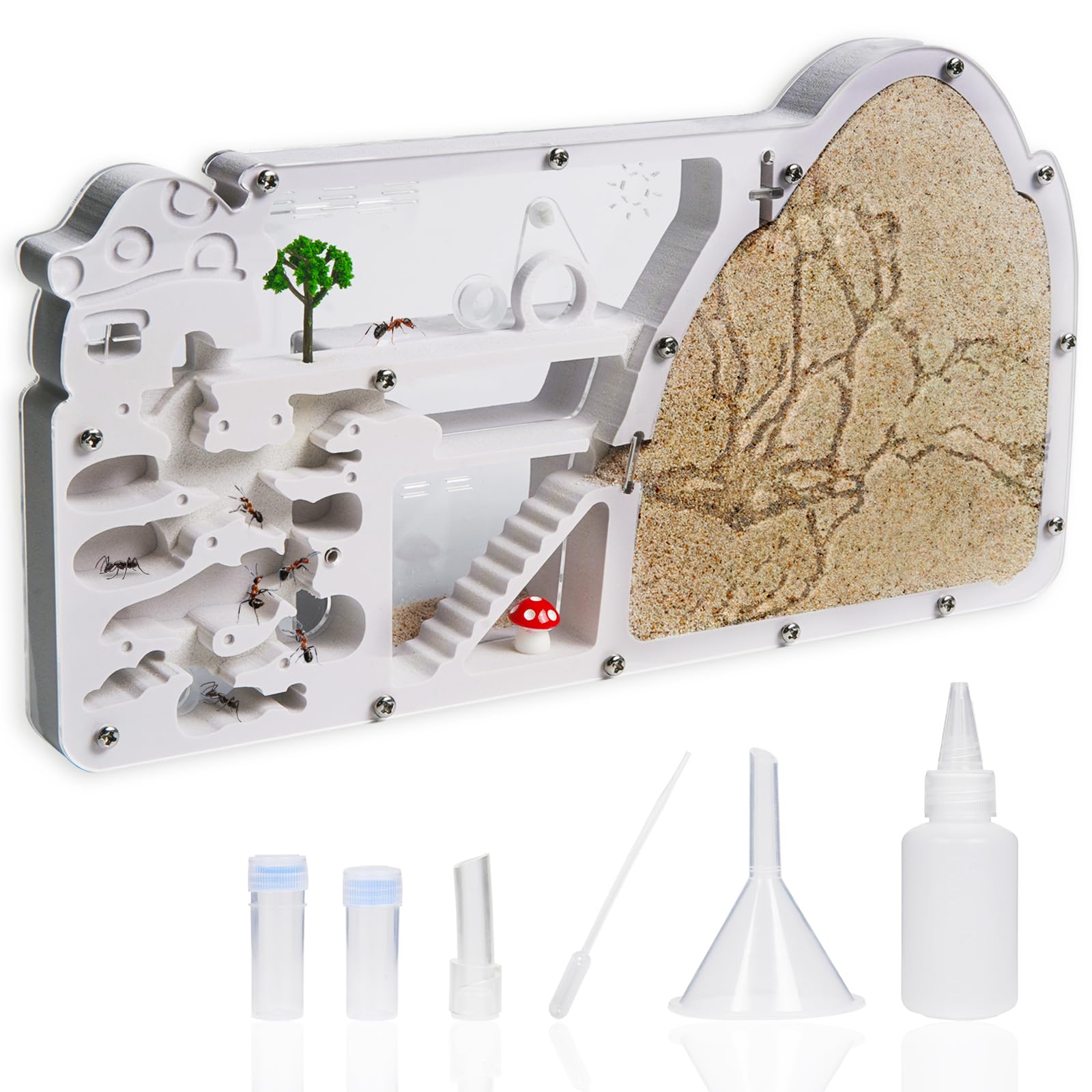
The wtsyant Ant Farm Castle features a 10.8-inch double-sided viewing area with multiple dedicated zones — digging area, feeding station, watering station, and egg-laying chamber. The automatic water system works the same way as the ELNMLHT, requiring refills every ten days rather than daily misting. The 0.01mm ventilation holes are small enough to prevent escapes while maintaining airflow.
The kit includes sand, a drip bottle, funnel, water tower, and dropper. The acrylic construction feels durable, and the farm has survived being moved between home and school. Customers note that the front panel removes for cleaning, which is useful if condensation builds up or if food debris collects on the surface.
Tunneling starts within hours of adding ants, and the separate feeding zone prevents mold from forming inside the main sand area. Some users found that ants stopped digging if the sand became too wet, so controlling the initial water amount is important. Overall, this farm offers the same core feature set as the ELNMLHT with slightly simpler accessories.
Why it’s great
- Large double-sided viewing for colony observation
- Automatic water system with ten-day refill cycle
- Removable front panel for easy cleaning
Good to know
- Overwatering can cause sand compaction
- Live ants not included
4. Nature Gift Store Lighted Gel Habitat
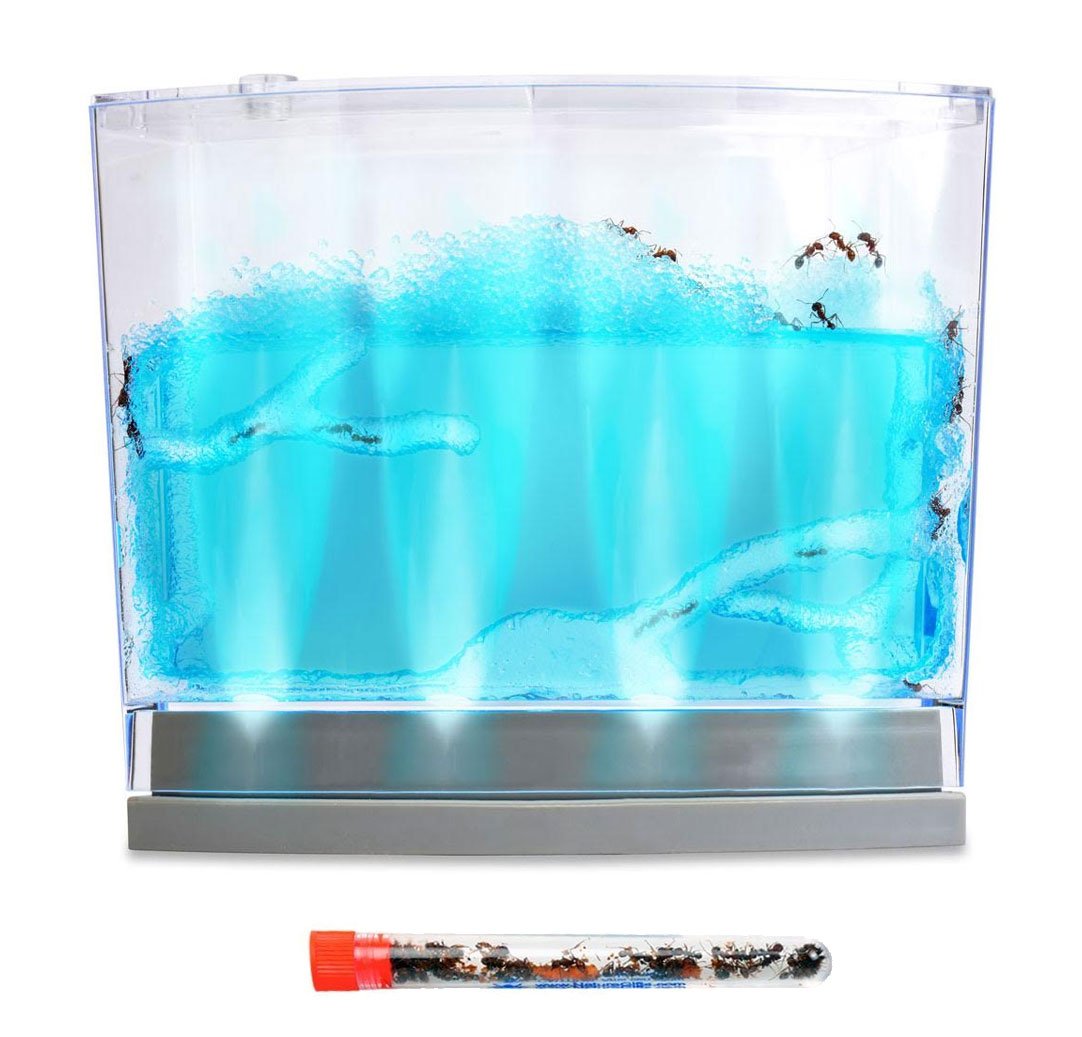
The Nature Gift Store habitat ships with 25 live red harvester ants and a nutrient gel that serves as both food and tunneling medium. The blue LED base lights up the tunnels and makes night observation possible. The curved gel habitat measures 6.5 x 5.5 x 1.5 inches — compact enough for a desk — and includes a magnifying glass and tunnel starter tool.
The gel eliminates the need for separate feeding and watering, which simplifies maintenance for younger kids. The instructions include a temperature warning: do not order if temperatures in your area are below 40°F or above 85°F, or the ants may die in transit. Some users report that the gel eventually liquifies after a few weeks, filling the tunnels and stopping digging activity.
The live arrival guarantee is a plus, but the gel breakdown issue appears in multiple customer reports. This farm works best as a short-term project — two to four months — rather than a long-term colony habitat. If you want a low-commitment introduction to ant observation, this is a convenient starting point.
Why it’s great
- Comes with 25 live ants and nutrient gel
- Blue LED base illuminates tunnels for night viewing
- Easy maintenance — no separate feeding or watering
Good to know
- Gel may liquefy after a few weeks, ending tunneling
- Compact size limits visibility compared to sand farms
5. National Geographic Light-Up Ant Terrarium
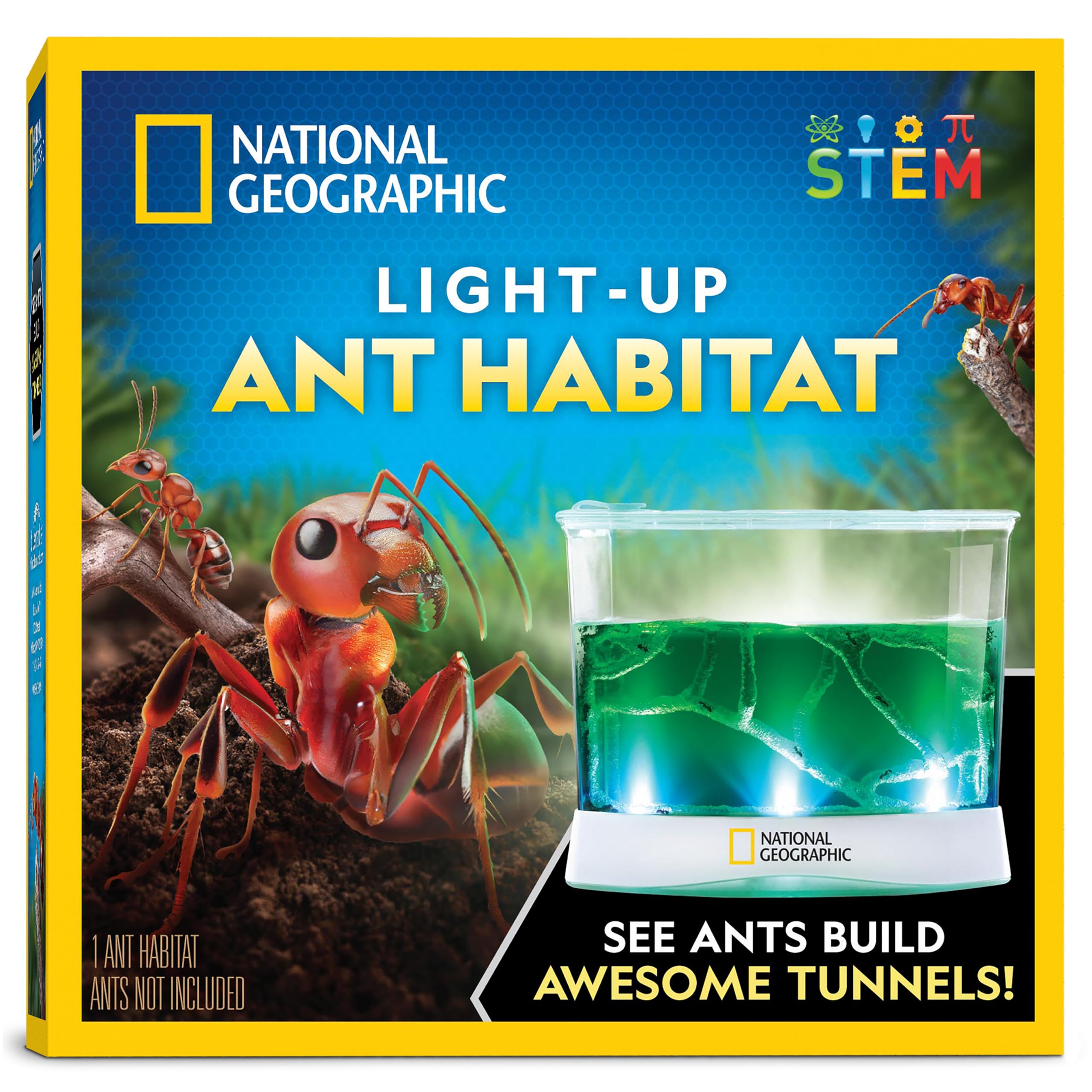
The National Geographic Light-Up Ant Terrarium uses a translucent nutrient gel and plugs in via a USB-style cord to light the habitat. Two magnifying glasses are built directly into the lid, plus an additional removable magnifier, giving kids multiple ways to zoom in on ant activity. The gel contains nutrients, so no additional food or water is required.
The habitat is ultra-stable and measures 8.46 x 7.4 x 2.83 inches. The tunnel starter tool helps create initial burrows so the ants begin digging immediately. The lid closes securely and the ventilation holes are small enough to prevent escapes. Ants are not included; the kit is compatible with ants from Ants Alive.
The light-up feature works well in dark rooms and makes the gel glow, revealing tunnels clearly. Some customers note that the gel can dry out over time and that the habitat is gel-only — you cannot swap in sand later. It is a good option for kids who want immediate visual payoff without the complexity of sand maintenance.
Why it’s great
- Two built-in magnifiers for close-up viewing
- Plug-in light illuminates tunnels in dark rooms
- Nutrient gel eliminates feeding and watering
Good to know
- Live ants sold separately — not included
- Gel-based only; cannot be converted to sand
6. Tigerific Real Sand Ant Farm

The Tigerific Ant Farm keeps things straightforward: real sand, a transparent plastic habitat measuring 9 x 2 x 7 inches, and an included AntWay Connector Tube for attaching secondary habitats. The kit ships with two bags of sand, a learning booklet, water dropper, and a coupon to order live ants at a discounted price. No assembly is required — you open the box, fill the sand, and add ants.
The learning booklet covers ant roles, how ants search for food, and the differences between queen, worker, and soldier ants. The connector tube lets you expand the setup later by linking to another farm. The compact size works well on a shelf or desk, and the fully transparent design allows 360-degree viewing.
Some customers found the connector tube creased during shipping, which confused the ants. The farm uses real sand rather than gel, so you need to add moisture periodically to keep the tunnels stable. It is a simple, budget-friendly sand-based entry point, especially if you want a habitat that can grow with additional modules.
Why it’s great
- Real sand substrate promotes natural digging
- Connector tube allows expansion with additional habitats
- No assembly required — open and set up
Good to know
- Connector tube can arrive bent or creased
- Sand needs periodic moisture to maintain tunnels
7. WodGod Illuminated Ant Habitat
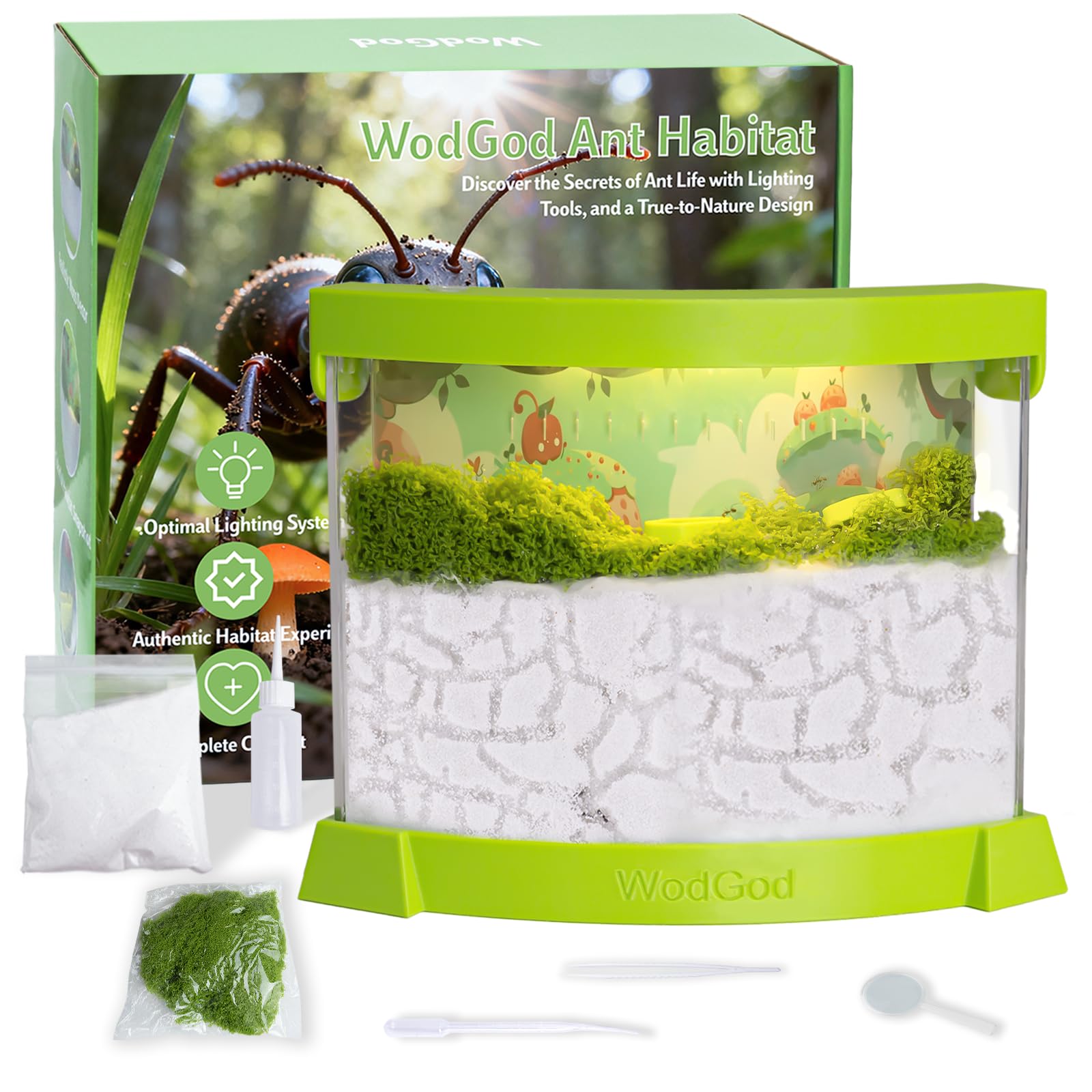
The WodGod Illuminated Ant Habitat uses a top-down LED light strip and sterilized quartz sand to create an authentic ecosystem for behavioral study. The kit includes realistic moss decor and naturalistic printed landscape backgrounds that mimic the ants’ wild environment. The viewing area measures 8.66 x 3.15 x 11.02 inches, giving a tall vertical cross-section of the colony.
The sand is textured quartz that promotes optimal tunnel engineering without compacting into mud. The kit includes a calibrated dropper for precise water control, anti-escape tweezers for handling stray ants, and a magnifier for close inspection. The top-down lighting is unusual — most farms light from the base — and it reduces glare on the viewing surface.
Customer reports note that the farm is fun to watch and easy to assemble, but the quality control on arrival can be hit-or-miss. Some units arrived cracked or with fingerprints inside the acrylic. The anti-escape tweezers are too heavy-handed for delicate ant transfer. For the price, the ecosystem details are a nice touch, but check the unit carefully upon arrival.
Why it’s great
- Top-down LED lighting reduces reflection on viewing area
- Quartz sand holds tunnels without compacting
- Realistic moss and landscape decor for authentic study
Good to know
- Some units arrive cracked or with interior smudges
- Tweezers included are too bulky for safe ant transfer
FAQ
Do ant farms for kids include live ants or do I need to buy them separately?
How long do ants typically live in a kid’s ant farm?
Can I reuse an ant farm after the ants die?
Final Thoughts: The Verdict
For most users, the ant farm for kids winner is the ELNMLHT Ant Farm Castle because it combines real sand, an automatic water system, and a large double-sided viewing area that keeps tunneling visible for months. If you want a classroom-ready STEM kit with built-in magnification and the flexibility to use backyard ants, grab the Educational Insights GeoSafari Ant Factory. And for a simple, no-fuss sand starter that lets you expand later, nothing beats the Tigerific Real Sand Ant Farm.