
Our readers keep the lights on and the weekend projects moving. As an Amazon Associate, I earn from qualifying purchases.
Most earbuds are tuned to flatter pop radio, not to render the textured decay of a cymbal crash or the air between a vocalist’s breaths. If you have ever felt your favorite track was hiding something, the issue is likely a driver configuration and tuning philosophy built for convenience, not fidelity. True audiophile-grade wired earbuds prioritize low harmonic distortion, accurate transient response, and a neutral frequency curve that reveals what the recording engineer heard.
I’m Rikta — the co-founder and writer behind FitlyFast. I have spent hundreds of hours analyzing driver topologies, impedance curves, and customer feedback across dozens of IEM models to separate genuine high-fidelity engineering from clever marketing.
Whether you are a musician checking a mix, a gamer hunting directional cues, or a listener rediscovering your library, finding the right pair means navigating a sea of driver counts and tuning gimmicks. This guide breaks down seven of the best contenders to help you pick a pair of audiophile wired earbuds that match your real priorities.
How To Choose The Best Audiophile Wired Earbuds
An audiophile earbud is more than a component list — it is a system of decisions about driver architecture, tuning targets, and ergonomics. Understanding a few core specs will save you from buyer’s remorse and help you match a pair to your source gear and listening preferences.
Driver Topology: Dynamic, Balanced Armature, or Hybrid
A single dynamic driver (like the Sennheiser IE 200’s 7mm TrueResponse) can produce a cohesive sound with natural bass decay, but may struggle with micro-detail separation in dense mixes. Balanced armature drivers excel at precision in the mids and highs, but can sound sterile in the low end. Hybrid designs (such as the Tipsy M3’s 2BA+1DD config) attempt to blend the strengths, but require careful crossover design to avoid phase issues. For most listeners, a well-tuned single dynamic driver offers the best coherence per dollar.
Impedance and Sensitivity: Know Your Source
Earbuds with low impedance (under 32 ohms) and high sensitivity (above 105 dB) are easy to drive from a phone or laptop, but may hiss with noisy sources. Higher impedance models (over 50 ohms) often benefit from a dedicated DAC or amplifier, where they scale in terms of soundstage width and transient control. If you primarily listen through a USB-C dongle or a laptop jack, seek models in the 16–32 ohm range.
Tuning Switches and Filter Systems
Some IEMs, like the KZ AS24 with its eight tuning switches or the Shure SE846 Gen 2 with interchangeable sound signature filters, let you adjust frequency response without EQ. This is valuable if you switch between genres or need a flat signature for monitoring and a warmer one for casual listening. The trade-off is added complexity and potential switch noise or failure over time.
Quick Comparison
On smaller screens, swipe sideways to see the full table.
| Model | Category | Best For | Key Spec | Amazon |
|---|---|---|---|---|
| Sennheiser IE 200 | Mid-Range | Neutral / balanced listening | 7mm TrueResponse dynamic driver | Amazon |
| MEZE AUDIO ALBA | Premium | USB-C convenience + sound | 10.8mm dynamic driver w/ USB-C DAC | Amazon |
| Tipsy M3 | Premium | Professional monitoring / gaming | 2BA + 1DD hybrid, 3 independent tubes | Amazon |
| Fosi Audio IM4 | Mid-Range | Open-back soundstage | 10mm beryllium-coated dynamic driver | Amazon |
| SENNHEISER IE 100 PRO | Mid-Range | Stage monitoring / value | 10mm dynamic driver, detachable cable | Amazon |
| KZ AS24 | Mid-Range | Tuning flexibility / BA detail | 24 BA drivers, 8 tuning switches | Amazon |
| Shure SE846 PRO Gen 2 | Premium | Reference-grade detail | 4 Hi-Def BA drivers, swappable filters | Amazon |
In‑Depth Reviews
1. Sennheiser IE 200

The IE 200 uses Sennheiser’s 7mm TrueResponse transducer, a single dynamic driver engineered to minimize unit-to-unit variation. Out of the box, its frequency response is neutral — not an exciting V-shape — which means bassheads will want EQ, but anyone chasing accurate mids and smooth treble will appreciate the lack of coloration. The dual bass-tuning design lets you adjust the ear tip mounting position to tighten or warm the low end without losing coherence.
Comfort is a standout: the compact, rounded shell fits deeply and securely, and the flexible earhooks keep the cable manageable during long sessions. The detachable MMCX cable is braided to reduce microphonics, though some users report the connector is proprietary enough to limit aftermarket upgrades. The included memory foam and silicone tips in three sizes help achieve a reliable seal, which is critical for bass extension and isolation.
At this price point, the IE 200 competes directly with hybrid and multi-BA designs, but its strength is tonal balance rather than raw resolution. Listeners who prefer analytical detail may find it slightly relaxed, and the plastic build does not feel as premium as metal-shelled rivals. It remains a top recommendation for those who want a reference-neutral signature that reveals poorly mastered recordings without sounding shrill.
Why it’s great
- Neutral, revealing sound with controlled bass
- Exceptional long-wear comfort and secure fit
- Dual bass-tuning positions add flexibility
Good to know
- Plastic shell feels less premium than metal alternatives
- Stock cable can tangle and picks up some noise
- MMCX connector limits cable upgrade options
2. MEZE AUDIO ALBA

The Meze Audio ALBA is built around a 10.8mm dynamic driver housed in a zinc-alloy and anodized aluminum chassis that feels substantially more durable than its lightweight profile suggests. It ships with a custom-designed 3.5mm-to-USB-C adapter containing a built-in DAC/AMP, making it one of the few audiophile IEMs that genuinely sounds its best straight out of a modern smartphone or tablet without an external dongle. The sound is natural and musical rather than clinical — lower frequencies get a gentle lift for richness while the upper register stays clean and airy.
Comfort is excellent: the shell is small and contoured, and the included silicone tips in four sizes (S through XL) help most ears achieve a deep seal. The braided SPC cable terminates in a gold-plated 3.5mm jack and uses 2-pin 0.78mm connectors, which are standard enough for easy aftermarket replacement. The eco-leather carrying pouch is a practical touch, though it lacks the rigid protection of a hard case.
Where the ALBA falls short for some is in the bass department — it is fast and textured but not punchy, making it a poor fit for bass-heads or EDM-focused libraries. The 2-pin connectors on the early batch have been reported to loosen over time, causing the earbud to detach. The included USB-C adapter is a genuine differentiator for mobile users who want high fidelity without a separate DAC purchase.
Why it’s great
- Included USB-C DAC/AMP adapter for phone/tablet use
- Premium metal build with iridescent finish
- Natural, musical tuning with good air and detail
Good to know
- Modest bass output; not for bass-heavy genres
- 2-pin connector can loosen on some units
- Thin stock cable tangles relatively easily
3. Tipsy M3
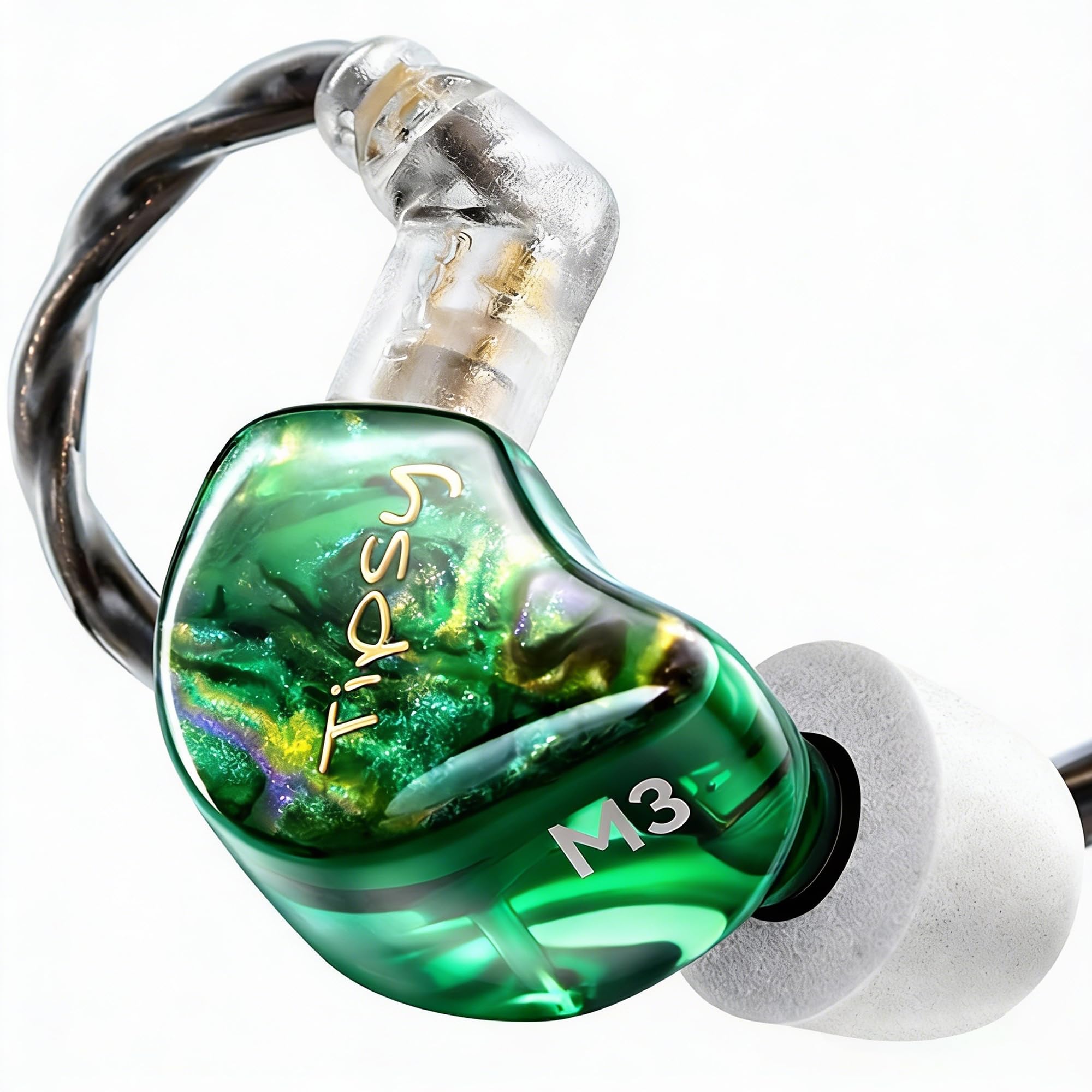
The Tipsy M3 uses a hybrid driver configuration — a 9.2mm titanium-plated dynamic driver for the low end and two custom balanced armature drivers for mids and highs — paired with the company’s Acoustic-Runway Technology, which physically separates each frequency band into its own internal tube to eliminate crossover distortion. The result is exceptionally clean imaging and separation, particularly in complex mixes where cheaper hybrids smear transients. The shell is a transparent, hand-polished resin that is both lightweight and durable, and the 3D-printed fit is based on over 20,000 ear scans, making it one of the most ergonomic options here.
Tuning is ruthlessly transparent: the bass is present but not boosted, the mids are forward without being shouty, and the treble extends smoothly without sibilance. This makes the M3 a strong tool for musicians checking mixes or gamers who need precise directional audio. The included high-purity silver-plated copper cable with 0.78mm 2-pin connectors is a solid step above stock cables in this tier, and the bundle includes foam and silicone tips plus a carrying case.
The trade-off for that transparency is that the M3 can sound slightly aggressive in the upper-midrange (1.6–4 kHz region) on certain vocals and brass instruments, which some listeners may perceive as nasal or fatiguing over very long sessions. The included case is functional but lacks the premium feel of the earbuds themselves. For professionals and serious hobbyists who prioritize clarity over warmth, the M3 delivers a level of detail that rivals models costing twice as much.
Why it’s great
- Exceptional imaging and instrument separation for the price
- Lightweight, ergonomic resin shell with excellent fit
- Good cable and tip selection included
Good to know
- Upper-mid emphasis can sound aggressive on some tracks
- Carrying case feels budget relative to the IEM quality
- Requires a clean source to avoid hiss
4. Fosi Audio IM4
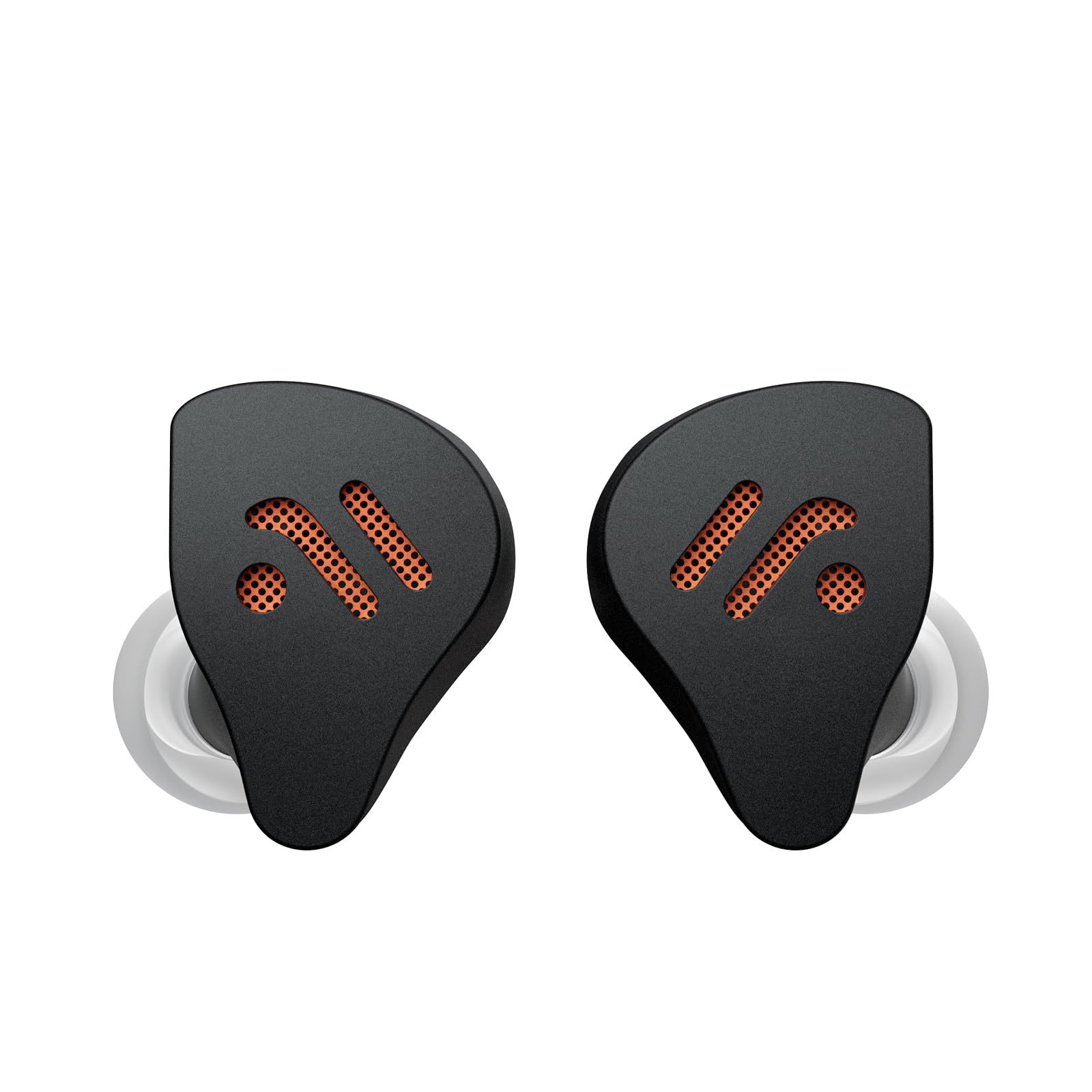
The Fosi Audio IM4 is an open-back IEM, a rarity in the sub- category. Its 10mm beryllium-coated diaphragm dynamic driver, dual-chamber structure, and N52 dual-magnet circuit produce a soundstage that feels wide and airy, with instruments occupying distinct positions in space rather than stacking on top of each other. The open-back design means you lose passive isolation — you will hear ambient noise, and people nearby will hear your music — but for critical listening in a quiet room, the sense of space and reduced ear fatigue are significant advantages.
Build quality punches above its price: the full-aluminum alloy shell is CNC-machined with a sand-blasted finish that feels smooth and solid. At 7 grams per earbud, the IM4 is light enough to disappear in the ear, and the shape is derived from a large ear-database to ensure a natural fit. The tuning customization is generous — three sets of silicone tips (balanced, bass, deep-bass) in three sizes each, plus two sets of interchangeable nozzles (brass and aluminum alloy) that alter the treble response slightly.
The stock sound is bright and detailed, with clean mids and highs that reveal recording flaws, but bass is clean rather than impactful. Listeners seeking a warm, bass-forward signature should look elsewhere. The lack of a swappable termination plug (only 3.5mm, no 4.4mm balanced) is a minor limitation for those with balanced DACs. For its price, the IM4 offers a genuinely open-back experience that few competitors even attempt.
Why it’s great
- Wide, airy soundstage from true open-back design
- Premium metal build at a budget-friendly price
- Customizable tuning via nozzles and tip sets
Good to know
- No passive noise isolation; leaks sound in both directions
- Bass is clean but lacks impact for bass-heavy genres
- Only 3.5mm termination; no balanced option included
5. SENNHEISER Professional IE 100 PRO
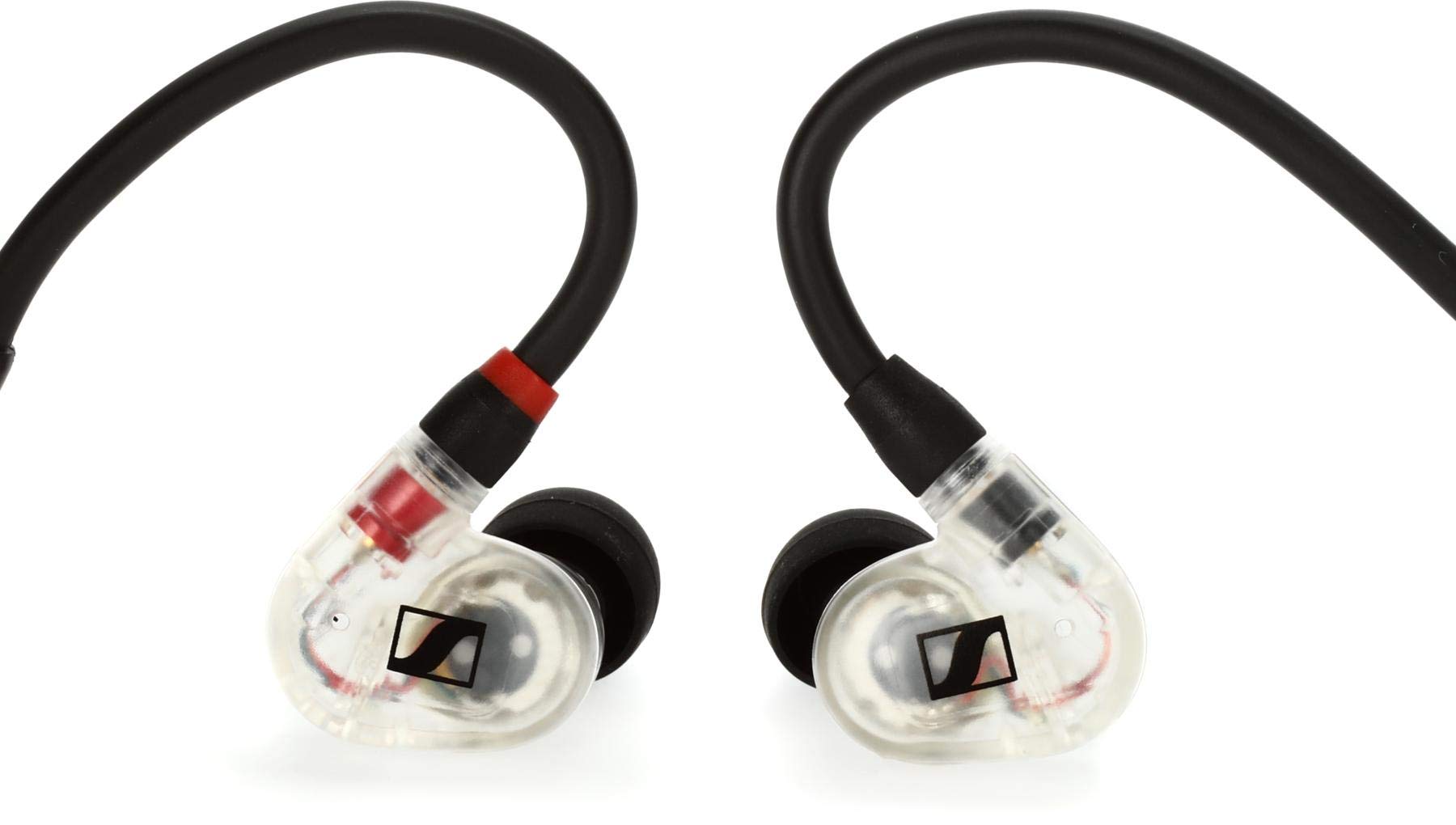
The IE 100 PRO is Sennheiser’s entry-level stage monitor, built around a single 10mm dynamic driver tuned for clarity and distortion-free reproduction at high SPL. The sound signature is slightly treble-forward — reviewers note it can be sibilant on certain tracks — which helps vocals cut through a live mix but can be fatiguing for critical home listening. The slim, ergonomic shell fits shallowly into the ear, making it comfortable for extended wear, and the included foam and silicone tips provide solid isolation for stage use.
The cable is designed for stage durability, with an internal cable duct and a detachable connection that allows easy replacement. The carrying case is soft and lightweight. At its price point, the IE 100 PRO offers a reliable, comfortable monitoring solution with Sennheiser’s brand reliability, but the tuning is not neutral enough for critical studio mixing — it is a tool for live performance and practice, not for analytical headphone listening.
Where the IE 100 PRO excels is in value: it is one of the most affordable dedicated stage monitors from a major brand, and it sounds noticeably better than generic budget IEMs. The treble emphasis and lack of deep bass extension mean it is not a great choice for casual music enjoyment, but for a musician on a budget who needs a dependable wired monitor, it ticks the essential boxes.
Why it’s great
- Durable construction designed for stage use
- Comfortable, lightweight fit for long sessions
- Good isolation with included foam and silicone tips
Good to know
- Treble-forward tuning can cause sibilance on some tracks
- Bass is tasteful but not impactful
- Sound quality varies significantly with source gear
6. KZ AS24

The KZ AS24 packs 24 balanced armature drivers per side — twelve dedicated to each channel — configured across low, mid, and high-frequency bands with a professional crossover. In theory, this allows extreme detail retrieval. In practice, the AS24 delivers a flat, balanced sound out of the box with excellent mids and highs, but it is the eight tuning switches (four per earbud) that let you adjust ultra-high, high, mid, and low frequencies independently to fine-tune the signature to your preference or source material.
The shell is a 3D-printed DLP resin that is smooth and ergonomic, and the included high-purity silver-plated OFC cable with detachable 2-pin 0.78mm connectors is a solid step up from basic stock cables. The AS24 also pairs well with KZ’s own Bluetooth adapters, giving users a wireless option when needed. Reviewers consistently note that the build quality and fit are excellent for the price range.
The downside is that 24 BA drivers do not automatically equal 24 times the quality — coherence can suffer if the crossover is not perfectly executed, and the sheer driver count can lead to a slightly disjointed sound compared to a well-tuned single dynamic driver. The tuning switches add complexity, and some users report audible clicks when adjusting them. The AS24 is a fascinating choice for tinkerers who want extreme tweakability, but listeners who prefer a cohesive, natural tonality should look at simpler designs.
Why it’s great
- Exceptional detail retrieval from 24 BA drivers
- 8 tuning switches for extensive sound customization
- Comfortable 3D-printed shell with good build quality
Good to know
- Multi-BA crossover can sound disjointed vs. single DD
- Tuning switches can click and add complexity
- Not as cohesive as simpler, well-tuned competitors
7. Shure SE846 PRO Gen 2

The Shure SE846 PRO Gen 2 is a four-driver, three-way system that has been a reference in the professional audio world for years. The Gen 2 update adds a fourth sound signature filter (the “extended” filter) to the existing balanced, warm, and bright options, giving more control over the frequency response. The drivers are housed in a low-profile, ergonomic shell with an optimized nozzle angle that improves long-wear comfort, and the sound isolating design blocks up to 37 dB of ambient noise — one of the highest isolation ratings in the category.
Detail retrieval is exceptional: the extended high-end clarity and low-end performance rival full-sized open-back headphones like the Sennheiser HD660S2. The bass is tight and textured, the mids are sweet and natural, and the treble extends smoothly without harshness. The swappable filters are easy to change and genuinely alter the character of the sound — the blue filter, for example, is favored by gamers for its slightly boosted presence region. The included premium carrying case, sleeve assortment, and 1/4-inch adapter add to the professional feel.
The price positions the SE846 Gen 2 as a long-term investment. It requires a clean source and benefits noticeably from a balanced DAC/AMP setup to scale its soundstage. The stock cable is detachable via MMCX, but some users prefer aftermarket replacements for better ergonomics. For the dedicated audiophile, musician, or gamer who wants a single do-everything IEM that competes with kilobuck models, the SE846 Gen 2 remains a benchmark that few have dethroned.
Why it’s great
- Reference-level detail retrieval across the entire frequency range
- Four swappable sound signature filters for easy tuning
- Exceptional passive noise isolation
Good to know
- High price requires genuine need for the performance
- Requires a good DAC/AMP to reach full potential
- Stock cable is functional but not premium-feeling
FAQ
Do I need a separate DAC or amplifier for these earbuds?
What is the difference between open-back and closed-back IEMs?
How important are eartips for sound quality?
Can I use audiophile wired earbuds for gaming?
Final Thoughts: The Verdict
For most users, the audiophile wired earbuds winner is the Sennheiser IE 200 because it delivers a neutral, natural sound signature with exceptional comfort and a dual bass-tuning feature that adds versatility without complexity — all at a price that respects your wallet. If you want a premium build and a built-in USB-C DAC for phone-first listening, grab the MEZE AUDIO ALBA. And for professional-grade detail and isolation that scales with your gear, nothing beats the Shure SE846 PRO Gen 2.