
Our readers keep the lights on and the weekend projects moving. As an Amazon Associate, I earn from qualifying purchases.
A poorly fitted backpack turns a beautiful summit trail into a misery of sore shoulders, lower back strain, and sweat-soaked fabric. The right pack disappears against your back, transferring weight to your hips and keeping your gear organized enough that you never dig for a water bottle five miles in. This guide breaks down the seven best options on the market today based on fit, suspension design, and category-specific storage features that actually matter on the trail.
I’m Rikta — the co-founder and writer behind FitlyFast. This guide reflects hundreds of hours spent analyzing customer body-fit data, comparing suspension materials and ventilation channel geometries, and decoding the real-world load capacities of each pack’s frame system.
After evaluating volume ratings, torso adjustability, hip-belt padding density, and fabric durability across seven leading models, we settled on a definitive ranking for the backpack for hiking that fits the widest range of actual hiker body types.
How To Choose The Best Backpack For Hiking
Choosing a hiking backpack starts with matching the pack’s internal frame and torso-length adjustment to your body dimensions. A pack that does not fit your spine length will never carry well, no matter how many pockets it has. Ignore volume first and dial in your fit range.
Volume and Trip Duration
A 20-30 liter pack works for day hikes where you carry only layers, lunch, and water. For overnight or multi-day trips with a tent and sleeping bag, you need a 40-50 liter pack. Over 50 liters suits extended expeditions where you also carry bear canisters and extra fuel. Overstuffing any bag destroys stability and strains the suspension system.
Suspension and Ventilation
Look for a rigid or semi-rigid frame — either a perimeter wire frame or a molded back panel — that transfers load to your hips rather than your shoulders. Trampoline back systems, like the AirSpeed and Airstripes designs, create a gap between your spine and the pack to reduce sweat buildup. Thick, contoured hip belts with padded fins distribute weight evenly and prevent the bag from swaying on technical terrain.
Access and Organization
Panel-loading packs unzip like a suitcase, making it easy to reach gear at the bottom without unpacking everything. Top-loading packs with drawstring closures are lighter and more waterproof but require digging. Look for hip-belt pockets that fit your phone, a hydration sleeve compatible with a 3-liter bladder, and stretch mesh side pockets that hold water bottles accessible without removing the pack.
Quick Comparison
On smaller screens, swipe sideways to see the full table.
| Model | Category | Best For | Key Spec | Amazon |
|---|---|---|---|---|
| Osprey Stratos 44 | Premium | Multi-day trips | 44L / AirSpeed suspension / 3.64 lbs | Amazon |
| Deuter Trail 30 | Premium | Ventilated day hikes | 30L / Airstripes back / 2.47 lbs | Amazon |
| Gregory Miko 30 | Mid-Range | Agile day hiking | 30L / BioSync hipbelt / 1.9 lbs | Amazon |
| Osprey Tempest 20 | Mid-Range | Women-specific fit | 20L / AirScape back / 2.1 lbs | Amazon |
| Salomon Trailblazer 30 | Mid-Range | Fast-and-light day trips | 30L / 3D padded back / 1.2 lbs | Amazon |
| Eddie Bauer Adventurer 30 | Budget | Value day hiking | 30L / Trampoline back / 1.56 lbs | Amazon |
| Mardingtop 60L | Budget | Heavy-load budget carry | 60L / Internal frame / 4.49 lbs | Amazon |
In‑Depth Reviews
1. Osprey Stratos 44L Men’s Hiking Backpack
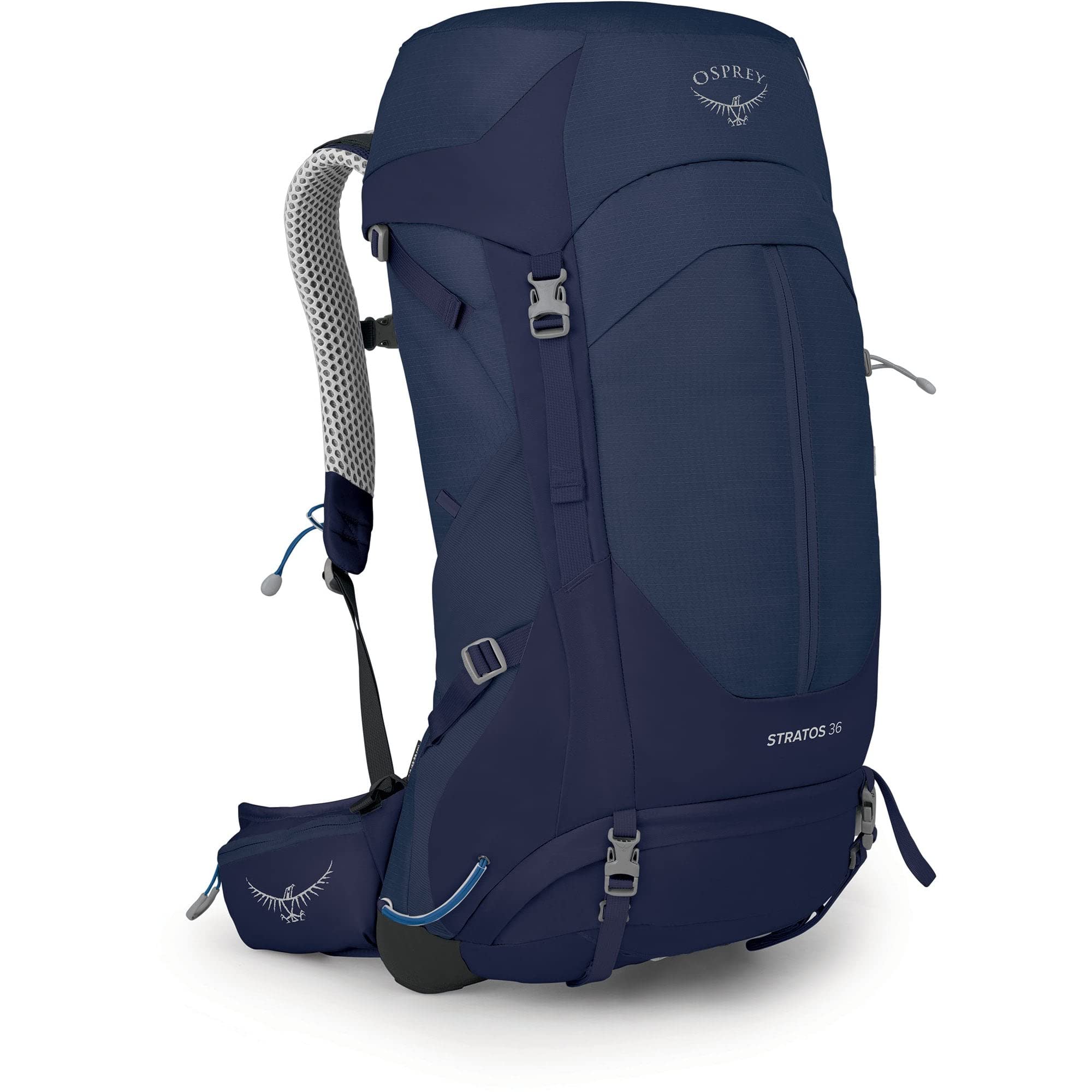
The Stratos 44 uses Osprey’s injection-molded AirSpeed suspension system, which creates a tensioned mesh trampoline that sits several inches off your back. This design delivers serious ventilation — your spine stays dry even on sweaty approaches — while the rigid peripheral frame transfers load directly to the padded hip belt. The adjustable torso range accommodates taller frames better than most packs in this class.
Top-loading with a drawcord closure and a floating top lid, the Stratos includes a dedicated rain cover, trekking pole attachments, and an internal hydration sleeve with a hose port. The hip belt’s padded fins are thick and supportive, distributing weight evenly enough for 30-pound carries over extended mileage.
At 3.64 pounds, the Stratos is not the lightest option for ultralight missions, but the ventilation and load control make it the most versatile multi-day pack here. The fixed frame limits its use as a travel carry-on, but for serious hiking it remains the top choice for anyone carrying gear beyond a single day.
Why it’s great
- Best-in-class AirSpeed back panel keeps your spine cool on long climbs
- Thick, contoured hip belt with adjustable torso fits a wide range of body sizes
Good to know
- Rigid frame makes it unsuitable for under-seat airline carry-on
- Heavier than comparable day packs at over 3.5 pounds
2. Deuter Trail 30L Backpack

The Trail 30 uses Deuter’s signature Airstripes system — two padded foam strips that run vertically along your back while deep channels between them allow air to circulate freely. The reduced contact surface combined with a WideAirMesh cover keeps the pack close to your body without sacrificing airflow. A Delrin U-frame gives it stability and balanced load distribution even on uneven terrain.
Materials are a mix of recycled 600D PES and 210D PA nylon, making it tough against abrasions while keeping weight down to 2.47 pounds. The pack includes a rain cover, a hydration compartment for up to 3 liters, an ice-axe loop, and a wet storage pocket. The hip fins are ergonomically shaped and snug, and the shoulder straps use perforated foam for additional breathability.
The front zippered access is a standout feature — you can reach the bottom of the main compartment without untying everything. The waist belt pockets are functional but small; some users found them too tight for larger phones. Overall, this is a premium daypack built for hikers who prioritize back ventilation without sacrificing structure.
Why it’s great
- Airstripes system with wide ventilation channels keeps your back cool and dry
- Front zipper access lets you grab gear from any layer of the pack
Good to know
- Waist belt pockets are small — may not fit larger smartphones
- Recommended load range caps at 18 pounds; not for heavy gear
3. Gregory Miko 30L Unisex Day Hiking Backpack
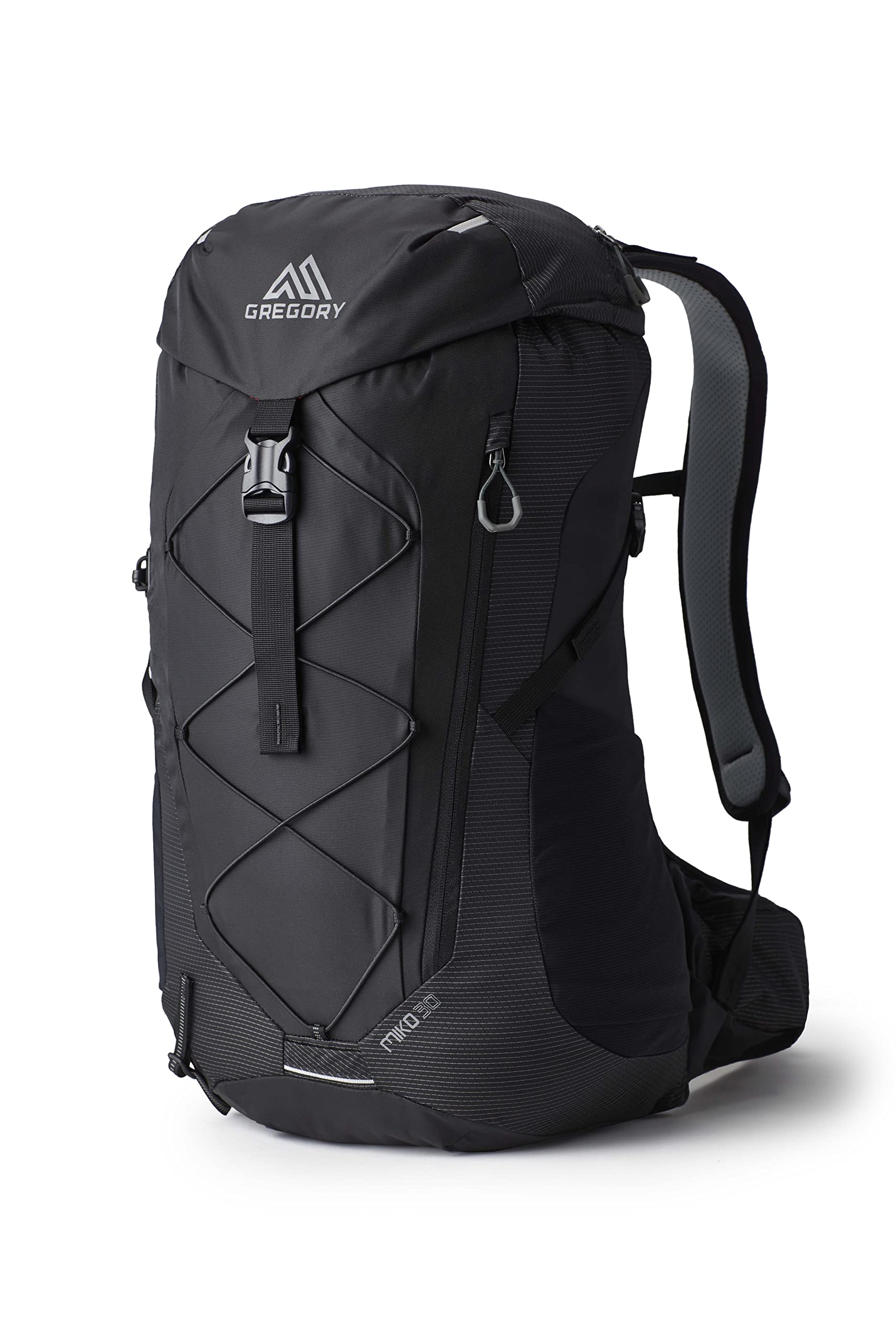
The Gregory Miko 30 is built around a BioSync flexible hip belt that moves with your natural gait, reducing pressure points during dynamic hiking. The channeled foam back panel has aerodynamic grooves to promote air movement, and the shoulder straps use perforated padding with flexible edge construction to keep you comfortable on long days.
Adjustable torso length with 3.5 inches of range allows a customized fit across different body sizes, while the top lid includes a zippered pocket for small valuables. The large hip belt pockets are genuinely spacious — they easily swallow a modern smartphone and a few snacks. The SpeedClip hydration hanger works with Gregory reservoirs and keeps a 3-liter bladder stable.
One drawback: the Miko lacks a dedicated padded laptop compartment, so it is less of a hybrid travel pack. It also has no internal frame, relying on the BioSync belt and back panel for structure. This keeps the weight very low but limits load capacity to about 25 pounds. For fast day hikes where every gram matters, this is the best value in the list.
Why it’s great
- BioSync hip belt flexes naturally with your stride, reducing hot spots
- Large hip belt pockets fit phones and gear without awkward reaching
Good to know
- No padded laptop sleeve limits urban-to-trail versatility
- Lacks a rigid frame; not built for loads above 25 pounds
4. Osprey Tempest 20L Women’s Hiking Backpack

The Tempest 20 is built specifically for women, with a shorter torso length, contoured shoulder straps, and an extended hip belt designed to fit hips up to 70 inches. The AirScape back panel uses injection-molded die-cut foam to create a breathable, close-to-body fit that balances ventilation with stability. This is a technical pack aimed at dynamic movement on demanding terrain.
At just 20 liters, this is a true day pack — you get dual-zippered panel access to the main compartment, a hydration sleeve that accommodates a 2-liter bladder (though inserting it takes effort), and a small but functional top pocket with a key clip. The waist belt pockets are present but narrow; they barely fit a Samsung S21, so larger phones may need to ride in the main compartment.
The BioStretch harness and continuous lumbar-to-hipbelt wrap allow the pack to move naturally during scrambling or running sections. Some users noted the hip belt does not fully wrap around narrower waists without adjustment, requiring a moment of fiddling each time you tighten. For small-framed women who want a lightweight, technical day pack, this is the best option available.
Why it’s great
- Women-specific torso and hip belt geometry for a true anatomical fit
- AirScape back panel balances breathability with close-to-body stability
Good to know
- Waist belt pockets are tight for larger phones
- Hydration bladder cavity is snug and awkward to load
5. Salomon Unisex Trailblazer 30

The Trailblazer 30 is engineered for fast-paced day hikes where every ounce counts. Weighing only 19.4 ounces, it uses an updated 3D padded back system with perforated foam that keeps you cool while maintaining minimal structure. The adjustable elastic sternum strap allows chest expansion during heavy breathing — a detail that matters when you are pushing uphill.
Storage is well-thought-out for a lightweight pack: two zippered hip belt pockets, an internal reservoir sleeve, a top pocket with a key holder, a trekking pole holder, and an internal hanging sleeve for small electronics. The fabric is hardwearing polyamide with PFC-free treatment, and the YKK zippers add reliability. Side stretch pockets keep water bottles accessible on the move.
The trade-off for the low weight is reduced weather protection. Multiple buyers reported water intrusion in sustained rain, so you will want a separate rain cover for wet conditions. The pack is also unisex, so torso fit is less adjustable than gender-specific options. For a lightweight day pack that prioritizes speed and breathability, this delivers.
Why it’s great
- Extremely lightweight at 19.4 ounces for fast day missions
- Perforated 3D back system breathes well under high output
Good to know
- Not waterproof — gear gets wet in steady rain without a cover
- Unisex fit lacks the torso adjustability of gender-specific designs
6. Eddie Bauer Adventurer Trail 30L Backpack

The Adventurer Trail 30 competes in the budget tier but brings a feature typically reserved for more expensive packs: a FreeCool trampoline airflow back panel that cushions the load while creating a ventilation gap between the pack and your back. At only 1 pound 9 ounces, it is lightweight enough for all-day wear without feeling flimsy.
The 70-denier shadow ripstop nylon body is durable for the weight class, and the organizational layout is generous for a budget pack. You get multiple exterior pockets, gear loops, attachment points, two external water bottle pockets, and an internal hydration sleeve. The one-size-fits-all design fits most adults comfortably, though users with shorter torsos may find the straps slightly long.
A recent redesign changed the shape of the shoulder straps — some users found the new straps slightly narrower and angled inward, causing minor neck discomfort on long carries. The side-access laptop compartment is a nice bonus for commuters, but on rough trails the pack lacks the load-transfer structure needed for heavy carries. For light day hiking on a budget, this is a solid entry-level choice.
Why it’s great
- Trampoline back panel provides real ventilation at a budget price point
- Lightweight build at 1.56 pounds with good organizational pockets
Good to know
- Shoulder strap redesign may cause neck rub for some body types
- Lacks a load-bearing frame for carries over 15-20 pounds
7. Mardingtop 60L Military Internal Frame Backpack
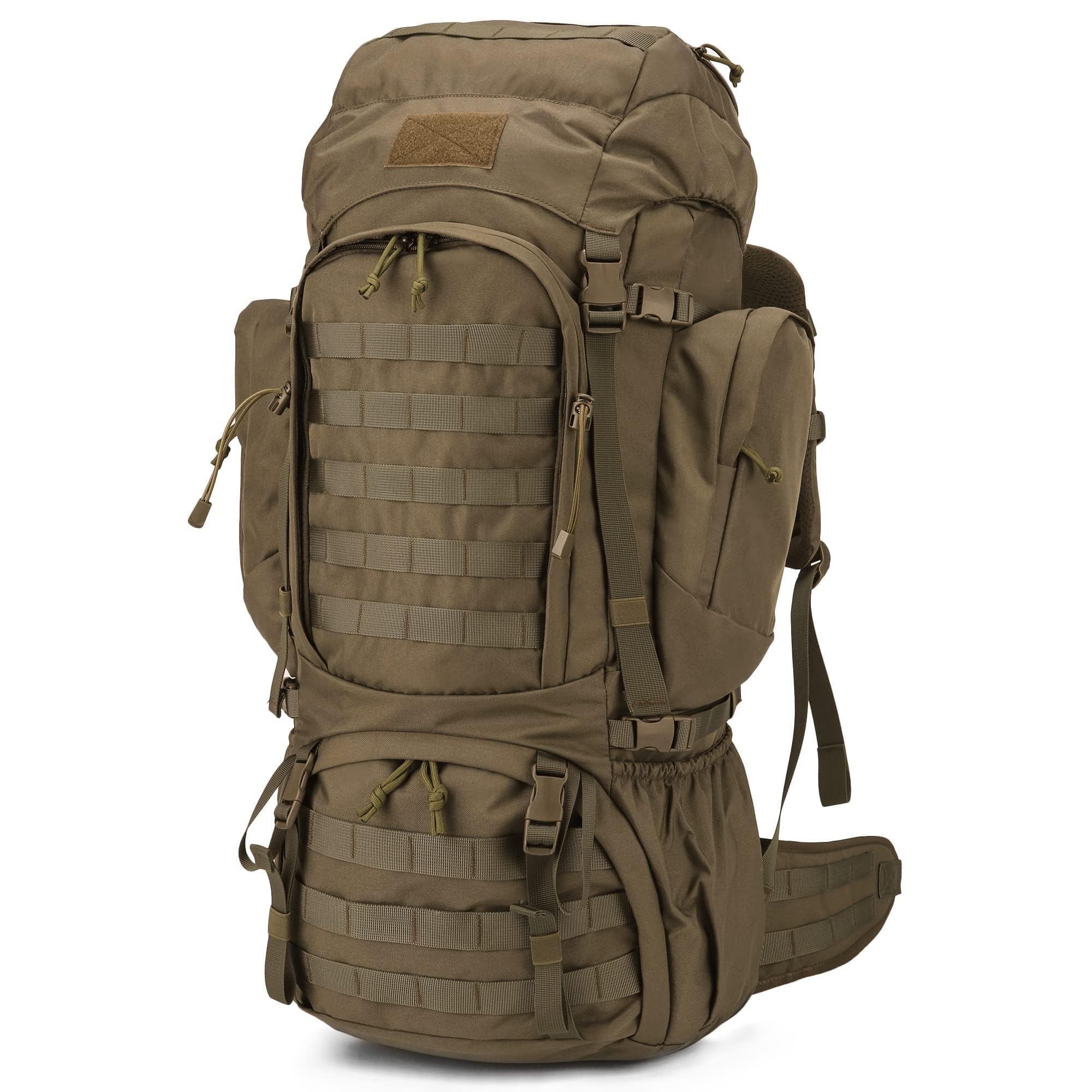
The Mardingtop 60L is a budget-oriented military-style pack built for heavy loads. It uses an internal frame for structure, YKK zippers for durability, and a MOLLE webbing system on the exterior for attaching extra pouches. At 4.49 pounds, it is heavy for its volume class, but it holds up under extreme loads — one buyer reported using it for 90-pound ruck runs without failure.
The main compartment is cavernous at 60 liters, with multiple internal pockets for organization. The included rain cover adds weather protection, and the modular MOLLE grid allows you to customize the pack with pouches for water bottles, radios, or tools. It also features a hydration sleeve and hose port.
The hip belt padding is thinner than premium packs, and the belt straps can loosen under heavy loads during longer distances. The shoulder straps are on the narrow side, which can dig in when the pack is fully loaded. This is not a pack for all-day comfort on a multi-day thru-hike; it is a value-heavy option for short, heavy carries, hunting trips, or travel where you need volume at minimal cost.
Why it’s great
- Massive 60-liter capacity with YKK zippers and a MOLLE platform
- Durable enough to handle 90-pound ruck loads without damage
Good to know
- Hip belt padding is thin and can loosen under continuous heavy loads
- Narrow shoulder straps may cause discomfort on long-distance carries
FAQ
What torso length is right for a hiking backpack?
Do I need a rain cover for my hiking backpack?
Final Thoughts: The Verdict
For most users, the backpack for hiking winner is the Osprey Stratos 44 because its AirSpeed suspension provides the best ventilation-to-stability ratio for multi-day treks, and the adjustable torso system fits the widest range of body sizes. If you want a lightweight day pack with excellent back cooling, grab the Deuter Trail 30. And for the best value in a nimble, flexible day pack that handles hybrid use between trails and travel, nothing beats the Gregory Miko 30.