
Our readers keep the lights on and the weekend projects moving. As an Amazon Associate, I earn from qualifying purchases.
Setting up a planted tank for the first time often ends with melted leaves, brown water, and the quiet frustration of watching store-bought bunches dissolve within a week. The gap between the lush aquarium photos on social media and what actually grows in a standard beginner tank comes down to one thing: choosing plant species that match your lighting, substrate, and patience level.
I’m Rikta — the co-founder and writer behind FitlyFast. My approach to this guide involved cross-referencing hundreds of verified buyer experiences against specific botanical tolerances like low-light adaptability, nutrient demand, and growth rate to identify which freshwater species consistently survive the mistakes new aquarists make.
Whether you are setting up a desktop nano tank or a 20-gallon community aquarium, these selections focus on hardy, forgiving species that do not require CO2 injection or specialized lighting. This thorough breakdown of the best aquarium plants for beginners will help you build a stable planted environment from day one.
How To Choose The Best Aquarium Plants For Beginners
Selecting the wrong plant species is the single most common reason new planted tanks fail. Beginners often grab whatever looks lush at the pet store without checking whether that plant requires high light, CO2 injection, or root tabs — conditions a standard starter tank simply does not provide.
Lighting Tolerance and Photoperiod
Not all “low light” plants are equal. Species like Java Fern and Anubias can survive under a standard LED hood running eight hours per day, while carpeting plants like Dwarf Baby Tears will melt without intense lighting. If your tank came with a basic clip-on light, stick to plants that tolerate partial shade conditions — anything rated for 1-2 watts per gallon is safe ground.
Substrate Requirements and Root Structure
Root feeders like Amazon Swords need nutrient-rich substrate or root tabs to thrive in gravel. Rhizome plants like Anubias and Java Fern should never be buried — tie them to driftwood or rock instead. Stem plants like Bacopa Moneywort pull nutrients from the water column, making them forgiving choices when your substrate is plain gravel or sand.
Growth Rate and Maintenance Load
Fast-growing stem plants such as Water Sprite and Hornwort absorb excess nitrates and help control algae, but they require weekly trimming to prevent them from overtaking the tank. Slow growers like Anubias Nana Petite need almost no maintenance, which makes them ideal for beginners who prefer a “plant it and leave it” approach.
Quick Comparison
On smaller screens, swipe sideways to see the full table.
| Model | Category | Best For | Key Spec | Amazon |
|---|---|---|---|---|
| AquaLeaf 6-Species Bundle | Variety Pack | Complete tank scape | 6 species, 6-8 inch height | Amazon |
| AquaLeaf 4 Potted Bundle | Potted Bundle | Low-maintenance mix | 4 species, rhizome & sword | Amazon |
| Marcus Fish Tanks Java Fern 3-Pack | Rhizome Pack | Hardy background filler | 3 plants, 7-12 inch leaves | Amazon |
| Canton Aquatics Bacopa Moneywort | Stem Plant | Nitrate absorption | 8-16 inch stem growth | Amazon |
| FISTOY Aquascaping Tool Set | Tool Kit | Precision planting | 15-inch stainless steel | Amazon |
| Marcus Fish Tanks Anubias Nana Petite | Rhizome Plant | Foreground decor | 20-30 leaves per pot | Amazon |
| Water Spangles Salvinia Minima | Floating Plant | Surface cover | 60+ leaves per order | Amazon |
In‑Depth Reviews
1. AquaLeaf Aquatics Rooted Live Aquarium Plant Bundle

The AquaLeaf 6-species bundle delivers one rooted specimen each of six different beginner-friendly species, including Amazon Sword, Java Fern, and Cryptocoryne Wendtii. This variety allows you to observe which plants naturally thrive under your specific lighting and water chemistry before investing in larger numbers of a single species. The plants shipped at 6 to 8 inches in height, giving them enough stored energy to recover from transit stress without becoming too leggy for a standard 10-gallon tank.
Multiple verified buyers reported that the plants survived four-day shipping during 90-degree summer heat with only minimal browning at the leaf tips, which demonstrates the robust health of greenhouse-grown stock. The Sword plants arrive in their emersed growth form — marsh leaves that are broader and greener than the submerged form shown in product photos — and they will gradually transition to narrower aquatic leaves over the first two to three weeks. This is a normal adaptation, not a defect, but beginners should avoid trimming the transition leaves until new growth appears. Several reviewers noted that the “snail-free guarantee” is not always accurate; some packages introduced pond snails or hydra into previously clean tanks. A preventive dip in diluted hydrogen peroxide or potassium permanganate before planting eliminates this risk without harming the plants.
For a 10- to 20-gallon community tank, this bundle gives you enough species diversity to create a natural-looking aquascape with background, midground, and foreground coverage. The plants are rooted in mineral wool with established root systems, which makes them easy to place directly into gravel or planted substrate without additional preparation. Expect the stem plants and foreground species to require trimming every four to six weeks to maintain shape, while the rhizome-based Java Fern can be left untouched for months. The bundle is also suitable for 5-gallon tanks if you separate the plants into individual pots or attach the Java Fern to hardscape rather than planting it all in one area.
Why it’s great
- Six different species in one purchase gives you a complete starting scape
- Plants arrived with strong root systems and minimal die-off even in warm shipping conditions
- Includes both root-feeding and water-column-feeding species for balanced nutrient uptake
Good to know
- Not reliably snail-free — several reports of pond snails and hydra arriving with plants
- Emersed-grown Sword leaves will melt and regrow into aquatic form, which can alarm new owners
- Some bundles shipped with heat damage during summer despite seller disclaimer
2. AquaLeaf Aquatics 4 Potted Live Aquarium Plants Bundle

The AquaLeaf 4-potted bundle includes Anubias, Amazon Sword, Kleiner Bar Sword, and Narrow Leaf Sword — four varieties that cover both foreground and background needs in a single order. The Anubias comes attached to its pot with a rock wool base, ready for mounting on driftwood or stone without substrate burial, while the three Sword species are root feeders that will spread quickly once planted in nutrient-rich substrate. Buyers consistently described the plants as “phenomenal quality” with deep green coloration and respectable size upon arrival, and many reported new leaf growth within the first week.
Customer reviews spanning several months show that the Anubias is the most forgiving plant in this bundle, surviving in tanks with only basic LED lighting and no fertilizer. The Narrow Leaf Sword, however, requires root tabs in inert gravel to maintain its color — several reviewers noted that this specific plant arrived with brown or rotting leaves when shipped during colder months. The pots are biodegradable, but the root systems often grow through the bottom quickly; some users found they needed to cut the pots to prevent root restriction. This bundle works best in tanks of 10 gallons or larger because the Amazon Sword alone can reach 12 inches in width at maturity. The Kleiner Bar Sword stays more compact at around 6 to 8 inches, making it suitable for midground placement in front of taller background plants.
For beginners who want a straightforward “plant and forget” experience, leaving the Anubias in its pot and attaching it to hardscape while planting the Swords directly into gravel supplemented with root tabs creates a low-stress setup. The plants transition well to liquid fertilizer regimens, and several reviewers noted thriving growth even in tanks where they only performed weekly water changes without CO2 injection. The bundle is also a practical choice for those who previously had plants die due to algae or nutrient imbalance — the hardy Sword species can outcompete mild algae when given adequate light, and the Anubias tolerates low-light conditions that would cause more demanding plants to melt.
Why it’s great
- Anubias and Swords together provide both low-light and root-feeding options in one order
- Plants arrived consistently healthy and pest-free according to the majority of long-term reviews
- Anubias in particular showed strong resilience to beginner mistakes like inconsistent lighting and infrequent fertilization
Good to know
- Narrow Leaf Sword sometimes arrived with rotted leaves when shipped in cold weather
- Pots restrict root expansion — many users cut the pots before planting to avoid stunting growth
- Amazon Sword grows large enough that it may outgrow tanks smaller than 10 gallons
3. Marcus Fish Tanks 3X Java Fern Microsorum Pteropus

Java Fern (Microsorum Pteropus) is widely regarded as the most bulletproof plant in freshwater aquariums, and Marcus Fish Tanks ships three individual plants ranging from 7 to 12 inches in leaf length. The species grows from a rhizome that should never be buried — buyers report that simply wedging the plant between rocks or tying it to driftwood with cotton thread yields immediate root attachment within two weeks. Verified customer reviews highlight that the plants arrived with vibrant green leaves and sturdy root systems, and multiple users noted that the Java Fern survived intact even when shipping was delayed during cold weather.
The primary advantage of buying a three-pack rather than a single Java Fern is the ability to create visual depth by placing plants at different heights in the same tank. One plant attached high on driftwood near the water surface will develop slightly narrower leaves and grow upward, while a plant placed at the mid-bottom level will spread its leaves horizontally to catch available light. Buyers consistently praised the value of receiving three healthy plants for a price that often buys only one or two at local pet stores, and several reported that the plants continued to produce new leaves without any CO2 supplementation or fertilizer. The natural slow growth rate of Java Fern means it rarely needs trimming — a major plus for beginners who do not want to prune plants weekly.
Despite its reputation for indestructibility, Java Fern can suffer from “Java Fern melt” if the rhizome is buried or if the tank experiences dramatic water parameter swings. Buyers should avoid planting in high-flow areas near filter outputs, as the constant water movement can prevent the rhizome from anchoring to hardscape. The leaves are tough enough to withstand the attention of goldfish and cichlids, making this pack a smart choice for tanks with larger or more aggressive fish that would shred stem plants. To maximize survival rates, avoid ordering this plant when local temperatures are expected to drop below 20°F — the Marcus Fish Tanks seller explicitly warns that cold exposure can cause irreversible damage during transit.
Why it’s great
- Three plants per order provide excellent coverage for background and midground zones
- Survives low light, no CO2, and a wide range of water parameters without complaint
- Tough leaves tolerate nibbling from goldfish and cichlids without disintegrating
Good to know
- Rhizome must not be buried — beginners often kill Java Fern by planting it in substrate
- Slow growth means it will not fill bald spots quickly like stem plants can
- Shipping damage is more likely below 20°F — check local forecast before ordering in winter
4. Canton Aquatics Bacopa Monnieri Moneywort Potted
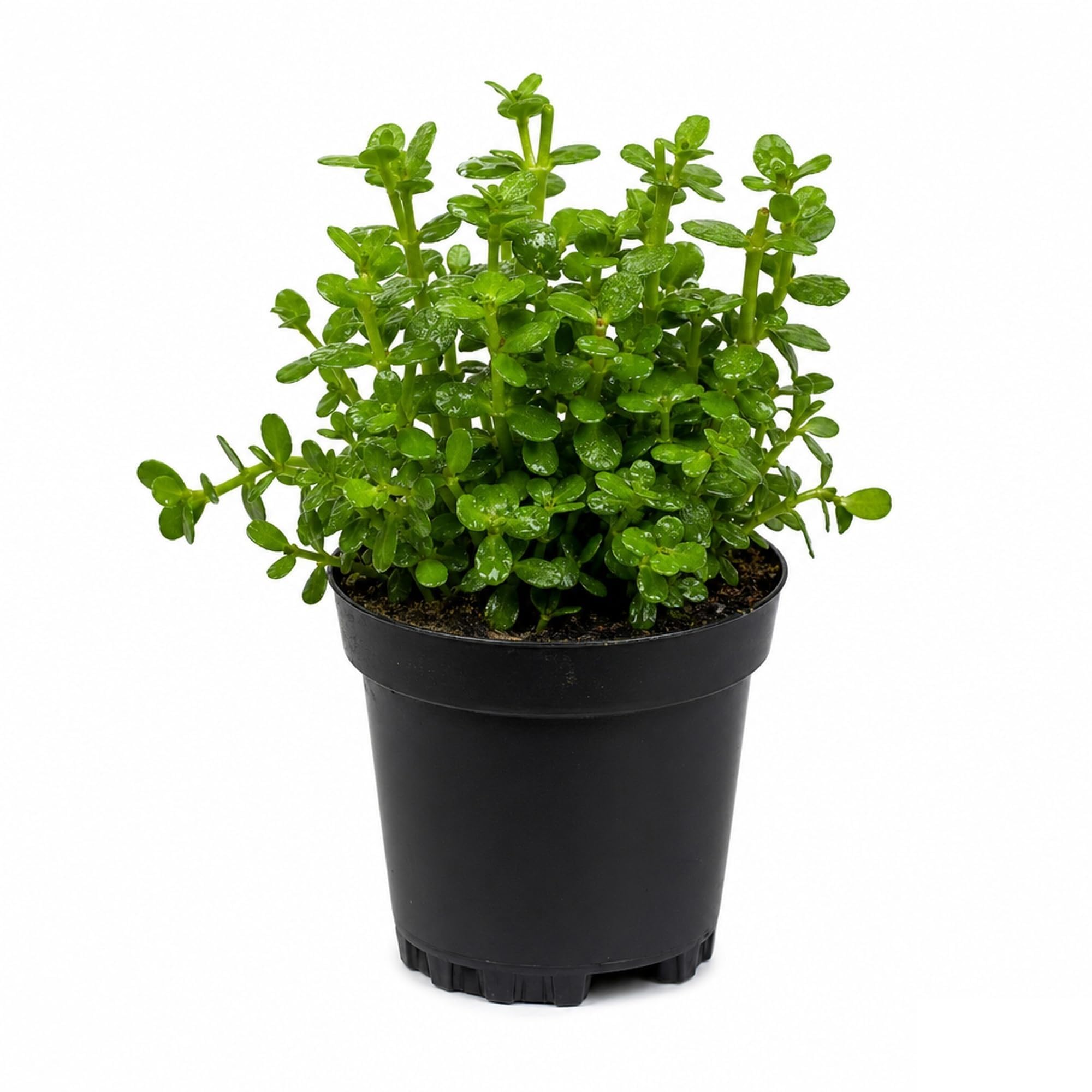
Bacopa Monnieri, commonly called Moneywort, is a stem plant that grows upright with pairs of round, bright green leaves spaced along the stem. Canton Aquatics ships each plant in a single pot, greenhouse-grown at their Texas facility, with an expected mature height of 8 to 16 inches when fully submerged. The plant consumes nitrates and ammonia directly from the water column, which makes it an effective biological filter that can reduce the frequency of water changes in lightly stocked tanks. Multiple verified buyers described the plant as “exceptionally well packaged” and noted that the stems arrived with vibrant color and no signs of yellowing or rot even after several days in transit.
This stem plant is forgiving enough to grow under standard aquarium hood LEDs running eight hours per day, though the internodal spacing will tighten — meaning leaves grow closer together — under brighter light. In lower light conditions, the stems may stretch upward faster and produce wider gaps between leaf sets, but the plant remains healthy and continues to root from the lower nodes. When the stem reaches the water surface, trimming the top half and replanting the cutting into the substrate will produce a second vertical stem, allowing you to propagate the plant indefinitely without buying replacements. Buyers who left three-star reviews noted that the initial bunch sometimes arrived with fewer leaves than expected, though the vast majority praised the root quality and overall health of the specimen.
Moneywort is suitable for background or midground positioning in tanks from 5 to 40 gallons. Its moderate growth rate means it will not choke out slower plants like Anubias, but it will require trimming every two to three weeks during peak growth seasons. The plant prefers moderate water flow and will drop lower leaves if placed in dead spots with stagnant water circulation. Canton Aquatics recommends moderate lighting and regular trimming to maintain a bushy shape, and the plant does not require root tabs — liquid fertilizer once per week is sufficient to support healthy stem development. The greenhouse-grown stock also reduces the risk of introducing algae spores or snails compared to imports, which is a recurring concern with many floating plant bundles.
Why it’s great
- Actively removes nitrates and ammonia from the water column, helping stabilize new tanks
- Easy to propagate by cutting and replanting — one pot can fill a background wall over time
- Greenhouse-grown in Texas with individual inspection before shipping reduces pest risk
Good to know
- Needs moderate lighting to maintain compact leaf spacing — low light causes leggy growth
- Lower leaves may drop in slow-moving water areas, requiring periodic replanting of fresh tops
- Initial shipment may have fewer leaves than expected, though stem health was still praised
5. FISTOY 15in Aquascaping Tools Set

The FISTOY 4-in-1 set includes a 15-inch straight tweezer, 15-inch curved tweezer, 11.7-inch curved scissors, and a 14.4-inch sand spatula, all housed in a velvet pouch for organized storage. The long reach of each tool allows you to position plants, trim leaves, and level substrate without submerging your arms into the tank, which reduces disturbance to roots and fish. Both tweezers feature serrated tips that grip slippery stems and moss securely without crushing delicate tissue, and the curved scissors cut cleanly through stem plants without tearing the surrounding leaves. Verified buyers reported that the tools felt durable and well-balanced, with the ridged handles providing a secure grip even when hands are wet.
One practical detail beginners often overlook is that standard aquarium tweezers sold at pet stores are typically 10 to 12 inches long, which forces you to push your hand deep into the water to reach the bottom of a 12-inch-deep tank. The 15-inch length on this set eliminates that problem entirely for tanks up to 18 inches deep, allowing you to plant stem cuttings into the substrate without dislodging adjacent plants. Buyers noted that the scissors cut through thick stem plants like Bacopa and Hygrophila cleanly without fraying the cut end, which reduces the risk of the stem rotting after trimming. The sand spatula is particularly useful for creating sloped contours in the substrate before planting, though some users found the blade slightly narrow for large aquascaping projects.
The stainless steel construction resists rust even in saltwater use, but the tools should be rinsed and dried after each session to prevent mineral deposits from dulling the cutting edge. The included velvet pouch keeps the tools organized and prevents the tweezers from scratching tank glass during storage. For beginners who plan to plant stem species that require frequent trimming, this set pays for itself by reducing the time spent untangling roots and repositioning floating cuttings. One caveat: the sharp tips of the tweezers and scissors can scratch acrylic tanks, so this set is best suited for glass aquariums or should be used with caution on acrylic surfaces.
Why it’s great
- 15-inch length reaches the substrate of standard tanks without submerging your arm
- Serrated tweezers grip moss, stem cuttings, and small root tabs securely without slipping
- Stainless steel construction resists rust and feels balanced for precision work
Good to know
- Sharp tool tips can scratch acrylic tanks — best used with glass aquariums
- Sand spatula is narrower than professional-grade versions, less effective for large substrate sculpting
- Some shipping pouches arrived worn or with holes, though tools themselves were undamaged
6. Marcus Fish Tanks Anubias Nana Petite Potted

Anubias Nana Petite is a dwarf variant of the classic Anubias species, producing leaves that stay under an inch in length even at full maturity. Marcus Fish Tanks ships each pot with 20 to 30 individual leaves, creating a compact clump that fits perfectly on small driftwood branches, the base of aquarium hardscape, or the front corner of a 10-gallon tank. The plant grows from a rhizome that must remain above the substrate — tying it to stone or wood with gel superglue or cotton thread allows the roots to wrap around the surface naturally without the risk of rot. Buyer reviews repeatedly mention that the plants arrived with strong root systems and vibrant leaf color, and several users noted that Anubias Nana Petite survived parameter swings that melted more sensitive species in the same tank.
The extremely slow growth rate of this variety means it will maintain its shape for months without trimming — a deciding factor for beginners who want a planted tank without regular maintenance. One verified buyer described the plant as “very small with good root systems” and noted that after two weeks in a community tank with miniature African frogs, the leaves remained undamaged and the frogs used the plant as hiding cover. The rock wool pot contains no dirt or fertilizer, which means the plant will not leach ammonia into the water during the first week — a common issue with substrate-based aquatic plants. The seller’s buy-2-get-1 promotional structure also makes it easy to source multiple pots for a larger coverage area at a reduced effective price per plant.
Because Anubias Nana Petite is a low-light champion, it can be placed in areas of the tank that receive only ambient light from room windows or from a single LED strip running six hours per day. This makes it the safest option for tanks without dedicated plant lights, such as desktop aquariums with built-in hood LEDs. The plant is also one of the few foreground options that will not require CO2 injection or high-intensity lighting to maintain its compact shape. For the best aesthetic placement, glue three to four small pieces of driftwood together to create a branching structure and attach one pot to each branch — the contrast between the dark green leaves and the wood texture creates a natural-looking foreground feature that draws the eye through the tank.
Why it’s great
- Extremely slow growth means zero trimming required for months after planting
- Thrives in low light conditions that would melt most foreground carpeting plants
- Compact size with 20-30 leaves per pot fits small tanks and nano setups perfectly
Good to know
- Rhizome must not be buried — new owners who plant it in gravel will kill it within weeks
- Growth is so slow that it cannot cover large bare areas quickly if you want a full carpet look
- Shipments during winter below 30°F may result in leaf melt — monitor local temperatures before ordering
7. Water Spangles Salvinia Minima Floating Plant
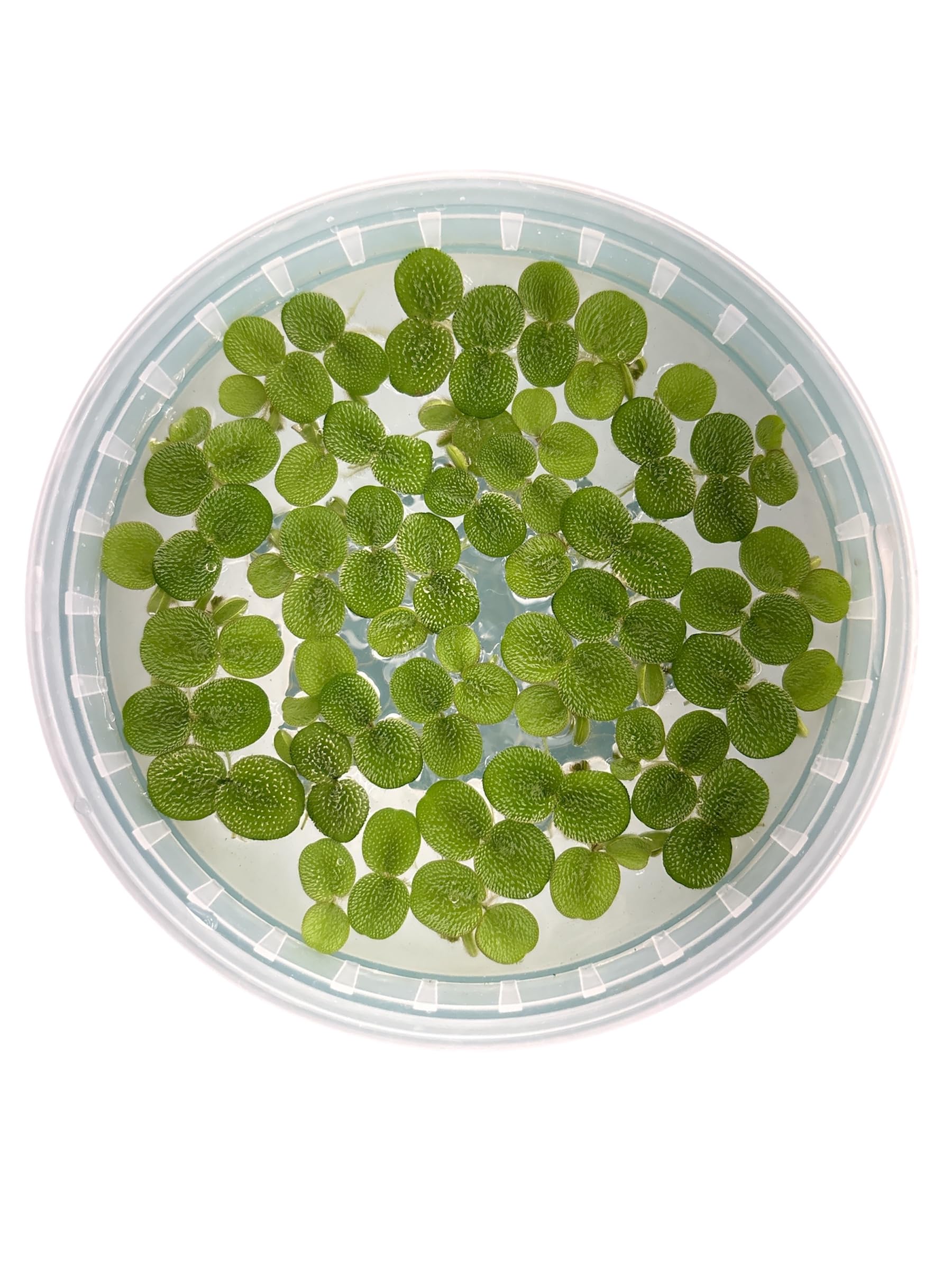
Salvinia Minima, commonly known as Water Spangles, is a floating plant that forms a dense mat of tiny oval leaves on the water surface. This order ships with 60 or more individual leaves, each bearing the characteristic “hair” texture that gives the plant its name and helps it shed water droplets to prevent rot. The plant requires no substrate, no planting, and no CO2 — it simply floats on the surface and absorbs nutrients directly from the water column through its hanging root structures. Verified customers consistently described the plants as “healthy, vibrant, and undamaged” upon arrival, with many noting that the packaging included paper towels and secure taping to prevent leakage during transit.
Floating plants serve two critical functions in a beginner tank: they provide shade that reduces algae growth by blocking excess light, and they consume nitrates faster than most rooted plants can. Multiple users reported that within two weeks of adding Water Spangles to their tanks, they began removing handfuls of excess growth because the plant was multiplying so quickly. One reviewer noted that they now have “too much and nowhere to put them all” between four tanks, which demonstrates the aggressive growth potential of this species under medium to high lighting. The root structures provide shelter for fry and small shrimp, and the leaves create a natural resting surface for bettas and other surface-dwelling fish.
The primary consideration with Water Spangles is its rapid growth rate — in a well-lit tank with adequate nutrients, it can double in surface coverage every three to four days, requiring weekly thinning to prevent it from blocking all light to submerged plants. The plant is also sensitive to strong surface agitation; if your filter output creates choppy water, the leaves may become waterlogged and sink. Salvinia Minima tolerates both freshwater and brackish conditions, which is unusual for floating plants and makes it a flexible choice for tanks with moderate salt levels. The seller warns against ordering when temperatures are expected to exceed 90°F or drop below 35°F, as extreme heat or cold during transit can cause the leaves to rot before arrival. For beginners, this plant is best added after the tank has cycled and established a stable nutrient load, because its growth will immediately signal whether nitrate levels are within safe range.
Why it’s great
- Incredibly fast nitrate absorption helps stabilize water quality in new and established tanks
- No substrate or planting required — simply float on the surface and let it grow
- Provides shade that reduces algae pressure on slower-growing plants below
Good to know
- Growth is so rapid that it requires weekly thinning to prevent total surface coverage
- Surface agitation from filter output can cause leaves to sink and rot
- Cannot be shipped in extreme heat or cold — temperature-sensitive during transit
FAQ
Can I keep Anubias and Java Fern alive with just a standard aquarium hood light?
Why did my Amazon Sword lose all its leaves after I added it to the tank?
How do I attach Anubias or Java Fern to driftwood without glue?
Final Thoughts: The Verdict
For most users, the best aquarium plants for beginners winner is the AquaLeaf 6-Species Bundle because it offers the widest variety of hardy, low-light-tolerant species in a single order, giving new aquarists the best chance to discover which plants naturally thrive under their specific tank conditions. If you want a “plant it and never worry about it” foreground specimen, grab the Marcus Fish Tanks Anubias Nana Petite — it will not outgrow its space and tolerates beginner errors like inconsistent lighting and skipped fertilization. And for fast nitrate absorption and natural surface cover, nothing beats the Water Spangles Salvinia Minima — just be ready to thin it weekly as it multiplies across the water surface.