
Our readers keep the lights on and the weekend projects moving. As an Amazon Associate, I earn from qualifying purchases.
A long day on unforgiving concrete or rocky trails can leave your feet, knees, and lower back in agony. The factory insoles that came with your work boots or hiking boots often lack the targeted support and shock absorption needed for real protection, turning every step into a source of fatigue. Finding a reliable insole that provides true, lasting comfort is the single best investment for anyone who stands, walks, or works hard for a living.
I’m Rikta — the co-founder and writer behind FitlyFast. I’ve spent countless hours analyzing the material science, biomechanical design, and real-user feedback in this category to separate the market leaders from the generic soft foams that collapse after a few weeks.
Skipping flimsy foam pads is the first step toward genuine foot health, but knowing which models combine durable arch reinforcement with real energy return is critical when searching for the best boot inserts.
How To Choose The Best Boot Inserts
Choosing the right boot insert means moving past the simple cushioned pad. You need to consider your specific foot arch, the type of terrain or flooring you face, the duration of wear, and the boot’s internal volume. A mismatch in any of these areas can turn a promising insole into a source of new discomfort.
Arch Profile: The Foundation of Alignment
Your foot’s arch dictates how weight is distributed. Low-arch (flat) feet often benefit from motion control and a moderate arch profile to prevent overpronation. High-arched feet require a pronounced, firm arch support to fill the natural gap and reduce strain on the heel and ball of the foot. Many premium inserts now offer three distinct arch profiles (low, medium, high) instead of a generic “one-size-fits-all” curve.
Cushioning Material vs. Energy Return
Memory foam offers excellent initial plushness and conforms to your foot, but it lacks energy return and can pack out quickly under heavy loads. EVA foam with a higher density provides more durable shock absorption. For industrial or heavy-use environments, look for Poron XRD or similar composite materials in the heel and forefoot, as these absorb instantaneous impact rather than just compressing.
Heel Cup and Stability
A shallow heel cup allows your foot to slide and shift, leading to blisters and instability. A deep, structured heel cup, often reinforced with a rigid plastic or resin shell, locks the heel in place. This not only improves balance on uneven ground but also reduces the load on your Achilles tendon and plantar fascia by preventing the heel from moving sideways.
Volume and Fit
Boots have varying internal volumes. A thick, cushioned insole might make a snug-fitting work boot too tight, while a thin leather insole is perfect for boots that are slightly too wide. Always check if the product is trimmed down or full-length. Material choice also affects volume — a vegetable-tanned leather insole is about 3–4mm thick, whereas a layered gel and foam combo may be 8–10mm.
Quick Comparison
On smaller screens, swipe sideways to see the full table.
| Model | Category | Best For | Key Spec | Amazon |
|---|---|---|---|---|
| Timberland PRO Anti-Fatigue | Work | Long shifts on concrete | Hexagonal cushioning pillars | Amazon |
| CURREX HikePro | Hiking | Rugged trail performance | 3 arch profiles available | Amazon |
| BestHalo Heavy Duty | Orthotic | High arch & heavy weight | 220+ lbs support rating | Amazon |
| ARIAT Energy Max | Work | Direct replacement comfort | Agion antimicrobial liner | Amazon |
| Dr. Scholl’s Work | Work | Massaging gel cushioning | Polygiene odor control | Amazon |
| ROCKROOSTER RC930 | Memory Foam | All-day construction trades | Poron XRD composite heel | Amazon |
| Nicks Boots Leather | Natural | Volume filler & longevity | Vegetable-tanned leather | Amazon |
In‑Depth Reviews
1. Timberland PRO Men’s Anti-Fatigue Replacement Insole

This insole uses a distinctive grid of hexagonal cushioning pillars that compress and rebound independently, creating a dynamic energy return that directly fights leg fatigue. Users facing 10–14 hour shifts on concrete floors report that it eliminated knee, hip, and lower back pain that persisted with other premium insoles. The construction is surprisingly low-profile, meaning it fits well inside steel-toe work boots without crowding the toe box or raising the heel excessively.
The material durability is a mixed bag — the top fabric layer typically lasts around six months before it can wear through under heavy use, allowing the hex pillars to break through. This is a predictable trade-off for the level of active cushioning it provides; keeping a spare pair on hand is a smart strategy for workers who log 12-hour days. The insoles require zero break-in and are simple to trim with standard scissors for a custom fit.
Arch support is moderate rather than aggressive, which makes them ideal for those with medium arches who need broad fatigue relief rather than a specific orthotic correction. Users with high arches or specific plantar fasciitis needs may want to pair these with a dedicated arch support insert. The material resists odor far better than standard foam, a major plus for all-day wear in closed work boots.
Why it’s great
- Hexagonal cushioning delivers noticeable energy return and reduces joint impact
- Low-profile design fits snugly inside tight work boots
- No break-in period required — comfortable immediately
Good to know
- Top fabric layer can wear through after 5–6 months of heavy daily use
- Not designed for those needing aggressive high-arch orthotic support
2. CURREX HikePro Insoles
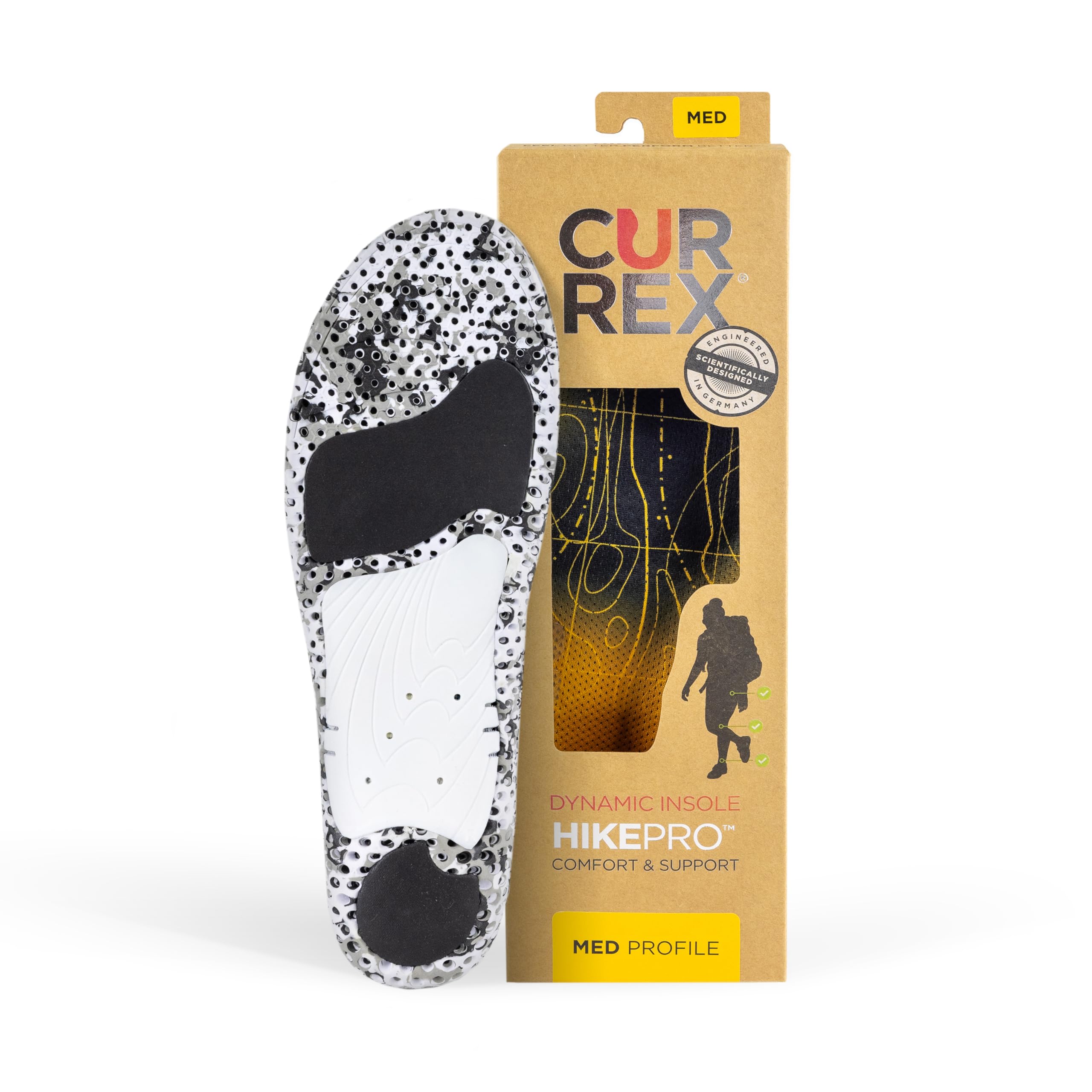
The HikePro is purpose-built for uneven terrain, offering a decoupled heel cup with a SuperGrip coating that locks the heel in place during steep descents and lateral moves. This is a genuine stability upgrade over standard foam insoles, which can allow the foot to slide inside the boot. The 3D Dynamic Arch technology comes in low, medium, and high profiles, so you can match the support level to your specific foot shape rather than forcing a one-size-fits-all arch into your boot.
The cushioning is firm rather than plush, which provides excellent proprioception — you feel the trail beneath you without sharp impacts. Ruckers carrying heavy packs on multi-day treks report significant reductions in foot fatigue and a noticeable absence of hot spots or blisters. The recycled EVA base includes air vents for breathability, and the top fabric resists moisture well, keeping feet drier than standard insoles during strenuous hikes.
The premium price reflects a high level of design specificity, but the material durability is a reasonable consideration — some users note that the foam could feel expensive relative to its physical density. The insoles fit true to size and require minimal trimming. They are a specialist tool for hikers who demand both arch support and a reliable heel lock on varying terrain.
Why it’s great
- Dedicated anti-slip heel surface improves stability on uneven ground
- Available in three distinct arch profiles for a customized fit
- Excellent shock absorption for heavy backpack loads
Good to know
- Premium pricing reflects specialized design rather than high foam density
- Firm cushioning may feel too hard for casual walkers expecting plush softness
3. BestHalo Heavy Duty Plantar Fasciitis Insoles
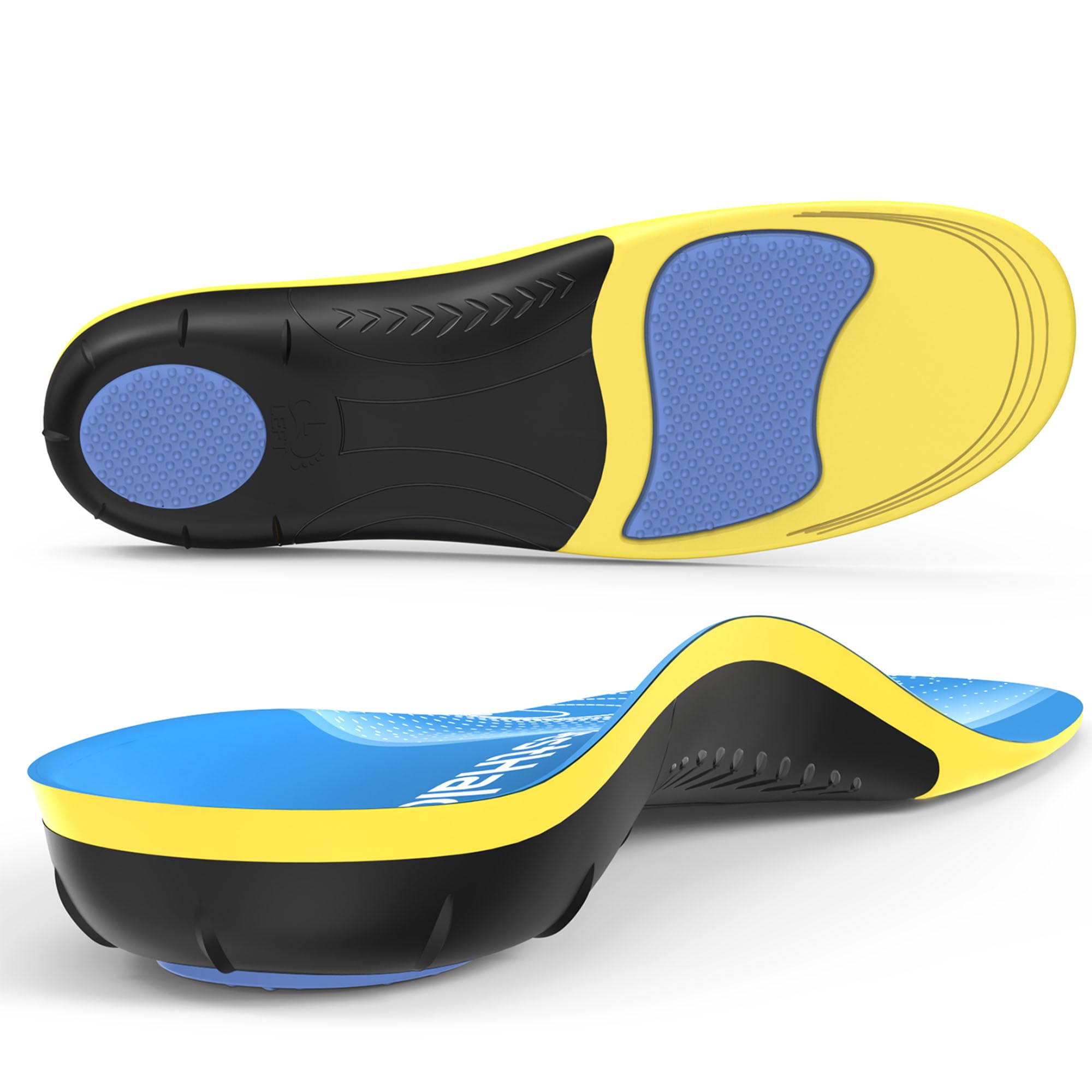
This insole delivers a pronounced, rigid arch support coupled with a deep heel cup and premium gel cushioning targeted at users over 220 pounds. The biomechanical design encourages natural foot alignment, which is why many users report that it resolved pain radiating from the foot up through the hip after prolonged standing. The EVA foam base is dense and resists compression better than standard memory foam, even under heavy loads.
Adjustment is necessary — the high arch profile can feel aggressive during the first 3 to 7 days. Gradual introduction, starting with 2–3 hours per day, is recommended to allow the plantar fascia to adapt. Users who push through this period consistently report significant long-term relief from heel pain and arch strain. The trim-to-fit design is straightforward, though the rigid structure requires a strong pair of scissors for clean cuts.
The gel pad in the heel provides noticeable shock absorption without feeling bouncy, making it suitable for hard surfaces like warehouse floors and concrete. It fits well in work boots and athletic sneakers, earning praise for its stability and lack of slippage inside the shoe. This is a strong option for anyone with high arches or flat feet who needs corrective support rather than simple cushioning.
Why it’s great
- Firm, structured arch support is effective for high arches and heavy users
- Gel heel pad provides targeted shock absorption on hard floors
- Many users report dramatic reduction in foot-to-hip pain after adaptation
Good to know
- Requires a gradual break-in period to avoid initial discomfort
- Not suitable for those with low arches who prefer a flat cushion
4. ARIAT Men’s Energy Max Work Insole

The Energy Max insole is designed as a direct replacement for factory insoles in work boots, offering a rebounding foam layer that cradles the foot and dissipates pressure. It includes Agion antimicrobial technology in the liner for intense odor defense, a critical feature for workers facing 8 to 10-hour days in closed boots. The fit runs true to size, often requiring no trimming, which simplifies the replacement process significantly.
The open-cell foam used in the construction regulates temperature, helping to keep feet cool during summer months without sacrificing cushioning. Users consistently note that the comfort improvement over stock insoles is immediate and substantial, with particular praise for how it reduces heel and back pain after full shifts. The rebound foam is less rigid than a hard orthotic, making it a comfortable option for those who do not need corrective arch support.
Durability is solid for a foam-based insole, though the material pack-out occurs gradually over several months of heavy use. It is not designed to treat specific conditions like plantar fasciitis, but rather to provide a high-quality general foundation of comfort and energy return. This is an excellent choice for anyone looking for a direct, high-performance upgrade to the thin insoles that ship with most work boots.
Why it’s great
- Moisture-wicking Agion liner effectively controls odor in heavy-use boots
- True-to-size fit typically requires no trimming
- Rebound foam provides noticeable energy return for all-day comfort
Good to know
- Not designed for users who need aggressive orthotic arch correction
- Foam pack-out occurs over extended daily use
5. Dr. Scholl’s Work Insoles

This mass-market work insole uses extended gel cushioning designed to distribute foot pressure and reduce fatigue on hard surfaces like concrete and asphalt. The gel reacts to impact and delivers adaptive cushioning at each key area of the foot, providing a softer walking feel than rigid foam alternatives. The reinforced arch support is noticeable but not aggressive, making this a good middle-ground for users who want more support than a flat insole but do not need orthotic correction.
The Polygiene StayFresh Technology is a genuine differentiator here, providing effective odor control that holds up through continuous daily wear. The insoles trim easily and stay in place without sliding inside the boot, but users should note that the cushioning stack height adds detectable bulk, which may require loosening laces a bit to maintain a comfortable fit in snug work boots. Some users with sensitive feet found the cushioning too thin for severe impact.
While it does not solve severe plantar fasciitis or provide the structural rigidity of a medical orthotic, this insole offers a reliable, affordable upgrade for the average worker looking to reduce general foot and leg fatigue. The gel material resists compression better than basic foam, and the dual-layer design (two pairs per pack) provides solid value for rotating between different pairs of boots.
Why it’s great
- Gel cushioning provides adaptive, responsive comfort for long shifts
- Polygiene technology keeps odor under control effectively
- Value-priced two-pack allows rotation between different boots
Good to know
- Gel cushioning adds noticeable volume to the boot interior
- Arch support is moderate, not suitable for severe orthotic needs
6. ROCKROOSTER Memory Foam Anti-Fatigue Insoles (RC930)
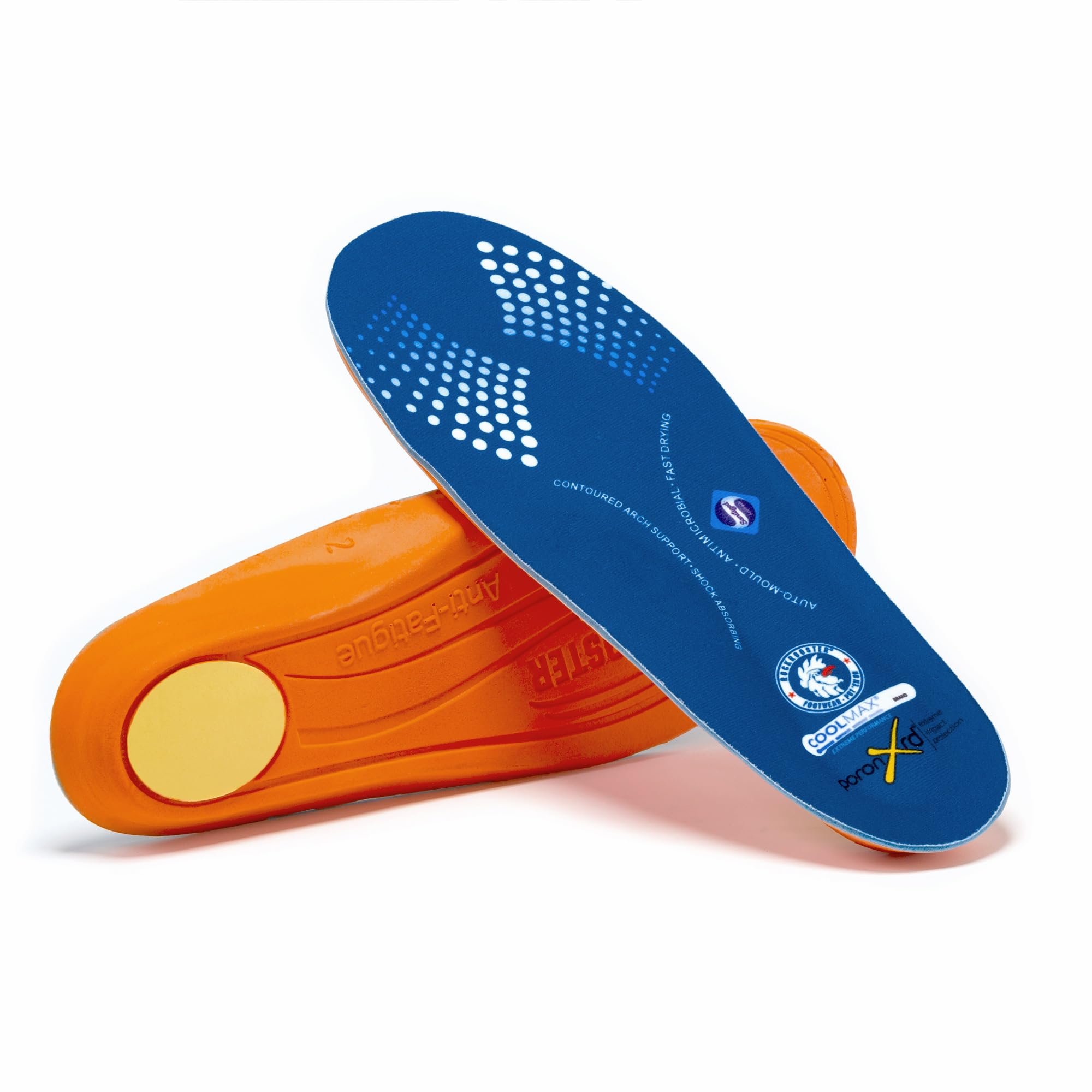
The RC930 stands apart from standard memory foam insoles by incorporating a Poron XRD composite layer in the heel and forefoot for superior shock absorption, alongside a slow-rebound memory foam top layer that molds to the individual sole. This combination delivers both impact protection and a customized fit. The COOLMAX fabric on the surface actively wicks moisture, keeping feet dry during long days in construction boots or on warehouse floors.
The arch support is more pronounced than in a basic flat foam insole, providing a secure wrap around the heel to prevent side-to-side shaking. Users who spend 8+ hours standing on concrete report consistent relief from foot fatigue, with many calling it the most comfortable insole they have used in work boots. The thickness provides excellent cushioning, but this can make the boot fit tighter, so users with snug boots should account for the volume change.
Long-term durability is an open question for the memory foam layer, as the soft foam can pack down over months of heavy daily use. The Poron XRD layer maintains its impact protection much longer than the foam above it. This insole is an excellent choice for someone who prioritizes immediate plush comfort combined with real shock-absorbing technology over raw longevity.
Why it’s great
- Poron XRD composite heel provides genuine high-impact shock absorption
- COOLMAX moisture-wicking fabric keeps feet dry in hot conditions
- Memory foam molds to the foot for a personalized pressure distribution
Good to know
- Memory foam layer may pack out faster than rigid EVA alternatives
- Thick cushioning adds volume — may not fit snug boots without adjustment
7. Nicks Boots Leather Insole

This is not a cushioned insole — it is a solid slab of vegetable-tanned leather, roughly 3 to 4 mm thick, designed to shape to your foot over weeks of wear. The leather starts firm and gradually conforms to the unique contours of your sole, providing a custom foundation that is unmatched by synthetic foams. It also functions as a volume filler, making it ideal for boots that are slightly too wide or have excess internal space.
The natural leather is breathable and odor-resistant, and its density provides a surprising amount of shock absorption simply by creating a barrier between your foot and the ground. Users report that the leather feels like armor underfoot, smoothing out sharp rocks and hard terrain. The trim-to-fit design requires a strong scissors or utility knife, and it is recommended to cut it slightly oversize and use contact cement to prevent squeaking against the boot sole.
The break-in period is real — don’t expect plushness on day one. Over two to three weeks of regular wear, the leather will take on a permanent impression of your foot, offering a level of comfort and support that feels like the boot was made for you. This is the ultimate choice for boot enthusiasts who value durability, natural materials, and a personalized fit over instant soft cushioning.
Why it’s great
- Molds permanently to your foot for a custom, durable fit over time
- Natural leather is breathable and inherently odor-resistant
- Excellent for taking up volume in boots that are too wide
Good to know
- Firm from day one — requires a 2-3 week break-in period
- Thick profile may make boots too snug for some lace-up styles
FAQ
How do I know whether I need a low, medium, or high arch support profile?
Can I use hiking insoles in my work boots and vice versa?
Why do my insoles squeak, and how can I stop it?
Final Thoughts: The Verdict
For most users, the boot inserts winner is the Timberland PRO Anti-Fatigue Insole because its hexagonal cushioning system provides the best balance of impact absorption and energy return for long workdays on hard surfaces. If you need aggressive arch support or weigh over 220 lbs, grab the BestHalo Heavy Duty Insoles. And for hybrid trail and work use where stability matters most, nothing beats the CURREX HikePro with its dedicated anti-slip heel surface and three arch profile options.