
Our readers keep the lights on and the weekend projects moving. As an Amazon Associate, I earn from qualifying purchases.
The difference between hearing an enemy reload and not hearing it at all often comes down to the driver in your headset. Standard gaming headsets compress sound, mask detail, and smear the spatial cues your brain uses to build a mental map of the battlefield. An audiophile-grade open-back or planar magnetic design gives you a wide, layered soundstage where every footstep has a distinct position in space.
I’m Rikta — the co-founder and writer behind FitlyFast. I’ve spent hundreds of hours analyzing driver topologies, frequency response curves, and impedance matching requirements to separate the headsets that actually deliver studio-grade sound from the ones that just print the word “gaming” on the box.
Whether you compete in ranked lobbies, play immersive single-player campaigns, or simply refuse to tolerate muddy audio, this guide breaks down the top wired and wireless options that satisfy both your competitive edge and your ears. After extensive research, I’ve compiled the definitive list of the best audiophile gaming headset for every type of player and budget.
How To Choose The Best Audiophile Gaming Headset
Picking a headset for competitive and immersive gaming involves balancing driver type, impedance, comfort, and whether you need a built-in microphone. Here are the three most critical factors to consider before you buy.
Driver Type: Planar Magnetic vs. Dynamic
Planar magnetic drivers use a thin diaphragm suspended between two magnetic arrays. This design delivers faster transient response, lower distortion, and a wider soundstage than traditional dynamic drivers. Dynamic drivers are more common and often cheaper, but they can struggle with detail retrieval and clarity at higher volumes. For pure positional audio in games like Valorant or Call of Duty, planar magnetic headsets like the HIFIMAN Edition XS provide a noticeable advantage in separating footsteps from gunfire.
Open-Back vs. Closed-Back
Open-back headsets have vented ear cups that let air and sound pass through. This creates a more natural, spacious soundstage but also leaks audio in and out. Closed-back designs isolate you from ambient noise and prevent sound from disturbing others. If you play in a quiet room and want pinpoint spatial awareness, open-back is the way to go. If you need noise isolation for a shared space or LAN events, a closed-back model like the Sennheiser HD 620S is a better fit.
Impedance and Sensitivity: Do You Need an Amp?
Impedance, measured in ohms, determines how much power a headphone needs to reach a given volume. Low-impedance models (under 32 ohms) are easy to drive from a phone or controller. High-impedance models (over 100 ohms) require a dedicated headphone amplifier or DAC to sound their best. The Sennheiser HD 660S2, at 300 ohms, demands a desktop amp to unlock its full performance. Skipping the amp with a high-impedance headset will result in thin, quiet, and lifeless audio.
Quick Comparison
On smaller screens, swipe sideways to see the full table.
| Model | Category | Best For | Key Spec | Amazon |
|---|---|---|---|---|
| HIFIMAN Edition XS | Open-Back Planar | Wide Soundstage & Detail | Stealth Magnet / NsD | Amazon |
| beyerdynamic TYGR 300 R | Open-Back Dynamic | Competitive FPS Footsteps | 32 Ohm Dynamic Driver | Amazon |
| ASUS ROG Kithara | Open-Back Planar | All-in-One with Mic | 100mm Planar + MEMS Mic | Amazon |
| Sony INZONE H9 II | Closed-Back Wireless | Wireless + ANC Gaming | WH-1000XM6 Driver, ANC | Amazon |
| Sennheiser HD 620S | Closed-Back Dynamic | Isolation + Natural Stage | 150 Ohm Angled Driver | Amazon |
| SteelSeries Arctis Nova Pro Wireless | Closed-Back Wireless | Multi-Platform + Hot-Swap | Hi-Fi Driver + ANC | Amazon |
| Sennheiser HD 660S2 | Open-Back Dynamic | Critical Listening & Mids | 300 Ohm 42mm Driver | Amazon |
| SteelSeries Arctis Nova Pro Omni | Closed-Back Wireless | Hi-Res Multi-Device Gaming | 96kHz/24bit Wireless | Amazon |
| HIFIMAN Arya Stealth | Open-Back Planar | End-Game Soundstage | Stealth Magnet + NsD | Amazon |
In‑Depth Reviews
1. HIFIMAN Edition XS

The HIFIMAN Edition XS delivers a massive, airy soundstage that few headsets under any price can match. Its Stealth Magnet design and NEO supernano diaphragm produce fast, detailed transients with extremely low distortion. Bass is punchy and extends deep without bleeding into the mids, while the treble reveals cymbal crashes and vocal sibilance with excellent clarity. In games like Apex Legends, you can pinpoint enemy pings and zip lines with uncanny precision.
Comfort is a mixed bag: the memory foam ear pads and lightweight frame are plush for medium-sized heads, but the large cup size and moderate clamp force can cause discomfort for smaller users. The supplied 3.5mm cable is on the short side, and you will need an external DAC or amplifier to drive them properly. A quality desktop amp like the Topping DX3 Pro+ unlocks the full potential of these planar drivers.
At this price point, the Edition XS offers sound quality that rivals headsets costing twice as much. The trade-offs come in build finesse and cable length, but for pure audio fidelity and spatial awareness, this is the benchmark for the category. Just budget for a decent amp and a longer cable.
Why it’s great
- Expansive, detailed soundstage
- Punchy sub-bass with planar speed
- Excellent value for audiophile-grade performance
Good to know
- Requires a dedicated DAC/amp for best results
- Short included cable
- Large fit can be uncomfortable for smaller heads
2. beyerdynamic TYGR 300 R

The beyerdynamic TYGR 300 R is a purpose-built gaming headphone that leverages the company’s professional studio driver heritage. Its tuning prioritizes clarity in the critical mid-to-upper frequency range, making footsteps, reloads, and environmental cues stand out without harshness. The open-back design provides a surprisingly wide soundstage for a dynamic driver, and the bass is present without ever overwhelming the mids.
Comfort is outstanding: the velour ear pads and lightweight frame (around 290 grams) let you play for five hours or more without fatigue. The headband is adjustable and the clamp force is moderate, fitting most head sizes securely. The main complaint from users is the short cable, which requires an extension for desktop use, and the slightly rolled-off sub-bass for anyone who wants thumping low-end.
This is the headset to buy if you value pinpoint directional audio for competitive shooters above everything else. It works well directly from a controller or motherboard jack, though a modest amplifier improves headroom and dynamics. Pair it with a simple USB dongle for a clean voice chat solution.
Why it’s great
- Excellent directional audio for competitive gaming
- Extremely lightweight and comfortable for long sessions
- Works decently without an amp
Good to know
- Short included cable
- Sub-bass is rolled off
- No included boom microphone
3. ASUS ROG Kithara
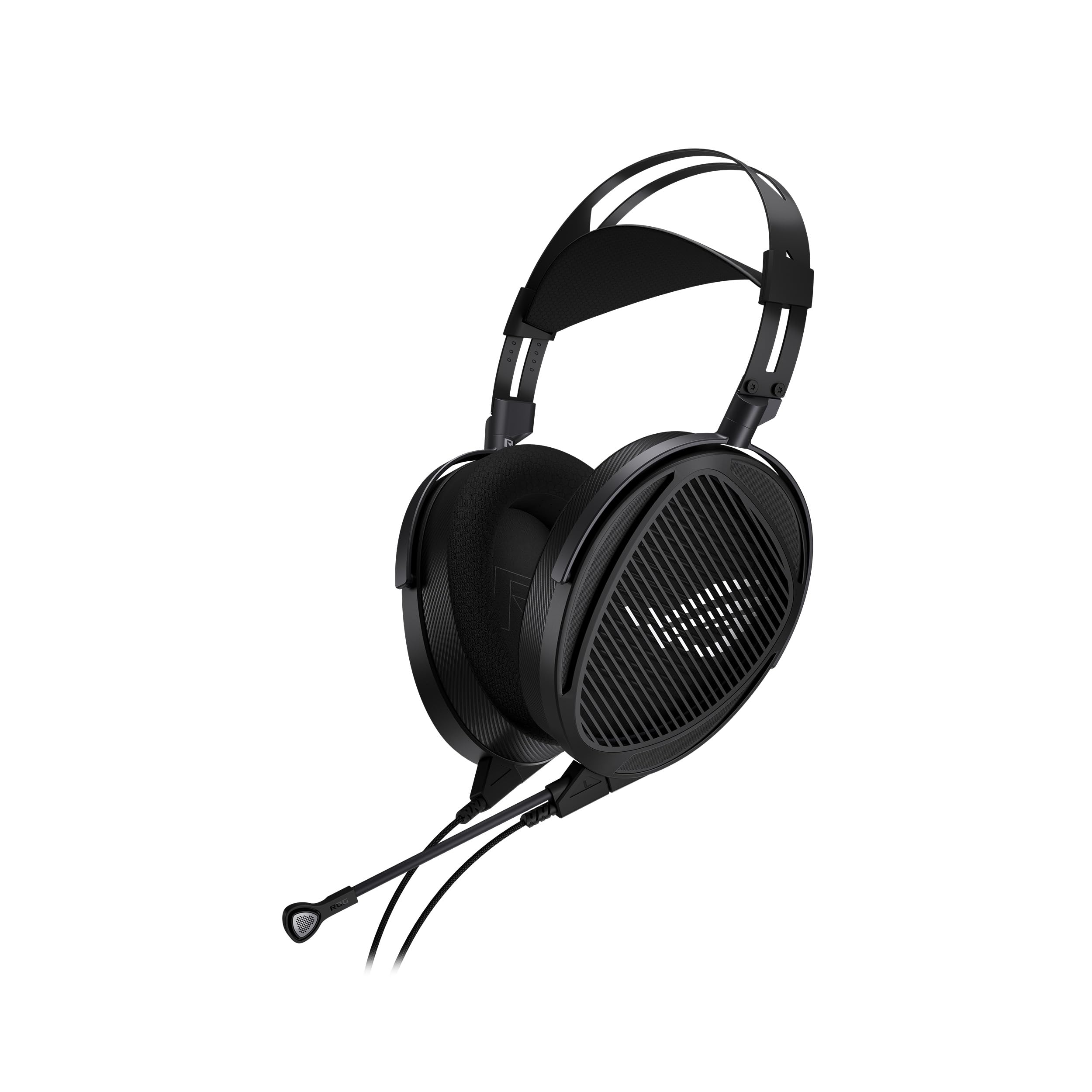
The ASUS ROG Kithara combines ROG-tuned 100mm HIFIMAN planar magnetic drivers with a proper on-cable MEMS boom microphone, creating a rare all-in-one package for gamers who want audiophile sound without a separate mic setup. The open-back architecture delivers a spacious, natural soundstage with clear separation across bass, mids, and treble. The mic captures voice with excellent clarity in the 20Hz–20kHz range and rejects background noise effectively.
Build quality is robust: the metal frame and eight-level adjustable headband feel solid, and the package includes two sets of ear cushions (hybrid fabric and leatherette) plus cables with 3.5mm, 4.4mm balanced, 6.3mm, and USB-C adapters for broad compatibility. However, the headset requires an external DAC or amplifier for adequate volume on most devices, and some early units reported loose headband screws that were quickly replaced under warranty.
If you want one headset that does it all — planar magnetic sound, a great built-in mic, and multi-platform wired connectivity — the Kithara is a standout. It is heavier than pure headphones, but the comfort features make it manageable for four-hour sessions. The mic is sensitive to placement, so adjust the distance for optimal vocal quality.
Why it’s great
- Planar magnetic fidelity with an integrated high-quality mic
- Versatile cable kit for PC, console, and mobile
- Dual ear cushion sets for customizable comfort
Good to know
- Needs an external DAC/amp for full volume
- Mic is sensitive to correct positioning
- Early units had minor headband defects
4. Sony INZONE H9 II
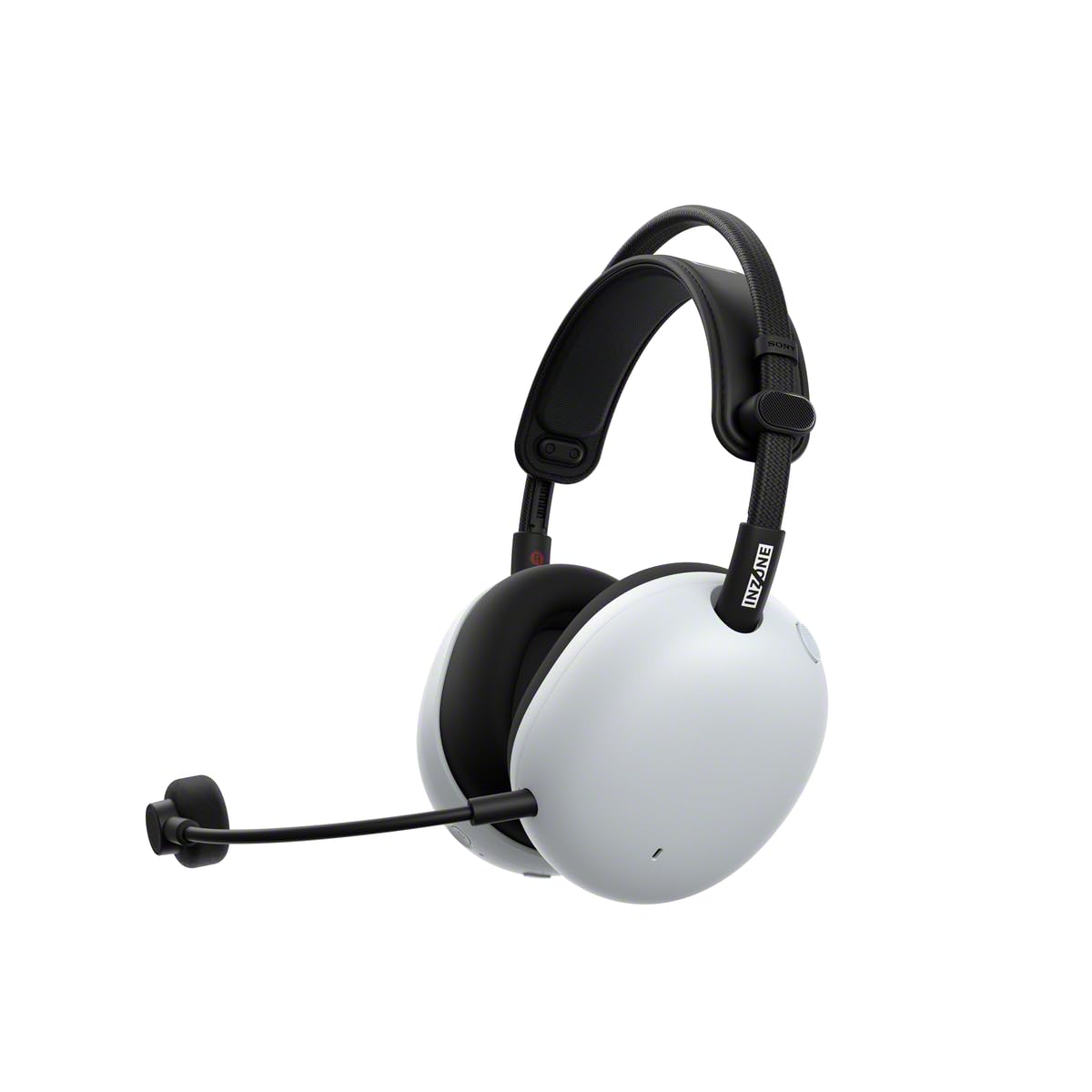
The Sony INZONE H9 II borrows the same driver unit found in the acclaimed WH-1000XM6 headphones, bringing full-spectrum sound with deep, controlled bass and crisp highs to the gaming world. The active noise cancellation is effective at blocking out fan noise and ambient chatter, and the transparency mode lets you hear your surroundings without removing the headset. Sony’s 360 Spatial Sound algorithm customizes the audio to your ear shape for precise enemy detection.
At 260 grams, this is one of the lightest premium wireless headsets on the market. The pressure-balanced design and soft-fit ear cushions make it comfortable for marathon sessions exceeding ten hours. Connectivity options include ultra-low-latency 2.4GHz via USB-C dongle, Bluetooth 5.3, and a 3.5mm wired connection. The detachable cardioid mic with AI-powered noise rejection provides clear voice chat, though the audio driver itself doesn’t match the detail retrieval of top-tier open-back planars.
The H9 II is ideal for gamers who prioritize wireless convenience, ANC, and a lightweight build over absolute audiophile purity. The battery life is around 18 hours, and quick charging gives you one hour of playtime from a five-minute charge. The sound quality is excellent for a wireless headset but won’t satisfy purists who demand the finest micro-detail.
Why it’s great
- Lightweight and comfortable for all-day wear
- Effective ANC with low-latency 2.4GHz wireless
- Multipoint Bluetooth for calls and gaming simultaneously
Good to know
- Sound detail doesn’t match open-back planars
- Battery life average for the premium class
- No native PS5 integration for EQ
5. Sennheiser HD 620S
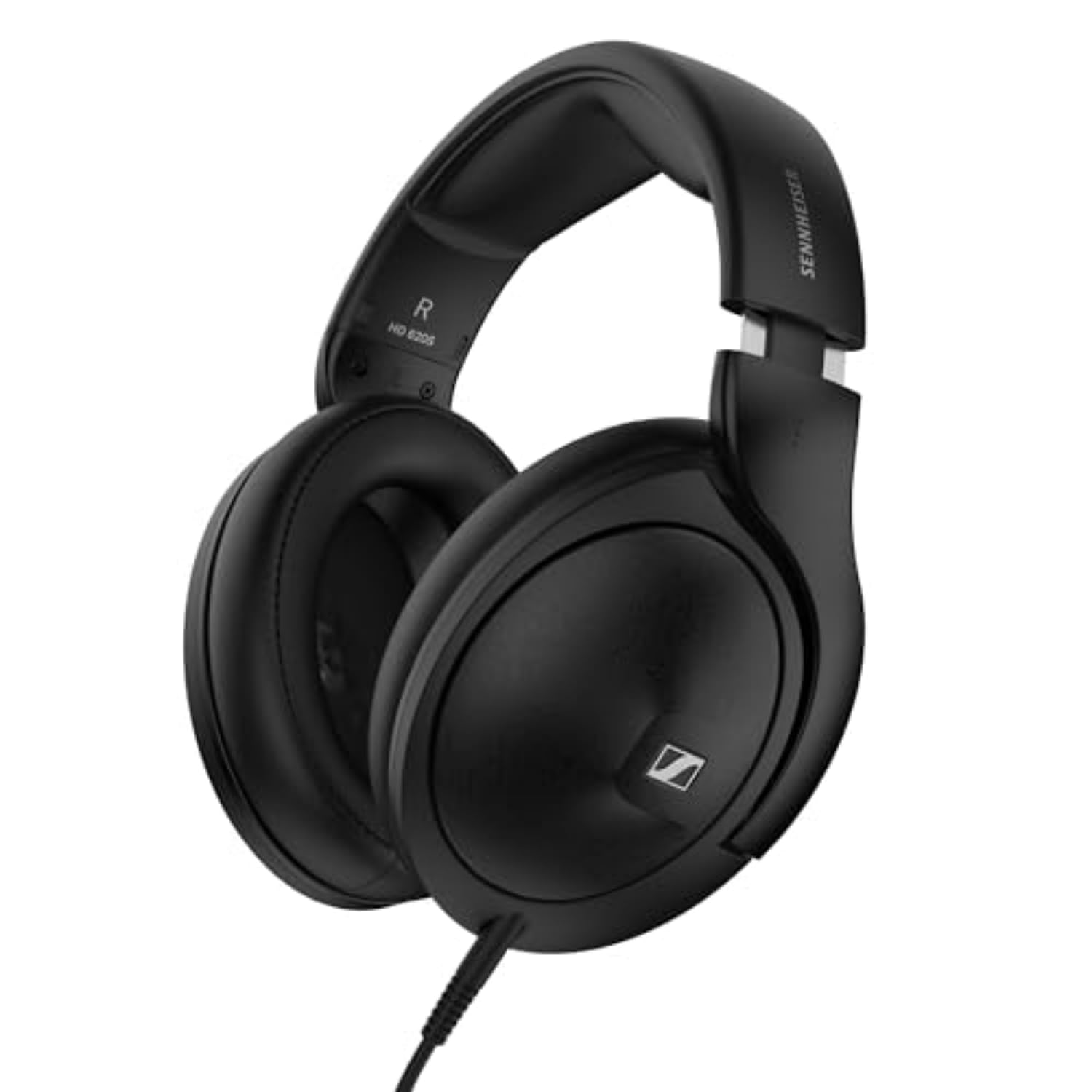
The Sennheiser HD 620S uses angled 42mm dynamic transducers and an open baffle system to create a soundstage that rivals many open-back designs, all while maintaining the isolation of a closed-back headphone. The bass is present and controlled, the mids are clear and present, and the treble is detailed without being fatiguing. This makes it an excellent choice for single-player games where you want to hear environmental details without disturbing others in the room.
Build quality is classic Sennheiser: steel-reinforced headband, soft artificial leather ear pads, and a durable plastic chassis that feels premium. The 150-ohm impedance means it benefits from a dedicated amp, but it is easier to drive than the HD 600 series. The detachable 1.8m cable with a 3.5mm to 6.3mm adapter covers most desktop setups. The main drawback is that the stock tuning requires some EQ for optimal balance, and the left-side-only cable can be mildly microphonic.
If you need isolation but hate the cramped sound of typical closed-back headphones, the HD 620S is a revelation. It delivers a surprisingly wide and natural stage while keeping noise leakage to a minimum. Pair it with a clean DAC and a bit of EQ for the most satisfying closed-back experience under the premium tier.
Why it’s great
- Wide soundstage for a closed-back headphone
- Accurate, neutral frequency response with good detail
- Comfortable and well-built
Good to know
- Stock tuning may need EQ for some listeners
- Left-side only cable can be slightly microphonic
- Benefits from a dedicated amp
6. SteelSeries Arctis Nova Pro Wireless

The SteelSeries Arctis Nova Pro Wireless brings premium Hi-Fi drivers and active noise cancellation to a multi-system wireless package. The Sonar software suite offers a Pro-grade Parametric EQ for fine-tuning the sound to your exact preferences, and the 360° Spatial Audio provides immersive surround sound for supported titles. The hot-swappable battery system — two batteries, one charging while the other powers the headset — eliminates downtime completely.
Comfort is generally good, though some users with larger ears find the ear cups slightly small, leading to pressure after extended wear. The ANC is effective for blocking low-frequency hum like fans or air conditioning. The ClearCast Gen 2 microphone is clear but noticeably less impressive than dedicated standalone mics. The base station connects to two devices simultaneously, letting you switch between PC and PlayStation with a button press.
This headset is for the gamer who values convenience, multi-platform support, and a full feature set over absolute sound purity. The audio quality is excellent for a wireless closed-back headset, but it doesn’t match the detail and stage of an open-back planar. The software ecosystem adds significant value if you want precise EQ control and game-specific audio profiles.
Why it’s great
- Hot-swappable batteries for unlimited playtime
- Dual-system base station with one-button switching
- Powerful EQ software with game-specific presets
Good to know
- Ear cups can be small for larger ears
- Microphone quality is average for the price
- Software can feel bloated
7. Sennheiser HD 660S2
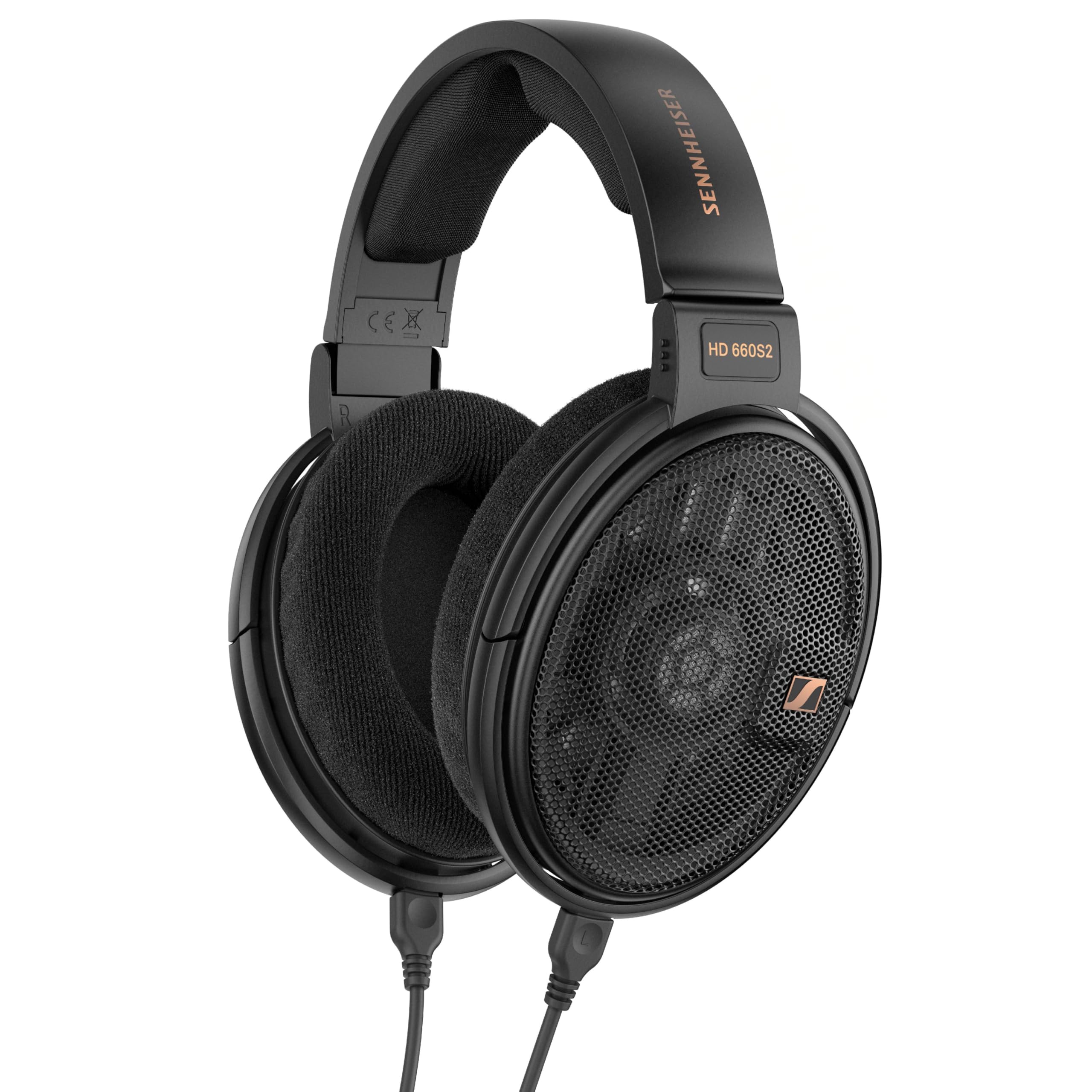
The Sennheiser HD 660S2 is a refined evolution of the legendary HD 600 series, offering a natural, balanced sound with deeper sub-bass extension and enhanced clarity. The 42mm dynamic drivers with ultra-light aluminum voice coils deliver fast transient response and excellent instrument separation. Vocals sound lifelike and intimate, while the bass is controlled and extends down to 27.5 Hz, giving piano and kick drums real weight.
Build quality is excellent, with robust materials and plush, breathable ear cushions that make it comfortable for hours of critical listening or gaming. The open-back design provides a spacious soundstage, though it is more intimate than the ultra-wide presentation of the HIFIMAN planars. The 300-ohm impedance means this headphone absolutely requires a dedicated amplifier — on a standard controller output, it will sound quiet and flat. A hybrid tube amp like the XDUOO TA-10R can bring out a richer, more three-dimensional character.
For the purist gamer who also uses their headset for music production or critical listening, the HD 660S2 is a benchmark. It reveals details in game audio that lesser headsets mask entirely. The trade-off is the need for a significant amplifier investment and the lack of any integrated microphone.
Why it’s great
- Exceptional clarity and natural midrange
- Deep, controlled bass extension
- Comfortable for extremely long listening sessions
Good to know
- Requires a high-quality headphone amplifier
- No built-in microphone
- Soundstage is intimate, not massive
8. SteelSeries Arctis Nova Pro Omni
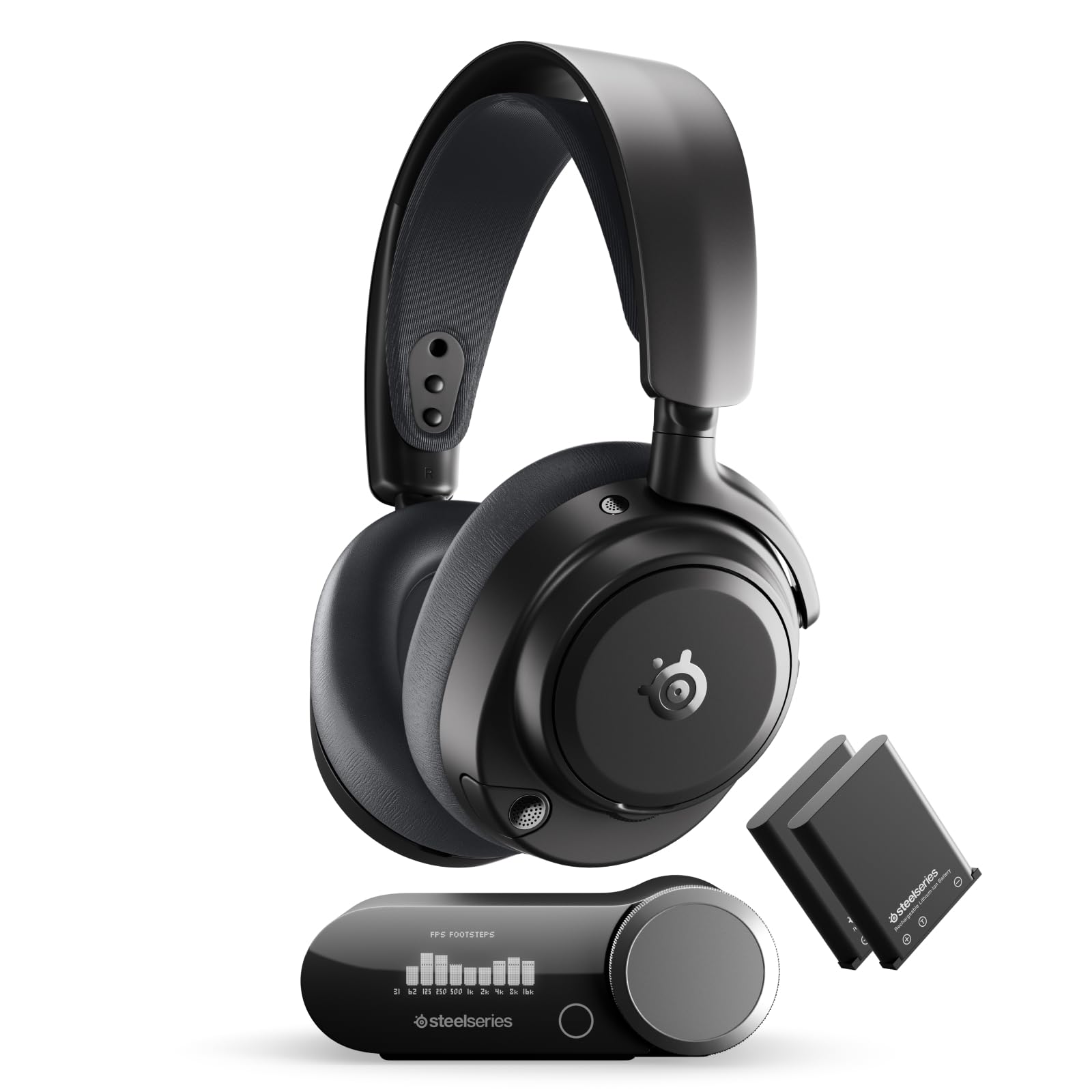
The SteelSeries Arctis Nova Pro Omni is the upgraded Hi-Res variant of the Nova Pro Wireless, certified for 96kHz/24-bit wireless audio over 2.4GHz and Bluetooth. The neodymium magnetic drivers deliver excellent clarity and extended frequency response, making it one of the best-sounding wireless gaming headsets available. The OmniPlay feature lets you connect up to five devices simultaneously and switch between them, with support for PC, PlayStation, Xbox, Switch, and mobile.
The active noise cancellation has been improved with a new algorithm that blocks up to 40% more background noise than the previous generation. The ClearCast Pro microphone features AI noise rejection, shielding up to 96% of background noise for pro-level voice clarity in any environment. The hot-swappable battery system returns, and the design is comfortable for most head shapes, though the rubber headband can be a personal preference issue.
If you play across multiple platforms and demand the highest-quality wireless audio possible without going to a dedicated DAC/amp setup, the Omni is the top contender. It trades absolute soundstage width and micro-detail retrieval against the best open-back wired headsets, but for a wireless closed-back solution, it is a remarkable achievement. The battery life is generous with the swappable packs.
Why it’s great
- Hi-Res certified wireless audio (96kHz/24-bit)
- Multi-device support for up to five platforms
- Excellent ANC with AI-powered mic
Good to know
- Requires software for full customization
- Minor paint smell initially reported
- Microphone distance affects clarity
9. HIFIMAN Arya Stealth Magnet

The HIFIMAN Arya Stealth Magnet is a flagship planar magnetic headphone that offers an enormous, holographic soundstage with exceptional resolution. The Stealth Magnet technology eliminates wave diffraction turbulence, resulting in pure, distortion-free audio across the entire frequency range. The nanometer-thickness diaphragm provides lightning-fast transient response, revealing every micro-detail in game audio — from the echo of footsteps in a cavern to the subtle hum of a distant engine.
Build quality uses a metal headband and high-grade plastic ear cups that keep the weight manageable, but the overall feel is less substantial than the Sennheiser alternatives. The asymmetrical ear cups follow the natural shape of the ear, though the large pads can be slightly irritating on the jaw during very long sessions. The single crystalline copper cable with a 6.35mm plug is a basic accessory for a headphone of this caliber, and you will want to upgrade the cable and add a balanced connection.
The Arya demands a serious amplifier — a hybrid Class A tube amp like the Apos Gremlin or a powerful solid-state unit is essential to unlock its full potential. It pairs poorly with OTL tube amps, which cannot provide the current. If you have the budget and the gear, the Arya delivers a spatial experience that transforms how you hear games and music. It is the endgame choice for the dedicated audiophile gamer.
Why it’s great
- Massive, three-dimensional soundstage
- Incredible detail retrieval and low distortion
- Excellent value compared to its original price
Good to know
- Requires a high-power amplifier (avoid OTL)
- Build quality could be more premium
- Basic cable and no carrying case included
FAQ
Do I need a separate DAC and amplifier for an audiophile gaming headset?
Can I use open-back audiophile headphones for competitive online gaming?
What is the difference between planar magnetic and dynamic drivers for gaming?
Final Thoughts: The Verdict
For most users, the best audiophile gaming headset winner is the HIFIMAN Edition XS because it delivers a massive, detailed planar magnetic soundstage at a price that undercuts the competition while still leaving room for a modest DAC/amp investment. If you want a lightweight, closed-back design with wide stage and good isolation, grab the Sennheiser HD 620S. And for a seamless wireless, multi-platform experience with Hi-Res audio and excellent ANC, nothing beats the SteelSeries Arctis Nova Pro Omni.