
Our readers keep the lights on and the weekend projects moving. As an Amazon Associate, I earn from qualifying purchases.
A lateral collateral ligament (LCL) sprain or tear creates a specific type of instability — a feeling that the outside of your knee might buckle or give way under load. Unlike ACL injuries that produce rotational instability, LCL damage produces a distinct varus (inward) collapse sensation that standard knee sleeves simply cannot control. Finding a brace that delivers genuine lateral stabilization without shifting, pinching, or restricting your daily movement is the difference between protecting your recovery and aggravating the injury.
I’m Rikta — the co-founder and writer behind FitlyFast. My research process for this guide involved analyzing hundreds of customer reviews across competing LCL braces, cross-referencing hinge architectures, strap systems, and sizing accuracy complaints to identify which models actually resist varus stress throughout the day.
The result is this detailed review of the best brace for lcl injury options available on the market today, ranked by hinge performance, fit consistency, and value for money.
How To Choose The Best Brace For LCL Injury
An LCL injury demands a brace that controls varus (side-to-side) stress on the outer knee. A standard compression sleeve or basic hinged brace designed for general knee pain lacks the lateral stability required. Focus on hinge architecture, strap configuration, and sizing precision to get the support your recovery needs.
Hinge Type and Lateral Support
The hinges are the most critical component. Look for bilateral polycentric hinges that track the knee’s natural rotation throughout flexion. Rigid single-axis hinges can bind or shift during bending, reducing stability exactly when the LCL needs protection. The best LCL braces use multiple pivot points to maintain contact with the leg through the full range of motion.
Strap System and Fit Security
A brace that migrates down the leg during activity provides zero LCL protection. Anti-migration features such as silicone grippers, elastic tension straps above and below the knee, and multi-point calf and thigh restraints are essential. Avoid braces that rely solely on circumferential compression to stay in place — they will slide, especially on tapered legs.
Sizing and Measurement Accuracy
Most LCL brace returns are caused by sizing errors. Measure the circumference of your thigh 6 inches above the kneecap and your calf 6 inches below the kneecap. Use the larger of the two measurements to select your size, not the manufacturer’s suggested size based on knee diameter. Many premium brands run small; if you’re at the top of a range, sizing up is usually safer.
Quick Comparison
On smaller screens, swipe sideways to see the full table.
| Model | Category | Best For | Key Spec | Amazon |
|---|---|---|---|---|
| DonJoy BIONIC FULLSTOP | Premium | Multi-ligament stability & sports | 4-point leverage dampening hinge | Amazon |
| Ovation Medical Game Changer Unloader | Premium | LCL pain with OA or meniscus issues | Offloading adjustment key | Amazon |
| BioSkin Wraparound Hinged | Mid-Range | All-day wear & easy on/off | Aircraft-grade aluminum hinges | Amazon |
| Shock Doctor Maximum Support | Mid-Range | High-impact sports & gym | Bilateral dual stabilizers | Amazon |
| MUELLER Hg80 Hinged | Mid-Range | Daily activities & mild instability | Triaxial hinge tracking | Amazon |
| DonJoy Drytex Sport Hinged | Budget | Post-injury healing & rehab | Breathable Drytex material | Amazon |
| Ossur CTI Mission | Premium | Professional-grade LCL control | Carbon composite frame | Amazon |
In‑Depth Reviews
1. DonJoy Performance BIONIC FULLSTOP Knee Brace

The DonJoy BIONIC FULLSTOP features a four-point leverage system paired with a dampening hinge cycle that actively trains the knee to avoid the at-risk extended position. For LCL injuries, this translates into superior varus control — the brace’s frame resists inward buckling through a broader arc of motion compared to simpler dual-hinge designs. The anti-migration technology built into the sleeve prevents the brace from sliding down during lateral movements, which is the most common failure mode of lesser braces during cutting or pivoting.
Users confirm the BIONIC FULLSTOP handles multi-ligament scenarios well, including combined LCL and meniscus injuries. The adjustable straps allow fine-tuning around the thigh and calf, and the breathable back panel reduces heat buildup during extended wear. The most critical detail for LCL buyers: the hinge system produces a mechanical stop before hyperextension, which offloads the lateral collateral ligament during the terminal phase of knee straightening.
The strap system has drawn complaints about durability — some users report the elastic components begin twisting or loosening within months of heavy use. This is a concern for wrestlers or skiers who put extreme lateral force through the brace daily. For moderate to heavy recreational activity, the hinge performance is excellent; for competitive athletes, the straps may need replacing before the hinges wear out.
Why it’s great
- Four-point leverage system creates genuine lateral stabilization against varus collapse
- Dampening hinge cycle encourages safer movement patterns during recovery
- Breathable construction reduces sweat buildup for longer wear sessions
Good to know
- Strap system can degrade under competitive use, requiring replacement
- Premium pricing means a significant investment for non-athletes
2. Ovation Medical Game Changer Unloader Left Knee Brace

The Ovation Game Changer uses a single upright offloading mechanism rather than bilateral hinges, which is a distinct architectural approach for LCL-related pain. Instead of purely blocking lateral movement, this brace transfers weight away from the painful compartment of the knee via an adjustable tension key. For LCL injuries that also involve medial or lateral meniscal tears or early osteoarthritis, this offloading function can reduce the compressive load that triggers pain during weight-bearing.
The push-button release buckles make application straightforward, even for users with limited hand mobility. The absence of hardware on the inner side of the knee eliminates the pressure point that bilateral braces can create against the MCL area. Users report that the brace stays firmly in place during walking and light activity without the “riding down” problem common to sleeve-style braces. The adjustable tension key allows minute changes to offloading force, which is useful during recovery phases where pain fluctuates.
The single upright design provides less direct lateral stabilization compared to a full bilateral frame. For isolated LCL tears where pure varus control is the priority, a dual-hinge brace offers more resistance. The Game Changer also fits a narrower range of leg shapes — users with very muscular thighs or unusually tapered calves may find the one-size frame inadequate. Sizing must be correct on the first attempt, as the offloading geometry is sensitive to placement.
Why it’s great
- Adjustable offloading key lets you dial in precise pain relief during daily movement
- Single upright avoids metal contact on the inner knee, reducing irritation
- Easy push-button buckles accommodate users with hand or grip limitations
Good to know
- Less effective for pure varus instability compared to bilateral hinge braces
- One-size frame may not fit very large or very small legs correctly
3. BioSkin Wraparound Hinged Knee Brace
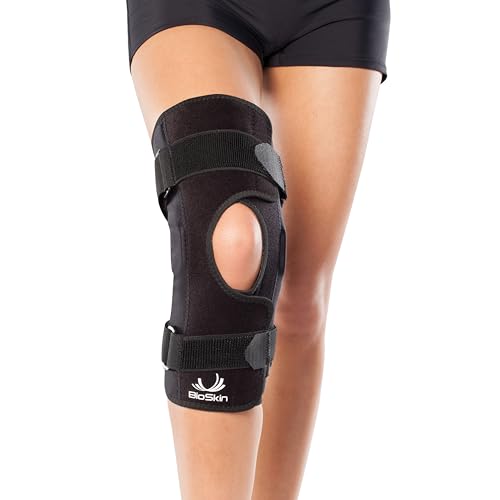
The BioSkin Wraparound solves the fundamental problem of pulling a sleeve brace over a swollen or painful knee. Its open-back, fully wraparound design with full-length Velcro panels allows you to apply the brace directly to the injured area without bending or twisting the knee into an uncomfortable position. The aircraft-grade aluminum hinges provide lateral stiffness without the bulk of steel alloy frames, keeping the brace low-profile under pants.
The elastic straps positioned above and below the knee joint are the key to its anti-migration performance. Users with earlier BioSkin models report years of daily use without the brace losing its grip — the nylon-Lycra blend does not stretch out as quickly as neoprene alternatives. The open-back construction also improves airflow, which is a significant advantage for those who need to wear the brace for long work shifts or during warmer months.
Some users find the Velcro closure system on the inner thigh can irritate sensitive skin, particularly during activities involving repetitive knee flexion. The wraparound design sizes differently than closed sleeves — users at the larger end of a size bracket often need to size up, as the overlap of the wrap reduces effective circumference. The hinges, while light, are non-removable, so the brace cannot be converted to a simple sleeve for low-activity days.
Why it’s great
- Wraparound application eliminates painful pulling over an injured knee
- Hypoallergenic nylon-Lycra allows all-day wear without heat buildup
- Elastic straps prevent migration during walking and light activity
Good to know
- Velcro closure can rub on inner thigh during high-flexion activities
- Sizing requires careful attention at the top of each range
4. Shock Doctor Knee Brace, Maximum Support Hinged

The Shock Doctor Maximum Support brace uses bilateral side stabilizers encased in vented neoprene to deliver a high level of lateral restraint. The neoprene body itself provides therapeutic compression and heat retention, which helps manage inflammation while the hinges control varus movement. The straps are designed with a hook-and-loop closure system that holds firm through explosive movements — users in court sports and martial arts report the brace stays fully engaged even during lateral shuffling and pivoting.
The N-Tex Air Flow venting system is a functional upgrade over solid neoprene sleeves, channeling moisture away from the skin and reducing the “sweat rash” problem that plagues all-day neoprene wear. The bilateral hinges are fixed and do not loosen during use, unlike some mid-range braces where the hinge pin can begin to wobble after repeated flexion. For combined ACL/MCL/LCL injuries, the Shock Doctor provides a rigid frame that resists both rotational and lateral loads simultaneously.
The brace runs small — several users who ordered their standard size found the fit extremely tight for the first three days before the neoprene broke in. The hinge mechanism limits full knee flexion at the extreme end, which can be noticeable during deep squatting or kneeling. Some users report that the outer hinge mesh can tear if the brace is dragged across gym floors, though the structural integrity of the stabilizers is unaffected by superficial fabric damage.
Why it’s great
- Rigid bilateral stabilizers provide robust resistance against varus stress
- Vented neoprene balances compression therapy with moisture management
- Straps maintain tension through dynamic lateral movements without loosening
Good to know
- Runs small; expect a tight break-in period of several days
- Full knee flexion is restricted at the deepest end of the bend
5. MUELLER Sports Medicine Hg80 Hinged Knee Brace
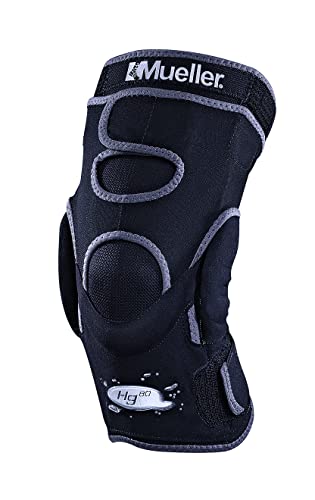
The Mueller Hg80’s distinguishing feature is its Triaxial hinge system, which uses three pivot points to more closely match the natural rolling and gliding motion of the knee joint. For LCL injuries, this means the brace maintains contact with the leg throughout the bending cycle instead of shifting or binding at specific angles. The HydraCinn fabric is notably softer and more flexible than standard neoprene, making the Hg80 one of the more comfortable options for users who need to wear the brace under clothing for extended periods.
User reports from those with meniscal tears and MCL strains confirm that the Hg80 reduces walking pain significantly while still allowing natural gait mechanics. The brace is lightweight enough that many users forget they are wearing it after a few minutes. The adjustable hook-and-loop straps allow for progressive tightening as swelling subsides, which is useful during the acute phase of an LCL sprain when knee circumference can decrease several centimeters over a week.
The hinges have a known issue with squeaking after several months of use, and the hinge pins can work loose if the brace is subjected to high-impact lateral loads. Some users with larger calf circumferences (over 17 inches) report that even the XXL size is difficult to slide over the foot. The brace lacks patella padding or buttressing, so users who also require kneecap stabilization may need to pair the Hg80 with a separate compression sleeve.
Why it’s great
- Triaxial hinge system mimics natural knee motion for all-day comfort
- Lightweight HydraCinn fabric breathes better than standard neoprene alternatives
- Progressive strap adjustment accommodates changes in knee swelling over time
Good to know
- Hinges can develop squeaking or loosen after extended heavy use
- Not suitable for users with very thick calves; sizing is limited at the top end
6. DonJoy Drytex Sport Hinged Knee Brace
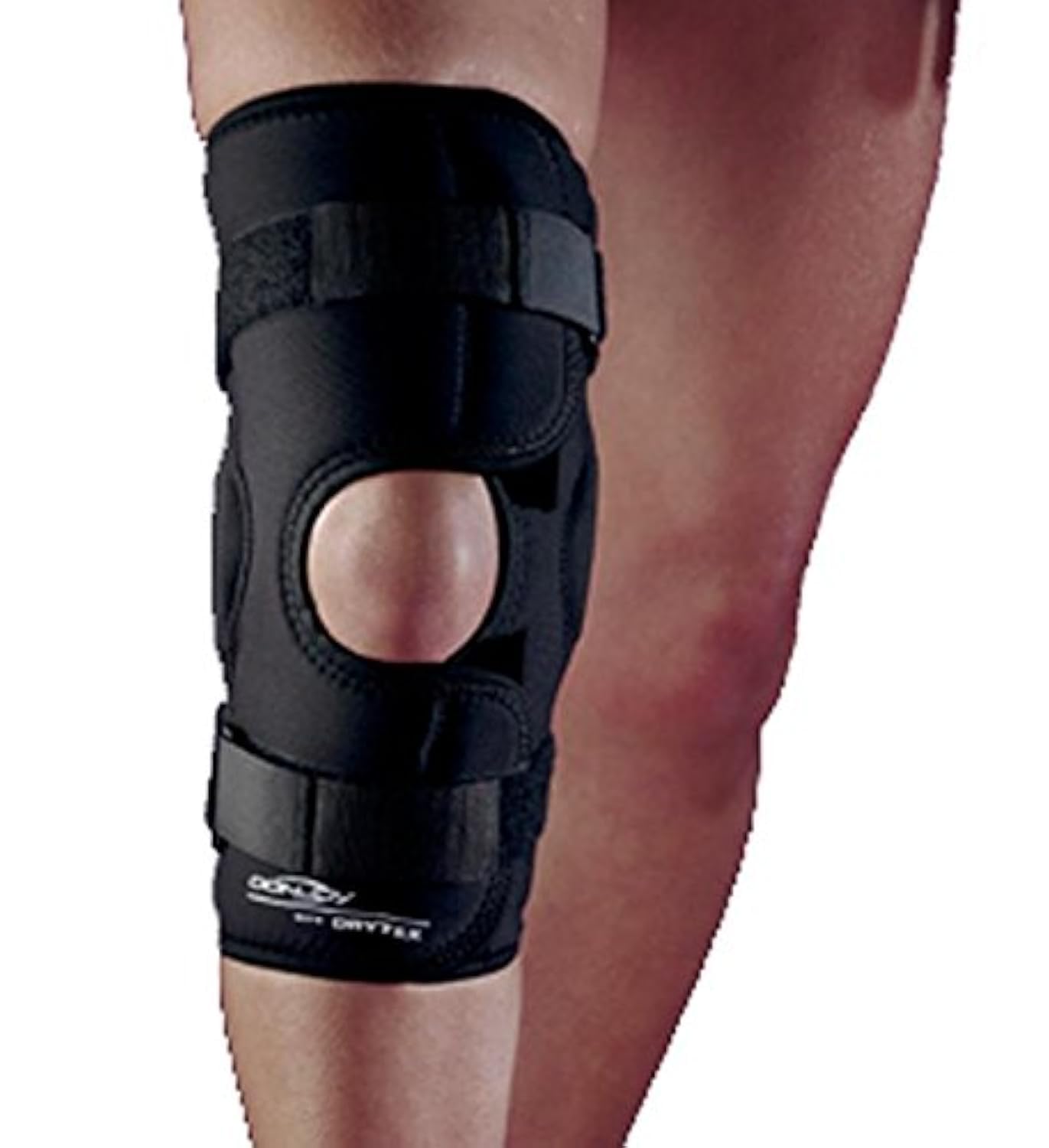
The DonJoy Drytex Sport is a slim-profile hinged brace designed for post-injury recovery rather than high-intensity sports. The Drytex material is noticeably lighter and more breathable than standard neoprene, making this a good option for users who run warm or plan to wear the brace under work clothes. The integrated hinges are not as robust as the BIONIC series, but they provide enough lateral resistance for grade 1 LCL sprains and general knee support during rehabilitation exercises.
Users who need a replacement for a previous high-end brace that stretched out over years of use find the Drytex Sport to be a solid value alternative. The compressive support helps with proprioception — the brain’s awareness of knee position — which is often impaired after a ligament injury. The brace is relatively easy to slide on and off, and the fit is consistent for average calf and thigh proportions.
The hinge cutout behind the knee can rub against the skin during prolonged wear, particularly in the seated position. The brace does not provide the same level of lateral rigidity as the Shock Doctor or DonJoy BIONIC, so it is not appropriate for return-to-sport scenarios or grade 2 or 3 LCL tears. Some users report inconsistent sizing, with the brace running either too loose or too tight depending on individual leg geometry.
Why it’s great
- Lightweight Drytex fabric reduces heat buildup during extended wear
- Compressive support improves knee position awareness during rehab
- Budget-friendly entry point for mild LCL instability
Good to know
- Hinge cutout can rub on bare skin behind the knee
- Insufficient rigidity for grade 2 or 3 LCL tears or return-to-sport activity
7. Ossur CTI Mission Knee Brace
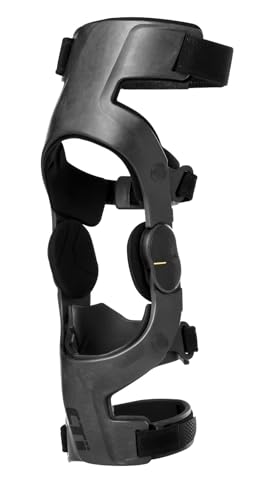
The Ossur CTI Mission is constructed with an advanced carbon composite frame that delivers maximum strength at a fraction of the weight of aluminum or steel braces. The Human Motion hinge technology is designed to mimic the anatomical motion of the knee more closely than standard polycentric hinges, reducing the “pistoning” effect that can cause braces to shift during deep flexion. The flexible cuffs conform to individual leg shapes, and the Quick-Loc Clip System allows for fast, secure attachment without threading straps through loops.
This brace is specified for ACL, MCL, LCL, PCL, and combined instabilities, making it a true multi-ligament solution. The tool-free extension stops allow the user to set the exact range of motion permitted during recovery, which is critical for preventing the terminal extension that stresses the LCL. The condyle pad set includes thick and thin options to optimize the fit around the bony protrusions of the knee, which is the primary factor determining whether a custom-grade brace stays in place during dynamic activity.
Reports of strap failure after limited use are a concern at this price tier — the low-profile straps are not built with the same redundancy as professional bracing systems used in surgical recovery. The brace can also slip downward during the day, particularly on legs with less muscular calf development, which compromises the hinge alignment relative to the knee joint. Users on the borderline between sizes should size down to achieve the necessary condyle compression that prevents rotation of the frame.
Why it’s great
- Carbon composite frame provides high lateral stiffness with very low weight
- Human Motion hinge tracks natural knee biomechanics during active use
- Tool-free extension stops allow precise range-of-motion control
Good to know
- Low-profile straps have shown durability issues in early-use reports
- Frame may migrate down on legs with less developed calf musculature
FAQ
Can a standard hinged knee brace treat an LCL tear?
How do I measure my leg for an LCL brace?
Why does my knee brace keep sliding down during activity?
Final Thoughts: The Verdict
For most users, the brace for lcl injury winner is the DonJoy BIONIC FULLSTOP because its four-point leverage system and dampening hinge cycle provide the most reliable lateral stabilization across varying activity levels. If you want breathable all-day comfort with a wraparound design that avoids pulling over a painful knee, grab the BioSkin Wraparound Hinged. And for professional-grade protection with a lightweight carbon frame that handles multi-ligament instability, nothing beats the Ossur CTI Mission.