
Our readers keep the lights on and the weekend projects moving. As an Amazon Associate, I earn from qualifying purchases.
Choosing an air mattress for backpacking means balancing ounces against insulation and durability. A pad that’s comfortable at home can feel like a frozen slab when the ground temperature drops, and a pad that’s ultralight might leave your hips aching against the dirt. The right pick keeps you warm, supported, and well-rested without adding unwanted bulk to your pack.
I’m Rikta — the co-founder and writer behind FitlyFast. I’ve analyzed the spec sheets, customer stress tests, and real-world performance data across nine top backpacking air mattresses to find the models that actually deliver on their R-value claims and packed weight.
Whether you are a weekend hiker or a thru-hiker pushing long miles, finding the best air mattress for backpacking comes down to understanding how R-value, thickness, and packed size affect your sleep on the trail.
How To Choose The Best Air Mattress For Backpacking
Backpacking air pads are a trade-off game: every ounce of insulation and each centimeter of thickness adds weight and packed volume. Begin by deciding what season you’ll use the pad in. A three-season hiker can get away with an R-value around 4.0, while winter campers need at least 5.0 to stay warm on frozen ground. Next, consider your sleeping style — side sleepers need a thicker pad (3 inches or more) to avoid bottoming out, while back sleepers can use a thinner profile. Finally, look at the packed size: a pad that compresses to the size of a one-liter bottle is ideal for ultralight backpacking, while a bulkier roll works fine for shorter trips or car camping.
R-Value and Insulation Technology
The R-value measures the pad’s resistance to conductive heat loss. A higher number means better ground insulation. For summer trips, an R-value of 2.0 to 3.0 is sufficient. For three-season use, you’ll want 4.0 to 5.0. For winter camping, look for 5.0 or higher. The insulation method matters too: reflective foil layers (like Thermacapture or Thermal Mirror) trap radiant heat without adding much weight, while synthetic fill or foam adds bulk. Be aware that cheap pads often inflate their R-value claims — look for ASTM-tested ratings for real numbers.
Weight and Packed Size
Every ounce matters when you’re carrying your shelter on your back. Ultralight pads weigh under 1 pound (around 16 ounces), while standard backpacking pads range from 1.2 to 2.5 pounds. The packed size is equally critical: a pad that compresses to 5 inches by 8 inches will fit inside your backpack, while a larger roll may need to be strapped to the outside. Check the manufacturer’s confirmed packed dimensions — some pads claim a small pack size but arrive bulkier in practice.
Thickness and Comfort
Pad thickness affects both comfort and insulation. A pad 2.5 to 3 inches thick provides adequate cushioning for most sleepers. Thicker pads (3.5 to 4 inches) offer better comfort for side sleepers but can feel unstable or bouncy. Very thin pads (under 2 inches) are ultralight but may leave your hips or shoulders pressing against the ground. Consider the baffle design: vertical baffles cradle you in place, while horizontal baffles can cause you to slide off during the night.
Durability and Fabric Quality
Backpacking pads face scrapes from rocks, sticks, and tent floors. Look for fabrics with a denier rating of 20D or higher — 20D nylon is standard for lightweight pads, 30D or 40D adds durability at a weight penalty. The TPU lamination quality matters just as much: high-grade TPU withstands repeated folding without delaminating. Check customer reviews for reports of leaks or valve failures, as these are common failure points. Most quality pads include a repair patch kit, but a pad that fails early is a waste of money no matter how light it is.
Quick Comparison
On smaller screens, swipe sideways to see the full table.
| Model | Category | Best For | Key Spec | Amazon |
|---|---|---|---|---|
| FLEXTAILGEAR R05 | Premium | Warmth and weight balance | 5.6 R-Value / 19.6 oz | Amazon |
| NEMO Tensor All-Season | Premium | Ultralight 4-season insulation | 3.5 in thick / 590 g | Amazon |
| Therm-a-Rest NeoAir Xlite NXT | Premium | Minimum weight and pack size | 4.5 R-Value / 11.5 oz | Amazon |
| Big Agnes Rapide SL | Premium | Plush comfort and quiet sleep | 4.8 R-Value / 4.25 in thick | Amazon |
| Naturehike 6.5R | Mid-Range | Maximum insulation for the price | 6.5 R-Value / 19.05 oz | Amazon |
| Naturehike 4.6R | Mid-Range | Light three-season warmth | 4.6 R-Value / 27.2 oz | Amazon |
| Big Agnes Divide | Mid-Range | Budget-friendly brand quality | 4.0 R-Value / 23 oz | Amazon |
| ONETIGRIS Obsidian | Mid-Range | Extra-wide comfort with high insulation | 5.2 R-Value / 2.05 lb | Amazon |
| Hikenture 6.2R | Value | Low-cost high-R-value entry | 6.2 R-Value / 1.53 lb | Amazon |
In‑Depth Reviews
1. FLEXTAILGEAR R05 Ultralight Backpacking Sleeping Pad
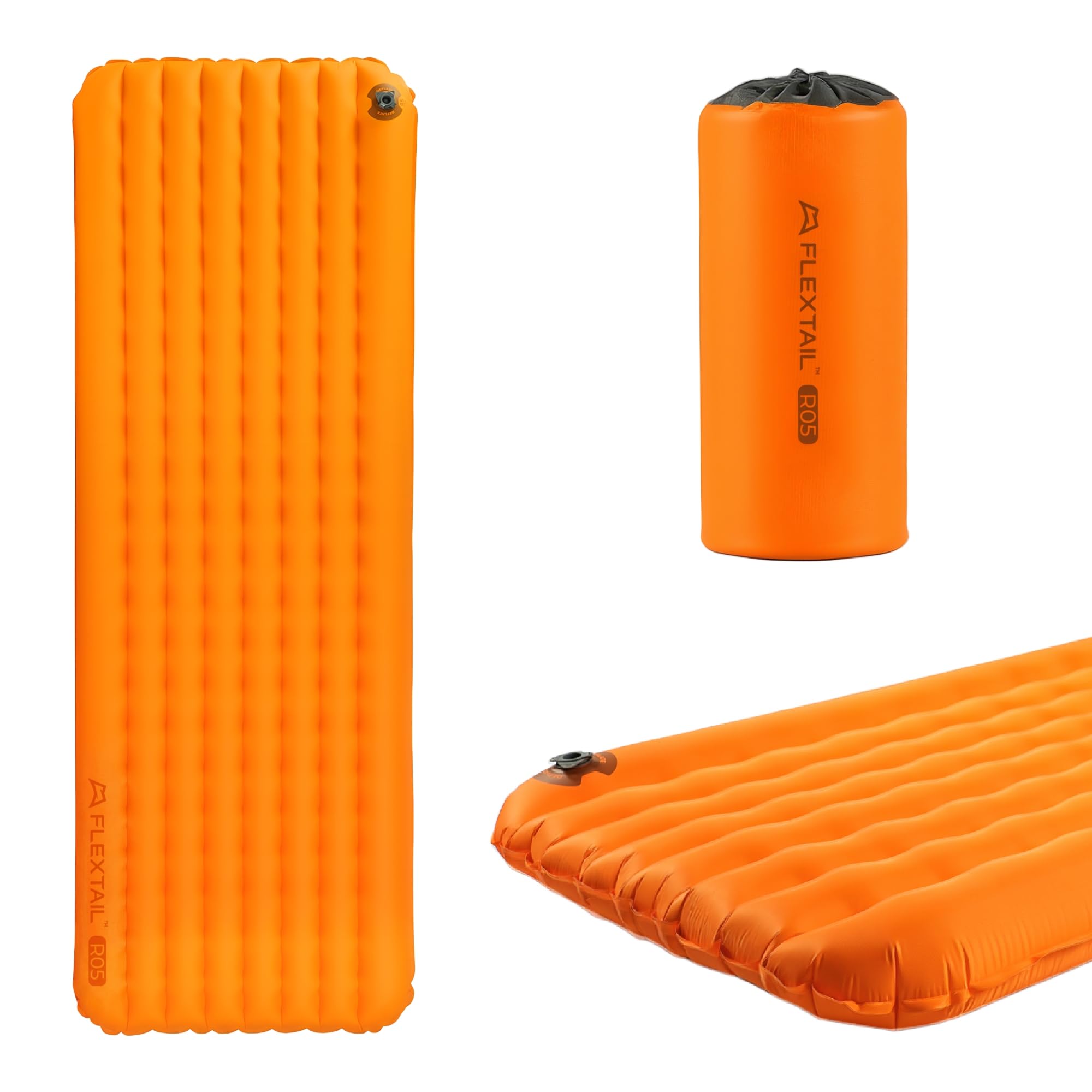
The FLEXTAILGEAR R05 hits a near-perfect middle ground between ultralight weight and serious winter insulation. Its 5.6 R-value, ASTM-tested, keeps you warm on ground temperatures well below freezing, while the 19.6-ounce weight keeps your pack light enough for multi-day carries. The 4-inch thickness provides ample cushioning for side sleepers, and the internal chamber design distributes weight evenly to prevent bottoming out. Real-world reports confirm it holds up well against 3-season abuse, with durable tear-resistant nylon and a quiet internal layer that won’t wake your tent mate.
The bright orange color makes it easy to spot in your pack, and the included pump sack inflates the pad in under a minute with about four squeezes. A repair patch kit is included for trailside fixes. Some users have noted the valve can be fussy to open one-handed, and the 2.8-inch packed depth is slightly bulkier than the premium Therm-a-Rest competitors, but for the price the weight and warmth ratio is outstanding.
This pad works equally well for three-season backpackers who want a buffer for cold snaps and four-season campers on a budget. It’s not the lightest option on the market, but it offers the best insulation per ounce in the mid-premium tier, making it a smart choice for anyone who prioritizes warm sleep without spending top dollar.
Why it’s great
- 5.6 R-Value tested to ASTM standards
- Quiet, non-slip fabric layer
- Generous 25.6-inch width for comfort
Good to know
- Valve can be tricky to use one-handed
- Packed size slightly larger than premium options
2. NEMO Tensor All-Season Ultralight Insulated Sleeping Pad
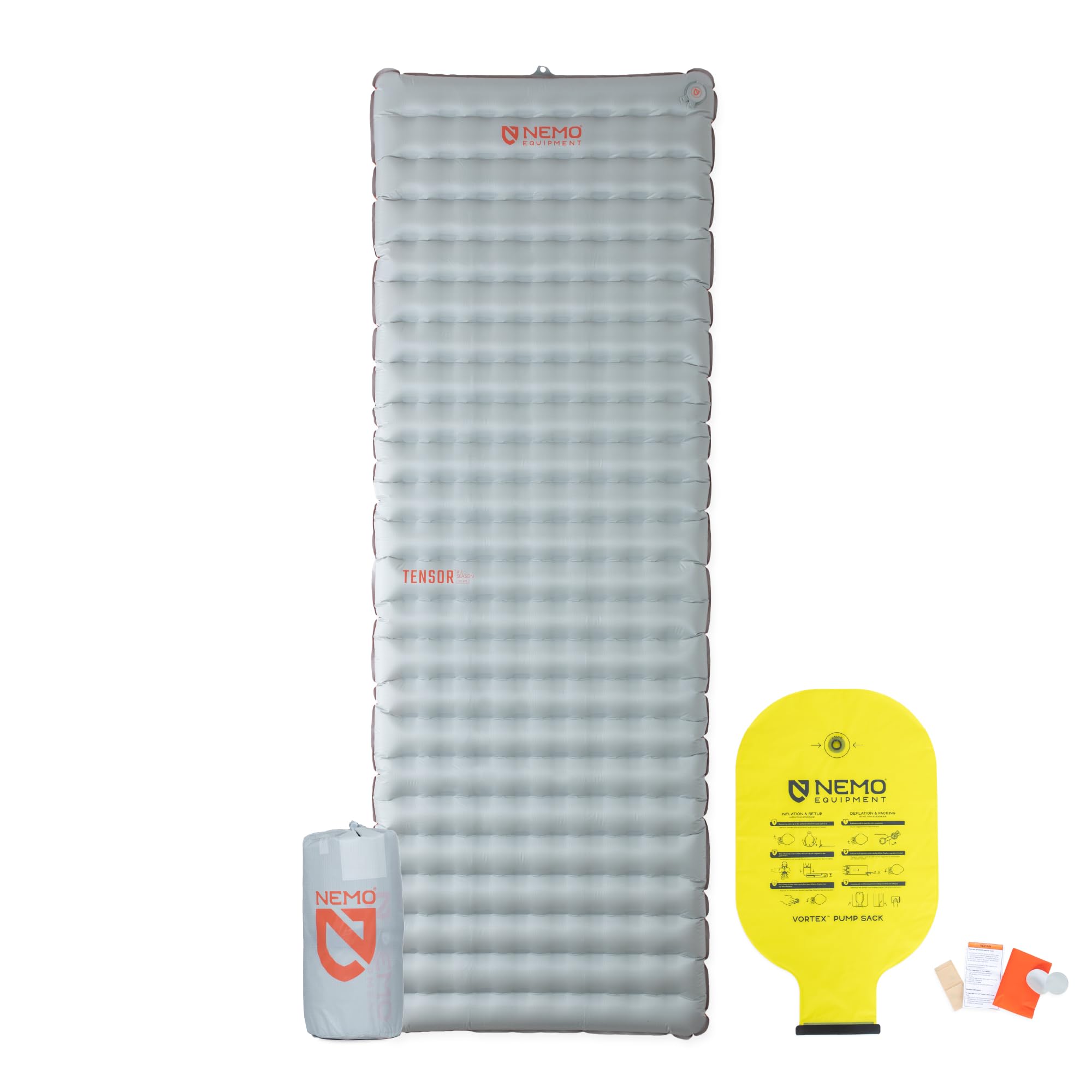
The NEMO Tensor All-Season achieves an incredible weight-to-warmth ratio using two layers of floating Thermal Mirror metallized film. This aluminized insulation reflects body heat back to you without the crinkle noise that plagued earlier reflective pads — users consistently report quiet, restful sleep. The 3.5-inch thickness and Spaceframe baffles provide stable support for all sleeping positions, and the regular wide size (72 by 25 inches) offers enough room for larger individuals to turn without feeling restricted.
The included Vortex pump sack works efficiently, inflating the pad in about three to four fills. The pad compresses to about the size of a Nalgene bottle, making it easy to stow inside any backpack. Bluesign-approved nylon fabrics add extra puncture resistance without adding weight. Real-world tests show it surviving rocky ground and 18-degree hammock camping without leaks or cold spots.
This pad commands a premium price, but the combination of ultralight weight, true four-season insulation, and whisper-quiet construction makes it a top-tier investment for dedicated backpackers. If you can stretch your budget, the Tensor All-Season delivers the best balance of comfort, warmth, and packability among premium options.
Why it’s great
- Very quiet aluminized insulation
- Generous 25-inch width in regular size
- Compact roll about the size of a water bottle
Good to know
- Premium price point
- Deflation requires rolling care to avoid air pockets
3. Therm-a-Rest NeoAir Xlite NXT Ultralight Sleeping Pad

The Therm-a-Rest NeoAir Xlite NXT remains the benchmark for ultralight backpacking pads. At just 11.5 ounces for the regular size, it compresses to roughly the size of a one-liter bottle — smaller than almost any competitor offering similar warmth. The 3-inch thickness and baffled internal structure provide stable, bottom-out-free support for most sleepers, and the WingLock valve allows both rapid inflation and lightning-fast deflation. The 4.5 R-value is warm enough for three-season use and extends into early winter with proper layering.
Earlier versions of the NeoAir were notorious for loud crinkling noise, but the NXT version has been significantly quieted. Users report it as acceptable for tent sleeping, rating it far less intrusive than the original. The 30D ripstop nylon outer is durable but still light — careful use is recommended on rocky or sharp terrain. The pump sack works reliably, though some users prefer using the stuff sack as a backup method.
The regular size (20 by 66 inches) is narrower and shorter than many competitors, which saves weight but may not suit tall or wide individuals. For ultralight purists chasing every gram, the Xlite NXT is still the go-to choice. If you need more width, Therm-a-Rest offers a regular-wide and large version at a slight weight increase.
Why it’s great
- Extremely lightweight at 11.5 ounces
- Packs smaller than a one-liter bottle
- WingLock valve for quick inflation and deflation
Good to know
- 20-inch width is narrow for some sleepers
- Fragile fabric requires careful site selection
4. Big Agnes Rapide SL Insulated Sleeping Pad

The Big Agnes Rapide SL focuses on comfort without sacrificing packability. The quilted top surface creates a plush, pillowy feel that cradles you, and the offset I-beam construction eliminates the bouncy sensation common to simpler air pads. At 3.5 inches thick with 4.25-inch outer chambers, the stay-put edges keep you centered on the pad even during restless sleep. The 4.8 R-value uses two layers of heat-reflective film, providing strong three-season insulation with a buffer for shoulder-season cold snaps.
The Pumphouse inflation sack is a standout feature — it doubles as a dry bag for storing gear while hiking, and inflates the pad in about four minutes with minimal effort. The micro-adjustment valve allows fine-tuning of firmness, a rare and welcome feature. The superlight double ripstop nylon is impressively durable for its weight, and the pad rolls up to about 5 by 8 inches. Real-world users report great results on multiday trips, including through the Grand Canyon.
The regular size (20 by 72 inches) is on the narrower side, so larger or wider individuals should consider the 25-inch version. The Rapide SL is not the lightest premium pad, but its comfort and easy inflation make it ideal for backpackers who prioritize sleep quality over shaving ounces.
Why it’s great
- Quilted top provides pillow-like comfort
- Pumphouse sack inflates quickly and doubles as dry bag
- Micro-adjust valve for fine-tuning firmness
Good to know
- 20-inch width is narrow for broad-shouldered users
- Heavier than premium ultralight competitors
5. Naturehike 6.5R Ultralight Sleeping Pad with Sidewalls
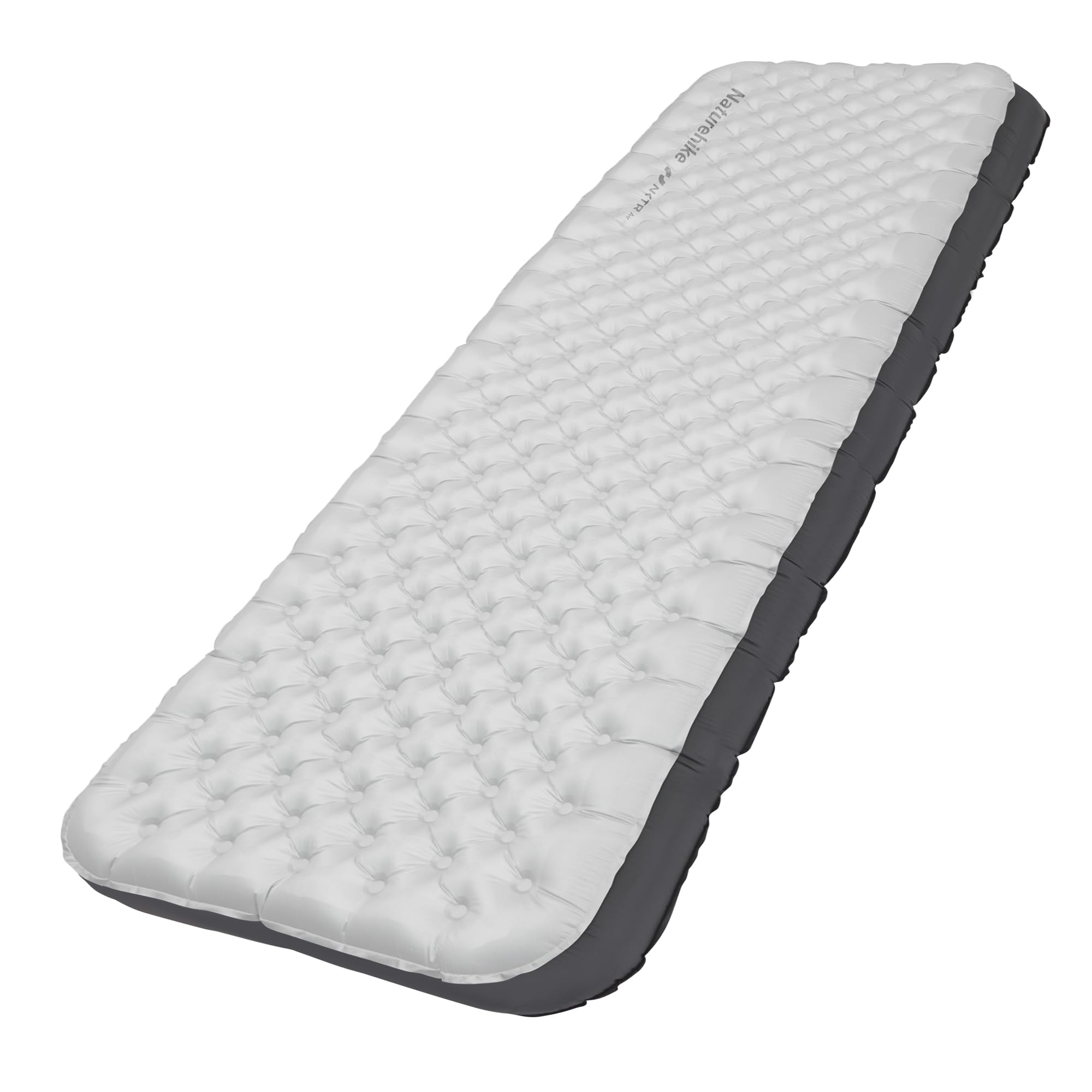
The Naturehike 6.5R delivers the highest R-value in this roundup at a mid-range price point. The eight-layer aluminum molded insulation structure locks in body heat down to minus 13 degrees Fahrenheit, making it one of the warmest pads available for winter camping. The 10-centimeter (3.94-inch) thickness provides generous cushioning, and the extra side walls prevent you from rolling off during the night — a thoughtful detail for active sleepers. At just 19.05 ounces, it competes with premium pads on weight while offering superior insulation.
The patented dual-vent valve design allows unidirectional inflation and rapid deflation, though some users report that the inner air cover requires careful handling to avoid air leaks during setup. The included inflation bag is functional, but the instructions can be confusing — you may need to watch a video to get the hang of it. The 20D nylon and TPU construction feels durable for its weight class, and the silver-medium color resists showing dirt. Real-world reviews confirm excellent warmth and comfort over multiple nights.
This pad is best for winter campers and cold-sleepers who need maximum insulation without the premium price tag. The additional side walls are a unique feature that improves sleep stability, though the valve learning curve might frustrate those who prefer simpler setups.
Why it’s great
- Very high 6.5 R-value for extreme cold
- Side walls prevent rolling off the pad
- Lightweight at 19.05 ounces
Good to know
- Valve system has a learning curve
- Inflation bag instructions could be clearer
6. Naturehike 4.6R Ultralight Sleeping Pad
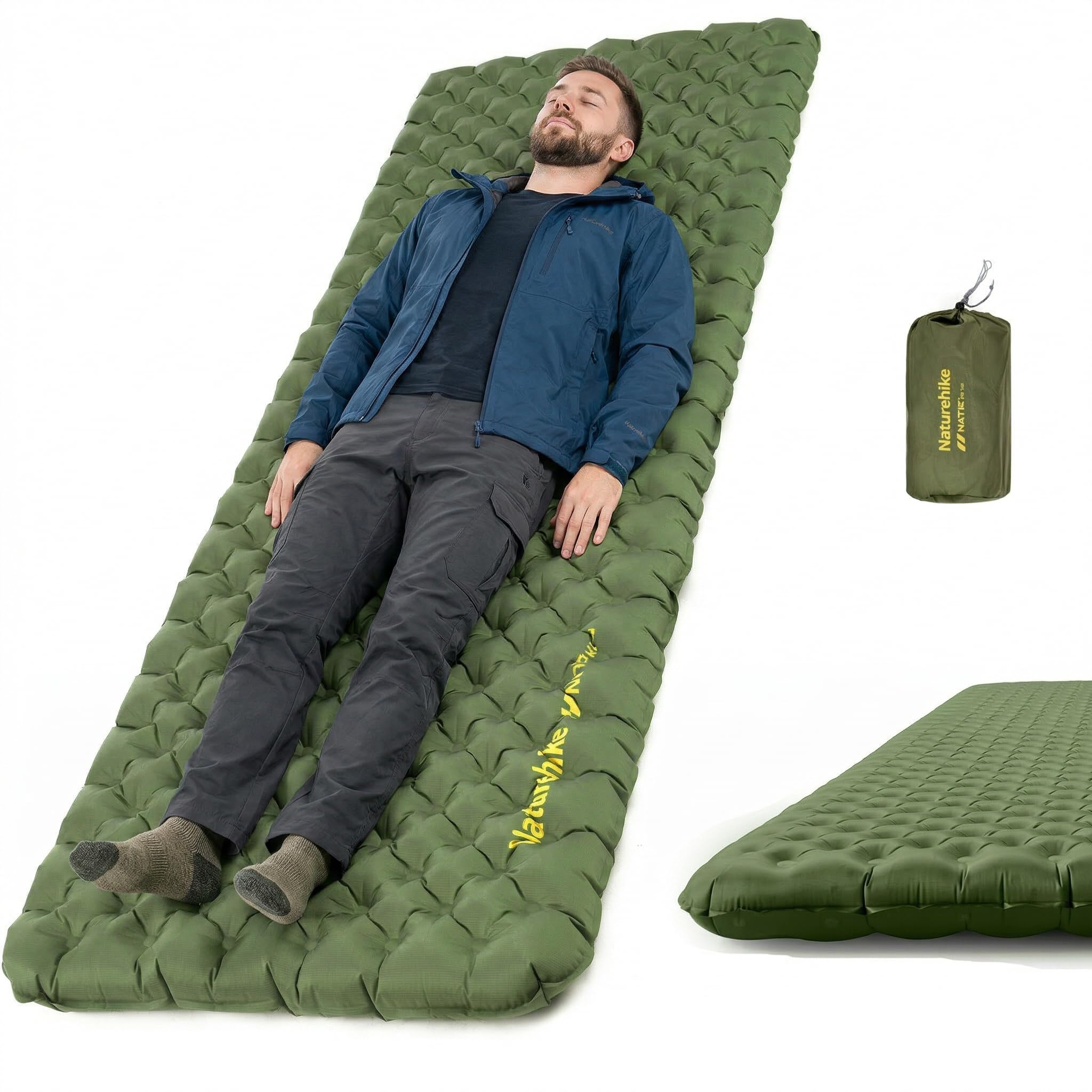
The Naturehike 4.6R offers reliable three-season insulation with the same eight-layer aluminum molded construction as its higher-R sibling. The 4.6 R-value is warm enough for temperatures down to minus 4 degrees Fahrenheit, making it suitable for spring, summer, and fall camping with a buffer for early winter. At 27.2 ounces, it’s heavier than the premium options, but the 8-centimeter (3.2-inch) thickness provides a good balance of comfort and ground clearance for side sleepers.
The punching point structure distributes pressure evenly, preventing the mattress feel that some air pads create. Real-world users report better sleep quality compared to the Sea to Summit Etherlite XT, noting that the pad is comfortable, quiet, and non-slip. The dual-vent valve works well once you get the hang of attaching the inflation bag — some users report the bag’s attachment can be finicky. The green color blends well with natural surroundings, and the pad rolls up to a compact 5.1 by 8.7 inches.
For backpackers looking for a budget-friendly option with genuine insulation, the Naturehike 4.6R provides excellent value. It’s heavier than the premium competition, but its warmth and durability make it a strong choice for shorter trips and car-accessible campsites where weight is less critical.
Why it’s great
- Genuine 4.6 R-value for three-season use
- Even pressure distribution from punching point design
- Compact roll size for easy packing
Good to know
- Heavier at 27.2 ounces
- Inflation bag attachment can be tricky
7. Big Agnes Divide Insulated Sleeping Pad

The Big Agnes Divide is a solid entry-level insulated pad that brings brand reliability to a price-sensitive shopper. The 4.0 R-value uses THERMOLITE insulation and heat-reflective film to provide reliable warmth for three-season camping, and the I-beam construction delivers consistent stability without the bounce of simpler air pads. At 23 ounces for the regular 25-inch-wide version, it’s not ultralight, but the weight is reasonable for the insulation and width provided.
The 3.25-inch thickness with 3.5-inch larger outer chambers cradles the sleeper comfortably without feeling restrictive. The high-volume valves accept the included inflation sack, which makes setup easy, though the sack itself lacks clear instructions. The recycled nylon ripstop fabric feels durable and passes the environmental-conscious check. Real-world owners report that the pad stays inflated overnight, keeps kids warm, and packs down to a manageable 5 by 8 inches. Some note the 20-inch width version feels narrow for broad-shouldered users.
The Divide sits in a mid-range price category that’s lower than the premium Big Agnes Rapide SL but still above budget options. It’s a good choice for new backpackers who want a reliable insulated pad from a trusted brand without the sticker shock of the flagship models.
Why it’s great
- Reputable brand with lifetime warranty
- Quiet fabric with good stability
- Recycled nylon reduces environmental impact
Good to know
- 20-inch width may feel narrow
- Insulation sack lacks clear instructions
8. ONETIGRIS Obsidian Ultralight Sleeping Pad

The ONETIGRIS Obsidian offers a 5.2 R-value in a generously sized 74.4 by 24.8-inch package. The quilted baffle design provides superior comfort over simple horizontal baffle pads — users report it as more comfortable than the Klymit Static V Luxe. The multiple layers of aluminum-coated TPU membranes reflect body heat effectively, and the three-layer construction provides stable support for restless sleepers. At 2.05 pounds, it’s heavier than the ultralight competition, but the extra width and length accommodate taller and broader individuals without feeling cramped.
The included pump system inflates the pad in four to five squeezes, though some users report the pump sack can be cumbersome and prefer using a mini air pump instead. The 20D nylon outer shell resists tears well, but there are isolated reports of durability issues — some pads developed leaks after several nights of use. The repair patches included help extend the pad’s life. The crinkle noise is noticeable when you shift weight but subsides during still sleep — users say it’s quieter than Therm-a-Rest pads of earlier generations.
This pad is best for backpackers who prioritize width and warmth over minimum weight. The 24.8-inch width is a significant advantage for stomach and side sleepers who need room to spread out, and the 5.2 R-value keeps you warm well into the cold season without needing a foam underlay.
Why it’s great
- Generous 24.8-inch width for spacious sleep
- Quilted baffles provide superior comfort
- 5.2 R-value for cold-weather use
Good to know
- Heavier at 2.05 pounds
- Some durability concerns reported
9. Hikenture Camping Sleeping Pad with 6.2 R-Value
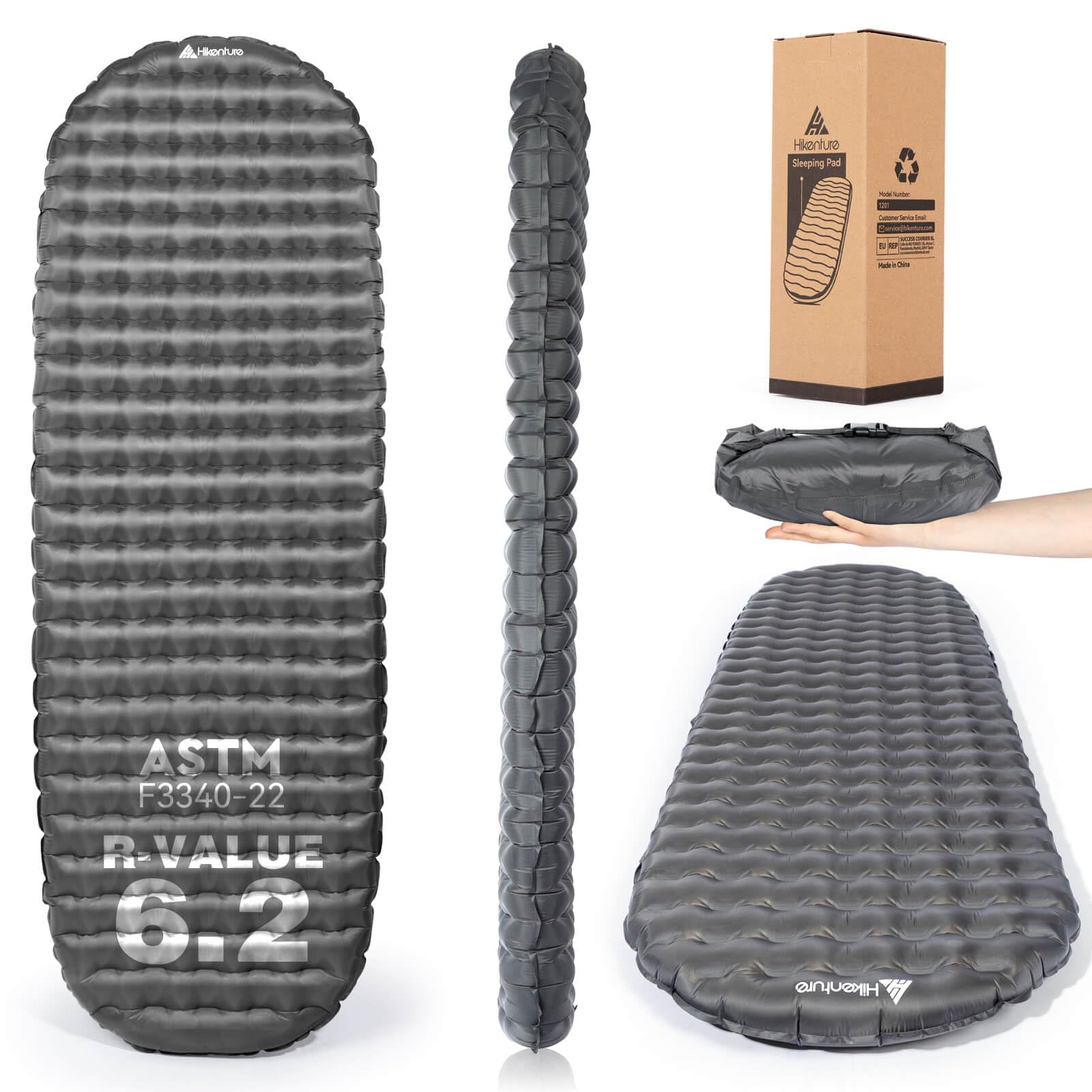
The Hikenture pad delivers an exceptional 6.2 R-value at a budget-friendly price point, making it one of the most affordable options for serious cold-weather camping. The ASTM-tested rating means you can trust it to keep you warm when the mercury drops, and the 3.2-inch thickness provides adequate cushioning for back and stomach sleepers. At 1.53 pounds, it’s competitive on weight for its insulation class, and the 78-inch length fits tall campers without issue.
The 40-liter pump sack inflates the pad in about three squeezes, and the 2-in-1 storage bag design doubles as a place to store extra clothing. The TPU liner is an environmentally friendly choice, and the eco-friendly cardboard packaging reduces waste. Real-world reports confirm the pad holds up impressively against abuse — it survived kids jumping on it and dog nails without leaking, and kept users warm in a snowstorm at 5 degrees Fahrenheit when paired with a zero-degree bag. Some users note a slight crinkling noise from the reflective inner liner, but nothing excessive.
The nozzle is located at the foot end, which can be hard to reach and open one-handed, and there is no rapid deflate valve. For the price, however, the Hikenture offers unbeatable insulation value. It’s best for cold-sleepers on a tight budget who need serious warmth without spending on premium brands.
Why it’s great
- Very high 6.2 ASTM-tested R-value
- Durable construction that withstands rough use
- Excellent warmth-to-price ratio
Good to know
- Valve at foot end is hard to reach one-handed
- Slight crinkle noise from reflective liner
FAQ
What R-value should I look for in a backpacking air mattress?
How do I inflate a backpacking air pad without a pump?
Can I use a backpacking air mattress for car camping?
Final Thoughts: The Verdict
For most users, the best air mattress for backpacking winner is the FLEXTAILGEAR R05 because it combines a 5.6 R-value with a 19.6-ounce weight at a reasonable price. If you want the lightest possible pad, grab the Therm-a-Rest NeoAir Xlite NXT. And for extreme cold-weather warmth on a budget, nothing beats the Naturehike 6.5R.