
Our readers keep the lights on and the weekend projects moving. As an Amazon Associate, I earn from qualifying purchases.
The 35mm focal length sits in a sweet spot that no other prime can touch — wide enough for environmental storytelling, tight enough for intimate portraits. For anyone building a mirrorless system, the decision between f/1.8, f/1.4, and f/1.2 options involves trade-offs in size, autofocus speed, and optical character that directly impact your daily shooting experience.
I’m Rikta — the co-founder and writer behind FitlyFast. I’ve spent countless hours analyzing lens MTF charts, comparing autofocus motor response times, and studying the real-world rendering differences between modern lens coatings to help match shooters with the right glass.
Whether you are a portrait photographer, a street shooter, or a hybrid content creator, choosing the right glass determines the look of your final image. This guide breaks down the top options to help you find your ideal 35mm digital camera lens or body pairing for your specific needs.
How To Choose The Best 35mm Digital Camera
A 35mm prime lens is often the second or third lens a photographer buys, but it can become the most-used piece of glass in the bag. The key is matching the lens’s optical character and build with your camera system and shooting style.
Maximum Aperture: Speed vs Size
The f/1.8 primes offer a compact, lightweight profile ideal for all-day carry and travel. The f/1.4 and f/1.2 options trade bulk and cost for an extra stop of light and shallower depth of field. Note that at f/1.2, focus precision demands more from your camera’s autofocus system — older bodies may struggle to keep eyes sharp wide open.
Autofocus Motor Type
Stepping motors (STM) deliver smooth, near-silent focus for video. HyperVCM and linear motors provide faster racking for action. If you shoot video professionally, check for focus breathing specs — some 35mm primes shift focal length noticeably when pulling focus, which ruins the shot.
Optical Character: Clinical vs Artistic
Some 35mm lenses deliver clinically perfect sharpness with minimal distortion — ideal for architectural and commercial work. Others introduce subtle aberrations, unique bokeh textures, or vintage color rendering that gives portraits a distinct feel. Know which camp you prefer before buying.
Lens Mount Compatibility
L-mount, Nikon Z, Sony E, Canon RF — choose glass designed for your camera’s native mount. Adapters work for manual focus lenses (like the Zeiss Loxia), but native lenses preserve full autofocus speed, in-body stabilization communication, and firmware features like lens corrections.
Quick Comparison
On smaller screens, swipe sideways to see the full table.
| Model | Category | Best For | Key Spec | Amazon |
|---|---|---|---|---|
| Panasonic Lumix S 35mm f/1.8 | Lens | Hybrid L-Mount Shooters | 0.24m min focus | Amazon |
| Nikon NIKKOR Z 35mm f/1.8 S | Lens | Z-Series Sharpness | 5-axis VR compatible | Amazon |
| ZEISS Loxia 35mm f/2 | Lens | Manual Focus Purists | Metal casing, de-click | Amazon |
| VILTROX 35mm f/1.2 FE | Lens | Fast Bokeh on Budget | HyperVCM motor | Amazon |
| Sony a7 III + 28-70mm | Camera Kit | Entry-Level Full-Frame | 24.2MP BSI Sensor | Amazon |
| Panasonic Lumix S5II + 20-60mm | Camera Kit | Hybrid Video/Photo Value | Phase Hybrid AF | Amazon |
| Canon EOS R5 Body | Camera Body | High-Res Action | 45MP Stacked CMOS | Amazon |
| Canon EOS 5D Mark IV Kit | DSLR Kit | Legacy DSLR Workflow | 30.4MP, 61 AF points | Amazon |
| Sony Alpha 7R V Body | Camera Body | Ultra-Resolution Still | 61MP, AI AF Unit | Amazon |
| Nikon Z 8 Body | Camera Body | Pro Hybrid Capture | 45.7MP Stacked Sensor | Amazon |
| Leica Q2 | Compact Camera | Fixed-Lens Travel | 28mm f/1.7 Summilux | Amazon |
In‑Depth Reviews
1. Panasonic LUMIX S 35mm f/1.8

The Panasonic Lumix S 35mm f/1.8 is the quiet workhorse of the L-mount system, designed to complement bodies like the S5II and S9. Its 0.24m minimum focusing distance lets you get remarkably close for environmental portraits and detail shots, while the f/1.8 aperture delivers smooth bokeh without the bulk of faster glass. Multiple reviewers on the S5II report that the autofocus with person detection locks onto eyes reliably even at 1/50 shutter, a testament to the lens’s mechanical precision.
Video shooters will appreciate the minimal focus breathing and smooth aperture control — features that make this lens a favorite for run-and-gun content creation. The dust and splash-resistant build handles tough field conditions, and at 10.4 ounces, it balances well on full-frame bodies. The lack of built-in optical stabilization is a non-issue given Panasonic’s strong in-body stabilization.
Some users note that the lens delivers a “clinically perfect” rendering that lacks the character of older glass. If you prefer lenses with distinct personality — like the spotty bokeh circles some reviewers mention in specific lighting — this may feel too sterile. But for hybrid shooters who need reliable autofocus and consistent results across photo and video, this is a prime choice.
Why it’s great
- Compact, lightweight build for all-day carry
- Minimal focus breathing for video work
- Dust, splash, and freeze-resistant
Good to know
- No built-in lens stabilization
- Clinical rendering may lack character for some
2. Nikon NIKKOR Z 35mm f/1.8 S
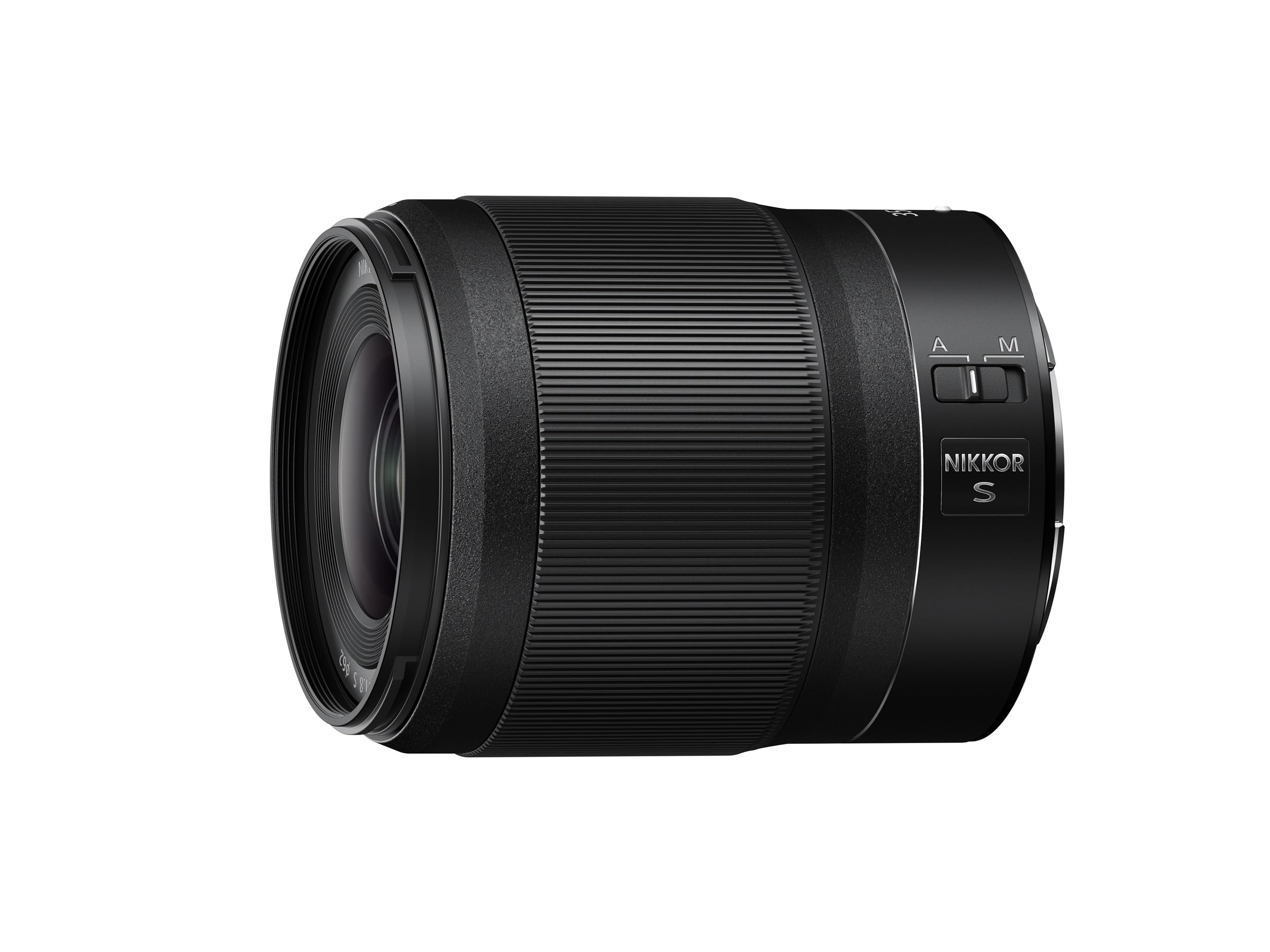
The Nikon NIKKOR Z 35mm f/1.8 S lens sets a high bar for edge-to-edge sharpness on the Z mount. Owners shooting with a Z7 report that it copes with the high-resolution sensor admirably, delivering low distortion and excellent contrast even wide open. The ultra-quiet stepping motor makes it a strong candidate for silent video recording and discreet event photography where shutter noise matters.
The 5-axis Dual Detect Optical VR works in concert with Z-series bodies to enable sharp handheld shots in lower light. One wedding photographer uses this lens paired with the 85mm Z for a two-camera setup — 35mm for group portraits, 85mm for singles and duos — and praises the fast, accurate focus. The f/1.8 aperture is a full stop faster than typical kit zooms, giving you dreamy background separation.
Some shooters find the 35mm focal length a bit wide for their style, especially those accustomed to the tighter field of view of a 50mm. The lens is larger than some competing f/1.8 primes, though its light weight offsets the size. For Nikon Z users who want a sharp, versatile prime for both photography and videography, this S-line lens delivers consistent results.
Why it’s great
- Extreme sharpness from center to edges
- Silent stepping motor for video
- 5-axis VR compatible with Z bodies
Good to know
- Larger than some competing f/1.8 primes
- 35mm may be too wide if you prefer 50mm
3. ZEISS Loxia 35mm f/2

The ZEISS Loxia 35mm f/2 is built for photographers who value the feel of a mechanical connection. The full-metal casing, grippy aperture ring, and buttery-smooth focus ring deliver a tactile experience that modern autofocus lenses cannot replicate. Its de-click feature, activated via a supplied tool, eliminates aperture ring clicks for smooth video exposure transitions — a rare find in a manual lens.
Optically, the Loxia exhibits virtually distortion-free rendering, with beautiful sun stars at f/8 and minimal astigmatism. The 35mm focal length on a Sony a7 series body provides a natural field of view for street photography and environmental portraits. The camera detects the aperture setting automatically for aperture priority mode, preserving metering convenience despite manual control.
The usability quirks are real: the aperture ring sits flush near the body, making it hard to adjust without looking, and the focus ring offers no tactile differentiation from the barrel. Some units show minor aperture stop misalignment. For shooters comfortable with zone focusing and deliberate composition, the Loxia rewards patience. For fast-paced event work, it will slow you down.
Why it’s great
- Precision full-metal build quality
- De-click aperture for smooth video
- Excellent distortion control and sun stars
Good to know
- Flush rings are hard to operate by touch
- Manual focus only — not for fast action
4. VILTROX 35mm f/1.2 FE
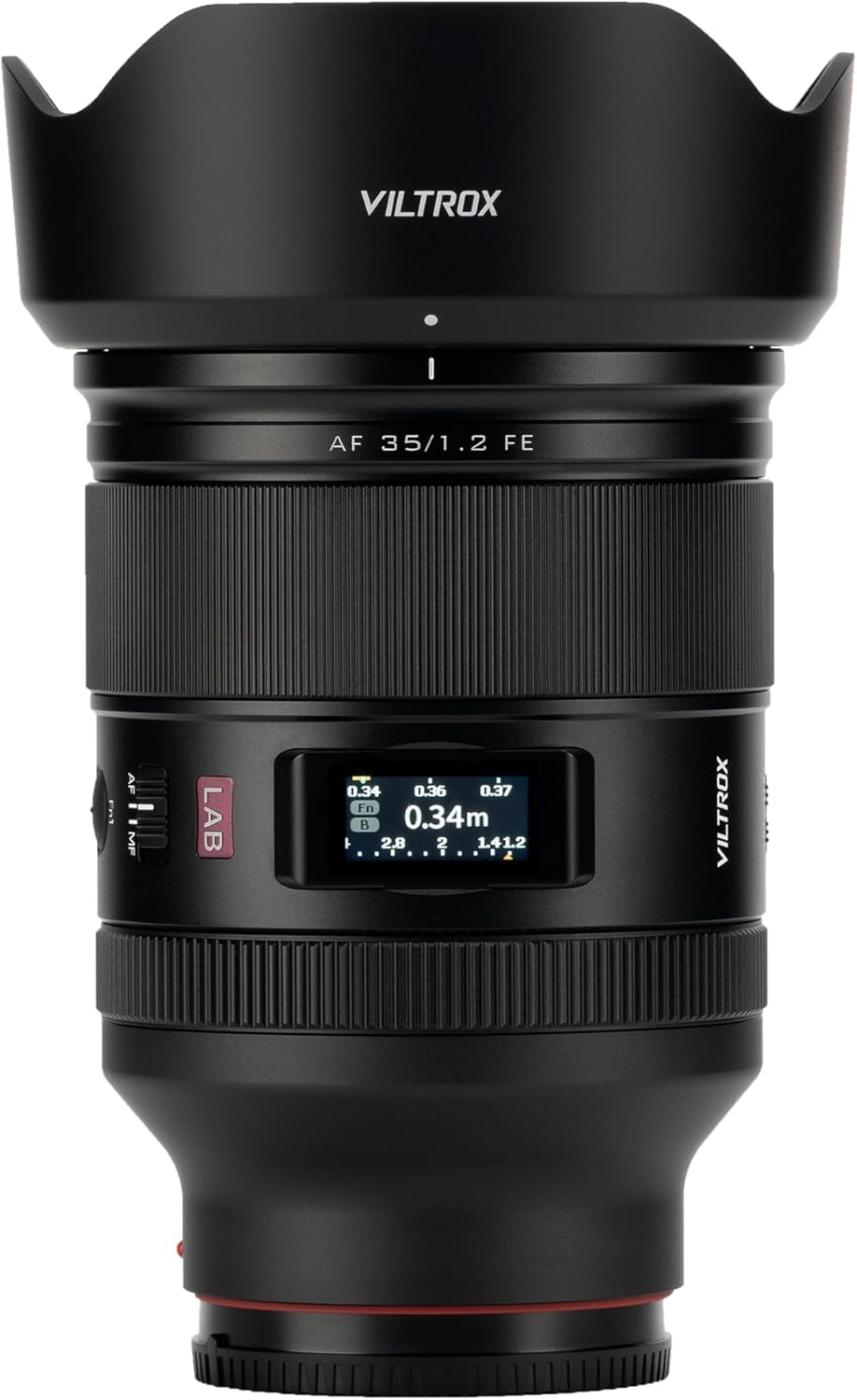
The VILTROX 35mm f/1.2 FE brings an ultra-fast aperture to Sony E-mount shooters at a price that undercuts native f/1.4 options by a significant margin. The HyperVCM autofocus motor delivers noticeably faster racking than conventional STM designs, and reviewers confirm it locks focus accurately and quietly on bodies like the A6700 and A7IV. The magnesium-alloy construction with dust and splash resistance gives it a premium feel.
Optically, the lens uses 5 ED elements and 2 aspherical elements to control chromatic aberration and maintain sharpness corner-to-corner even wide open at f/1.2. The 0.34m minimum focusing distance and 0.17x magnification ratio allow for crisp close-up shots with background separation. The customizable OLED display, dual Fn buttons, and click/de-click aperture ring appeal to advanced shooters who want control without menu diving.
Keep in mind that achieving critical focus at f/1.2 demands a camera with reliable eye AF — older Sony bodies may produce soft results wide open. The lens is also heavier than typical f/1.8 primes, which can unbalance smaller camera bodies. If your camera has strong autofocus and you want the shallowest depth of field available at 35mm, this lens delivers remarkable value.
Why it’s great
- Ultra-fast f/1.2 aperture for low light
- HyperVCM motor for quick, quiet AF
- Weather-sealed magnesium-alloy build
Good to know
- Heavier than typical f/1.8 primes
- Critical focus at f/1.2 requires strong AF body
5. Sony a7 III with 28-70mm Lens

The Sony a7 III kit remains one of the most sensible entry points into full-frame mirrorless photography. The 24.2MP back-illuminated sensor delivers 15 stops of dynamic range and clean images up to ISO 204800, making it a capable low-light performer. The 693 phase-detection AF points cover 93% of the frame, with real-time eye tracking that locks onto subjects reliably for portraits and events.
The included 28-70mm f/3.5-5.6 kit lens provides a versatile zoom range for beginners, but its variable aperture limits low-light performance. Reviewers consistently recommend pairing this body with a 35mm prime for the best image quality — one user notes that “35mm prime lens results are stunning” on this sensor. The excellent battery life, shooting approximately 710 shots per charge, means you can shoot all day without worrying about power.
The menu system has been criticized as complex, though experienced users find the depth of customization worth the learning curve. The kit lens is decent for outdoor daytime shooting but will frustrate you indoors without flash or high ISO. For the price, this body gives you access to Sony’s extensive E-mount ecosystem and full-frame image quality that can grow with your skills.
Why it’s great
- Excellent full-frame sensor and dynamic range
- Fast, reliable autofocus with eye tracking
- Great battery life for all-day shoots
Good to know
- Kit lens is mediocre in low light
- Complex menu system requires learning
6. Panasonic LUMIX S5II with 20-60mm Lens
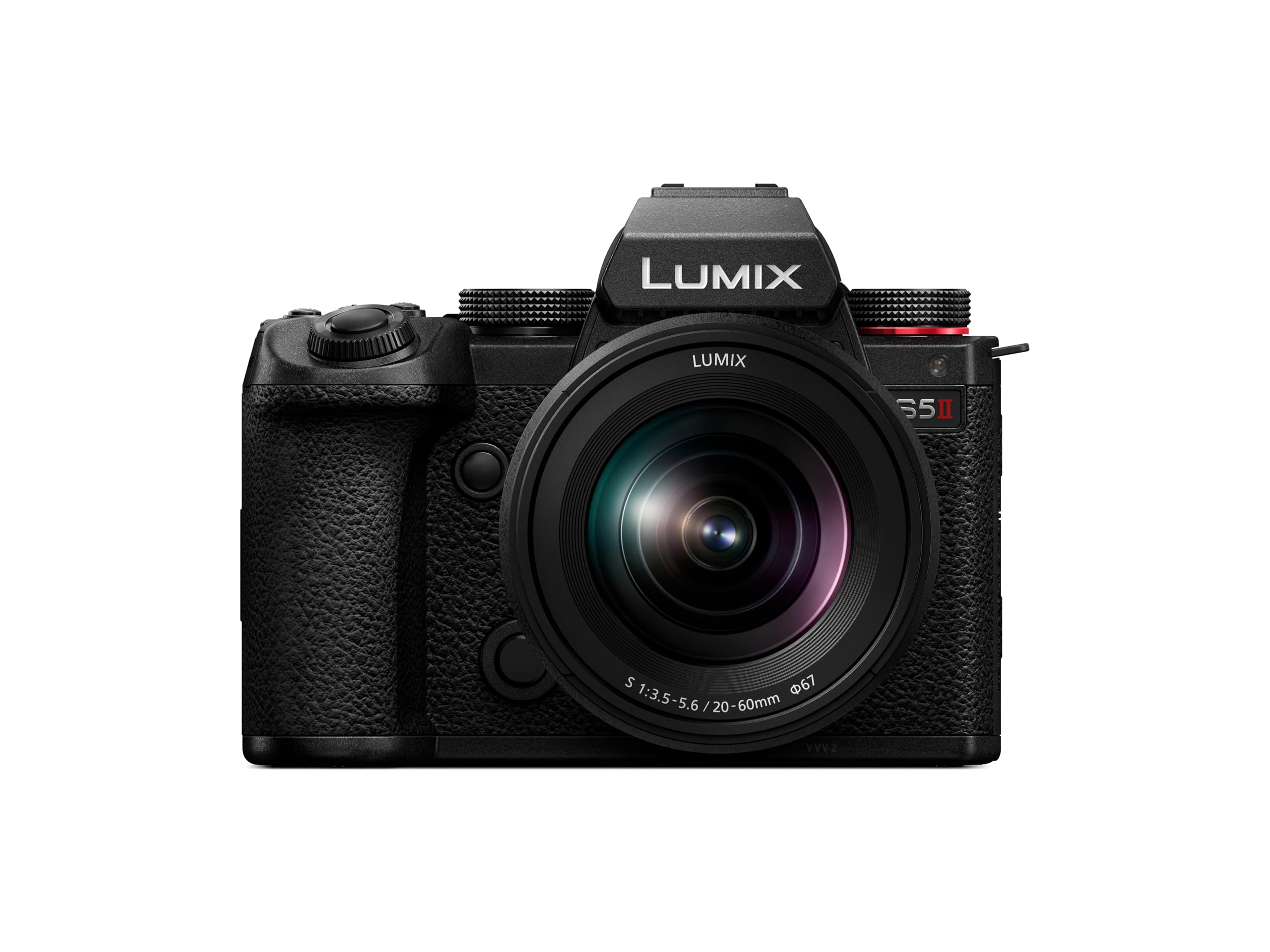
The Panasonic LUMIX S5II addresses the biggest complaint about previous Lumix bodies — autofocus — with its phase hybrid AF system. Combined with the 24.2MP full-frame sensor and Active I.S. technology, this camera delivers gimbal-like stabilization for walking shots without additional gear. The unlimited 4:2:2 10-bit recording and heat dispersion fan make it a serious tool for videographers who need long record times.
The 20-60mm f/3.5-5.6 kit lens offers a useful wide-to-standard range, giving you a 20mm ultra-wide option not found in typical 24-70mm kits. Reviewers praise the accurate colors, intuitive menu, and solid grip. The REAL TIME LUT feature allows in-camera color grading, which is a massive time-saver for content creators who want a specific look straight out of camera.
Battery life is a known weak point — expect to carry spares if shooting video all day. The square body design also scratches more easily than rounded competitors. The L-mount ecosystem continues to grow with excellent Sigma and Leica options, giving you room to expand. If you shoot both video and stills in equal measure, this is one of the most balanced hybrid kits available.
Why it’s great
- Phase hybrid AF solves past Lumix issues
- Active I.S. for smooth handheld video
- Unlimited 4:2:2 10-bit recording
Good to know
- Battery life is below average
- Body scratches more easily than peers
7. Canon EOS R5 Body

The Canon EOS R5 packs a 45-megapixel stacked CMOS sensor and DIGIC X processor into a body that delivers 8K RAW video and 20 fps electronic shutter shooting. The Dual Pixel CMOS AF with 1,053 AF points covers 100% of the frame, utilizing deep learning subject detection for people, animals, and vehicles. The Eye Control AF feature, which lets you select focus points by looking at them, is a genuinely innovative tool for fast-moving portrait work.
In-body image stabilization provides up to 8 stops of correction, making it possible to shoot handheld at surprisingly slow shutter speeds. Reviewers moving from the 5D Mark IV report the EVF is large and bright with minimal lag, and the IBIS is a game-changer for indoor shooting with adapted EF lenses. The 45MP sensor allows extensive cropping without losing detail, ideal for wildlife and landscape photographers.
Early concerns about overheating during 8K recording have been largely overblown in real-world use, though prolonged 8K recording in hot environments will still trigger thermal limits. Battery life is worse than previous Canon DSLRs, and the CFexpress cards required for 8K are expensive. For photographers and videographers who demand the highest resolution and fastest burst rates, the R5 remains a benchmark.
Why it’s great
- 45MP sensor with incredible detail
- 8-stop IBIS for handheld stability
- Eye Control AF for instant focus selection
Good to know
- Battery life worse than previous Canon bodies
- 8K video overheating in hot environments
8. Canon EOS 5D Mark IV with 24-105mm Lens

The Canon EOS 5D Mark IV remains a solid choice for photographers who prefer an optical viewfinder and DSLR ergonomics. Its 30.4MP full-frame sensor provides approximately 12 stops of dynamic range, and the 61-point AF system with 41 cross-type points offers solid coverage for portraits and events. The touchscreen LCD makes menu navigation and focus point selection faster than older models, a significant upgrade from the 5D Mark III.
The included EF 24-105mm f/4L IS II USM lens provides a versatile zoom range with image stabilization, making it a capable all-around lens for travel and events. GPS geotagging is built-in, useful for landscape photographers who want to track shooting locations. Reviewers consistently note that the camera makes even beginners look good — the phrase “makes an apprentice look like a master” appears repeatedly in user feedback.
The 5D Mark IV shows its age in video capabilities, offering only 4K 30p with a significant crop factor. The optical viewfinder, while excellent for stills, gives no real-time exposure preview compared to mirrorless EVFs. For photographers primarily shooting stills who already own Canon EF glass, this camera still delivers professional results at a used price that undercuts modern mirrorless bodies.
Why it’s great
- Excellent optical viewfinder experience
- Built-in GPS for landscape geotagging
- Compatible with extensive EF lens library
Good to know
- 4K video has significant crop factor
- DSLR form factor is bulkier than mirrorless
9. Sony Alpha 7R V Body

The Sony Alpha 7R V is built around a 61-megapixel back-illuminated Exmor R CMOS sensor paired with an AI processing unit that takes Real-time Recognition AF to a new level. The deep learning-based autofocus system identifies and tracks a wide range of subjects with remarkable accuracy, making it a strong choice for wedding and portrait photographers who need reliable eye AF across multiple subjects. The BIONZ XR engine delivers up to 8x faster processing than previous generation.
The 8K 24p and 4K 60p video options add hybrid capability, though the 61MP sensor makes this body best suited for stills. Reviewers praise the improved menu system, articulating LCD, and larger grip compared to the A7R III. The 10 fps burst rate with 14-bit RAW files gives you enough speed for most subjects without overheating. Dual card slots accept CFexpress Type A and SD cards.
The 61MP files are massive — each RAW image takes significant storage space and requires a powerful computer for editing. Low-light performance is excellent up to ISO 3200, but pushing beyond reveals noise earlier than lower-resolution sensors. The higher battery consumption (approximately 25% more than A7R III) means you should carry extras. If you need to crop aggressively or print at large sizes, the 7R V delivers unmatched resolution.
Why it’s great
- 61MP sensor for extreme cropping potential
- AI-based autofocus tracks subjects intelligently
- 8K video with comprehensive codec support
Good to know
- Massive file sizes strain storage and editing
- Higher battery consumption than earlier models
10. Nikon Z 8 Body

The Nikon Z 8 delivers Z9-level performance in a body roughly the size of a D850. Its 45.7MP stacked CMOS sensor and EXPEED 7 processor enable internal 8K/60p and 4K/120p video recording with 12-bit N-RAW and ProRes RAW options. The autofocus system, developed using deep learning, detects subjects down to -9 EV and tracks people, animals, birds, and vehicles with 3D tracking precision.
Still photographers benefit from blazing fast burst rates of 20, 30, 60, and 120 fps with full AF tracking. The Skin Softening and Portrait Impression Balance features simplify portrait work with natural-looking results. Reviewers upgrading from the D850 praise the lighter weight, silent electronic shutter, and sensor shield that protects the sensor during lens changes. The camera uses standard D850 batteries, easing the transition.
The smaller body does have trade-offs: the Z 8 has shorter recording times than the Z9 due to heat dissipation limits, and battery life is power-hungry when shooting at high frame rates. Some users report a steep learning curve due to the complex configuration options. For professionals who need a compact hybrid body that matches Z9 image quality, the Z 8 is a compelling option.
Why it’s great
- Z9-level performance in smaller body
- Deep learning AF tracks diverse subjects
- Internal 8K/60p and 4K/120p recording
Good to know
- Smaller body limits heat dissipation for long video
- Steep learning curve for configuration
11. Leica Q2 Digital Camera

The Leica Q2 is a fixed-lens full-frame compact camera that pairs a 47MP sensor with a Summilux 28mm f/1.7 ASPH prime lens. The fixed wide-angle forces a “shoot now, crop later” approach that many photographers find creatively liberating — the high resolution allows aggressive cropping while retaining excellent detail. The camera is weather-sealed, quiet, and fast, with minimal UI and physical dials that encourage deliberate shooting.
Image quality from the Summilux lens is superb, with beautiful color rendering and clarity that holds up at 16×20 inch prints. The electronic viewfinder is bright and responsive, and the FOTOS app provides reliable wireless image transfer. Reviewers love the compact, pocketable design that makes it genuinely possible to carry a full-frame camera everywhere without a bag.
The fixed 28mm lens is a dealbreaker for anyone who needs versatility — you cannot swap lenses or zoom. Adjustable digital zoom functions but at the cost of resolution. The price sits among the highest in this guide, and some reviewers argue it performs as an expensive point-and-shoot rather than a professional tool. For photographers who value image quality, build, and portability above all else, the Q2 delivers an unmatched carrying experience.
Why it’s great
- Beautiful Summilux optics and color science
- Fully weather-sealed compact body
- 47MP allows heavy cropping
Good to know
- Fixed 28mm lens — no zoom or swap
- Premium price bracket
FAQ
Is a 35mm lens good for portraits?
What is the difference between f/1.8 and f/1.2 in a 35mm lens?
Why choose a 35mm over a 50mm prime lens?
Final Thoughts: The Verdict
For most users, the 35mm digital camera winner is the Panasonic Lumix S 35mm f/1.8 because it combines compact size, excellent video performance, and reliable autofocus at a accessible price point for L-mount shooters. If you want the sharpest 35mm prime for Nikon Z, grab the Nikon NIKKOR Z 35mm f/1.8 S. And for the ultimate in low-light bokeh control on Sony E-mount, nothing beats the VILTROX 35mm f/1.2 FE.