
Our readers keep the lights on and the weekend projects moving. As an Amazon Associate, I earn from qualifying purchases.
That pale, flat sourdough loaf—dense crumb, soft crust—isn’t your starter’s fault. It’s a steam problem. A proper bread oven for sourdough traps the moisture your dough releases, turning it into a high-heat steam bath that transforms starch into a crackling, mahogany crust and forces the crumb to open into irregular, airy pockets. Without this closed environment, your oven spring stalls and the crust sets before the interior has a chance to expand.
I’m Rikta — the co-founder and writer behind FitlyFast. I’ve spent many hours analyzing thermal mass, enamel thickness, dome geometry, and steam retention specs across dozens of models to identify which bread oven designs actually deliver the 450–500°F environment that sourdough demands.
This guide breaks down the seven best options on the market, from entry-level stoneware cloches to dual-loaf cast iron systems, so you can confidently choose the right bread oven for sourdough and never pull a deflated loaf from your kitchen oven again.
How To Choose The Best Bread Oven For Sourdough
A bread oven designed for sourdough must do three things: hold extreme heat (450–500°F), trap steam to delay crust setting, and distribute heat evenly to avoid scorched bottoms. Here’s what to look for before you buy.
Material: Cast Iron vs. Stoneware vs. Ceramic
Cast iron delivers the highest thermal mass and most even heat distribution, which gives you the most reliable oven spring. Enameled cast iron is easier to maintain than raw cast iron because it doesn’t require seasoning. Stoneware and ceramic cloches also perform well—they produce excellent crust texture thanks to their porous surfaces—but they are more fragile and take longer to preheat fully. For pure performance and durability, enameled cast iron is the standard. For traditional artisan crust, high-fired stoneware or ceramic is the classic choice.
Shape and Capacity: Round vs. Oval / Loaf Pan
Round dutch ovens (typically 5–7 quarts) are the most versatile for boules and batards, but the shape matters for scoring and steam management. Oval or loaf-pan shaped bread ovens produce sandwich-style loaves and often have a lower profile, making it easier to load and unload the dough without burning your forearms on a hot rim. If you bake two loaves per batch, a dual-loaf pan or a larger capacity oven saves significant time.
Steam Management: Lid Fit and Enamel Quality
A tight-sealing lid is non-negotiable. Any gap allows steam to escape, which reduces oven spring and yields a thicker, tougher crust. Enamel coating quality also affects long-term performance—thick, smooth enamel resists chipping and makes cleanup effortless. Raw stoneware cloches require you to soak the lid before baking to create steam, while enameled cast iron ovens trap steam naturally from the moisture in the dough itself. Choose the method that fits your workflow.
Quick Comparison
On smaller screens, swipe sideways to see the full table.
| Model | Category | Best For | Key Spec | Amazon |
|---|---|---|---|---|
| Emile Henry Bread Cloche | Ceramic Cloche | Crust-focused artisan boules | High-fired ceramic, 500°F max | Amazon |
| VORRINGARD Enameled Cast Iron | Enameled Cast Iron | All-around sourdough performance | 5 Qt, chip-proof enamel | Amazon |
| Nuovva Double Loaf Pan | Dual-Loaf Cast Iron | Batch baking two loaves at once | 6.4 Qt, two 16.5 cm cavities | Amazon |
| Sassafras Superstone Covered Baker | Stoneware Baker | Oblong loaves with crackly crust | Unglazed interior, 500°F+ safe | Amazon |
| Nuovva Round Enameled Dutch Oven | Enameled Cast Iron | Steam retention at a mid-range price | 6 Qt, domed lid | Amazon |
| Northriver Casting Oval Dutch Oven | Enameled Cast Iron | Sandwich-shaped sourdough loaves | 5 Qt, oval 12″x8″ pan | Amazon |
| Brod & Taylor Sourdough Home | Temperature Controller | Starter maintenance & proofing | 41-122°F range, compact | Amazon |
In‑Depth Reviews
1. Emile Henry Bread Cloche | Charcoal
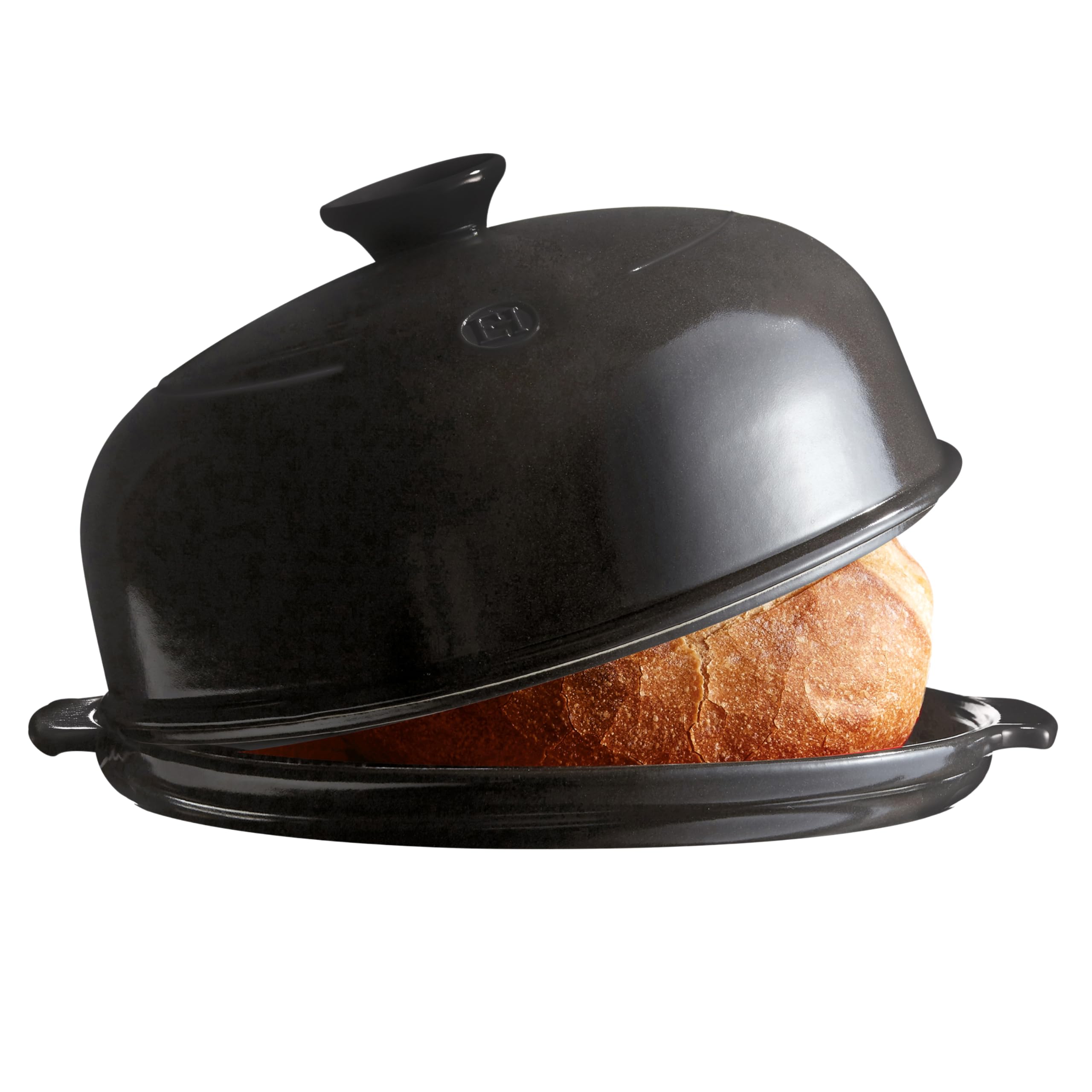
This French-made ceramic cloche uses a bell-shaped lid to trap steam from the baking dough, replicating a steam-injected professional oven without any extra spritzing or water pans. The high-fired ceramic material absorbs moisture slightly during preheat and releases it as steam, producing a thin, brittle crust that shatters when sliced. The base doubles as a proofing vessel, so you can transfer the loaf directly from final rise to the oven without disturbing its shape.
At 6.5 pounds, the cloche is lighter than cast iron options but requires careful handling when preheated—the lid is especially hot and needs a safe surface to rest on when you uncover the loaf mid-bake. The unglazed interior surface can cause the dough to stick if you skip parchment, but once seasoned with use, release improves. It handles 1 to 2 pound loaves made with about 3 cups of flour, which fits the standard home sourdough recipe.
The ten-year warranty speaks to the craftsmanship, and the matte charcoal finish looks elegant on any counter. Reviewers consistently note that this cloche produces “incredible bread results” with a crisp crust and tender crumb, though the preheat time is slightly longer than cast iron. If your priority is bakery-level crust and you don’t mind a slightly more delicate material, this cloche is a top contender.
Why it’s great
- Produces exceptionally thin, crackly crust with high oven spring
- Proof and bake in the same vessel—no final shaping transfer needed
- Backed by a 10-year warranty from a respected French manufacturer
Good to know
- Ceramic is fragile: avoid thermal shock and sudden temperature changes
- Unglazed interior requires parchment or cornmeal to prevent sticking at first
2. VORRINGARD Enameled Cast Iron Sourdough Bread Oven
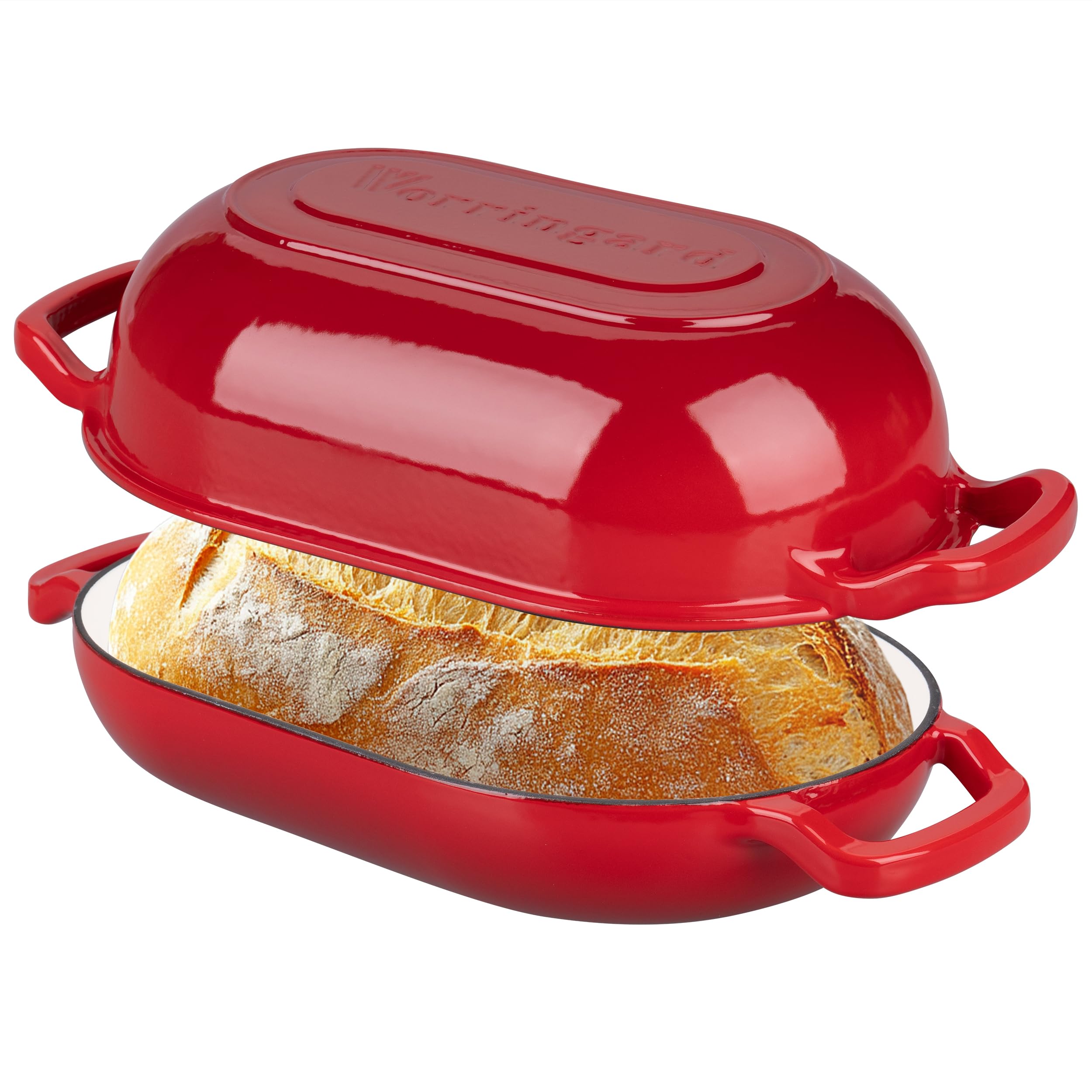
This loaf-pan shaped dutch oven from VORRINGARD is designed specifically for sourdough, with a flat bottom and domed lid that makes loading scored dough much easier than a deep round pot. The thick, chip-resistant enamel coating is noticeably smooth and cleans easily after even the most caramelized loaf. The 5-quart capacity fits standard sandwich-size loaves, and the oval shape gives you more surface area for ear development across the scored face.
User reviews highlight the “perfectly crisp, chewy crust” and “airy interior” that this oven produces every time. The tight-fitting lid seals effectively to trap steam without needing additional ice cubes or water sprays. At 5.73 kilograms (about 12.6 pounds), the cast iron is heavy enough to deliver excellent heat retention and even browning. The side handles make it manageable to lift into a hot oven, though you’ll still need strong oven mitts.
The red gloss enamel is strikingly vibrant and resists staining even after heavy use. A few reviewers mentioned that the first few bakes may need a light oil wipe to condition the surface. If you want a dedicated sourdough loaf oven that delivers consistent results without any guesswork, this is a strong mid-range investment that performs well above its price tier.
Why it’s great
- Flat bottom and domed lid make scoring and loading simple and safe
- Thick, chip-resistant enamel wipes clean without soaking or scrubbing
- Steam retention is exceptional—no extra water required for high oven spring
Good to know
- Avoid metal utensils and abrasive pads to protect the enamel coating
- Not dishwasher safe; hand wash with warm soapy water only
3. Nuovva Double Bread Loaf Pan (Cream)
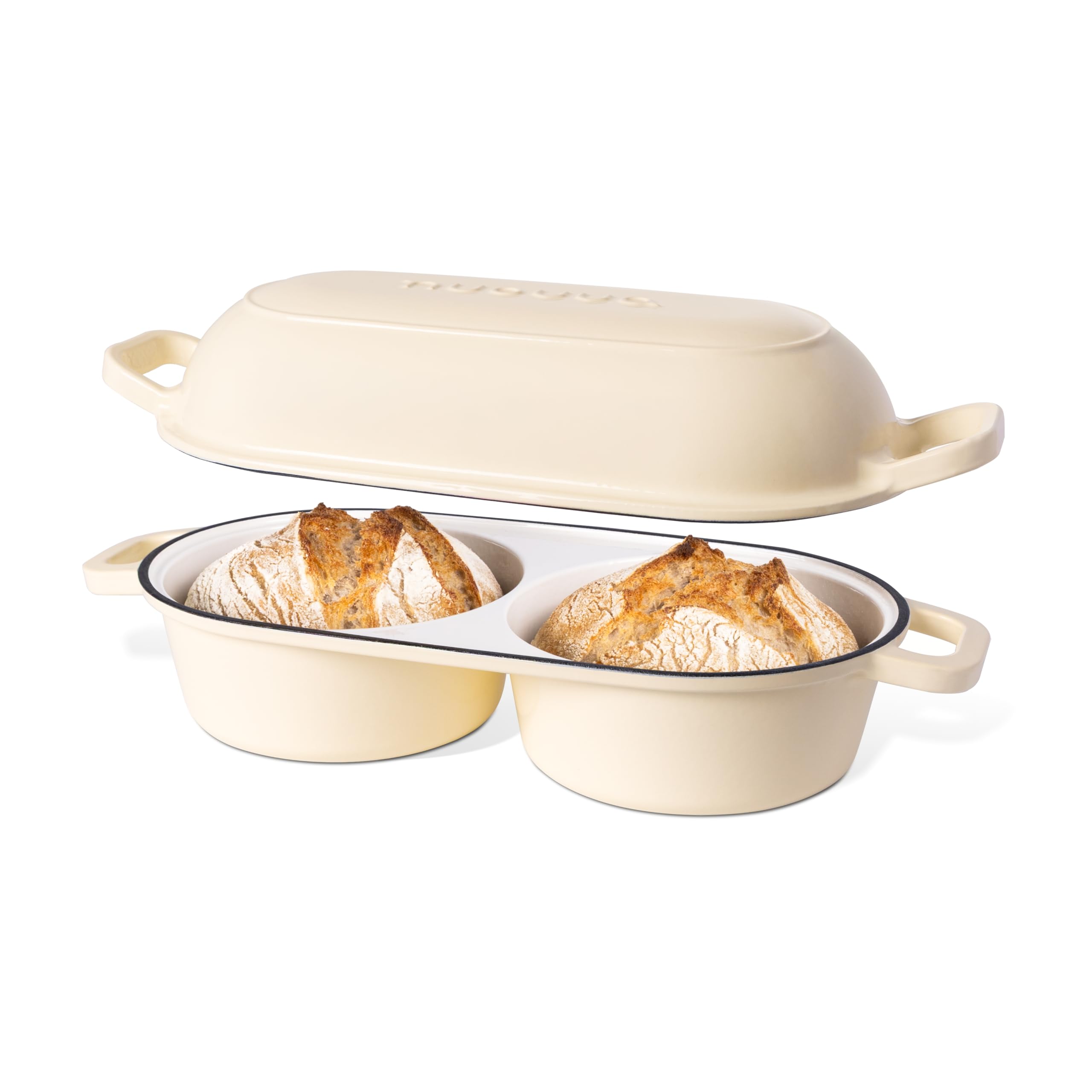
This unusual double-loaf oven from Nuovva gives you two round cavities in one cast iron body, each 16.5 cm in diameter, allowing you to bake two smaller sourdough boules simultaneously. The total capacity is 6.4 quarts, but the divided design means each loaf is roughly half the size of a standard boule—perfect for households that prefer smaller loaves or want to try different recipes side-by-side. The cream enamel finish is smooth, non-reactive, and resists staining.
The self-basting lid traps steam effectively for both loaves, and reviewers report that the oven spring on these smaller bakes is excellent because the enclosed space concentrates steam more efficiently than a single large dutch oven. The lid itself is cast iron and heavy, adding to the thermal mass. Several users noted this is ideal for making sourdough bread bowls for soups, as the smaller diameter creates a perfect bowl shape.
At nearly 15 pounds, this is the heaviest oven on the list, so plan your oven rack placement carefully before preheating. The enamel coating is reinforced and resists chips, but the manufacturer advises hand washing only. If you regularly bake two loaves at a time or want to experiment with smaller boules, this dual-cavity design saves significant time over baking sequentially in a single pot.
Why it’s great
- Bakes two loaves at once in a single preheating cycle—major time saver
- Compact cavities concentrate steam for exceptional oven spring on smaller loaves
- Reinforced enamel coating stands up to frequent use without chipping
Good to know
- Extremely heavy at nearly 15 pounds; ensure your oven rack can support it
- Will not accommodate large single boules over 900g of dough
4. Sassafras Superstone Covered Baker
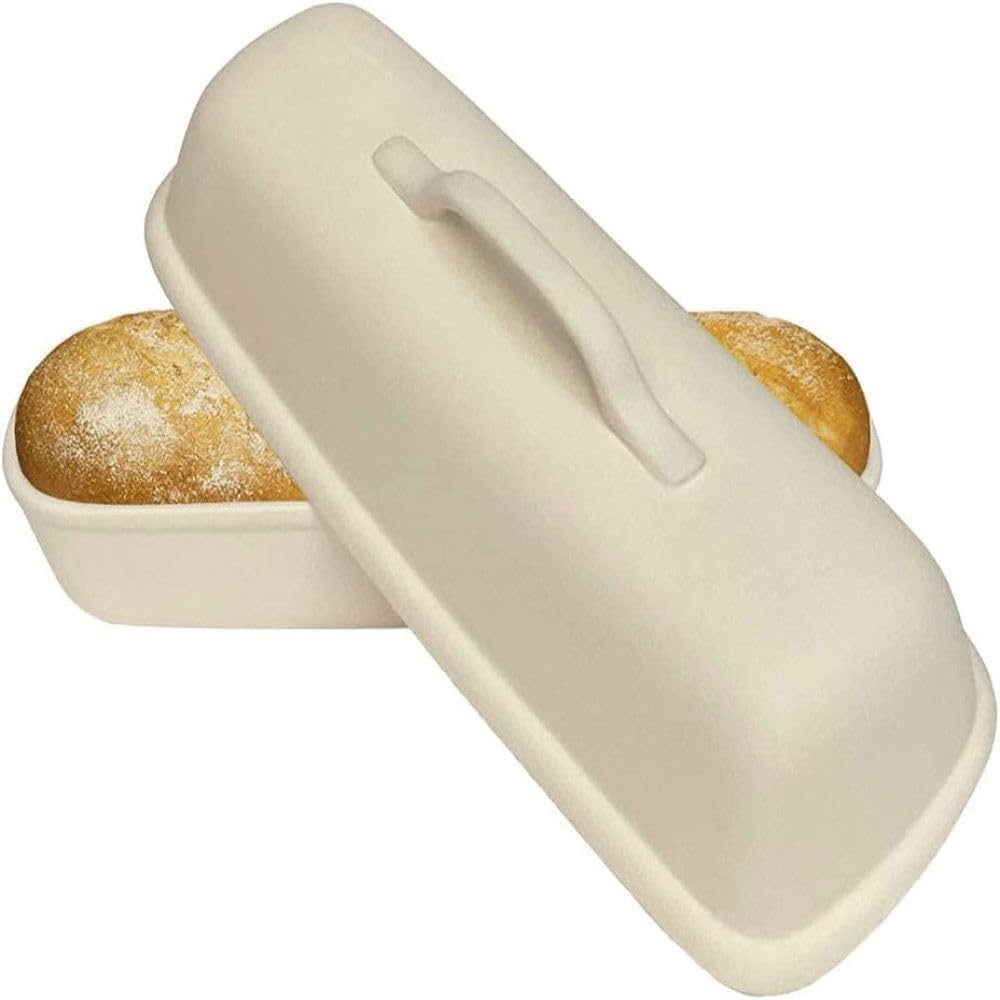
The Sassafras Superstone Covered Baker uses unglazed stoneware to actively wick moisture away from the dough surface during baking, producing the signature crackly crust and light, airy crumb that artisan bakers prize. The bisque-glazed exterior is attractive enough for table service, while the raw interior surface creates the ideal humidity balance: steam from the dough stays trapped under the domed lid, but excess surface moisture is absorbed, preventing a thick, leathery crust.
The oblong shape fits Italian-style loaves up to about 1.5 pounds, which works beautifully for a standard sourdough batard. The manufacturer recommends preheating the baker in a cold oven to avoid thermal shock. Some reviewers suggest soaking the lid in water for 30 minutes before baking to generate additional steam, though the included instructions advise against this. The unglazed surface can stick if not seasoned with oil or lined with parchment, but once conditioned, the release improves significantly.
This stoneware baker is lighter than cast iron and dishwasher safe, making cleanup easier. The handle on the lid is helpful, though the base lacks side handles, so lifting a hot 450°F stoneware base requires careful mitt placement. A few units arrived with minor chips due to packaging, but the overall craftsmanship and consistent baking results make this a favorite among sourdough enthusiasts who want traditional crust texture.
Why it’s great
- Unglazed stoneware pulls moisture for a thin, crackling crust
- Eliminates need for steam pans or spritzing during the bake
- Lighter than cast iron and dishwasher safe for easy cleaning
Good to know
- Must be preheated in a cold oven to prevent thermal cracking
- Unglazed interior may stick during the first few uses without oil or parchment
5. Nuovva Round Enameled Dutch Oven (Dark Blue)
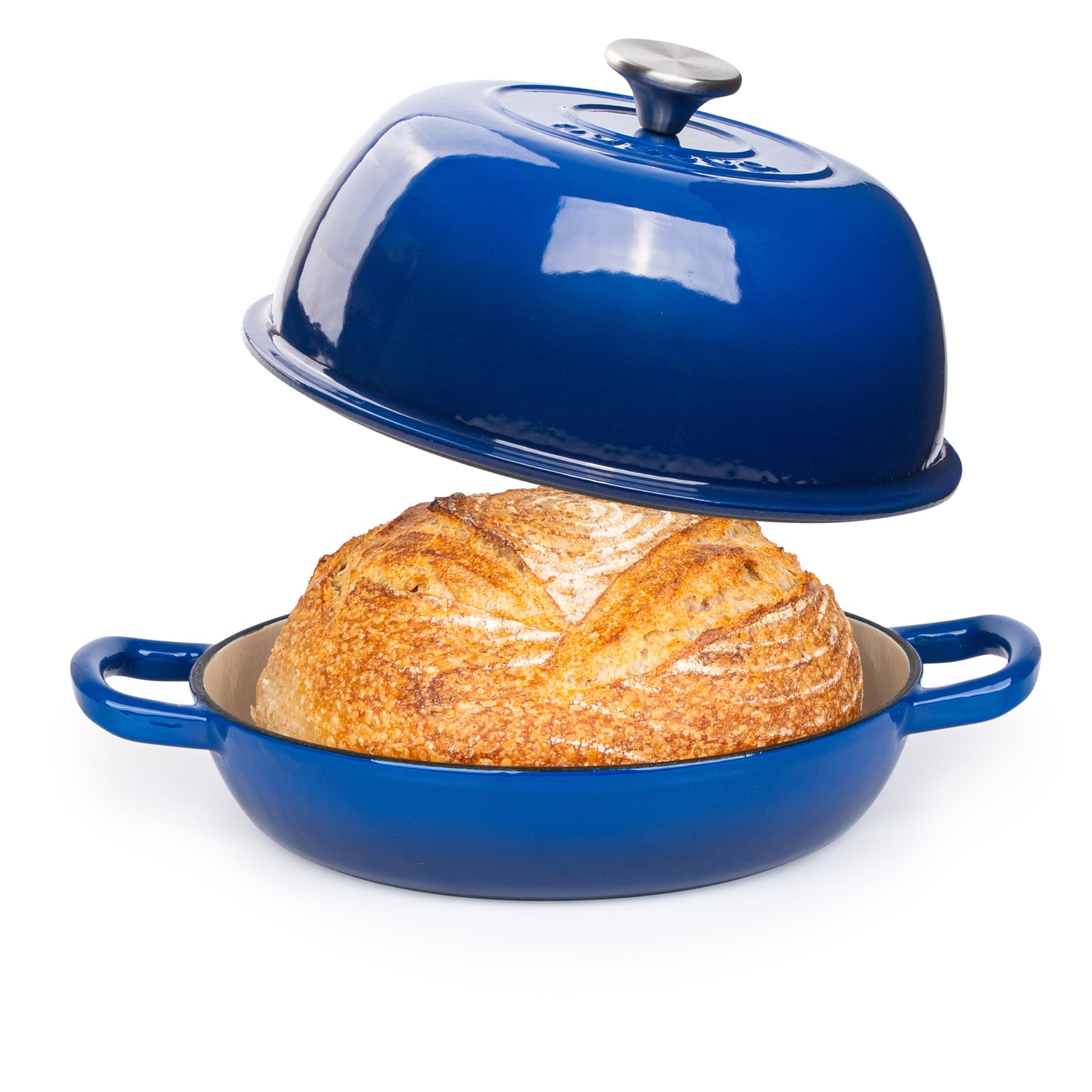
This round 6-quart enameled dutch oven in dark blue offers a compelling balance of size, performance, and affordability. The domed lid creates generous headroom for tall loaves, and the heavy cast iron construction ensures even heating across the entire pot surface. The enamel finish is non-reactive and resists rust and scratches, making it safe for all dough types and easy to maintain without seasoning.
Reviewers consistently mention that this dutch oven “retains steam perfectly for high, crispy sourdough loaves without extra water or towels.” The fit is tight enough that moisture stays sealed inside, and the 6-quart capacity accommodates large boules (up to 2 pounds of dough) with room to expand. The lower sides compared to a traditional deep dutch oven make loading and removing the loaf safer—you’re less likely to burn your forearm on the rim.
The dark blue enamel is vibrant and resists staining, though the manufacturer recommends hand washing and avoiding the dishwasher. The pot is heavy at about 12.6 pounds, but the weight is typical for this capacity and material. If you want a straightforward, no-frills round dutch oven that performs reliably for sourdough without spending for a premium brand name, this Nuovva model delivers consistent results at a reasonable cost.
Why it’s great
- Large 6-quart capacity fits sizable boules with plenty of headroom for spring
- Lower side profile compared to traditional dutch ovens makes loading safer
- Excellent steam retention—no additional water or spritzing needed
Good to know
- Not dishwasher safe; hand washing is required to preserve enamel
- Heavy at over 12 pounds, requires sturdy oven mitts and careful handling
6. Northriver Casting Oval Enameled Dutch Oven
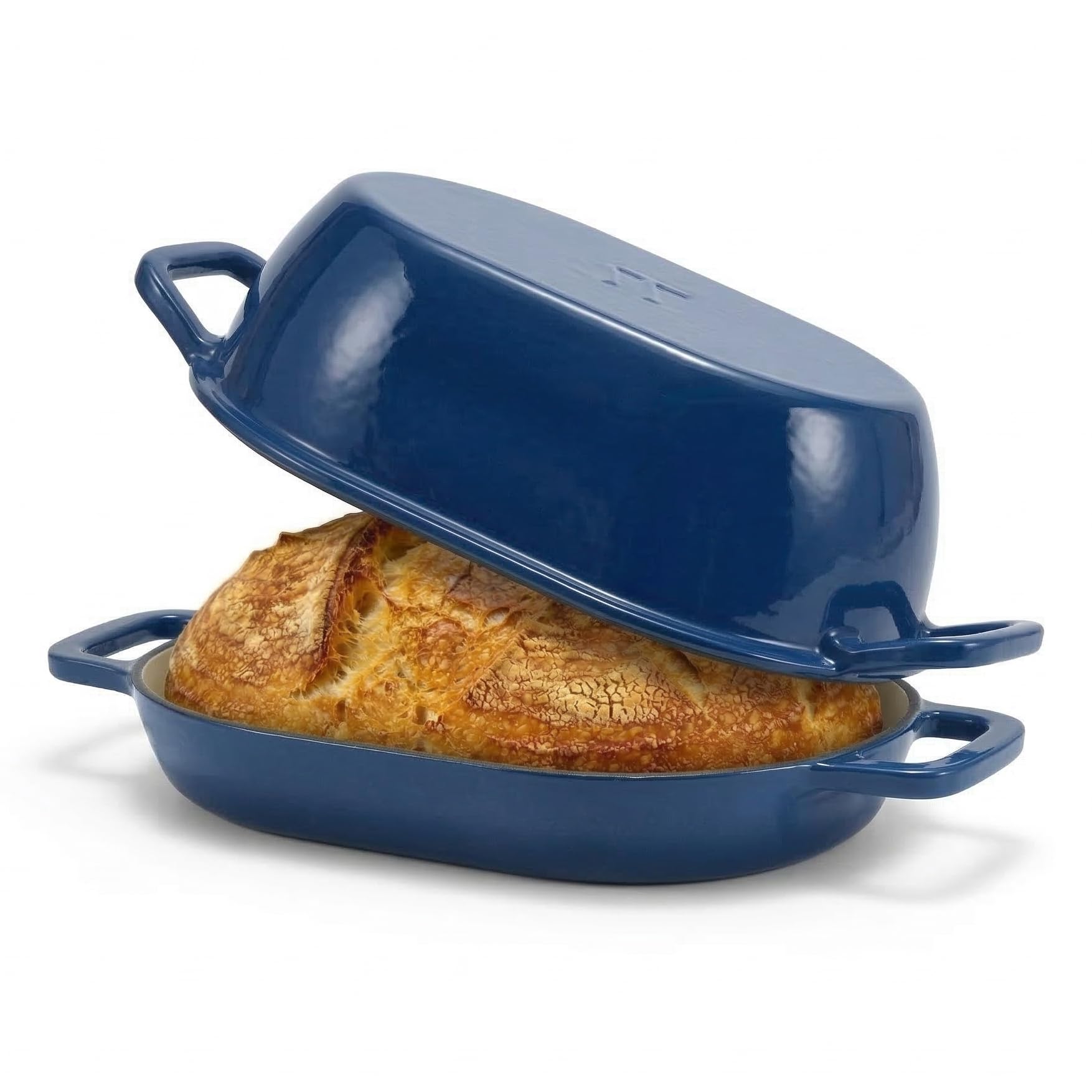
This 5-quart oval dutch oven from Northriver Casting is designed for bakers who prefer sandwich-shaped sourdough loaves over round boules. The 12-by-8-inch oval creates a natural steam chamber with the tight-fitting lid, giving you tall loaves with golden, crackly crusts and even crumb structure. The two-piece design can be used together as a closed oven or split into separate shallow and deep pans for cooking other meals.
The enamel coating is smooth and non-stick, though a few reviewers noted that the first bake required parchment paper to prevent the dough from adhering to the bottom. Once conditioned with a light olive oil wipe, the release improves significantly. The cast iron core ensures even heating, and the oven is safe up to 500°F on all cooktops including induction. Users with gluten-free recipes reported especially good results, as the enclosed steam environment helps gluten-free doughs rise without collapsing.
At under 7 pounds, this oval dutch oven is lighter than many round alternatives, making it easier to handle when hot. The oval shape also fits better in smaller ovens alongside a second pan. The blue enamel finish is attractive, though some users wished the lid handle were larger for easier grip with oven mitts. For bakers who want classic sandwich-style sourdough loaves without the weight of a full-size round dutch oven, this is a practical entry point.
Why it’s great
- Oval shape produces sandwich-style loaves with even crumb and tall rise
- Lighter weight than round dutch ovens—easier to handle when hot
- Versatile two-piece design works as both a bread oven and serving dish
Good to know
- Enamel is not fully non-stick early on; use parchment for the first several bakes
- Lid handle could be larger for safer gripping with thick oven mitts
7. Brod & Taylor Sourdough Home

The Brod & Taylor Sourdough Home is not a baking vessel—it is a temperature-controlled cabinet that keeps your sourdough starter at the optimal temperature for fermentation or cold storage. This unit heats and cools, so you can maintain a steady 45°F for weekly feedings or ramp up to 80°F for vigorous daily bakes. By controlling the starter’s environment, you eliminate sluggish fermentation in winter and over-proofing in summer, which directly improves loaf volume and crumb complexity.
The internal space fits a single 1-quart or 1-liter jar, with inside dimensions of 7.5 by 5.125 by 5.5 inches. The sealed door holds temperature stable, and the digital controls let you dial in exact settings between 41°F and 122°F. Many reviewers call this a “game changer” because it allows them to feed their starter on a 5- to 6-day schedule even in a cold house, keeping the starter active without daily attention. The compact footprint (11 by 8 by 10 inches) fits easily on a countertop.
It is important to understand that this product complements a bread oven—it doesn’t replace one. You still need a dutch oven or cloche to bake in. But for bakers who struggle with starter consistency, temperature-related failed rises, or who want to bake on a flexible schedule, the Sourdough Home solves the variable that kitchen ambient temperature introduces. The price reflects its specialized function, but for dedicated sourdough bakers, the investment often pays for itself in reduced wasted flour and more reliable results.
Why it’s great
- Heats and cools to maintain precise starter temperature year-round
- Extends feeding intervals to 5-6 days without losing starter activity
- Stable temperatures improve loaf rise, crumb texture, and flavor consistency
Good to know
- Does not bake bread—it is a starter maintenance and proofing tool only
- Fits only a single 1-quart jar; no space for multiple vessels or large batches
FAQ
Can I use a regular dutch oven for sourdough bread?
What is the best temperature to bake sourdough in a bread oven?
Do I need to preheat a stoneware bread oven differently than cast iron?
How do I prevent my sourdough from sticking to the bread oven?
Can I bake two loaves at once in a single bread oven?
Final Thoughts: The Verdict
For most users, the bread oven for sourdough winner is the VORRINGARD Enameled Cast Iron Sourdough Bread Oven because it combines thick, chip-proof enamel with an ideal loaf-pan shape and exceptional steam retention at a mid-range price. If you prioritize a thin, crackling crust and prefer traditional stoneware, grab the Sassafras Superstone Covered Baker. And for batch bakers who want two loaves done in one heat cycle, nothing beats the Nuovva Double Loaf Pan.