
Our readers keep the lights on and the weekend projects moving. As an Amazon Associate, I earn from qualifying purchases.
An amplifier is the soul of your system, either breathing life into every note or flattening the dynamic range into a lifeless wall of noise. Choosing a unit with a low noise floor, high current delivery, and a transparent signal path is not a luxury—it is the only way your high-end speakers will ever show you what they are truly capable of.
I’m Rikta — the co-founder and writer behind FitlyFast. I have spent months analyzing the sonic signature, build topology, and real-world measured performance of over a dozen different amplifier architectures to bring you this guide.
After filtering for THD+N figures, power bandwidth, and damping factor consistency, I present the most thoroughly vetted collection of the best audiophile power amplifier choices available on the market today.
How To Choose The Best Audiophile Power Amplifier
An amplifier that measures well but sounds sterile is a common trap. The goal is a circuit design that offers both exceptional measured performance—low noise, wide bandwidth, high damping factor—and a musical, engaging presentation that does not fatigue the listener over long sessions.
Power Topology: Class A/B vs. Class D vs. Tube
Class A/B amplifiers offer a balance of linearity and efficiency, typically using a robust toroidal transformer and large heat sinks to deliver high bias current. This design is favored by purists for its natural, liquid sound and low crossover distortion. Modern Class D amplifiers, such as those using GaN FETs or advanced feedback loops like PFFB, can approach Class A/B linearity while running much cooler and lighter. Tube amplifiers (single-ended or push-pull) produce even-order harmonic distortion that the ear interprets as warmth and richness, but they demand high-sensitivity speakers (above 90 dB) to reach satisfying volume levels.
Damping Factor and Current Delivery
The damping factor describes the amplifier’s ability to control the speaker cone’s motion after the signal stops. A high damping factor (above 200) yields tight, authoritative bass, especially with low-impedance speakers. Equally important is the amplifier’s ability to deliver high current into difficult loads—an amp rated for 4 ohm operation with a high current capacity will drive demanding speakers without strain or distortion.
Noise Floor and Signal Path Purity
A truly transparent amplifier reveals micro-details without adding grit or hiss. Look for a signal-to-noise ratio (SNR) above 105 dB, and check for the use of a fully discrete output stage rather than integrated op-amps. A star-ground layout and separate physical sections for the power supply and audio circuitry dramatically reduce hum and crosstalk.
Connectivity and System Integration
Balanced XLR inputs reject common-mode noise over long cable runs, making them essential for a clean signal path in a high-end system. A preamp output or subwoofer output, along with a 12-volt trigger for remote power, are practical features that elevate the user experience. For streaming, integrated Wi-Fi, HDMI ARC, and support for high-resolution codecs like LDAC or aptX HD ensure the amplifier remains the center of a modern system.
Quick Comparison
On smaller screens, swipe sideways to see the full table.
| Model | Category | Best For | Key Spec | Amazon |
|---|---|---|---|---|
| WiiM Amp Ultra | Streaming Amp | All-in-one streaming | 100W, -106 dB THD+N | Amazon |
| Denon PMA-600NE | Integrated Amp | Analog purity | 70W/4 ohm, AHC circuit | Amazon |
| Marantz PM6007 | Integrated Amp | Toroidal clean sound | 45W/8 ohm, 60W/4 ohm | Amazon |
| FiiO K17 | DAC/Amp | Desktop high-res | 4000mW+4000mW bal. | Amazon |
| Marantz Model M1 | Streaming Amp | Multi-room/streaming | 100W/ch, MMDF filter | Amazon |
| OSD Nero HTA7200 | Multi-Channel Amp | High-power home theater | 7x210W/4 ohm, 110 dB | Amazon |
| Monolith 2ch Amp | Power Amp | Reference power stage | 2x200W/8 ohm, 120 dB | Amazon |
| Yamaha A-S1200 | Integrated Amp | Pure music reproduction | 240W, floating balanced | Amazon |
| Yamaha R-N2000A | Network Receiver | Network HiFi hub | ESS ES9026PRO DAC | Amazon |
| REISONG A50 MKIII | Tube Amp | Single-ended 300B warmth | 7.6W, 300B tubes | Amazon |
| Willsenton R8 | Tube Integrated | KT88 power tube | 45W, KT88/EL34 swap | Amazon |
| BOSS Katana Artist | Guitar Amp | Guitar practice/gig | 100W, 12″ Waza spkr. | Amazon |
| Klipsch RP Subwoofer | Subwoofer | Deep bass extension | 12″, 28Hz-120Hz | Amazon |
In‑Depth Reviews
1. WiiM Amp Ultra

The WiiM Amp Ultra delivers 100 watts per channel of clean, low-distortion power measured at -106 dB THD+N, built around an ESS SABRE ES9039Q2M DAC and dual TI TPA3255 amplifiers. The inclusion of a 3.5-inch touchscreen and built-in RoomFit room correction EQ transforms this compact unit into a genuinely flexible hub for both music and home theater. It powers up to four speakers with ease and includes Wi-Fi 6 and Bluetooth 5.3 with LE Audio for rock-solid streaming.
In real-world listening, the Ultra provided a dramatically cleaner and more dynamic presentation compared to older AVRs. The bass management and subwoofer output are precise, and the auto input switching simplifies daily use. The unit runs cooler than most Class AB amps of similar rated output. Vocals and woodwinds came through with studio-like clarity, while the piano reproduction sparkled with air and detail.
The only notable omission is the lack of AirPlay support, which may affect Apple-centric users. The app-based control is extensive, offering per-source EQ, presets, and volume limits. For those seeking a modern, all-in-one streaming amplifier that rivals separates, the WiiM Amp Ultra sets a new benchmark at its price point.
Why it’s great
- Very low THD+N for clean dynamic range
- Integrated RoomFit EQ and touchscreen
- Supports high-res streaming up to 24-bit/192kHz
Good to know
- No AirPlay support
- Bluetooth scanning can have a short delay
2. Denon PMA-600NE

The Denon PMA-600NE is a 70-watt integrated amplifier that uses Denon’s Advanced High Current (AHC) push-pull circuit to balance power and detail. Its divided circuitry design allows you to disengage the digital section, turning off Bluetooth for a purer analog signal path. The built-in DAC supports optical and coaxial inputs, while the phono input handles moving magnet cartridges directly.
Listeners describe the PMA-600NE’s sound as warm and tube-like, with excellent treble clarity and tighter bass than many receivers at similar wattage. The subwoofer output integrates seamlessly, and the headphone output drives high-impedance cans like 300-ohm models without strain. Its compact, vibration-resistant chassis keeps the signal clean at all volume levels.
The analog-only Source Direct mode bypasses tone controls for the most transparent signal. Some users note that the relay clicks during input switching and the front LED indicators are dim, but these are minor complaints against a unit that delivers such musical engagement. It is a strong choice for those building a refined, budget-conscious two-channel system.
Why it’s great
- Analog Mode eliminates digital noise
- Built-in DAC and phono preamp
- Powerful and warm sonic character
Good to know
- Relay clicks during input changes
- Lacks a dedicated loudness control
3. Marantz PM6007

The Marantz PM6007 continues the brand’s legacy of musicality, offering 45 watts per channel into 8 ohms and 60 watts into 4 ohms. It features a large toroidal transformer that delivers clean, stable power, resulting in a black background with excellent channel separation. The built-in phono stage handles moving magnet cartridges, and the high current output ensures dynamic swings are rendered without compression.
When paired with bookshelf speakers like the Q Acoustics 3010i or floor-standing designs, the PM6007 reveals a forward, spacious soundstage that brings vocals and instruments to life. Users upgrading from budget receivers often report a night-and-day difference in clarity and presence. The toroidal transformer design contributes to the low noise floor and immediate transient response.
Its power output is modest compared to some Class D competitors, so pairing with high-sensitivity speakers is beneficial. The remote is functional but basic, and the unit lacks digital inputs beyond optical, but for pure analog reproduction, the PM6007 stands tall as a refined, musical integrated amplifier.
Why it’s great
- Toroidal transformer for clean analog power
- Excellent channel separation and soundstage
- Built-in phono stage for vinyl enthusiasts
Good to know
- Limited digital inputs
- Power output modest for insensitive speakers
4. FiiO K17

The FiiO K17 is a desktop DAC and headphone amplifier that uses an AKM flagship DAC combination with AK4191 and dual AK4499EX chips in a fully balanced architecture. Its discrete output stage, built around complementary ON Semiconductor transistors, delivers a massive balanced output of 4000mW per channel, effortlessly driving both planar magnetic headphones and high-impedance dynamic drivers. The unit also includes a professional 31-band PEQ, MQA decoding, and support for DSD512 and 32-bit/768kHz PCM.
In practice, the K17 transforms headphones like the ZMF Atrium, revealing previously hidden detail and a black noise floor that allows micro-dynamics to shine. The LCD touchscreen and five control knobs provide intuitive navigation, while the remote adds convenience for long listening sessions. Roon Ready, AirPlay, and LDAC Bluetooth support make it a versatile streaming hub.
Some early units experienced a left channel popping issue that was promptly addressed by FiiO’s support, and the PEQ interface on Mac can be slightly finicky. However, once dialed in, the K17 offers a sonic purity that rivals much more expensive separates. For the desktop audiophile seeking an all-in-one powerhouse, the K17 is a top-tier choice.
Why it’s great
- High-current discrete output stage
- Professional 31-band PEQ for tailoring
- Supports DSD512 and full MQA
Good to know
- Early QC issues reported with balanced output
- PEQ adjustment on Mac can be complex
5. Marantz Model M1

The Marantz Model M1 is a compact wireless streaming amplifier that delivers 100 watts per channel using Marantz’s proprietary MMDF digital filtering technology, designed to reveal natural detail and tonal purity. It includes an HDMI ARC input for seamless TV connection, a subwoofer output, and full integration with the HEOS multi-room ecosystem. The diminutive size—just 9.4 inches wide—allows it to fit into any living space without sacrifice.
When paired with speakers like the KEF R3 Meta, the M1 sounded less fatiguing and more engaging than competitive Class D streaming amps, according to direct comparisons. The MMDF filtering creates a spacious, non-fatiguing presentation that works equally well for music and home theater. The HEOS app provides reliable streaming from services like TIDAL and Qobuz, including virtual surround mode for enhanced immersion.
The optional Dirac Live upgrade dramatically improves room correction over the built-in EQ, but the base HEOS app can feel slower than competitors. At its regular price, the value is strong, and the M1 justifies its position as a premium, elegant streaming solution. Users seeking a simple, high-performance hub for both TV and music should consider the M1 a top contender.
Why it’s great
- MMDF filtering for natural tonality
- HDMI ARC for TV integration
- Optional Dirac Live room correction
Good to know
- HEOS app interface could be faster
- Premium price for the feature set
6. OSD Nero HTA7200

The OSD Nero HTA7200 is a seven-channel Class AB power amplifier delivering 210 watts per channel into 4 ohms with all channels driven simultaneously. It features balanced XLR and RCA inputs for flexible integration, along with a 12-volt trigger for automated system power. The rated signal-to-noise ratio of 110 dB at full power ensures a clean, black background even at reference listening levels.
In home theater setups, the HTA7200 drives speakers 9 dB louder than typical AVRs without entering thermal shutdown, providing effortless headroom for dynamic soundtracks. The build quality is tank-like at 71 pounds, with large toroidal transformers and generous heat sinks. Users report flawless performance at high output, with zero audible distortion or noise.
The only real drawback is its size and weight, which require a dedicated rack or sturdy shelf. The lack of a dedicated trigger toggle can be a minor inconvenience for some. But for those seeking a high-current, multi-channel power amplifier that delivers reference-grade dynamics, the HTA7200 is a fantastic value compared to similarly specified audiophile brands.
Why it’s great
- High current Class AB with 210W per channel
- Balanced XLR inputs for clean signal
- Excellent build quality with no distortion
Good to know
- Very heavy at 71 pounds
- Trigger toggle function could be more accessible
7. Monolith 2ch Stereo Power Amplifier

The Monolith two-channel amplifier from Monoprice is a no-compromise Class AB design that delivers a true 200 watts per channel into 8 ohms with all channels driven across the full 20Hz-20kHz bandwidth. The absence of current limiting and protection circuitry in the signal path means the amplifier never restricts instantaneous current delivery, making it ideal for low-impedance or highly reactive speaker loads. The signal-to-noise ratio exceeds 120 dB, providing an incredibly clean and transparent window into the recording.
Users driving demanding 4-ohm, 86 dB sensitivity speakers note that the Monolith easily outperformed competitors in its price class, offering a wider soundstage and more natural dynamics. The toroidal transformer and massive heat sinks keep the unit running cool even under sustained high-output conditions. The 12-volt trigger and balanced XLR inputs integrate seamlessly into a high-end system.
The primary concern is quality control: a small number of users have reported humming or complete unit failure, which Monoprice handles through replacement rather than repair. The unit is also very heavy at 48 pounds. However, for its sheer power delivery and audiophile-grade resolution, the Monolith 2ch is a reference-level amplifier that competes with units costing multiples more.
Why it’s great
- True 200W/ch across full bandwidth
- Over 120 dB SNR for black background
- No current limiting for difficult speaker loads
Good to know
- Quality control issues reported for some units
- Heavy and requires dedicated rack space
8. Yamaha A-S1200

The Yamaha A-S1200 is a 240-watt integrated amplifier that uses a toroidal power transformer and a floating balanced power amplifier circuit to deliver exceptionally pure musical reproduction. Its design incorporates Yamaha’s mechanical ground concept, which maximizes chassis rigidity to prevent vibration-induced distortion. The front-panel VU meters provide a nostalgic visual link to the Hi-Fi era while accurately reflecting dynamic swings in real time.
Listeners upgrading from older Yamaha models report a substantial improvement in bass tightness, soundstage width, and high-frequency air. The phono stage outperforms many external units, especially with 180-gram vinyl. The unit’s warm but detailed character reveals new nuances in familiar recordings, and the floating balanced topology yields a remarkably low noise floor even at high gain settings.
The main downsides are the absence of a volume control backlight and potential reliability issues with used or older stock. The unit is also large, requiring significant shelf depth. For the listener seeking a modern integrated amplifier with a classic look, a toroidal power supply, and truly expressive sound, the A-S1200 is a beautiful, high-performance investment.
Why it’s great
- Floating balanced amplifier topology
- Toroidal transformer for clean power
- VU meters for visual feedback
Good to know
- Volume knob lacks backlight
- Large footprint requires deep shelf
9. Yamaha R-N2000A

The Yamaha R-N2000A is a network Hi-Fi receiver that pairs an ESS SABRE ES9026PRO DAC with a toroidal power transformer and MusicCast streaming for a comprehensive, high-resolution source-to-speaker solution. It supports DSD 11.2 MHz native playback, 384 kHz PCM, and features a phono input for moving magnet cartridges. The classic silver face and VU meters evoke a vintage aesthetic while accommodating modern HDMI, USB, and Bluetooth connectivity.
In extended listening sessions, the R-N2000A delivers a sound that is described as sweet, smooth, and full of authority. The MusicCast app provides reliable access to Amazon Music HD, TIDAL, and internet radio, with YPAO room correction optimizing in-room response. It drives speakers like the Klipsch RP-8000F with effortless power and clean bass, and the phono stage brings analog sources to life with rich detail.
The unit lacks balanced XLR inputs and only supports moving magnet phono cartridges, which may limit some vinyl enthusiasts. It also has only one subwoofer output and the YPAO EQ is not fully customizable. Yet for a single-box solution that combines streaming, DAC, amplifier, and tuner in a beautifully built chassis, the R-N2000A is a standout flagship receiver.
Why it’s great
- ESS SABRE ES9026PRO DAC for high-res
- MusicCast multi-room streaming
- Toroidal transformer with VU meters
Good to know
- No balanced XLR inputs
- Only one subwoofer output
10. REISONG A50 MKIII
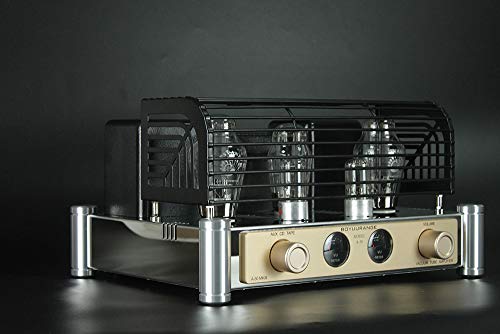
The REISONG A50 MKIII is a single-ended Class A tube amplifier that uses a pair of PSVANE 300B output tubes to deliver 7.6 watts per channel. The MKIII revision adds an inductance transformer and bipolar filter circuit to further refine the midrange and bass presentation. The included tube cage and VU meters add to its vintage charm, while the steel and aluminum chassis ensures mechanical stability.
With speakers rated above 90 dB sensitivity, the A50 MKIII produces a holographic, engaging soundstage with rich midrange texture and sweet, extended highs. The startup requires a burn-in period of 50-100 hours, after which the tonality opens up significantly. Users pairing it with high-sensitivity speakers like Klipsch horns report deep, tight bass and a completely silent background—no hum or hiss.
Quality control is a known concern: some units arrive with crackling tubes or loose knobs, and the 300B tubes are delicate. The amplifier also clips easily with insensitive speakers at high volumes. But for those committed to the single-ended 300B sound, the A50 MKIII offers an affordable gateway to truly musical, tube-driven magic.
Why it’s great
- Pure single-ended 300B tube sound
- Holographic soundstage and rich mids
- Includes tube cage and VU meters
Good to know
- Requires high-sensitivity speakers above 90 dB
- Quality control issues reported with tubes and knobs
11. Willsenton R8

The Willsenton R8 is a KT88-based integrated tube amplifier that can switch between KT88, EL34, and 6550 output tubes, offering three distinct sonic signatures from a single chassis. It delivers 45 watts per channel in ultralinear mode, enough to drive many moderate-sensitivity speakers. The amplifier includes triode/ultralinear switching, a built-in bias meter, and a headphone output, making it a versatile tool for tube enthusiasts.
In listening tests, the R8 in ultralinear mode produces a powerful, open sound with tight bass and airy highs. The triode mode offers more refined detail and a sweeter midrange. After a burn-in period of 100-300 hours, the soundstage becomes deep and three-dimensional. With upgraded tubes from brands like Gold Lion or Tung Sol, the R8 competes sonically with tube amps costing two to three times as much.
The unit is very heavy at over 60 pounds, and the remote control quality could be better. Some users experienced a control board failure after extended use, which Willsenton addressed by sending a replacement board. Despite these quirks, the R8 is praised as outstanding value for those wanting to explore the tube world without breaking the bank.
Why it’s great
- Compatible with KT88, EL34, and 6550 tubes
- Triode/ultralinear switching for versatility
- Excellent value for tube sound
Good to know
- Heavy at over 60 pounds
- Remote control and control board reliability concerns
12. BOSS Katana Artist Gen 3

The BOSS Katana Artist Gen 3 is the flagship 100-watt combo amplifier in the Katana series, featuring a custom 12-inch Waza speaker and six amp characters including the new Pushed type with selectable variations. The Class AB power section and evolved Tube Logic deliver dynamic, responsive feel that approaches a traditional tube amp. Advanced features like a stereo link, Bluetooth for tone editing, and extensive onboard effects make it one of the most capable stage-ready modeling amplifiers available.
Guitarists upgrading from earlier Katana models note the Gen 3’s improved clarity, tighter bass, and more detailed high-end. The Waza speaker provides a classic British stack tonality with increased power handling. The extensive software via BOSS Tone Studio allows deep sculpting of presets, and the Bluetooth adapter enables wireless music playback and app control. The Artist model adds an effects loop for external pedals.
The firmware update process is somewhat cumbersome, and the 5-8 second lag when switching tones in the Librarian mode can be distracting. For home practice or gigging, the Katana Artist Gen 3 delivers exceptional versatility and sound quality at a very competitive price, though purists may still prefer a dedicated tube amp for its immediate response and simpler signal path.
Why it’s great
- Custom Waza speaker with classic British tone
- Six amp characters with variation modes
- Bluetooth app and extensive effects
Good to know
- Firmware update process is not smooth
- Librarian tone switching has noticeable lag
13. Klipsch RP Subwoofer

The Klipsch Reference Premiere subwoofer features a new 12-inch spun-copper thermoformed crystalline polymer woofer and an all-digital amplifier that delivers deep, clean bass with minimal distortion. The front-firing driver allows flexible placement close to walls, while the low-pass crossover and phase control ensure seamless blending with main speakers. The frequency response ranges from 28Hz to 120Hz, providing satisfying extension for both movie explosions and music bass lines.
In real-world use, this subwoofer easily fills a medium to large room with powerful, tactile bass. Users report that it surpasses subwoofers costing significantly more, delivering tight, articulate low end without rattling or popping. The integration with Klipsch speakers is seamless via the subwoofer output, and the adjustable crossover allows fine-tuning for any system.
While it produces excellent output above 28Hz, it does not dig as deep as some dedicated subwoofers that reach 20Hz. The enclosure is large and heavier than some alternatives. However, for its combination of punch, clarity, and value, the Klipsch RP subwoofer is a strong addition to any system that needs controlled, musical bass extension.
Why it’s great
- Powerful, clean bass down to 28Hz
- Front-firing driver for flexible placement
- Excellent value and integration with Klipsch speakers
Good to know
- Does not reach ultra-low frequencies below 28Hz
- Larger and heavier than some similar options
FAQ
What wattage do I need for my speakers?
Should I use balanced XLR or unbalanced RCA cables?
How long does a tube amplifier typically last before tubes need replacement?
Final Thoughts: The Verdict
For most users, the best audiophile power amplifier winner is the WiiM Amp Ultra because it combines low-distortion Class D power, an ESS DAC, and intelligent room correction in a compact, modern design. If you want the warm, engaging sound of a toroidal-based integrated amp, grab the Marantz Model M1 for its streaming and HDMI capabilities. And for high-power, reference-level dynamics, nothing beats the OSD Nero HTA7200 for multi-channel systems or the Monolith 2ch Power Amp for two-channel purists.