
Our readers keep the lights on and the weekend projects moving. As an Amazon Associate, I earn from qualifying purchases.
Children today spend hours glued to tablets, laptops, and smartphones for school and play, yet those screens emit high-energy blue light that can disrupt sleep cycles and cause digital eye strain. The right pair of protection is no longer a nice-to-have; it is essential gear for any family managing screen time.
I’m Rikta — the co-founder and writer behind FitlyFast. This guide is the result of deep market research, spec-sheet analysis, and cross-referencing real parent feedback on frame durability, lens clarity, and fit across a wide range of kids’ head sizes.
From the bus to the bedroom, these filters help reduce squinting, headaches, and late-night restlessness. Whether you need a durable first pair for a toddler or a flexible frame for a tween, the right choice makes all the difference. We analyzed dozens of models and narrowed the list to the very best blue light blocking glasses for kids available today.
How To Choose The Best Blue Light Blocking Glasses For Kids
Not every pair of kids’ glasses on the market actually reduces digital eye strain. Parents need to look past cute colors and focus on material science, fit, and lens certification. Below are the three most critical factors to evaluate before clicking add to cart.
Frame Material: Durability Meets Comfort
Children are active. A rigid plastic frame that snaps after a single drop will waste your money. The best frame materials for kids are TR90 (a lightweight, flexible thermoplastic) and silicone. TR90 offers memory — it bends back into shape under stress — while silicone grips the nose and ears without leaving red marks. Avoid brittle acetate or cheap glossy plastic unless the child is old enough to manage delicate items.
Lens Technology: Clear vs. Amber vs. Yellow Tint
Blue light blocking lenses come in different tints. Clear lenses with a special coating block roughly 20% to 30% of blue light and are ideal for daytime school or tablet use because they don’t alter color perception. Amber or yellow-tinted lenses block 90% or more of blue light, making them perfect for evening gaming or bedtime screen routines, but they shift how colors appear. The right tint depends on when and where your child will wear the glasses.
Fit and Size Range
One-size-fits-all does not exist in kids’ eyewear. Check frame width, temple length, and bridge measurement. A good pair for ages 3 to 6 generally has a lens width of 42 to 46 mm, a bridge of 14 to 16 mm, and a temple of 120 to 130 mm. For ages 7 to 12, look for lens widths of 47 to 50 mm. Springs in the temples (spring hinges) also help the frame expand to accommodate a wider range of head sizes without breaking.
Quick Comparison
On smaller screens, swipe sideways to see the full table.
| Model | Category | Best For | Key Spec | Amazon |
|---|---|---|---|---|
| Cyxus Kids | Premium | Long-lasting daily wear | TR90 frame, 90% blue light block | Amazon |
| Horus X | Premium | Heavy gaming & evening use | Amber lens, 86%+ blue light (380-450nm) | Amazon |
| DefenderShield Kid Series | Premium | Sleep improvement | Amber tint, ultra-light polycarbonate | Amazon |
| GALVANOX Ava & Ethan | Mid-Range | School headache prevention | 3.0 oz, polycarbonate lens | Amazon |
| JM Kids | Mid-Range | Comfortable flexible fit | TR90 frame, bendable sides | Amazon |
| COASION 3-Pack | Budget | Multiples for home & school | 3 pairs, plastic frame | Amazon |
| Yogo Vision | Budget | Toddler introduction | Polycarbonate, adjustable fit | Amazon |
In‑Depth Reviews
1. Cyxus Kids Blue Light Blocking Glasses

Cyxus uses TR90, an advanced thermoplastic that is incredibly light and flexible, making this frame resilient to the daily bending and dropping that kids dish out. The spring hinges allow the temples to flex outward without snapping, accommodating a wider head size range (ages 6 to 15) while staying snug. At only 0.62 ounces, most children forget they are even wearing them.
The lenses use American HEV-absorb substrate technology to filter 90% of harmful blue light without leaving a heavy color cast. Unlike cheap coated lenses that scratch or peel, the polycarbonate substrate is impact-resistant and blocks UV400 as a bonus. This is a genuine high-blocking lens that still looks mostly clear — perfect for all-day school and homework use.
Every pair ships with a hard carrying case, a cleaning cloth, a verification card, and stickers. Several parents report that their children’s screen-related headaches vanished within the first week. The flexible TR90 has survived an entire school year for many families, making this a singularly durable investment for the price.
Why it’s great
- Substrate absorption technology — no coating to scratch off
- Ultra-light TR90 frame with spring hinges for durability
- Included hard case and lifetime warranty
Good to know
- Frame runs slightly small for tweens over age 12
- Lenses have a faint yellow tint, not fully clear
2. Horus X Kids Blue Light Blocking Glasses

Horus X is built for serious screen time, offering an amber-tinted lens that filters 100% of UV rays (A, B, and C) and over 86% of harmful blue light in the 380-450nm range. The polycarbonate lenses are also anti-reflective and anti-scratch, so late-night gaming sessions under direct monitor light remain comfortable without glare bouncing off the glass.
Weighing just 19 grams, the frame is built from a lightweight polycarbonate material that is nearly unnoticeable during long sessions. The thin temple arms are designed to slide comfortably under a gaming headset, eliminating the pinch point that many kids’ glasses create. The plush nose pad adds an extra layer of grip for active gamers.
The premium package includes a solid storage box, an ultra-light carrying case, and a thick microfiber cloth. Horus X is a French company that backs this pair with a lifetime guarantee — a clear sign they trust the build. Parents report that these glasses eliminated headaches in children as young as 6 during computer classes at school.
Why it’s great
- 86%+ blue light filtration in the most harmful spectrum band
- 19-gram frame with headset-compatible thin arms
- Lifetime satisfaction guarantee from a reputable brand
Good to know
- Amber tint alters color perception — not ideal for art classes
- 52-14 frame is tight for children with broader faces
3. DefenderShield Blue Light Blocking Glasses Kid Series
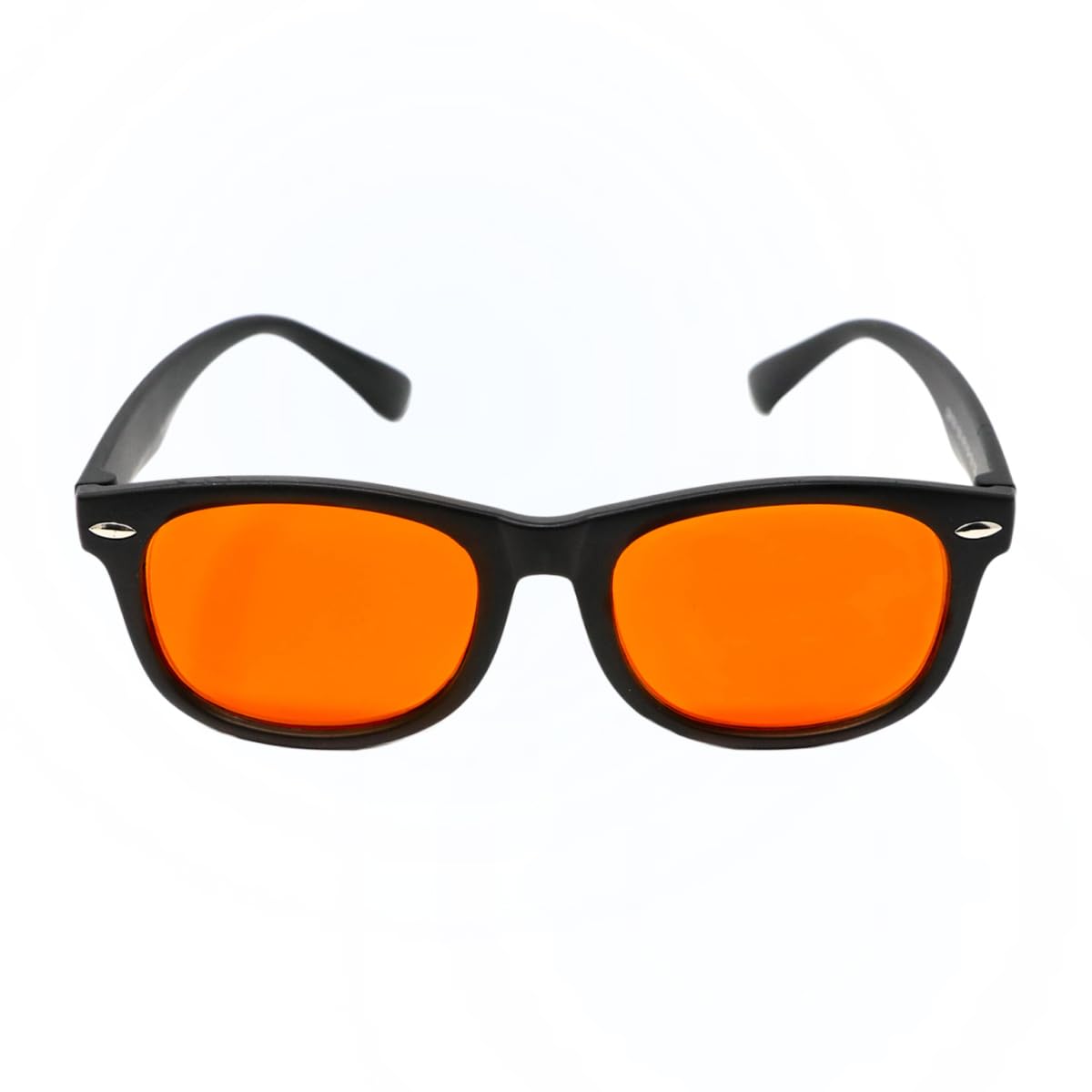
DefenderShield’s Kid Series is specifically designed to improve sleep onset in children who use screens in the evening. The deep amber-tinted lenses filter a high percentage of blue light, which directly supports the body’s natural melatonin production. Parents consistently report that children fall asleep faster and report better sleep quality within weeks of use.
The frame dimensions (47-19-131) are narrow enough to fit younger faces comfortably, and the polycarbonate build keeps weight low. An interesting bonus is that many adults with small faces have also found these glasses fit perfectly, making them a versatile option for a family to share. The included carrying box and cleaning cloth add everyday practicality.
A few parents have noted that the lenses can pop out if the frame is twisted aggressively, and the ear tabs can irritate sensitive ears after several hours. However, for the specific use case of bedtime screen wind-down, these are among the most effective blockers tested. The color shift from the amber tint is noticeable, but that is the trade-off for maximum sleep protection.
Why it’s great
- High-density amber filtration promotes faster sleep onset
- Narrow fit works for ages 3 to 12 and small adult faces
- Includes sturdy box and microfiber bag
Good to know
- Lenses pop out under heavy twisting — not toy-proof
- Ear tabs can bother sensitive ears after long wear
4. GALVANOX Ava & Ethan Blue Light Glasses

GALVANOX’s Ava & Ethan model is a straightforward, mid-range option that gets the basics right: a durable polycarbonate lens housed in a fun-colored frame. Several parents observed that their children stopped complaining about headaches and fluorescent-light sensitivity at school after switching to these. The clear lenses warm up harsh indoor lighting without making the world look yellow.
At 3.0 ounces, the frame is slightly heavier than the TR90 options, but the weight is distributed well and does not slide down a child’s nose. The frame dimensions (6.3 x 5.12 x 0.51 inches) indicate a medium-size face fit, suitable for ages 5 to 10. The color range includes bright purple and pink that kids genuinely enjoy wearing.
The glasses are not spring-hinged, so the temples lack the flex found in premium models. Some parents noted the frame ran larger than expected, meaning it may work better for the upper end of the age range. Nonetheless, for the price, these provide solid blue light filtration and stylish looks that children are proud to wear.
Why it’s great
- Clear lenses with effective blue light reduction for school use
- Fun color options that kids love
- Good value for a single, durable pair
Good to know
- No spring hinges — less forgiving for active kids
- Frame runs slightly large for smaller faces
5. JM Kids Blue Light Glasses
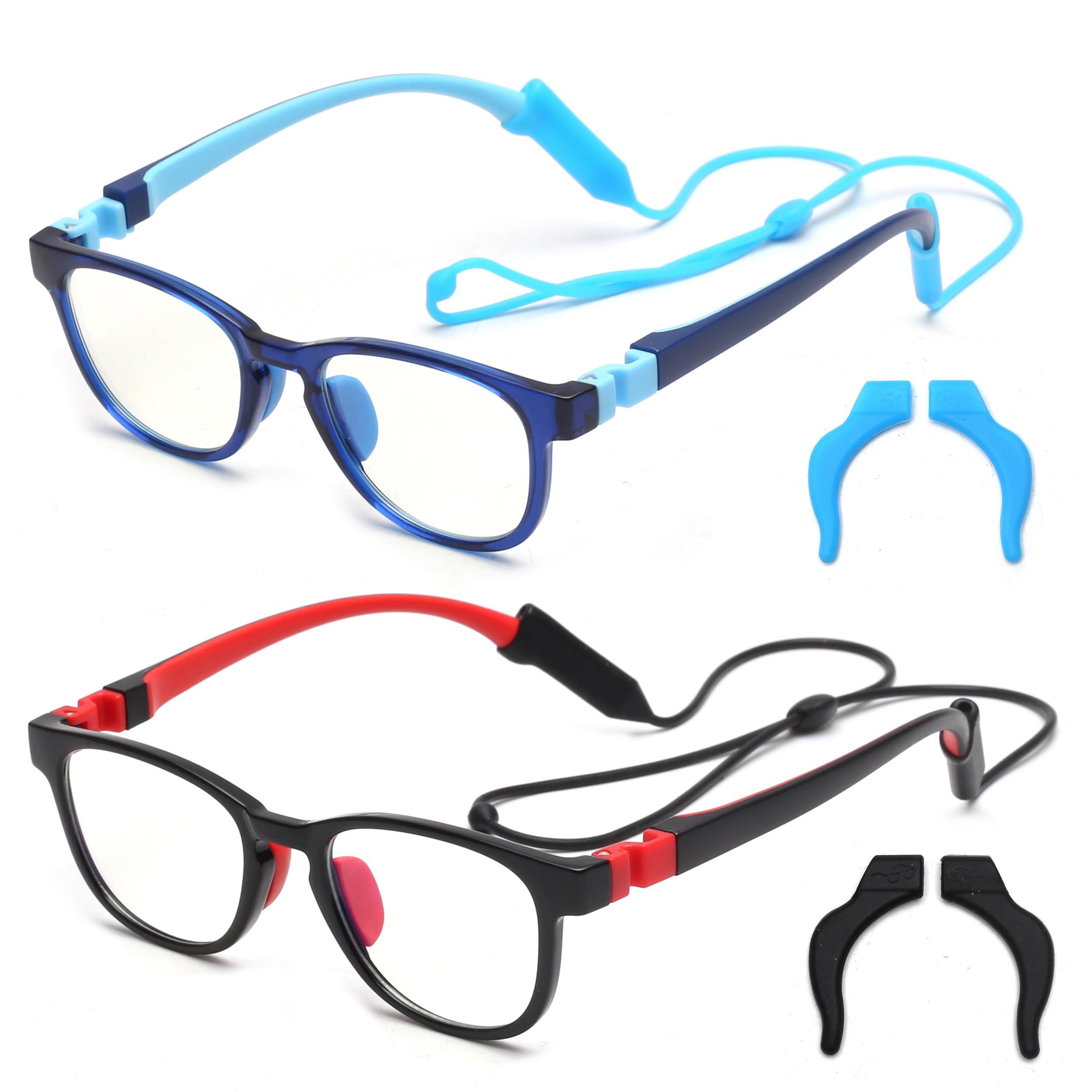
JM Kids brings TR90 construction to a more accessible price point, delivering the same flexible, lightweight feel as premium options without the premium cost. The stand-out feature is the bendable temple sides, which let the frame expand comfortably without putting pressure on a child’s head. Parents of 6- to 10-year-olds particularly praise how comfortable these are for all-day wear.
The lenses are designed to filter blue light without adding a heavy tint, keeping the world looking natural. This makes them a versatile choice for both daytime tablet learning and evening entertainment. The quality of the polycarbonate lens is solid enough that one parent even repurposed them as prescription frames for an autistic child, trusting the optician to cut lenses for the frame.
Size-wise, these fit children ages 3 through 10, with many parents reporting a perfect fit for 6- to 8-year-olds. The frame is not as impact-resistant as the Cyxus, but for the price, it offers excellent flexibility and comfort. The bendable sides dramatically reduce the risk of breakage when a child sits or sleeps on them.
Why it’s great
- Bendable TR90 temples for a customized, pressure-free fit
- Versatile size works well for 3–10 year olds
- Trusted by parents as a frame option for prescription lenses
Good to know
- Lacks the impact resistance of heavier frames
- May be too small for children over 10
6. COASION Blue Screen Glasses for Kids

COASION’s 3-pack is the practical choice for families who need glasses in multiple locations — one for the bedroom, one for the living room, and one for grandma’s house. The included pairs come in distinct frame colors, which helps children identify which pair is theirs. The plastic frames are lightweight and sit comfortably on faces ages 3 to 9.
The lenses provide basic blue light filtration without a noticeable tint, making them suitable for daytime screen use where color accuracy matters. Parents describe the glasses as “very pretty” and “absolutely adorable,” highlighting the aesthetic appeal that encourages kids to actually wear them. The plastic build is sturdy enough for average handling but lacks the flex memory of TR90.
One caveat: the pink frames in some packs are nearly clear with only a hint of pink, which may disappoint children expecting a bold color. The frames are also on the smaller side, so a 9-year-old may find them tight. Despite these trade-offs, the three-pair format is unmatched for coordination-free household management.
Why it’s great
- Three pairs eliminate the “lost glasses” scramble
- No-tint lenses preserve natural color perception
- Adorable styles that kids actually want to wear
Good to know
- Plastic frame lacks the flexibility of TR90
- Pink frames appear nearly clear, not bright pink as shown
7. Yogo Vision Blue Light Blocking Glasses for Kids
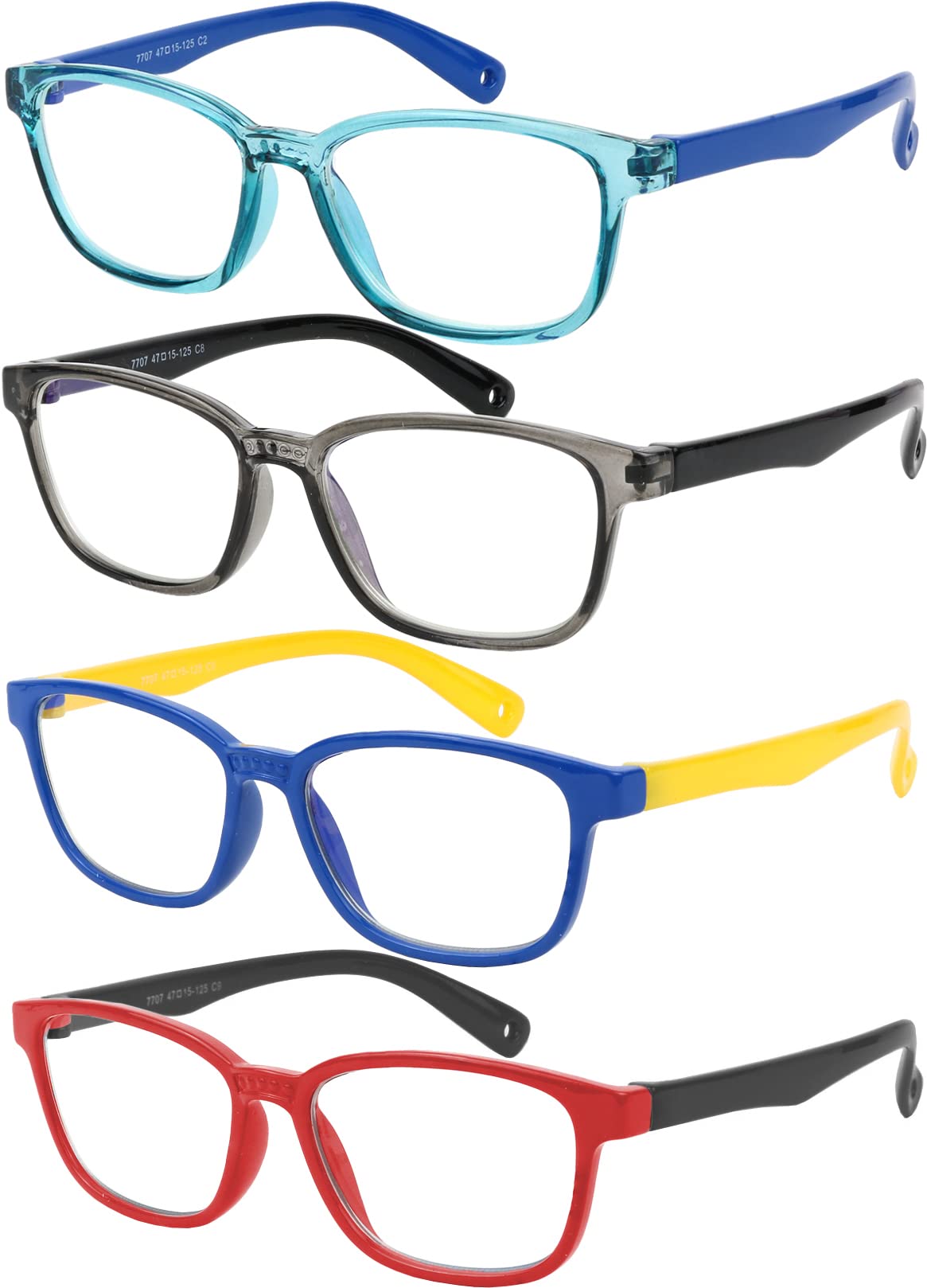
Yogo Vision is designed for the youngest screen users — toddlers and preschoolers who are just beginning their digital journey. The frames are made from a durable polycarbonate that has survived months of active play for many parents. The aesthetic is playful and child-friendly, making kids excited to wear them even when screens are off.
The blue light blocking is paired with UV400 protection, so these glasses also serve as basic eye protection outdoors. Parents of 4- and 5-year-olds report that their children no longer complain about eye fatigue after tablet time. One review noted that a child who cried about wanting glasses for perfect vision was delighted to wear these as a fashion accessory that also filters blue light.
The main downside is that some children find the temple arms too tight, leaving marks on the skin after extended wear. This seems to vary by head shape, and the glasses appear to work best for 3-year-olds or children with narrower heads. For families introducing blue light protection at the toddler stage, Yogo Vision is a safe, functional, and affordable entry point.
Why it’s great
- Toddler-friendly design with UV400 protection
- Durable polycarbonate stands up to daily play
- Encourages screen-time awareness from a young age
Good to know
- Temple arms can be too tight on some children
- Best suited for ages 3–4; may be small for older kids
FAQ
Do kids really need blue light blocking glasses or is it a marketing gimmick?
What is the ideal blue light blockage percentage for a child?
Can I get prescription blue light blocking glasses for my child?
How do I measure my child’s face for the right frame size?
Final Thoughts: The Verdict
For most users, the best blue light blocking glasses for kids winner is the Cyxus Kids because its TR90 frame with spring hinges offers near-indestructible durability, and the substrate lens technology provides 90% blue light filtration without a heavy color cast. If you want maximum blue light blockage for gaming sessions, grab the Horus X. And for improving sleep after evening screen time, nothing beats the DefenderShield Kid Series.