
Our readers keep the lights on and the weekend projects moving. As an Amazon Associate, I earn from qualifying purchases.
A splitting axe that sticks in the round or bounces back on the first swing isn’t a tool—it’s an arm-breaker. Real split-faces wedge wood apart, not just chop into it, and the geometry separating a frustrating afternoon from a cord of perfectly quartered firewood comes down to blade angle, head weight, and handle leverage. This guide breaks down the exact combo of steel hardness, handle length, and edge grind that turns a heavy swing into a clean split—so you stop fighting your log pile and start owning it.
I’m Rikta — the co-founder and writer behind FitlyFast. I’ve spent hundreds of hours cross-referencing head weight distributions, handle materials, and customer durability reports across dozens of splitting axes to narrow down which designs actually hold up against knotty, wet, and oversized rounds without needing constant resharpening or replacement.
After reviewing performance data on forged carbon steel, composite handles, convex versus wedge blade grinds, and impact ratings up to 56 HRC, I’ve built the definitive breakdown of the best axe for splitting wood—categorized by head type, handle length, and real-world splitting force so you pick the right one for your woodpile and your body.
How To Choose The Best Axe For Splitting Wood
Choosing a wood-splitting tool isn’t about grabbing the heaviest head or the longest handle. It’s about matching blade geometry, handle leverage, and head weight to the type of wood you’re splitting—seasoned softwood splits differently than knotty green hardwood, and a tool optimized for one can feel useless on the other. Here are the three specs that define a real splitter.
Blade Geometry: Wedge vs. Convex
A wedge-shaped blade—thick at the spine and tapering sharply to the edge—pushes wood fibers apart with brute force, ideal for large, knotty rounds where you need maximum splitting action without the blade burying deep. A convex grind, like the one on Fiskars axes, creates a slicing action that bites deeper into the wood and releases easier, better for medium logs where you want high speed and fewer stuck heads. The wrong geometry doubles your swing count and sends shock into your wrists.
Handle Material & Length: Leverage vs. Vibration
Fiberglass composite handles—like FiberComp or dual-injection fiberglass—absorb shock better than hickory, won’t warp in wet conditions, and weigh less, letting you swing faster without fatiguing. Wood handles (Grade A hickory) offer traditional feel and controlled flex but require oiling and can crack under overstrike abuse. Handle length directly dictates leverage: 28 inches suits average-height users splitting medium rounds, while 36 inches gives taller users the arc needed to generate maul-level force on oversized logs without needing a sledgehammer build.
Head Weight & Hardness: Impact vs. Precision
A 5 to 6.25-pound splitting head delivers enough mass to drive a wedge through dense grain without requiring a full-body heave—too light and you’ll bounce off knotty wood, too heavy and you’ll miss or fatigue fast. Steel hardness, measured in HRC (Rockwell Hardness Scale), determines edge retention: 50-56 HRC (common on good splitting axes) holds a sharp edge through hundreds of swings but remains tough enough to resist chipping when you accidentally hit a rock or frozen knot. Under 50 HRC and you’ll be filing every second session; over 58 HRC and the edge becomes brittle.
Quick Comparison
On smaller screens, swipe sideways to see the full table.
| Model | Category | Best For | Key Spec | Amazon |
|---|---|---|---|---|
| Fiskars Super Splitting Axe 36″ | Splitting Axe | Medium to extra-large logs | 5.95 lb, 36” FiberComp handle | Amazon |
| Helko Werk Traditional Saxon | Splitting Axe | Large, knotty rounds | 6.25 lb head, 53-56 HRC | Amazon |
| Fiskars X25 Splitting Axe | Splitting Axe | Medium to large logs | 28” FiberComp handle, convex grind | Amazon |
| Estwing 8 lb Splitting Maul | Splitting Maul | Stubborn, fibrous hardwood | 8 lb head, 36” FG handle | Amazon |
| Hooyman Splitting Maul 36″ | Splitting Maul | All-purpose splitting, budget | 8 lb maul, 45-60 HRC forged steel | Amazon |
| Husqvarna S2800 | Splitting Axe | Larger firewood splitting | 5 lb head, 28” composite handle | Amazon |
| LEXIVON V18s Splitting Axe | Splitting Axe | Camping, kindling, light splits | 18″, 2.8 lb, Grade-A carbon steel | Amazon |
In‑Depth Reviews
1. Fiskars Super Splitting Axe 36″
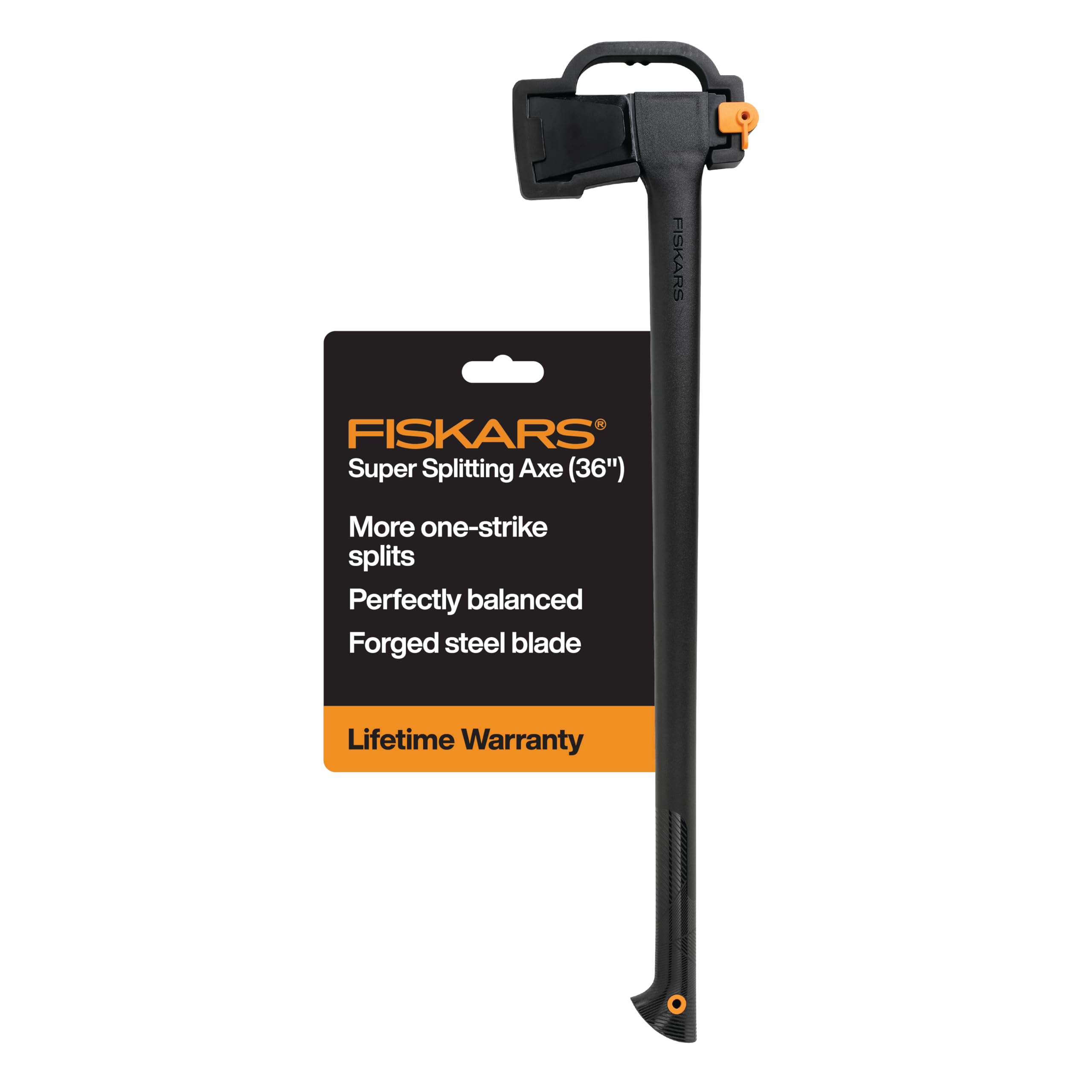
The Fiskars Super Splitting Axe dominates the category because of its 36-inch FiberComp handle combined with a 5.95-pound forged steel head and a perfected bevel-convex blade. That handle length generates torque comparable to an 8-pound maul, while the blade geometry bites deep into oak and hickory yet releases cleanly without binding—fewer stuck-head pullouts mean more splits per minute and less ego damage. The whole package weighs under six pounds, making it swingable for taller users who need arc leverage without hauling an extra two pounds of dead weight.
Customer reports confirm this axe splits medium to extra-large logs in one to two strikes, with the hardened forged steel edge holding up through years of use without frequent filing. The FiberComp handle absorbs the vibration that normally travels through hickory into your wrist, so session fatigue drops noticeably after a full cord. It’s virtually unbreakable under normal splitting loads—no warping, no head loosening, and the grip stays tactile in wet conditions.
Some users with glove issues experienced mild thumb tingling during the first few rounds, but proper grip resolved it. The sheath is functional but basic—store it inside to avoid UV degradation on the composite handle.
Why it’s great
- 36” FiberComp handle delivers maul-level force without maul-level weight
- Convex grind bites deep and releases easily, reducing stuck-head frustration
- Forged steel edge retains sharpness through dense hardwoods with minimal maintenance
Good to know
- Sheath is basic and may degrade if left in direct sunlight
- Some users with large hands prefer a longer grip handle for heavier rounds
2. 1844 Helko Werk Traditional Saxon

The Helko Werk Traditional Saxon is a hand-forged German splitting axe that feels more like a precision tool than a brute-force maul. Its 6.25-pound C50 high carbon steel head (hardened to 53-56 HRC) delivers splitting force that walks even wet, knotty rounds apart in one to three blows—but the real magic is the blade design: a moderate convex grind paired with a small hook on the heel for rolling logs without bending over. The 31-inch Grade A American hickory handle (linseed oil finished, 150-grit sanded) offers a smooth, comfortable flex that experienced users prefer over fiberglass.
Customer tests show the edge remains sharp after seven hours of splitting green, knotty wood, with no chipping or rolling. The head doesn’t bind on dense grain thanks to the optimized wedge angle, and the weight distribution makes it feel lighter than its 8.5-pound total suggests when swinging—less bounce-back means safer, more controlled strikes. Included vegetable-tanned leather sheath and protective Axe Guard oil add longevity that cheaper axes skip entirely.
It’s expensive and requires basic maintenance—oiling the handle every season and keeping the sheath dry. The overstrike protector can shift on first use (easily fixed or replaced via Helko’s customer service). For splitters who value heritage craftsmanship, edge longevity, and a tool that splits with precision rather than pure mass, this is the premium pick that outperforms decorative axes at the same price point.
Why it’s great
- Hand-forged C50 steel with 53-56 HRC holds a working edge longer than mass-produced alternatives
- Convex grind and heel hook reduce stuck heads and log handling strain
- Full-grain leather sheath and protective oil included for long-term maintenance
Good to know
- Requires periodic handle oiling and dry storage to prevent wood stabilizing issues
- Premium price point reflects manual forging and Grade A handle selection
3. Fiskars X25 Splitting Axe
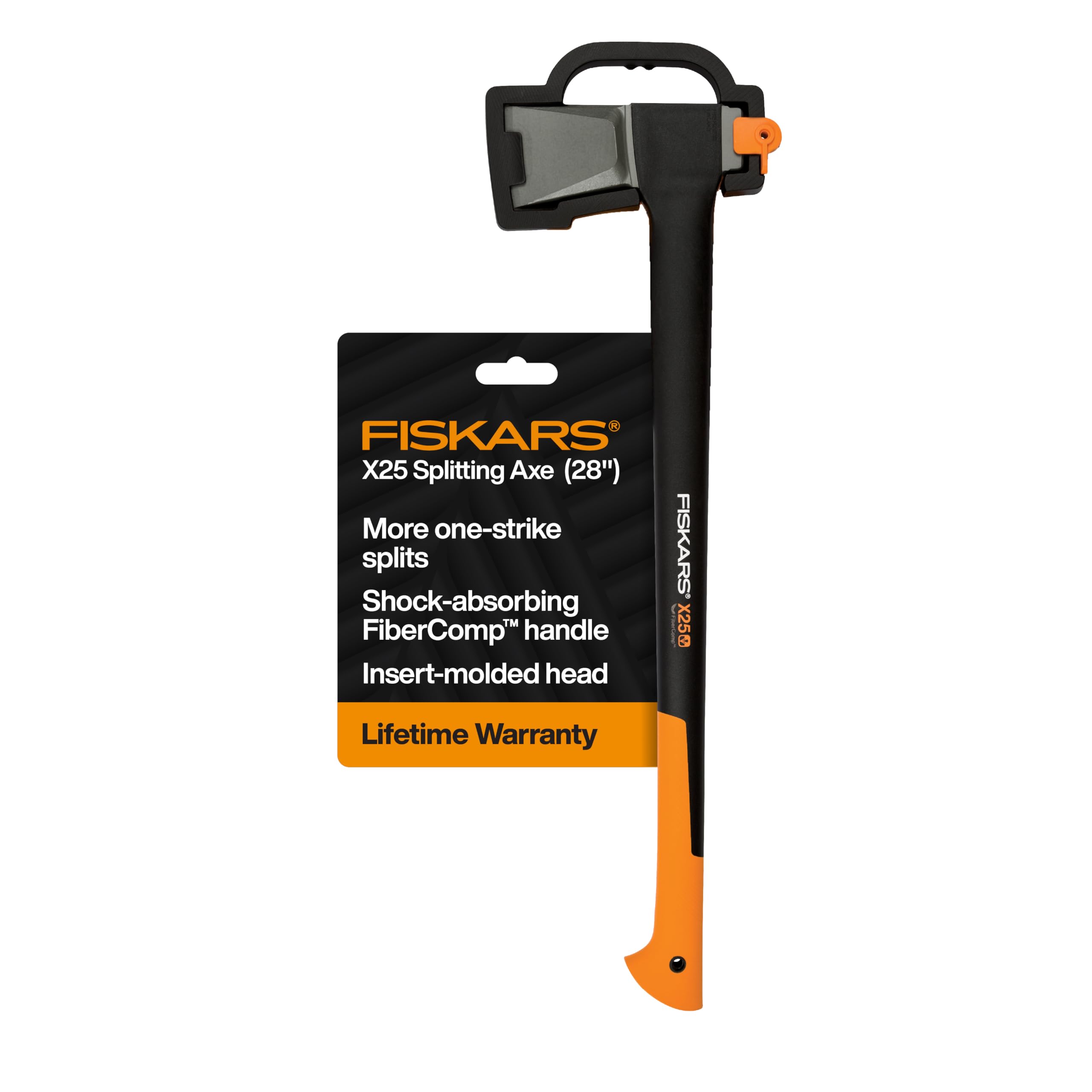
The Fiskars X25 splits the difference between a full-size maul and a camp axe—its 28-inch FiberComp handle and convex bevel blade make it ideal for medium to large logs without the overhead clearance issues of a 36-inch tool. The advanced blade geometry bites deep and releases clean, and the power-to-weight ratio (sub-4 pounds) lets you swing faster, multiplying force per strike like an aluminum bat. For users splitting seasoned oak or cherry, one-strike splits are the norm, not the exception.
Customers report zero need for sharpening after splitting full cords of hardwood, with the hardened forged alloy steel holding edge geometry through heavy use. The handle absorbs enough shock that users switching from traditional hickory feel less impact fatigue. The included sheath is storage-ready, and the balance point sits just forward of the grip, making end-over-end swings feel natural and predictable.
Some users experienced thumb tingling with the stock grip when wearing thin gloves—switching to padded work gloves resolved it. The X25 isn’t designed for massive, oversized rounds where a longer handle would offer more leverage; for those jobs, step up to the 36-inch Super Splitting Axe in the same family. For the vast majority of weekend splitters and homestead users, this is the best value-to-performance ratio on the list.
Why it’s great
- 28” FiberComp handle offers great leverage for medium-to-large logs without bulk
- Convex blade design produces clean splits with minimal head-sticking incidents
- Edge retention is exceptional, requiring no sharpening over multiple wood cords
Good to know
- Thin grip may cause tingling with bare hands or thin gloves during heavy sessions
- Not ideal for extra-large or knotty rounds that demand 36” handle leverage
4. Estwing 8 lb Splitting Maul

The Estwing 8 lb Splitting Maul is the blunt-force specialist for those rounds that laugh at lighter axes. Its forged head (hardened between 50-55 HRC) and 36-inch dual-injection fiberglass handle deliver high-force impact designed to split fibrous woods like elm, ironwood, and wet oak that stall a standard wedge-style blade. The special head design (thick wedge profile) penetrates minimally and pushes fibers apart explosively, which is exactly what you need when the grain laughs at your best swing.
Customer reviews highlight the maul’s superior balance for its weight class—it doesn’t feel as clumsy as other 8-pounders, and the broad handle gives a solid, non-slip grip even through winter sessions. Users report splitting two cords of oak without any edge damage or handle fatigue, with several noting the maul outperformed their gas-powered splitter on stubborn sections. The dual-injection fiberglass handle (over 70% fiberglass content) resists overstrike damage better than hickory and dampens vibration noticeably.
The weight is genuine—8 pounds of head plus a long handle means a full-body swing every time, and not everyone can sustain that for extended sessions. Shorter users may find the 36-inch length requires a more vertical chopping motion. The chisel edge is purpose-designed for splitting, not felling—don’t use it for limbing or tree removal. For the dedicated homesteader who faces daily knotty rounds, this maul is the brute-force solution that earns its place in the shed.
Why it’s great
- 8 lb forged head with 50-55 HRC edge punches through knotty, fibrous hardwoods
- Dual-injection fiberglass handle absorbs shock and resists overstrike damage
- Excellent balance for a heavy maul, reducing swing fatigue compared to alternatives
Good to know
- Full 8 lb weight and 36” length may be too heavy for shorter or less experienced users
- Chisel edge is unsuitable for anything other than splitting—no felling or limbing
5. Hooyman Splitting and Chopping Maul

The Hooyman 36-inch Splitting Maul competes with established brands by delivering a forged 1045 steel head (HRC 45-60) at a fraction of the premium-tier cost. Its convex grind blade and heavy 8-pound wedge design are built for brute-force splitting of large rounds, and the V-shaped head profile helps prevent the blade from sticking as deeply as a maul with a narrower wedge. The H-Grip handle turns tacky when wet, which is a practical safety feature for damp winter splitting sessions.
Customers who put it through a full cord of wood report no edge dings, no handle loosening, and a nearly 100% one-strike split rate when used with a drop-and-lift motion rather than an axe-style arc. The head-to-handle interlock with epoxy seal adds real structural integrity—head separation, a common failure on cheap mauls, hasn’t been reported in significant numbers. The flat poll is useful for driving steel wedges into oversized splits when the maul alone won’t finish the job.
Some users note the rubber overmolding near the head starts showing cosmetic wear after extended use, though it hasn’t affected performance. The 45-60 HRC range is wide—some units may land on the softer end, requiring more frequent edge touching. The included sheath is functional but minimal. For the splitter on a budget who still needs maul-class splitting force, this is the most capable entry-level option on the market.
Why it’s great
- Forged 1045 steel head with HRC up to 60 delivers maul-level splitting without a premium price
- H-Grip handle is tacky when wet, reducing slip risk in damp conditions
- Interlocked and epoxy-sealed handle-to-head connection resists common failure points
Good to know
- Rubber overmolding near head may show cosmetic wear under heavy use
- Wide HRC range means some units may need more frequent edge dressing
6. Husqvarna Wood Splitting Axe S2800

The Husqvarna S2800 is engineered with a 5-pound steel head and a 28-inch fiberglass composite handle that balances splitting force with portability. The head is coated with a non-stick finish that reduces friction and sap buildup, and the hardened stainless steel edge offers corrosion resistance that hickory-handled axes simply can’t match. For weekend splitters who process firewood but don’t want a full-length maul dominating their shed space, this axe splits medium rounds cleanly without feeling oversized.
Customer reports highlight the S2800’s balance as its standout feature—the weight distribution makes it feel lighter than 6.2 pounds when swinging, and the composite handle doesn’t warp or loosen over time like wood handles can. Users have tested it by dropping a 40-inch oak section on the handle without catastrophic failure. The sheath is simple but protective, and the non-stick coating genuinely helps the blade slide through sappy wood with less resistance than uncoated steel.
The 28-inch length can feel short for taller users (over 6 feet) who would benefit from a 36-inch handle for leverage on large rounds. The edge comes less sharp than some competitors, but splitting geometry relies more on wedge action than razor sharpness, so it’s less critical. For anyone who needs a mid-range, midsize splitter that won’t rust in the truck bed or garage, the S2800 is a solid choice.
Why it’s great
- 5 lb head with non-stick coating reduces friction and sap adhesion during splits
- Fiberglass composite handle resists warping and loosening over long-term storage
- Excellent weight-to-balance ratio makes it feel lighter than its actual 6.2 lb weight
Good to know
- 28” handle may feel short for users over six feet when splitting large-diameter rounds
- Edge sharpness is adequate for splitting but noticeably less sharp than premium options
7. LEXIVON V18s Splitting Axe

The LEXIVON V18s packs splitting capability into a compact 18-inch fiberglass composite handle with a forged Grade-A carbon steel head—total weight is only about 2.8 pounds, making it the lightest axe in this guide. It’s designed for campers, hikers, and gardeners who need a splitter for kindling, small logs, and fire preprather than full-season homestead splitting. The wedge-shaped blade profile and reinforced back spine let it handle small-to-medium splits that would stall a hatchet, and the balance point sits close to the head for increased swing speed.
Customer feedback consistently notes that this axe splits far above its weight class: users compare it favorably to full-size axes for bushcrafting and light firewood duty, with the Grade-A carbon steel holding a better edge than the Fiskars X27 after prolonged use. The over-molded construction that encases the blade in the handle eliminates head-loosening failure. The included sheath and blade edge guard are practical for backpack storage—no exposed edge in transit.
Multiple customers report the edge arrives less sharp than ideal and requires a quick session with a file or stone to reach optimal splitting sharpness. The 18-inch length limits leverage, so it’s not suitable for large rounds or high-volume splitting sessions—stick to logs under 6 inches diameter for best results. For a compact, packable splitter that won’t weigh you down on a camping trip or daily kindling duty, the V18s is the top pick.
Why it’s great
- 2.8 lb total weight makes it the most portable option for camping and hiking splits
- Forged Grade-A carbon steel blade outperforms many full-size axes in edge longevity
- Over-molded head-to-handle construction eliminates traditional loosening failure points
Good to know
- Blade often arrives dull and requires a manual sharpening session before first use
- 18” handle limits splitting power to logs under 6 inches—not suitable for large rounds
FAQ
What is the best handle length for splitting wood?
Do I need a splitting axe or a splitting maul?
How do I sharpen a splitting axe properly?
Final Thoughts: The Verdict
For most users, the best axe for splitting wood winner is the Fiskars Super Splitting Axe 36″ because its 36-inch FiberComp handle and convex grind deliver maul-class splitting force at under 6 pounds, making it the most versatile option for medium to extra-large logs. If you want traditional craftsmanship and precision for knotty rounds, grab the Helko Werk Traditional Saxon. And for those on a budget who still need maul-level splitting power, nothing beats the Hooyman Splitting Maul for value and durability.