
Our readers keep the lights on and the weekend projects moving. As an Amazon Associate, I earn from qualifying purchases.
Shaping a bonsai is a slow conversation with a living thing, and the wire in your hands is the grammar of that dialogue — one wrong gauge can scar bark or snap a season’s growth. The difference between a graceful cascade and a snapped leader often comes down to choosing anodized aluminum over steel, matching branch thickness to wire diameter, and knowing when to stop bending.
I’m Rikta — the co-founder and writer behind FitlyFast. I’ve spent countless hours analyzing user feedback, tensile performance data, and material science details to separate the training wires that hold their shape from those that kink, rust, or damage delicate cambium layers.
Whether you’re wiring a juniper cascade or a ficus upright, the right tool keeps your tree healthy and your design intact. This guide breaks down the best options available for bonsai wire, sized for every branch and every budget.
How To Choose The Best Bonsai Wire
Selecting the right wire isn’t complicated, but using the wrong type can waste your time and scar your tree. Focus on three factors: material, gauge, and quantity.
Anodized Aluminum vs. Copper
Anodized aluminum is the default choice for nearly all bonsai work. It bends easily with bare hands, holds its shape without springing back, and its oxide coating prevents rust. Copper wire is harder to work with, requires annealing (heating) before use, and is generally reserved for very advanced techniques or specific conifer species where extra holding power is needed. For beginners and most intermediate artists, anodized aluminum is safer, faster, and more forgiving.
Matching Gauge to Branch Thickness
The golden rule: wire diameter should be roughly one-third the thickness of the branch you’re training. A 1mm wire suits thin twigs; 2.5mm to 3mm handles average primary branches; 4mm and above is for thick lower branches or small trunks. Using wire that is too thin will fail to hold the bend; wire that is too thick can crush bark and restrict sap flow.
Kit vs. Individual Rolls
Multi-size kits are ideal for starting out because they give you the full spectrum of gauges to learn what your trees actually need. Once you know you work mostly with 2mm and 3mm wire, buying individual rolls of those specific sizes becomes more economical and reduces waste.
Quick Comparison
On smaller screens, swipe sideways to see the full table.
| Model | Category | Best For | Key Spec | Amazon |
|---|---|---|---|---|
| Bonsai Outlet Kit | Premium Trio | Serious hobbyists | 3 sizes: 1.5mm, 3.0mm, 4.0mm | Amazon |
| MOSFiATA 8-Piece Kit | Complete Set | All-in-one starter | 7 rolls + wire cutter | Amazon |
| FALIDI 5-Roll Kit | Value Pack | High volume projects | 164 ft total, 1mm-2mm | Amazon |
| RASKOO 7-Roll Set | Versatile Kit | Mixed thick & thin branches | 5 sizes from 1mm to 3mm | Amazon |
| PATIKIL 3.0mm Roll | Single Spool | Focused medium branch work | 32.8 ft of 3.0mm wire | Amazon |
| BENECREAT 6 Gauge | Heavy Duty | Thick trunks & sculpting | 4mm (6 gauge), 52 ft | Amazon |
| Hotop 10-Roll Kit | Max Variety | Every gauge in one box | 10 rolls, 5 sizes, 164 ft | Amazon |
In‑Depth Reviews
1. Bonsai Outlet Three-Pack Kit

Bonsai Outlet delivers a focused three-pack that skips the filler gauges and gives you the most useful trio for serious training: 1.5mm for fine twigs, 3.0mm for primary branches, and 4.0mm for thick lower limbs and small trunks. Each spool holds 100 grams, which translates to substantial working length per size — enough for multiple trees without constantly reordering.
The anodized aluminum is noticeably smooth, with a polished finish that glides over bark rather than digging in. Users consistently note that the black color blends inconspicuously against most bark tones, and the wire holds its set after bending without creeping back. The 4.0mm spool alone makes this kit stand out — most bargain sets top out at 3.0mm.
This is a premium mid-range option built for artists who want a refined, reliable wire that won’t corrode or snap mid-bend. If you’ve moved past the beginner phase and know exactly which gauges you reach for, this kit eliminates the waste of multi-roll sets filled with sizes you rarely use.
Why it’s great
- Includes rare 4.0mm heavy-gauge wire for thick branches
- Anodized black blends naturally with most bonsai bark
- Holds shape reliably without spring-back
Good to know
- Only three sizes — not for beginners who need a full range
- No wire cutter included in the pack
2. MOSFiATA 8-Piece Bonsai Wire Kit
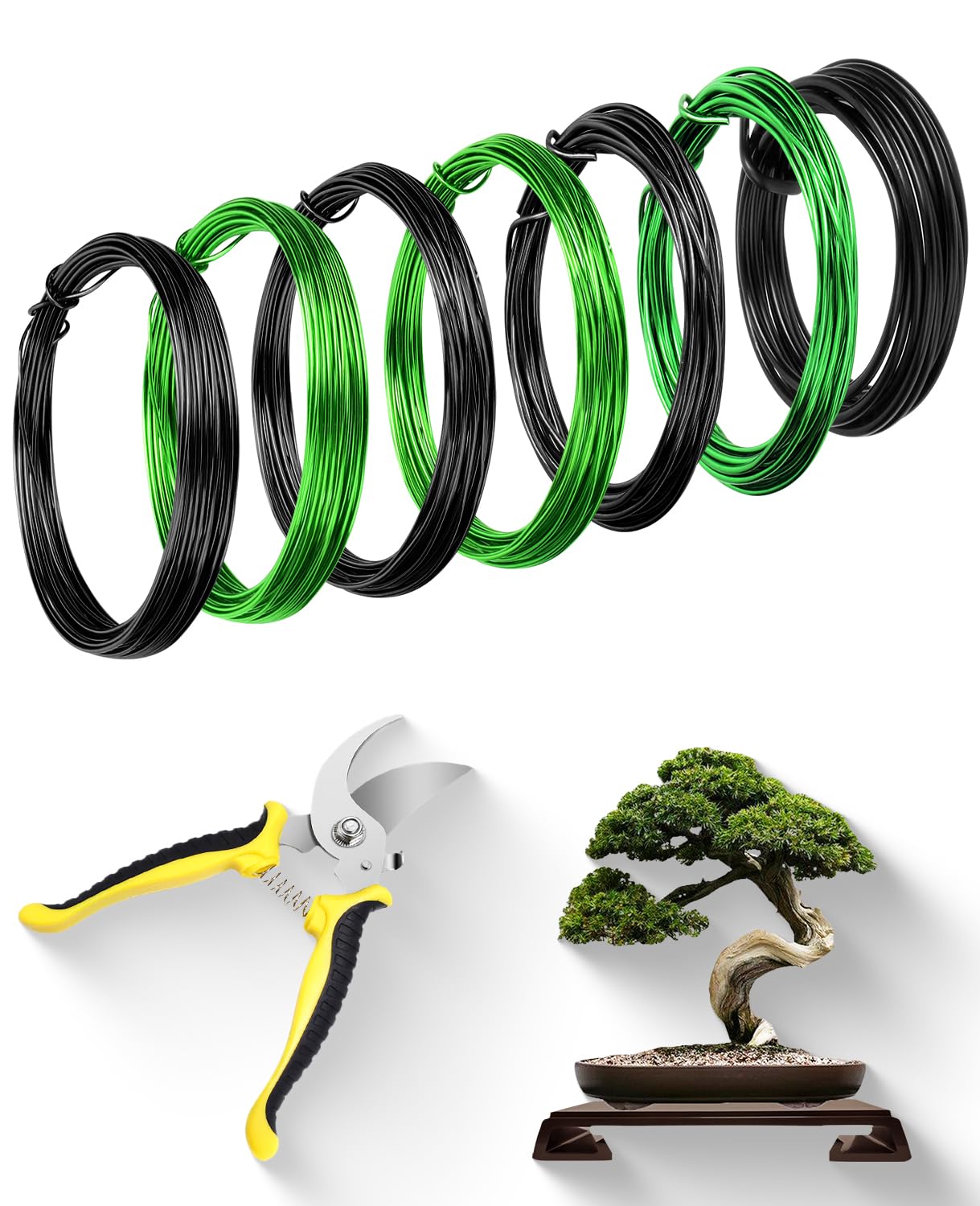
MOSFiATA’s kit is the closest thing to a bonsai wire starter pack done right. You get seven rolls spanning 1.0mm, 1.5mm, 2.0mm, and 3.0mm gauges, plus a dedicated wire cutter with high-strength steel jaws. The 1.0mm and 1.5mm rolls each come in two color variants (brown and green), which helps hide the wire against different bark tones and foliage.
The aluminum alloy is rust-resistant and non-corrosive, and users praise its flexibility without being flimsy. The included cutter features a double leaf spring and non-slip handles, making one-handed operation smooth and safe — a detail that matters when you’re holding a branch in place with the other hand.
For anyone starting their first bonsai or wanting a complete training toolkit in one purchase, this set removes the friction of buying wire and a separate cutter. It’s a budget-friendly entry point that still delivers professional-grade material.
Why it’s great
- Includes a real wire cutter, not a cheap accessory
- Two color choices per thin gauge for better camouflage
- Compact case keeps everything organized
Good to know
- Short length on 3.0mm roll (only 2 meters)
- Hard case is decent but not heavy-duty
3. FALIDI 5-Roll Bonsai Wire Kit

FALIDI’s kit maximizes raw footage — 164 feet split across five rolls in 1mm, 1.5mm, and 2mm sizes, each roll running 32.8 feet. That’s enough wire to train a small forest of shohin bonsai or handle multiple restyling sessions without running short. The wire is anodized aluminum with a colorful protective paint coating that resists rust.
Users highlight that the 1mm and 1.5mm wires are gentle on delicate branches and don’t cause stress fractures, while the 2mm holds secondary branches securely. A basic wire cutter is bundled, though some early reviews noted the cutter broke on first use — treat it as a backup, not your primary tool.
If you burn through thin wire quickly or maintain several trees, this value pack gives you the most working length per dollar. Just plan to replace the cutter with your own pair of bonsai shears for reliable performance.
Why it’s great
- Generous 32.8 ft per roll across three useful gauges
- Anodized coating resists corrosion and fading
- Affordable per-foot cost for high-volume wiring
Good to know
- Bundled cutter may fail early — keep a backup
- No 2.5mm or 3.0mm roll for thicker branches
4. RASKOO 7-Roll Bonsai Wire Kit
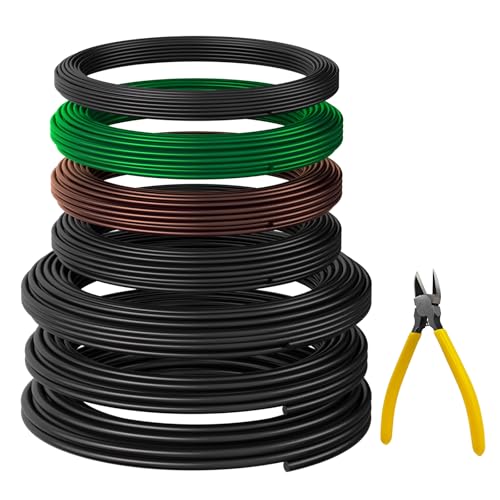
RASKOO’s kit covers the full spectrum from 1mm up to 3mm across seven rolls, totaling 189 feet. The distribution is thoughtful: three rolls of 1.5mm in black, green, and brown for color-matching, plus dedicated 1mm, 2mm, 2.5mm, and 3mm rolls. This range is wide enough to handle everything from delicate shohin twigs to thick lower branches.
The aluminum is flexible without being too soft — users describe it as holding shape exceptionally well for branch training on fruit trees and maples. The included cutter handles aluminum wire up to 3mm cleanly, though it’s not designed for steel or thick copper wire.
For the artist who needs one kit to cover all training stages, this set delivers the most practical gauge ladder without forcing you to buy separate spools. It’s a smart mid-range buy that balances variety with usable length per roll.
Why it’s great
- True inch-by-inch gauge progression (1mm to 3mm)
- Color options for thin wire help hide against different barks
- Generous total length for the price
Good to know
- Thick-wire rolls (2.5mm, 3mm) are only ~10 ft each
- Cutter is adequate for aluminum but not heavy-duty
5. PATIKIL 3.0mm Bonsai Training Wire
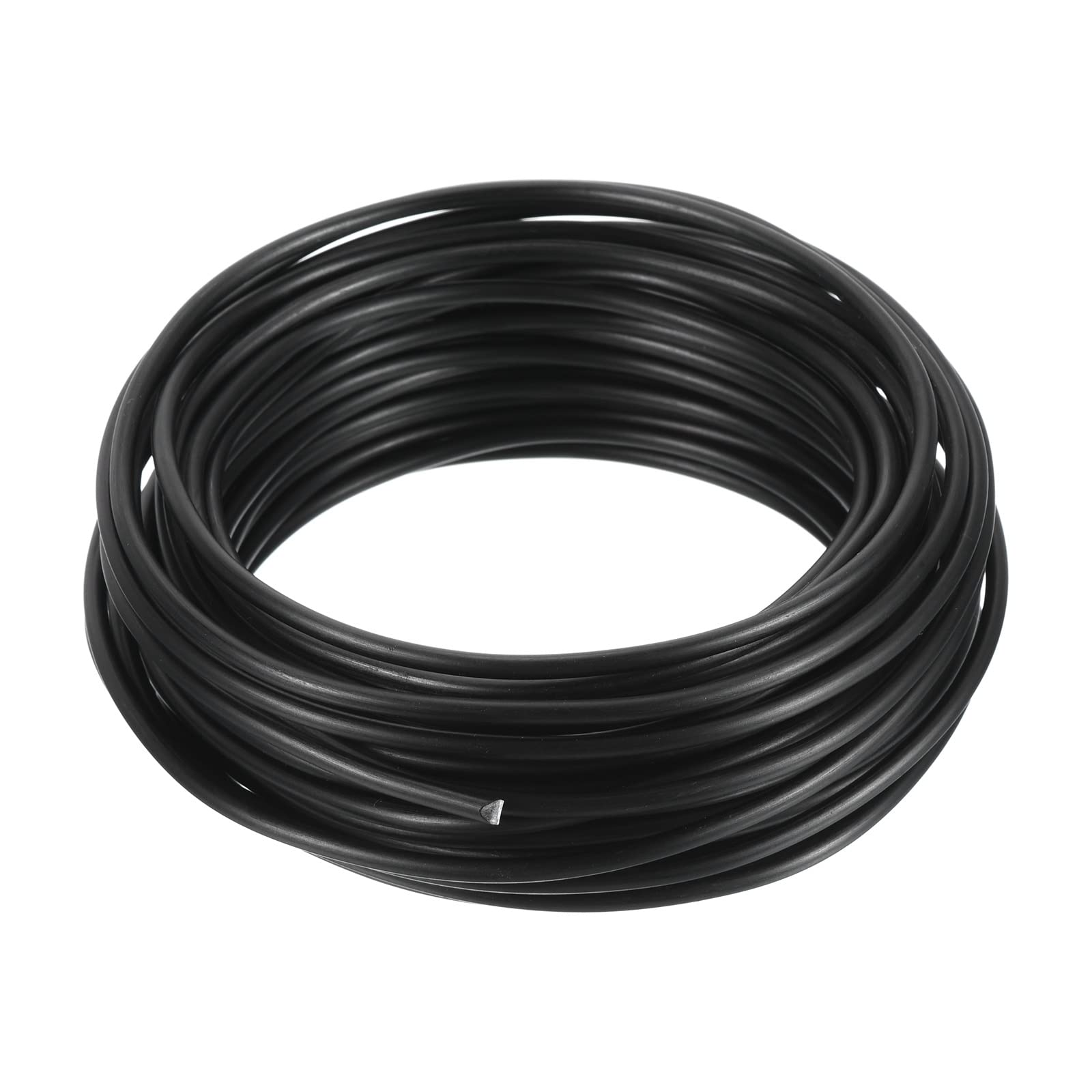
PATIKIL offers a no-fuss single roll of 3.0mm anodized aluminum wire — 32.8 feet of consistent medium-gauge material ideal for training primary branches on junipers, maples, and ficus. The anodized coating gives a polished black finish that resists rust and blends into darker bark, keeping your design aesthetic clean.
Users describe the wire as firm enough to hold position without constant retightening, yet flexible enough to shape by hand without pliers. Some found it slightly stiffer than expected right out of the roll, which actually helps it maintain tension once wrapped.
This is the right choice if you already own a stash of thin wire and just need to restock your most-used medium gauge. It eliminates the waste of buying another kit when you only need one specific size.
Why it’s great
- Solid 3.0mm diameter for medium branch training
- Polished anodized finish resists rust and looks clean
- Good length for multiple trees at a fair price
Good to know
- Single size — must buy separate rolls for thin or thick work
- Some users found it a bit stiff for very tight bends
6. BENECREAT 6 Gauge Aluminum Wire

At 4mm (6 gauge), BENECREAT’s wire enters heavy-duty territory — this is not for twigs or small branches. It’s built for bending thick lower branches, small trunks, and even wire sculpting or armature projects. The 52-foot spool gives you enough length for several heavy applications, and the black anodized finish keeps it visually unobtrusive.
The aluminum is noticeably thicker and requires more hand strength to shape, but it holds its position powerfully once set. Users also use this wire for jewelry making, wreath frames, and doll skeletons, reflecting its versatility beyond bonsai.
If you’re wiring a tree with substantial branches or need a single heavy-gauge spool for sculptural work, this is the cost-effective way to get 4mm wire without buying a kit full of gauges you don’t need.
Why it’s great
- True 4mm thickness handles thick trunks and heavy branches
- Long 52-foot spool offers plenty of working material
- Smooth finish doesn’t snag or scratch bark
Good to know
- Tangles easily if not stored carefully after each use
- Can break if repeatedly bent at the same point
7. Hotop 10-Roll Bonsai Wire Kit
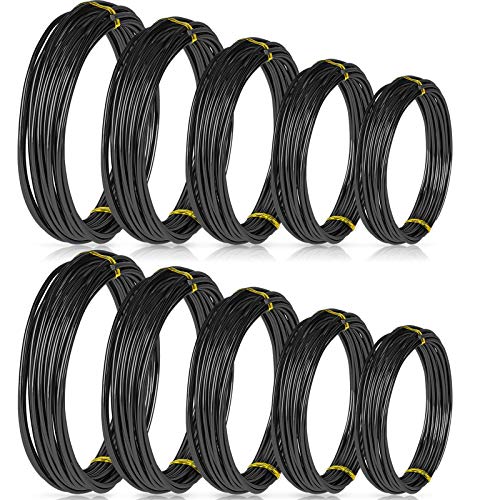
Hotop packs ten rolls into one kit — two rolls of each gauge: 1.0mm, 1.5mm, 2.0mm, 2.5mm, and 3.0mm. That’s 164 feet of anodized aluminum wire in a single package, making it the most comprehensive variety pack on this list. The black color choice is consistent across all gauges, giving a uniform look to your wiring.
The wire is notably flexible and reusable; users report unwinding and rewinding it without kinking, which is a strong indicator of quality aluminum. It cuts cleanly with standard bonsai shears, and the 2.5mm and 3.0mm rolls provide enough material for real structural work.
If you’re building a bonsai tool collection from scratch and want every common gauge on hand, this kit delivers the widest variety for the money. It’s a premium-feeling budget option that covers all your training bases in one box.
Why it’s great
- Two rolls per gauge means you won’t run out mid-project
- Wire is reusable and resistant to kinking
- Covers every gauge from fine twig to medium branch work
Good to know
- No wire cutter or case included
- Some users prefer individual spools for easier storage
FAQ
How long should I leave bonsai wire on a branch?
Can I reuse bonsai wire after removing it?
Is copper wire better than aluminum for bonsai training?
Final Thoughts: The Verdict
For most users, the bonsai wire winner is the Bonsai Outlet Three-Pack because its curated selection of 1.5mm, 3.0mm, and 4.0mm covers the most critical gauges with premium anodized quality. If you want a complete starter system with a cutter and color options, grab the MOSFiATA 8-Piece Kit. And for maximum gauge variety in a single purchase, nothing beats the Hotop 10-Roll Kit.