
Our readers keep the lights on and the weekend projects moving. As an Amazon Associate, I earn from qualifying purchases.
The challenge of finding board games that bridge the gap between engaging adult-level strategy and inclusive family fun is real. You want something more substantial than a roll-and-move kids game but accessible enough that your teenager, your partner, and your visiting parents can all sit at the same table and enjoy a real challenge without anyone feeling lost.
I’m Rikta — the co-founder and writer behind FitlyFast. My approach to this guide involves deep research into gameplay mechanics, playtime ranges, age ratings, and setup complexity, analyzing how each game accommodates mixed-age groups and varying skill levels to identify the most rewarding options for your family.
After extensive analysis, I’ve curated a list of standout titles that balance strategic depth with approachable rules, perfect for your next game night. This is the definitive field guide to the best board games for adult families.
How To Choose The Best Board Games For Adult Families
Choosing a game for an adult family requires balancing depth with accessibility. You need a game that offers enough strategic weight to keep experienced players engaged while remaining easy to teach and quick to grasp for occasional gamers.
Player Count and Age Range
Always check the official player count and suggested age. Many games advertise 2-5 players but play optimally with 3 or 4. The age rating often indicates cognitive complexity rather than content — a 10+ game may involve resource management, while an 8+ game relies more on simple pattern recognition.
Playtime and Replayability
The ideal playtime for adult family game night falls between 30 and 60 minutes. Shorter than 20 minutes feels too fleeting; longer than 90 minutes can lose momentum. Replayability hinges on variable setup, multiple scoring paths, or modular expansions that change the core rules.
Interaction Style: Cooperative vs. Competitive
Cooperative games unite the family against the game itself, reducing direct conflict and making them excellent for mixed-skill groups. Competitive games with indirect interaction — like set collection or engine-building — keep everyone engaged without eliminating players early.
Quick Comparison
On smaller screens, swipe sideways to see the full table.
| Model | Category | Best For | Key Spec | Amazon |
|---|---|---|---|---|
| Wingspan | Engine-Building | Deep Strategy with Beautiful Theme | 170 unique bird cards, 70 min playtime | Amazon |
| Ticket to Ride | Route Building | Classic Family Strategy | 225 plastic trains, 60 min playtime | Amazon |
| Harmonies | Tile Placement | Tactile & Visual Puzzle | 120 wooden tokens, 30 min playtime | Amazon |
| Sky Team | Cooperative | Intense Two-Player Co-op | 8 dice, 20 scenarios, 20 min playtime | Amazon |
| Castle Panic | Cooperative | Family Tower Defense Fun | 3D towers, 45 min playtime | Amazon |
| Planted | Resource Management | Light Strategy for Plant Lovers | 42 plant cards, 30 min playtime | Amazon |
| Splendor Duel | Card Drafting | Quick Head-to-Head Competitive | 67 jewel cards, 30 min playtime | Amazon |
In‑Depth Reviews
1. Wingspan

Wingspan earns its reputation as a modern classic for good reason. With 170 unique bird cards, each featuring beautiful artwork and factual details, the game offers immense variety and replayability. The engine-building mechanics are smooth and intuitive: you gain food tokens using a custom dice tower, lay eggs with miniature egg pieces, and draw new bird cards to extend your engine across three different habitats. The 70-minute playtime feels complete without overstaying its welcome, and the solo Automa mode adds excellent value for single-player sessions.
The design prioritizes indirect competition through set collection and hand management rather than confrontational take-that mechanics. This makes it exceptionally well-suited for families where players have different skill levels — everyone builds their own tableau at their own pace. The Swift-Start pack helps new players get going quickly, though the rulebook is comprehensive enough for dedicated learners.
Some may find the player interaction to be on the lower side, as most actions are self-contained. The birdfeeder dice tower can feel a bit flimsy, and the plastic insert may not accommodate sleeved cards. Despite these minor points, the sheer quality of the production, the depth of educational content, and the satisfying progression through each round make Wingspan a standout pick for any adult family game collection.
Why it’s great
- Deep engine-building with multiple scoring paths
- Stunning artwork and educational bird facts
- Excellent solo mode included
Good to know
- Lower player interaction may not suit competitive groups
- Dice tower feels less durable than other components
2. Ticket to Ride
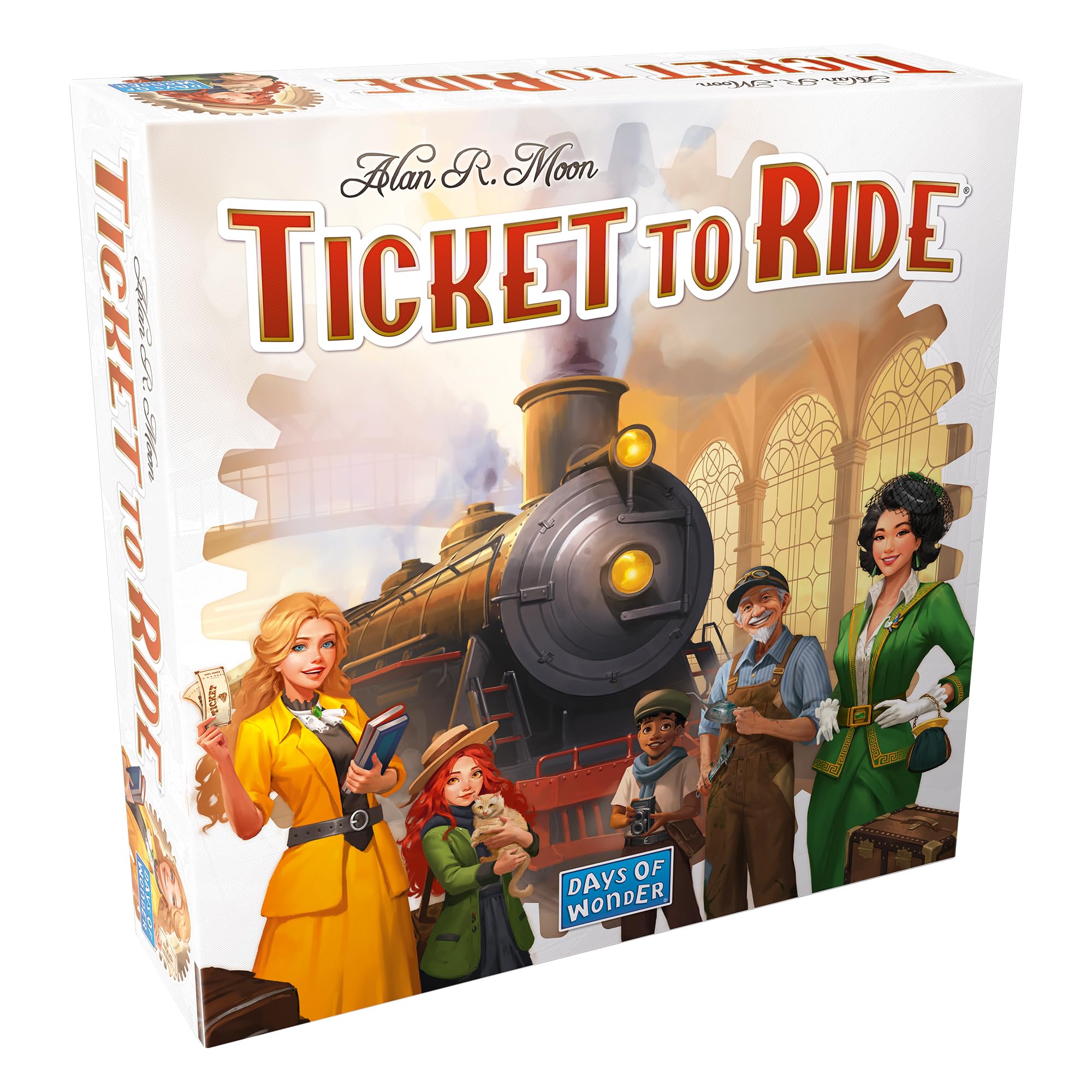
Ticket to Ride is the gold standard for accessible family strategy. The core gameplay is elegantly simple: collect colored train cards, claim railway routes on the board, and try to connect your destination tickets across the map. The 2025 refresh brings updated components, including 225 plastic trains in five colors, a large illustrated board, and clear rulebook. With 30-60 minutes per game, it fits neatly into most family schedules without dragging.
The genius lies in the tension between hoarding cards to complete long routes and snatching key connections before opponents can claim them. The multiple scoring paths — completing tickets, building the longest continuous route, and claiming shorter segments — ensure that no two games play out the same way. The easy-to-learn rules make it a perfect gate-way game, while the strategic depth gives veterans plenty to ponder.
Some may find the player interaction primarily limited to blocking routes rather than direct conflict. The game also skews slightly toward the lighter side of strategy, which might not satisfy hard-core engine-builders. However, for its balance of teachability, replay value, and pure table presence, Ticket to Ride remains a must-have for families seeking a reliable, fun game night staple.
Why it’s great
- Extremely easy to learn and teach
- High replayability with variable ticket draws
- Beautifully produced components and board
Good to know
- Player interaction is mostly non-confrontational
- Lacks the engine-building complexity of deeper games
3. Harmonies

Harmonies is a stunning tile-laying game where players build three-dimensional landscapes and populate them with colorful animal cubes. The rule set is remarkably straightforward — place landscape tokens, satisfy animal habitat requirements, and earn victory points through careful spatial planning. With 120 wooden tokens, 79 animal cubes, and 42 beautifully illustrated cards, the component quality creates a deeply satisfying tactile experience. The 30-minute playtime is brisk and ideal for multiple rounds.
The game offers three difficulty levels through its Nature’s Spirit cards, providing plenty of room to grow as players become more skilled. The solo mode is particularly well-implemented, offering a thoughtful and engaging puzzle that can be played in under 20 minutes. The minimal player interaction (everyone works on their own board) reduces conflict, making it a relaxing choice for families who prefer constructive competition over direct sabotage.
Some may find the lack of direct player interaction a drawback if they prefer cutthroat gameplay. The game can also feel somewhat solitary in larger groups, as each player focuses on their own board. However, for families seeking a beautiful, meditative, and replayable strategy game that fits comfortably within a limited attention span, Harmonies is a delightful addition.
Why it’s great
- Gorgeous 3D landscape and tactile components
- Excellent solo mode with multiple difficulties
- Quick setup and clean rules
Good to know
- Limited player interaction
- Can feel solitary in larger groups
4. Sky Team

Sky Team won Game of the Year 2024 for good reason. It’s a two-player cooperative game where you and a partner work as pilot and co-pilot to land an airplane using dice placement. The catch? Once each round begins, you cannot talk to each other. You must silently place your dice on the shared cockpit board, trusting your co-pilot to handle their responsibilities — adjusting speed, leveling wings, engaging brakes, and clearing air traffic.
With 20 different scenarios representing airports around the world, each with unique challenges, the replayability is exceptional. The optional modules — including kerosene leaks, ice on the tarmac, and a new intern — escalate the difficulty without adding excessive rules overhead. The 20-minute playtime means you can play through several scenarios in a single evening, and the compact box makes it a fantastic travel game.
The silent communication mechanic can be initially disorienting for some pairs. The game is strictly two-player, so it won’t work for larger family groups. The artwork is charming but simple, not aiming for the lavish presentation of some other games. Nevertheless, for couples seeking intense, tense, and deeply satisfying cooperative gameplay, Sky Team is unmatched.
Why it’s great
- Unique silent co-op mechanic avoids alpha player issues
- High replayability with 20 scenarios and modules
- Quick playtime and compact box
Good to know
- Two-player only — not for larger families
- Silent mechanic may take adjustment
5. Castle Panic

Castle Panic is a cooperative tower defense game that brings the whole family together against a common enemy. In this second edition, players work together to defend Castle Bravehold from waves of monsters, trading cards, coordinating plans, and trying to keep at least one central tower standing. The inclusion of 3D towers, vibrant monster tokens, and an illustrated board gives the game excellent table presence. With 45-minute sessions, it fits neatly into a standard family game night.
The game offers four distinct modes: full co-op, solo play, a competitive Master Slayer mode, and an Overlord mode where one player controls the monsters. This variety ensures the game stays fresh after multiple plays. The difficulty escalates nicely through plagues, boulders, and boss monsters, creating genuine tension without becoming punishing for younger or less experienced players.
Some experienced gamers may find the gameplay lacks the depth of more complex cooperative games like The Siege of Runedar. The components are decent but the artwork could be more detailed. Despite these caveats, Castle Panic delivers exactly what it promises: accessible, exciting, team-based fun that turns your family into a medieval tactical squad.
Why it’s great
- Unites family against a common threat
- Multiple game modes increase replay value
- Easy to learn, quick to play
Good to know
- May feel shallow for experienced gamers
- Artwork and components are adequate, not premium
6. Planted

Planted is a light strategy game from acclaimed designer Phil Walker-Harding where players manage resources to cultivate a garden of 42 unique houseplant varieties. The theme is immediately charming and accessible — collect water and plant food tokens, then spend them to acquire plant cards, each with different point values and care requirements. The 20-30 minute playtime is perfect for quick rounds or playing multiple times in one evening.
The game encourages a small degree of forward planning without being punishing. Players must optimize which resources they collect and which plants they target, creating a satisfying puzzle without overwhelming decision paralysis. The artwork is vibrant and inclusive, featuring a diverse range of common houseplants like fiddle leaf figs and monsteras. The durable wood and plastic pieces feel nice to handle.
Some families may find the game lacks the depth needed for extended replayability after many sessions. The lightweight nature means it may not become a perennial favorite for hard-core strategy groups. However, for families with plant enthusiasts or those who enjoy relaxing, low-stress strategy games with beautiful aesthetics, Planted delivers a delightful experience that earns its place on the shelf.
Why it’s great
- Beautiful plant-themed artwork and inclusive cards
- Easy to learn and quick to play
- Relaxing, low-stress strategy
Good to know
- May lack depth for long-term replayability
- Resource tokens are limited in the box
7. Splendor Duel
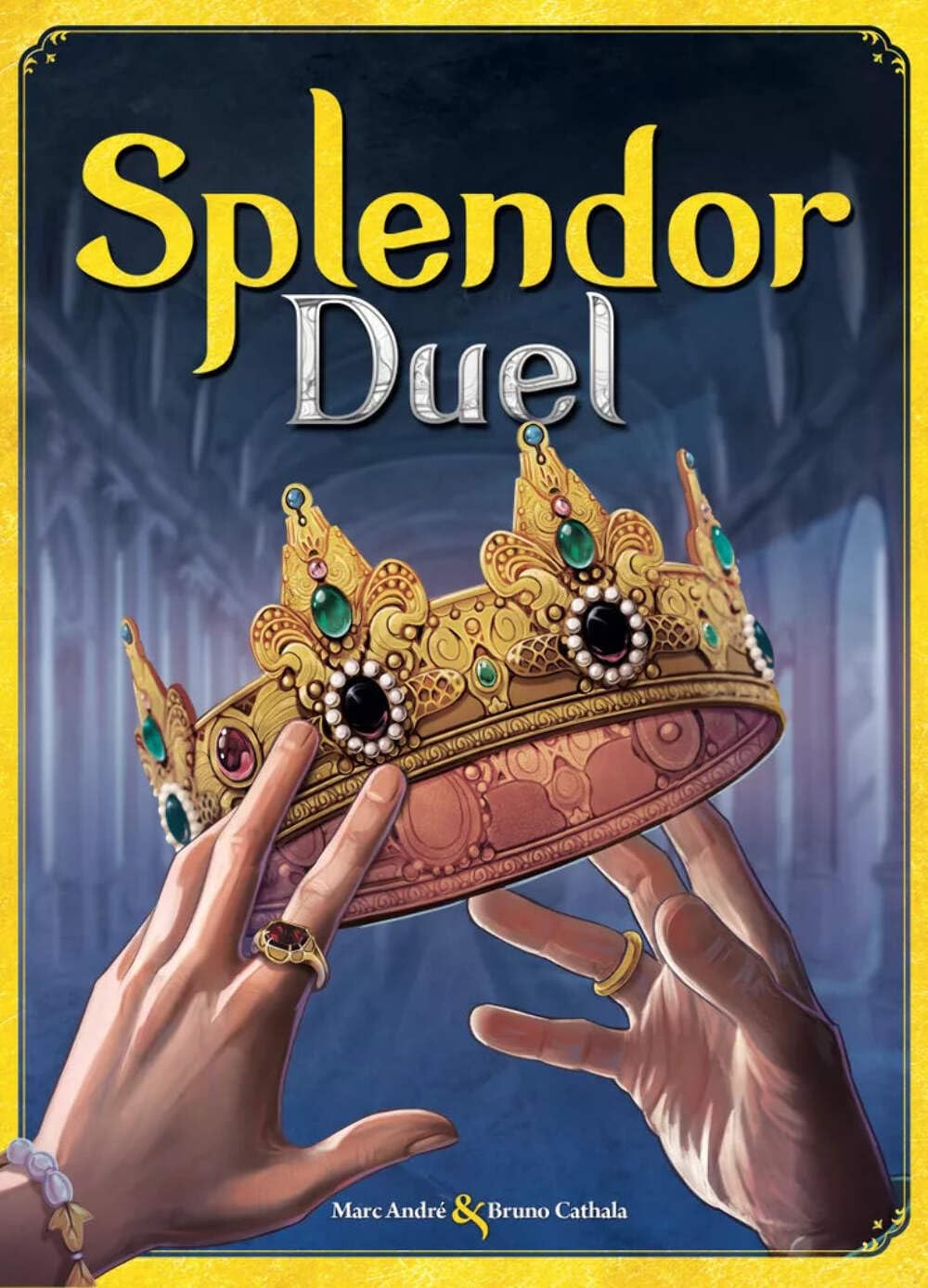
Splendor Duel takes the beloved gem-collecting formula of the original and optimizes it for intense two-player competition. The game introduces new mechanics like pearls, special powers, and alternate win conditions, adding layers of strategic depth that the original lacks for head-to-head play. The compact box houses 67 jewel cards, 25 plastic gem tokens, and a shared board that creates dynamic, ever-changing drafting options. Games run about 30 minutes, making it perfect for a fast-paced showdown.
The decision space is tight and meaningful: do you grab the gem you need now or deny your opponent their key resource? The new privilege system adds a fresh layer of tactical flexibility. The components maintain the high quality of the Splendor series — thick cards, solid coin-like tokens, and a functional insert. As a standalone game, it requires no prior Splendor knowledge.
The two-player exclusivity means it won’t replace a larger family game night. Some fans of the original Splendor still prefer the broader strategy of that game, especially at higher player counts. But for couples or pairs seeking a focused, replayable, and highly strategic duel, Splendor Duel is a superb choice that delivers taut competition in every box.
Why it’s great
- Designed specifically for balanced two-player play
- Adds pearls, powers, and alternate win conditions
- High-quality components and compact box
Good to know
- Two-player only — not for larger families
- Some prefer the original Splendor’s scalability
FAQ
What is the best board game for adult families with varying skill levels?
Are these board games suitable for teenagers and older adults?
How do I choose between cooperative and competitive board games for my family?
Final Thoughts: The Verdict
For most users, the board games for adult families winner is the Wingspan because it offers deep engine-building, gorgeous components, and a rewarding experience that scales from solo play to five players. If you want a classic, easy-to-teach strategy game that everyone already loves, grab the Ticket to Ride. And for a cooperative experience that turns your family into a team, nothing beats the tense teamwork of Castle Panic or the two-player challenge of Sky Team.