
Our readers keep the lights on and the weekend projects moving. As an Amazon Associate, I earn from qualifying purchases.
A miter saw blade is the single component that determines whether a cut is glass-smooth or a splintered mess. The wrong blade burns through wood, leaves a ragged edge, and ruins expensive stock. The right blade slides through material effortlessly, leaving a surface that needs no sanding — a direct result of the tooth geometry, carbide quality, and plate tensioning design you choose.
I’m Rikta — the co-founder and writer behind FitlyFast. I have spent hundreds of hours analyzing blade specifications, comparing carbide formulations, tooth counts, and kerf designs to understand what separates a disposable blade from one that delivers professional-grade results cut after cut.
This guide breaks down the tooth geometry, arbor size compatibility, and material-specific designs that define a top-tier blade for miter saw, so you can confidently upgrade from the stock blade that came with your saw.
How To Choose The Best Blade For Miter Saw
Selecting a miter saw blade goes far beyond matching the diameter. The tooth configuration, carbide quality, kerf thickness, and hook angle all determine whether a blade delivers clean crosscuts or leaves burns and tear-out. Understanding these four specs will let you pick the right blade for your specific material and workflow.
Tooth Count and Grind Geometry
Blades with 40 to 60 teeth are the sweet spot for general crosscutting and framing lumber. Jump to 80 to 96 teeth for finish work on hardwoods, plywood, and melamine — the extra teeth produce a finer edge but cut slower. Triple-Chip Grind (TCG) teeth are essential for non-ferrous metals and plastics, while Alternate Top Bevel (ATB) teeth excel at wood crosscuts. High ATB (Hi-ATB) geometry is the pinnacle for splinter-free cuts on veneered sheet goods.
Carbide Grade and Coatings
The carbide tip formulation directly determines edge retention. Premium blades use a dense micro-grain carbide blend that resists chipping on hard maple or abrasive materials like MDF. Non-stick coatings like Perma-Shield or Silver I.C.E. reduce friction, prevent pitch buildup, and keep the blade running cooler — which extends sharpness and prevents burn marks on the workpiece.
Quick Comparison
On smaller screens, swipe sideways to see the full table.
| Model | Category | Best For | Key Spec | Amazon |
|---|---|---|---|---|
| Freud LU85R010 | Premium Finish | Flawless crosscuts on hardwoods | 80T ATB, 38° bevel, Silver I.C.E. coating | Amazon |
| Makita B-66977 | Max Efficiency | Fast, clean cuts on cordless saws | 80T ATAFR thin kerf | Amazon |
| DEWALT DWA11280 | Fine Finish | Trim work and softwoods | 80T, optimized tooth geometry | Amazon |
| Diablo D1080N | Non-Ferrous | Aluminum, plastic, and brass | 80T TCG, Tri-Metal brazing | Amazon |
| Bosch DCB1244 | General Purpose | DIY framing and crosscuts | 44T ATB, Speed Coat finish | Amazon |
| DEWALT DWA112CMB | Combo Pack | Versatile cuts with two blades | 40T + 60T, ultra sharp carbide | Amazon |
| Freud LU80R012 | Sheet Goods | Splinter-free plywood and melamine | 96T Hi-ATB, 2° hook angle | Amazon |
In‑Depth Reviews
1. Freud LU85R010: 10″ x 80T Ultimate Cut-Off
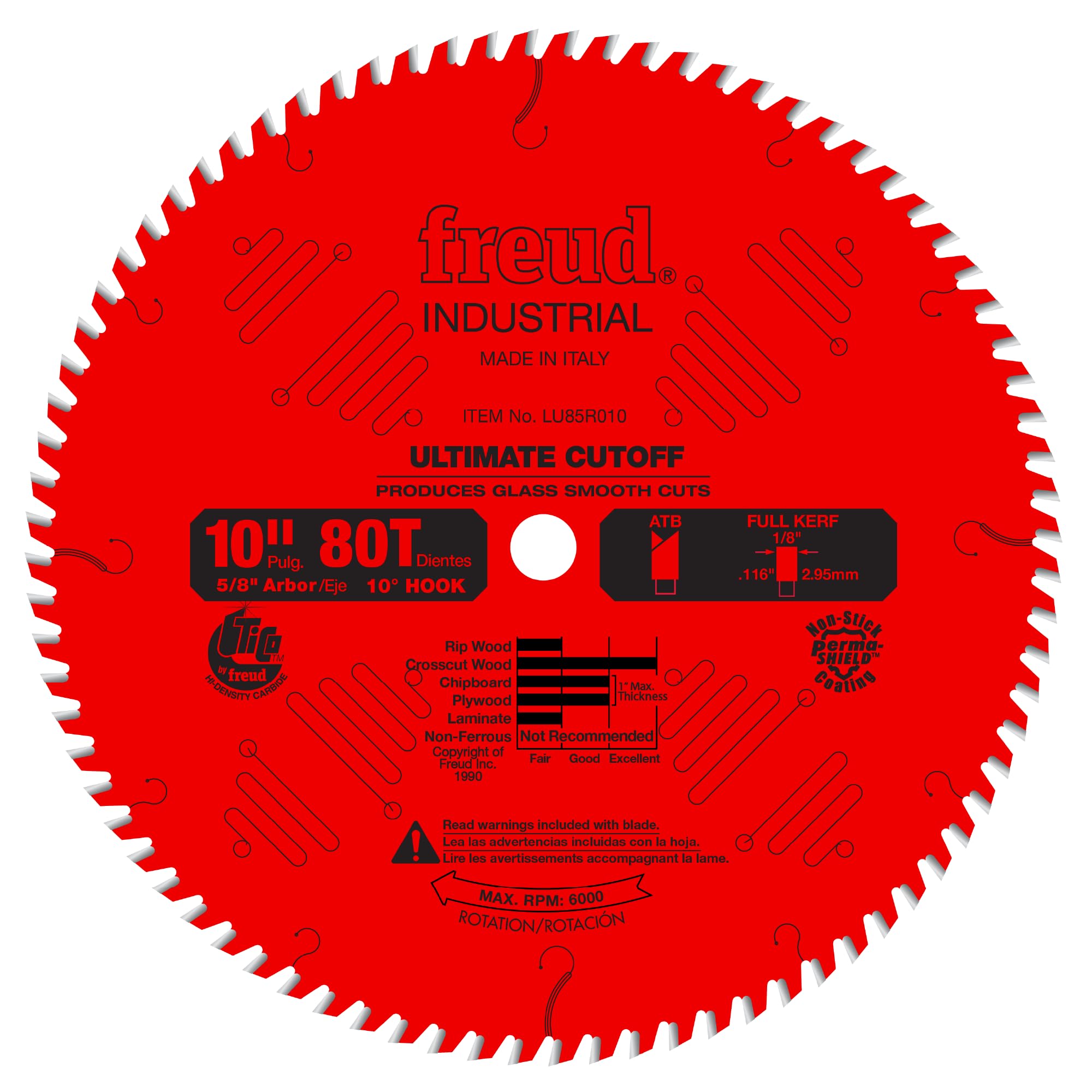
The Freud LU85R010 sets the standard for crosscutting hardwoods. Its 80-tooth Alternate Top Bevel grind with a 38-degree positive cutting angle shears through walnut, maple, and cherry without sanding the edge afterward. The Silver I.C.E. coating actively reduces heat and prevents pitch accumulation, so the blade stays sharp longer and never leaves burn marks on expensive stock.
The full kerf measures .116 inches, providing the stability needed for dead-on miter joints on picture frames and crown molding. Users report flawless 45-degree miters on veneered material without masking tape — a testament to the precision plate grinding and tensioning. The Tri-Metal brazing at the tooth base adds impact resistance, protecting the carbide when encountering a knot.
At 80 teeth, this blade is not designed for ripping or fast framing cuts. It thrives in finish carpentry and cabinet work where cut quality is the priority. The Perma-Shield non-stick coating on the body prevents rust and further reduces drag, making each cut feel effortless.
Why it’s great
- Zero tear-out on figured hardwoods and veneers
- Anti-vibration design eliminates chattering on sliding saws
- Reduced heat buildup prevents burning on dense woods
Good to know
- Full kerf requires a powerful saw to avoid bogging
- Not suitable for ripping or fast framing cuts
2. Makita B-66977: 10″ 80T Max Efficiency
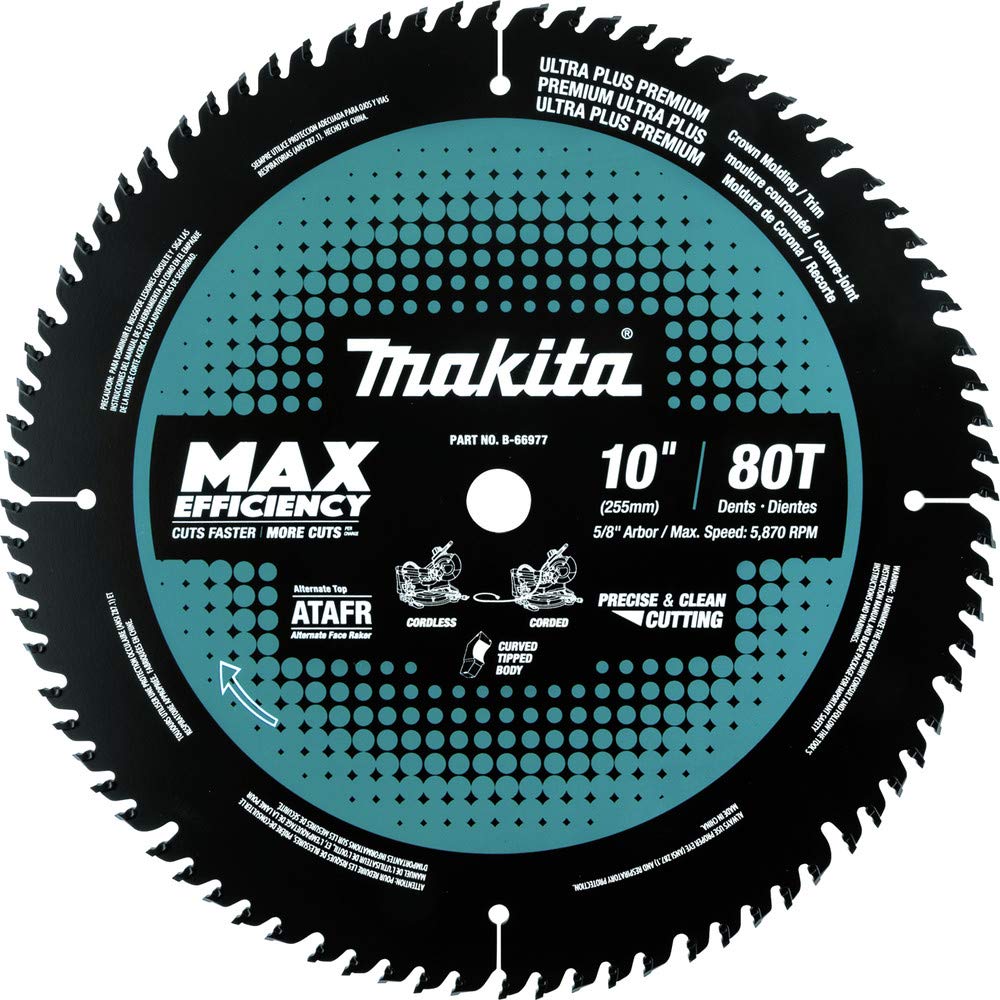
The Makita B-66977 uses a proprietary ATAFR (Alternate Top Alternate Face with Raker) tooth design that delivers up to 100 percent faster cutting compared to standard blades. This tooth geometry alternates between three distinct cutting surfaces, reducing drag and making it ideal for battery-powered miter saws where motor efficiency matters. Users report it cuts through 8/4 cherry and butcher block with minimal tear-out and no burning.
The thin kerf carbide-tipped design removes less material, which translates to less waste and reduced strain on the saw motor. At 10 inches with 80 teeth, this blade produces finish-quality cuts while still feeding fast enough for production work. Professional cabinet installers have noted that this blade gums up far less than comparable 90-tooth options from competitors.
One key advantage is the reduced load on the tool — the specially engineered teeth assist the motor rather than fighting it. This makes the B-66977 a smart choice for anyone using a cordless miter saw who wants to maximize cuts per charge without sacrificing cut quality.
Why it’s great
- 100 percent faster cutting through hardwoods
- Thin kerf reduces strain on cordless miter saws
- Excellent cut quality with minimal tear-out
Good to know
- Thin kerf can deflect on heavy framing cuts
- 10-inch size limits use to smaller miter saws
3. DEWALT DWA11280: 12″ 80T Fine Finish

The DEWALT DWA11280 is engineered for trim carpenters who need clean, vibration-free cuts on softwoods, hardwoods, and plywood. The patented body slot design dampens vibration effectively, producing a smooth cut surface on cedar and pine without the singing or wobble common on thinner blades. The ultra-sharp carbide maintains a keen edge through hundreds of cuts on construction-grade lumber.
Optimized tooth geometry means this 12-inch, 80-tooth blade delivers a fine finish suitable for casing, baseboards, and crown molding. Users running it on the DW780 sliding miter saw report no blowout on crosscuts and clean edges on sliding cuts for wider boards. The thin kerf helps the saw maintain power while still giving a finish-ready surface.
The “3X life” claim comes from a carbide blend that resists chipping on embedded abrasives in pressure-treated wood. While one user rated the cut quality as merely “ok,” the overwhelming majority report significant improvement over the stock blade and consistent performance across hundreds of cuts. It is a straightforward upgrade for anyone with a 12-inch miter saw doing finish work.
Why it’s great
- Patented body slots drastically reduce vibration
- Carbide holds an edge through heavy trim jobs
- Clean cuts with no blowout on plywood crosscuts
Good to know
- Thin kerf may deflect on dense knotty hardwoods
- Not optimized for metal or non-wood materials
4. Diablo D1080N: 10″ 80T Medium Aluminum & Plastic
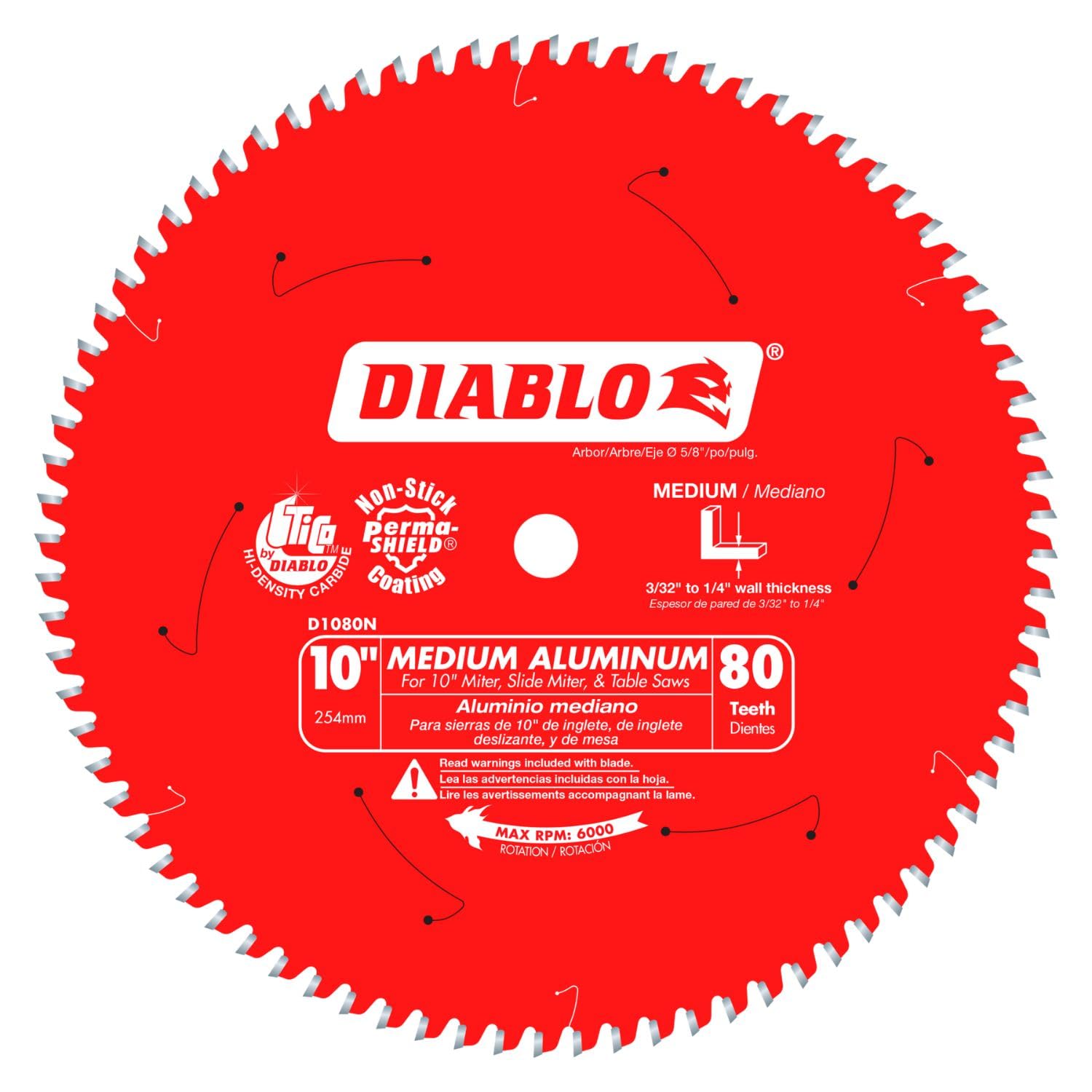
The Diablo D1080N is the go-to blade for cutting non-ferrous metals, plastics, and engineered materials. Its Triple-Chip Grind (TCG) tooth design produces clean, burr-free edges on aluminum extrusions, copper pipe, brass rods, and acrylic sheets. The Tri-Metal shock-resistant brazing bonds the carbide to the steel body with enough flex to withstand the impact of cutting through aluminum without tooth loss.
The Perma-SHIELD non-stick coating protects against heat buildup and gumming when cutting plastics that tend to melt and stick. Laser-cut stabilizer vents trap noise and reduce vibration, which is critical when feeding metal through a miter saw. Users report perfect cuts on 1/16-inch aluminum sheet and 0.093-inch ABS plastic with zero rework needed.
This blade is purpose-built for remodeling, electrical work, and plumbing — not for wood framing. The negative hook angle of -5 degrees controls the feed rate, preventing the blade from grabbing when cutting metal. For anyone regularly working with aluminum thresholds or plastic trim, this blade prevents the frustration of melted edges and dangerous kickback.
Why it’s great
- Burr-free cuts on aluminum and acrylic
- Tri-Metal brazing prevents tooth loss on impact
- Non-stick coating prevents gumming on plastics
Good to know
- Not designed for wood cutting
- Requires rigid saw setup for square cuts on metal
5. Bosch DCB1244: 12″ 44T General Purpose

The Bosch DCB1244 is a 12-inch, 44-tooth general-purpose blade built for the woodworker who needs one blade for crosscuts, rips, and trim. The Brute Carbide formulation is an upgraded C3/C4 micro-grain blend that offers increased impact damage resistance — useful when cutting through nails or dirty lumber. The ATB tooth geometry handles fast crosscuts on framing lumber and plywood without excessive burning.
The Speed Coat antifriction finish reduces drag and prevents pitch buildup, keeping cuts clean and the blade running cool during extended use. The extra-hard steel body resists bending and deflection, which is important when cutting thicker stock on a miter saw. Users upgrading from the stock blade on a Bosch table or miter saw report a noticeable jump in cut quality without sacrificing speed.
With only 44 teeth, this blade cuts faster than high-tooth-count finish blades but leaves a slightly rougher edge. It is the right choice for weekend DIYers doing a mix of framing, shelving, and basic trim who want a single blade that can handle everything. The thin kerf also reduces waste, making it economical for project lumber.
Why it’s great
- Brute Carbide resists chipping on embedded nails
- Speed Coat prevents burning on long cuts
- Versatile enough for crosscuts and ripping
Good to know
- 44-tooth count leaves a grainier cut on hardwoods
- Not optimized for fine finish or sheet goods
6. DEWALT DWA112CMB: 12″ 40T & 60T Combo Pack

The DEWALT DWA112CMB delivers two premium blades in one package — a 40-tooth for general framing and crosscutting, and a 60-tooth for finish work and trim. This combo eliminates the guesswork for users who switch between rough lumber and fine trim on the same jobsite. The patented body slot design on both blades keeps vibration low, which is critical when using a 12-inch blade on thin crown molding.
The ultra-sharp carbide tips on both blades are engineered for extended edge life. One user reported the 40-tooth blade survived cutting 2,800 square feet of IPE hardwood decking before needing replacement — a testament to the durability of the carbide formulation. The 60-tooth blade produces smooth cuts on pressure-treated lumber and delivers clean miters for finish work.
Having two dedicated blades is significantly better than swapping between settings on a single general-purpose blade. The 40-tooth cuts faster through dimensional lumber, while the 60-tooth gives the fine finish needed for casing and baseboards. For anyone with a 12-inch miter saw who does both rough and finish work, this pack covers the full range without compromise.
Why it’s great
- Two blades cover both rough and finish work
- 40-tooth blade extremely durable on hardwoods
- Low-vibration design works well on sliding saws
Good to know
- No dedicated ripping blade included
- 60-tooth blade not ideal for non-ferrous metals
7. Freud LU80R012: 12″ x 96T Ultimate Plywood & Melamine
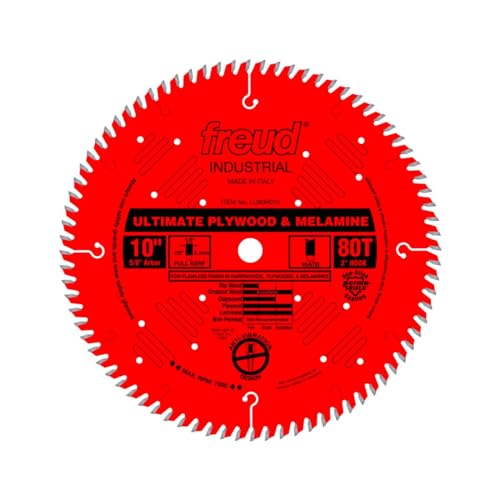
The Freud LU80R012 is the ultimate blade for sheet goods, featuring 96 teeth with a High Alternate Top Bevel (Hi-ATB) grind that produces glass-smooth, splinter-free cuts on plywood, melamine, and veneered MDF. The 2-degree negative hook angle prevents the blade from grabbing the material, allowing controlled feeds that eliminate chip-out on both faces of the cut. Users report cutting cabinet-grade plywood with edges smoother than the factory edge.
The Perma-Shield non-stick coating reduces drag and protects against pitch buildup, which is critical when cutting melamine and laminates that tend to clog standard blades. Laser-cut anti-vibration slots keep the blade running true and quiet, even on long crosscuts. The Hi-ATB geometry shears the wood fibers rather than tearing them, leaving a ready-to-assemble edge that needs no sanding.
This blade is not meant for framing or ripping — it is a specialist tool for anyone who builds cabinets, shelving, or furniture from sheet goods. Users working with thin-veneer plywood and laminate flooring consistently report near-zero chip-out, making it a time-saver that eliminates the need for masking tape or pre-scoring.
Why it’s great
- Splinter-free cuts on both sides of veneered plywood
- Non-stick coating prevents gumming on melamine
- Quiet, vibration-free operation on sheet goods
Good to know
- 96 teeth cut slower through thick lumber
- 1-inch arbor may require bushing for some miter saws
FAQ
Is a higher tooth count always better for a miter saw blade?
Can I use a thin kerf blade on a sliding miter saw?
What does a negative hook angle do on a miter saw blade?
Final Thoughts: The Verdict
For most users, the blade for miter saw winner is the Freud LU85R010 because its 80-tooth ATB grind with Silver I.C.E. coating delivers flawless crosscuts on hardwoods without burning or tear-out. If you want faster cuts on a cordless saw, grab the Makita B-66977. And for splinter-free sheet goods, nothing beats the Freud LU80R012 with its 96-tooth Hi-ATB geometry.